
Fantasy Books
NONESUCH by Francis Spufford
One of the trends I have noticed in recent years is the mainstreaming of science-fictional or fantasy tropes in mainstream fiction, crime novels, police procedurals, urban fantasy and the like. David Mitchell’s Cloud Atlas, Michael Chabon’s The Amazing Adventures of Kavalier & Clay, and yes, Margaret Atwood’s The Handmaid’s Tale, amongst others. At the same…
Categories: Fantasy Books
Forgotten Authors: Rog Phillips
 Rog Phillips
Roger Phillip Graham was born in Spokane, Washington on February 20, 1909 to John Alfred Graham and Abbie Susan (née McCalmont). His family moved often, spending time in Oklahoma, among other places. He returned to Spokane to attend Gonzaga College, from which he graduated in 1931 and did some graduate work at the University of Washington. Most of his sf work appeared under the name Rog Phillips.
During the pre-war years, Phillips held a variety of jobs, including working as a farm worker, plumber, construction worker, and carpenter. During World War II, he worked as a power plant engineer and a shipyard welder.
Graham married Eleanor Cora Smith on October 8, 1938 in Spokane, although they were divorced by 1950, when he married sf fan and author Mari Wolf. They divorced in 1955 and the following year, he married another fan, Honey Wood, to whom he remained married until his death. Wood and Phillip were members of the Outlanders, a subset of LASFS fans who lived just outside Los Angeles.
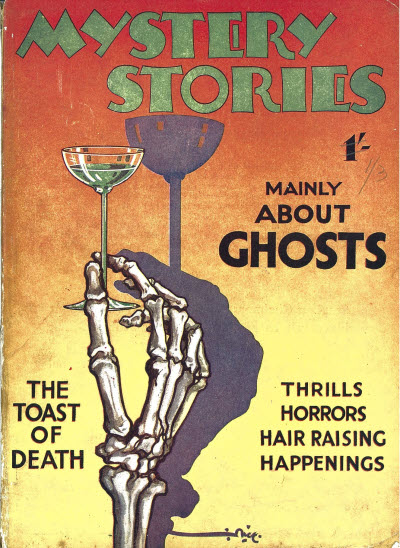 Mystery Stories #20
Phillips published his first short stories in Mystery Stories in 1939 under the name Roger Graham. His next story, “Let Freedom Ring,” appeared after the war in the December 1945 issue of Amazing Stories, a magazine which would be his main place of publication, along with its sister magazine Fantastic Adventures.
His first novel, Time Trap, was published in 1949. His other novels appeared in 1950 and 1951. Later novels appeared in magazines, with one of them, These Are My Children, which first appeared as a serialization in Other Worlds Science Stories in 1952 seeing its first stand-alone publication in 2018. Other small presses have published collections of his work in the twenty-first century, most recently Rog Phillips, Ace of Science Fiction Digests in 2023.
During the 1950s, he lived in Chicago and wrote “The Club House” a column covering science fiction fan gatherings and short reviews of fanzines, first for Amazing Stories from 1948-1953 and later in Universe Science Fiction from 1954-1955, and finally in Other Worlds Science Stories from 1955-1956. “The Club House” introduced fannish culture to people, including a young Robert Silverberg.
Phillips wrote under a variety of house names, including Craig Browning, Franklin Bahl, Peter Worth and Melva Rogers, in addition to his own name. He also used the pseudonym John Wiley for mystery and detective stories. He used other pseudonyms as well.
In 1956, Phillips was a Hugo finalist in the “Best Feature Writer” category in the only year it was awarded. He lost to Willy Ley. Other nominees included L. Sprague de Camp, Robert A. Madle, and R.S. Richardson. Three years later, his story “Rat in the Skull” was nominated for Best Novelette, losing to Clifford D. Simak’s “The Big Front Yard.”
Phillips served as best man at SF author Chad Oliver’s wedding. He also served as godfather to Earl Terry Kemp, the son of Earl Kemp, who chaired the 1962 Chicon. The younger Kemp has revived “The Club House” and has also edited collections of Phillips’ work.
He died on March 2, 1966 in San Francisco.
 Steven H Silver is a twenty-two-time Hugo Award nominee and was the publisher of the Hugo-nominated fanzine Argentus as well as the editor and publisher of ISFiC Press for eight years. He has also edited books for DAW, NESFA Press, and ZNB. His most recent anthology is Alternate Peace and his novel After Hastings was published in 2020. Steven has chaired the first Midwest Construction, Windycon three times, and the SFWA Nebula Conference numerous times. He was programming chair for Chicon 2000 and Vice Chair of Chicon 7.
Categories: Fantasy Books
Book review: The Tapestry of Fate by Shannon Chakraborty

Book links: Amazon, Goodreads
GENRE: Adventure Epic Fantasy
ABOUT THE AUTHOR: S. A. Chakraborty is the author of the critically acclaimed and internationally best-selling The Daevabad Trilogy. Her work has been nominated for the Locus, World Fantasy, Crawford, and Astounding awards. When not buried in books about thirteen-century con artists and Abbasid political intrigue, she enjoys hiking, knitting, and re-creating unnecessarily complicated medieval meals. You can find her online at www.sachakraborty.com or on Twitter and Instagram at @SAChakrabooks, where she likes to talk about history, politics, and Islamic art. She lives in New Jersey with her husband, daughter, and an ever-increasing number of cats.
Publisher: Harper Voyager (May 12, 2026) Page count: 494 pages Formats: audiobook, ebook, paperback
The Tapestry of Fate was easily one of my most anticipated books of 2026. I loved The Adventures of Amina al-Sirafi, but sequels are difficult. Especially sequels to books built almost entirely on charm, chemistry, and an awesome adventure featuring people addicted to making terrible decisions. Sometimes the magic disappears the second everyone comes back for round two.
Not here.
This is, imo, a masterclass in writing a sequel. The stakes are higher, the story gets darker, the world expands naturally, and yet it still feels like its own complete adventure. Also, the ending caught me off guard. Shannon Chakraborty clearly looked at readers peacefully enjoying closure and decided that was unacceptable.
The story sends Amina after another magical artifact, this time a spindle capable of rewriting fate itself. You know, the sort of thing nobody should touch under any circumstances, but, naturally, everyone immediately sails toward it. The island at the center of the story is eerie, dangerous, full of strange magic and shifting loyalties. The deeper Amina gets into the mission, the clearer it becomes that the peris are hiding far more than they admitted.
This book is noticeably darker than the first one too. There are some genuinely brutal scenes here, more violence, more heartbreak, and more tension between the characters. Amina’s relationship with her daughter gets more complicated - Marjana is older now, smarter, and increasingly tired of being lied to about her mother’s life and her own heritage. Fair enough. If your mother keeps disappearing on magical pirate missions while refusing to explain anything, eventually you start asking questions.
Amina and Dalila's friendship is the main focus of the story. It's crazy how deeply these two women care about each other while also being stubborn enough to make everything infinitely harder than necessary. So, we get lots of emotional scenes between them, but also demons, sorceresses, sea monsters, and people getting stabbed at alarming speed.
It's worth noting that even when things get darker, it never becomes emotionally miserable. There’s heartbreak, yes, but this is still fundamentally a story about adventure, friendship, found family, and larger-than-life characters doing wildly reckless things for reasons that usually make emotional sense at the time.
And the characters really are the magic here. Amina remains one of the most entertaining protagonists in fantasy right now. Brave, stubborn, overprotective, occasionally very wrong, but always compelling. Raksh continues to cause chaos like an immortal being who genuinely wakes up every morning asking himself how to make today everyone else’s problem.
Shannon Chakraborty somehow managed to make the world feel bigger while keeping the story personal, which isn’t easy in epic fantasy sequels. The Tapestry of Fate feels richer, darker, and more confident than the first novel without losing the warmth and sense of adventure that made me love the series in the first place.
Now I just need book three immediately. Which, judging by that ending, is probably exactly what Chakraborty wanted.
Categories: Fantasy Books
Review – The Ornithologist’s Field Guide to Love by India Holton (4.5/5 stars)

Reading Level: Adult
Genre: Historical Romance/Humor
Length: 378 pages
Publisher: Berkley
Release Date: July 23, 2024
ASIN: B0CLN6XSD7
Stand Alone or Series: 1st book in the Love’s Academic series
Source: Borrowed ebook from library
Rating: 4.5/5 stars
“Beth Pickering is on the verge of finally capturing the rare deathwhistler bird when Professor Devon Lockley swoops in, stealing both her bird and her imagination like a villain. Albeit a handsome and charming villain, but that’s beside the point. As someone highly educated in the ruthless discipline of ornithology, Beth knows trouble when she sees it, and she is determined to keep her distance from Devon.
For his part, Devon has never been more smitten than when he first set eyes on Professor Beth Pickering. She’s so pretty, so polite, so capable of bringing down a fiery, deadly bird using only her wits. In other words, an angel. Devon understands he must not get close to her, however, since they’re professional rivals.
When a competition to become Birder of the Year by capturing an endangered caladrius bird is announced, Beth and Devon are forced to team up to have any chance of winning. Now keeping their distance becomes a question of one bed or two. But they must take the risk, because fowl play is afoot, and they can’t trust anyone else—for all may be fair in love and war, but this is ornithology.”
Series Info/Source: This is the 1st book in the Love’s Academic series. I borrowed this on ebook from the library.
Thoughts: This started a bit slow but picked up the pace about 25% of the way in. This is a Victorian alternate history sort of fantasy romance. It is set in England (mostly) but an England where the birds are deadly and magical, and ornithologists play a major role in the safety of people in general.
Beth is a rare female ornithologist professor and, when a contest to capture the rare caladrius bird is announced (with tenure as the prize) she must participate. Unfortunately, all the ornithologists dive right into this challenge, including the incredibly smart and handsome Professor Devon Lockley. As Devon and Beth are forced to team up, they are incredibly attracted to each other, and both are forced to admit there are more important things in life than winning Birder of the Year (of course, nothing is more important than the birds). As the chase for this rare bird continues, they both realize that there is more behind this contest than they initially thought.
This is a very fun and cute read. The beginning missed the mark for me a bit. Beth was just too timid and the characters felt a bit too stereotypical, however that was quickly remedied as we got further into the story. There is a lot of action here, and a lot of the story is a bit tongue-in-cheek. I mean the ornithologists are so famous and so important, at times it all feels a bit over characterized and silly, but in a fun way.
The story does jump between a few different POVs. However, the majority of the story is told from Beth’s and Devon’s points of view. I enjoyed both Beth and Devon as characters. At first, they seem a bit stereotypical to this type of alternate history Victorian story, but I think that is part of the point. As they get to know each other better, we also get to know them better. They are both exceptional characters with deep intelligence and interests.
This was a fun romp, was effortless to read, and was well written. I enjoyed it immensely.
My Summary (4.5/5): Overall, though the start of this was a bit rough for me, I thought the story really hit it’s stride about 25% of the way in and I really started to love it. I loved this alternate history Victorian London setting with deadly magical birds, the quirky characters, the fast pace, the romance, and the mystery that is unraveled. I would recommend to those who enjoy alternate history Victorian romance with some magic, adventure, and mystery in it. I will definitely be picking up the second book in the series, “The Geographer’s Map to Romance.”

Categories: Fantasy Books
Courtship Customs: Marrying Mr. Darcy by Erika Svanoe and Erik Evensen
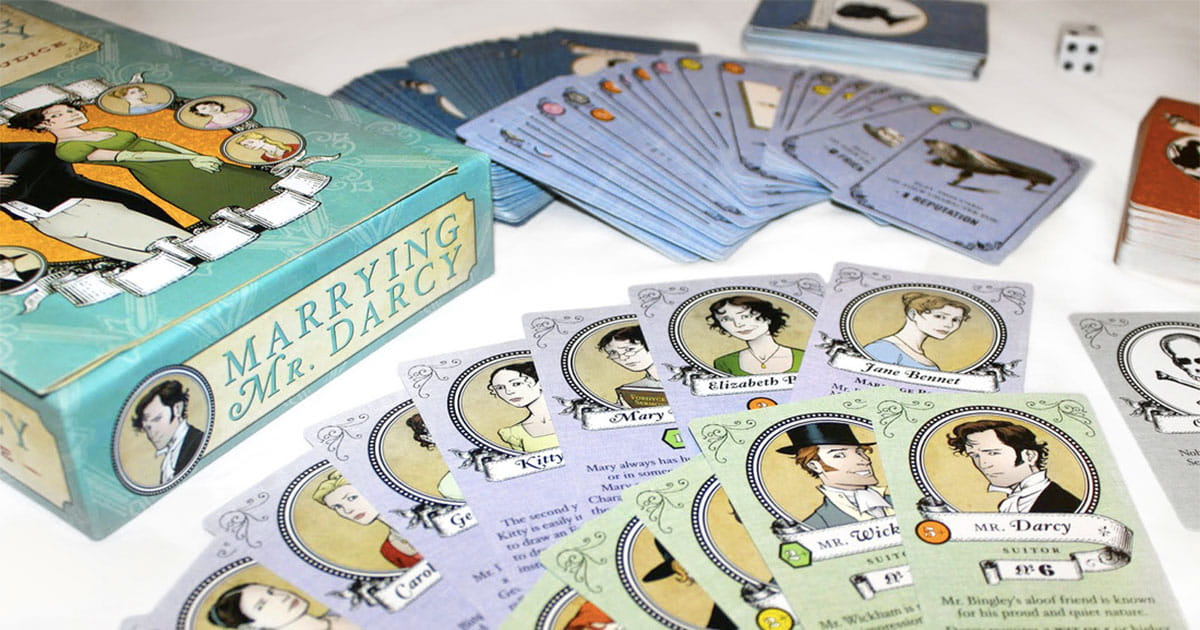
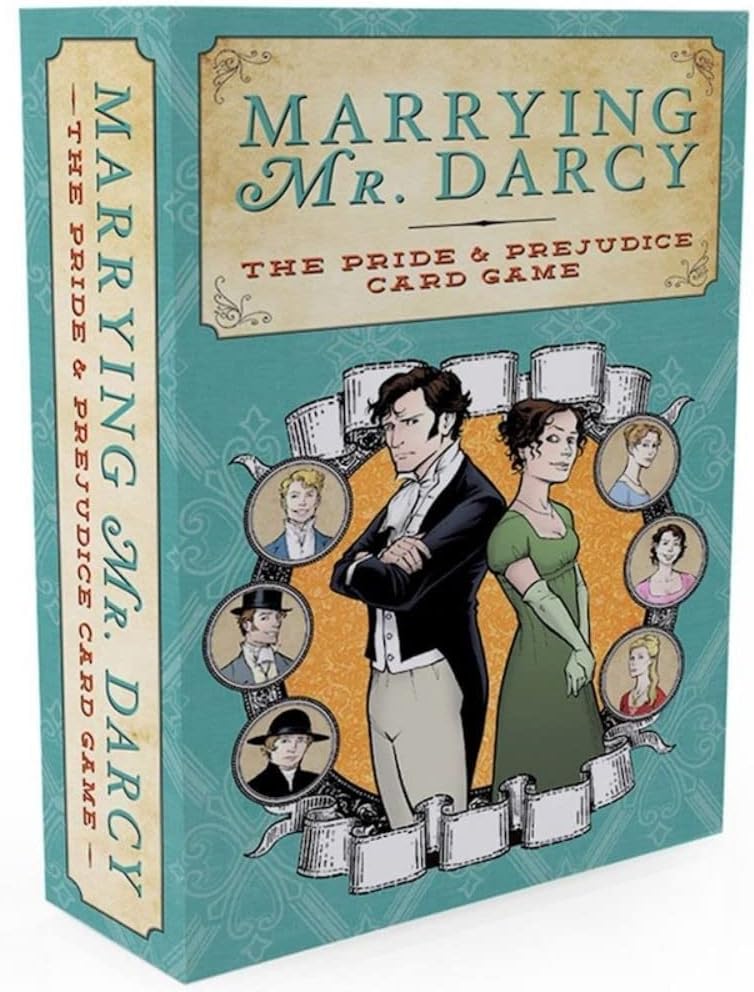 Marrying Mr. Darcy, designed by Erika Svanoe, art by Erik Evensen (Erika Svanoe Games, 2013)
One of my local gaming friends told me about Marrying Mr. Darcy, and brought his copy to a recent session, where we played it. I thought it was a lot of fun and have acquired a copy.
This is a game based on Jane Austen’s classic novel Pride and Prejudice. I think it could be played without having read that book, by anyone who has some familiarity with the courtship customs of the past. On the other hand, such players will miss some of the jokes that add to the pleasure of the game.
[Click the images to engage with larger versions.]
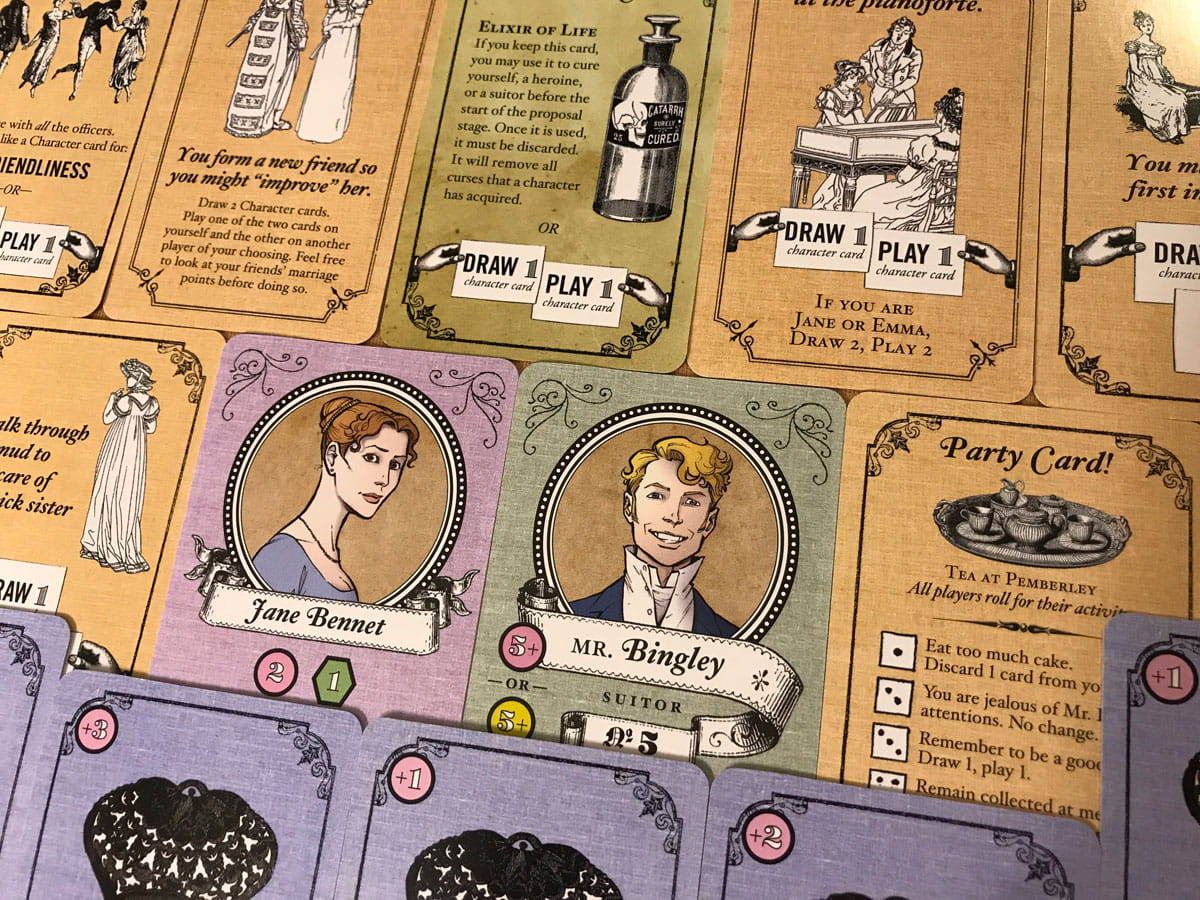 Some of the cards in Marrying Mr. Darcy
Up to six people can play Marrying Mr. Darcy. At the outset, players roll a die for first choice, and each chooses a young woman to play, from a set of eight, who are more or less all the named marriageable women in the novel: its heroine, Lizzie Bennet, and her four sisters, plus three others with disparate backgrounds. These women start out with certain personal traits; a dowry, which doesn’t count as a “personal trait,” but which many suitors are looking for; and a set of base scores to be earned by marrying different suitors.
Darcy, the hero of the novel, for whom the game is named, is usually worth a fair number of points, but is only the top ranked choice for Lizzie, for example. Cards are put out for suitors, showing what traits each requires before he would consider proposing to a woman. Note that some of the women are sisters of some of the men, who won’t propose to them — though there’s an optional rule where the women turn out to have been adopted (a plot twist H.G. Wells actually used in Joan and Peter, written about a century later).
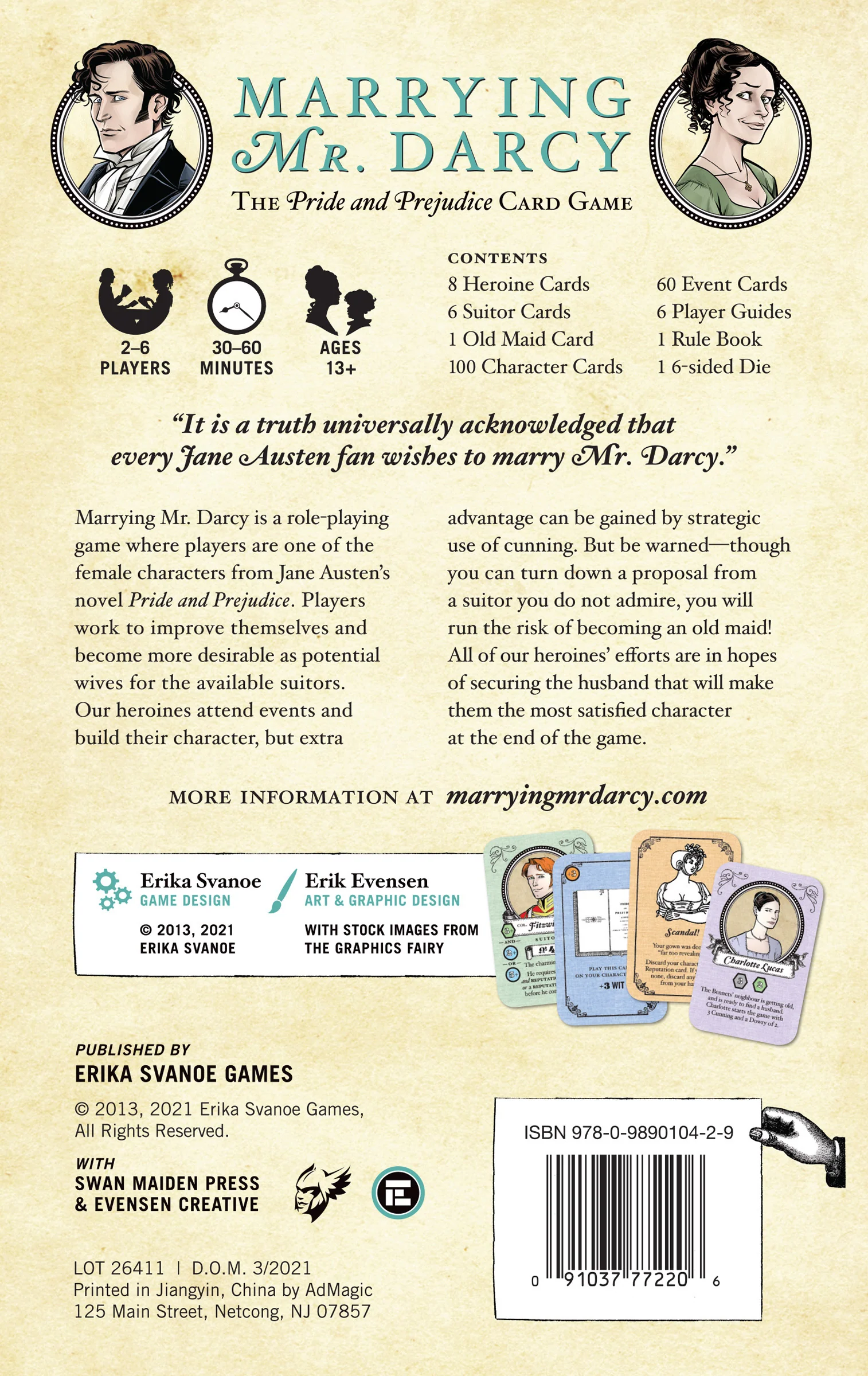 Back cover of Marrying Mr. Darcy
The first phase of play, courtship, involves drawing event cards, which represent something that could happen in the characters’ social milieu, such as a party, a family scandal, or simply learning to play a new piece at the pianoforte. I could think of an incident in the novel for nearly every “event.” Many event cards grant the ability to draw and/or play one or more character cards; they may also produce direct benefits or problems.
Character cards, in turn, often add to a characteristic. There are five of these. Four can be played face up: Beauty, Friendliness, Reputation, and Wit. These accumulate as played, giving each young woman the ability to appeal to various suitors; the strategy of the game involves knowing that Mr. Darcy, for example, favors young women with Wit, while Mr. Collins cares about Beauty and Reputation.
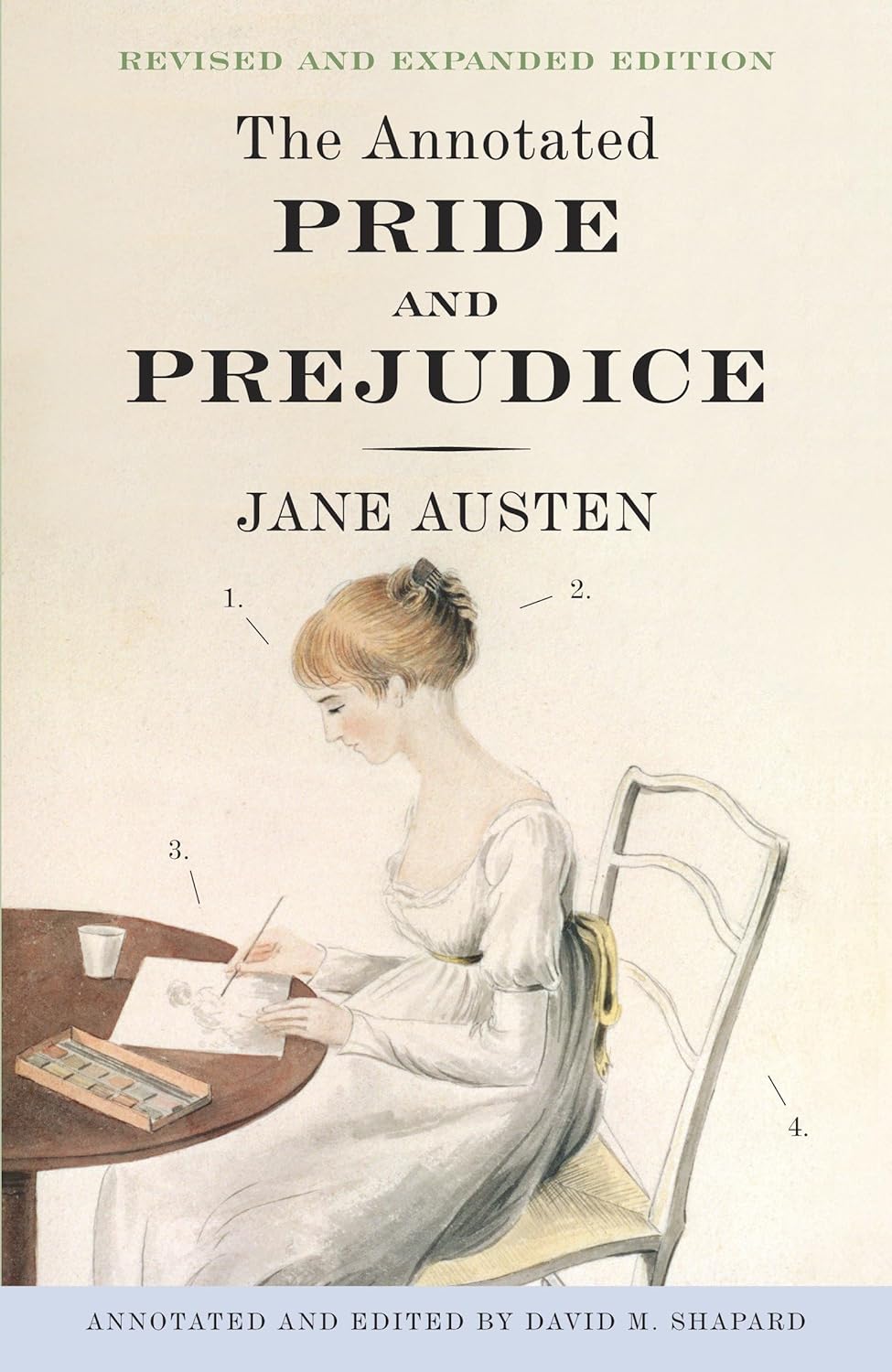
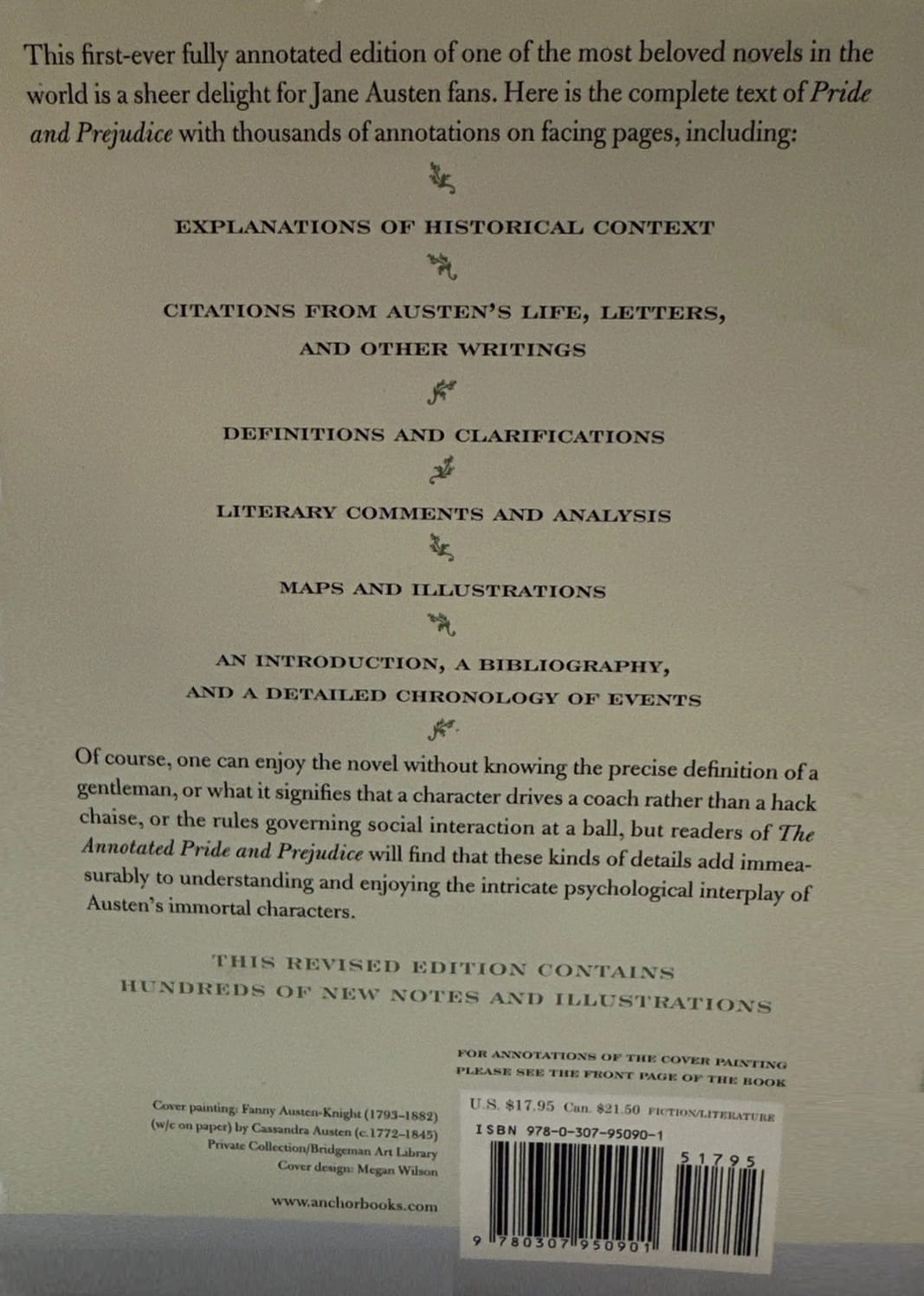
The Annotated Pride and Prejudice, by Jane Austen and David M. Shapard (Vintage, March 13, 2007)
Cunning is played face down, and can be used to undercut another young woman’s advantages by removing a card she has played face up, making her less able to compete for a suitor you want.
Character cards can also add to Dowry, which is not a characteristic but is important to some suitors. Reputation and Dowry, in particular, are important in ways that no longer apply in our era; players may need to have read some Austen or Heyer to be seized of the point that men usually expect a young woman to bring some of her family’s wealth into a marriage, and that they avoid a woman who might be feared to be unchaste or unfaithful — perhaps because her sister has eloped with a man she wasn’t married to (how did their family bring them up?).
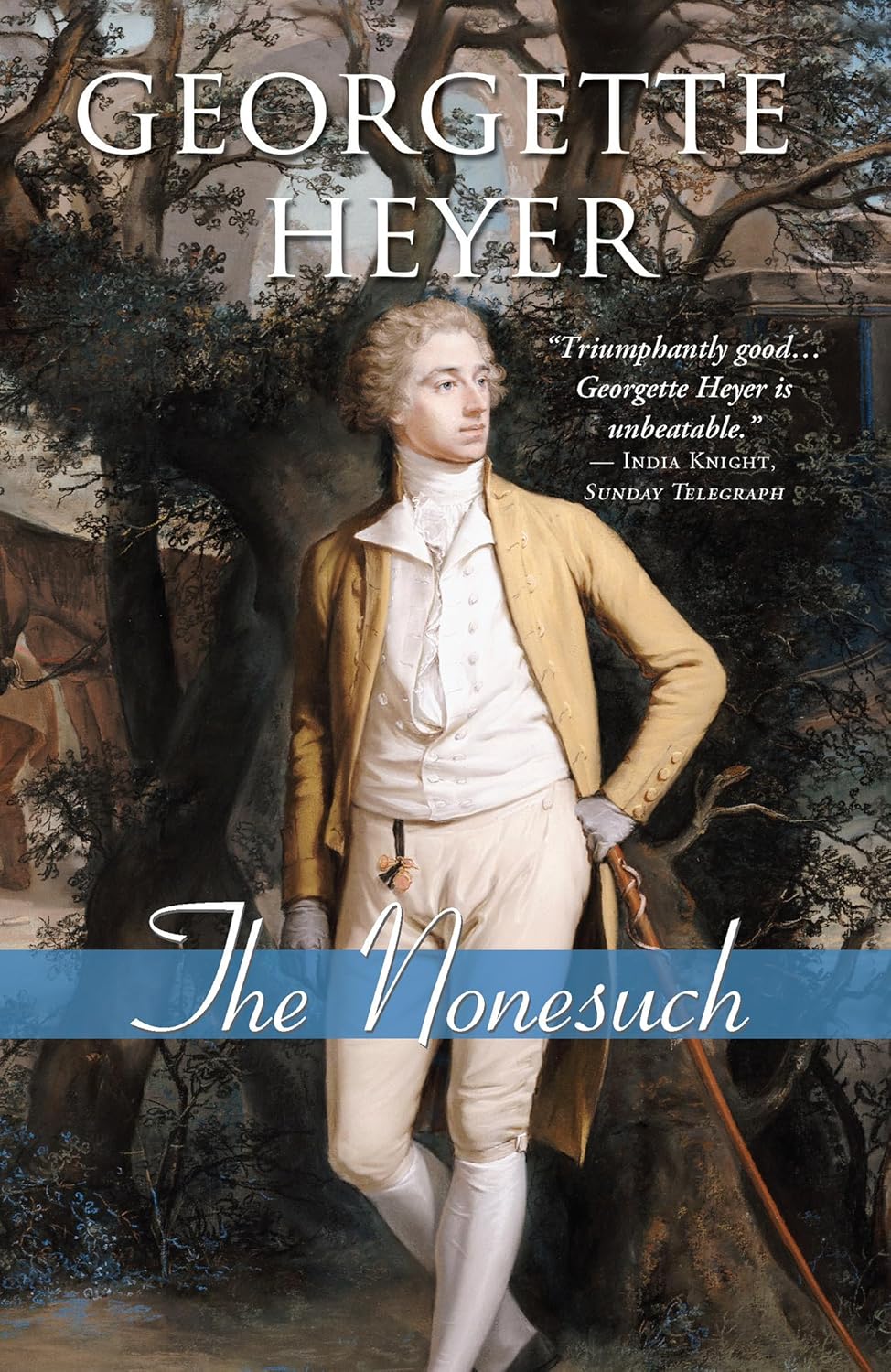 The Nonesuch by by Georgette Heyer (Sourcebooks Casablanca, April 1, 2009)
In the second phase of play, proposal and marriage, players’ turns are decided by Cunning scores: The most cunning young woman goes first. (If two young women are tied, the one with the higher Dowry goes first.)
All the suitors whose standards a young woman meets are identified, and the dice are rolled for each one to see if he proposes. The player can either accept or reject each proposal; acceptance removes that suitor from the pool available to other young women.
A young woman who turns down all her suitors, or receives no proposals, acquires the Old Maid card — a social disaster, but one some young women might prefer to a really bad marriage!
The final score is the sum of a character’s scores on Beauty, Friendliness, Reputation, and Wit and the point value of her suitor for her. The highest score determines the winner; ties are broken by Dowry or by Cunning — so that these two traits can still matter, in a less obvious way than the characteristics.
Marrying Mr. Darcy can be played in an hour or a bit less. It can be quite an entertaining game, as characters raise their standing in the marital competition or suffer dramatic reversals; each game is effectively a new drama about the Bennets and their social milieu.
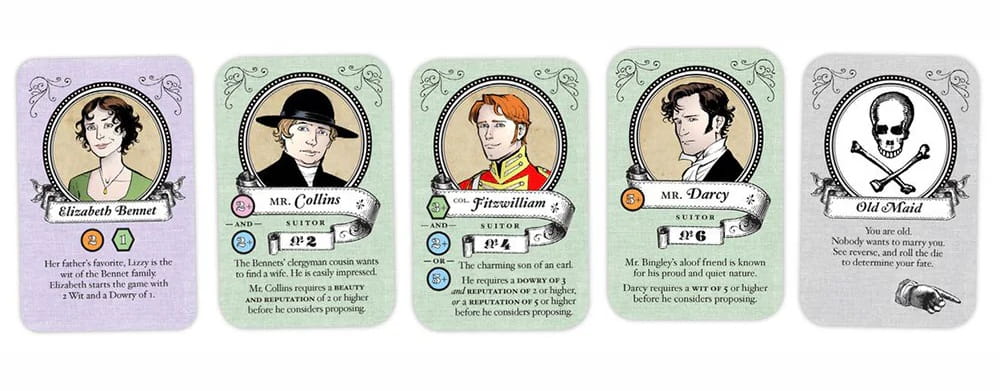
The cards are also attractively designed: Erik Evensen did a good job of suggesting that milieu. And between quickness and lightness, this was a perfect palate cleanser to be played after a complex, tactically challenging game, like having a salad after a main course. I look forward to playing it again.
William H. Stoddard is a professional copy editor specializing in scholarly and scientific publications. As a secondary career, he has written more than two dozen books for Steve Jackson Games, starting in 2000 with GURPS Steampunk. He lives in Lawrence, Kansas with his wife, their cat (a ginger tabby), and a hundred shelf feet of books, including large amounts of science fiction, fantasy, and graphic novels.
Categories: Fantasy Books
Spotlight on “Red X” by David Demchuk

LitStack Spots Here are a few other thrilling titles that we are absolutely adding to…
The post Spotlight on “Red X” by David Demchuk appeared first on LitStack.
Categories: Fantasy Books
The Faraway Inn - Book Review
 The Faraway Innby Sarah Beth Durst
What is it about:After a devastating heartbreak, a teen girl decides to spend her summer helping her eccentric great aunt manage her quaint Vermont inn--but this fixer-upper is hiding a magical secret--in this cozy and irresistable new fantasy from the New York Times bestselling author of The Spellshop.
Sixteen-year-old Calisa is desperate for a change of scenery after her lying ex ruins her perfect Brooklyn summer. When her parents suggest she head to rural Vermont to help her great-aunt run her cozy bed and breakfast for a few months, she jumps at the chance.
But when Calisa arrives at the B&B, she's shocked to find a rundown inn with only a handful of guests. And to make matters worse, upon meeting with her great-aunt it quickly becomes clear that Calisa was not invited. Auntie Zee is determined to keep anyone from messing with her beloved inn…even if it is clear she needs the help.
To earn her keep, Calisa sets to work fixing up the inn, enlisting extra help from the groundskeeper's (handsome) son. But the longer she stays, the more it becomes evident that there is something strange about the B&B—and its residents. Something almost…otherworldly.
The inn is keeping a magical secret—but to protect the place she's come to love, Calisa must unravel the truth of it, and her aunt, before it's too late.
What did I think of it:After the fluffy happy coziness of The Spellshop series I totally had to get this YA Cozy Fantasy.
And it doesn't disappoint!
I loved every minute I spent with this book. Together with Calisa I got to explore the Faraway Inn and discover its many wonders. Having read my fair share of Magical Realism and Fantasy books I picked up on the hints dropped throughout the story, which made sure I kept ahead of Calisa in discovering what was going on. It was fun to see where things started to click into place with Calisa.
Overall this is a wonderful and cozy read. You bet I'm keeping an eye out for more books by Sarah Beth Durst.
Why should you read it:This book is like a cup of hot chocolate on a chilly day.
Categories: Fantasy Books
Review: The Unicorn Hunters by Katherine Arden

Buy The Unicorn Hunters
FORMAT/INFO: The Unicorn Hunters will be published on June 2nd, 2026 by Del Rey. It is 368 pages and available in hardcover, ebook, and audiobook formats.
OVERVIEW/ANALYSIS: Duchess Anne of Brittany knows that she will never marry for love. As the ruler of a small duchy, she understands that any marriage she enters will be purely for political reasons. So when faced with marriage to the king of France, her resistance is purely political: marrying the king will end the independence of Brittany. Anne needs to find another marriage option without the king knowing, a task made all the harder due to the fact that the king's diviners can spy on a person at any time. But Anne knows of a nearby forest where the magics interfere with a diviner's gifts. In a desperate gambit, Anne announces a grand unicorn hunt in the forest, an event that will hide her real intent: to secretly marry a different king, one who won't require her to give up her duchy's independence. But the forest in question borders a fantastical realm known as the Lost Lands, and it isn't long before Anne realizes her actions have caused the Lost Lands to bleed into the mortal realms, threatening everyone she loves.
The Unicorn Hunters is a historical fantasy that has a wonderful blend of court politics and fairytale adventure. Loosely based on the real Anne of Brittany, much of the story has to deal with real world intrigue. Anne must deftly navigate advisors in her own court as well as envoys from two different royal courts as she tries to stall one marriage long enough to secretly arrange for the second. Through multiple POVs, we see the political chess moves of different characters, each trying to trap the other with clever words and polite decorum.
But woven throughout all the mortal intrigue is a fairytale adventure. Anne accidentally unleashes entities from what is essentially a fae realm known as the Lost Lands. It is a realm that operates by its own rules and logic. As the borders of the Lost Lands expand, the more fantastical things start to occur in the mortal world. The result is a story where Anne has to survive a political dinner in one scene, and figure out how to navigate a hall of endless doors in another. The two sides of the story blend together well and kept me thoroughly engaged in the story.
The one thing I bumped against in this story is that it often felt like problems were resolved too easily. A character could be kidnapped and rescued in a mere few pages, while a seemingly brutal political loss was turned into a victory in a mere blink. I'm all for competent characters, but I felt like some of these dangers needed to last longer to have their weight fully felt. Instead, we race from one problem to the next, which keeps the story moving, but also makes the dangers feel somewhat less threatening.
But overall, I loved the tone and writing of The Unicorn Hunters. It leans into the medieval, fairytale feeling of the story, feeling both real and surreal in equal measure. It was a wonderful adventure and another excellent release from Katherine Arden.
Categories: Fantasy Books
Book Review: A Parade of Horribles by Matt Dinniman
I received a review copy from the publisher. This does not affect the contents of my review and all opinions are my own.
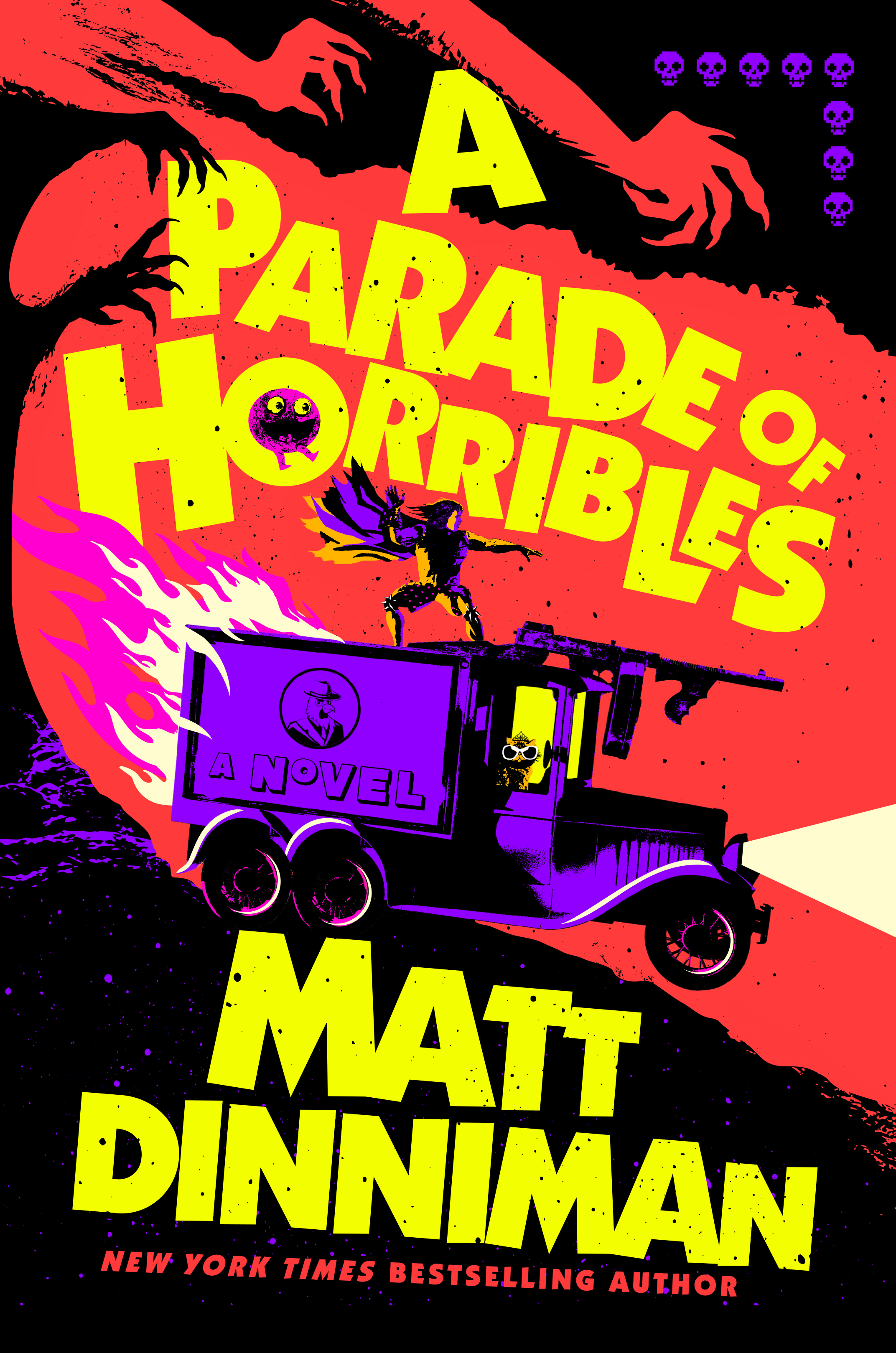 A Parade of Horribles by Matt Dinniman
Mogsy’s Rating: 4 of 5 stars
Genre: Fantasy, Science Fiction
Series: Book 8 of Dungeon Crawler Carl
Publisher: Ace (May 12, 2026)
Length: 704 pages
Author Information: Website
Saying that I was excited for A Parade of Horribles feels like gigantic understatement. Dungeon Crawler Carl has become one of my favorite ongoing obsessions, and thanks to the rapid-fire releases of the earlier books, I was able to tear through the first seven installments. This was the first time I actually had to wait, but I have to say, the anticipation was half the fun. Gotta love seeing this series explode in popularity over the last couple years because Dinniman really has built something special here, an action-packed sci-fi fantasy litRPG that’s equal parts ridiculous, heartfelt, and chaotic.
A Parade of Horribles brings us to the tenth floor, giving Carl, Donut, and the remaining crawlers barely a moment to breathe after the absolute carnage and fallout of the Faction Wars on the previous level. They thought the worst was behind them, but true to form, the dungeon has prepared yet another brutal setup, this time built around a deadly racing game that feels a bit like Mario Kart meets Mad Max. While the scale of the dungeon remains enormous, the field has narrowed considerably. Only several thousand crawlers remain, but their numbers are about to be whittled down further in this cutthroat, no holds barred competition designed to kill them all.
However, Carl has never been particularly good at sitting back and accepting impossible odds when the lives of the people he cares about are on the line. He wants to get as many of them out of the dungeon alive as he can but also knows he can’t guarantee the survival of every crawler during their individual heats on the racetrack. But perhaps there may be other ways to protect them? Meanwhile, the dungeon itself is evolving into something far more unpredictable and dangerous as the AI grows increasingly more unhinged. Out in the wider universe beyond the crawl, the fragile balance between alien factions and their galactic governments is also beginning to break down under the weight of everything that’s happened. Before long, the cracks in the system will become impossible to contain, threatening to bring entire civilizations crashing down along with them.
In this book, only a relatively small number of crawlers remain, and even our group of core characters has become reduced. For example, a certain someone who was a member of Carl and Donut’s party is no longer in the dungeon, for reasons I will not spoil, and I felt their absence keenly. This does give the story a very different feeling compared to the earlier books. Also, this isn’t the only area growing more streamlined, as I can feel Dinniman trying to simplify things in other ways. And honestly, I can understand why. In addition to the character roster, over the course of the series we have seen the world-building, game mechanics, dungeon lore, alien factions and politics all balloon into something massive. At some point, trimming is required to keep things manageable, and A Parade of Horribles definitely feels like part of that process.
I also noticed how the world outside the dungeon feels less present this time around. Earlier books constantly reminded us of the audience tuning in, watching Carl’s journey and showering his feed with septillion follower counts and likes. Presumably, everyone in the universe is watching by default, which makes sense narratively, but I did miss the broader sense of scale and spectacle. On the flip side, it did help keep the focus tighter on the immediate danger and the increasingly desperate attempts to survive what’s coming next.
Speaking of which, what I continue to love about this series is how every floor delivers something different. The vehicle race mechanics on the tenth offer new ways to play, and despite the high stakes, they are genuinely fun and full of the over-the-top scenarios that this series thrives on. Characters are dodging traps, engaging in sabotage, and pulling off increasingly ruthless strategies even as the story’s darker themes continue building in the background. The humor is still there, of course, but the mood has gotten noticeably heavier as Carl and Donut begin approaching problems with the cold pragmatism of hardened, seasoned crawlers.
Finally, even though I had a great time, I confess A Parade of Horribles comes in slightly lower for me compared to the previous books, but that honestly says more about how absurdly high the bar for this series has become than anything else. The pacing did feel a little off towards the end as certain plot points were rushed, and these were developments that probably could have benefited from more breathing room considering the importance of this final stretch. Sometimes the solutions to conflicts also feel like they materialize a little too conveniently and not as organically as before, but the author’s incredible creativity along with his sheer confidence are usually enough to push through any plot hiccups before things get too bogged down.
All in all, I greatly enjoyed A Parade of Horribles. Even when it gets messy, it remains wildly entertaining. The emotional investment is there. The humor is laugh-out-loud funny. The tension still works. And Carl and Donut are still the best duo ever. More than ever, this book feels like the calm before something huge, with all the buildup pointing towards a momentous endgame looming just over the horizon. I can’t wait to see how Matt Dinniman will bring this insane, hilarious, awesome ride home.


More on The BiblioSanctum:
Review of Dungeon Crawler Carl (Book 1)
Review of Carl’s Doomsday Scenario (Book 2)
Review of The Dungeon Anarchist’s Cookbook (Book 3)
Review of The Gate of the Feral Gods (Book 4)
Review of The Butcher’s Masquerade (Book 5)
Review of The Eye of the Bedlam Bride (Book 6)
Review of This Inevitable Ruin (Book 7)
Categories: Fantasy Books
Tales of Fantasy Rome: The Eternal City, edited by David Drake, Martin Greenberg, and Charles Waugh
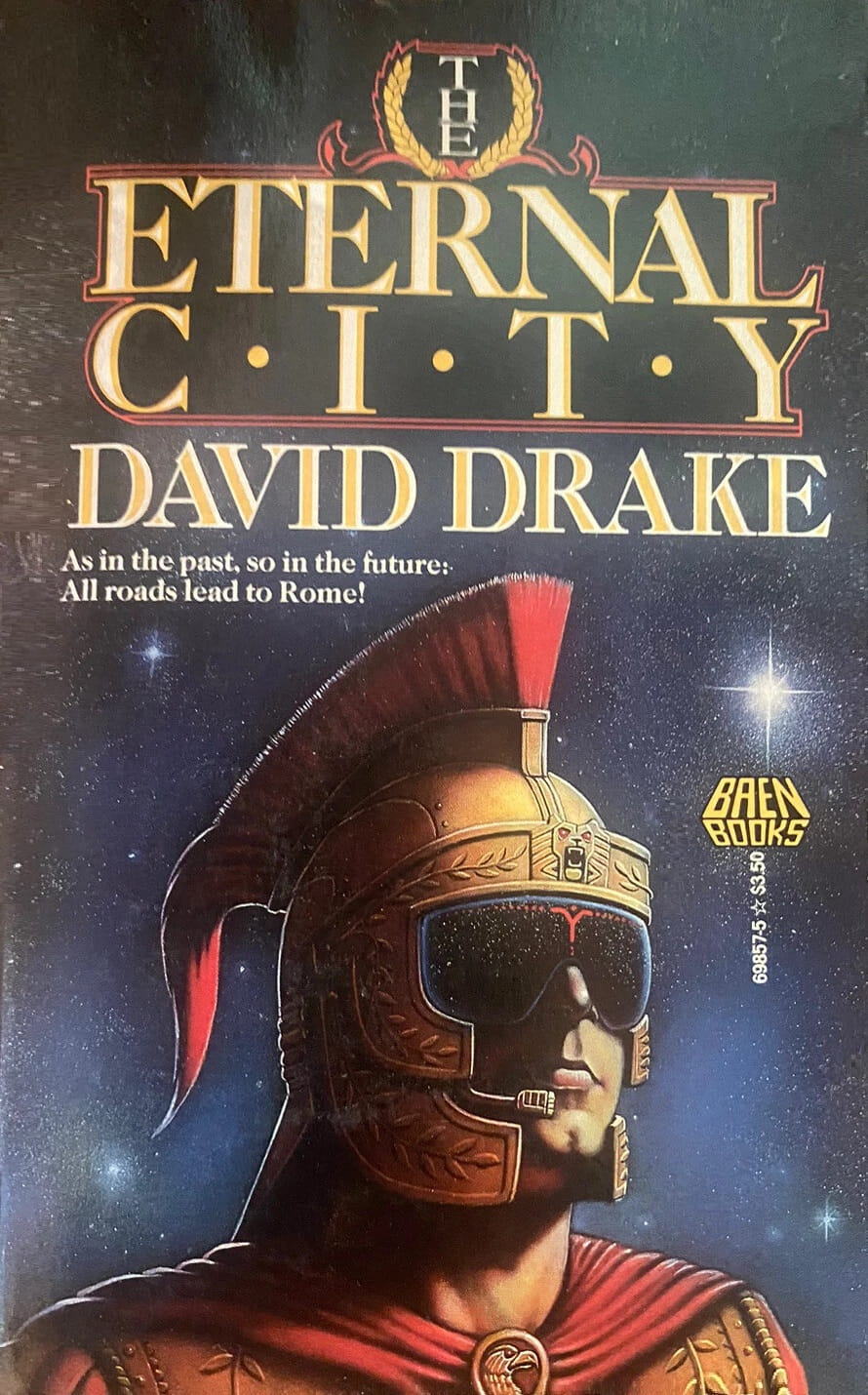
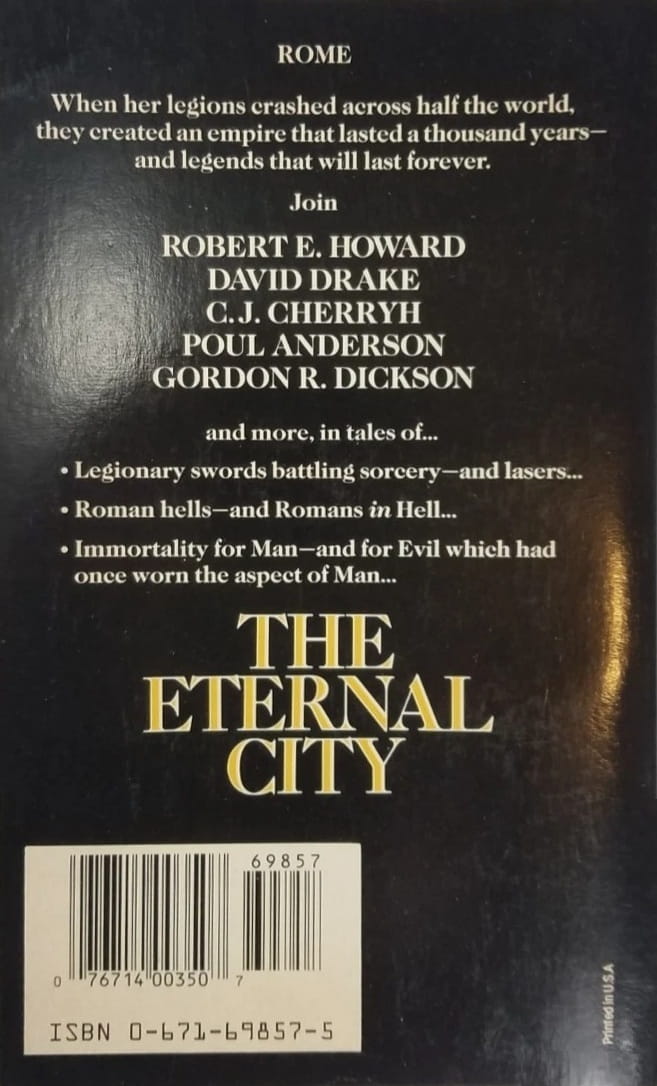
The Eternal City, edited by David Drake, Martin Greenberg, and Charles
G. Waugh (Baen Books, January 1990). Cover by John Rheaume
The main reason I bought this collection was for the Howard story, “Kings of the Night.” This was back when I was striving to be a Howard completist. All in all, an entertaining collection.
It was published by Baen in 1990, and Drake did a pretty good job of selecting the stories. Here’s the complete Table of Contents.
We have:
1. Introduction: The Creation of Rome, by David Drake.
2. “Delenda Est, a Time Patrol tale,” by Poul Anderson (F&SF, December 1955)
3. “Nightfall on the Dead Sea,” by Ray Faraday Nelson (F&SF, September 1978)
4. “The Prince, Heroes in Hell tale,” by C. J. Cherryh (Far Frontiers Vol. IV, 1986)
5. “The Bottom of the Gulf,” by Barry Pain (Stories in the Dark, 1901)
6. “An Elixir for the Emperor,” by John Brunner (Fantastic, Nov. 1964)
7. “Some Very Odd Happenings at Kibblesham Manor House,” by Michael Harrison (F&SF, April 1969)
8. “Time Grabber,” by Gordon R. Dickson (Imagination, December 1952)
9. “Survey of the Third Planet,” by Keith Roberts (F&SF, January 1966)
10. “Don’t Be a Goose,” by Robert Arthur (Argosy, May 3, 1941)
11. “Domitia,” by Mrs. Richard S. Greenough (Arabesques: Monarè, Apollyona, Domitia, Ombra, 1872)
12. “Survival Technique,” by Poul Anderson & Kenneth Gray (F&SF, March 1957)
13. “Ranks of Bronze,” by David Drake (Galaxy, August 1975)
14. “Kings of the Night,” by Robert E. Howard (Weird Tales, November 1930)
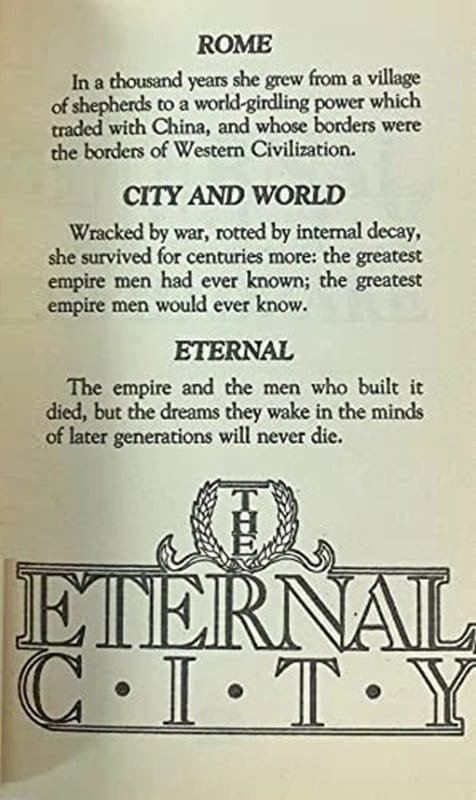 Inside cover for The Eternal City
All the stories have some tie in with Rome, although sometimes fairly tenuous. A lot of them are very good.
“Delenda Est” is a classic. I also much enjoyed “Nightfall on the Dead Sea,” “An Elixir for the Emperor,” and “Survey of the Third Planet.” I thought “The Prince” was weak.
The “Some Very Odd Happenings” was definitely the strangest of the bunch, and grotesque enough to make itself a horror story.
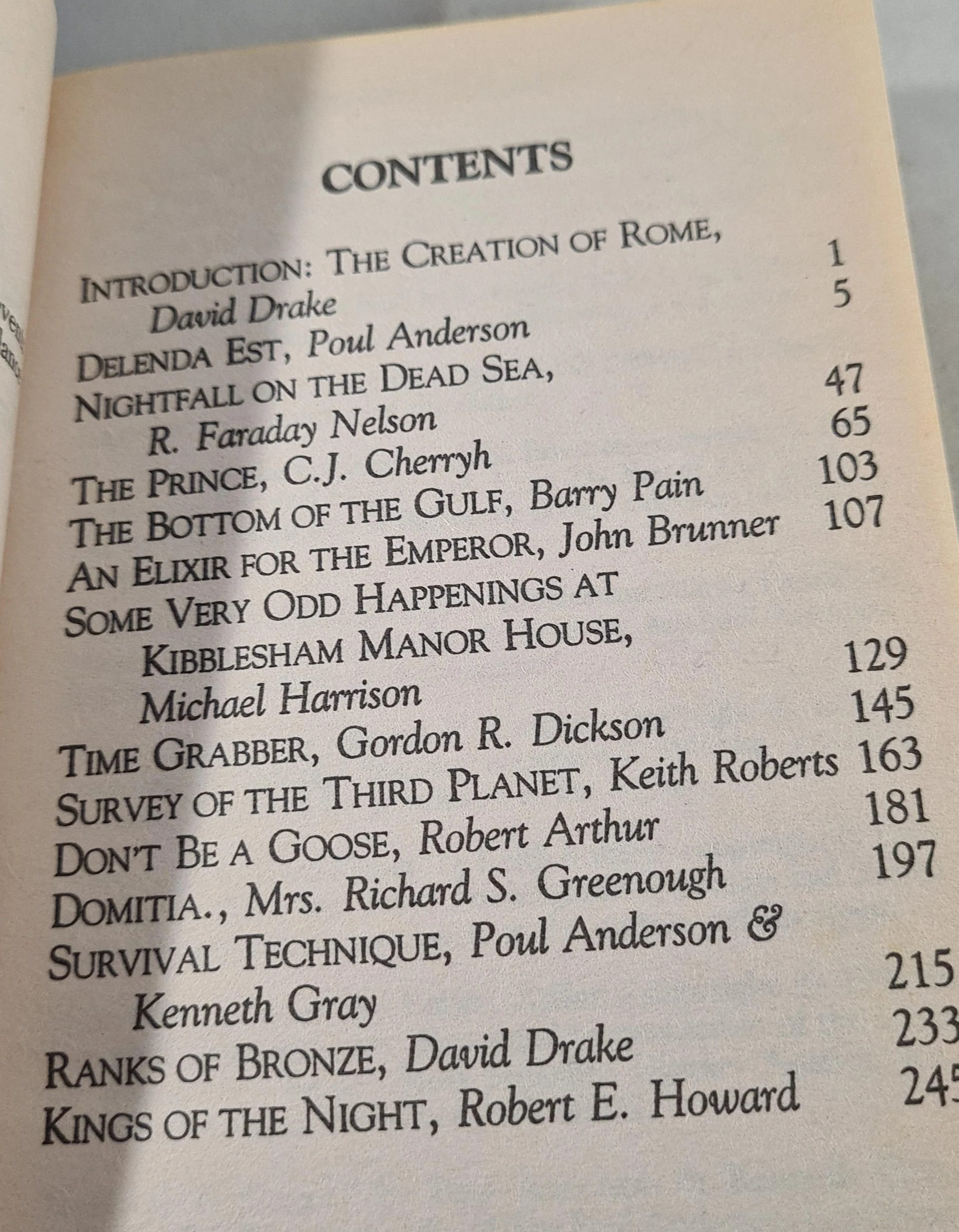 Table of Contents for The Eternal City
There were also two very hilarious tales, “Don’t be a Goose,” and “Survival Technique.” I enjoyed them both, and I like the short story “Ranks of Bronze” better than the full-length novel of that name.
Of course, Howard’s “Kings of the Night” is a great story, when Bran Mak Morn and Kull meet.
Charles Gramlich administers The Swords & Planet League group on Facebook, where this post first appeared. His last article for us was a look at Lin Carter’s Year’s Best Fantasy Stories. See all of his recent posts for Black Gate here.
Categories: Fantasy Books
7 Author Shoutouts | Authors We Love To Recommend

Here are 7 Author Shoutouts for this week. Find your favorite author or discover an…
The post 7 Author Shoutouts | Authors We Love To Recommend appeared first on LitStack.
Categories: Fantasy Books
Slaying the Vampire Conqueror - Book Review
 Slaying the Vampire Conqueror (Crowns of Nyaxia #2.5)by Carissa Broadbent
What is it about:She was commanded to kill him with a single strike to the heart. She didn’t expect her own to betray her.
Sylina has sacrificed everything for her goddess–her soul, her freedom, her eyes. Life in service to the Arachessen, a cult of the Goddess of Fate, has turned Sylina from orphaned street-rat to disciplined killer, determined to overthrow Glaea’s tyrannical king. But when a brutal vampire conqueror arrives on their shores, Sylina faces an even deadlier adversary. She’s tasked with a crucial mission: infiltrate his army, earn his trust… and kill him.
Atrius is a terrifying warrior carving an unstoppable path through Glaea. Yet when Sylina becomes his seer, she glimpses a dark and shocking past–and a side of him that reminds her far too much of parts of herself she’d rather forget. Sylina’s orders are clear. The conqueror cannot live. But as the blood spilled by Glaea’s tyrant king runs thicker, her connection with Atrius only grows stronger. A connection forbidden by her vows. A connection that could cost her everything.
Slaying the Vampire Conqueror is a standalone fantasy romance set in the Crowns of Nyaxia world, full of heart-wrenching forbidden romance, dark curses, and epic battles – perfect for fans of The Bridge Kingdom and the From Blood and Ash series.
What did I think of it:I devoured this book, it's so good!
Turns out I absolutely love Broadbent's writing and worldbuilding, I just really did not like the main characters in The Serpent and the Wings of Night.
Sylina is an intriguing character. I liked getting to know her and learn more about her order and how it shaped her. Atrius is a cool character as well, so it was easy to root for the both of them to connect and learn to trust each other.
There's action and suspense, betrayal, and more, but the growing bond between the two and Sylina's growth as a person away from her order were the heart of this story.
All in all this is a really enjoyable and engaging read. I'll investigate if there are more books in this world that have this vibe.
Why should you read it:Cool worldbuilding and a very enjoyable romance.
Categories: Fantasy Books
Review – First Sign of Danger (Haven’s Rock, Book 4) by Kelley Armstrong (5/5 stars)

Reading Level: Adult
Genre: Mystery/Thriller
Length: 344 pages
Publisher: Minotaur Books
Release Date: February 17, 2026
ASIN: B0F5PDG8NF
Stand Alone or Series: 4th book in the Haven’s Rock series
Source: Borrowed ebook from library
Rating: 5/5 stars
“Detective Casey Duncan and her husband, Sheriff Eric Dalton, are entering a new chapter of life as parents to their six-month-old baby. Their family is hidden away in the sanctuary town of Haven’s Rock where they can live safe and private lives. But when they encounter hikers too close to the borders of Haven’s Rock, they realize they’re in danger of being exposed.
When they find one of the hikers dead the next day, they realize that their paranoia was justified, but they’re no closer to finding out who these people were and what they were doing in the vicinity of Haven’s Rock. Only by tracing the hikers’ movements, as well as examining the recent behavior of their closest neighbors, the workers of a secretive mining camp, will they be able to figure out where the threat is coming from and shut it down. Otherwise, the lives of everyone in Haven’s Rock–and their safe, secure new existence–are at risk.”
Series Info/Source: This is the 4th book in the Haven’s Rock series. I borrowed this on ebook from the library.
Thoughts: I really enjoyed this continuation of the Haven’s Rock series. The mystery is well done, and it was great to see how the new sanctuary town of Haven’t Rock is progressing. I am a big fan of Armstrong and have read the majority of her other series and enjoyed them. I would recommend reading the Rockton series before reading this one because there is quite a bit of background there that ties in with this story. However, this whole series does stand alone fine on its own.
In this book, Casey and Eric are juggling being new parents while ensuring that Haven’s Rock runs smoothly. The autumn is in full swing and they are surprised when they stumble upon a couple of lost hikers. This makes them both a bit paranoid about why the hikers were really out in the middle of the Yukon forest this late in the year. When one of the hikers is found dead the next day, their worry deepens. Exposure is always a danger, and Haven’s Rock has already been dealing with a group of nearby miners, not to mention rumors about possible spies from Rockton.
This story is another wonderful blend of survival elements, combined with a good mysterious police procedural. We get some closure around the mystery of the nearby mining company and also get some insight into what has been happening at Rockton since Casey and Eric left there.
I really enjoyed watching Casey and Eric move onto a new stage of life with their young daughter. Many people seem to want their new baby to be a liability, but instead, they are approaching this new stage of life in a way that brings the people of Haven’s Rock closer together.
This was a quick and easy read that was fast paced, kept you guessing, and well written. I can’t wait to see what the fifth, and final, book of the series holds.
My Summary (5/5): Overall I really enjoyed this book and thought it did a wonderful job of progressing the story. I really enjoyed the police procedural and survival elements to this story. I also enjoyed seeing Casey and Eric enter a new stage of their lives together. I am eager to see what happens in the final book in the series. I would recommend to Rockton fans, or to those who think survival combined with a good murder mystery sounds intriguing.

Categories: Fantasy Books
The Horrifying Draw of Subnautica

Good afterevenmorn, Readers!
Now that I’ve finished my play-thorugh of Far Cry 6, I have started playing a new game on my Friday night live streams. It is a survival exploration game that I am assured also has a story element (my livestreams are narrative games, largely). It is both fascinating and absolutely horrifying. I am, of course, talking about Subnautica. With the third game in the series out now in early access (oddly called Subnautica 2, even though the second game in the series was Subnautica: Below Zero), I figured I should take a stab at the original game. I knew precious little about it, save that it was a science fiction survival and exploration game, and that there was a thing in it called a reaper levaithan.
Now, I’m not very far into the game, so I haven’t experienced any of the promised story, save for the introduction, but I am already obsessed. Let’s talk about it!
 This thing. This thing is a reaper. I have seen it at a distance, heard it roar… and that’s quite enough for me.
I have only streamed this game three times (it’s a recent start), so I’m not very far into it. The story so far is this: your spaceship, the Aurora, owned by intergalactic corporation Alterra, crash lands on an alien planet (4546). A planet that’s entirely ocean. You, a person on the ship, escape into a life pod/escape module and land in a relatively shallow region in the ocean, not far from your downed spaceship. You are the only person in the life pod. And you might be the only person who survived the crash. I’m not sure yet. Every other life pod I’ve come across has been sunken, ripped open and empty of anything but personal PDAs (personal digital assistants). A couple of times, your PDA notes that some of the animals in the area have bellies full of human remains.
Oh, great.
You have nothing, but some food and some water, and your life pod. So… good luck?
It is up to you to gather resources and, using what’s on your life pod, create the things you need to survive – a scanner, so you can scan parts of other tech that you need in order to have your PDA patch together blueprints that you can use, or, if you’re me, the fascinating biological life everywhere around you (seriously, my inner nerd is going wild!). The further you explore, the more you discover and can use in order to help you survive this alien world. For instance, there is a type of fish that can yield fresh water… which is your most essential resource. Other fish you can cook or salt and eat. Other fish are poisonous and will kill you, which you won’t know unless you scan the thing. Also, there are broken pieces of tech strewn all over the place. If you scan enough of the pieces of one kind, you can create all kinds of tools – a knife, a repair tool, a seamoth (a kind of personal submarine – I just got the blueprints for that), even habitat pieces you can use in order to build your own base. I have a very rudimentary base at present.
 That’s her. That’s the remains of the Aurora (and your wee life pod).
There is also something about a virus which, the game having prompted the player to scan themselves for, I feel will play a much larger role eventually. I suspect that’s where the story will come in, but I haven’t much of a clue as to what that might be just yet.
I stream only once a week, being stupidly busy, but I am obsessed. I can’t stop thinking about this game. I want to catalogue all the species I find. I want to explore every biome. I run (swim?) screaming from that exploration because of horrific sounds in the dark…
Look, I don’t do horror. I am a cowardly, knock-kneed, scaredy-cat. I don’t read horror novels. I don’t watch horror films. And I do not play horror games. Except for this one, apparently. In my defence, I didn’t know this was horror until I was looking into the murky waters around the Aurora and heard a roar right behind me. THE SCREAM I SCRUMPT. As they say in internet parlance. Beyond the horrifying unknown, though, is an incredible game. The world is insanely thought through; from the various biomes to the creatures that inhabit them, and the technology that will help you survive this water world. It’s all so detailed and thorough. This game is a masterclass in worldbuilding.
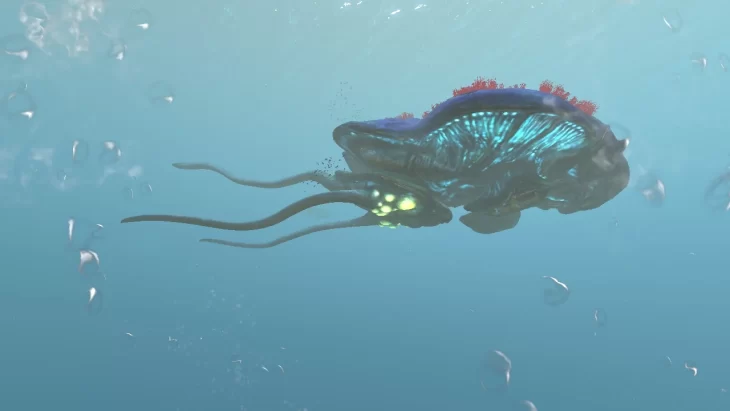 *Best Steve Irwin Voice* This beauty is a Reefback; the gentle giants of the oceans of planet 4546B. They might be the size of a house, but these puppies are passive as. They carry entire ecosystems on their backs…
While I cannot yet make any claims as to the story (I’m way too early in game time for much of that to have happened), if the story is anywhere near the level of worldbuilding, this game might become my absolute favourite.
It is also scratching that itch that I believe lives in nearly everyone. The itch that is curiosity – the urge to learn, to go to new places, to discover, and explore. The urge that compelled our ancestors into the frozen lands north of their home, the urge that compels us now to stretch out into the heavens. It is a powerful thing that I think the makers of this game tapped into expertly.
It is also absolutely horrifying. The number of times I have muttered the word “nope” (and much less savory words) while playing is not insignificant. And yet, despite that horror, despite the threat of dehydration, starvation, and drowning, I am drawn again and again beneath the waves of 4546B. I don’t know what magic this dev. team poured into the making of this game, but just nine hours in, it is certainly working. I can’t wait to return.
Alas, I must go to the office instead.
*grumble*
When S.M. Carrière isn’t brutally killing your favorite characters, she spends her time teaching martial arts, live streaming video games, and sometimes painting. In other words, she spends her time teaching others to kill, streaming her digital kills, and sometimes relaxing. Her most recent titles include Daughters of Britain, Skylark and Human. The Timbercreek Incident is free to read on Wattpad.
Categories: Fantasy Books
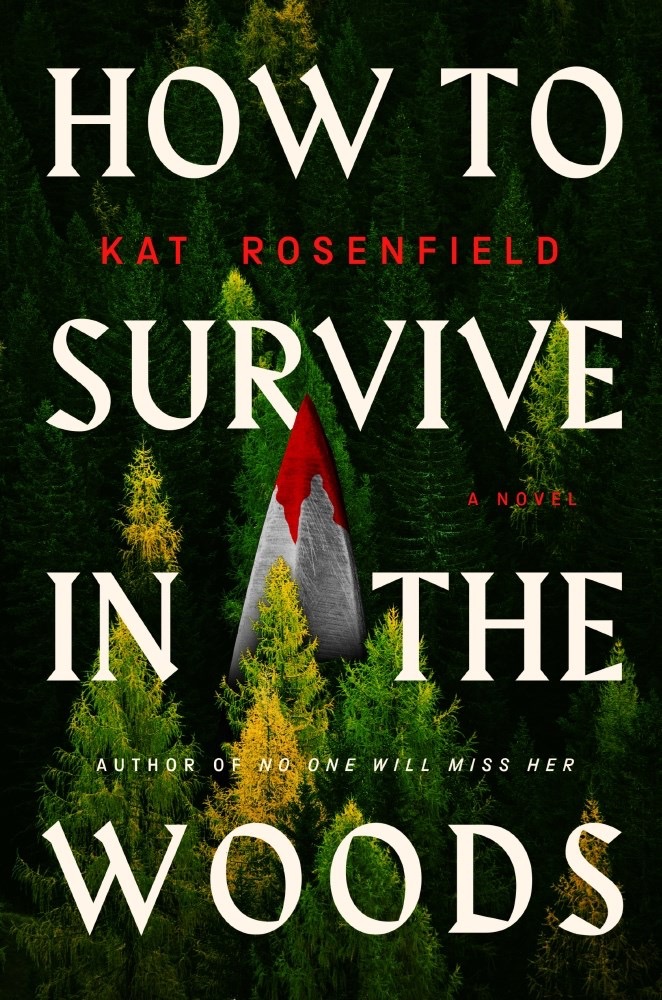
How to Survive in the Woods (by Kat Rosenfield)
Mystery / Thriller
Logan comes into Emma’s life after a suicide attempt, at a time when she just wanted someone to tell her what to do, where to be, how to live. He is a control freak and at her most vulnerable it seemed to be what she needed, but as the years go by his gaslighting and controlling lead into domestic violence.
When Emma meets Taylor, Logan’s former girlfriend she immediately knows what is happening and she comes up with a plan to get Logan out of both their lives. But everyone has secrets, everyone has a plan.
–––––––––––––––––––––––––––––––––––––––––––––––––––––––––––––––––––––––––––––
How to Survive in the Woods reminded me of a lot of different things. Gaslight, the old Ingrid Bergman move, Sleeping With the Enemy and maybe just a little Double Indemnity. It is a dark mystery thriller which holds its secrets close and only releases them begrudgingly. If I’m honest, the first half of the book was a struggle, it’s a painfully slow build but the second half more than makes up for it.
Trigger Warning: suicide, domestic violence
Categories: Fantasy Books
“Last Girl Gone” | Heart-Pumping Realism Hits Close to Home
Recommended Titles by J. G. Hetherton and Others Along with Last Girl Gone, we’re picking…
The post “Last Girl Gone” | Heart-Pumping Realism Hits Close to Home appeared first on LitStack.
Categories: Fantasy Books
Teaser Tuesdays - The Sea Witch

But I thought I should show him what I can do, I protest.The Sea Witch cuts me off. Let him win. Again and again. Watch his mood improve.
(page 136, The Sea Witch by Rebecca F. Kenney)
---------
Teaser Tuesdays is a weekly bookish meme, previously hosted by MizB of Should Be Reading. Anyone can play along! Just do the following: - Grab your current read - Open to a random page - Share two (2) “teaser” sentences from somewhere on that page BE CAREFUL NOT TO INCLUDE SPOILERS! (make sure that what you share doesn’t give too much away! You don’t want to ruin the book for others!) - Share the title & author, too, so that other TT participants can add the book to their TBR Lists if they like your teasers!
Categories: Fantasy Books
THE DORIANS by Nick Cutter
If, on your death bed, a stranger offered you the chance to extend your life, would you? Especially after you were resigned to death to the point your death would be medically assisted? That’s the question Nick Cutter posits at the start of The Dorians, publishing in May 2026 from Saga Press. On a remote…
Categories: Fantasy Books
Spotlight on “Tillinghast” by Clare Cavenagh
LitStack Spots Here are a few other bloodcurdling titles that we are definitely adding to…
The post Spotlight on “Tillinghast” by Clare Cavenagh appeared first on LitStack.
Categories: Fantasy Books
A (Black) Gat in the Hand: Elliot Gould’s Better Philip Marlowe
 “You’re the second guy I’ve met within hours who seems to think a gat in the hand means a world by the tail.”
– Phillip Marlowe in Raymond Chandler’s The Big Sleep
Back in the Summer of 2020, A (Black) Gat in the Hand looked at some screen and radio productions for Raymond Chandler’s private eye, Philip Marlowe. Two months before, I had done a separate post on Powers Boothe’s terrific series for HBO. That series was really the impetus to move me from not liking Raymond Chandler, to being a fan.
There was a second thing which brought me all the way in to being a Chandler guy. Now, I cannot abide Elliott Gould’s The Long Goodbye. My attempts to ‘try again’ inevitably lead to me quitting the re-watch. I don’t like my Marlowe in 1973, and it’s my least favorite Marlowe on screen.
However, as with Powers Boothe, I wouldn’t be a fan of Raymond Chandler if not for Gould. He recorded all the Marlowe novels, as well as several of Chandler’s non-Marlowe short stories, as audiobooks. This was way back in cassette days, and I was smart enough to pick up several of the CDs, even though I wasn’t into Chandler then.
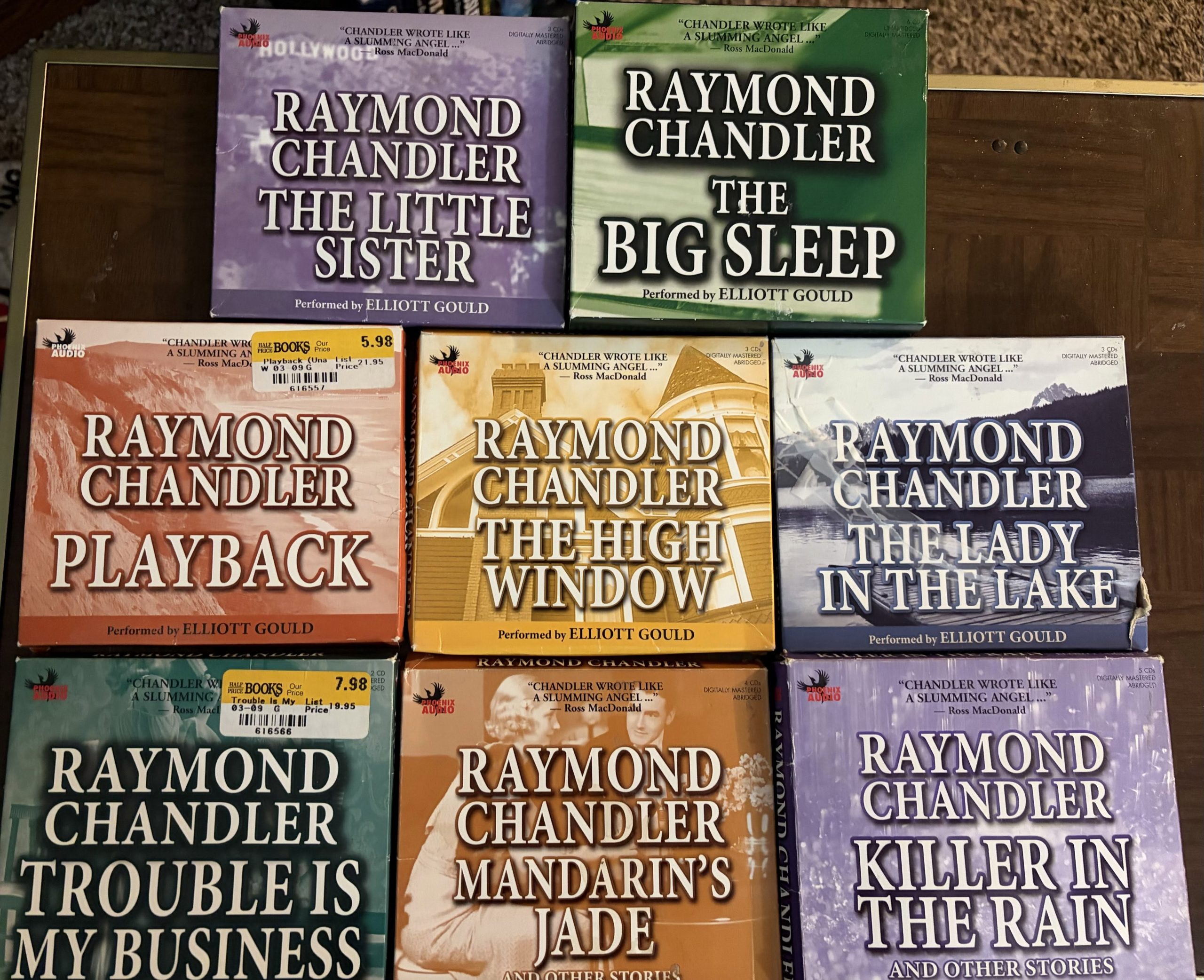
I have five of the seven novels (he also narrated Poodle Springs, an unfinished Chandler novel, which Robert B. Parker completed), and three short story CDs:
The Big Sleep
The High Window
The Lady in the Lake
The Little Sister
Playback
Killer in the Rain and Other Stories
Mandarin’s Jade and Other Stories
Trouble is My Business
 Gould is spot on. I have no complaints whatsoever about these audiobooks, other than that almost all of them are abridgements (at least The Big Sleep is unabridged).
Early on, Chandler wrote about a very Marlowe-like PI named Carmady, for Black Mask. Gould’s Killer in the Rain is all Carmady stories, as are two of the stories in Mandarin’s Jade.
After Cap Shaw was fired by Black Mask, Chandler left the magazine for Dime Detective and essentially turned Carmady into John Dalmas. And Dalmas was basically Marlowe before he was called Marlowe. There’s not much difference between the latter two.
John Dalmas is in “Mandarin’s Jade,” and the short novella, Trouble is My Business.
Dalmas was also in “Red Wind” (which I wish I’d bought), and the short story version of “The Lady in the Lake,” which Chandler turned into the Marlowe novel of the same name.
Chandler was pretty much done with short stories by 1942, and he would cannibalize some of these for his novels, starting with The Big Sleep. I like Chandler’s short stories, and fans of Marlowe should enjoy Dalmas. The Carmady stories are a little less polished, but he was just starting out as a writer. They’re still very Chandler.
I would have liked to see Gould in a period-appropriate Marlowe movie or two. Based on his readings, they would have been good.
Gould conveys the cynicism and world-weariness which is characteristic of Chandler’s detectives This is vital to a believable Marlowe. Chandler’s PI is different from Dashiell Hammett’s Sam Spade, or The Continental Op. Gould sounds like Chandler reads.
I can absolutely picture the scene as Gould narrates. The hard dames, the corrupt cops, the tough guys, the arrogant clients: Gould is excellent at ‘showing’ all the emotions and attitudes which Marlowe has to deal with. Prospective clients like to ‘put him in his place, and he rolls with it, often ignoring, rather than arguing back. Part of it is Chandler’s tremendous facility with words. But Gould isn’t just a good narrator. He’s a good Marlowe.
My feelings about Gould on screen vs in audio, reminds me of Alfred Molina. His modern-day Murder on the Orient Express was an unpopular movie. But a few years ago he did a radio play of “The Murder on the Links.” He is very good as Poirot.
Gould pronounces coupe ‘coop-ay.’ which feels kind of classy. And I like the way he says porte-cochere (Chandler really liked that French word). His voice is smooth. I like listening to him read. And he totally vibes the Marlowe of the written page.
Some of Gould’s audiobooks are on Youtube, and a few can be found via the Libby library app, and also on Audible. I’m fortunate that I bought most on CD. I listen to them at least every year or two when I get in a Marlowe mood. Though I really like the BBC radio plays with Toby Stephens (Vexed) as Marlowe. They’re tough to beat, and readily available to buy for phone listening.
But I often recommend Gould’s audiobooks. I think that the fact I can’t stand the movie,
It’s mid-May, and I’ve been in something of a hardboiled mood lately. So with Summer looming, here’s a Black (Gat) in the Hand. More Pulp is coming, like a gumshoe with a gasper and a rod.
Prior Posts in A (Black) Gat in the Hand – 2026 (1)
Prior Posts in A (Black) Gat in the Hand – 2025 (12)
Will Murray on Dash(iell Hammet) and (Lester) Dent
Shelfie – Dashiell Hammett
Windy City Pulp & Paper Fest – 2025
Will Murray on Who was N.V. Romero?
Conan – The Phoenix in the Sword in Weird Tales
More of Robert E. Howard’s Kirby O’Donnell
More Weird Menace from Robert E. Howard – Conrad and Kirowan
Hardboiled Gaming- LA Noire
Western Noir: Hell on Wheels
T.T. Flynn’s Mr Maddox
Dashiell Hammettt’s The Scorched Face (my intro)
Will Murray on Raymond Chandler’s Other Lost Stories?
Prior Posts in A (Black) Gat in the Hand – 2024 Series (11)
Will Murray on Other Lost Raymond Chandler Stories?
Will Murray on Dashiell Hammett’s Elusive Glass Key
Ya Gotta Ask – Reprise
Rex Stout’s “The Mother of Invention”
Dime Detective, August, 1941
John D. MacDonald’s “Ring Around the Readhead”
Harboiled Manila – Raoul Whitfield’s Jo Gar
7 Upcoming A (Black) Gat in the Hand Attractions
Paul Cain’s Fast One (my intro)
Dashiell Hammett – The Girl with the Silver Eyes (my intro)
Richard Demming’s Manville Moon
More Thrilling Adventures from REH
Prior Posts in A (Black) Gat in the Hand – 2023 Series (15)
Back Down those Mean Streets in 2023
Will Murray on Hammett Didn’t Write “The Diamond Wager”
Dashiell Hammett – ZigZags of Treachery (my intro)
Ten Pulp Things I Think I Think
Evan Lewis on Cleve Adams
T,T, Flynn’s Mike & Trixie (The ‘Lost Intro’)
John Bullard on REH’s Rough and Ready Clowns of the West – Part I (Breckenridge Elkins)
John Bullard on REH’s Rough and Ready Clowns of the West – Part II
William Patrick Murray on Supernatural Westerns, and Crossing Genres
Erle Stanley Gardner’s ‘Getting Away With Murder (And ‘A Black (Gat)’ turns 100!)
James Reasoner on Robert E. Howard’s Trail Towns of the old West
Frank Schildiner on Solomon Kane
 Paul Bishop on The Fists of Robert E. Howard
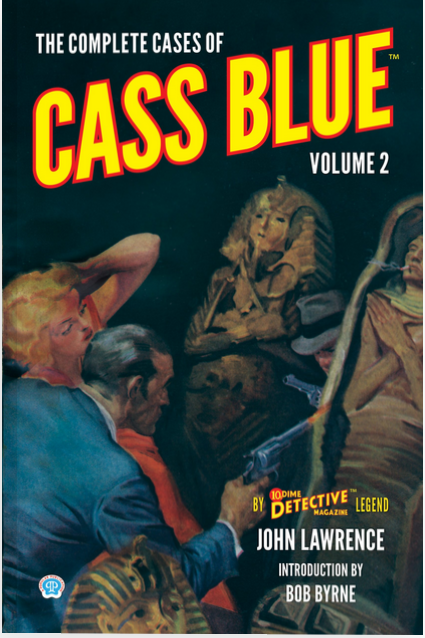
John Lawrence’s Cass Blue
Dave Hardy on REH’s El Borak
Prior posts in A (Black) Gat in the Hand – 2022 Series (16)
Asimov – Sci Fi Meets the Police Procedural
The Adventures of Christopher London
Weird Menace from Robert E. Howard
Spicy Adventures from Robert E. Howard
Thrilling Adventures from Robert E. Howard
Norbert Davis’ “The Gin Monkey”
Tracer Bullet
Shovel’s Painful Predicament
Back Porch Pulp #1
Wally Conger on ‘The Hollywood Troubleshooter Saga’
Arsenic and Old Lace
David Dodge
Glen Cook’s Garrett, PI
John Leslie’s Key West Private Eye
Back Porch Pulp #2
Norbert Davis’ Max Latin
Prior posts in A (Black) Gat in the Hand – 2021 Series (7 )
The Forgotten Black Masker – Norbert Davis
Appaloosa
A (Black) Gat in the Hand is Back!
Black Mask – March, 1932
Three Gun Terry Mack & Carroll John Daly
Bounty Hunters & Bail Bondsmen
Norbert Davis in Black Mask – Volume 1
Prior posts in A (Black) Gat in the Hand – 2020 Series (21)
Hardboiled May on TCM
Some Hardboiled streaming options
Johnny O’Clock (Dick Powell)
Hardboiled June on TCM
Bullets or Ballots (Humphrey Bogart)
Phililp Marlowe – Private Eye (Powers Boothe)
Cool and Lam
All Through the Night (Bogart)
Dick Powell as Yours Truly, Johnny Dollar
Hardboiled July on TCM
YTJD – The Emily Braddock Matter (John Lund)
Richard Diamond – The Betty Moran Case (Dick Powell)
Bold Venture (Bogart & Bacall)
Hardboiled August on TCM
Norbert Davis – ‘Have one on the House’
with Steven H Silver: C.M. Kornbluth’s Pulp
Norbert Davis – ‘Don’t You Cry for Me’
 Talking About Philip Marlowe
Steven H Silver Asks you to Name This Movie
Cajun Hardboiled – Dave Robicheaux
More Cool & Lam from Hard Case Crime
A (Black) Gat in the Hand – 2019 Series (15)
Back Deck Pulp Returns
A (Black) Gat in the Hand Returns
Will Murray on Doc Savage
Hugh B. Cave’s Peter Kane
Paul Bishop on Lance Spearman
A Man Called Spade
Hard Boiled Holmes
Duane Spurlock on T.T. Flynn
Andrew Salmon on Montreal Noir
Frank Schildiner on The Bad Guys of Pulp
Steve Scott on John D. MacDonald’s ‘Park Falkner’
William Patrick Murray on The Spider
John D. MacDonald & Mickey Spillane
Norbert Davis goes West(ern)
Bill Crider on The Brass Cupcake
A (Black) Gat in the Hand – 2018 Series (32)
George Harmon Coxe
Raoul Whitfield
Some Hard Boiled Anthologies
Frederick Nebel’s Donahue
Thomas Walsh
Black Mask – January, 1935
Norbert Davis’ Ben Shaley
D.L. Champion’s Rex Sackler
Dime Detective – August, 1939
Back Deck Pulp #1
W.T. Ballard’s Bill Lennox
Erle Stanley Gardner’s The Phantom Crook (Ed Jenkins)
Day Keene
Black Mask – October, 1933
Back Deck Pulp #2
Black Mask – Spring, 2017
Erle Stanley Gardner’s ‘The Shrieking Skeleton’
Frank Schildiner’s ‘Max Allen Collins & The Hard Boiled Hero’
A (Black) Gat in the Hand: William Campbell Gault
A (Black) Gat in the Hand: More Cool & Lam From Hard Case Crime
MORE Cool & Lam!!!!
Thomas Parker’s ‘They Shoot Horses, Don’t They?’
Joe Bonadonna’s ‘Hardboiled Film Noir’ (Part One)
Joe Bonadonna’s ‘Hardboiled Film Noir’ (Part Two)
William Patrick Maynard’s ‘The Yellow Peril’
Andrew P Salmon’s ‘Frederick C. Davis’
Rory Gallagher’s ‘Continental Op’
Back Deck Pulp #3
Back Deck Pulp #4
Back Deck Pulp #5
Joe ‘Cap’ Shaw on Writing
Back Deck Pulp #6
The Black Mask Dinner
 Bob Byrne’s ‘A (Black) Gat in the Hand’ made its Black Gate debut in 2018 and has returned every Summer since.
His ‘The Public Life of Sherlock Holmes’ column ran every Monday morning at Black Gate from March, 2014 through March, 2017. And he irregularly posts on Rex Stout’s gargantuan detective in ‘Nero Wolfe’s Brownstone.’ He is a member of the Praed Street Irregulars, and founded www.SolarPons.com (the only website dedicated to the ‘Sherlock Holmes of Praed Street’).
He organized Black Gate’s award-nominated ‘Discovering Robert E. Howard’ series, as well as the award-winning ‘Hither Came Conan’ series. Which is now part of THE Definitive guide to Conan. He also organized 2023’s ‘Talking Tolkien.’
He has contributed stories to The MX Book of New Sherlock Holmes Stories — Parts III, IV, V, VI, XXI, and XXXIII.
He has written introductions for Steeger Books, and appeared in several magazines, including Black Mask, Sherlock Holmes Mystery Magazine, The Strand Magazine, and Sherlock Magazine.
You can definitely ‘experience the Bobness’ at Jason Waltz’s ’24? in 42′ podcast.
Categories: Fantasy Books
Pages

Recent comments