
Fantasy Books
Women in SF&F Month: Tesia Tsai
Today’s Women in SF&F Month guest is Tesia Tsai! Her young adult fantasy novel released earlier this week, Deathly Fates, is described as a “a sweeping debut inspired by the Chinese folk practice of necromancy…perfect for fans of Descendant of the Crane, The Bone Shard Daughter, and A Magic Steeped in Poison.” I’m happy she’s here today to share about the women she writes in “The Fate of the Eldest Daughter.” About Deathly Fates: A sweeping debut inspired by the Chinese folk […]
The post Women in SF&F Month: Tesia Tsai first appeared on Fantasy Cafe.
Categories: Fantasy Books
Forgotten Authors: Austin Hall
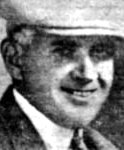 Austin Hall
Austin Hall was born on July 27, 1880.
While working as a cowboy, Hall was asked to write a story. This led to his career as an author, writing westerns, science fiction and fantasy stories, with westerns forming the majority of his published work. A one time, Hall may have worked as a sports editor for a newspaper in San Francisco.
Following the death of Hall’s father, his mother remarried and the family appears to have moved to Ohio, in an interview published by Forrest J Ackerman in 1933, Hall claims to have attended college in Ohio and California, but no details of his academic life can be confirmed. By the time he was thirty, Hall (as well as his mother and step-father) were living back in California and Hall had married Clara Mae Stowe and they had two children, Javen and Bessie.
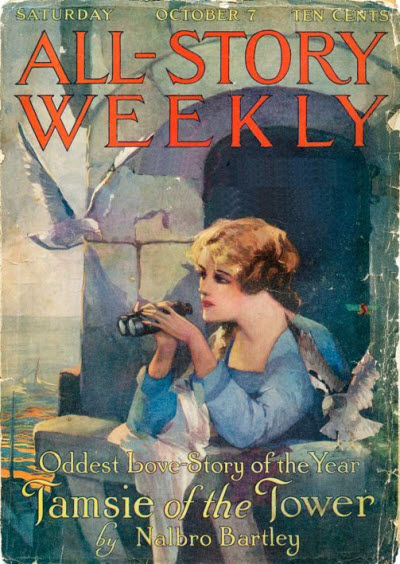 All-Story Weekly, 10/7/1916
His first science fiction story was “Almost Immortal,” which appeared in the October 7, 1916 issue of All-Story Weekly.
His 1919 story “The Man Who Saved the Earth” was reprinted in the first issue of Amazing Stories. Everett Bleiler describes this story as Hall’s second worst, which given Damon Knight’s opinion of Bleiler’s writing says quite a bit.
He collaborated with Homer Eon Flint on the novel The Blind Spot, which Damon Knight described in In Search of Wonder as “an acknowledged classic of fantasy…much praised…several times reprinted, venerated by connoisseurs—all despite the fact that the book has no recognizable vestige of merit. Knight enumerates his problems, not just with the novel, but with Hall’s writing, stating that hall is bereft of, among other things, style, grammar, vocabulary, observation, scientific knowledge, or ability to plot. Knight’s criticism of Hall is almost enough to make someone want to pick up one of his works to see how it could be as bad as Knight describes it.
Bleiler does not believe the story was an actual collaboration. Although Ackerman claims Hall pitched the idea to Flint and the two planned out how to work on it, Bleiler believes that Hall couldn’t come up with the middle of the novel and had Flint take over to get him over the hump.
Eventually, in 1932, eight years after Flint’s death, Hall would published a sequel to The Blind Spot, the serial The Spot of Life, in Argosy. Hall’s other science fiction, “The Rebel Soul” and “Into the Infinite” focus on the life and adventures of George Witherspoon. His The People of the Comet has Alvar, the king of the Sansars, describe his journey to a comet, which had a hollow interior in which they could live.
Although the majority of Hall’s writing appears to have been westerns, they appear to be harder to identify, although he wrote Where the West Begins and stories that appeared in Western Story Magazine.
He died on July 29, 1933 and is buried in Madronia Cemetery in Saratoga, California.
 Steven H Silver is a twenty-one-time Hugo Award nominee and was the publisher of the Hugo-nominated fanzine Argentus as well as the editor and publisher of ISFiC Press for eight years. He has also edited books for DAW, NESFA Press, and ZNB. His most recent anthology is Alternate Peace and his novel After Hastings was published in 2020. Steven has chaired the first Midwest Construction, Windycon three times, and the SFWA Nebula Conference numerous times. He was programming chair for Chicon 2000 and Vice Chair of Chicon 7.
Categories: Fantasy Books
La Belle Dame sans Merci: Tam Lin by Pamela Dean
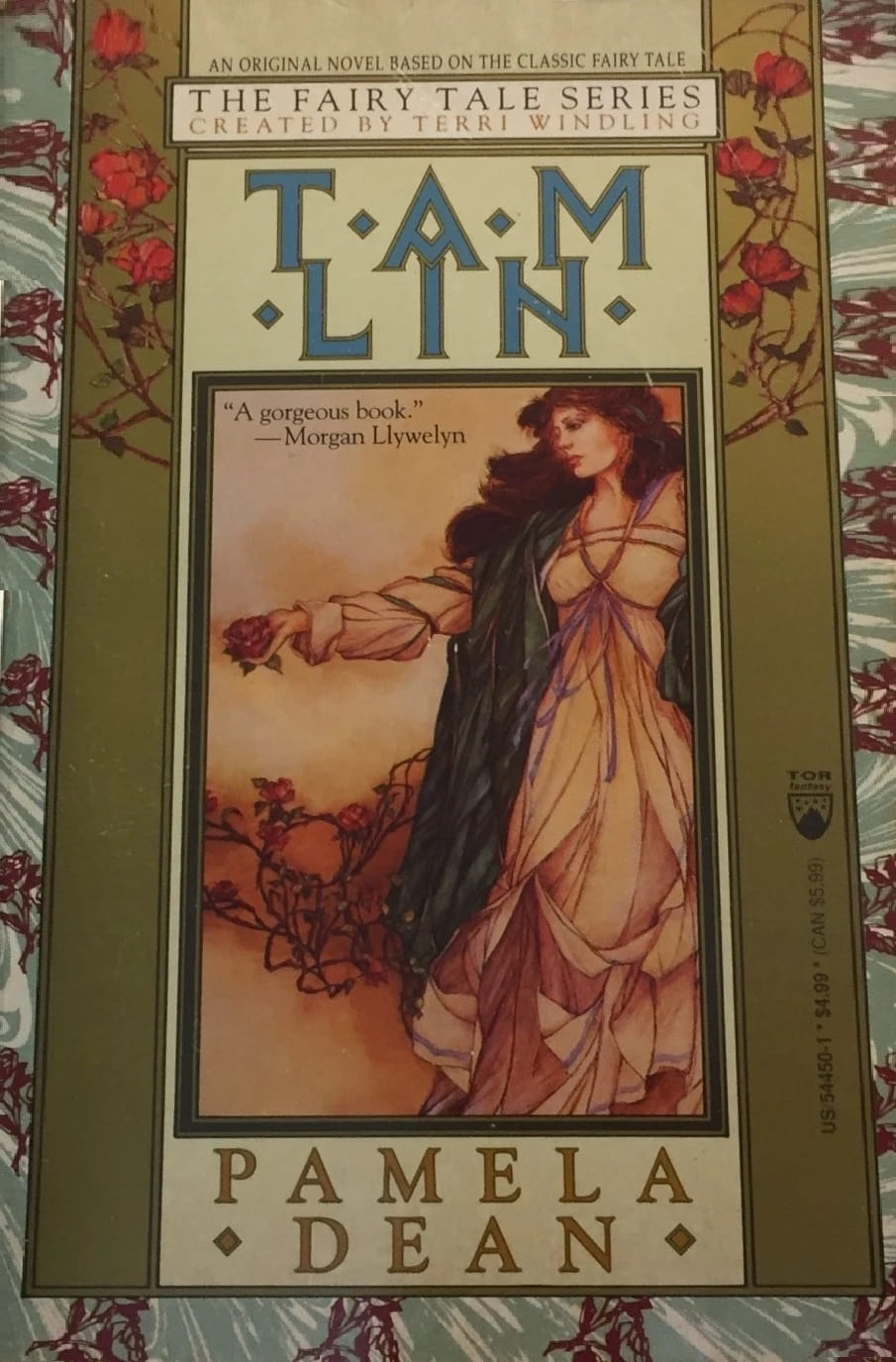
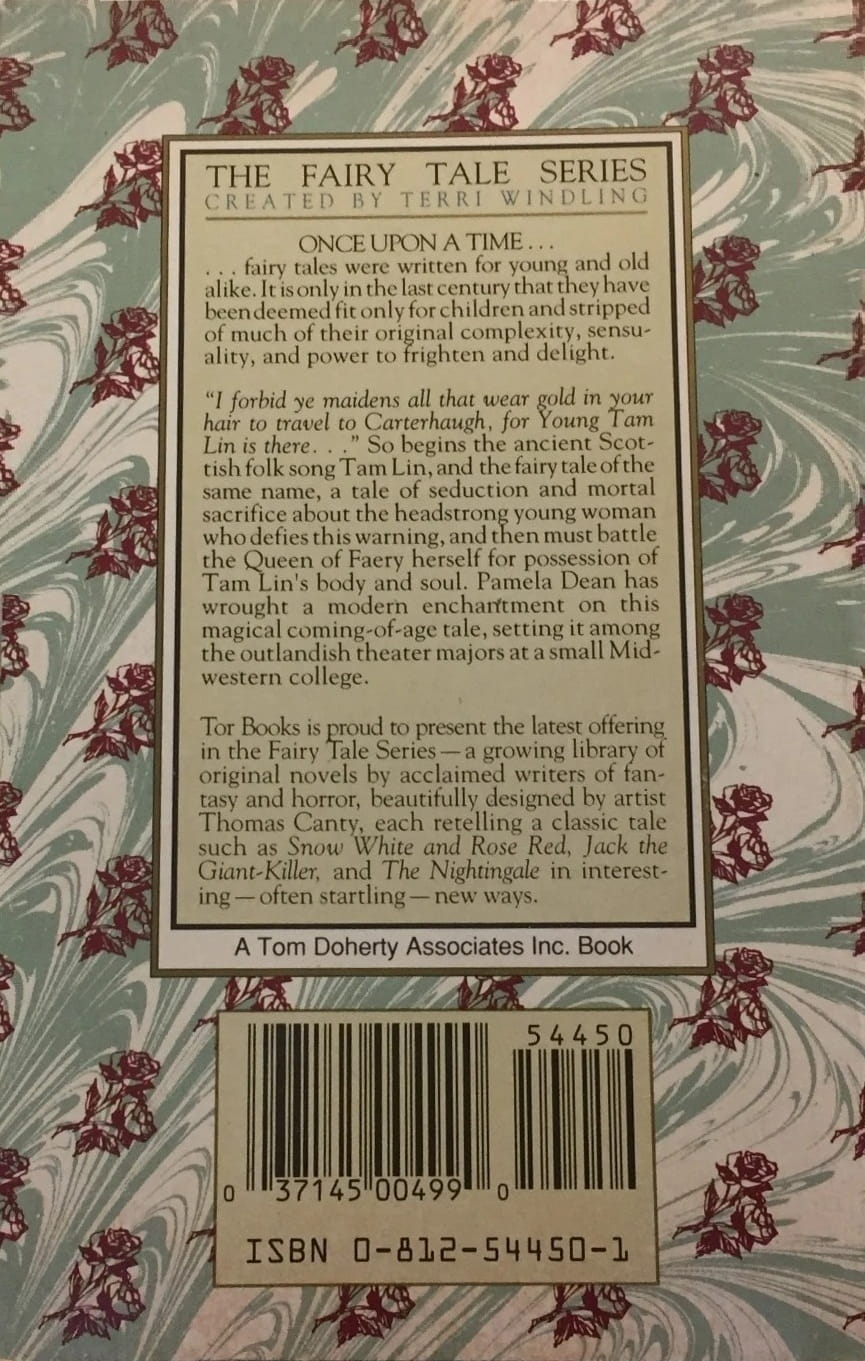
Tam Lin (Tor Books paperback reprint edition, April 1992). Cover by Thomas Canty
There’s been a lot of genre fiction set at schools. Hogwarts is an obvious example, but such settings were around long before Harry Potter; Heinlein’s Space Cadet, The Uncanny X-Men, and Le Guin’s A Wizard of Earthsea were all there first. Tam Lin is another early example, published six years before Harry Potter and the Philosopher’s Stone made scholastic fantasy a best-selling subgenre.
But it has an important difference: Its setting, the fictional Blackstock College, doesn’t teach magic, or superheroic combat, or spaceflight, or anything else fantastic. It’s a fairly typical small liberal arts college (based on the real college where Pamela Dean did her undergraduate work) where the supernatural elements are hidden beneath the surface.
 Carleton College, the real world model for Blackstock College
At the time when it was written, Tor Books was publishing novels that retold fairy tales at greater length, and with a style aimed at adult readers. Dean’s source wasn’t a fairy tale, strictly speaking, but a ballad, “Tam Lin,” though one where the fair folk are a visible presence — like “True Thomas” or Keats’s “La Belle Dame sans Merci.” Its theme is the mortal man who meets a fairy woman and is the worse for it, and that’s the undercurrent of Dean’s novel, and the problem her protagonist, Janet Carter, has to solve.
Much of the story is the non-fantasy details of Janet’s life. Dean lists every course she takes until the first quarter of her senior year — including a dozen in English, seven in Greek, and a variety of general education, from fencing to “physics for poets.”
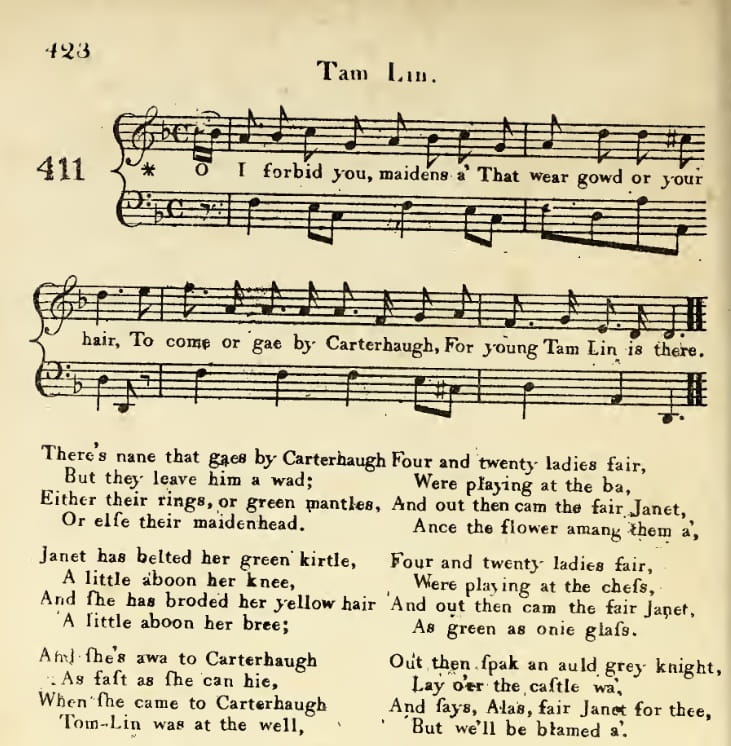 The opening verses of the ballad Tam Lin
We meet Janet’s roommates, Molly and Tina, whom she has difficulty with at first (especially with Tina) but stays with for all four years. We meet the young men they get involved with and learn of their experiences with sex and contraception — and of their breakups. We also meet Janet’s family, including her father, a member of the English faculty at Blackstock.
“I said I liked folk music, and Molly said she went to rock concerts, and Christina said she liked Bach, so they said, oh, look, three people who listen to music, and stuck us in the same room.”
So far as this part of the story goes, Tam Lin is a classic Bildungsroman (coming-of-age novel). But the social and psychological story is interwoven with an increasing awareness of magical aspects. On one hand, the campus has a ghost, a young woman who took an overdose of opiates in 1897 because she was pregnant, and who now throws specific books out of windows, including a Greek textbook. On the other, the classics department is a nexus of strangeness. All three of the women’s lovers are caught up in this, and Janet’s advisor, a classics professor, makes a serious effort to persuade her to major in classics as well.
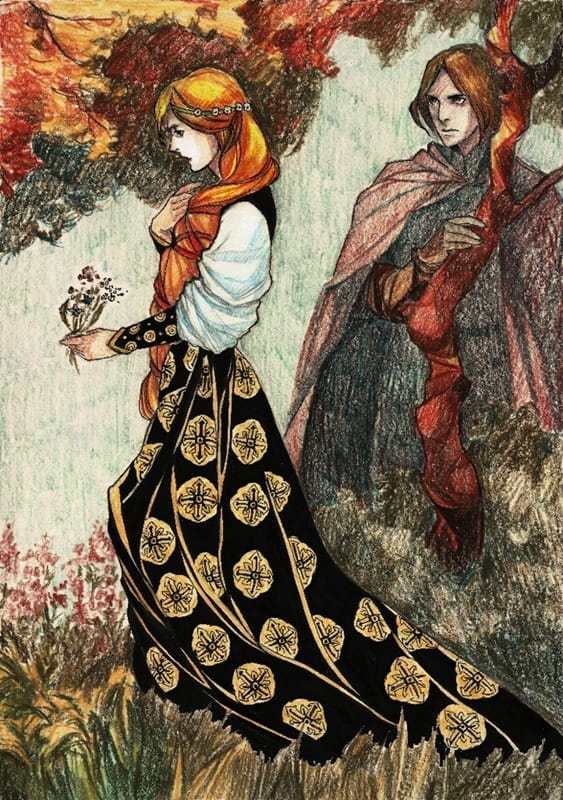
The other nuance of this is that the supernatural threads are interwoven with Janet’s literary tastes and interests, which we learn about in detail. One of the book’s major revelations, for example, comes from Janet reading a complete Shakespeare. An earlier scene has Janet reciting “La Belle Dame sans Merci”:
I saw pale kings and princes too,
Pale warriors, death-pale were they all;
They cried, “La belle dame sans merci
Thee hath in thrall!”
Earlier on, we see a discussion of which translation of Homer is best inspiring one of the young men to quote Keats’s sonnet “On First Looking into Chapman’s Homer.”
Quotations from the English classics are all through the dialogue — which seems plausible, as the fair folk are reputed to have a special affinity for poets and poetry. Janet herself writes a sonnet at one point, though one whose last line has all too plausibly flawed scansion.
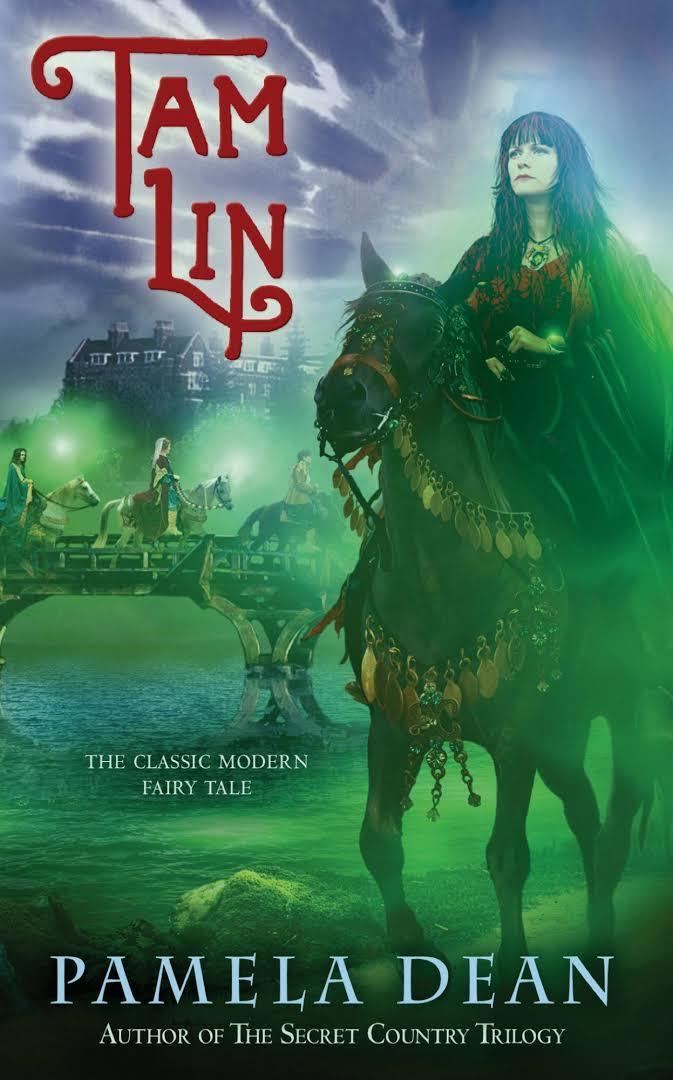 Tam Lin (Firebird, August 2006). Cover by Steve Stone
Women’s sexuality, pregnancy, and contraception are recurring issues, as of course they were in the real world in the 1970s. This fits its source material, where pregnancy is also an issue; but it seems that choosing to modernize that particular story gave Dean a way to comment on those issues, and to make them the crisis that leads to the novel’s climactic conflict.
Tam Lin seems oddly paced. Roughly the first half of the book portrays Janet’s, Molly’s, and Tina’s first term at Blackstock, almost day by day. The second half rushes through three full years, ending on Hallowe’en (naturally). This isn’t quite like some novels I’ve read that seemed to progress evenly until the penultimate chapter, and then rush ahead to tie off the plot; Dean does work things out step by step. But I’m not sure that first term needed to be shown in quite so much detail.
On the other hand, most of the details are, to my possibly peculiar tastes, fascinating. If you like English poetry, and the academic milieu, this novel may entertain you as much as it did me.
William H. Stoddard is a professional copy editor specializing in scholarly and scientific publications. As a secondary career, he has written more than two dozen books for Steve Jackson Games, starting in 2000 with GURPS Steampunk. He lives in Lawrence, Kansas with his wife, their cat (a ginger tabby), and a hundred shelf feet of books, including large amounts of science fiction, fantasy, and graphic novels.
Categories: Fantasy Books
Spotlight on “Seek Immediate Shelter” by Vincent Yu
Other LitStack Spots We’ve spotted more titles we are adding to our TBR stack, including…
The post Spotlight on “Seek Immediate Shelter” by Vincent Yu appeared first on LitStack.
Categories: Fantasy Books
Review: The Republic of Memory by Mahmud El Sayed

Buy The Republic of Memory
FORMAT/INFO: The Republic of Memory will be published by Saga Press on May 5th, 2026. It is 480 pages long and available in paperback, ebook, and audiobook formats.
OVERVIEW/ANALYSIS: Two hundred years ago, the Sarafina set out on a journey to a new planet. While thousands of people sleep in cryogenic pods, generations of living crew members work to keep the ship running smoothly and ensure the safe delivery of the sleepers to their new home. But when a crisis faces the ship, a growing number of people begin to ask a critical question: Do they still want to dedicate every aspect of their lives to serving and protecting people they've never met?
The Republic of Memory is an engrossing tale of a ship in crisis that also digs into some juicy existential questions. What do you do when your ship's values and identity no longer align with the civilization that gave the ship its mission in the first place? Why are the lives of those in cryostasis more honored than the lives of the people who keep the ship running today?
I really enjoyed how the disaster that hits the ship really forces its everyday inhabitants to question things that they've taken for granted and to see the contradictions in their lives. They revere those in cryo as "ancestors," and consider the journey to their new planet as a sacred mission, but the culture of the ship has fundamentally changed since it began its voyage. If the crew were to wake the ancestors today, would they even get along with those who woke up?
To explore all these facets of a culture in upheaval, the story skips around to several different viewpoints over the course of the book, from a mid-level administrator to a teen street artist to the head of a rebel faction. While a few POVs get more of the lion's share of the tale, it's almost hard to point to the "main" characters of this book as there are so many POVs. And yet it is done in a way that is never confusing, as many characters show up in other POV chapters; you are now simply getting a different angle of the same story. It gives a pretty broad look at the different ways people are handling the crisis and grappling with the choices put before them and really enjoyed seeing the different cultures and parts of the ship.
Where I'm a little more mixed is in how well the author engaged with one of the unique aspects of the ship. On this generation ship residential areas are divided not by nation or by job description, but by the language a person speaks. Dividing on those lines is supposed to allow residents more flexibility in migration, as anyone can learn a language but they can't change their religion or heritage. And I did enjoy some of the ways the author plays with language. For instance, when listening to the voice of an ancestor, the current ship inhabitants hear it as "ye olden days" style language, but in flashbacks, the dialogue is perfectly normal.
But language is also supposed to be a huge barrier between the different berths. In fact, there's a whole occupation dedicated to translation, as only Admin people speak English as a primary language, and common folk need a Translator to process paperwork. Aside from some initial encounters with Translators, however, language didn't seem to cause too much friction. I myself grapple if this was the intent, that language evolves to its needs and people will find a common language. But as this is being sold as a linguistic sci-fi, it didn't feel like the author did enough with it.
The Republic of Memory is exactly what I was hoping for: a deep dive into a fully realized culture that has uniquely evolved in support of its mission. I really enjoyed the many different POVs it used, and how well fleshed out this microcosm of civilization felt. I am eagerly awaiting the next installment in this journey and can't wait to see how the crew evolves in the aftermath of this first crisis.
Categories: Fantasy Books
Women in SF&F Month: E. J. Swift
Today’s Women in SF&F Month guest post is by E. J. Swift! Her short fiction includes the BSFA Award finalist “Saga’s Children,” first published in the anthology The Lowest Heaven and later in The Best British Fantasy 2014, and “The Complex,” first published in Interzone and later in The Best British Fantasy 2013. Her two latest novels are The Coral Bones, an Arthur C. Clarke Award and BSFA Award finalist, and When There Are Wolves Again, the 2025 BSFA Award […]
The post Women in SF&F Month: E. J. Swift first appeared on Fantasy Cafe.
Categories: Fantasy Books
7 Author Shoutouts | Authors We Love To Recommend

Here are seven Author Shoutouts for this week. Find your favorite author or discover an…
The post 7 Author Shoutouts | Authors We Love To Recommend appeared first on LitStack.
Categories: Fantasy Books
The Mighty Sword & Sorcery Anthologies of Hans Stefan Santesson
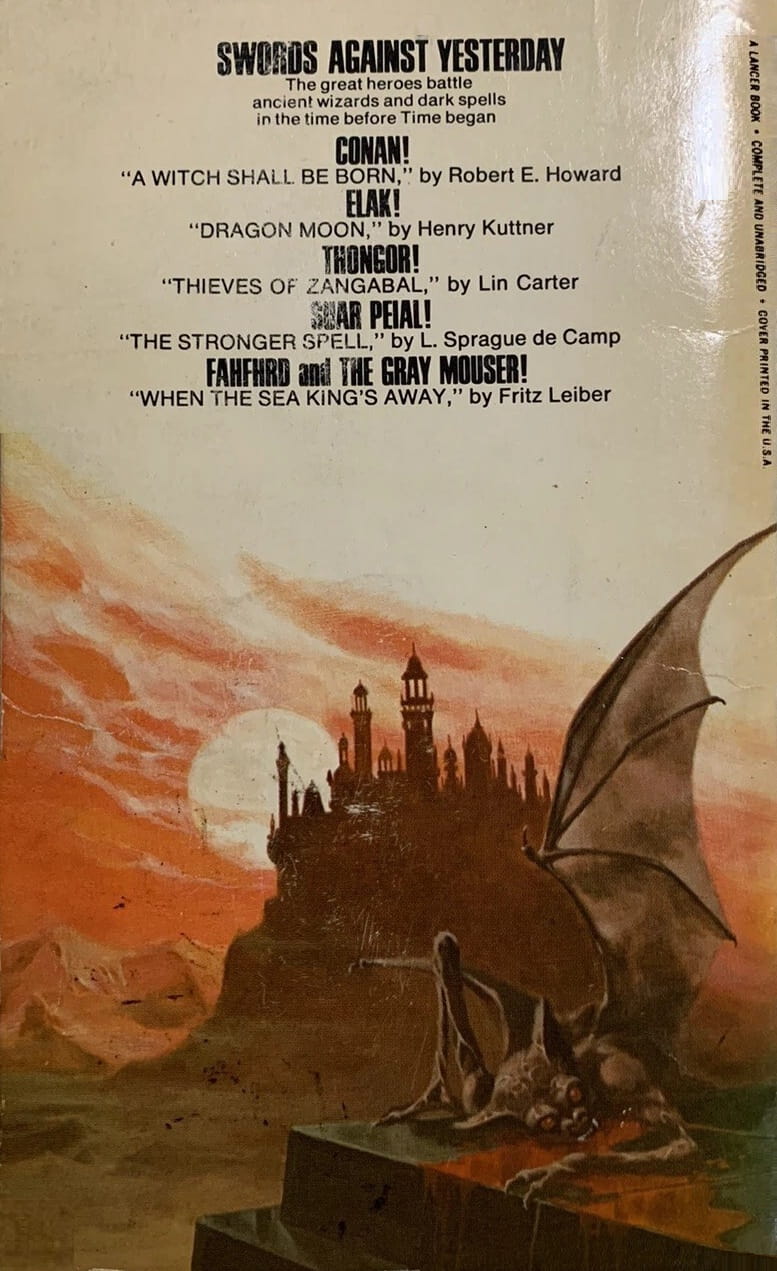
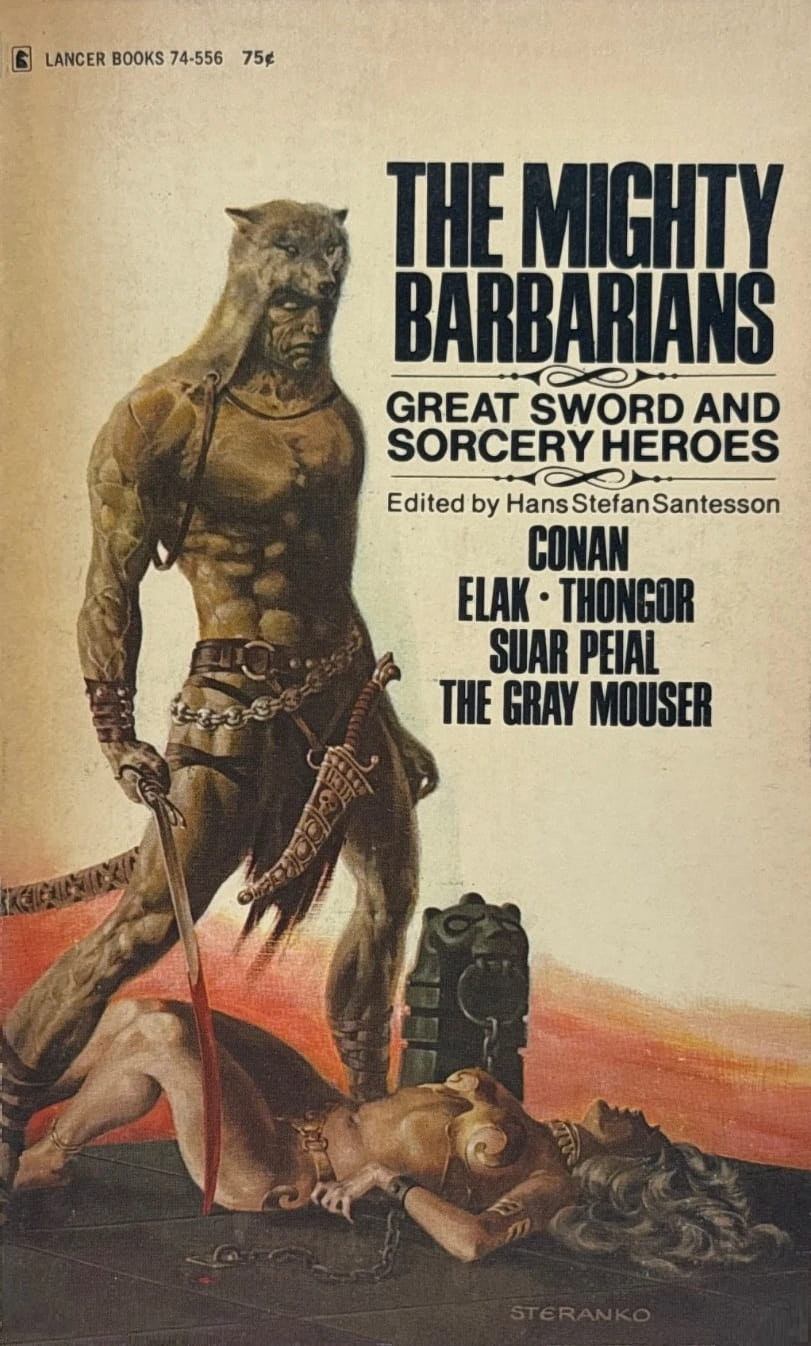
The Mighty Barbarians: Great Sword and Sorcery Heroes, edited by
Hans Stefan Santesson (Lancer Books, 1969). Cover by Jim Steranko
Hans Stefan Santesson (1914 – 1975) was born in France and lived in Sweden with his parents until 1923 when his mother immigrated to the US. She was a commercial artist and he soon became an editor for various mystery publications.
I likely would never have heard of him if not for two books of Sword & Sorcery he edited for Lancer Books. These were The Mighty Barbarians (1969) and The Mighty Swordsmen (1970), both with evocative covers by Jim Steranko.
[Click the images for mighty versions.]
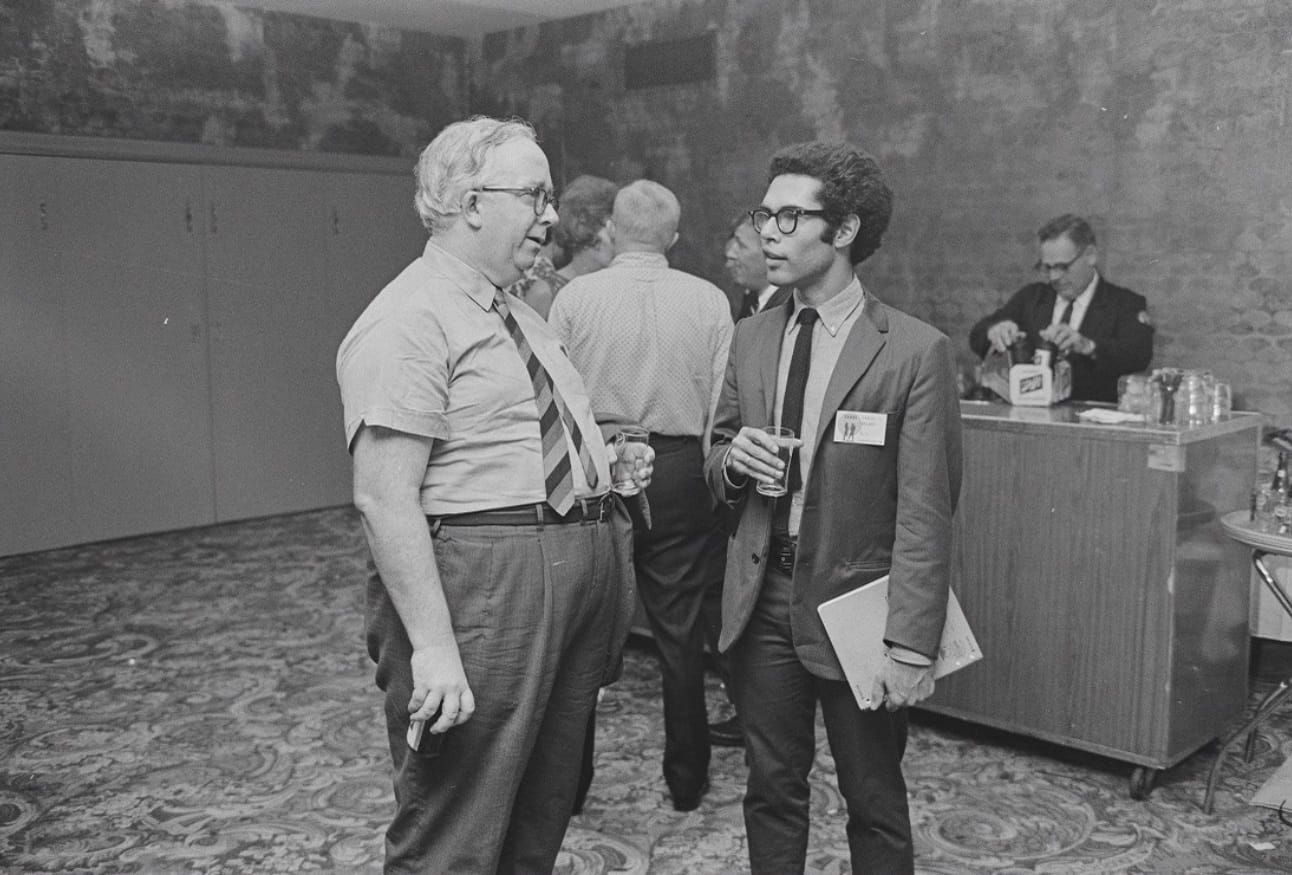 Hans Stefan Santesson and Samuel Delany in Cleveland, 1966. Photo by Jay Kay Klein
1. The Mighty Barbarians contains an Introduction by Santesson, and then the following stories.
“When the Sea-King’s Away by Fritz Leiber (Fafhrd/Gray Mouser)
“The Stronger Spell” by L. Sprague de Camp
“Dragon Moon by Henry Kuttner (Elak of Atlantis)
“Thieves of Zangabal” by Lin Carter (Thongor)
“A Witch Shall be Born” by Robert E. Howard (Conan)
The intro shows that Santesson was familiar with the history of heroic fantasy. He cites some of Carter’s nonfiction so he may have gotten it from there. All the stories are good and generally full of action.
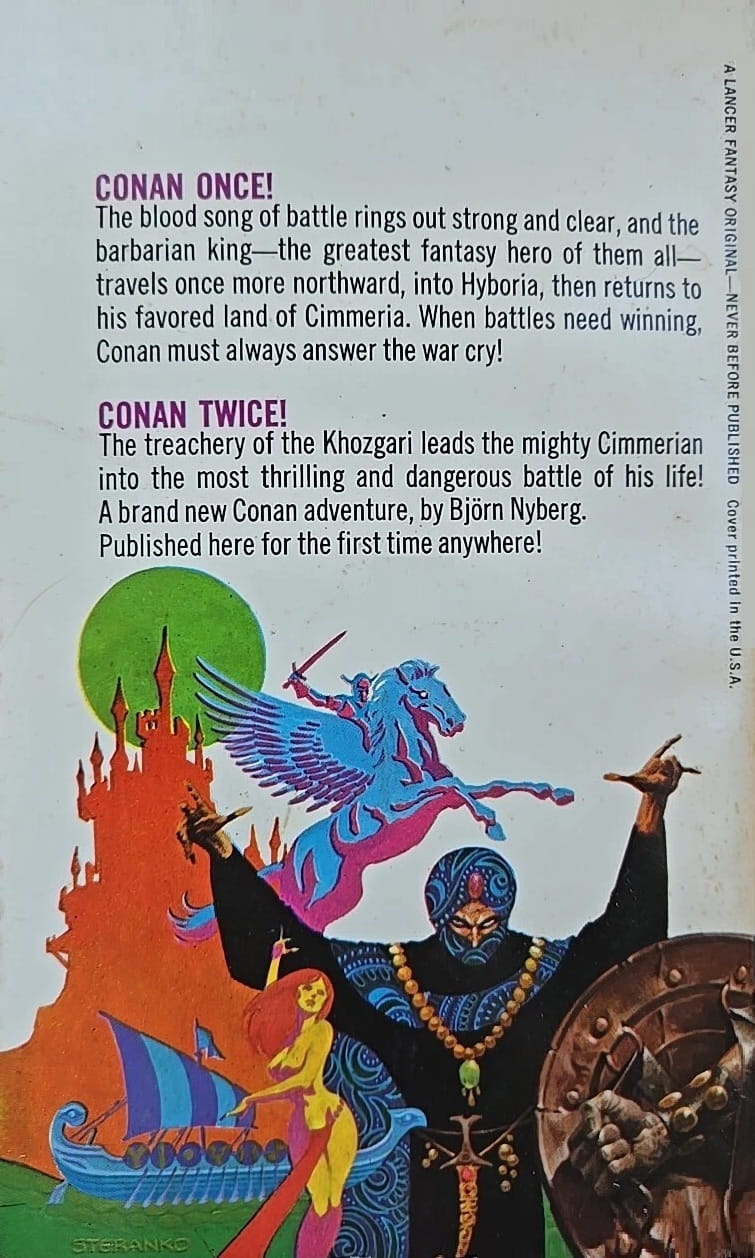
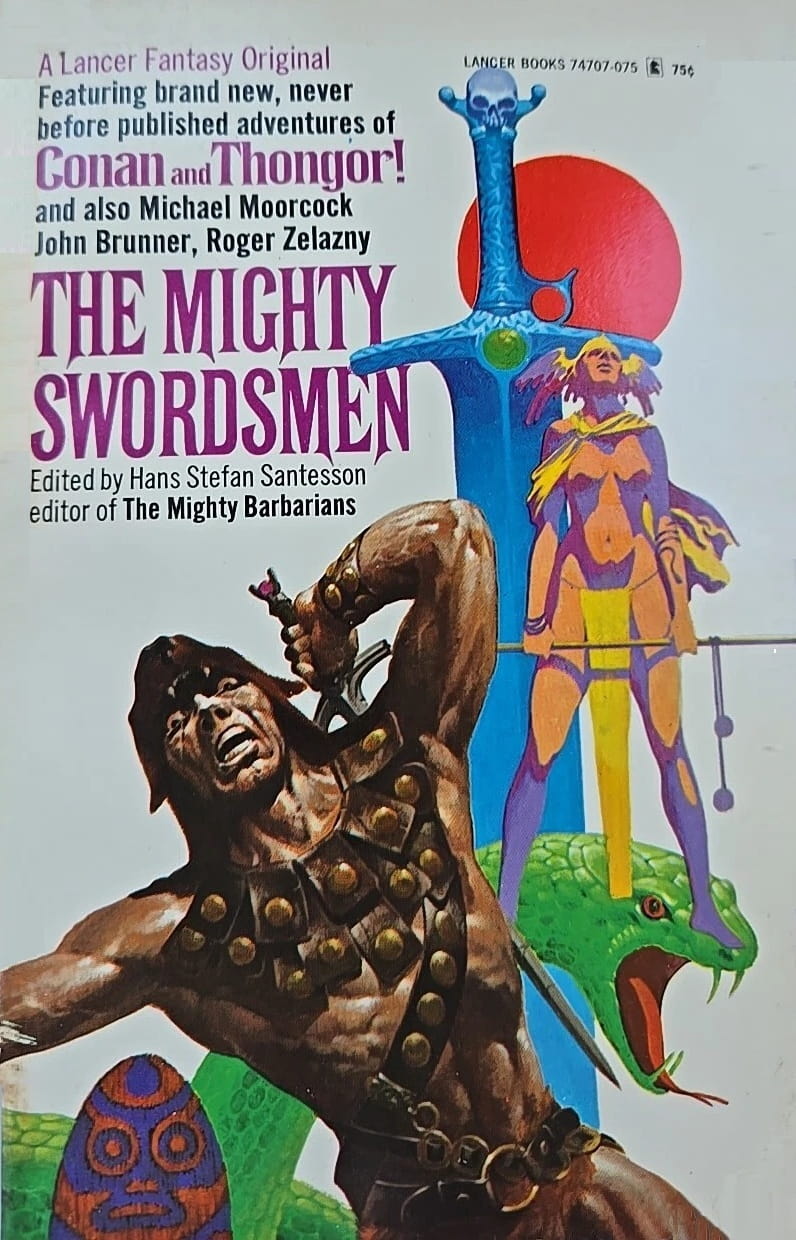
The Mighty Swordsmen, edited by Hans Stefan Santesson (Lancer Books, December 1970). Cover by Jim Steranko
2. The Mighty Swordsmen contains a shorter intro by Santesson and ends with “Beyond the Black River” by REH, one of the best Conan stories. It also contains tales by Moorcock, Brunner, Zelazny and a Conan pastiche by Bjorn Nyberg called “The People of the Summit,” which suffers by comparison with “Beyond the Black River.”
The Moorcock tale is “The Flame Bringers” (Elric). It’s quite good. Zelazny’s story is one of his Dilvish the Damned pieces, “The Bells of Shoredan.” Lin Carter’s “The Keeper of the Emerald Flame” is one of the best of his Thongor stories. Brunner’s story has the best title, “Break the Doors of Hell,” but doesn’t quite seem to fit with the others. It’s one of his Traveler in Black pieces.
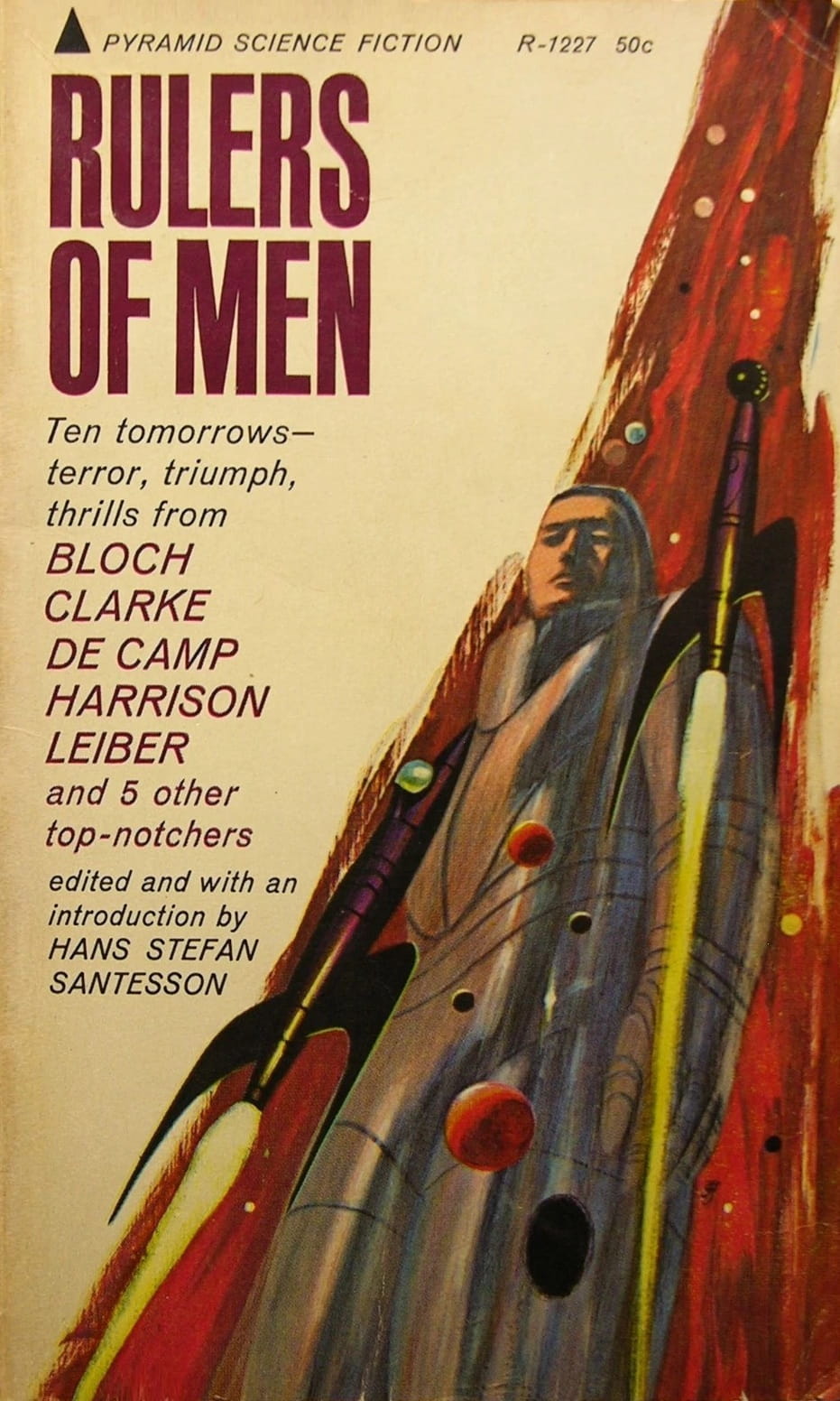
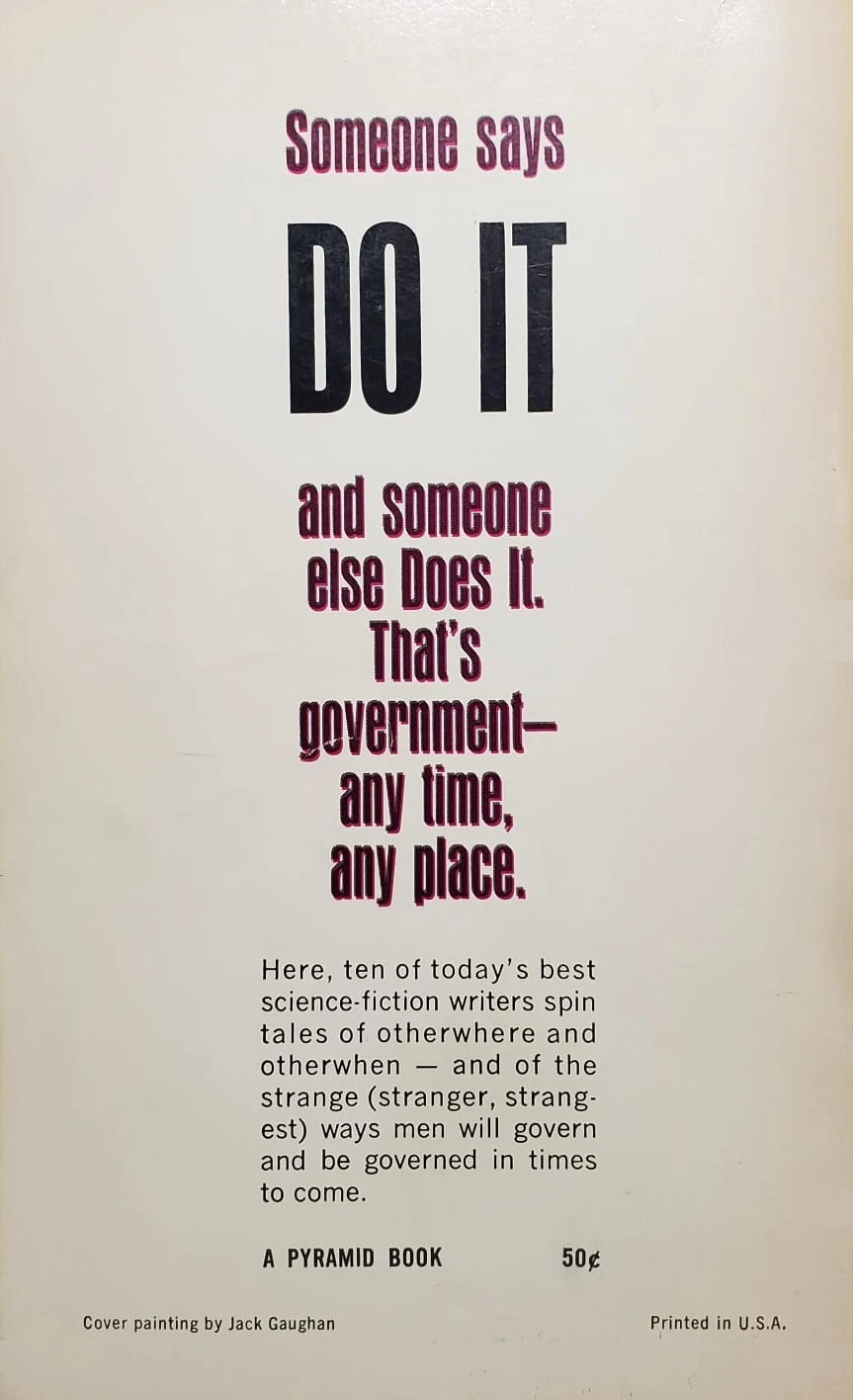
Rulers of Men, edited by Hans Stefan Santesson (Pyramid Books, 1965). Cover by Jack Gaughan
Santesson edited plenty of other works and even wrote a few stories himself under pseudonyms, none of which I’ve heard of. I did discover another edited collection by him that I’m going to try to get. You can see the cover above, by Jack Gaughan. Some star names there.
Charles Gramlich administers The Swords & Planet League group on Facebook, where this post first appeared. His last article for us was a review of the 1970 anthology Dark of the Soul, edited by Don Ward. See all of his recent posts for Black Gate here.
Categories: Fantasy Books
Book review: Flow My Tears, The Policeman Said by Philip K. Dick

ABOUT THE AUTHOR: Over a writing career that spanned three decades, Philip K. Dick (1928-1982) published 36 science fiction novels and 121 short stories in which he explored the essence of what makes man human and the dangers of centralized power. Toward the end of his life, his work turned toward deeply personal, metaphysical questions concerning the nature of God. Eleven novels and short stories have been adapted to film; notably: Blade Runner (based on Do Androids Dream of Electric Sheep?), Total Recall, Minority Report, and A Scanner Darkly. The recipient of critical acclaim and numerous awards throughout his career, Dick was inducted into the Science Fiction Hall of Fame in 2005, and in 2007 the Library of America published a selection of his novels in three volumes. His work has been translated into more than twenty-five languages.
First published February 1, 1974 Page count: 204 pages Formats: all Literary awards: Hugo Award Nominee (1975), Nebula Award Nominee (1974), Locus Award Nominee for Best Novel (1975), John W. Campbell Memorial Award for Best Science Fiction Novel (1975)
There are, broadly speaking, two kinds of bad mornings.
The first is when you wake up late, miss your alarm, and step on something on the way to the bathroom.
The second is when you wake up and discover that you do not legally, socially, or bureaucratically exist, which is considerably worse.
Jason Taverner experiences the second kind. And it’s a strong start. In fact, it’s such a strong start that the rest of the book spends a fair amount of time trying to catch up with it.
In the world Jason wakes up to, authority is everywhere, and it makes a routine of invigilating people. Taverner himself was a celebrity, and he spends most of the book trying to get his life back. Understandable, but it makes him less interested in big questions about identity and reality than in the more practical issue of not being arrested.
Anyway, he’s not awful to read about, but he’s also not that interesting. The book hints that losing everything might change him, but it mostly doesn’t. He stays focused on getting his life, status, comfort, and place at the top back. There are a few chances for him to actually connect with people, but he tends to fumble them or just move past them. That might be the point, but it doesn’t make him more engaging. That said, scenes describing his confusion and panic impressed me. And his attempts at explaining what love is are quite good.
Still, people around him are much more interesting. Buckman, in particular, is a fascinating character who knows a lot about life and certain life altering substances.
The structure is loose. Taverner moves through a series of encounters, each of which feels like it is going somewhere, but often isn’t. Characters appear, say something interesting, and then vanish. The explanation of the mystery didn't shock me since I read most books by Philip K. Dick and also his biography. But I won't spoil it.
So, did I like it? Mostly. There is something here, a sense that people are stuck being themselves, even when the world shifts under their feet. In the end, it’s an interesting book that never quite becomes a great one. It's full of good parts, just loosely assembled. You can see why people remember it. You can also see why they argue about it.
It makes it worth a read, I guess.
Categories: Fantasy Books
Is This Still a Thought?

Goodafterevenmorn, Readers!
I had an interaction online that took me aback a little bit, and I really need to talk about it. I realise that I’m largely preaching to the choir here, but I am feeling a little like I need a sympathetic ear, so apologies. But I must give some context, so here we go:
As part of my effort to make of my writing a viable source of income, I have joined a number of new social media sites that are, by and large, similar to but a much better experience than Facebook. I’m not going to tell you which one of these this happened in, largely because I’m not sure that some greater drama might result. I doubt anyone here is foolish enough to start a dogpile, but I’d much rather err on the side of caution.
On one of these sites, I posted a brief review of a book I had recently read — The Shadow of the Gods by John Gwynne. For those who have not yet read this, it is the first book in a trilogy, and it is heavily based on dark age Scandinavian life and myth (what we’d consider ‘Viking’ in its most populist understanding). It is dark, and gritty, and really interesting. It really enjoyed this read (it didn’t make me cry, though, so I knocked off a few points in the review). Here is what I wrote about the book:
Meant to note that I’d finished reading this last weekend. A gripping read that’s very clearly been well-researched. I really enjoyed it.
And then, rather oddly (to me), I received this reply:
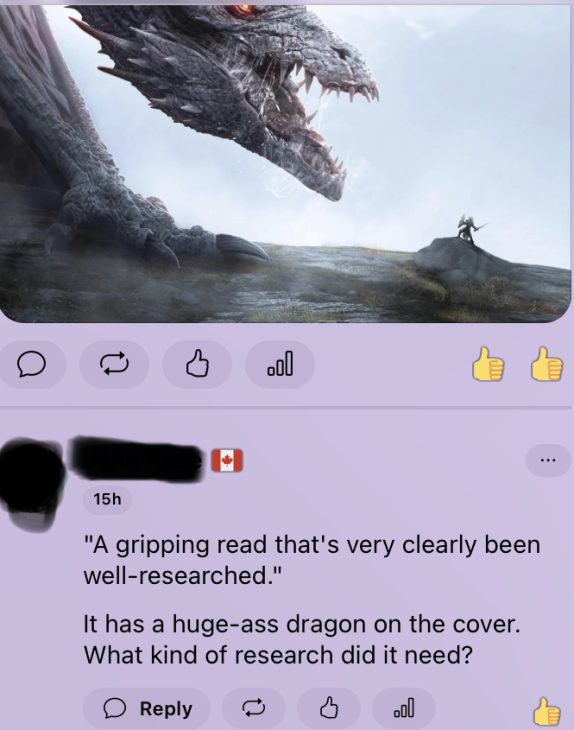
Now, I’ll be the first to admit, it got my hackles up right away. I write genre; mostly fantasy. And I’m usually in amongst people who also write the same, or adjacent, so I forget what opinions are outside of these circles. This slammed it in my face, and I wasn’t prepared. So my reply might have been equally as blunt, and perhaps a little tart as well. Perhaps I struck a nerve, as I received a reply to it, but it had been deleted before I could read what it actually said.
Probably for the best. I have a short fuse sometimes, and find myself in fights more often than I’d like, no matter how futile my brain knows it is. Besides the point. The point is, I had forgotten how some people outside of the genre view fantasy as a genre; primarily that because it is couched in distant allegory and magical worlds, and is a product of wild (also see: brilliant) imaginations, it clearly must not have much actual thought or “real work” (read here: research) behind it.
That is wildly offensive to me.
There are some things that even fantasy worlds and fantastical stories require in order for the reader to engage their suspension of disbelief, things must make sense. Things that are familiar must work more or less the same in the real world (unless its important to the world or plot that they don’t). If someone is fighting near a lava pool, there must be heat. If they are fighting with a spear, a strike with the shaft of the weapon will bludgeon, not cut. These kinds of things.
Are many things made up? Absolutely! Magic? That doesn’t exist in the real world, not at least like it does in fantasy stories (technology is a magic of a sort). Shape changers? Giant flying reptiles (this one did once exist, though. Have you seen arambourgiania, hatzegoteryx or quetzalcoatlus? Holy giant pterosaurs, Batman!)? Talking weapons? Talking animals? Talking plants? These things don’t exist in real life. Fun and completely made-up. But in order for them to work, the rest of the world must be believable. And often times, that requires a whole lot of research.
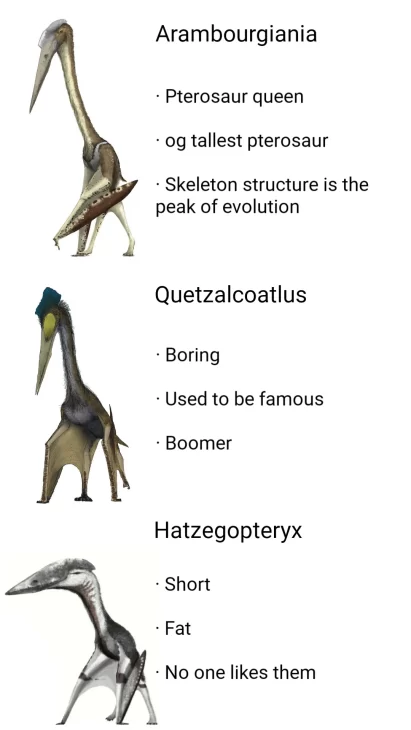 Found this image on reddit.com. It gave me a good giggle.
I will take The Shadow of the Gods as an example here. Set in a world that is analogous to Scandinavia of the (wrongly called) Dark Ages, but one in which myth and magic is real and exists, and the gods are not all that familiar in name or manner as the “Viking” pantheon we’re familiar with. It’s much more primal, with gods taking on bestial forms that are perhaps more familiar to folks who have studied various shamanic traditions.
That in an of itself requires a fair amount of research. As someone who has done that research, the execution of the world mythos was really well done. The tales have enough of a familiar ring to them that they do feel like a real life tradition made “real,” as it were. The hallmarks of many ancient myths are there – the all-being/first being was killed by his own progeny, and from his parts the world was made. We see it or its aspects in many traditions; particular those of Europe. In Viking myth, we see this in Odin and his siblings slaying Ymir, and making the world from the corpse.
It happened very similarly in this iteration, though the names Odin, Ymir and other names we might recognise are not used. This is a little out of my area of expertise (having studied much earlier up until the rise of the Roman Empire), but even those of us with a little passing knowledge would recognise the story, and those of us without would at least recognise the bones of it… pun unintended.
But there’s more to it than just the mythology of the world feeling familiar and plausible as an origin story in the world (that turns out to be probably very true). There’s so much in this book that benefitted from the author doing his research. A short list:
- Life in a world of snow and volcanoes, where night can last several weeks in mid-winter and day several weeks in high summer.
- Life on a raiding vessel; including division of labour, storage of armour and weapons, and beaching, disembarking and the actual act of raiding.
- Art and architecture in a world of frost and fire.
- Life in a settlement.
- Navigation
- Social structures and hierarchies in Late Iron Age/Early Middle Ages northern Europe.
- Fighting styles required of round shields and spears as primary weapons.
- Strategy in which shield and spear are the primary weapons in engagements.
- Anatomy (a femoral artery was cut in one scene that I recall, which anyone who knows anything about anatomy knows that’s as much a death sentence as if it was a carotid (particular in the time period represented)).
All of this and more was obvious in John Gwynne’s writing. It was very clear to me that a great deal of background research and knowledge was poured into this book.
 Image by Gordon Johnson from Pixabay. Also how I imagine the author looked while researching.
And the most oblique suggestion that it wasn’t still really grated on my nerves.
Again, I know I’m preaching to the choir, so this rant is going to change nothing, but still. I am getting quite fed up with people pretending that simply because a piece for writing is fantastical means that there was no research or work done behind the scenes to make it come to life. A good story well told will always have a lot behind it, whether or not magic is part of the tale. And I, for one, really appreciate it when you can tell it’s there. I’m just being a grump, I supposed, but I received that comment nearly two weeks ago, and it’s still bothering me.
So… thanks for listening to my rant. I needed to get that off my chest without starting a genre war. I feel better now.
Anyway, if you haven’t yet, do read The Shadow of the Gods, do. It’s a really great read.
And very well researched.
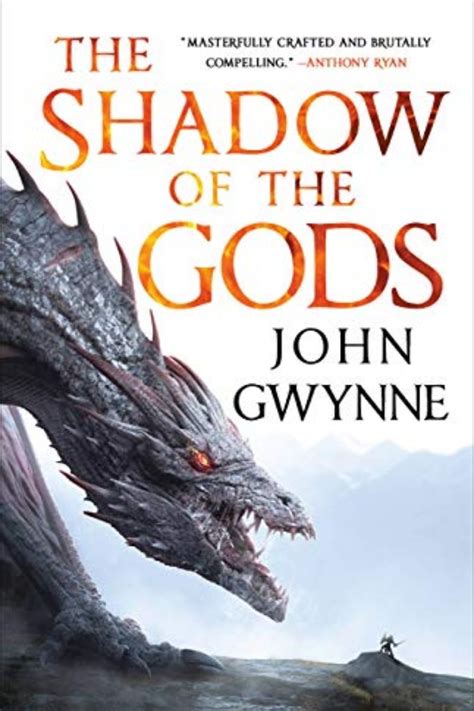
Ciao for now!
When S.M. Carrière isn’t brutally killing your favorite characters, she spends her time teaching martial arts, live streaming video games, and sometimes painting. In other words, she spends her time teaching others to kill, streaming her digital kills, and sometimes relaxing. Her most recent titles include Daughters of Britain, Skylark and Human. The Timbercreek Incident is free to read on Wattpad.
Categories: Fantasy Books
THIS KINGDOM WILL NOT KILL ME by Ilona Andrews (Maggie the Undying #1)
Portal Fantasies are some of the earliest subset of fantasy novels, going all the way back to the great Lord Dunsany. In those early stories, characters were often transported to a “Fairyland” but over the years, there are other worlds characters can visit. Take Ilona Andrews’s This Kingdom Will Not Kill Me, the first novel…
Categories: Fantasy Books
Audiobook Review: First Sign of Danger by Kelley Armstrong
I received a review copy from the publisher. This does not affect the contents of my review and all opinions are my own.
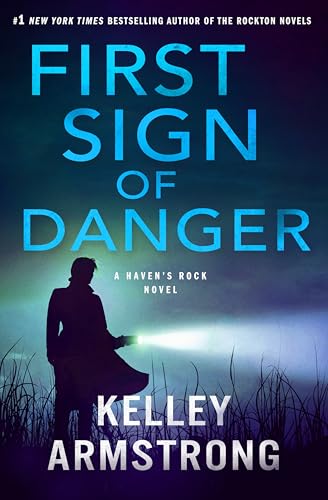 First Sign of Danger by Kelley Armstrong
Mogsy’s Rating (Overall): 4 of 5 stars
Genre: Mystery, Thriller
Series: Book 4 of Haven’s Rock
Publisher: Macmillan Audio (February 17, 2026)
Length: 9 hrs and 38 mins
Author Information: Website | Twitter
Narrator: Therese Plummer
I make it no secret how much I love the Haven’s Rock series, and I’ve been with this crew since they were first introduced in Rockton. As the fourth installment in this spinoff series, First Sign of Danger delivers the same tense, wilderness-set mystery I’ve come to expect, nothing more, nothing less. But while that may sound like business as usual rather than anything standout, it’s still a satisfying read.
The story picks up six months after the previous volume, Cold as Hell. Casey Duncan and Eric Dalton are new parents! Their home, the off-the-grid settlement of Haven’s Rock hidden in the wilds of the Yukon, continues to serve as a sanctuary for people looking to disappear, and this is where they are content to raise their family. Even the nearby mining operation has, for the moment, fallen into a workable truce. Boundaries are being respected, and both sides are keeping to themselves, at least for now. Everything feels relatively calm and balanced, just the way the town’s residents would prefer as they head into winter hoping for as little drama as possible.
But that fragile peace is abruptly shattered when Casey and Eric encounter two hikers who have wandered far too close to Haven’s Rock’s borders, raising immediate concerns about exposure. Thinking quickly, they point the interlopers away from town, towards a safer direction. But when they return the next day to make sure the hikers have moved on, they instead find one of them dead and the other missing without a trace. With no clear idea who these people were or why they were in the area, Haven’s Rock goes on high alert as Casey and Eric begin digging into the mystery. At best, the hikers’ presence is an unfortunate coincidence, but at worst, it could mean a new threat has found its way to their doorstep. Given everything this town has already endured, there’s too much at stake to take any chances.
One of the things this series does well is atmosphere, and that still holds true. The setting once more plays a starring role, the Yukon providing an active source of tension. Between the isolation, the harsh conditions, and the ever-present danger of nature and wildlife (speaking of which, there is a truly harrowing scene involving a bear in First Sign of Danger), there’s just this constant awareness in the back of your mind that things could go wrong at any moment. It gives the story a survivalist edge that perfectly complements the police procedural elements.
In terms of character development, Casey and Eric are now navigating a completely new phase of their lives with their six-month-old daughter, Rory. There’s a clear adjustment period as they figure out how to balance parenthood with their law enforcement responsibilities, but the book takes a refreshing approach here. Instead of playing up the usual themes of stress, exhaustion, and guilt in stories about new parents, it highlights how a strong support system can make all the difference, even in a remote place like Haven’s Rock. Here, the side characters step up. While overall they are in more background roles this time, their presence is still felt in meaningful ways, reinforcing the town’s sense of community. Sure, Casey is tired, but she’s never forced to choose between her job and her child. Rory, meanwhile, is growing up loved and cared for by a network of honorary aunties and uncles pitching in when needed, giving mom and dad the space to do what they need to do.
The mystery itself is engaging, though inevitably it feels familiar at times. Some of the plot points are recycled, easy to anticipate because we’ve seen them before. That said, I come at this as someone who genuinely loves this series, and there’s an undeniable comfort of returning to something I know. At the same time, I’m realistic. Between this series and the original Rockton run, we’re pushing close to a dozen novels in this world, and it’s starting to feel like we’re nearing the natural end of the road. And maybe that’s why I’m not all that upset about the author’s news that the next book will be the last. As much fun as I’ve had, quitting while you’re ahead is never a bad thing, and in this case, I’d much rather see the series wrap up on a strong note than stretch things out unnecessarily.
At the end of the day, First Sign of Danger is another dependable and easy-to-enjoy installment of the Haven’s Rock sequence. I also had the pleasure of listening to this in audio, and narrator Therese Plummer as ever does a fantastic job as Casey, bringing a natural and down-to-earth tone to her voice that fits the character completely. While this book doesn’t quite reach standout status for me, it still delivers a satisfying mix of mystery, character development, and wilderness tension, which are the exact ingredients that have always made this series so enjoyable.


Categories: Fantasy Books
Women in SF&F Month: Cheryl S. Ntumy
A new week of Women in SF&F Month starts today with a guest post by Cheryl S. Ntumy! Her short fiction includes “The Ghost of Dzablui Estate” in The Bright Mirror: Women of Global Solarpunk, “Godmother” in Apex Magazine and later The Best of World SF: Volume 3, and those in her BSFA Award–nominated collection Black Friday: Short Stories from Africa. She’s also written stories set in the shared Afrocentric speculative fiction universe named the Sauútiverse, including the novella Songs […]
The post Women in SF&F Month: Cheryl S. Ntumy first appeared on Fantasy Cafe.
Categories: Fantasy Books
Spotlight on “The Republic of Memory” by Mahmud El Sayed

Other LitStack Spots We’ve spotted a few other titles we are definitely adding to our…
The post Spotlight on “The Republic of Memory” by Mahmud El Sayed appeared first on LitStack.
Categories: Fantasy Books
Let’s Go to the Movies: 1996
1996 was 30 years ago. And it was quite the year for movies. Big-screen extravaganzas dominated the box office, and some movies outside the Top 10 still more than resonate today.
On July 3, Independence Day dropped. Man, that was a huge hit. EVERYBODY I knew saw, or was talking, about it. And smooth crooner Harry Connick Jr. became a lot more popular. With a US gross of $306,156,000 ($644,338,000 in today’s dollars) on a budget of $75 million, it was a smash hit.
Big-screen action continued the trend of domination, with Twister ($241,721,000) second, and The Rock ($134,069,000) fourth.
And at number three saw the birth of a mega-franchise that seven hit follow-ups and which only wrapped up last year: Mission Impossible. That first movie was an homage to the original series, and I really liked it. Then John Woo turned it into special effects cotton candy and I never watched another installment.
Eddie Murphy was at the end of his run as a box office super draw, and came it at number five with The Nutty Professor. The rest of the top ten was Ransom (Mel Gibson), The Bird Cage (Robin Williams), A Time To Kill (Matthew McConaughey), 101 Dalmations (a bunch of dogs), and The First Wives Club (Goldie Hawn).
Some Other Notable films
Eraser (11)
Arnold Schwarzenegger was five years removed from Terminator 2: Judgement Day. And two years from the disaster that was Junior. Ugh. But in addition to the sci-fi noir Eraser, he also made one of my favorite Christmas movies, Jingle all the Way (number 25).
Star Trek: First Contact (14)
 I loved the original cast reboot of Star Trek. And then Generations transitioned to a new era. First Contact ensured there would be more Star Trek films, and it had James Cromwell. BTW – if you’ve not seen 1997’s LA Confidential, it’s a superb hardboiled noir flick, and if you have read James Ellroy’s novel, Cromwell was a terrific choice as Dudley Smith.
Jerry Maguire (18)
The box office rankings are by the calendar year receipts. It released on December 13, and its total gross would have ranked it fourth for the year. This was the Romcom of 1996.
Twelve Monkeys (22)
I never got into this movie with Bruce Willis and Madeline Stowe, but it became a sci-fi cult classic. I should give this another try.
Tin Cup (26)
Post-apocalyptic movies – Waterworld (1995) and The Postman (91st this year) – did not exactly build on the success of The Bodyguard. But in between those two movies, Costner made a charming golf Romcom with Rene Russo and Don Johnson.
Grumpier Old Men (31)
The two-year take would put his up at number 17 (which was Broken Arrow). In the last 7 years of Walter Matthau’s life, he made Grumpy Old Men, Grumpier Old Men, Out to Sea, and The Odd Couple II, with Jack Lemmon. And I am darn glad those two old friends rekindled their on screen magic, which began in 1966 with The Fortune Cookie. And if you like this duo, I highly recommend My Fellow Americans. James Garner slips into a Walter Matthau role opposite Lemmon. My favorite of this whole bunch.
Toy Story (32)
Released the prior year, it’s total gross would have made it the number three movie of 1996. This was Pixar’s first feature film, and it changed movies. Pixar, and the animated types of movies it influenced other studios to make, are still part of the industry today.
Happy Gilmore (38)
I’m not an Adam Sandler fan. Stuff like Little Nicky, and The Waterboy, falls in what I call ‘dumb funny’ and I think it’s just dumb, not funny. To each their own. However, I LOVE Happy Gilmore. It’s simply funny. And frankly, hilarious. Great comedy. I put Talladega Nights in this category.
The Ghost and the Darkness (39)
I’m a big William Goldman fan. He wrote The Princess Bride (novel and screenplay), and two memoirs about working in Hollywood are among the best memoirs you’ll ever read. His chapter on this movie, which was not the hit expected, is interesting. The guy was an elite screenwriter, if you check his IMDB.com.
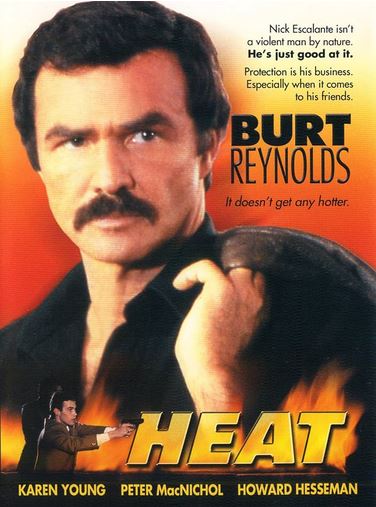 No. Not THAT one!
Heat (42)
Michael Mann had hit it big with The Last of the Mohicans – not the case with his adaptation of F. Paul Wilson’s The Keep. Heat is a ‘really good but not quite great’ movie for me. Like Bogie’s Dead Reckoning. But man, this is a taut heist film, with a great cast. Another one I’m due to watch again.
Striptease (48)
I am almost done re-reading/re-listening to the first ten Carl Hiassen novels (they drop off for me around number nine, so this won’t be a complete re-read). But I do love his books. They are laugh-out-loud dark crime comedies. I remember seeing this movie and thinking it wasn’t bad. But the book was much better. I suspect that would still hold true. Still, I think I’ll check it out again. TV’s R.J. Decker (based on Double Whammy) is losing it’s Hiassen roots, but still worth watching so far.
Leaving Las Vegas (53)
Sabrina (61) Excellent remake of a Bogart/Hepburn film
That Thing You Do! (67) A total gem!!!!!!!
From Dusk til Dawn (68)
Escape From LA (70) A far cry from the original.
Scream (74) A late release that would have been #11 for the year
Fargo (75) Coen Brothers wizardry, but not box office magic
Last Man Standing (97) Based on Hammett’s Red Harvest (which influenced Yojimbo)
The Phantom (100) Bruce Campbell lost out to Billy Zane for the lead
GoldenEye (108) Late release that was a 1997 hit
My Fellow Americans (120) See Grumpier Old Men, above
Mulholland Falls (124) Was a good year toe be a hardboiled/noir fan
2 Days in the Valley (125) More noir
Two if by Sea (128) See Grumpier Old Men…
Seven (129) 1997 hit
Heavens Prisoners (161) Hollywood is 0 for 2 on James Lee Burke. Do better!)
 Swingers (164) $4 million box office, but a cult classic
Ace Ventura: When Nature Calls (166) Big hit in 1997
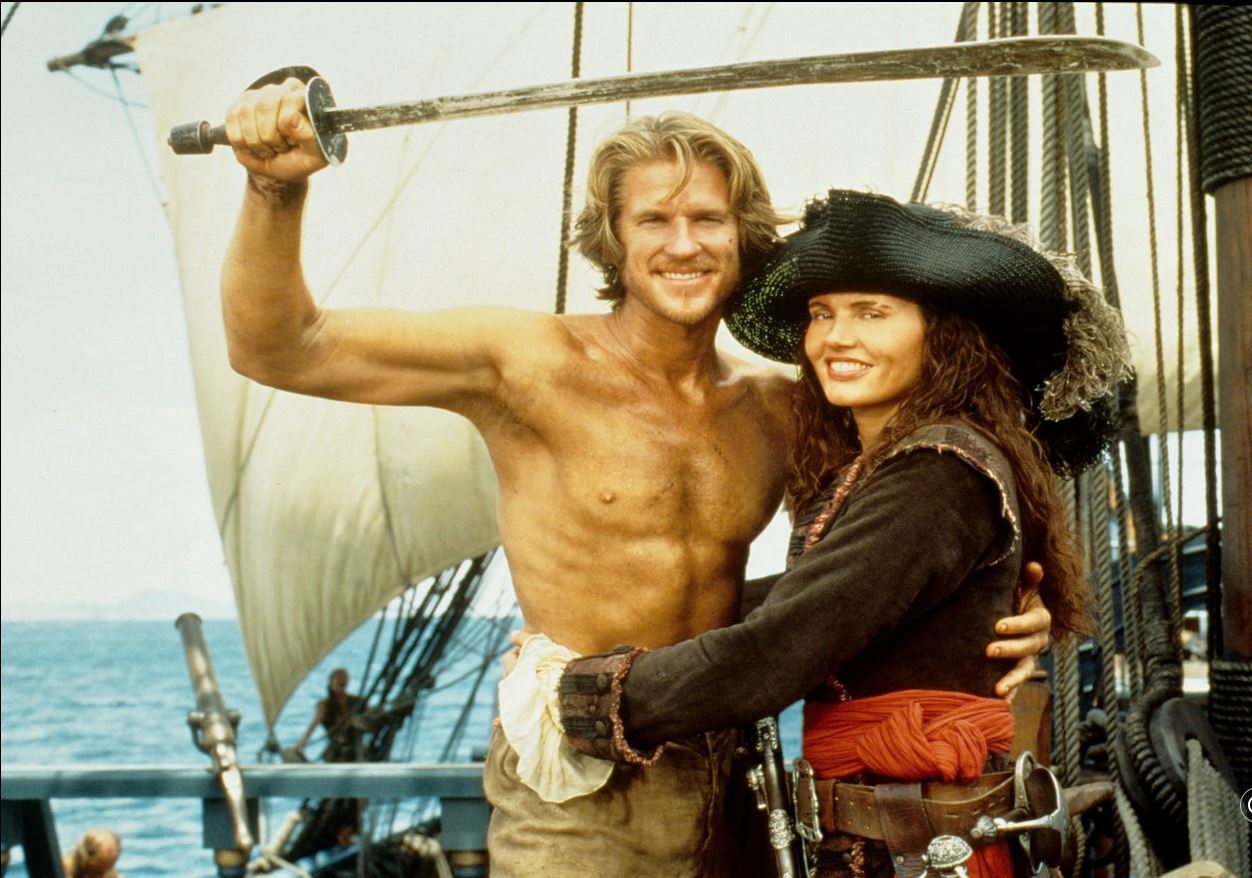
Cutthroat Island (170) Not quite Pirates of the Carribean
Barb Wire (180) Pamela Anderson remakes Casablanca/The Maltese Falcon. Soooo bad
Tastes certainly vary, but there was a lot to go see in 1996. As a hardboiled guy, Heat, Mulholland Falls, Last Man Standing, and 2 Days in the Valley, were all worthwhile. I liked Heavens Prisoners okay, as a Dave Robicheaux fan.
Scifi, comedy, action, offbeat – a good year for movies.And up top, Independence Day is still a great watch. That was from Dean Devlin, who had written Stargate, and would give us Leverage, and The Librarians. Mission Impossible continued to make bank for decades.
Share your thoughts on the list. Or others I left off. I skimped on the horror stuff.
So…what year shall we look at next?
Some previous entries on things to watch:Firefly – The Animated Reboot
What I’ve Been Watching – February 2026 (The Night Manager, SS-GB, Best Medicine)
What I’ve Been Watching – October 2026 (Return to Paradise, Lynley, Expend4bles, and more)
What I’ve Been Watching – August 2025 (Ballard, Resident Alien, Twisted Metal, and more)
What I’ve Been Watching – May 2025 (County Line, The Bondsman, Bosch: Legacy)
What I’ve Been Watching – October 2024 (What We Do in the Shadows, The Bay, Murder in a Small Town)
What I’m Watching – November 2023 (Brooklyn Nine-Nine, The Caine Mutiny Court Martial, A Haunting in Venice)
What I’m Watching – April 2023 (Florida Man, Picard – season three, The Mandalorian)
The Pale Blue Eye, and The Glass Onion: Knives Out
Tony Hillerman’s Dark Winds
The Rings of Power (Series I wrote on this show – all links at this one post)
What I’m Watching – December 2022 (Frontier, Leverage: Redemption)
What I’m Watching – November 2022 (Tulsa King, Andor, Fire Country, and more)
What I’m Watching – September 2022 (Galavant, Firefly, She-Hulk, and more)
What I’m Watching- April 2022 (Outer Range, Halo, Why Didn’t They Ask Evans, and more)
When USA Network was Kicking Major Butt (Monk, Psych, Burn Notice)
You Should be Streaming These Shows (Corba Kai, The Expanse, Bosch, and more)
What I’m BritBoxing – December 2021 (Death in Paradise, Shakespeare & Hathaway, The Blake Mysteries, and more)
To Boldly Go – Star Treking – (Various Star Trek incarnations)
What I’ve Been Watching – August 2021 (Monk, The Tomorrow War, In Plain Sight, and more)
What I’m Watching – June 2021 (Get Shorty, Con Man, Thunder in Paradise, and more)
Tucker and Dale vs. Evil
What I’ve Been Watching – June 2021 (Relic Hunter, Burn Notice, Space Force, and more)
Appaloosa
Psych of the Dead
The Mandalorian
What I’m Watching: 2020 – Part Two (My Name is Bruce, Sword of Sherwood Forest, Isle of Fury, and more)
What I’m Watching 2020: Part One (The Adventures of Brisco County Jr, Poirot, Burn Notice, and more)
Philip Marlowe: Private Eye
Leverage
Nero Wolfe – The Lost Pilot
David Suchet’s ‘Poirot’
Sherlock Holmes (over two dozen TV shows and movies)
 Bob Byrne’s ‘A (Black) Gat in the Hand’ made its Black Gate debut in 2018 and has returned every summer since.
His ‘The Public Life of Sherlock Holmes’ column ran every Monday morning at Black Gate from March, 2014 through March, 2017. And he irregularly posts on Rex Stout’s gargantuan detective in ‘Nero Wolfe’s Brownstone.’ He is a member of the Praed Street Irregulars, and founded www.SolarPons.com (the only website dedicated to the ‘Sherlock Holmes of Praed Street’).
He organized Black Gate’s award-nominated ‘Discovering Robert E. Howard’ series, as well as the award-winning ‘Hither Came Conan’ series. Which is now part of THE Definitive guide to Conan. He also organized 2023’s ‘Talking Tolkien.’
He has contributed stories to The MX Book of New Sherlock Holmes Stories — Parts III, IV, V, VI, XXI, and XXXIII.
He has written introductions for Steeger Books, and appeared in several magazines, including Black Mask, Sherlock Holmes Mystery Magazine, The Strand Magazine, and Sherlock Magazine.
You can definitely ‘experience the Bobness’ at Jason Waltz’s ’24? in 42′ podcast.
Categories: Fantasy Books
Horror and Gothic, Magic and Witchcraft: The Dark of the Soul, edited by Don Ward
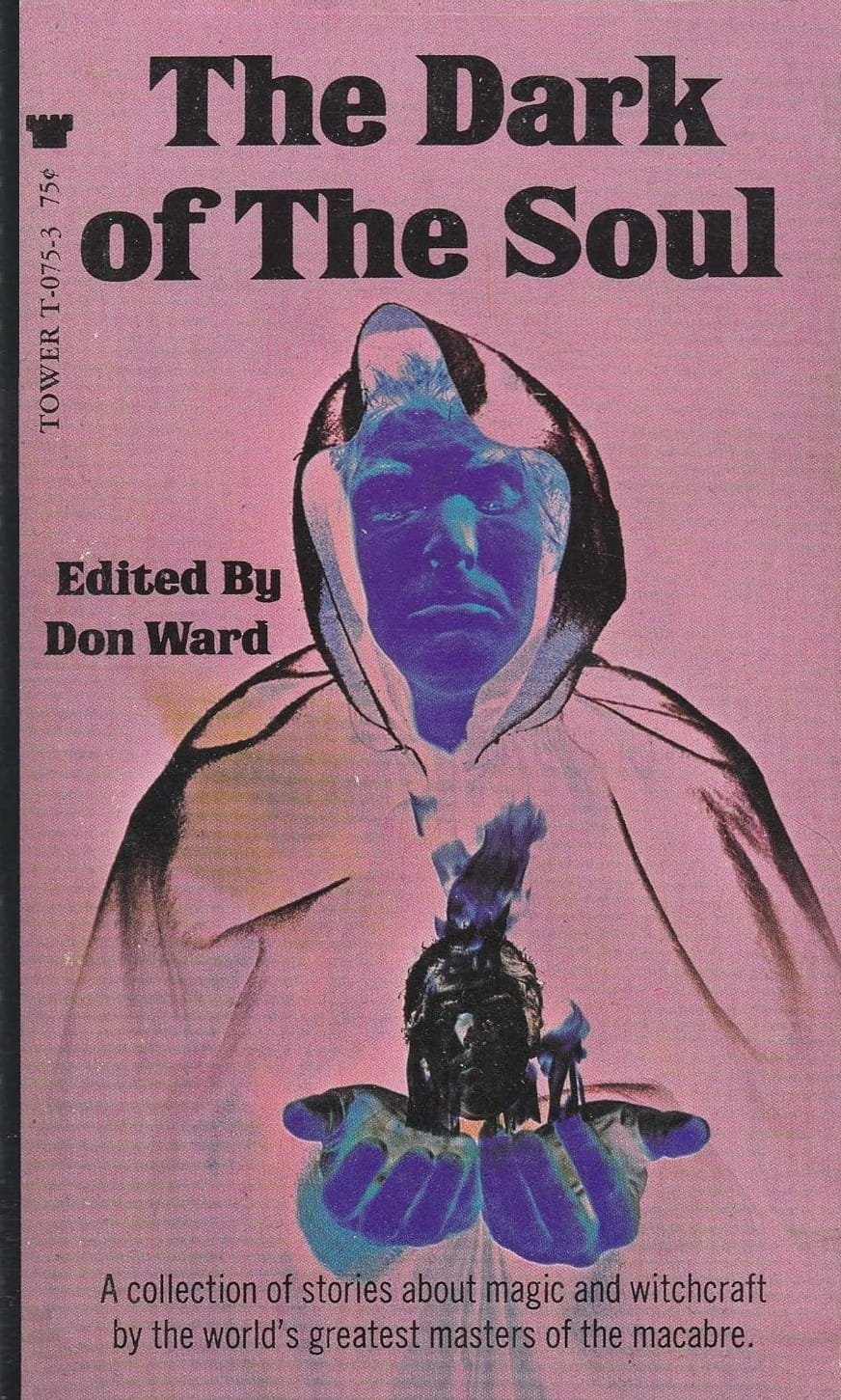
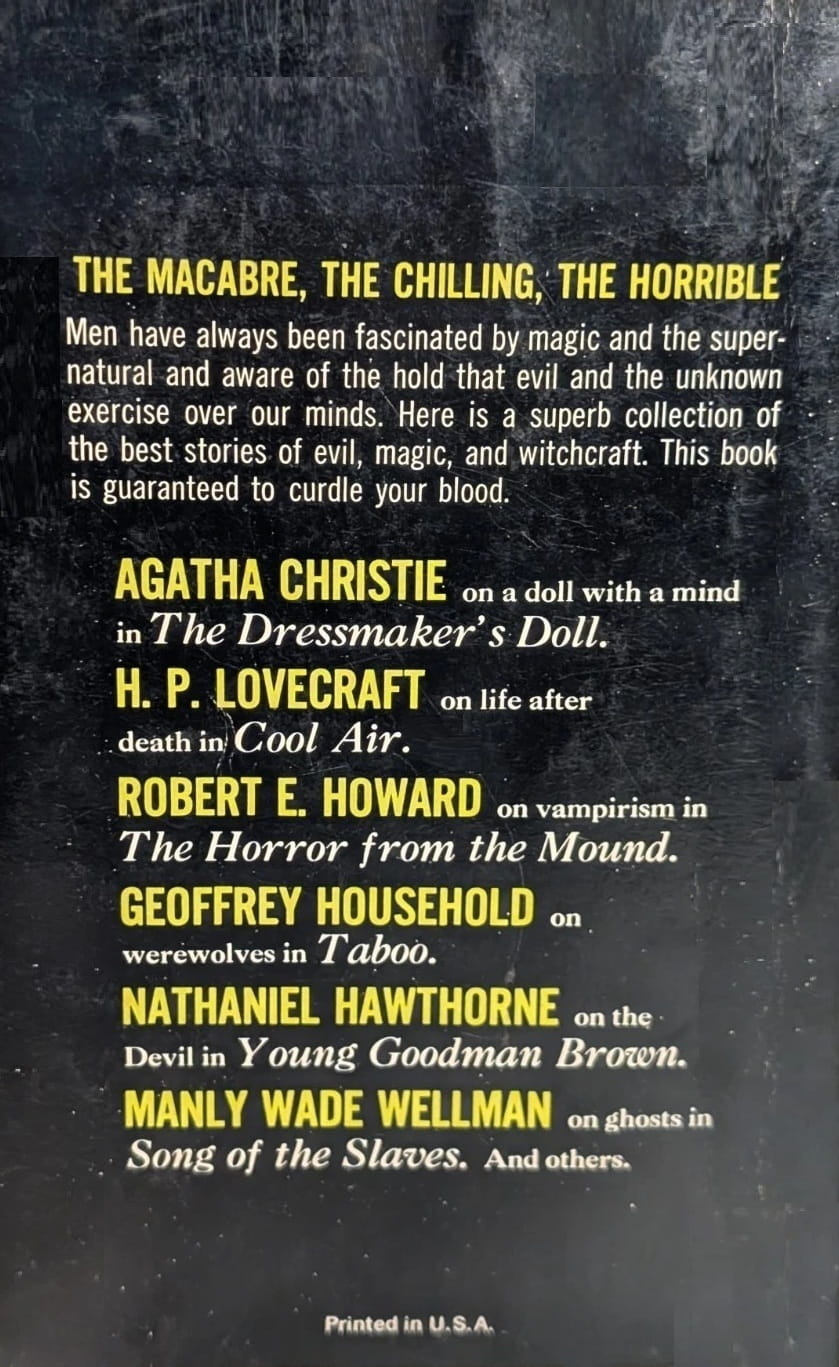
The Dark of the Soul (Tower Books, 1970)
Here’s another anthology I picked up because it had a Robert E. Howard story in it.
The Dark of the Soul, edited by Don Ward, A Tower book, 1970. Cover artist unknown. It contains a short story by Robert E. Howard called “The Horror from the Mound.” It’s a good story, although not one of Howard’s best.
This collection is more horror and gothic, magic and witchcraft, and not Sword & Sorcery (S&S). The stories are atmospheric but maybe slow for modern audiences. Here are my thoughts.
1. Introduction by Don Ward. Gives some context to the stories but probably wasn’t needed.
2. “The Horror from the Mound” by Robert E. Howard has the highest level of action in the collection, and is genuinely creepy.
3. “The Muted Horn” by Dorothy Salisbury Davis doesn’t have any action and is not my cup of tea.
4. “Mrs Amworth” by E. F. Benson was also slow, with a long setup that could mostly have been cut.
5. “Song of the Slaves” by Manly Wade Wellman is a long way from this author’s best work.
6. “The Ash Tree” by M. R. James is a creepy piece. James didn’t beat around the bush getting to the heart of the tale and this is one of the better pieces in the book.
7. “Cool Air” by H. P. Lovecraft. I’m a big Lovecraft fan but this isn’t among his best stories.
8. “Taboo” by Geoffrey Household was a solid tale but maybe with too much unnecessary material.
9. “Young Goodman Brown” by Nathaniel Hawthorne is a memorable tale from an author you don’t generally see in such collections.
10. “Smee” by A. M. Burrage is a good ghost story, though fairly slow.
11. “The Dressmaker’s Doll” by Agatha Christie was a surprise. I knew her from her mysteries but this was creepy and with a strong ending.
Charles Gramlich administers The Swords & Planet League group on Facebook, where this post first appeared. His last article for us was a review of two Sword & Sorcery anthologies from L. Sprague de Camp. See all of his recent posts for Black Gate here.
Categories: Fantasy Books
Women in SF&F Month: Week 3 Schedule & Week in Review
The fifteenth annual Women in SF&F Month continues with three new guest posts this week, starting with a new essay tomorrow. Thank you so much to last week’s guests for another fantastic week! The new guest posts will be going up on Monday, Wednesday, and Friday this week, but before announcing the upcoming schedule, here are last week’s essays in case you missed any of them. All guest posts from April 2026 can be found here, and last week’s guest […]
The post Women in SF&F Month: Week 3 Schedule & Week in Review first appeared on Fantasy Cafe.
Categories: Fantasy Books
What’s For Dinner? The Library at Hellebore by Cassandra Khaw
 Art by Vladimir Logos
I’ve lost count of novels that involve some sort of magical college featuring adolescent misfits plucked from humdrum daily existence thrust into contests between good and evil, not to mention raging hormones.
Blame Harry Potter, though Rowling was building on the trope, not inventing it (c.f., in particular, A Wizard of Earthsea). She just got wildly successful with it. So why shouldn’t others also build on that success?
Granted there is nothing new under the sun; no one is irked that Maggie O’Farrell did yet another riff on a Shakespeare play with Hamnet. Even so, not to knock the whole dark academia thing, I can understand how some might sneer at yet another mystical schoolyard fantasy.
Sure, some are tapping into a built-in audience without trying to rise much above the hackneyed (c.f., example, Starfleet Academy, despite the presence of Paul Giamatti and Holly Hunter, though you could probably say the same about most of the Star Trek spinoffs, The Next Generation and Strange New Worlds notwithstanding). Most others expand the form (c.f., the aforementioned Hamnet).
Which brings us to The Library of Hellebore by Cassandra Khaw. A sort of middle finger to the whole Harry Potter universe.
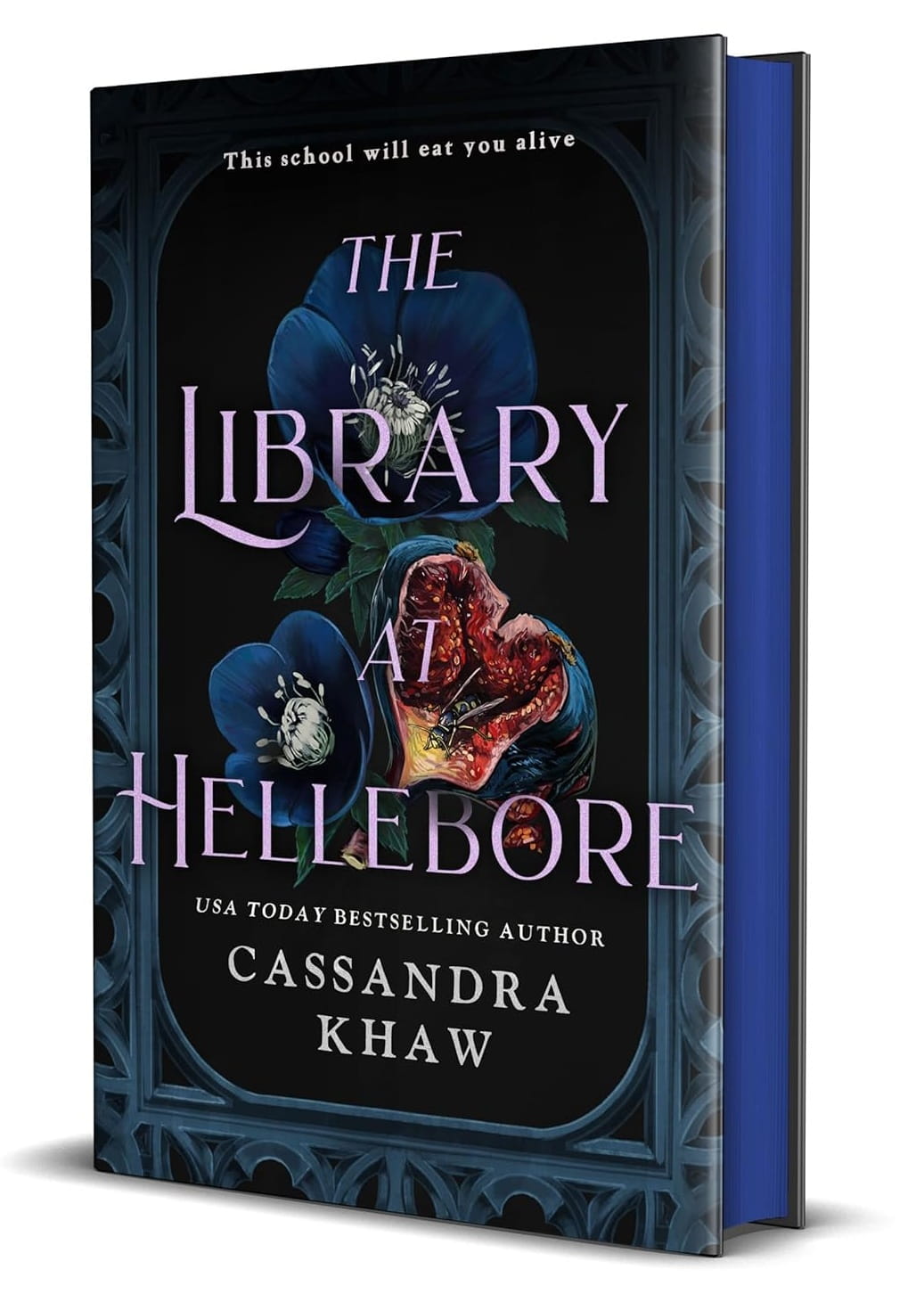 The Library at Hellebore, by Cassandra Khaw (Tor Nightfire, July 22, 2025)
Here’s how it starts.
When I woke up, my roommate, Johanna, was dead… the walls were soaked in effluvium. Every piece of linen on our beds was at least moderately pink with gore. The floor was a soup of viscera, intestines like ribbons unstrung over the scuffed wood.
So despite all the familiar elements — The Hellebore Technical Institute for the Gifted, students with magical abilities, the titular library — we’re not in Kansas anymore. Hammering home the point that this is not a Harry Potter clone is when the headmaster says,
That we might be sorted into houses, a prospect so repellant the crowd spontaneously lost all fear of her and began groaning objections.
“I am just kidding,” she simpered among the thunderous murmurs. “Although the way you’re all complaining, I might have to make it happen.”
Though she retained her mask throughout, what mystique she possessed was lost in the wake of that awful joke.
While Hellebore might seem to connote humdrum existence in the netherworld (and maybe at some level Khaw intends to convey that), a hellebore is actually a poisonous plant, sometimes used in antiquity to treat psychosis. Indeed, our narrator, Alessa Li, hasn’t escaped a humdrum Muggle existence by being chosen to enroll in the institute; rather, she’s been kidnapped to prevent her powers from harming normal society.

Further distancing the novel from run-of-the-mill dark academia is that the Institute’s faculty aims to eat the student body. Now that’s dark.
Which brings us to the titular library, where Alissa and some of her surviving classmates — though hardly friendly allies — escape from professorial ravenous cravings. But there are no safe spaces even at this bastion of learning and knowledge as the monstrous librarian has her own carnivorous cravings.
The only lesson here is that of kill or be killed. Not in a Hunger Games kind of way. More like in an eat or be eaten Darwinian kind of way. Literally.
The horror genre is transgressive, meant to provoke revulsion in reminding us of bodily disgust, of psychological dislocation, of humanity’s animalistic nature. The horror of the Library of Hellebore is that “things like decency are nothing but human inventions. The cosmos bends nowhere except toward annihilation.”
David Soyka is one of the founding bloggers at Black Gate. He’s written over 200 articles for us since 2008. See them all here.
Categories: Fantasy Books
Shakespeare’s “As You Like It” | A Fun-Loving Celebration Of Sexual Ambivalence

As You Like It speaks directly to the twenty-first century through its explorations of sexual…
The post Shakespeare’s “As You Like It” | A Fun-Loving Celebration Of Sexual Ambivalence appeared first on LitStack.
Categories: Fantasy Books
Book Review: Green & Deadly Things by Jenn Lyon
I received a review copy from the publisher. This does not affect the contents of my review and all opinions are my own.
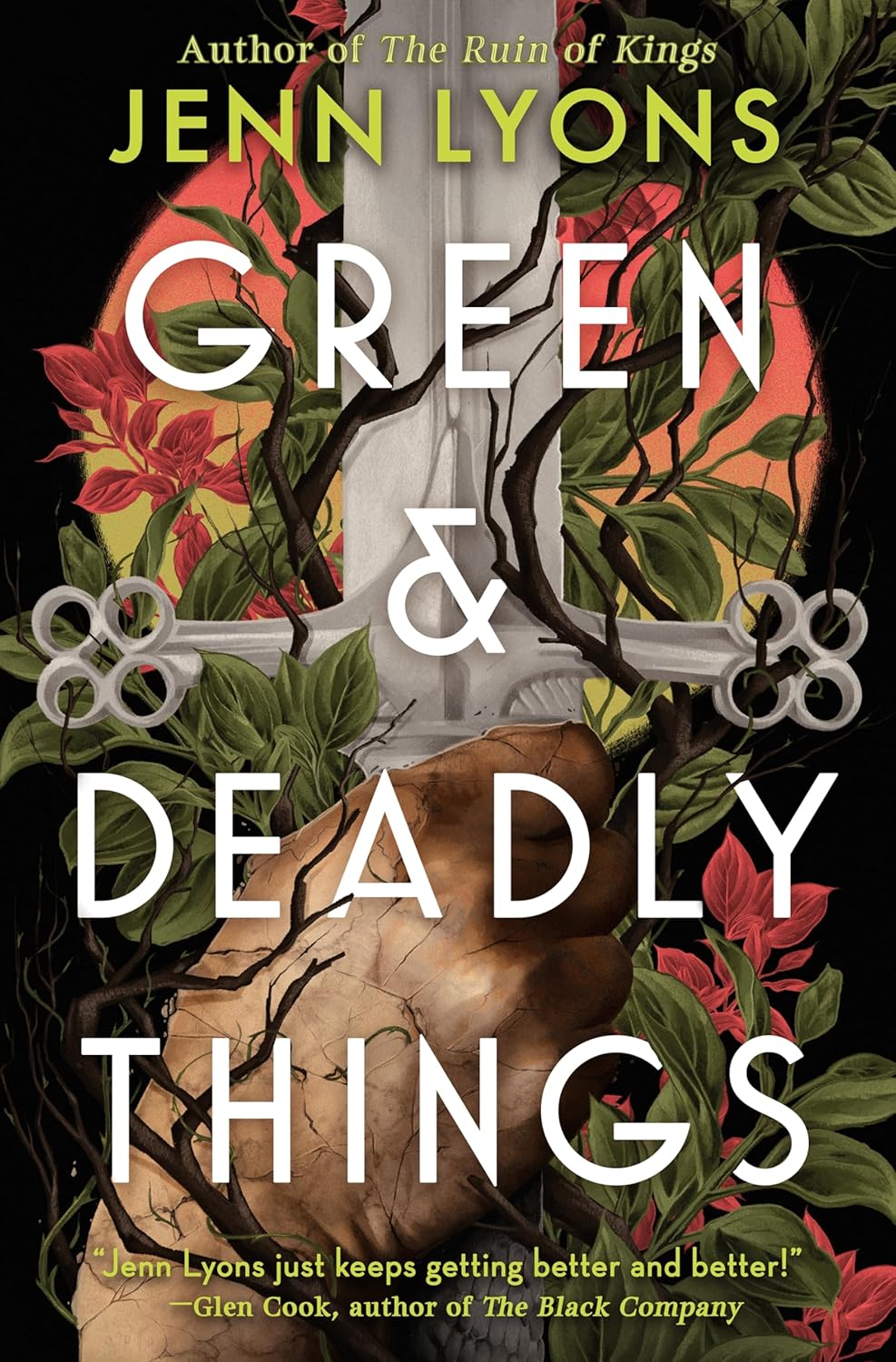 Green & Deadly Things by Jenn Lyons
Mogsy’s Rating: 3 of 5 stars
Genre: Fantasy
Series: Stand Alone
Publisher: Tor Books (March 3, 2026)
Length: 368 pages
Author Information: Website
I enjoyed Jenn Lyons’ Sky on Fire, so when I heard she was returning with another standalone novel which sounds right up my alley, I was immediately intrigued. But while Green & Deadly Things is an undeniably entertaining “in the moment” kind of book, it’s also not one that’s easy to breeze through. Despite being packed with action and big ideas, it also somehow feels lighter and surface-level than expected, never quite digging deep enough to leave a lasting impression.
The story follows Mathaiik, a young novitiate training with the Idallik Knights, an order devoted to protecting the world from the lingering threat of necromancy. But though he has spent years preparing, Math still struggles to control the magic required to complete his training to become a full knight. At the same time, he’s hiding a secret related to his family’s past and his own strange connection to plants. In a world where nature itself has become increasingly dangerous, Math’s ability to tap into its powers is something that is viewed upon with suspicion.
Then, an unexpected attack throws the Idallik Knights into chaos, leaving Math in a position to help uncover the truth behind the sentient vegetation that has suddenly turned hostile. Subsequently, he finds himself magically linked to a mysterious woman he awakens from beneath the order’s fortress. A necromancer from the long-lost era of the Grim Lords, Kaiataris may hold the key to understanding and ultimately stopping the unchecked wild magic driving these cycles of destruction. From there, the two are forced into an uneasy alliance as they flee from the knights and into the unpredictable wilderness, where the enemy is the very landscape around them.
Necromancy. Ancient magic. Killer plants. There’s a lot to like here. Lyon’s creative talents are something to be admired for sure, especially when it comes to world-building and magic systems. The integration of botanical horror into the epic fantasy framework is genuinely cool, giving readers some vivid and occasionally unsettling imagery as the natural environment comes to life and IT IS PISSED. There’s also a quiet sense of dread lingering just beneath the surface, because I guess there’s just something deeply unsettling about the inevitability of cyclical destruction.
That said, my biggest issue with the book involves its pacing and its lack of depth, in that it never quite slows down enough to let all its ideas breathe and settle. The plot is relentless, throwing the characters into one crisis after the other. While this rapid-fire development is what kept the pages turning, paradoxically it also made it more difficult to stay fully invested as events started to blur together.
The characters fall into a similar pattern. Math is a likeable enough protagonist, but he’s also tragically bland, an earnest figure caught between loyalty, truth, and his own feelings, like any standard fantasy hero pulled from a template. Kaiataris, meanwhile, offers a slightly more intriguing dynamic as an ancient necromancer who challenges everything Math believes. However, rather than fully exploring that conflict, the story quickly steers them into a romance, and a rushed one at that. It’s frustrating and it’s disappointing, because one feels that both characters deserve far more than simply becoming a checkbox for a romantic subplot.
Still, that’s not to say the book isn’t enjoyable. Lyon’s writing is approachable and easy to get into. The characters’ banter has plenty of sass and humor to keep things from getting grim. I also love the fact that it’s a standalone. As it was with Sky on Fire, it felt refreshing to read Green & Deadly Things knowing you’ll get a complete story in one volume. These strengths go a long way toward counterbalancing the novel’s weaknesses, which mainly come down to parts of the narrative feeling predictable or too convenient, and the relationship between the characters relying too heavily on proximity and magic rather than more organic development. Still, all this, along with its accessible tone which sits comfortably in a crossover space between adult and YA, makes this book a strong “entry into fantasy” kind of read.
In the end, Green & Deadly Things is a fun, fast-moving fantasy with lots of cool concepts and an easy reading style, but while reading it, I also couldn’t help but feel a nagging sense that it’s reaching for something a little deeper, a little more. Regardless, it remains accessible and entertaining, a good standalone that will probably work best for readers looking for a lighter entry point into fantasy rather than something more complex or layered.

Categories: Fantasy Books
Pages

Recent comments