
Fantasy Books
Book Review: A Parade of Horribles by Matt Dinniman
I received a review copy from the publisher. This does not affect the contents of my review and all opinions are my own.
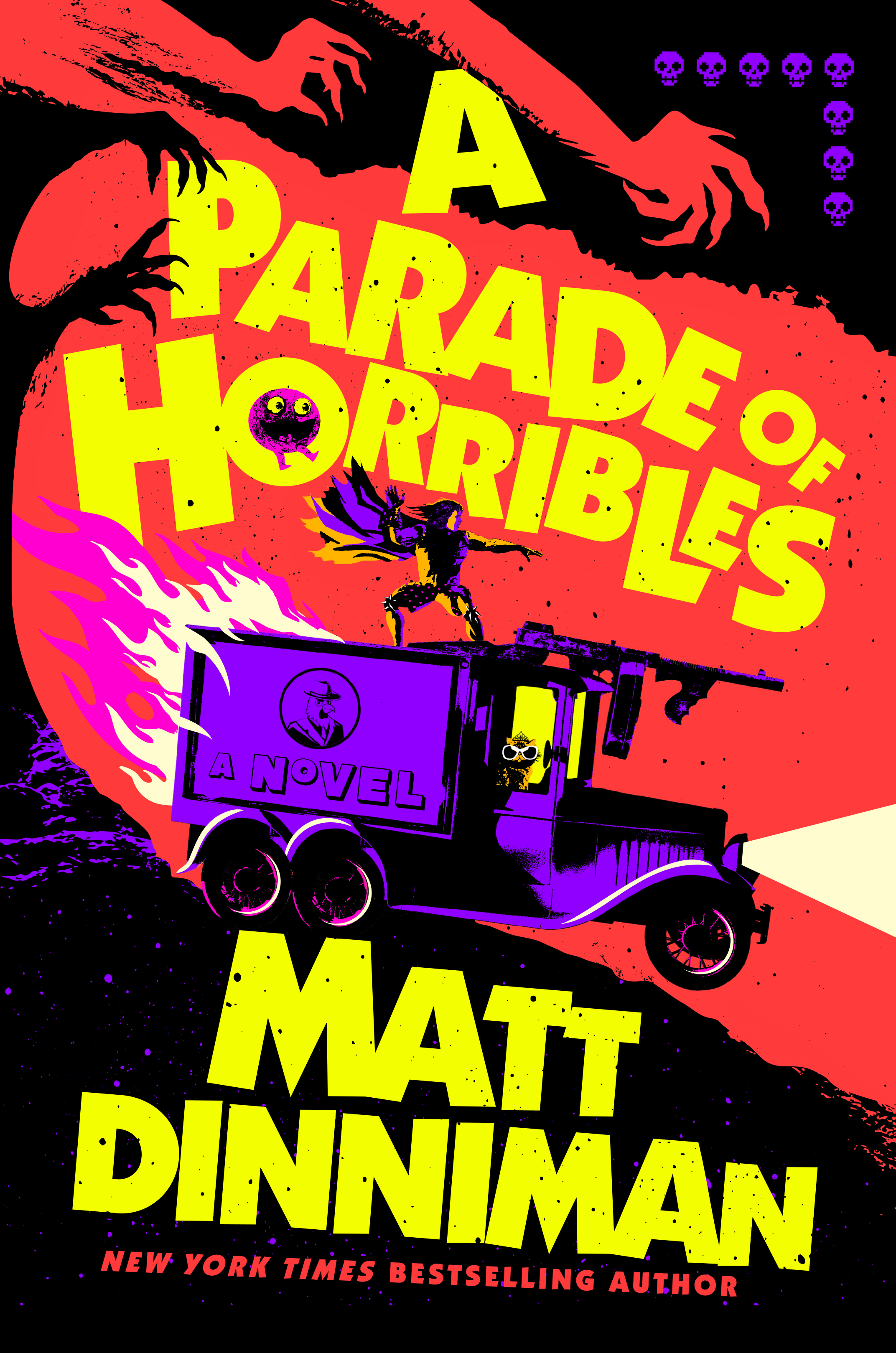 A Parade of Horribles by Matt Dinniman
Mogsy’s Rating: 4 of 5 stars
Genre: Fantasy, Science Fiction
Series: Book 8 of Dungeon Crawler Carl
Publisher: Ace (May 12, 2026)
Length: 704 pages
Author Information: Website
Saying that I was excited for A Parade of Horribles feels like gigantic understatement. Dungeon Crawler Carl has become one of my favorite ongoing obsessions, and thanks to the rapid-fire releases of the earlier books, I was able to tear through the first seven installments. This was the first time I actually had to wait, but I have to say, the anticipation was half the fun. Gotta love seeing this series explode in popularity over the last couple years because Dinniman really has built something special here, an action-packed sci-fi fantasy litRPG that’s equal parts ridiculous, heartfelt, and chaotic.
A Parade of Horribles brings us to the tenth floor, giving Carl, Donut, and the remaining crawlers barely a moment to breathe after the absolute carnage and fallout of the Faction Wars on the previous level. They thought the worst was behind them, but true to form, the dungeon has prepared yet another brutal setup, this time built around a deadly racing game that feels a bit like Mario Kart meets Mad Max. While the scale of the dungeon remains enormous, the field has narrowed considerably. Only several thousand crawlers remain, but their numbers are about to be whittled down further in this cutthroat, no holds barred competition designed to kill them all.
However, Carl has never been particularly good at sitting back and accepting impossible odds when the lives of the people he cares about are on the line. He wants to get as many of them out of the dungeon alive as he can but also knows he can’t guarantee the survival of every crawler during their individual heats on the racetrack. But perhaps there may be other ways to protect them? Meanwhile, the dungeon itself is evolving into something far more unpredictable and dangerous as the AI grows increasingly more unhinged. Out in the wider universe beyond the crawl, the fragile balance between alien factions and their galactic governments is also beginning to break down under the weight of everything that’s happened. Before long, the cracks in the system will become impossible to contain, threatening to bring entire civilizations crashing down along with them.
In this book, only a relatively small number of crawlers remain, and even our group of core characters has become reduced. For example, a certain someone who was a member of Carl and Donut’s party is no longer in the dungeon, for reasons I will not spoil, and I felt their absence keenly. This does give the story a very different feeling compared to the earlier books. Also, this isn’t the only area growing more streamlined, as I can feel Dinniman trying to simplify things in other ways. And honestly, I can understand why. In addition to the character roster, over the course of the series we have seen the world-building, game mechanics, dungeon lore, alien factions and politics all balloon into something massive. At some point, trimming is required to keep things manageable, and A Parade of Horribles definitely feels like part of that process.
I also noticed how the world outside the dungeon feels less present this time around. Earlier books constantly reminded us of the audience tuning in, watching Carl’s journey and showering his feed with septillion follower counts and likes. Presumably, everyone in the universe is watching by default, which makes sense narratively, but I did miss the broader sense of scale and spectacle. On the flip side, it did help keep the focus tighter on the immediate danger and the increasingly desperate attempts to survive what’s coming next.
Speaking of which, what I continue to love about this series is how every floor delivers something different. The vehicle race mechanics on the tenth offer new ways to play, and despite the high stakes, they are genuinely fun and full of the over-the-top scenarios that this series thrives on. Characters are dodging traps, engaging in sabotage, and pulling off increasingly ruthless strategies even as the story’s darker themes continue building in the background. The humor is still there, of course, but the mood has gotten noticeably heavier as Carl and Donut begin approaching problems with the cold pragmatism of hardened, seasoned crawlers.
Finally, even though I had a great time, I confess A Parade of Horribles comes in slightly lower for me compared to the previous books, but that honestly says more about how absurdly high the bar for this series has become than anything else. The pacing did feel a little off towards the end as certain plot points were rushed, and these were developments that probably could have benefited from more breathing room considering the importance of this final stretch. Sometimes the solutions to conflicts also feel like they materialize a little too conveniently and not as organically as before, but the author’s incredible creativity along with his sheer confidence are usually enough to push through any plot hiccups before things get too bogged down.
All in all, I greatly enjoyed A Parade of Horribles. Even when it gets messy, it remains wildly entertaining. The emotional investment is there. The humor is laugh-out-loud funny. The tension still works. And Carl and Donut are still the best duo ever. More than ever, this book feels like the calm before something huge, with all the buildup pointing towards a momentous endgame looming just over the horizon. I can’t wait to see how Matt Dinniman will bring this insane, hilarious, awesome ride home.


More on The BiblioSanctum:
Review of Dungeon Crawler Carl (Book 1)
Review of Carl’s Doomsday Scenario (Book 2)
Review of The Dungeon Anarchist’s Cookbook (Book 3)
Review of The Gate of the Feral Gods (Book 4)
Review of The Butcher’s Masquerade (Book 5)
Review of The Eye of the Bedlam Bride (Book 6)
Review of This Inevitable Ruin (Book 7)
Categories: Fantasy Books
Tales of Fantasy Rome: The Eternal City, edited by David Drake, Martin Greenberg, and Charles Waugh
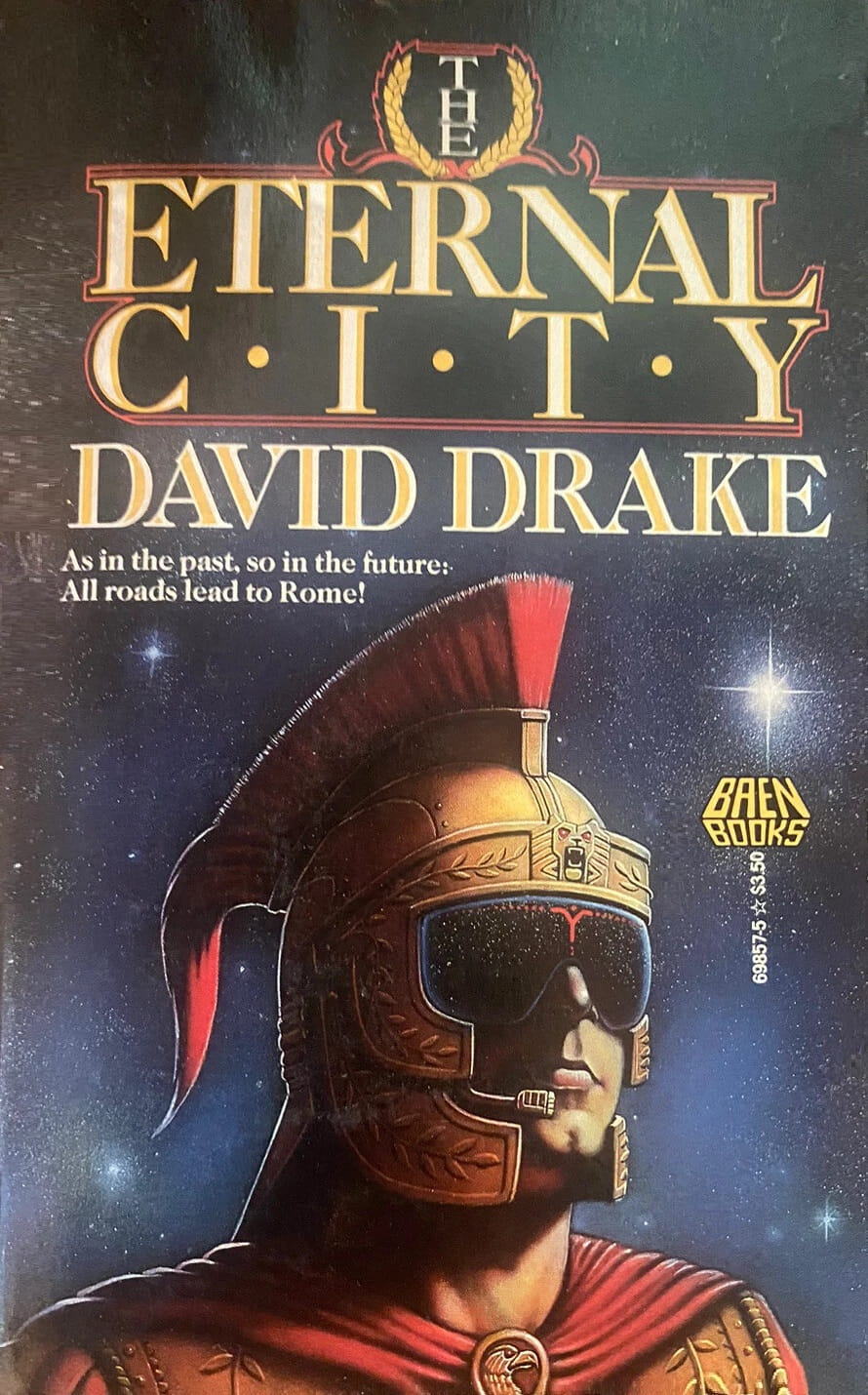
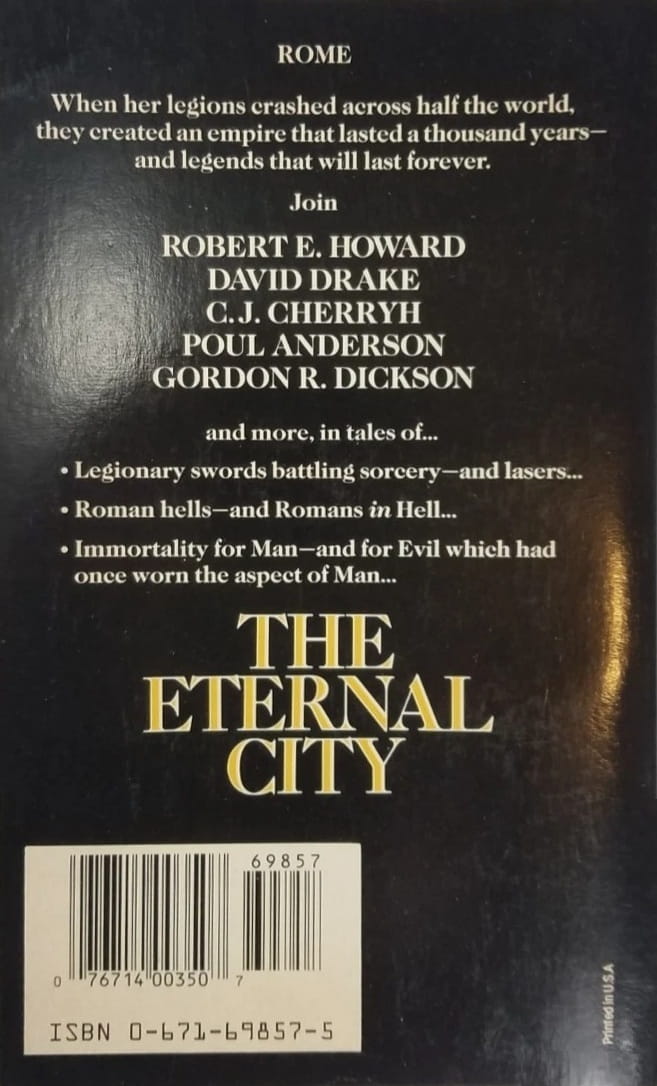
The Eternal City, edited by David Drake, Martin Greenberg, and Charles
G. Waugh (Baen Books, January 1990). Cover by John Rheaume
The main reason I bought this collection was for the Howard story, “Kings of the Night.” This was back when I was striving to be a Howard completist. All in all, an entertaining collection.
It was published by Baen in 1990, and Drake did a pretty good job of selecting the stories. Here’s the complete Table of Contents.
We have:
1. Introduction: The Creation of Rome, by David Drake.
2. “Delenda Est, a Time Patrol tale,” by Poul Anderson (F&SF, December 1955)
3. “Nightfall on the Dead Sea,” by Ray Faraday Nelson (F&SF, September 1978)
4. “The Prince, Heroes in Hell tale,” by C. J. Cherryh (Far Frontiers Vol. IV, 1986)
5. “The Bottom of the Gulf,” by Barry Pain (Stories in the Dark, 1901)
6. “An Elixir for the Emperor,” by John Brunner (Fantastic, Nov. 1964)
7. “Some Very Odd Happenings at Kibblesham Manor House,” by Michael Harrison (F&SF, April 1969)
8. “Time Grabber,” by Gordon R. Dickson (Imagination, December 1952)
9. “Survey of the Third Planet,” by Keith Roberts (F&SF, January 1966)
10. “Don’t Be a Goose,” by Robert Arthur (Argosy, May 3, 1941)
11. “Domitia,” by Mrs. Richard S. Greenough (Arabesques: Monarè, Apollyona, Domitia, Ombra, 1872)
12. “Survival Technique,” by Poul Anderson & Kenneth Gray (F&SF, March 1957)
13. “Ranks of Bronze,” by David Drake (Galaxy, August 1975)
14. “Kings of the Night,” by Robert E. Howard (Weird Tales, November 1930)
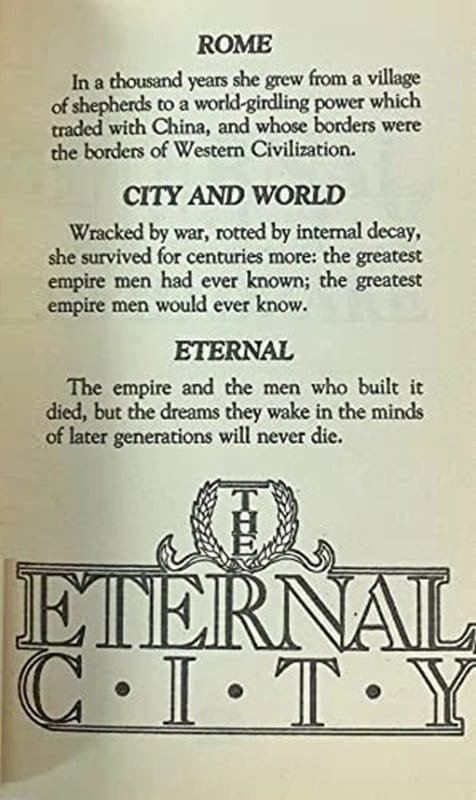 Inside cover for The Eternal City
All the stories have some tie in with Rome, although sometimes fairly tenuous. A lot of them are very good.
“Delenda Est” is a classic. I also much enjoyed “Nightfall on the Dead Sea,” “An Elixir for the Emperor,” and “Survey of the Third Planet.” I thought “The Prince” was weak.
The “Some Very Odd Happenings” was definitely the strangest of the bunch, and grotesque enough to make itself a horror story.
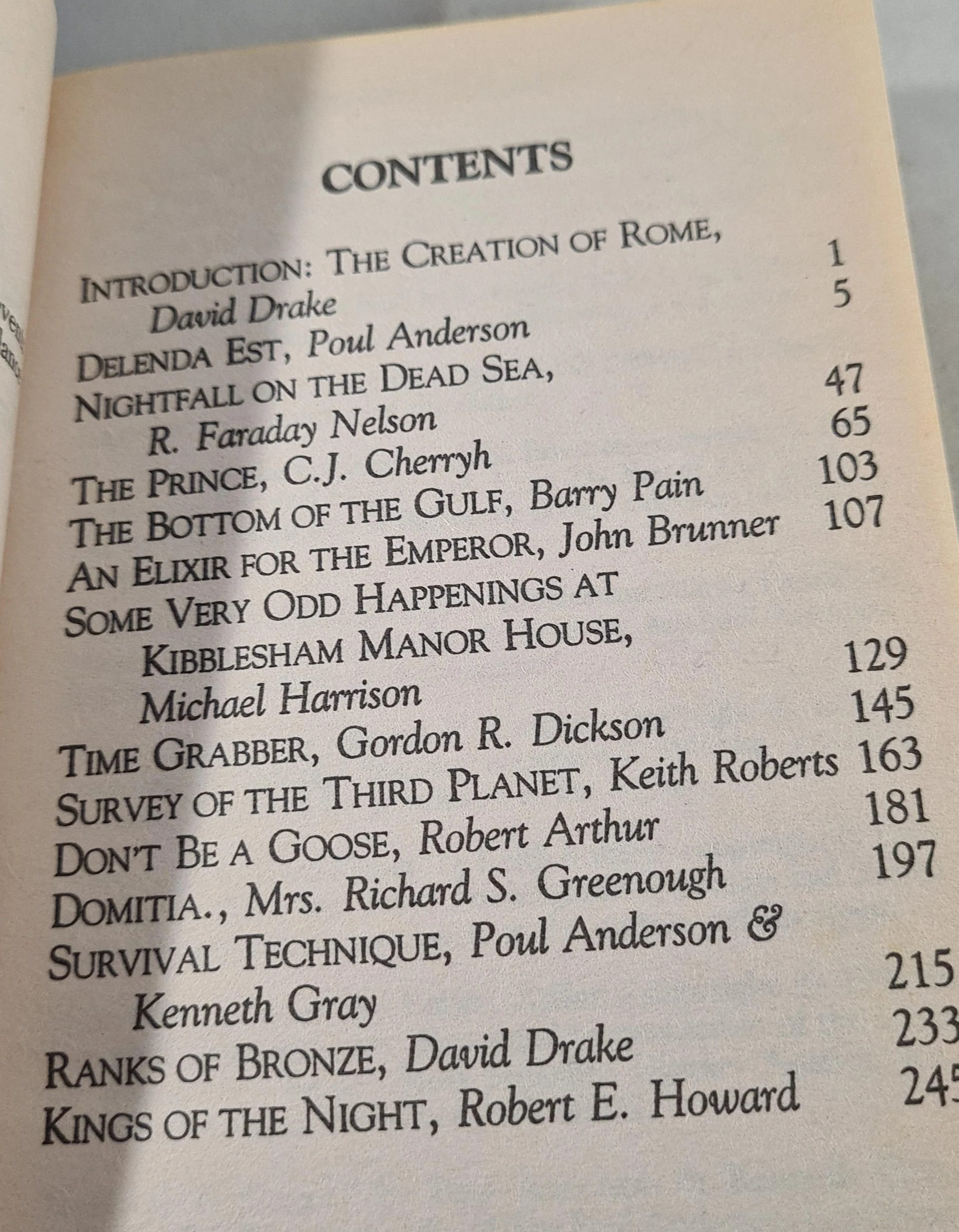 Table of Contents for The Eternal City
There were also two very hilarious tales, “Don’t be a Goose,” and “Survival Technique.” I enjoyed them both, and I like the short story “Ranks of Bronze” better than the full-length novel of that name.
Of course, Howard’s “Kings of the Night” is a great story, when Bran Mak Morn and Kull meet.
Charles Gramlich administers The Swords & Planet League group on Facebook, where this post first appeared. His last article for us was a look at Lin Carter’s Year’s Best Fantasy Stories. See all of his recent posts for Black Gate here.
Categories: Fantasy Books
7 Author Shoutouts | Authors We Love To Recommend

Here are 7 Author Shoutouts for this week. Find your favorite author or discover an…
The post 7 Author Shoutouts | Authors We Love To Recommend appeared first on LitStack.
Categories: Fantasy Books
Slaying the Vampire Conqueror - Book Review
 Slaying the Vampire Conqueror (Crowns of Nyaxia #2.5)by Carissa Broadbent
What is it about:She was commanded to kill him with a single strike to the heart. She didn’t expect her own to betray her.
Sylina has sacrificed everything for her goddess–her soul, her freedom, her eyes. Life in service to the Arachessen, a cult of the Goddess of Fate, has turned Sylina from orphaned street-rat to disciplined killer, determined to overthrow Glaea’s tyrannical king. But when a brutal vampire conqueror arrives on their shores, Sylina faces an even deadlier adversary. She’s tasked with a crucial mission: infiltrate his army, earn his trust… and kill him.
Atrius is a terrifying warrior carving an unstoppable path through Glaea. Yet when Sylina becomes his seer, she glimpses a dark and shocking past–and a side of him that reminds her far too much of parts of herself she’d rather forget. Sylina’s orders are clear. The conqueror cannot live. But as the blood spilled by Glaea’s tyrant king runs thicker, her connection with Atrius only grows stronger. A connection forbidden by her vows. A connection that could cost her everything.
Slaying the Vampire Conqueror is a standalone fantasy romance set in the Crowns of Nyaxia world, full of heart-wrenching forbidden romance, dark curses, and epic battles – perfect for fans of The Bridge Kingdom and the From Blood and Ash series.
What did I think of it:I devoured this book, it's so good!
Turns out I absolutely love Broadbent's writing and worldbuilding, I just really did not like the main characters in The Serpent and the Wings of Night.
Sylina is an intriguing character. I liked getting to know her and learn more about her order and how it shaped her. Atrius is a cool character as well, so it was easy to root for the both of them to connect and learn to trust each other.
There's action and suspense, betrayal, and more, but the growing bond between the two and Sylina's growth as a person away from her order were the heart of this story.
All in all this is a really enjoyable and engaging read. I'll investigate if there are more books in this world that have this vibe.
Why should you read it:Cool worldbuilding and a very enjoyable romance.
Categories: Fantasy Books
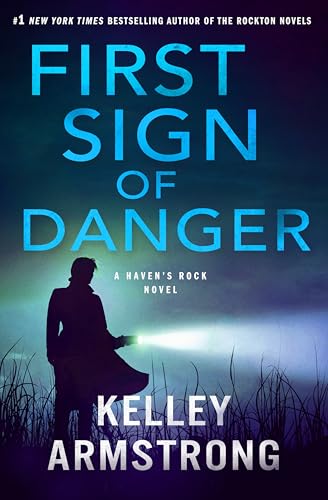
Review – First Sign of Danger (Haven’s Rock, Book 4) by Kelley Armstrong (5/5 stars)

Reading Level: Adult
Genre: Mystery/Thriller
Length: 344 pages
Publisher: Minotaur Books
Release Date: February 17, 2026
ASIN: B0F5PDG8NF
Stand Alone or Series: 4th book in the Haven’s Rock series
Source: Borrowed ebook from library
Rating: 5/5 stars
“Detective Casey Duncan and her husband, Sheriff Eric Dalton, are entering a new chapter of life as parents to their six-month-old baby. Their family is hidden away in the sanctuary town of Haven’s Rock where they can live safe and private lives. But when they encounter hikers too close to the borders of Haven’s Rock, they realize they’re in danger of being exposed.
When they find one of the hikers dead the next day, they realize that their paranoia was justified, but they’re no closer to finding out who these people were and what they were doing in the vicinity of Haven’s Rock. Only by tracing the hikers’ movements, as well as examining the recent behavior of their closest neighbors, the workers of a secretive mining camp, will they be able to figure out where the threat is coming from and shut it down. Otherwise, the lives of everyone in Haven’s Rock–and their safe, secure new existence–are at risk.”
Series Info/Source: This is the 4th book in the Haven’s Rock series. I borrowed this on ebook from the library.
Thoughts: I really enjoyed this continuation of the Haven’s Rock series. The mystery is well done, and it was great to see how the new sanctuary town of Haven’t Rock is progressing. I am a big fan of Armstrong and have read the majority of her other series and enjoyed them. I would recommend reading the Rockton series before reading this one because there is quite a bit of background there that ties in with this story. However, this whole series does stand alone fine on its own.
In this book, Casey and Eric are juggling being new parents while ensuring that Haven’s Rock runs smoothly. The autumn is in full swing and they are surprised when they stumble upon a couple of lost hikers. This makes them both a bit paranoid about why the hikers were really out in the middle of the Yukon forest this late in the year. When one of the hikers is found dead the next day, their worry deepens. Exposure is always a danger, and Haven’s Rock has already been dealing with a group of nearby miners, not to mention rumors about possible spies from Rockton.
This story is another wonderful blend of survival elements, combined with a good mysterious police procedural. We get some closure around the mystery of the nearby mining company and also get some insight into what has been happening at Rockton since Casey and Eric left there.
I really enjoyed watching Casey and Eric move onto a new stage of life with their young daughter. Many people seem to want their new baby to be a liability, but instead, they are approaching this new stage of life in a way that brings the people of Haven’s Rock closer together.
This was a quick and easy read that was fast paced, kept you guessing, and well written. I can’t wait to see what the fifth, and final, book of the series holds.
My Summary (5/5): Overall I really enjoyed this book and thought it did a wonderful job of progressing the story. I really enjoyed the police procedural and survival elements to this story. I also enjoyed seeing Casey and Eric enter a new stage of their lives together. I am eager to see what happens in the final book in the series. I would recommend to Rockton fans, or to those who think survival combined with a good murder mystery sounds intriguing.

Categories: Fantasy Books
The Horrifying Draw of Subnautica
Good afterevenmorn, Readers!
Now that I’ve finished my play-thorugh of Far Cry 6, I have started playing a new game on my Friday night live streams. It is a survival exploration game that I am assured also has a story element (my livestreams are narrative games, largely). It is both fascinating and absolutely horrifying. I am, of course, talking about Subnautica. With the third game in the series out now in early access (oddly called Subnautica 2, even though the second game in the series was Subnautica: Below Zero), I figured I should take a stab at the original game. I knew precious little about it, save that it was a science fiction survival and exploration game, and that there was a thing in it called a reaper levaithan.
Now, I’m not very far into the game, so I haven’t experienced any of the promised story, save for the introduction, but I am already obsessed. Let’s talk about it!
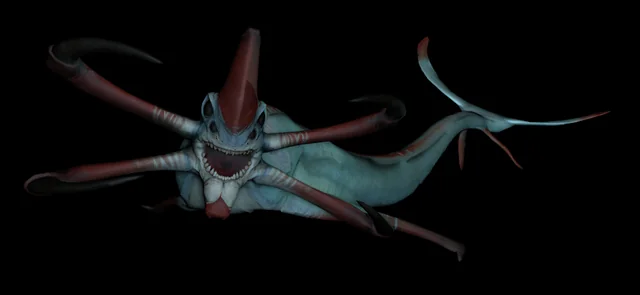 This thing. This thing is a reaper. I have seen it at a distance, heard it roar… and that’s quite enough for me.
I have only streamed this game three times (it’s a recent start), so I’m not very far into it. The story so far is this: your spaceship, the Aurora, owned by intergalactic corporation Alterra, crash lands on an alien planet (4546). A planet that’s entirely ocean. You, a person on the ship, escape into a life pod/escape module and land in a relatively shallow region in the ocean, not far from your downed spaceship. You are the only person in the life pod. And you might be the only person who survived the crash. I’m not sure yet. Every other life pod I’ve come across has been sunken, ripped open and empty of anything but personal PDAs (personal digital assistants). A couple of times, your PDA notes that some of the animals in the area have bellies full of human remains.
Oh, great.
You have nothing, but some food and some water, and your life pod. So… good luck?
It is up to you to gather resources and, using what’s on your life pod, create the things you need to survive – a scanner, so you can scan parts of other tech that you need in order to have your PDA patch together blueprints that you can use, or, if you’re me, the fascinating biological life everywhere around you (seriously, my inner nerd is going wild!). The further you explore, the more you discover and can use in order to help you survive this alien world. For instance, there is a type of fish that can yield fresh water… which is your most essential resource. Other fish you can cook or salt and eat. Other fish are poisonous and will kill you, which you won’t know unless you scan the thing. Also, there are broken pieces of tech strewn all over the place. If you scan enough of the pieces of one kind, you can create all kinds of tools – a knife, a repair tool, a seamoth (a kind of personal submarine – I just got the blueprints for that), even habitat pieces you can use in order to build your own base. I have a very rudimentary base at present.
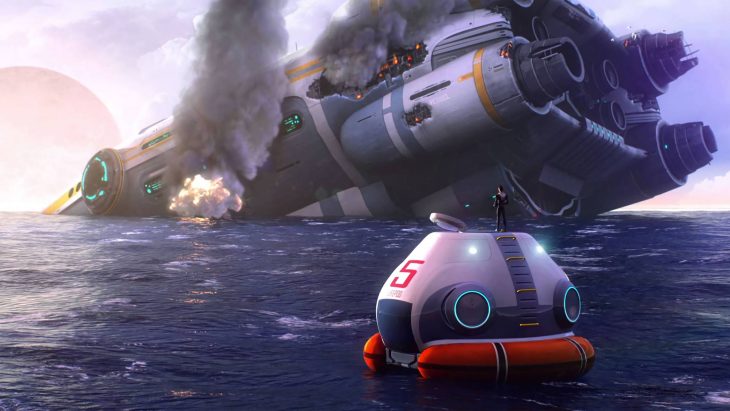 That’s her. That’s the remains of the Aurora (and your wee life pod).
There is also something about a virus which, the game having prompted the player to scan themselves for, I feel will play a much larger role eventually. I suspect that’s where the story will come in, but I haven’t much of a clue as to what that might be just yet.
I stream only once a week, being stupidly busy, but I am obsessed. I can’t stop thinking about this game. I want to catalogue all the species I find. I want to explore every biome. I run (swim?) screaming from that exploration because of horrific sounds in the dark…
Look, I don’t do horror. I am a cowardly, knock-kneed, scaredy-cat. I don’t read horror novels. I don’t watch horror films. And I do not play horror games. Except for this one, apparently. In my defence, I didn’t know this was horror until I was looking into the murky waters around the Aurora and heard a roar right behind me. THE SCREAM I SCRUMPT. As they say in internet parlance. Beyond the horrifying unknown, though, is an incredible game. The world is insanely thought through; from the various biomes to the creatures that inhabit them, and the technology that will help you survive this water world. It’s all so detailed and thorough. This game is a masterclass in worldbuilding.
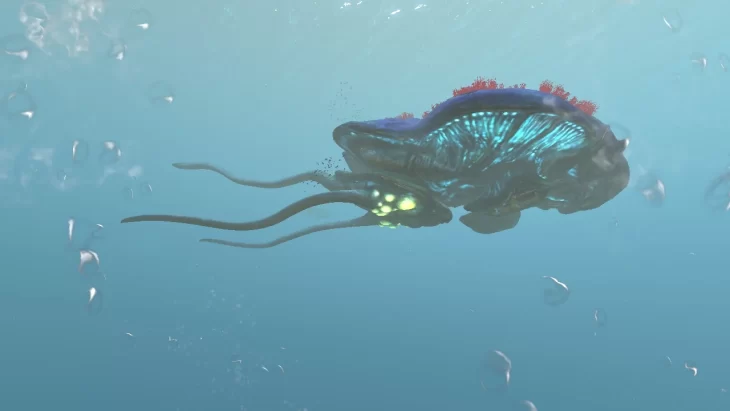 *Best Steve Irwin Voice* This beauty is a Reefback; the gentle giants of the oceans of planet 4546B. They might be the size of a house, but these puppies are passive as. They carry entire ecosystems on their backs…
While I cannot yet make any claims as to the story (I’m way too early in game time for much of that to have happened), if the story is anywhere near the level of worldbuilding, this game might become my absolute favourite.
It is also scratching that itch that I believe lives in nearly everyone. The itch that is curiosity – the urge to learn, to go to new places, to discover, and explore. The urge that compelled our ancestors into the frozen lands north of their home, the urge that compels us now to stretch out into the heavens. It is a powerful thing that I think the makers of this game tapped into expertly.
It is also absolutely horrifying. The number of times I have muttered the word “nope” (and much less savory words) while playing is not insignificant. And yet, despite that horror, despite the threat of dehydration, starvation, and drowning, I am drawn again and again beneath the waves of 4546B. I don’t know what magic this dev. team poured into the making of this game, but just nine hours in, it is certainly working. I can’t wait to return.
Alas, I must go to the office instead.
*grumble*
When S.M. Carrière isn’t brutally killing your favorite characters, she spends her time teaching martial arts, live streaming video games, and sometimes painting. In other words, she spends her time teaching others to kill, streaming her digital kills, and sometimes relaxing. Her most recent titles include Daughters of Britain, Skylark and Human. The Timbercreek Incident is free to read on Wattpad.
Categories: Fantasy Books
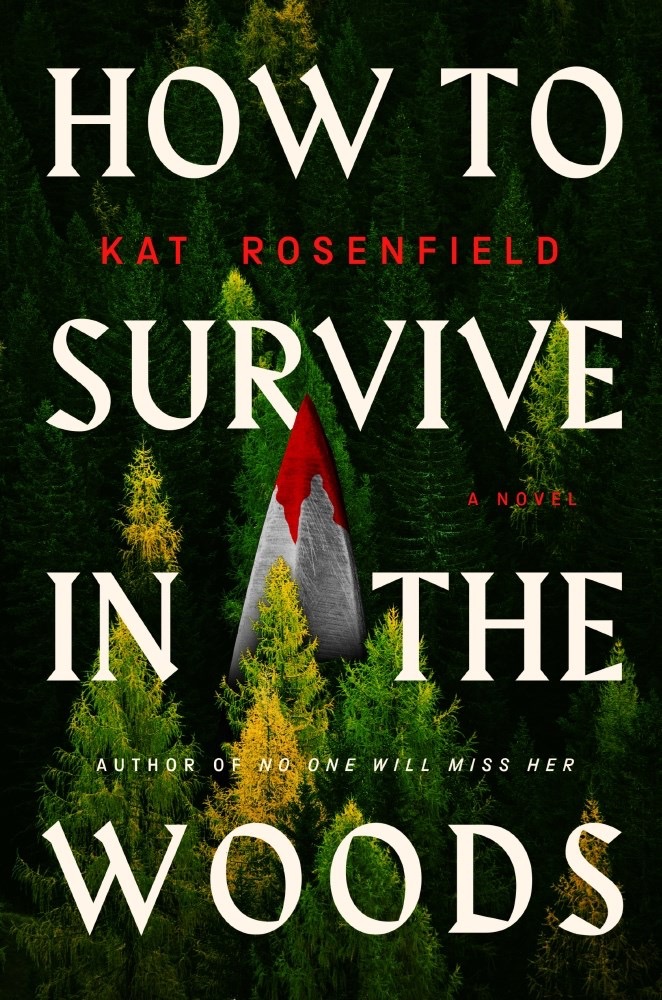
How to Survive in the Woods (by Kat Rosenfield)
Mystery / Thriller
Logan comes into Emma’s life after a suicide attempt, at a time when she just wanted someone to tell her what to do, where to be, how to live. He is a control freak and at her most vulnerable it seemed to be what she needed, but as the years go by his gaslighting and controlling lead into domestic violence.
When Emma meets Taylor, Logan’s former girlfriend she immediately knows what is happening and she comes up with a plan to get Logan out of both their lives. But everyone has secrets, everyone has a plan.
–––––––––––––––––––––––––––––––––––––––––––––––––––––––––––––––––––––––––––––
How to Survive in the Woods reminded me of a lot of different things. Gaslight, the old Ingrid Bergman move, Sleeping With the Enemy and maybe just a little Double Indemnity. It is a dark mystery thriller which holds its secrets close and only releases them begrudgingly. If I’m honest, the first half of the book was a struggle, it’s a painfully slow build but the second half more than makes up for it.
Trigger Warning: suicide, domestic violence
Categories: Fantasy Books
“Last Girl Gone” | Heart-Pumping Realism Hits Close to Home
Recommended Titles by J. G. Hetherton and Others Along with Last Girl Gone, we’re picking…
The post “Last Girl Gone” | Heart-Pumping Realism Hits Close to Home appeared first on LitStack.
Categories: Fantasy Books
Teaser Tuesdays - The Sea Witch

But I thought I should show him what I can do, I protest.The Sea Witch cuts me off. Let him win. Again and again. Watch his mood improve.
(page 136, The Sea Witch by Rebecca F. Kenney)
---------
Teaser Tuesdays is a weekly bookish meme, previously hosted by MizB of Should Be Reading. Anyone can play along! Just do the following: - Grab your current read - Open to a random page - Share two (2) “teaser” sentences from somewhere on that page BE CAREFUL NOT TO INCLUDE SPOILERS! (make sure that what you share doesn’t give too much away! You don’t want to ruin the book for others!) - Share the title & author, too, so that other TT participants can add the book to their TBR Lists if they like your teasers!
Categories: Fantasy Books
THE DORIANS by Nick Cutter
If, on your death bed, a stranger offered you the chance to extend your life, would you? Especially after you were resigned to death to the point your death would be medically assisted? That’s the question Nick Cutter posits at the start of The Dorians, publishing in May 2026 from Saga Press. On a remote…
Categories: Fantasy Books
Spotlight on “Tillinghast” by Clare Cavenagh
LitStack Spots Here are a few other bloodcurdling titles that we are definitely adding to…
The post Spotlight on “Tillinghast” by Clare Cavenagh appeared first on LitStack.
Categories: Fantasy Books
A (Black) Gat in the Hand: Elliot Gould’s Better Philip Marlowe
 “You’re the second guy I’ve met within hours who seems to think a gat in the hand means a world by the tail.”
– Phillip Marlowe in Raymond Chandler’s The Big Sleep
Back in the Summer of 2020, A (Black) Gat in the Hand looked at some screen and radio productions for Raymond Chandler’s private eye, Philip Marlowe. Two months before, I had done a separate post on Powers Boothe’s terrific series for HBO. That series was really the impetus to move me from not liking Raymond Chandler, to being a fan.
There was a second thing which brought me all the way in to being a Chandler guy. Now, I cannot abide Elliott Gould’s The Long Goodbye. My attempts to ‘try again’ inevitably lead to me quitting the re-watch. I don’t like my Marlowe in 1973, and it’s my least favorite Marlowe on screen.
However, as with Powers Boothe, I wouldn’t be a fan of Raymond Chandler if not for Gould. He recorded all the Marlowe novels, as well as several of Chandler’s non-Marlowe short stories, as audiobooks. This was way back in cassette days, and I was smart enough to pick up several of the CDs, even though I wasn’t into Chandler then.
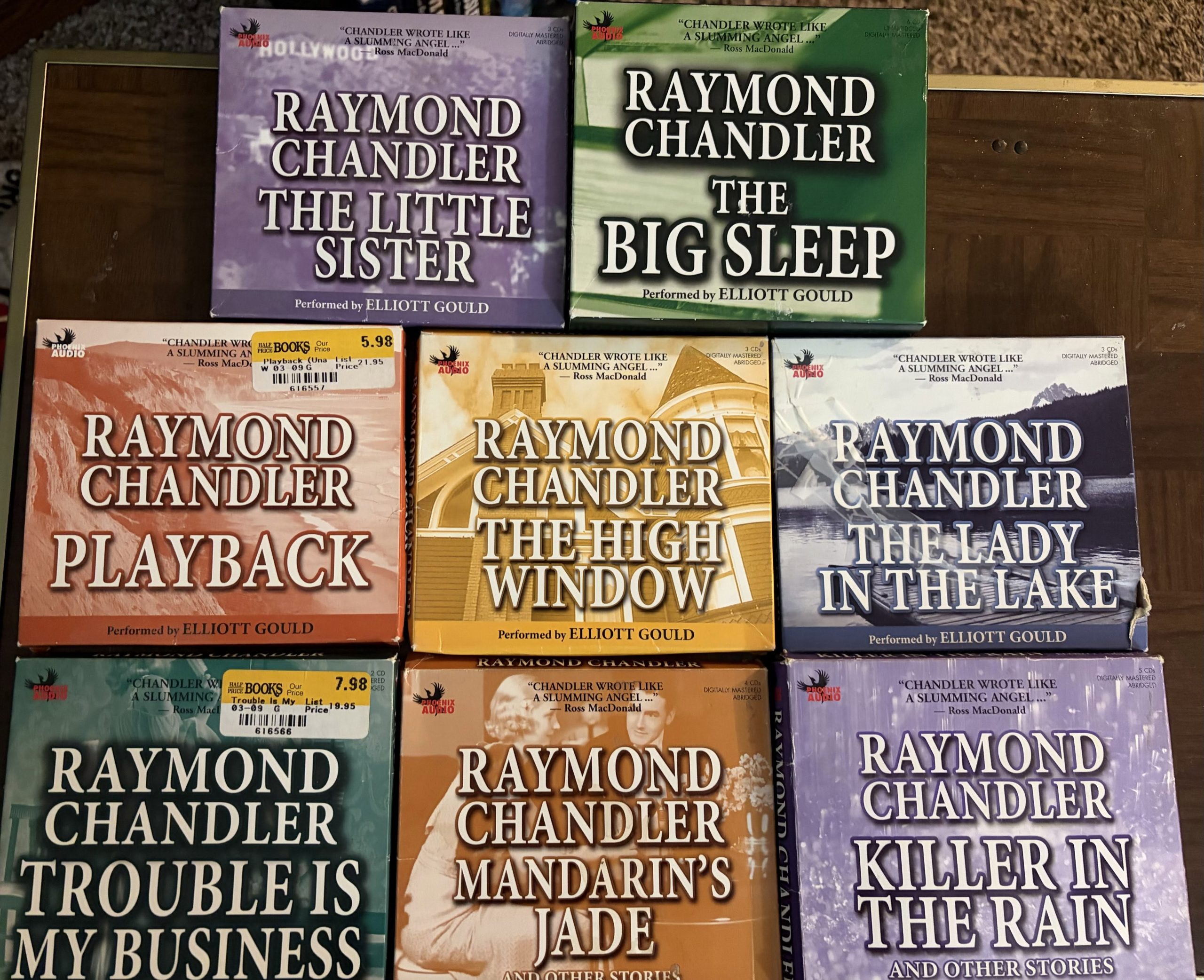
I have five of the seven novels (he also narrated Poodle Springs, an unfinished Chandler novel, which Robert B. Parker completed), and three short story CDs:
The Big Sleep
The High Window
The Lady in the Lake
The Little Sister
Playback
Killer in the Rain and Other Stories
Mandarin’s Jade and Other Stories
Trouble is My Business
 Gould is spot on. I have no complaints whatsoever about these audiobooks, other than that almost all of them are abridgements (at least The Big Sleep is unabridged).
Early on, Chandler wrote about a very Marlowe-like PI named Carmady, for Black Mask. Gould’s Killer in the Rain is all Carmady stories, as are two of the stories in Mandarin’s Jade.
After Cap Shaw was fired by Black Mask, Chandler left the magazine for Dime Detective and essentially turned Carmady into John Dalmas. And Dalmas was basically Marlowe before he was called Marlowe. There’s not much difference between the latter two.
John Dalmas is in “Mandarin’s Jade,” and the short novella, Trouble is My Business.
Dalmas was also in “Red Wind” (which I wish I’d bought), and the short story version of “The Lady in the Lake,” which Chandler turned into the Marlowe novel of the same name.
Chandler was pretty much done with short stories by 1942, and he would cannibalize some of these for his novels, starting with The Big Sleep. I like Chandler’s short stories, and fans of Marlowe should enjoy Dalmas. The Carmady stories are a little less polished, but he was just starting out as a writer. They’re still very Chandler.
I would have liked to see Gould in a period-appropriate Marlowe movie or two. Based on his readings, they would have been good.
Gould conveys the cynicism and world-weariness which is characteristic of Chandler’s detectives This is vital to a believable Marlowe. Chandler’s PI is different from Dashiell Hammett’s Sam Spade, or The Continental Op. Gould sounds like Chandler reads.
I can absolutely picture the scene as Gould narrates. The hard dames, the corrupt cops, the tough guys, the arrogant clients: Gould is excellent at ‘showing’ all the emotions and attitudes which Marlowe has to deal with. Prospective clients like to ‘put him in his place, and he rolls with it, often ignoring, rather than arguing back. Part of it is Chandler’s tremendous facility with words. But Gould isn’t just a good narrator. He’s a good Marlowe.
My feelings about Gould on screen vs in audio, reminds me of Alfred Molina. His modern-day Murder on the Orient Express was an unpopular movie. But a few years ago he did a radio play of “The Murder on the Links.” He is very good as Poirot.
Gould pronounces coupe ‘coop-ay.’ which feels kind of classy. And I like the way he says porte-cochere (Chandler really liked that French word). His voice is smooth. I like listening to him read. And he totally vibes the Marlowe of the written page.
Some of Gould’s audiobooks are on Youtube, and a few can be found via the Libby library app, and also on Audible. I’m fortunate that I bought most on CD. I listen to them at least every year or two when I get in a Marlowe mood. Though I really like the BBC radio plays with Toby Stephens (Vexed) as Marlowe. They’re tough to beat, and readily available to buy for phone listening.
But I often recommend Gould’s audiobooks. I think that the fact I can’t stand the movie,
It’s mid-May, and I’ve been in something of a hardboiled mood lately. So with Summer looming, here’s a Black (Gat) in the Hand. More Pulp is coming, like a gumshoe with a gasper and a rod.
Prior Posts in A (Black) Gat in the Hand – 2026 (1)
Prior Posts in A (Black) Gat in the Hand – 2025 (12)
Will Murray on Dash(iell Hammet) and (Lester) Dent
Shelfie – Dashiell Hammett
Windy City Pulp & Paper Fest – 2025
Will Murray on Who was N.V. Romero?
Conan – The Phoenix in the Sword in Weird Tales
More of Robert E. Howard’s Kirby O’Donnell
More Weird Menace from Robert E. Howard – Conrad and Kirowan
Hardboiled Gaming- LA Noire
Western Noir: Hell on Wheels
T.T. Flynn’s Mr Maddox
Dashiell Hammettt’s The Scorched Face (my intro)
Will Murray on Raymond Chandler’s Other Lost Stories?
Prior Posts in A (Black) Gat in the Hand – 2024 Series (11)
Will Murray on Other Lost Raymond Chandler Stories?
Will Murray on Dashiell Hammett’s Elusive Glass Key
Ya Gotta Ask – Reprise
Rex Stout’s “The Mother of Invention”
Dime Detective, August, 1941
John D. MacDonald’s “Ring Around the Readhead”
Harboiled Manila – Raoul Whitfield’s Jo Gar
7 Upcoming A (Black) Gat in the Hand Attractions
Paul Cain’s Fast One (my intro)
Dashiell Hammett – The Girl with the Silver Eyes (my intro)
Richard Demming’s Manville Moon
More Thrilling Adventures from REH
Prior Posts in A (Black) Gat in the Hand – 2023 Series (15)
Back Down those Mean Streets in 2023
Will Murray on Hammett Didn’t Write “The Diamond Wager”
Dashiell Hammett – ZigZags of Treachery (my intro)
Ten Pulp Things I Think I Think
Evan Lewis on Cleve Adams
T,T, Flynn’s Mike & Trixie (The ‘Lost Intro’)
John Bullard on REH’s Rough and Ready Clowns of the West – Part I (Breckenridge Elkins)
John Bullard on REH’s Rough and Ready Clowns of the West – Part II
William Patrick Murray on Supernatural Westerns, and Crossing Genres
Erle Stanley Gardner’s ‘Getting Away With Murder (And ‘A Black (Gat)’ turns 100!)
James Reasoner on Robert E. Howard’s Trail Towns of the old West
Frank Schildiner on Solomon Kane
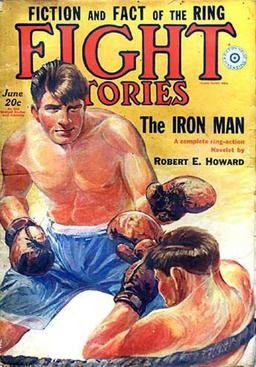 Paul Bishop on The Fists of Robert E. Howard
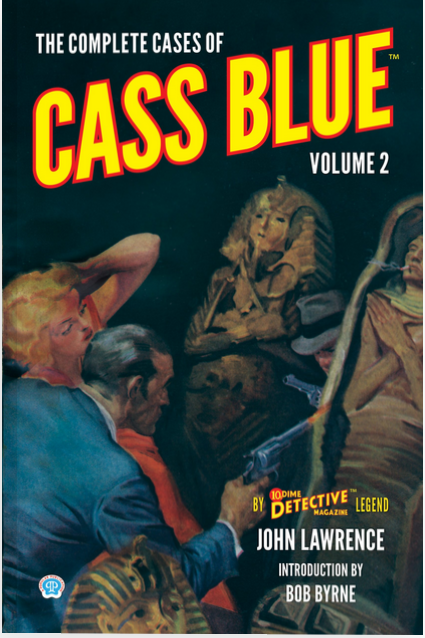
John Lawrence’s Cass Blue
Dave Hardy on REH’s El Borak
Prior posts in A (Black) Gat in the Hand – 2022 Series (16)
Asimov – Sci Fi Meets the Police Procedural
The Adventures of Christopher London
Weird Menace from Robert E. Howard
Spicy Adventures from Robert E. Howard
Thrilling Adventures from Robert E. Howard
Norbert Davis’ “The Gin Monkey”
Tracer Bullet
Shovel’s Painful Predicament
Back Porch Pulp #1
Wally Conger on ‘The Hollywood Troubleshooter Saga’
Arsenic and Old Lace
David Dodge
Glen Cook’s Garrett, PI
John Leslie’s Key West Private Eye
Back Porch Pulp #2
Norbert Davis’ Max Latin
Prior posts in A (Black) Gat in the Hand – 2021 Series (7 )
The Forgotten Black Masker – Norbert Davis
Appaloosa
A (Black) Gat in the Hand is Back!
Black Mask – March, 1932
Three Gun Terry Mack & Carroll John Daly
Bounty Hunters & Bail Bondsmen
Norbert Davis in Black Mask – Volume 1
Prior posts in A (Black) Gat in the Hand – 2020 Series (21)
Hardboiled May on TCM
Some Hardboiled streaming options
Johnny O’Clock (Dick Powell)
Hardboiled June on TCM
Bullets or Ballots (Humphrey Bogart)
Phililp Marlowe – Private Eye (Powers Boothe)
Cool and Lam
All Through the Night (Bogart)
Dick Powell as Yours Truly, Johnny Dollar
Hardboiled July on TCM
YTJD – The Emily Braddock Matter (John Lund)
Richard Diamond – The Betty Moran Case (Dick Powell)
Bold Venture (Bogart & Bacall)
Hardboiled August on TCM
Norbert Davis – ‘Have one on the House’
with Steven H Silver: C.M. Kornbluth’s Pulp
Norbert Davis – ‘Don’t You Cry for Me’
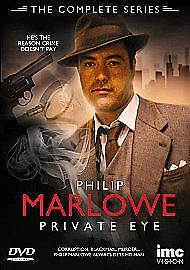 Talking About Philip Marlowe
Steven H Silver Asks you to Name This Movie
Cajun Hardboiled – Dave Robicheaux
More Cool & Lam from Hard Case Crime
A (Black) Gat in the Hand – 2019 Series (15)
Back Deck Pulp Returns
A (Black) Gat in the Hand Returns
Will Murray on Doc Savage
Hugh B. Cave’s Peter Kane
Paul Bishop on Lance Spearman
A Man Called Spade
Hard Boiled Holmes
Duane Spurlock on T.T. Flynn
Andrew Salmon on Montreal Noir
Frank Schildiner on The Bad Guys of Pulp
Steve Scott on John D. MacDonald’s ‘Park Falkner’
William Patrick Murray on The Spider
John D. MacDonald & Mickey Spillane
Norbert Davis goes West(ern)
Bill Crider on The Brass Cupcake
A (Black) Gat in the Hand – 2018 Series (32)
George Harmon Coxe
Raoul Whitfield
Some Hard Boiled Anthologies
Frederick Nebel’s Donahue
Thomas Walsh
Black Mask – January, 1935
Norbert Davis’ Ben Shaley
D.L. Champion’s Rex Sackler
Dime Detective – August, 1939
Back Deck Pulp #1
W.T. Ballard’s Bill Lennox
Erle Stanley Gardner’s The Phantom Crook (Ed Jenkins)
Day Keene
Black Mask – October, 1933
Back Deck Pulp #2
Black Mask – Spring, 2017
Erle Stanley Gardner’s ‘The Shrieking Skeleton’
Frank Schildiner’s ‘Max Allen Collins & The Hard Boiled Hero’
A (Black) Gat in the Hand: William Campbell Gault
A (Black) Gat in the Hand: More Cool & Lam From Hard Case Crime
MORE Cool & Lam!!!!
Thomas Parker’s ‘They Shoot Horses, Don’t They?’
Joe Bonadonna’s ‘Hardboiled Film Noir’ (Part One)
Joe Bonadonna’s ‘Hardboiled Film Noir’ (Part Two)
William Patrick Maynard’s ‘The Yellow Peril’
Andrew P Salmon’s ‘Frederick C. Davis’
Rory Gallagher’s ‘Continental Op’
Back Deck Pulp #3
Back Deck Pulp #4
Back Deck Pulp #5
Joe ‘Cap’ Shaw on Writing
Back Deck Pulp #6
The Black Mask Dinner
 Bob Byrne’s ‘A (Black) Gat in the Hand’ made its Black Gate debut in 2018 and has returned every Summer since.
His ‘The Public Life of Sherlock Holmes’ column ran every Monday morning at Black Gate from March, 2014 through March, 2017. And he irregularly posts on Rex Stout’s gargantuan detective in ‘Nero Wolfe’s Brownstone.’ He is a member of the Praed Street Irregulars, and founded www.SolarPons.com (the only website dedicated to the ‘Sherlock Holmes of Praed Street’).
He organized Black Gate’s award-nominated ‘Discovering Robert E. Howard’ series, as well as the award-winning ‘Hither Came Conan’ series. Which is now part of THE Definitive guide to Conan. He also organized 2023’s ‘Talking Tolkien.’
He has contributed stories to The MX Book of New Sherlock Holmes Stories — Parts III, IV, V, VI, XXI, and XXXIII.
He has written introductions for Steeger Books, and appeared in several magazines, including Black Mask, Sherlock Holmes Mystery Magazine, The Strand Magazine, and Sherlock Magazine.
You can definitely ‘experience the Bobness’ at Jason Waltz’s ’24? in 42′ podcast.
Categories: Fantasy Books
Book review: Catch and Kill (Neon Meridian #1) by Craig Schaefer

ABOUT THE AUTHOR: Craig Schaefer writes about witches, outlaws, and outsiders. Whether they’re weaving tales of an occult-shrouded New York in Ghosts of Gotham, the dimension-hopping adventures of Castaways, or the gritty streets of a noir future in the Neon Meridian series, their protagonists are damaged survivors searching for answers, redemption, or maybe just that one big score.
Publisher: Aethon Books (May 19, 2026) Page count: 358 pages Formats: audiobook, ebook, paperback Genre: Urban Science Fantasy
At this point Craig Schaefer has basically become an instabuy author for me. Whenever a new book appears, I buy it, move it straight to the top of my TBR pile, and assume I’m about to have a good time. So far this strategy has worked quite well. I don’t think Schaefer has actually disappointed me once.
Catch and Kill definitely continues the streak.
This book feels like Schaefer operating in peak form again: fast, tight, funny in the right places, surprisingly charming, and full of twists that keep the story moving without turning it into nonsense. It’s also definitely adult. People get shot, cursed, murdered, manipulated, and occasionally reduced to a warning. But if you’re picking up cyberpunkish urban fantasy involving magical corporate espionage, that's probably what you're looking for.
Magic became public knowledge decades ago and people decided to monetize it. So now Hell has embassies, corporations employ witches and undead accountants probably exist somewhere off-page filing cursed paperwork forever.
Emily Yeats is a blue-collar Brooklyn witch running security audits with her team by staging elaborate magical break-ins for clients. She may not be the strongest person in the room physically, but she compensates with skill, stubbornness, and enough magical talent to make very dangerous people regret underestimating her. Her team is fantastic, and it includes a sentient android who moonlights as a dominatrix, a hacker/catgirl genius, and a hardened military operative who balances out the team’s collective tendency toward chaos.
Also, Emily shares her apartment with venomous spiders. Weirdly enough, they are excellent roommates. Quiet. Helpful. Probably better at cleaning than most humans.
The whole thing is insanely readable. Schaefer throws cyberpunk elements, urban fantasy, corporate conspiracies, magical contracts, supernatural assassins, and heist elements into the same blender and somehow the story never feels overloaded. It just moves. Every chapter pushes forward cleanly, and before long you realize you read half the book in one sitting.
And while this is clearly the start of a series, the actual story feels complete. There's no massive cliffhanger or "to be continued" ambush right as things get interesting. The central plot wraps up properly while still leaving plenty of room for future books.
Which is good, because I absolutely want future books. Book two. Book three. Book seven if sales permit. I’d happily keep following Emily and her dysfunctional little team through magical cyberpunk disasters for quite a while.
Categories: Fantasy Books
Manga Review – Witch Hat Atelier Vol 14 by Kamome Shirahama (4/5 stars)

Reading Level: Young Adult
Genre: Fantasy/Manga
Length: 176 pages
Publisher: Kodansha Comics
Release Date: March 17, 2026
ASIN: B0FDJHS1ZP
Stand Alone or Series: 14th volume in the Witch Hat Atelier series
Source: Bought paperback
Rating: 4/5 stars
“At long last, Dagda and Custas are back together, reunited in the medical tower. All they should have to do now is wait for the doctors to treat them. But at that moment, Qifrey has a terrible premonition. Meanwhile, Coco has a plan to defend the town from the rampaging valance leeches. But it’s a long shot that’ll need all the town’s witches to work together…”
Series Info/Source: This is the 14th volume in the Witch Hat Atelier series. I bought this in paperback to read.
Thoughts: This volume continues the storyline of the valance leeches and follows our witches as they try to fight it. When Coco comes up with an amazing idea to defend the town her idea is challenged by the knights. While both the knights and the witches want to save people, they have very different beliefs on how that should be done. Unfortunately, for them, the valance leeches latch onto a new location to unleash their deadly chaos.
I love the illustration in this manga series, it is absolutely beautiful and a joy to look at. I continue to enjoy the theme of family and teamwork throughout. This volume really drives home that idea that you need amazing ideas from a team of people to solve a complex situation. I also loved that a lot of our apprentice witches are gaining confidence and really stepping up to help solve complicated problems.
While I was happy to see this storyline make more progress, I was a bit disappointed that the valance leech storyline is still going strong at the end of this volume. I feel like it’s time to wrap that up. Although at this point, I am not even sure what would come next for our characters.
My Summary (4/5 ):Overall I really love the artwork throughout this volume and love that our characters are growing and becoming more confident. I am happy the storyline made some progress, but felt like it didn’t make enough progress. I definitely plan to continue with this series because I want to know if Coco’s plan will work! I would recommend this manga series to those who enjoy cozy magic fantasy stories.

Categories: Fantasy Books
The Leaning Pile of Books
The Leaning Pile of Books is a feature in which I highlight books I got over the last week that sound interesting—old or new, bought or received in the mail for review consideration. Since I hope you will find new books you’re interested in reading in these posts, I try to be as informative as possible. If I can find them, links to excerpts, author’s websites, and places where you can find more information on the book are included, along […]
The post The Leaning Pile of Books first appeared on Fantasy Cafe.
Categories: Fantasy Books
Saved by the Panther: Jonathan Maberry on storytelling, books, and how the Black Panther changed his life, Part 1
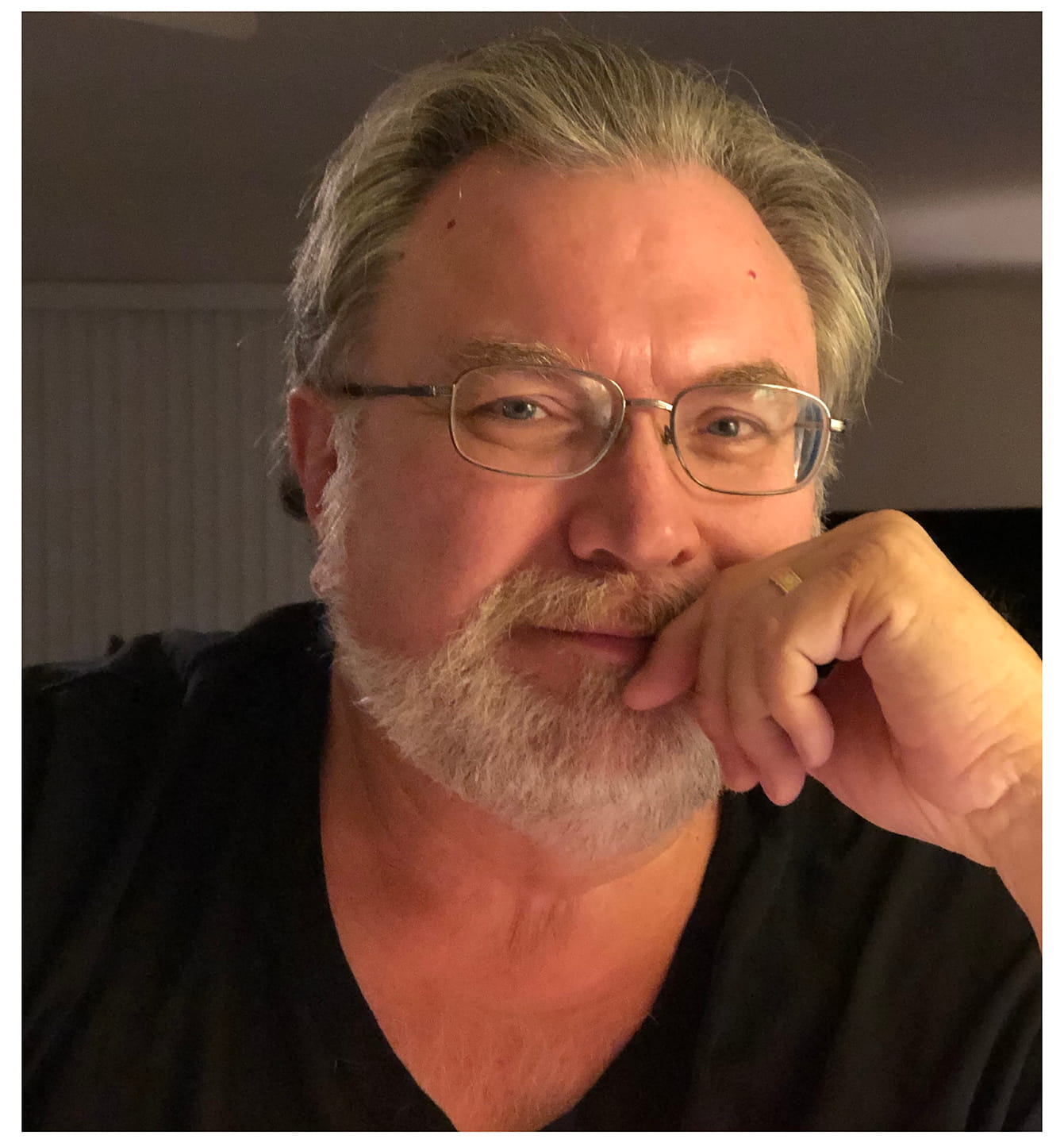 Jonathan Maberry
Since the publication of his first novel Ghost Road Blues, Jonathan Maberry has been a mainstay in genre fiction circles. Whether its for one of his multiple series, comic book writing, or the numerous anthologies he’s edited over the years, audiences have come to know and love his work.
With the completion of his 57th novel right around the corner, Maberry is still going strong. The five-time Stoker Award winner joined me for a chat about the past, present, and future. From his childhood in the rough Kensington neighborhood of Philadelphia to being editor of Weird Tales, here’s what Maberry had to share with Black Gate magazine in an interview so big we had to split it in two.
You’ve been writing and editing for decades, how has the industry changed since you made your fiction debut?
My first novel came out in 2006 which is just around the time that digital was rising, so a couple years from then on we saw the end of CDs and cassettes for audio books and the rise of digital downloads.
Also, we saw the rise of independent publishing going from what looked like cheap work to much more sophisticated work. Because, it’s kind of a sad event but had a good benefit, during the economic downturn a lot of people in publishing a lot of editors agents and so on lost their jobs. And those folks, a lot of them went freelance. So the indie crowd is now able to hire professional freelancers that worked in traditional publishing to be able to edit their books, design their books and so on which raised the quality of indie to be somewhat comparable to traditional publishing.
I’m 100% traditional published but you’ve seen so many books come out that are definitely top quality from the indie world and that’s happened during that phase.
We’ve also had the rise of CGI and AI which can be good or can be really bad. I’m not a fan of generative AI at all-I’m part of that big Anthropic lawsuit in fact. We’ve also seen the rise of E-book, though for a while a lot of industry folks thought that was going to explode and be the dominant form for books, but it turned out to be in third place. First is still print, audio is next, and for guys like me audio is actually more, and then e-books are a smaller group. I think that will change especially during the economic crisis we’re going through now. Because print relies on oil and everything from the chainsaws that cut down trees to the paper mills and trucks that drive them to the book store that’s all oil.
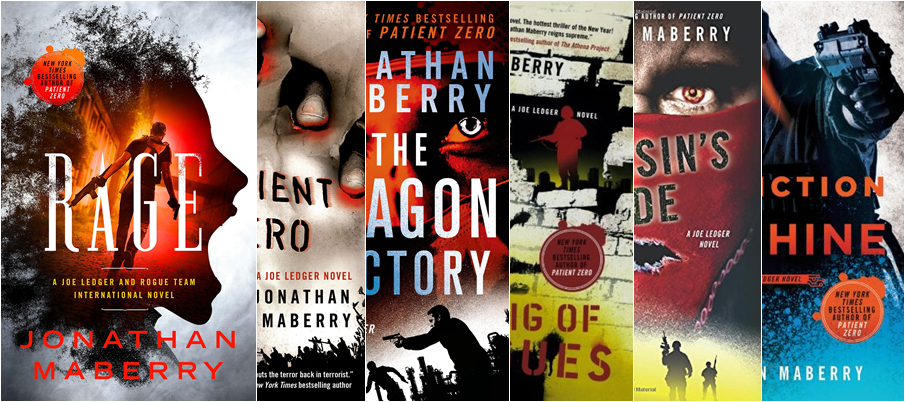 The 10-volume Joe Ledger series, written by Jonathan Maberry and published by St. Martin’s Griffin, began with Patient Zero in 2009
My personal favorite part of this is building a community because I’ve always been a community builder in the writing world anyway. For the last 26 years I’ve been actively building communities in various places so that writers of all kinds can share knowledge and mutually benefit. I started the Writers Coffeehouse back then and it’s since spread out to other parts of the country. I run the San Diego chapter and it’s thriving. It’s a free 3-hour networking group for writers of all kinds.
And that’s something that’s really wonderful. I can use these utilities like Zoom, Facebook Live, and others to talk to people, I can do classes, I do a writing masterclass as a charity fundraiser every month online. I do virtual panels, book events. All of that has happened in the 20 years since I started fiction.
The friends of mine who don’t like it, who are very much analog in their approach to writing, got left behind. And I’m sorry for them as a person but not sorry for them professionally because business has always changed and you have to change with it. That’s a fact of life. Business will not ask you whether it’s comfortable for you to change its going to change based on its needs and we’ve got to change with it.
Before you wrote your first novel in 2006, you’d written other books. What was it that made you want to become a writer and storyteller?
Honestly, I think I was born that way. I can remember even before I could write I was telling stories with toys. Storytelling was always baked into my DNA in some way. What changed over the years is the kind of writing. As a kid, I wanted to write comics and stories because that’s what I was reading and that’s what I understood. And my mentors, the people I met along the way at the time, were very encouraging of that.
But in high school I was very political. It was right after Watergate, right after the Vietnam war. Journalists had risen to become like rock stars. Woodward Bernstein, even Walter Cronkite, people like that were the voice of truth that we were hearing and I wanted to be that. So I shifted from fiction, probably in 10th grade, and then for the next 30 years that was my focus, nonfiction.
I went to school on a journalism scholarship through Temple University with every intention that I would expose the corrupt whatever, tear that down and expose the truth and all of that. Investigative journalists were like rock stars. But…I never actually did that. Halfway through college I took a course on magazine features and decided that was more fun, and I did that as part time work for decades.
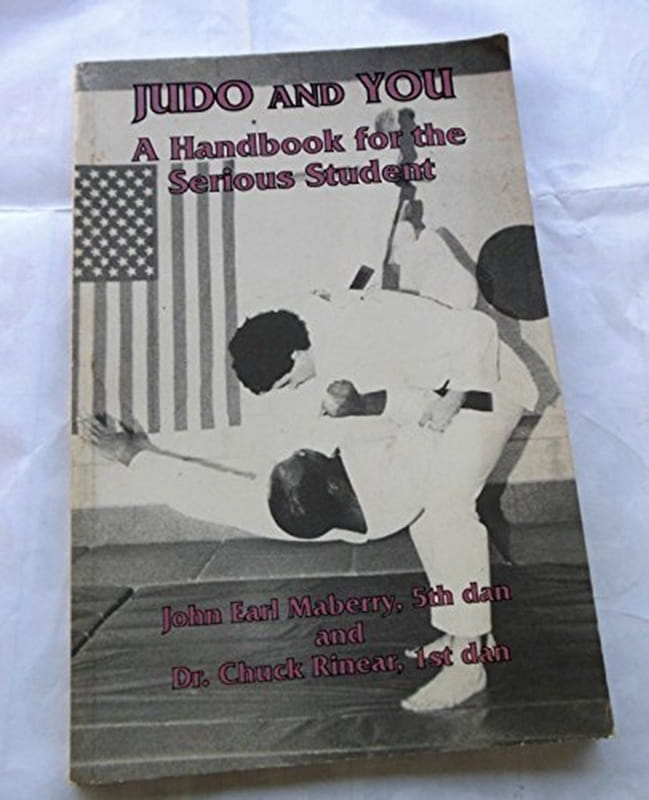 Judo & You: A Handbook for the Serious Student, by John Earl Maberry, 5th dan, and Dr. Chuck Rinear, 1st dan (Kendall Hunt Pub Co, 1991)
My day job was always teaching martial arts in various ways including teaching martial arts history at Temple University for 14 years along with teaching jujutsu classes and women’s self-defense and other things. So I was writing about that sort of stuff, my first book was a judo textbook I wrote for a friend of mine who was a judo instructor at Temple University. That book came out in 1991.
My breaking away from that kind of writing happened in stages. I started out with the ‘write what you know’ and since I’d been doing martial arts since I was five, I wrote about that. I then started writing about what I liked: skydiving, music, I wrote about travel, theater, bartending, holidays, parenting, all sorts of stuff. I did about 1200 feature articles and maybe 3000 reviews and filler pieces.
Then around 2000 I wrote a nonfiction book about supernatural folklore – The Vampire Slayers Field Guide to the Undead — about what people actually believed about monsters throughout history. It was the only thing I ever published under a pen name – Shane MacDougall — because my martial arts book publisher was afraid that such a dramatic genre shift would negatively impact sales of those other books. It did not, as it turned out.
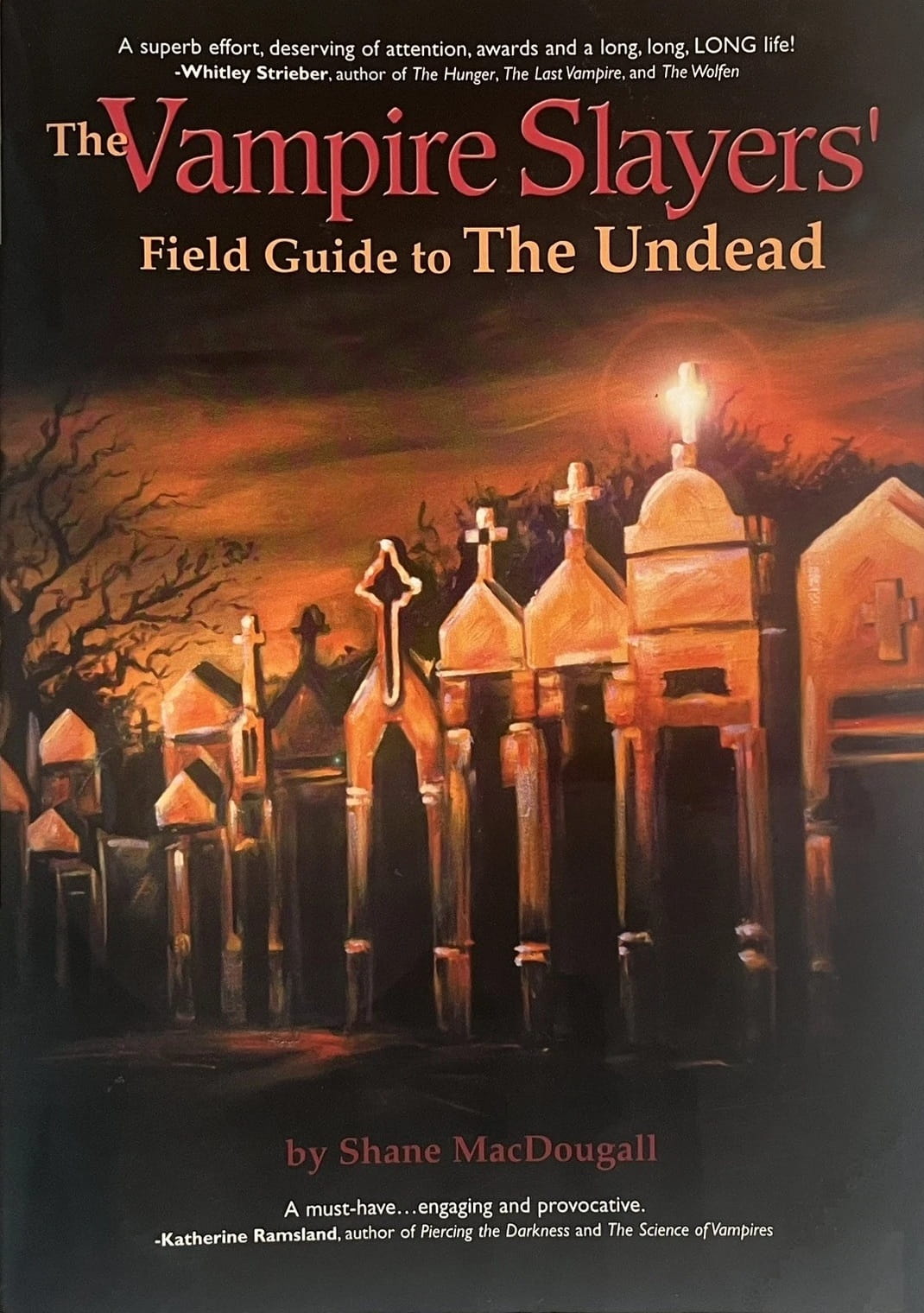
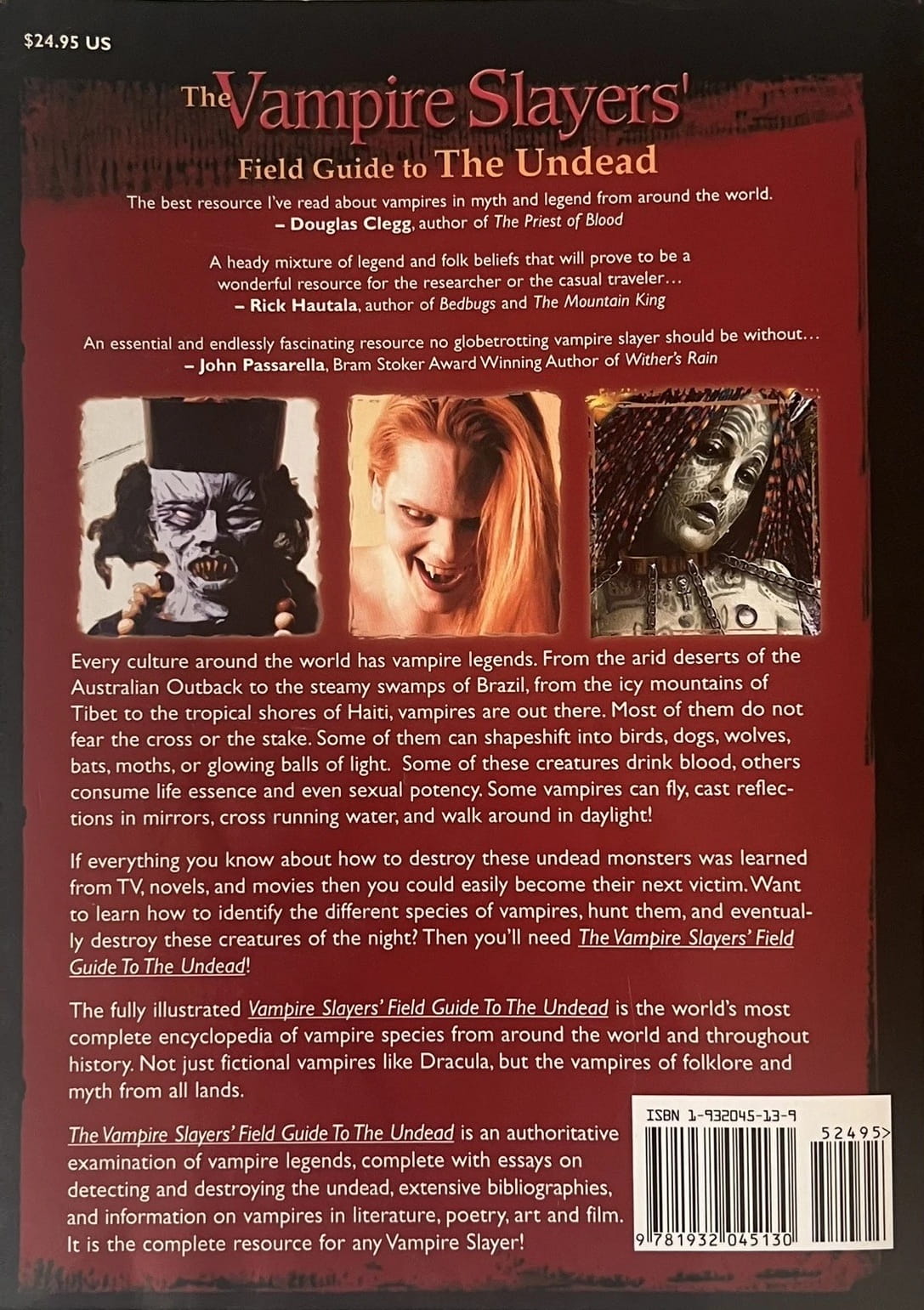
The Vampire Slayers’ Field Guide to the Undead by Shane MacDougall,
AKA Jonathan Maberry (Strider Nolan, October 1, 2003)
While researching folklore it made me want to find novels that use the folkloric versions of monsters but they were very hard to find, at least back then. Now they are more common. But back then my wife said, “Why don’t you just write it.” And you know I actually never considered that, so I spent five years learning to write a novel and trying to understand the carpentry used to build a novel. You know, the elements of craft: pacing and tone, voice, point of view, figurative and descriptive language, the three act structure, all that.
And then I wrote a novel just to get it out of my system more than anything else. I got an agent really quickly, and it sold to the second publisher who looked at it. The book Ghost Road Blues is still in print. In fact June 6th will be the 20th anniversary of its release. June 6th is also when I’m getting the lifetime achievement award from the Horror Writers Association.
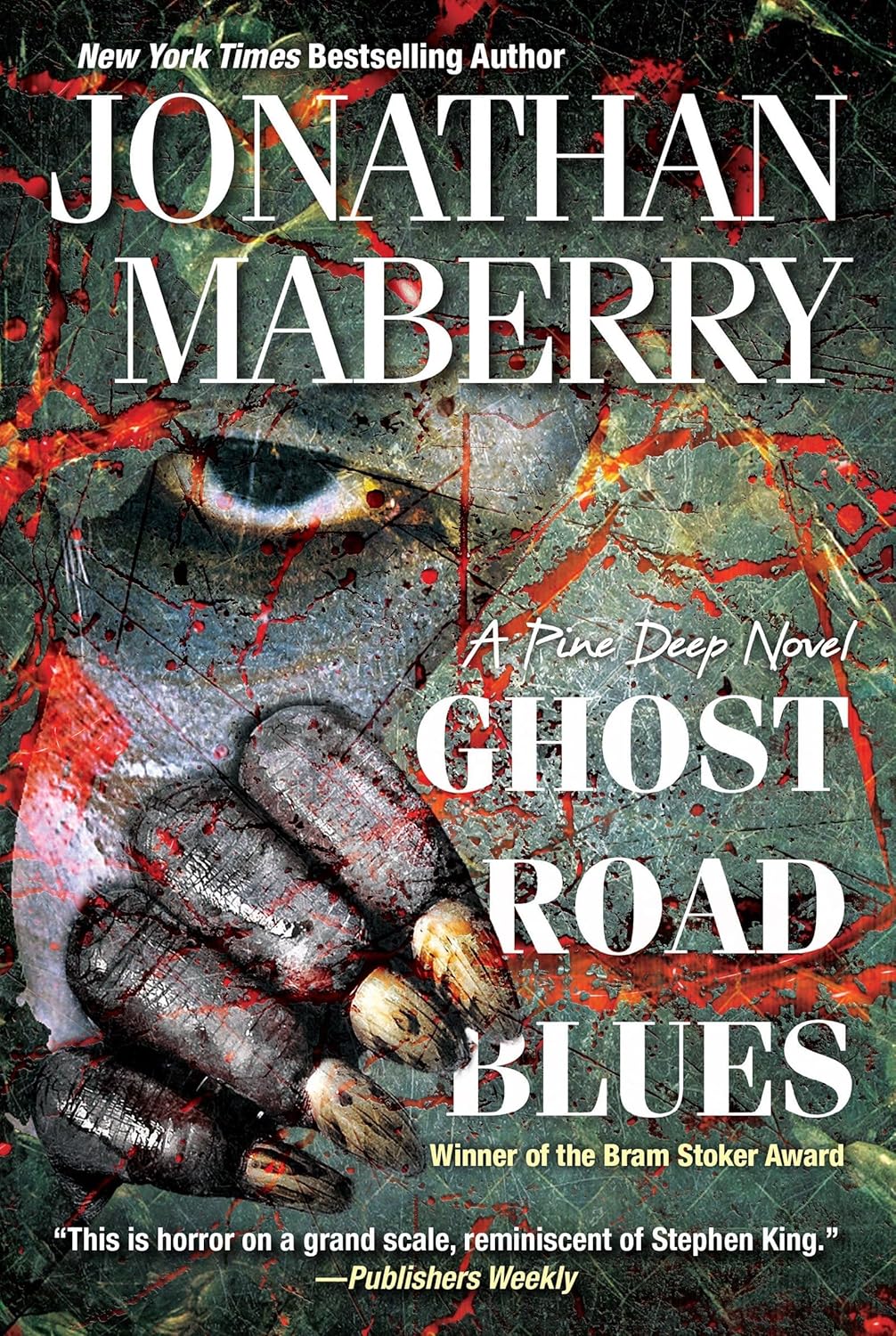
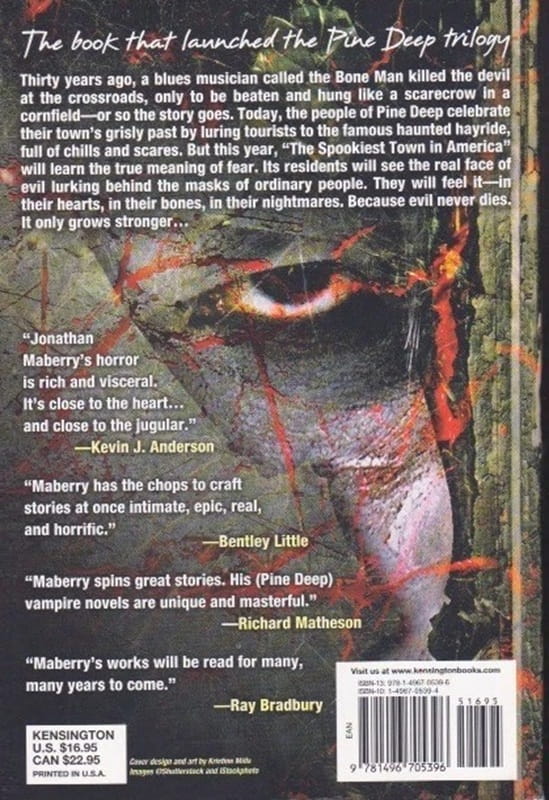
Ghost Road Blues by Jonathan Maberry (Kensington Books reprint edition, May 2016)
Just as publishing changes I’ve changed with publishing. I’ve had to learn about the business of publishing, about marketing and promotion, about business etiquette, and about the ways these things had changed and would continue to change.
I eventually wound up getting into comics, too. I’d grown up reading comics. Mostly Marvel, but other stuff as well, but I’d never seen what a comic script looked like. That was something else to learn, and I was there for it. ‘It’ was my novel Patient Zero that got Marvel interested enough to reach out and ask me if I would like to write for Marvel which is, by the way, a silly, silly question. Of course I want to write for Marvel. I’ve met very few writers that would say ‘oh I wouldn’t bother with that.’ No, we all want to write for Marvel.
I’m glad you mentioned all your other interests because that ties very nicely into my next question. How do you balance being a martial artist, a teacher, having all those different interests with being a writer. And how do you leverage those interests to help your writing?
These days I actually don’t teach martial arts anymore. I’d been doing it for 60 something years and it takes a toll on the old bones, you know? I do workshops on how to write fight scenes and I do some consulting on Spec-Ops and SWAT but that’s a smaller part of what I do. Everything else is writing now. It’s my day job, it’s what I do.
As far as balancing things, I look at my process all the time. I want to understand what makes me happy as a writer, because happiness has to be a big part of that; what makes me most efficient and what gets in the way of that and you tweak the process. It took me three and a half years to write the first draft of my (first) novel and then a year and a half to revise it. Now I write a long novel every three months.
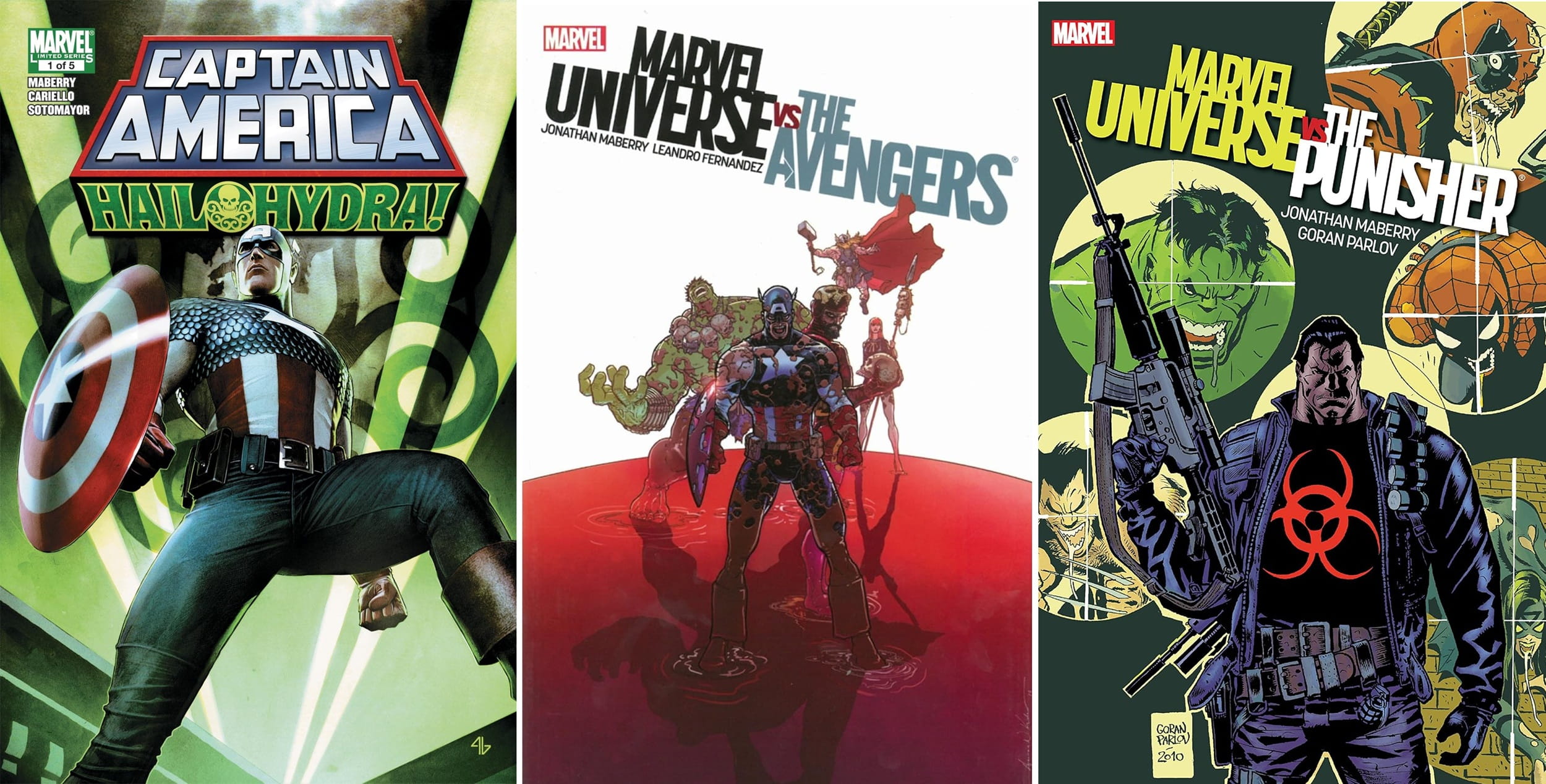 Marvel Comics by Jonathan Maberry: Captain America: Hail Hydra, Marvel Universe vs. The Avengers, and Marvel Universe vs. The Punisher
I think a lot of that pace has to do with being trained as a journalist. When you’re trained to be a newspaper reporter you’re not trained to write slow. Editor says go out and give me 2,000 words on that 5-alarm fire and phone it in. That isn’t waiting for the muse to whisper to you, or going out and waiting for the fire to speak to you. A reporter goes there, gets the information, finds a hook that makes that article different from every other article on the subject, writes it quick and dirty, fixes it in the rewrite and moves on. I applied that mindset and process to my fiction. So it allows me to be very productive but also, it allows me to be efficient enough so that I have family time. Without that balance what the hell are you working for?
As far as other jobs, I teach writing masterclasses online, I teach at writers conferences all over the country, and I do in-person things like the Writers Coffeehouse. These are kind of built into my schedule. Everything goes on my calendar. I run my writing career like a business because it is a business. I have an assistant who is a contract worker. I hire her by the hour when I need her and everything else is a one man show. And she is a working writer herself – Dana Fredsti. She’s a novelist and freelance editor.
If you’re running a business you’d better be efficient at it and you’d better be able to let it evolve with the times. Being willing to change as the publishing world changes has allowed me to have a rich writing career and a rich family life.
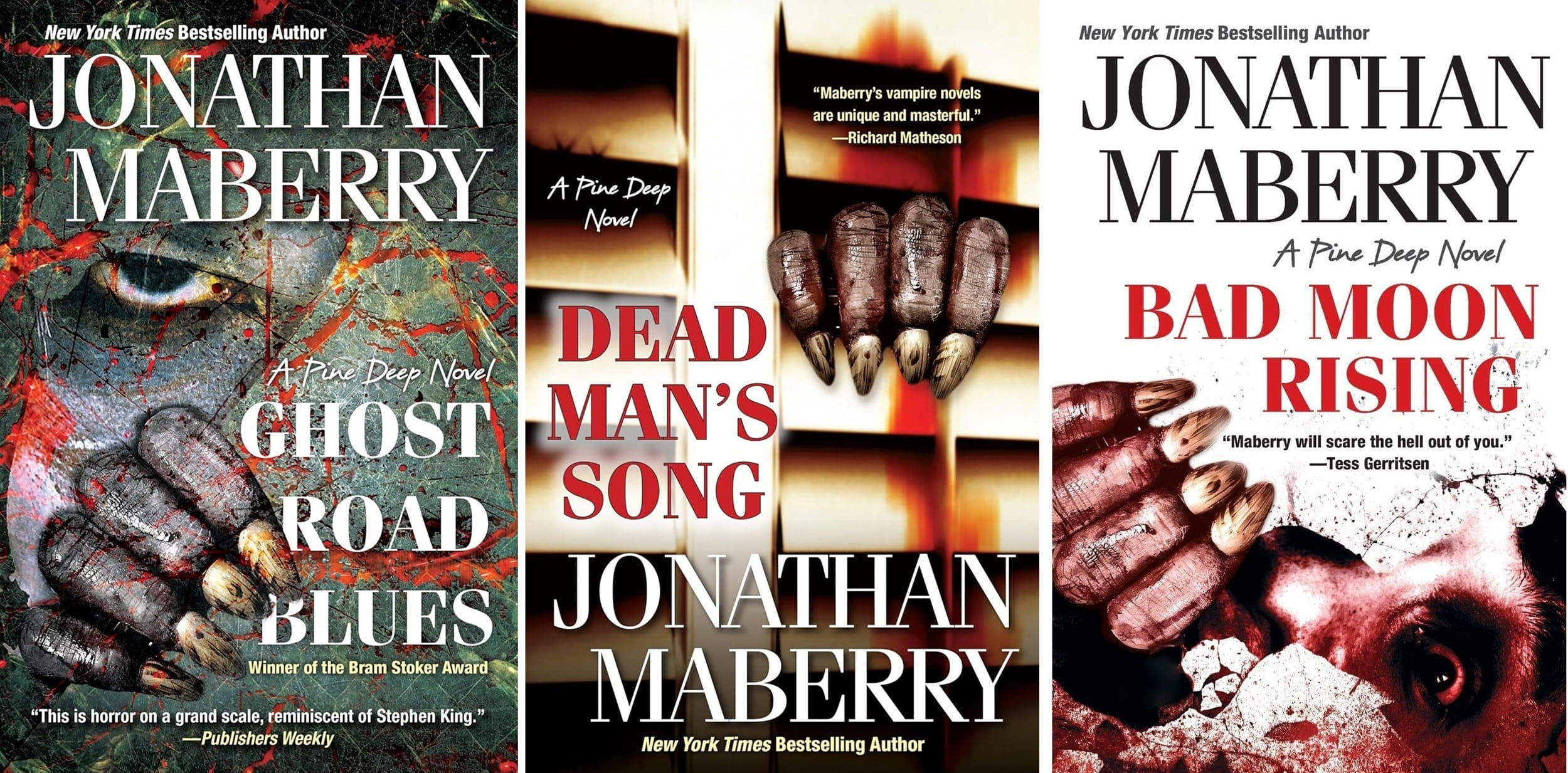 The Pine Deep Trilogy: Ghost Road Blues, Dead Man’s Song, and Bad Moon Rising (Kensington Books, 2006 – 2008)
You’ve written in a wide range of different genres: supernatural thrillers, science fiction, horror, etc. Do you find it easy to hop from genre to genre? Is there a certain frame of mind that you have to get into to write a zombie horror story as opposed to a dark science-fiction one?
I actually find jumping from genre to genre is like a palate cleanser. It freshens up your mind; it allows you to let the other things sit and think for a little bit while you go in and do something else, and then when you come back it’s ready for you to work on it.
My schedule works like this: I write one novel every three months as I said. During that three month period I’ll have maybe five or six short stories I have to write, I have a couple comics I’ll have to come back and do another issue of every couple of weeks, I have a packet I have to write for my online workshops, and I have appearances I need to do.
I just came back from the Las Vegas Writers Conference where I kept pretty busy with programs but soon as each program was over I went back up to my hotel room and I would write. I need t get at least 3,000 or more words done every day, even while teaching multiple classes at a writer’s conference. Its efficiency. It’s not that I’m the fastest writer in the world, I’m fast but I’m not the fastest. I’m just very focused on my process, my time management, and growing my career. I want to make sure that when I’m on the job I’m the best version of my own employee and my own boss that I can be. And that also makes it fun because then the business thrives.
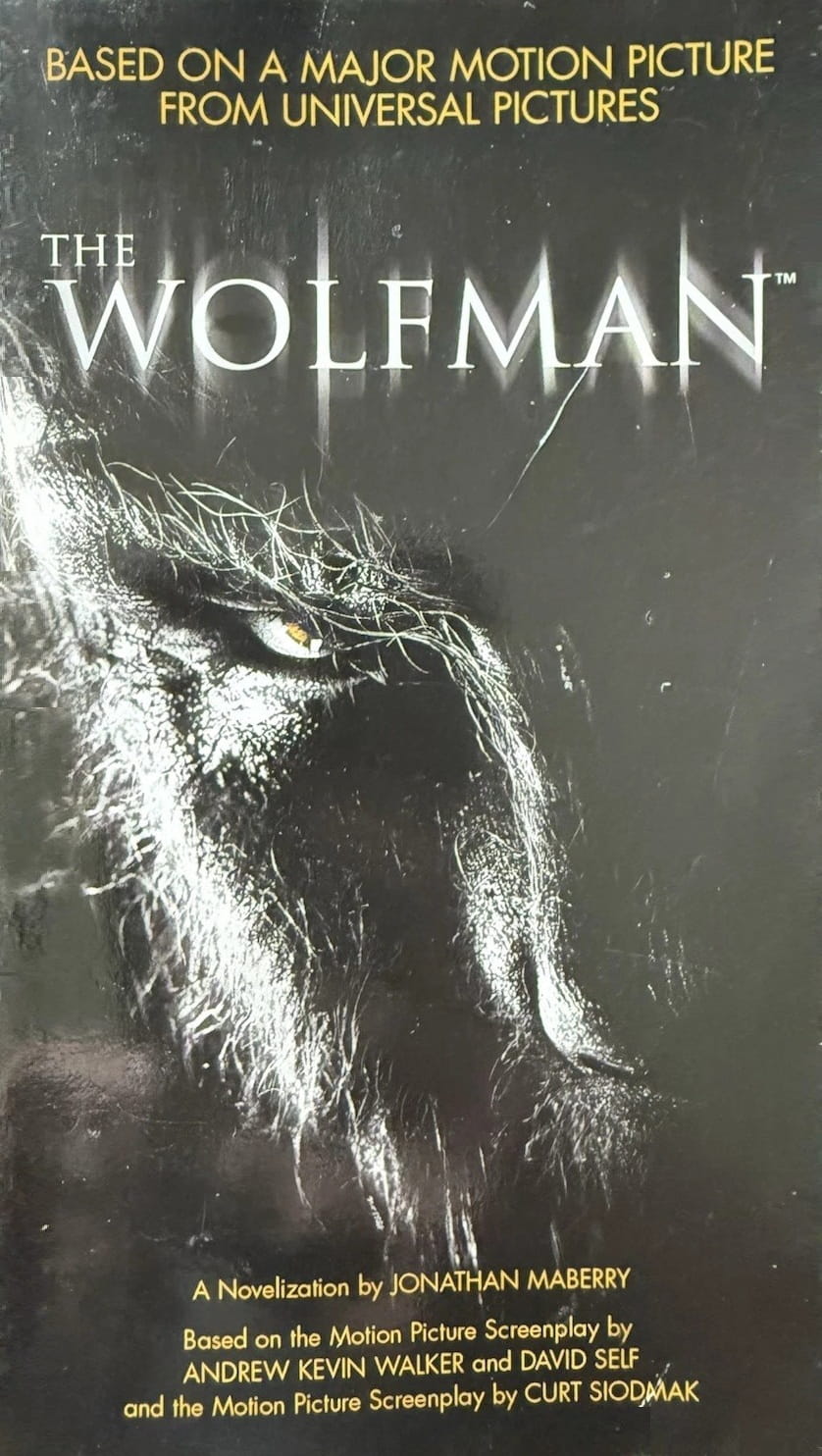
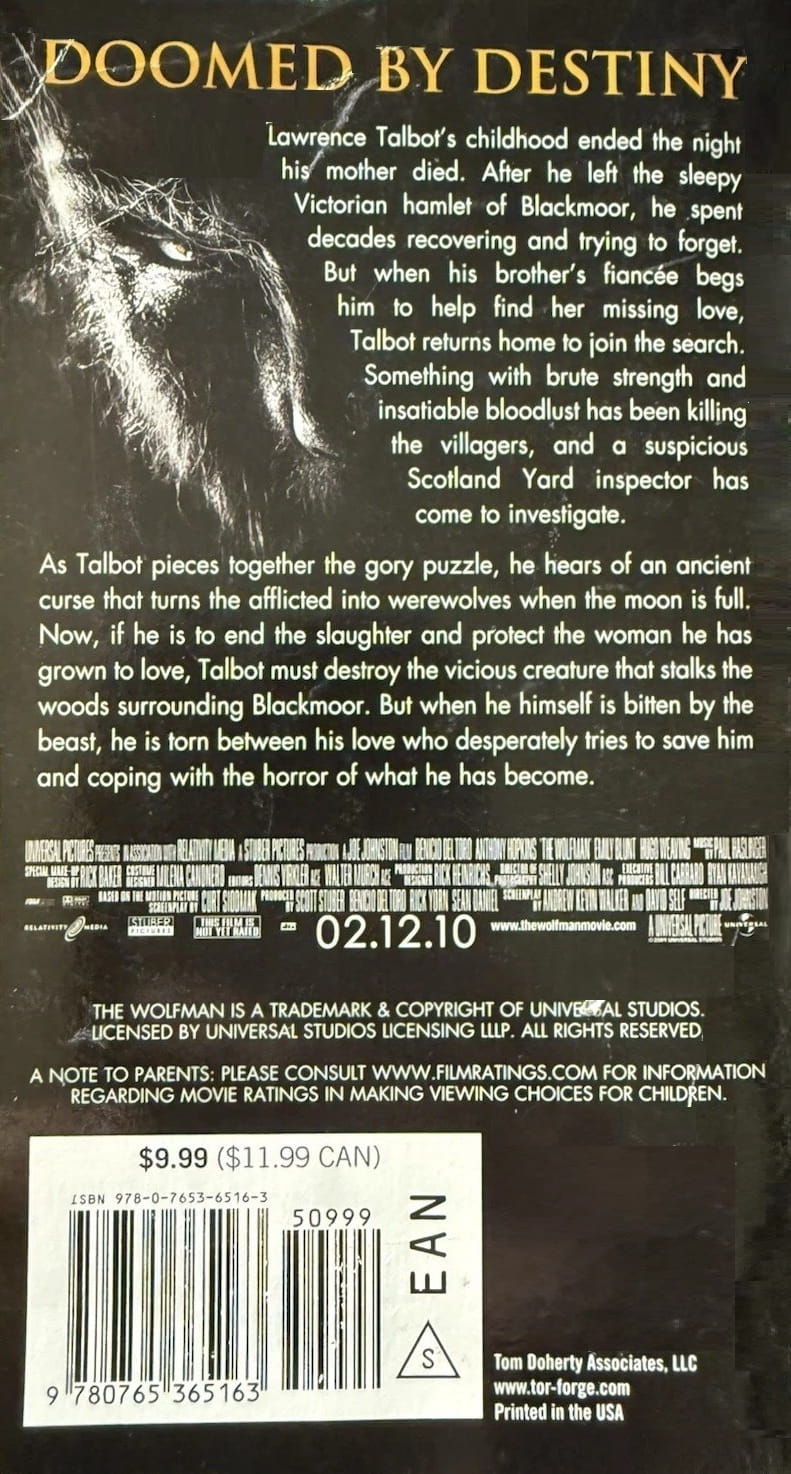
The Wolfman, Jonathan Maberry’s first bestseller (Tor, February 2010)
Through tie-in works and comics you’ve had the opportunity to write some classic characters including Doctor Doom, Deadpool, the Xenomorph. Is it difficult to add your own spin and style to these classic settings? How do you approach that when compared to writing your own characters?
I have people write in my literary worlds as well. There’s an organization called the International Association of Media Tie-in Writers. It’s for people who write in other people’s licensed worlds – like Star Wars, Star Trek, CSI, as well as movies and even video games. I’m currently the president of that organization. I’ve been able to write short stories, comics, and novels about other people’s amazing characters. I’ve done work with Hellboy, Planet of the Apes, True Blood, John Carter of Mars, Aliens vs Predator, X-files — some of that stuff was written because I went after it. Some of it was written because my very first best-seller was a tie-in to The Wolfman.
I enjoy exploring those worlds. Marvel really got me started with that because when they contacted me and asked me if I wanted to write, the first thing they offered me was a short (8-page) Wolverine script. I’ve read a lot of Wolverine comics, and those comics were not all written by the same person; they were written by dozens of writers. So it’s a matter of learning what is kept as bedrock by all writers working on that license and then to find an entry to tell something new without reinventing someone else’s character.
Like, you’re never going to turn Wolverine into someone who is just passive, that’s not him. Punisher is never going to start regretting killing a bad guy. So what you’re looking for is another element of their life that you would like to add another note to. With Wolverine, I ended up having him have to kill the Japanese woman he was in love with. That scenario was created by another writer years back, but like all stories there are untold “moments” that invite new ideas. My focus was on what the psychological effect on him was, and the inner turmoil that resulted from so tragic an act.
With The Punisher they don’t want you to change The Punisher’s personality so I gave him side characters who served the role of bringing personality, humor and other points of view somewhat into it.
Read Part Two of our interview with Jonathan Maberry next week!
Categories: Fantasy Books
Book Review: The Dorians by Nick Cutter
I received a review copy from the publisher. This does not affect the contents of my review and all opinions are my own.
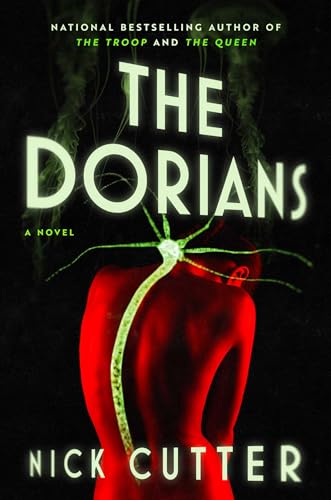
Mogsy’s Rating: 3.5 of 5 stars
Genre: Horror
Series: Stand Alone
Publisher: Gallery Books (May 19, 2026)
Length: 400 pages
Author Information: Website
A few years ago, I read about Canada’s expansion of its MAiD program, which stands for Medical Assistance in Dying, allowing eligible patients with grievous medical conditions to legally seek physician-assisted death. What struck me most though, is that its framework is considered one of the most permissive in the world. While many countries strictly limit this option for terminally ill adults, Canada does not. And ever since learning about it, I had a feeling authors would eventually begin writing stories related to the emotional and ethical implications, and I was right. The Dorians is probably the second or third book I’ve read recently that explores themes surrounding right to die, bodily autonomy, fear of decline, and how far people are willing to go in order to end their personal suffering. Nick Cutter, the pseudonym for critically acclaimed Canadian author Craig Davidson, takes those themes and pushes them into full-blown horror science fiction territory.
The story follows a group of elderly characters nearing the end of their lives for different reasons, who have all independently sought out MAiD. Each of them is approached by a mysterious doctor named Astrid Marsh, who offers them the chance to participate in a highly experimental but life-altering treatment at her secluded research facility on a remote island. Some of these individuals are terminally ill and out of medical options, while others are simply exhausted by old age and feeling like they have become a burden to society. What they all share, however, is regret. That lingering hope of a chance at a do-over is what drives a lot of them to at least hear Dr. Marsh out, even for those who have already made peace with the idea of assisted death.
And indeed, it turns out what the brilliant doctor has planned is nothing short of revolutionary. In her research, she has discovered a way to not only stop aging, but to reverse the biological clock completely, restoring youth to those willing to participate in her study. Of course, the treatment comes with enormous risks, and it is definitely not for the squeamish. The experiment centers on the hydra, a primitive multicellular organism known for its apparent biological immortality as they do not age due to their stem cells existing in a constant state of renewal. And now, Dr. Marsh and her team have found a way to harness those regenerative properties and integrate them into human hosts. Despite the uncertainty and hideousness behind the process, it’s not hard to see why many of the participants would take her up on the offer.
After his last few novels, Nick Cutter feels fully back in his element with The Dorians. As much as I admire some of his weirder, more ambitious work, I truly think he’s at his strongest when he’s tackling straightforward body horror with a tightly managed cast of characters and a more focused premise. After all, what’s more anxiety-inducing than the idea of aging? Losing control of your body is terrifying enough, but losing your mind right alongside might be even worse. That fear sits at the center of this novel, and the author digs into it with all the grotesque detail he’s become known for.
And yes, the body horror absolutely delivers. I simply love it when horror novels incorporate a biological component, and if you’ve read Nick Cutter before, you already know he has a talent for making certain biological processes feel disturbing in the most skin-crawling ways possible. But what really makes the novel effective, and also what I think is its greatest strength, is that the horror here isn’t necessarily of the “jump scare” variety, nor would I say it is scary in the traditional sense. Instead, it’s unsettling on an idea level, paired with vivid and sometimes nauseating imagery that becomes harder and harder to look away from.
But while Cutter clearly had a lot of fun exploring the nightmarish possibilities of Dr. Marsh’s hydra experiment, we still have a strong emotional thread running beneath all the biological ick and gore. For one, the elderly participants all came to the island thinking they were staring down the final stretch of their lives. Many of them carry deep loneliness, resentment, or fear about what’s coming next. In some ways, I wish the story had spent more time unpacking these ideas related to the characters’ anxieties and regret about aging, which might have helped flesh them out more as individuals. Instead, the plot spends a lot of time delving into the backstory and psychology of the main antagonist. While important and interesting in its own right, it also pulled the focus away from the others, and by the end, the villain was honestly the only character who really stuck with me.
Ultimately, The Dorians was for me a really entertaining return to form for Nick Cutter. It’s gross and packed with the kind of body horror that gets under your skin, but it’s also thoughtful and emotionally messy. The novel does have some issues, but I still feel like it’s one of his stronger works and well worth checking out if the premise speaks to you.

Categories: Fantasy Books
Fauxnan the Barbarian, Part Three
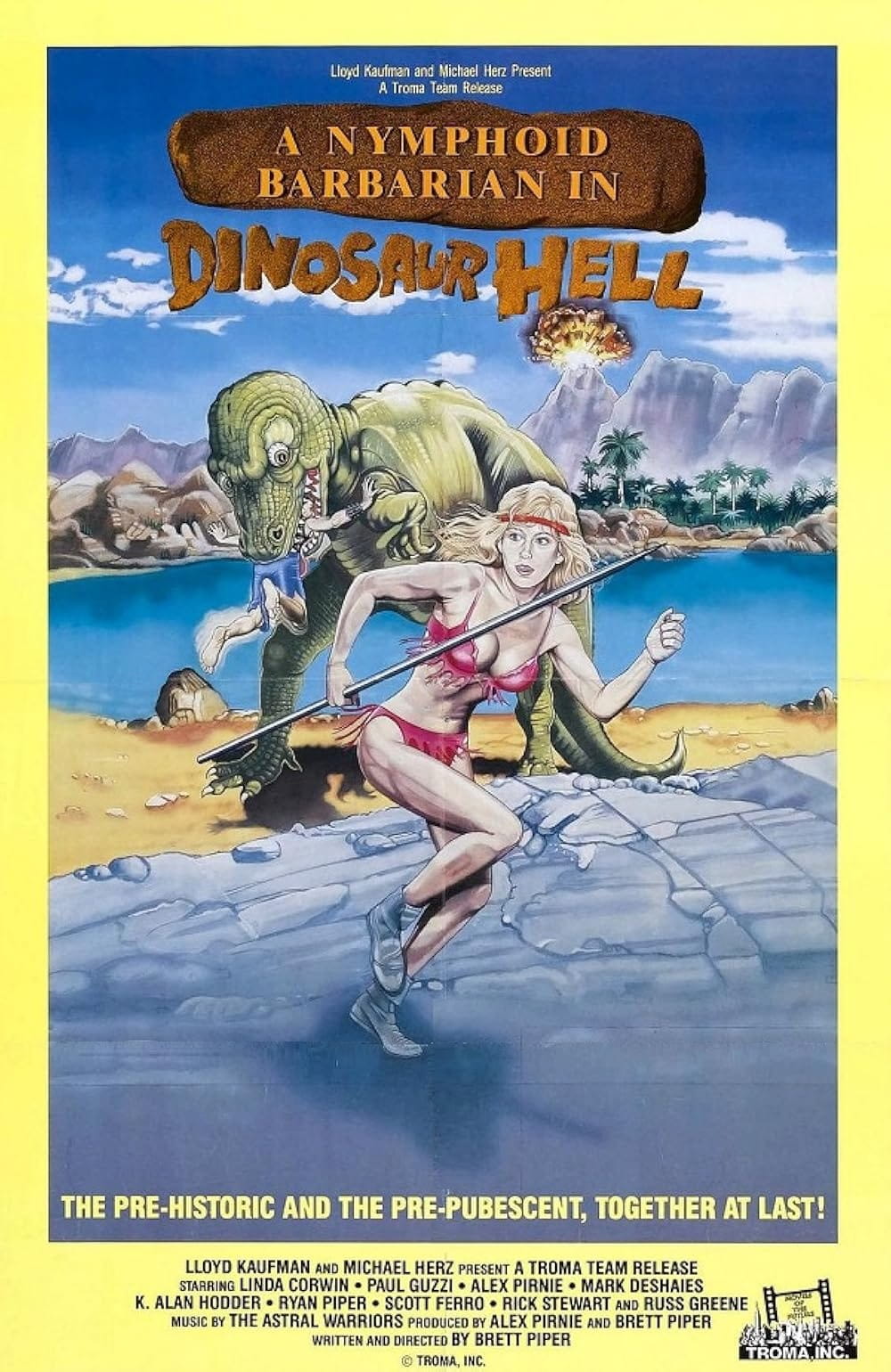 A Nymphoid Barbarian in Dinosaur Hell (Troma Entertainment, 1990)
A veritable cornucopia of dodgy barbarian and barbarian-adjacent movies that I have never watched before, and will probably never watch again. Enjoy Parts One and Two here and here.
A Nymphoid Barbarian in Dinosaur Hell (1990) – USAI can’t help thinking that this one must have disappointed many a randy teenager when they smuggled it out of the video store, only to learn that ‘nymphoid’ doesn’t mean the same as ‘nymphomaniac,’ and were instead subjected to a good hour of aimless wandering before even a glimpse of prehistoric knockers was on the cards.
This is another quick buck-maker from the Troma crew, who surely saw a return on their meagre investment thanks to the aforementioned teen suckers, but it really doesn’t feel like a Troma flick. There’s no sign of the inventive weirdness or inappropriate humour to be found in the usual Kaufman joint; it’s all replaced by a dull story in which the last woman on Earth after the apocalypse, (Linda Corwin) has to contend with wandering gangs of bestial chads, while trying to avoid larger critters in the form of daft-looking dinosaurs.
No real goal, just a bit of rambling. It doesn’t help that Corwin has a permanent expression on her face like every single living creature she encounters is farting in her direction. Having said all that, apart from a hilarious toothed sausage type thing (called a Tromasaurus), there are some very fun stop-motion monster moments, flung together by director Brett Piper in a matter of days, that hold up very well and almost redeem the rest of the snoozefest.
I said ‘almost.’
4/10
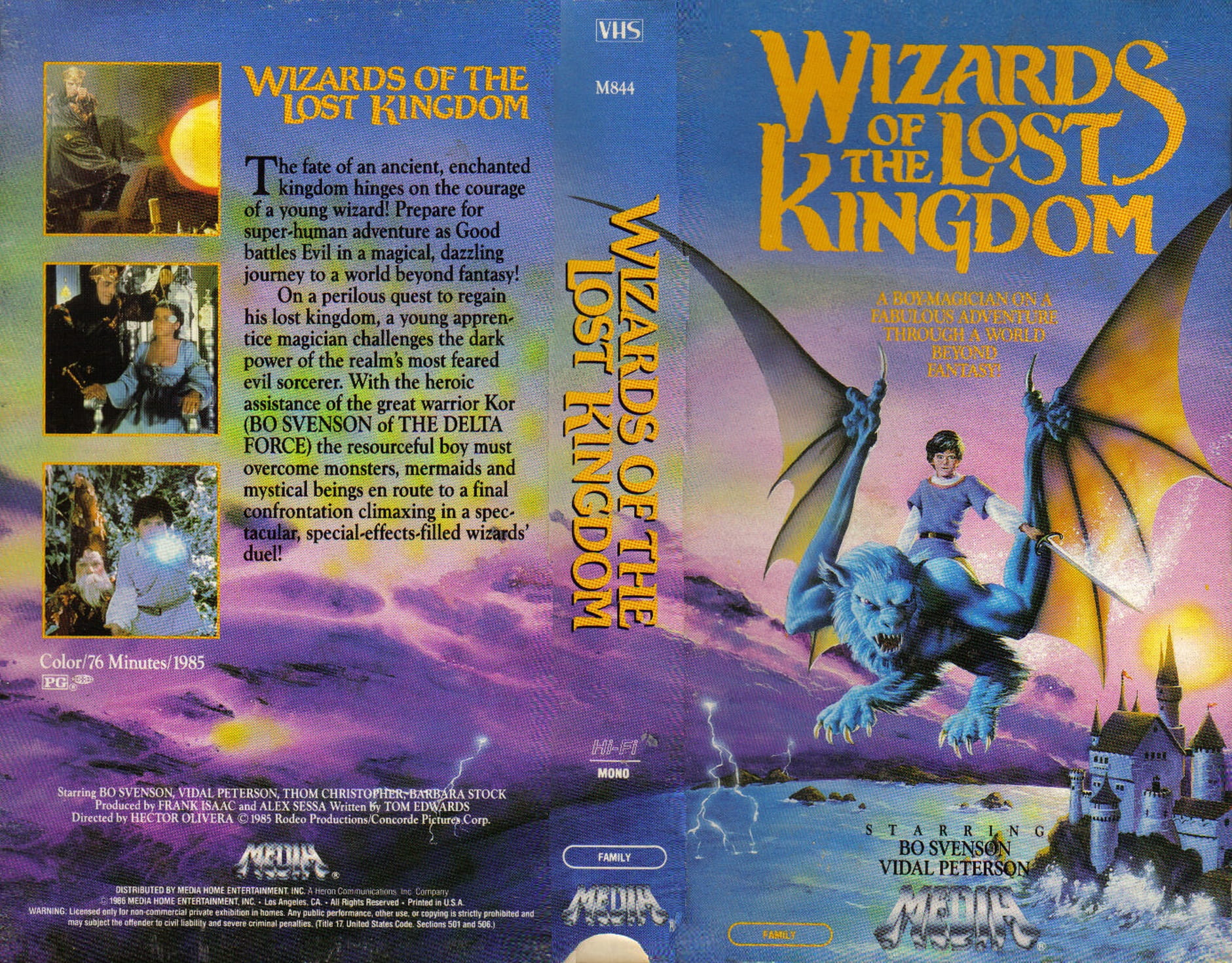 Wizards of the Lost Kingdom (Concorde Pictures, April 1985)
Wizards of the Lost Kingdom (1985) – USA/Argentina
Wizards of the Lost Kingdom (Concorde Pictures, April 1985)
Wizards of the Lost Kingdom (1985) – USA/Argentina
Here’s one that always caught my eye, but I never got around to watching, and I had mistakenly thought it was a fantasy film of the same caliber of semi-respectable S&S flicks such as Krull (1983), or Dragonslayer (1981). Oh, gentle reader, it is not.
It’s actually part of the multi-picture deal that Roger Corman struck with the Argentinian studios (that kicked off with the afore-critiqued Deathstalker), albeit given a few dollars more for production design and laser effects. The tale concerns a sorcerer’s apprentice, Simon (Vidal Peterson) who must locate his magic macguffin and save the teenage princess he plans to marry. The obstacle in his way is the evil wizard Shurka (Thom Matthews, the budgie-headed guy from Buck Rogers) who wants the frankly underage princess to himself, plus to commit other assorted naughtiness.
Simon is aided on his quest by a rogue warrior, Kor the Conqueror (Bo Svenson, having fun) and a ridiculous Chewbacca stand-in, Galfax, who looks like a tightly-permed yeti with the head of a bichon frise, and who does bugger all. Much derring-do ensues.
The humour is pushed to the forefront during the jam-packed adventure, and I doff my cap to the filmmakers who chose to throw everything into this one, no matter if it makes sense. It’s ultimately as daft as a kettle of chipmunks, but I didn’t hate it.
6/10
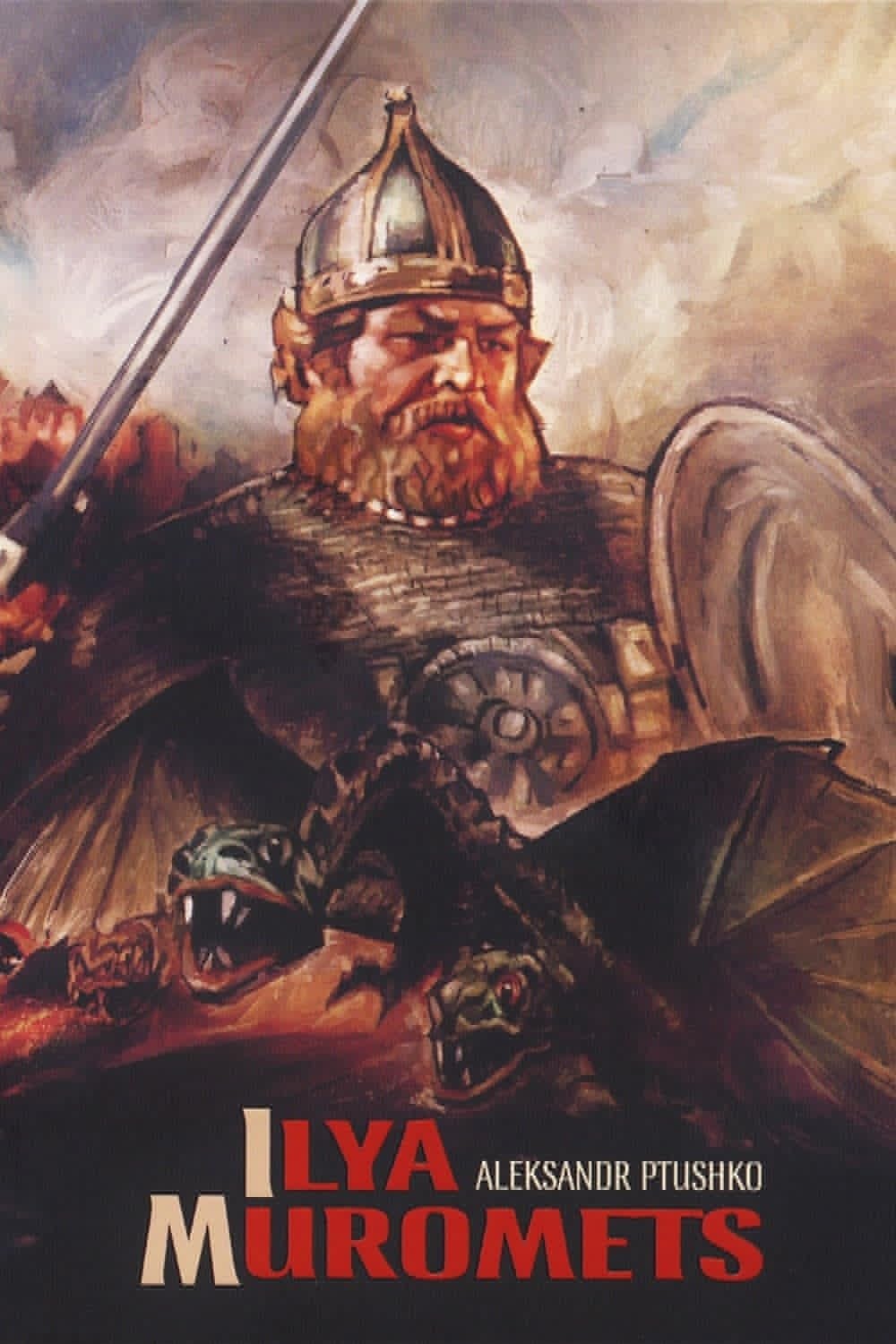 Ilya Muromets (Mosfilm, September 16, 1956)
Ilya Muromets (1956) – Russia
Ilya Muromets (Mosfilm, September 16, 1956)
Ilya Muromets (1956) – Russia
From the stable of epic fantasy director Alexandr Ptushko comes this retelling of a classic bit of Russian folklore. Ilya Muromets (Boris Andreyev) is a gentle giant of man, seemingly unable to walk until an ancient sword is presented to him by a band of wandering pilgrims, and he takes up arms against the invading Tugars who are rampaging through the lands of Mother Russia, led by the fearsome Tsar Kalin (Shukur Burkhanov). These Tugars are a little like the Tartars, but different, thus thwarting my plans to make a Tartar source joke.
It is up to Ilya to unite the lands, work with Prince Vladimir of Kiev (Andrey Abrikosov), and defeat various magical creatures along the way. It all culminates in a showdown including his own son (who had been adopted by Kalin) and the three-headed grandpappy of King Ghidora.
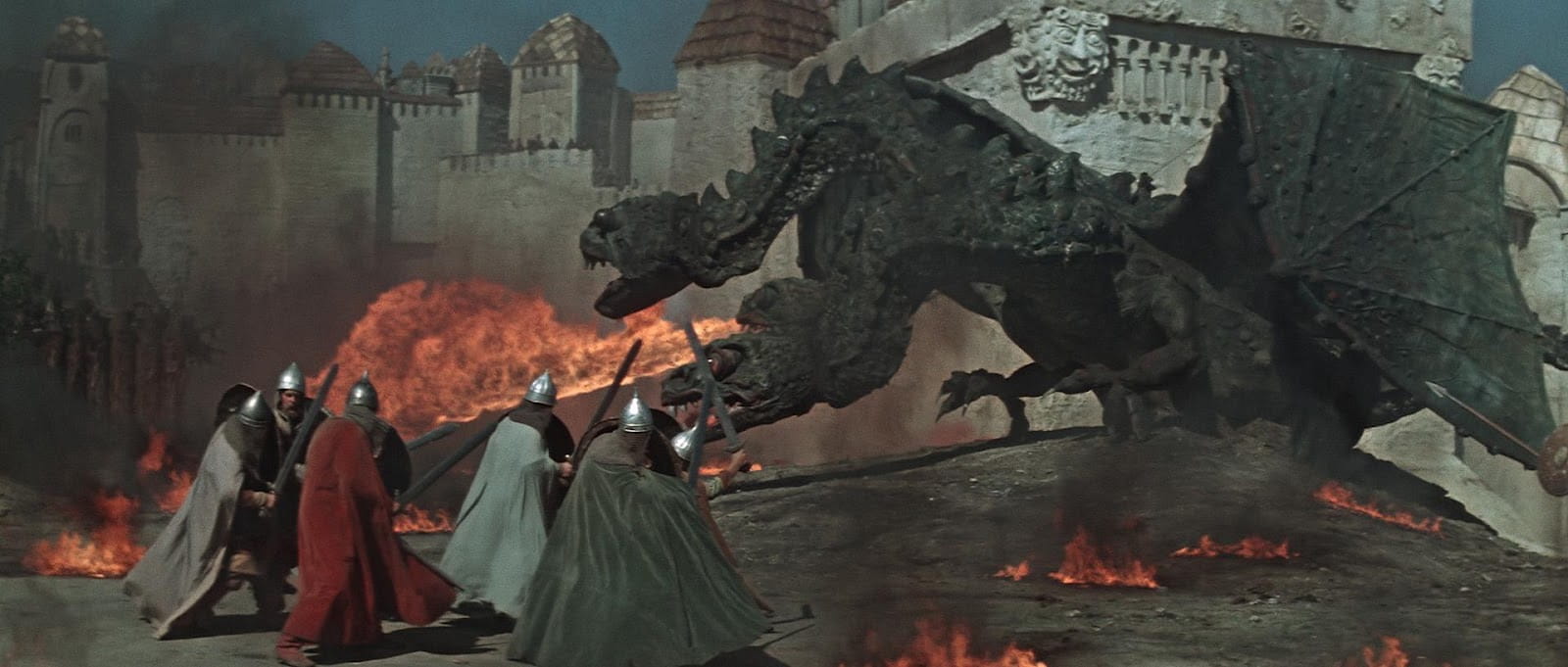 The three-headed dragon in Ilya Muromets
As with many Russian films of this period, Ilya Muromets has a dreamy ‘magical realism’ feel to it, as if we are watching a stage play on a monumental scale. Actual landscapes are enhanced with beautiful paintings and fantastic model work (Ptushko started out as an animator and model maker), and glorious puppetry is employed throughout in the depictions of animals, birds, and even Ilya’s own mighty steed.
This version (on Tubi) is the original, not the hacked up version that Corman presented as The Sword and the Dragon, that ended up as the butt of a plethora of Finnish jokes by the MST3K crowd.
Recommended.
8/10
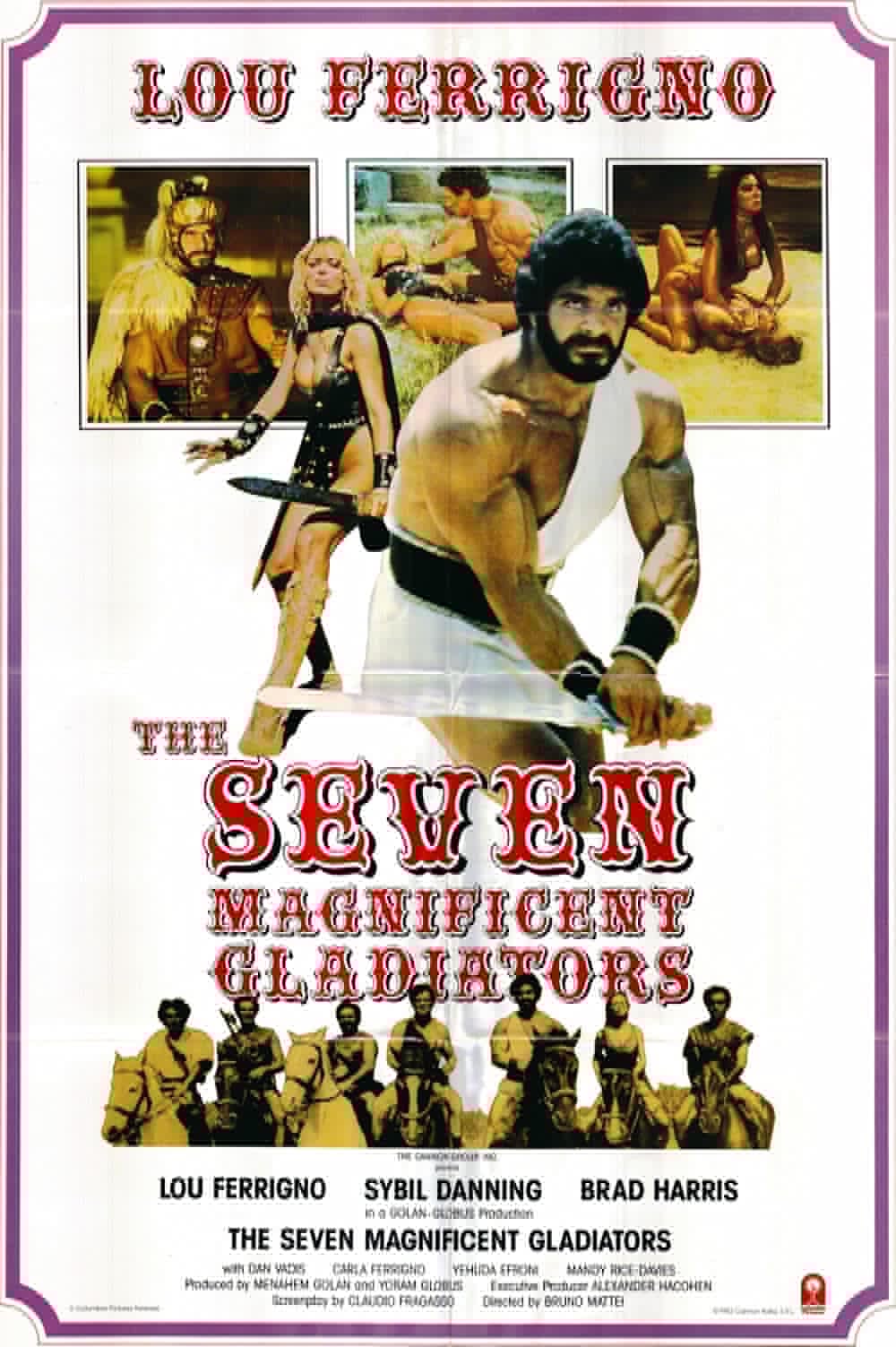 The Seven Magnificent Gladiators (Cannon Italia, August 31, 1984)
The Seven Magnificent Gladiators (1983) – USA/Italy
The Seven Magnificent Gladiators (Cannon Italia, August 31, 1984)
The Seven Magnificent Gladiators (1983) – USA/Italy
A community is terrorized by a nefarious leader of soldiers and cutthroats, and must recruit a small band of defenders to save their crops and their lives. Yes, this is a blatant rip-off of Battle Beyond the Stars (1980). Someone should do a samurai version.
Anyhoo, a wise old elder (as opposed to a wise young elder), reveals a hidden sword that will ‘choose’ a hero to wield it, and a gaggle of ladies takes off for the big city to find such a hunk. It eventually ends up in the hands of good-natured lunk Han (Lou Ferrigno, dubbed), a gladiatorial barbarian who is no fan of injustice. Han then recruits a bunch of other warriors, and the film then proceeds to follow the original(s) beat for beat. Half the fun is figuring out which warrior is meant to be James Coburn. I did realize that Julia (Sybil Danning), was the Brad Dexter one.
Anyhoo, swords are swung, villagers are trained, and some of the magnificent gladiators kick the bucket — all par for the course. It’s a bit laborious, but ultimately good for a laugh, and there’s no way any film with Sybil in it is getting less than 5 out of 10 from me.
5/10
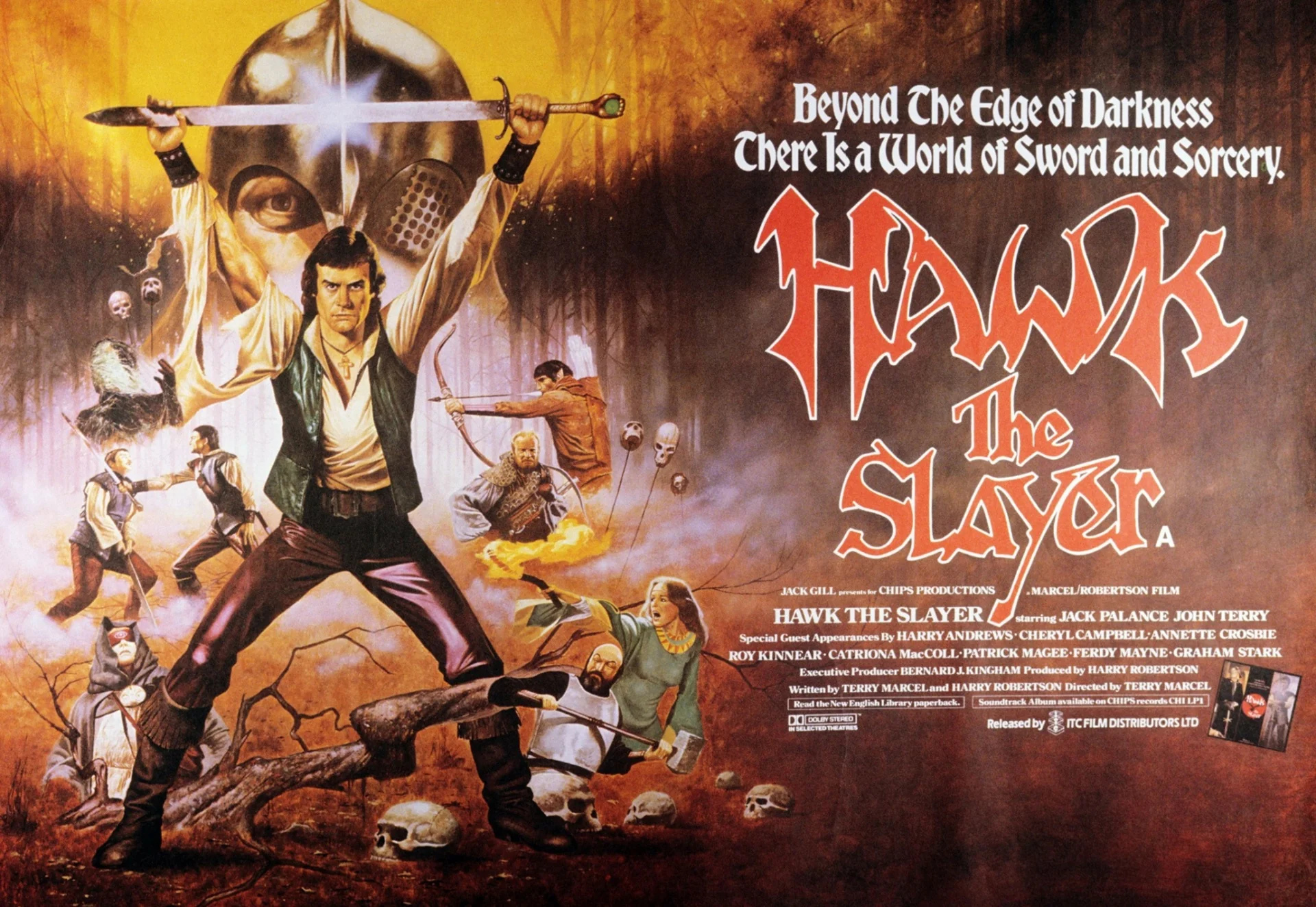 Hawk the Slayer (ITC Entertainment, December 18, 1980)
Hawk the Slayer (1980) – UK
Hawk the Slayer (ITC Entertainment, December 18, 1980)
Hawk the Slayer (1980) – UK
I concluded this watch-a-thon with an old British classic that I somehow managed to never get around to seeing, much to my shame. Hawk (John Terry — as stiff as a dead ferret) is the younger brother of Voltan (Jack Palance — having a blast), and the two of them have had a severe falling out over their rivalry for Eliane (Catriana McColl) — their squabble ending in the fair lady’s death and Voltan getting a crispy makeover.
Since then, Voltan has gone on to terrorize the land with dark magic and a bad attitude, while Hawk has lent himself out as a goodly fighter for hire. When Voltan kidnaps a nun (Annette Crosby!) Hawk decides it is time to put an end to his brother’s wicked ways once and for all, and recruits a group of tropes in order to rescue her.
This group includes Crow (Ray Charleson) an elf with the power to shoot arrows remarkably quickly through the power of editing, Baldin (Peter O’Farrell), a cheeky dwarf, and Gort (Bernard Bresslaw) a giant. Yes, in the space of three years, Bernard Bresslaw played a giant in a fantasy film (Krull), albeit this time with twice as many eyes. They are also joined by Ranulph (W. Morgan Sheppard), a crossbowman who has just lost one of his hands to Voltan.
Plenty of sorcery and shenanigans take place on the way to the inevitable showdown, some heroes die, others ride off into the sunset, and Jack Palance hangs up his Vader-inspired helmet vowing never to make another fantasy film (until the producers of Gor coax him back with a sack of gold).
Lots of fun, stuffed to the gills with beloved British character actors, and a bonkers synth score from Harry Robertson means I finish on a high note. Huzzah!
8/10
Previous Murky Movie surveys from Neil Baker include:
Fauxnan the Barbarian, Part One
Fauxnan the Barbarian, Part Two
Probing Questions
My Top Thirty Films
The Star Warses
Just When You Thought It Was Safe
Tech Tok
The Weyland-Yutaniverse
Foreign Bodies
Mummy Issues
Ch-Ch-Ch-Ch-Changes
Monster Mayhem
See all of Neil Baker’s Black Gate film reviews here. Neil spends his days watching dodgy movies, most of them terrible, in the hope that you might be inspired to watch them too. He is often asked why he doesn’t watch ‘proper’ films, and he honestly doesn’t have a good answer. He is an author, illustrator, teacher, and sculptor of turtle exhibits.
Categories: Fantasy Books
5 Stunning Novels On Film That Won Best Picture Academy Awards!
Experience Literary Magic: 5 Novels on Film that Won The Top Prize at the Academy…
The post 5 Stunning Novels On Film That Won Best Picture Academy Awards! appeared first on LitStack.
Categories: Fantasy Books
Stacking the Shelves – Audiobook, Bought, and Borrowed Books for Last 5 Months – 5/23/25
Welcome to Stacking the Shelves, hosted by Reading Reality.





Categories: Fantasy Books
Pages

Recent comments