
Fantasy Books
“Hamlet” by Shakespeare | Words Become The World
Hamlet – a celebrated Shakespeare classic, filled with treachery, vengeance, and moral dilemmas. Politics and…
The post “Hamlet” by Shakespeare | Words Become The World appeared first on LitStack.
Categories: Fantasy Books
MARS ONE by Charlotte Robinson
One of the recent discussions about Science Fiction I’ve had with non-genre readers has been about what readers want from Science Fiction. “Why do sci-fi writers explain things SO much?” was the question. This made me think. Personally, I think that it is part of the SF heritage. Modern SF came from a group of…
Categories: Fantasy Books
Women in SF&F Month: Sonia Tagliareni
Today’s Women in SF&F Month guest is Sonia Tagliareni! Her novel Deathbringer, which is described as “a dark academia romantasy steeped in necromancy, forbidden love and a twisty murder mystery set within the perilous halls of a magical institute,” will be published on April 28 in the UK and May 19 in the US. I’m delighted she’s here today to discuss her main character—a death mage who despises her ability—in “Does a Soft Female Lead Belong in SFF?” About Deathbringer: […]
The post Women in SF&F Month: Sonia Tagliareni first appeared on Fantasy Cafe.
Categories: Fantasy Books
Forgotten Authors: G. Peyton Wertenbaker
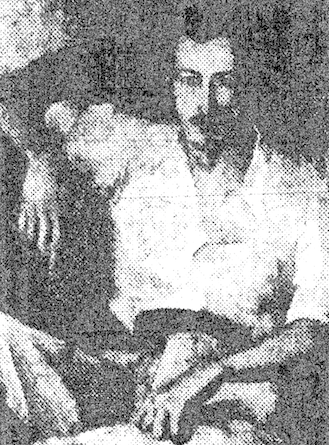 G. Peyton Wertenbaker
Green Peyton Wertenbaker was born on December 23, 1907 in New Castle, Delaware. He attended the University of Virginia. After graduation, he worked as a technical writer and eventually a journalist in addition to writing fiction. During World War II, Wertenbaker services in the U.S. Navy and was later associated with the USAF School of Aerospace Medicine.
Wertenbaker married Barkley Barbee and they had one son, George.
His first story, published in Science and Invention when he was 16 in 1923, was “The Man from the Atom.” Gernsback reprinted the story three years later in the first issue of Amazing Stories. The next month, he would become the first person to publish an original story in Amazing (as well as the first repeat author), when Gernsback published his obviously titled sequel “The Man from the Atom (sequel).” Wertenbaker would go three issues for three the next month with the appearance of “The Coming of the Ice.”
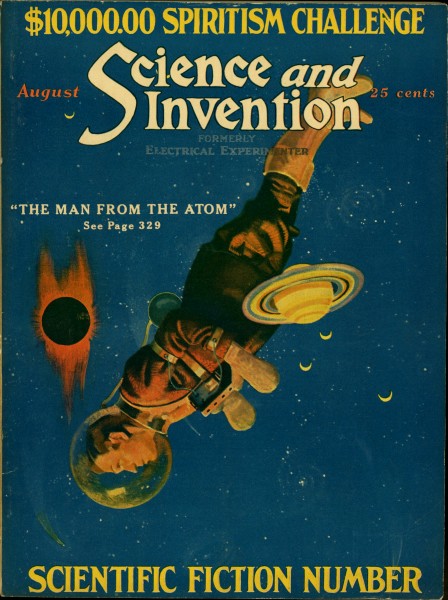 Science and Invention, 8/1923, Cover by Howard V. Brown
Along with Wertenbaker’s “The Man from the Atom,” the first issue of Amazing included a reprint story by Austin Hall. In January 1924, Weird Tales ran a letter from Wertenbaker which stated “In the September issue of Weird Tales, begins a romance by Austin Hall, entitled ‘The People of the Comet.’…You may imagine my surprise when I discovered that the idea that plays the most important part in it is one which I myself developed somewhat differently in a story about a month earlier. If you will consult Science and Invention…you will see my own tale ‘The Man from the Atom.’ Mr. Hall may possibly be interested in comparing it with his romance.” Wertenbaker’s letter indicates that he saw himself a fan of horror fiction, even if most of his own fiction was more science fiction.
Although Wertenbaker had a long and successful career as a writer, his science fiction formed only a small part of his work over a short period of time, with a mere eight years passing between the original publication of “The Man from the Atom” when he was 16 until “Elaine’s Tomb” when he was 24.
Wertenbaker also published under his first two names. His first novel, Black Cabin, was published in 1933 as by Green Peyton. Under that name he also wrote 5,000 Miles Toward Tokyo, San Antonio: City in the Sun, For God and Texas, and American’s Heartland: The Southwest and was considered an authority of the American Southwest.
Eventually, Wertenbaker moved to London, where he served as the UK correspondent for Fortune Magazine and also wrote for Time. In 1958, he wrote the scripts for the series Doctors in Space and joined NASA as a speechwriter, eventually taking on the role of NASA Chief Historian of the Aerospace Medical Division. In final book was the non-fiction Fifty Years of Aerospace Medicine.
Wertenbaker died on July 26, 1968 in San Antonio, Texas and was cremated.
 Steven H Silver is a twenty-one-time Hugo Award nominee and was the publisher of the Hugo-nominated fanzine Argentus as well as the editor and publisher of ISFiC Press for eight years. He has also edited books for DAW, NESFA Press, and ZNB. His most recent anthology is Alternate Peace and his novel After Hastings was published in 2020. Steven has chaired the first Midwest Construction, Windycon three times, and the SFWA Nebula Conference numerous times. He was programming chair for Chicon 2000 and Vice Chair of Chicon 7.
Categories: Fantasy Books
Audiobook Review: The Caretaker by Marcus Kliewer
I received a review copy from the publisher. This does not affect the contents of my review and all opinions are my own.
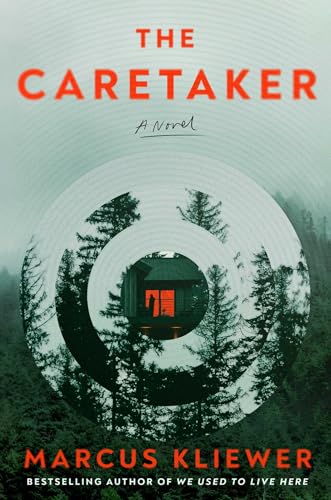 The Caretaker by Marcus Kliewer
Mogsy’s Rating (Overall): 3.5 of 5 stars
Genre: Horror
Series: Stand Alone
Publisher: Simon & Schuster Audio (April 21, 2026)
Length: 9 hrs and 33 mins
Author Information: Website
This was my first Marcus Kliewer book, and I was quite excited to tackle it since I’ve heard such great things about his debut We Used to Live Here. And now I can see why his style of horror has garnered him so many fans. The Caretaker leans hard into that brand of eerie, slow-burn horror where you’re never quite sure what’s real and what’s simply the protagonist’s sanity unraveling inside her own mind. But at the same time, the writing doesn’t always complement the story’s goals, often running long and being repetitive in ways that took away from the tension. That said, I also listened to this in audio, so it’s possible that the format might have made these issues stand out more.
The story follows Macy Mullins, a young woman barely keeping her head above water. After her father’s death, she’s left as the sole guardian of her teenage sister, and between the grief and a growing pile of bills, survival has become a daily struggle. Desperate to keep the rent paid and the lights on in their tiny apartment, Macy can’t afford to be picky about work. So when she stumbles across a vague Craigslist ad offering a short-term caretaking job at an isolated coastal property, with suspiciously generous pay, she decides to take the chance. Even if the woman hiring her is evasive about the details, and the job itself comes with a list of strange, unsettling requirements, it’s hard to say no to that kind of money for just a few days’ work.
At first, the rules seem odd but manageable. The homeowner explains they were put in place by her late husband, who insisted they be followed to the letter even after his death, with all instructions recorded on a VHS tape for Macy to watch. Some involve checking lights at specific times in the middle of the night, answering mysterious phone calls, and keeping a close eye on the rabbits that roam the property. Strange, sure, but straightforward. However, it doesn’t take long for things to spiral. Small mistakes lead to escalating consequences, and the written instructions in the event of failure quickly become more extreme, more unsettling, and at times outright unhinged. As Macy struggles to keep up with these “rites” that grow increasingly complex and difficult to follow, she finds her grip on reality slipping, blurred by exhaustion, fear, and the surreal nature of what’s happening around her. What started as a simple job soon reveals itself to be something far bigger, more dangerous, and impossible to escape.
First, the positives. The Caretaker really shines when it comes to concept and atmosphere. After looking into the author, I also discovered that Marcus Kliewer likes to weave mental health themes into his work. For example, OCD features heavily in this story, and the allusions aren’t exactly subtle. You can see it in the way the rites are structured, or the constant dread tied to getting them wrong. As someone with OCD though, I was surprised how strongly these connections resonated, like the constant checking, the double-checking, the second-guessing, and the intrusive thoughts that something terrible will happen if you don’t get it just right. Overall, it’s a clever use of horror that adds an extra layer of meaning beneath the strangeness, and I thought it worked really well.
But now, the elements that didn’t work so well. For me, the biggest weakness was the novel’s longwindedness with certain ideas, such as whole paragraphs devoted to expounding on topics related to Macy’s financial struggles, her cigarette cravings, how crappy her apartment is, etc. The writing had this tendency to keep pressing on things you’ve long already absorbed, and it’s like, “Okay, I get it!” It’s very conspicuous in audio and very distracting, making it easy to lose focus and drift off once the rambling starts.
In the end, The Caretaker is a solid if imperfect novel of psychological horror. It has a unique hook, interesting themes, and some genuinely unsettling moments. However, it’s also weighed down by repetition and an overextended runtime, making the final sections drag on and on. Still, pacing issues aside, this is one to check out if you’re drawn to horror that excels at building a strong sense of dread, and the audiobook is worth a listen as well.


Categories: Fantasy Books
Dark Muse News: There’s something about Return to Silent Hill – It’s Mary!

The movie Return to Silent Hill (2026) is an adaptation of the psychological horror Silent Hill 2 (SH2) video game that was rebooted by Konami under Bloober Team in 2024. This ‘return’ film is directed by Christophe Gans, who championed the original 2006 film (which loosely adapted the first video game released in 1999). With the resounding success of the Bloober SH2 video game reboot, fans of the horror series had hope that the movie would pack a 1-2 punch, but it has been received poorly. Why?
Not helping the United States release was an ill-timed blizzard that stretched across the country (Wikipedia even has an entry about the storm). I suspect if that were a fog-storm (do those exist?), then ticket sales would have skyrocketed. At this point, almost every blogger and reviewer who has seen the movie has been pissed since it did not seem to represent the core elements of the game; I was in a similar camp until I dissected the film for this article. Here’s the Deal.
 All warnings and advisories issued in the US due to the January 23–27 winter storm (Source: Wikipedia)
James Sunderland appears to be the focus since the movie opens with him driving a car to a lookout featuring Silent Hill, as would be expected from the video games (both original and release) and the Trailer. The truth is, the movie is really not about him. Also, you’ll meet a ton of characters, and they will mirror characters in the game… except in the movie, they aren’t really different people.
So:
- If you do not know the lore, you’ll take the characters at face value when introduced (different names imply different people), and you’ll get confused later
- Fans knowing the lore will watch assuming the same… and get confused… and pissed
To deliver this sucker punch approach, Gans’ production delivery had to be perfect. And it was off. I had to meticulously screen capture, crop, and dissect the movie to change my mind about the work. Why reveal spoilers here? Most of the internet already has, including Gans in his interview (links below), and, for me, the movie would have been more enjoyable knowing what I know now. What at first appears to be a big mess is actually a coherent offering.
Anyway, in short, as teased by the header image, there is something about Mary.
Read on! Maybe you will enjoy the film more!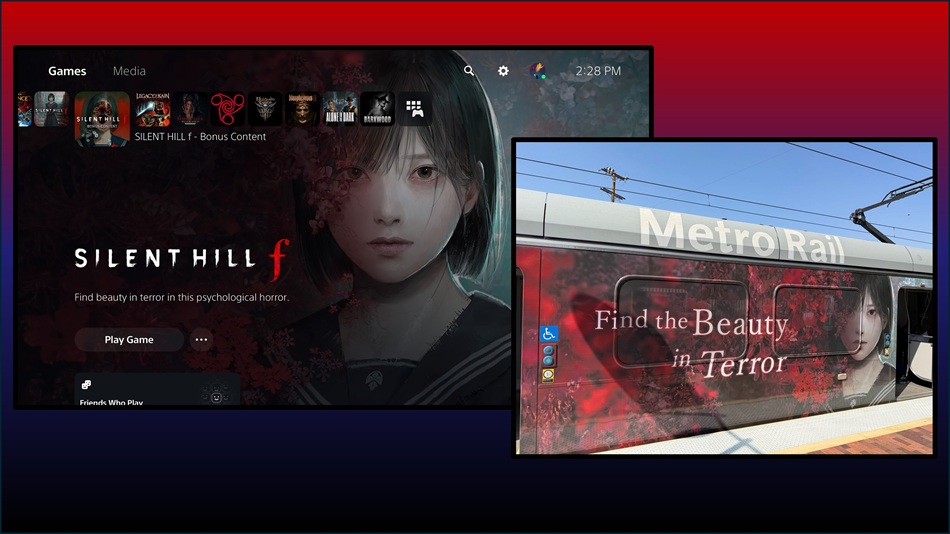
Being Dark Muse News, we are focused on beautiful, horrific art. With the resurgence of Silent Hill games, Silent Hill f released late 2025, just months before the Return to Silent Hill movie. This game is set in 1960s Japan, focusing on a teenage girl named Hinako Shimizu, and it doesn’t share creators with the film.
Anyway, it’s a great game that I hope to cover soon; we mention it here because its tagline is “Find the Beauty in Terror” which can be found on the buses in Japan and on the home screen of the PS5 console. Its use of red spider lilies (higanbana) instead of creepy, red paint used in prior SH offerings brought with it the beautiful horror it promised. Could the movie, released months after “f” have the same artistic, beautiful take on terror?
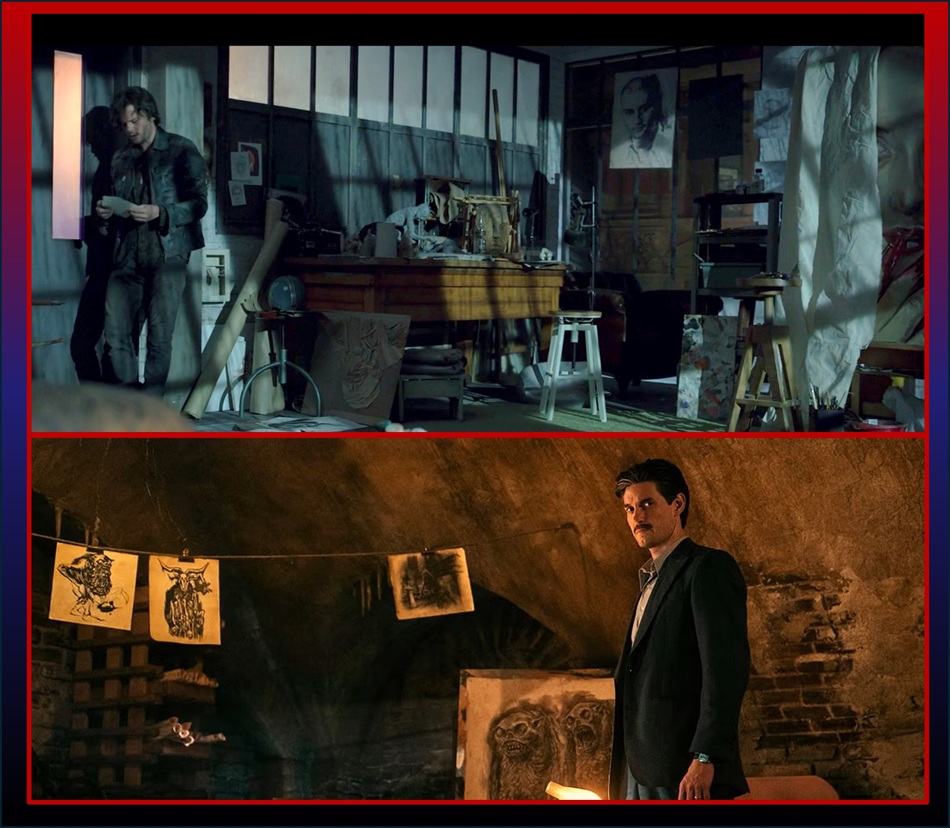 TOP: James Sunderland opens a letter from Mary in his art studio (Return to Silent Hill Movie) BOTTOM: Thurber, and artist in Pickman’s Model – Netflix adaptation (Guillermo del Toro’s Cabinet of Curiosities Season 1, Ep 5)
James is a Painter! But he isn’t Lovecraft’s Pickman / Thurber
TOP: James Sunderland opens a letter from Mary in his art studio (Return to Silent Hill Movie) BOTTOM: Thurber, and artist in Pickman’s Model – Netflix adaptation (Guillermo del Toro’s Cabinet of Curiosities Season 1, Ep 5)
James is a Painter! But he isn’t Lovecraft’s Pickman / Thurber
Ok, so we are revved up, expecting blends of art and horror from the SH franchise. In the game, the protagonist is James Sunderland, who was an “average Joe” everyman. In the movie, he is portrayed as a painter! As soon as I learned this from the trail and internet hype, I was excited, since I had hopes of the character being more deep, something like the artist(s) in H. P. Lovecraft’s 1927 “Pickman’s Model” (wherein Richard Upton Pickman painted monstrosities that were more real than his audience knew; the story is fantastic and occasionally adapted to film, such as Guillermo del Toro’s Cabinet of Curiosities Season 1, Ep 5, 2022).
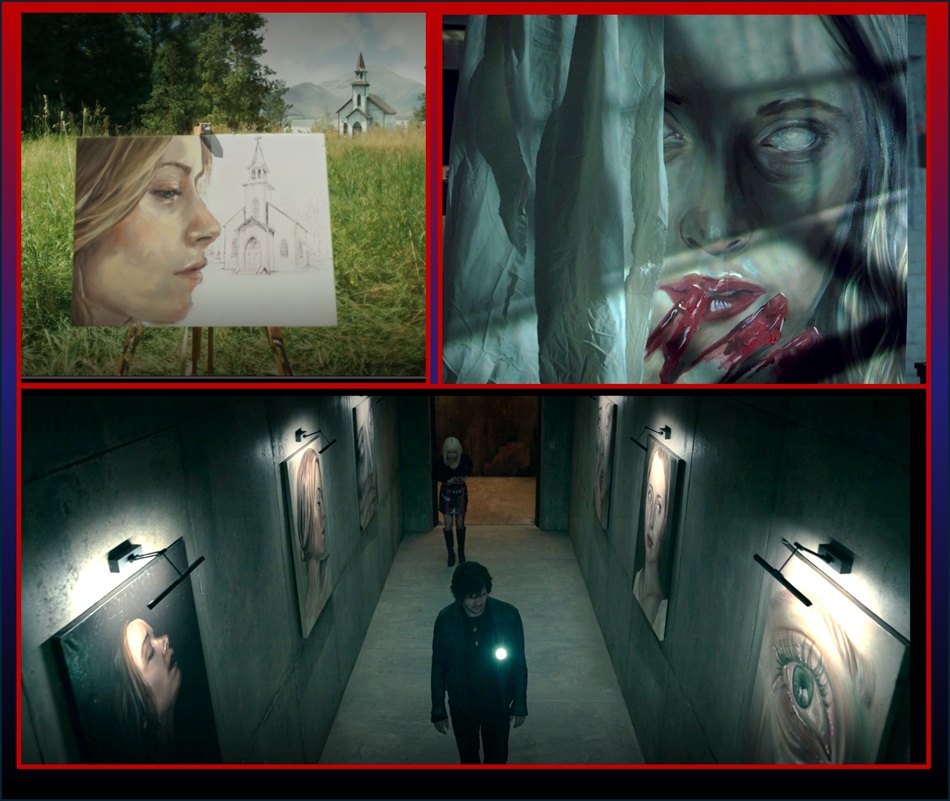
In Return to Silent Hill, James is only shown painting in one instance. As far as screen time goes, the painter aspect is not fleshed out much (this post highlights the most relevant, painting snapshots).
It’s a lost opportunity. Artsy elements were set up, but they are swamped out by CGI antics, with more time dedicated to atmospheric ambiance (which was overdone). James’ ability to paint feels thrown in as a bonus, rather than a critical design element. Why did we not see him portray Mary in action, watch him capture her emotions? Watch him make the gallery shown later in the movie (for about a minute when he races through it with Maria).
He could have stopped to analyze those paintings, inquire about his muse, and what was in them. Instead, he just races by them. I purchased and skimmed the Novelization by John Passarella, hoping to unearth some arcana, but it provides even less depth on the paintings than the movie.
.
So why would James’ character not be fleshed out more? Well, he was not the main draw, apparently. In a sense, Return to Silent Hill (2026) has more in common with There’s Something About Mary (1998), a romantic comedy in which Ben Stiller plays a man who pines for his old crush Mary Jensen (played by Cameron Diaz). Both movies are romances where a blond woman named Mary is sought out. RtSH was really more about Mary than James. Note that, according to Reddit and fan lore, a SH2 documentary had the character designers identifying Cameron Diaz as an inspiration for Maria’s character.
 LEFT: Cameron Diaz; RIGHT Maria from Silent Hill 2 (original game)
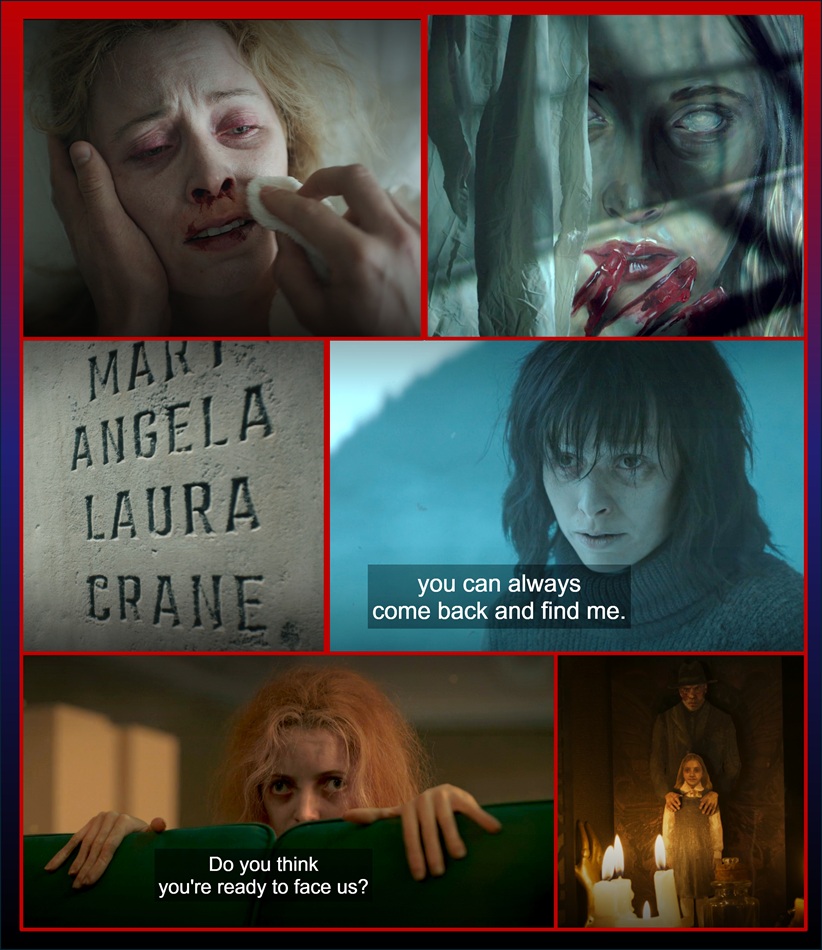
The evidence that movie is not really about James, but is about Mary? Well, Christopher Gans told the public via interviews with Fandomwire (link) and Temple of Geek (link to where Gans explains that Angela is Mary too). This explains why actress Hannah Emily Anderson plays four ‘distinct’ roles in the 2026 film Return to Silent Hill: Mary Crane, Maria, Angela, and monstrous/moth Mary.
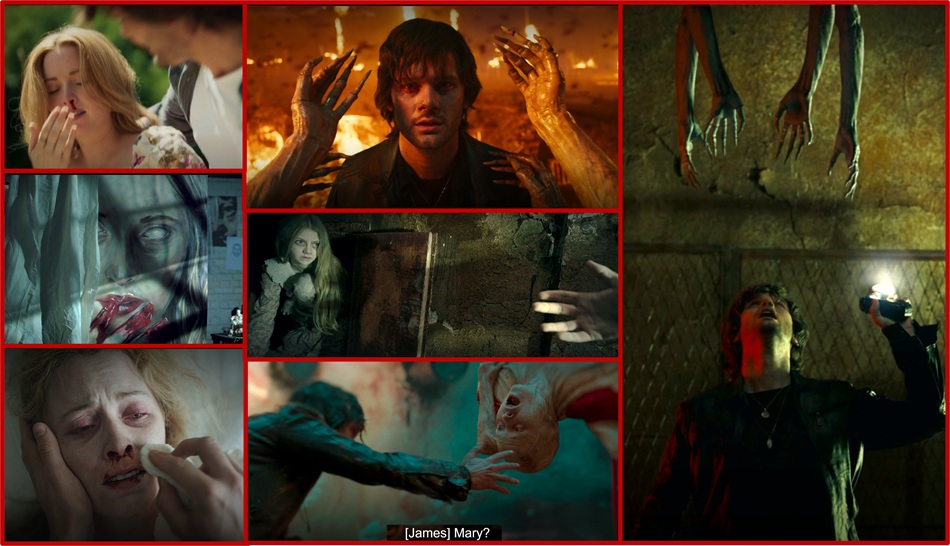
Evie Templeton played the character Laura, who, by chance, apparently also did the voice and motion capture for the same character in Bloober’s SH2. The explicit evidence of a universal Mary existing is Laura’s reveal at the Lakeview Hotel, when she reminded James that the tombstone for Mary has this inscription: “Mary Angela Laura Crane.” In the video game, Laura is a girl whom Mary met in the hospital, and Angela is a depressed survivor of sexual abuse. The film conversely posits that Angela, Mary, and Laura are all the same! For me, I would have enjoyed the movie more if I had known this ‘sucker punch’ spoiler.
For first-time watchers, the film appears to be a mess until the grand reveal of the tombstone naming. There are tons of characters that seem to require more screen time and stories fleshed out. They all play roles similar to what they had in the games, but are left fragmented. Once we know that many of the characters in the movie are literally Mary in different forms, then we can enjoy it a lot more.
Return to Silent Hill is really about her. Let go of a few red herrings and cameos (i.e., Eddie) and focus on the implications.
Embracing There’s something about MaryThe consequence of having Laura, Angela, Mary, and Mary’s monstrous version of herself all being the same entity is profound. It implies that the Abstract Daddy is Mary’s father, who abused her sexually (more so than the cultish poisoning). It implies her connection to the town is so powerful that her soul/identity manifests throughout everything. It means she was trying to communicate with James through several versions of herself.
In the film, Abstract Daddy was Mary’s father. Mary’s father and his cult (The Order) abused her, drugged and manipulated her. James catches Mary when she wants to leave the cult at the overlook at the beginning, and he brings her back. He is responsible for her not leaving the cult!
Character Differences: Game vs Movie Character SH2 Video Game(s) Return to Silent Hill movie James Sunderland Focal Character of Story, knew his wife was terminally ill A foil character for Mary …. it’s all about Mary. James did not know Mary was sick Silent Hill A resort/retreat town that James and Mary Mary’s birthplace, a trap she is trying to escape Mary _____ Mary Shepherd-Sunderland, WIFE of James, victim of terminal disease, and later to James Mary Crane, a GIRLFRIEND of James, a victim to her father’s abuse and the cult of Silent Hill Laura A girl whom Mary befriended in Brookhaven Hospital A younger Mary Angela A woman abused by her father Another version of Mary Maria An alternative version of Mary, a sluttier version of his wife A doppelganger Mary, a sluttier version of his girlfriend, is not real Pyramid Head A monstrous manifestation of James ’ sexual frustrations An angry/champion version of James, fighting on his behalf against the monstrous version of Mary (the version of her that the cult encouraged her to becomeIncarnations of Mary
The movie introduces Pyramid Head as an entity chasing him/Laura, but then it becomes clear that it is not after James. It is after the monsters and unreal things haunting James. Pyramid Head doesn’t rape maniquins as he does in the video games; here he struggles with the monster version of Mary. James’s only painting (done when he had a beard, so before the timeline of the film) is a self-portrait that assumes the Pyramid Head mask. Many times in the film, both James and Pyramid Head mirror each other’s gestures.
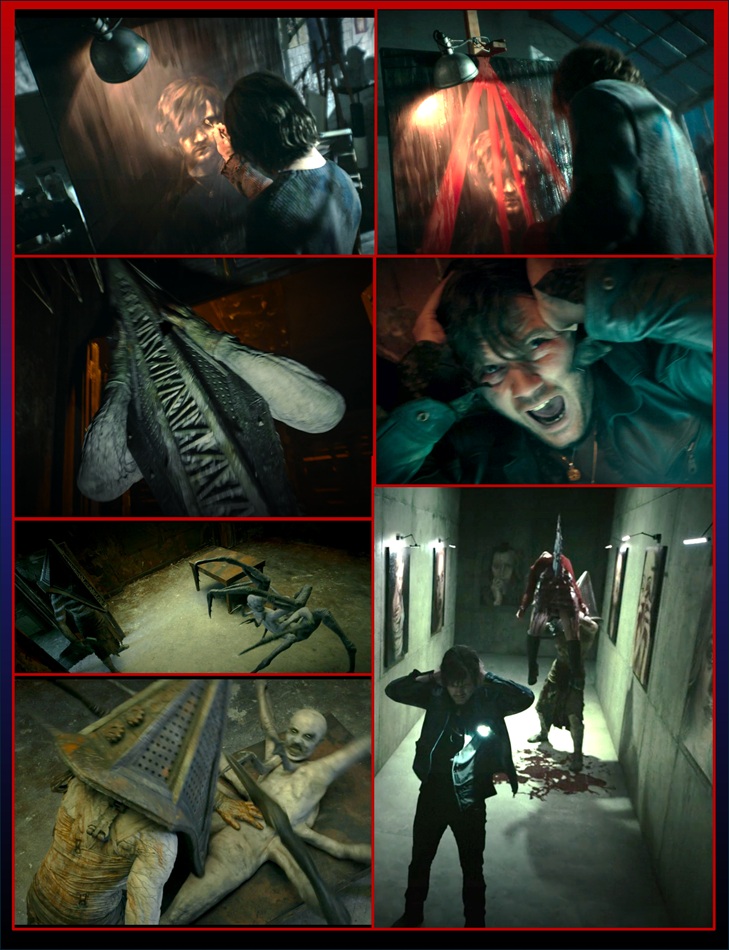
For my first viewing, the movie was too different than the game and too confusing for me to catch the artistic nuances. Analyzing it for this post made me more sympathetic to Mary (and happier to rewatch the film). Below are a few additions I would have enjoyed, and if there is a god in Silent Hill, perhaps some of them exist in a Director’s Cut.
- Have Mary be focused in the beginning scene (not James in the car); have her climb out of the valley to the overlook, maybe even dropping a sacred doll or relic of the cult to demonstrate her escape
- Have James place a rose on a tombstone when he meets Angela (instead of carrying sandbags with her)
- Have James actively paint Mary, show them interacting, and him exercising his craft. Show him learning about her as he paints. Show her hiding her odd past with the cult, turning into a monster. Maybe he sees the emerging monster in her, and paints it.
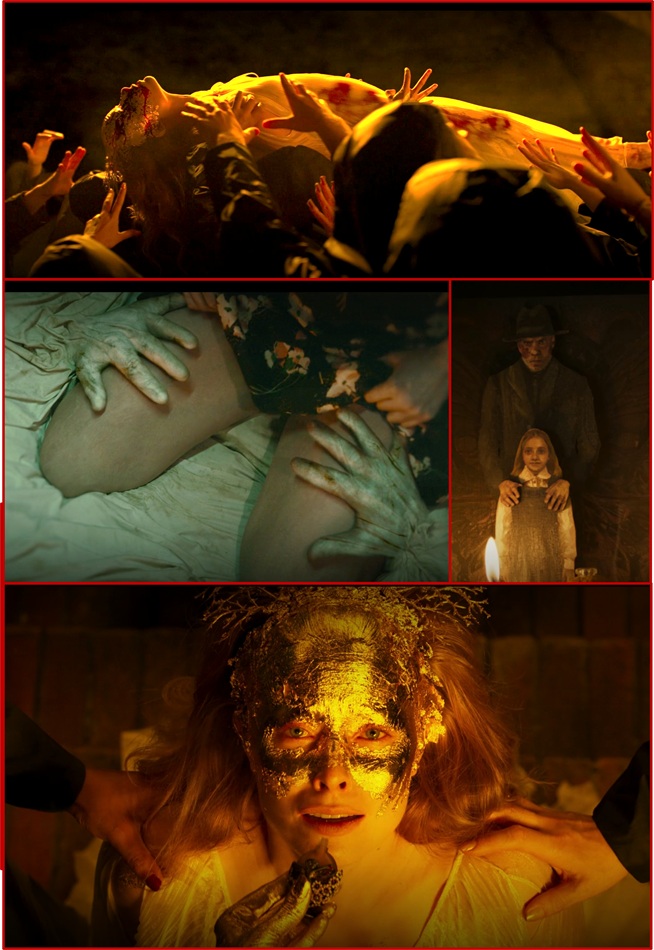
S.E. Lindberg is a Managing Editor at Black Gate, regularly reviewing books and interviewing authors on the topic of “Beauty & Art in Weird-Fantasy Fiction.” He has taken lead roles organizing the Gen Con Writers’ Symposium (chairing it in 2023), is the lead moderator of the Goodreads Sword & Sorcery Group, and was an intern for Tales from the Magician’s Skull magazine. As for crafting stories, he has contributed eight entries across Perseid Press’s Heroes in Hell and Heroika series, and has an entry in Weirdbook Annual #3: Zombies. He independently publishes novels under the banner Dyscrasia Fiction; short stories of Dyscrasia Fiction have appeared in Whetstone Amateur S&S Magazine, Swords & Sorcery online magazine, Rogues In the House Podcast’s A Book of Blades Vol I & II, DMR’s Terra Incognita, the 9th issue of Tales From the Magician’s Skull, Savage Realms Magazine, and Michael Stackpole’s S&S Chain Story 2 Project.
Categories: Fantasy Books
Spotlight on “The Midnight Train” by Matt Haig
LitStack Spots Matt Haig LitStack has spotted a few other titles we want on our…
The post Spotlight on “The Midnight Train” by Matt Haig appeared first on LitStack.
Categories: Fantasy Books
S. E. Lindberg is One of the most unique voices in Modern Sword & Sorcery
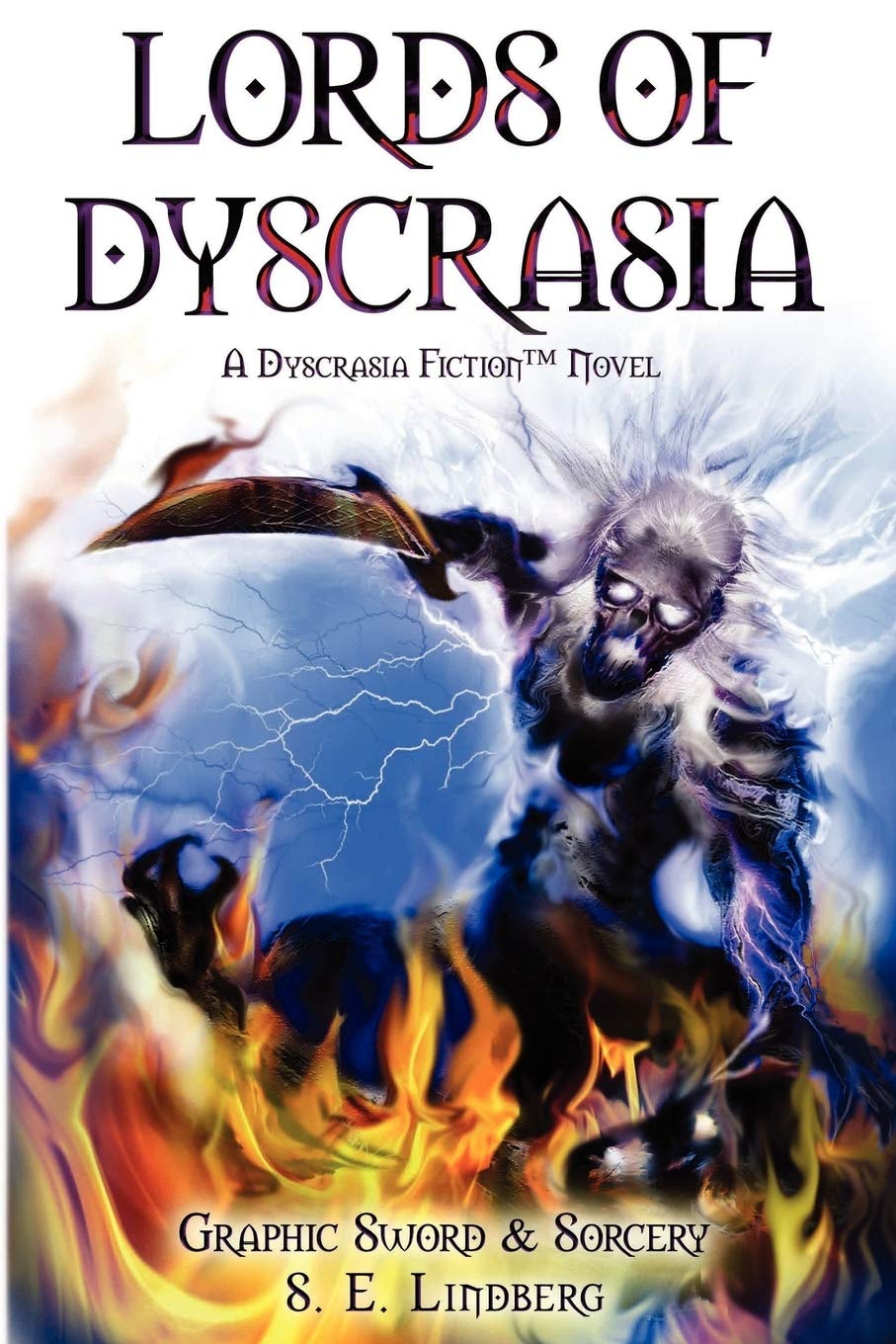
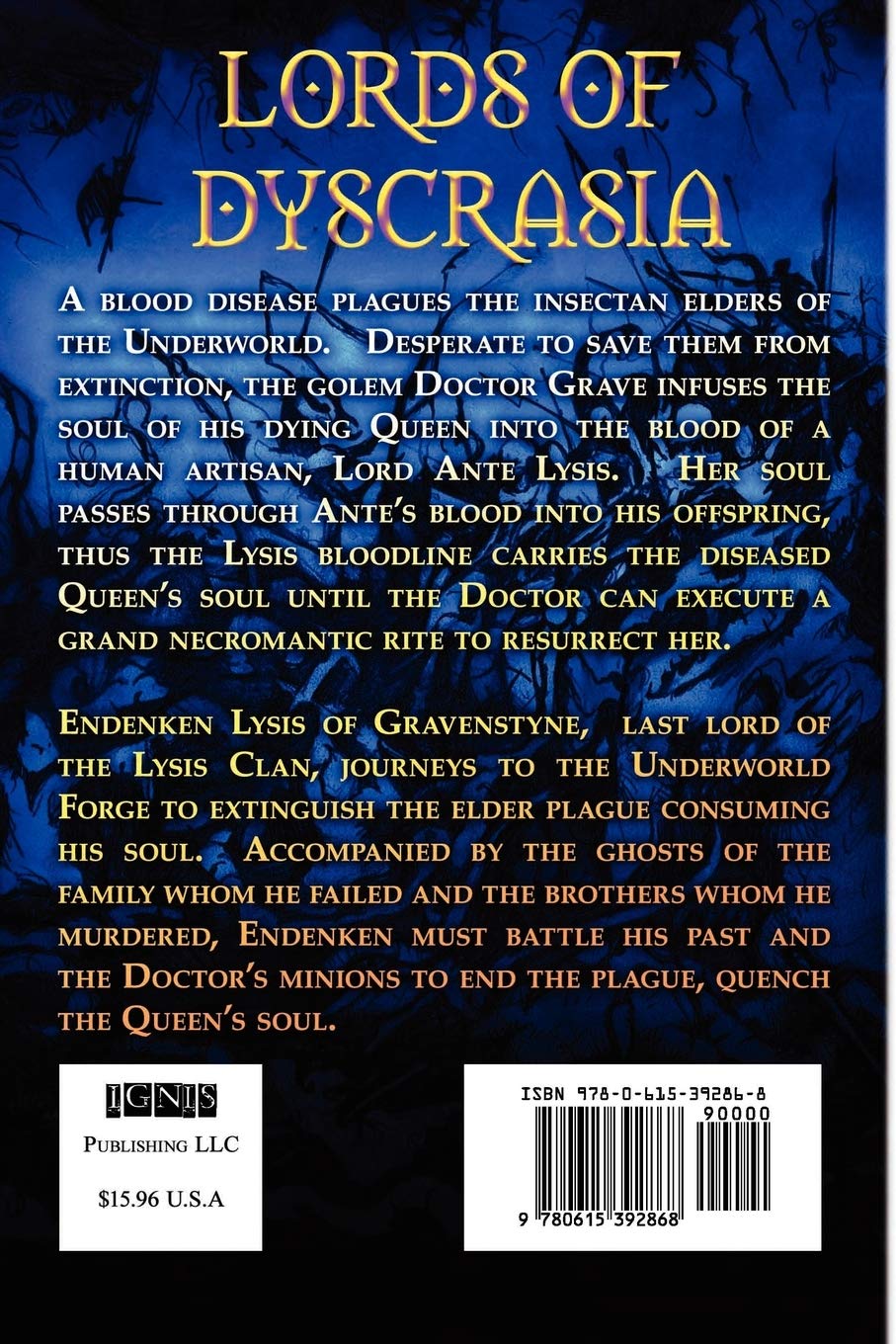
Lords of Dyscrasia by S. E. Lindberg (IGNIS Publishing, July 7, 2011). Cover by S. E. Lindberg
One of the most unique voices working in Sword & Sorcery today is S. E. Lindberg. I met Seth a few years back and we’ve corresponded frequently as well as running into each other here at Black Gate, where he is the Managing Editor, and at Goodreads. Lindberg has put together a unique setting for what he calls Dyscrasia Fiction.
Dyscrasia means “a bad mixture of liquids,” which is related to the Greek concept of the four “humors” of Blood, Phlegm, Black Bile, and Yellow Bile. In Dyscrasia fiction, these humors are sources of magical power and often soul and body corrupting influences.
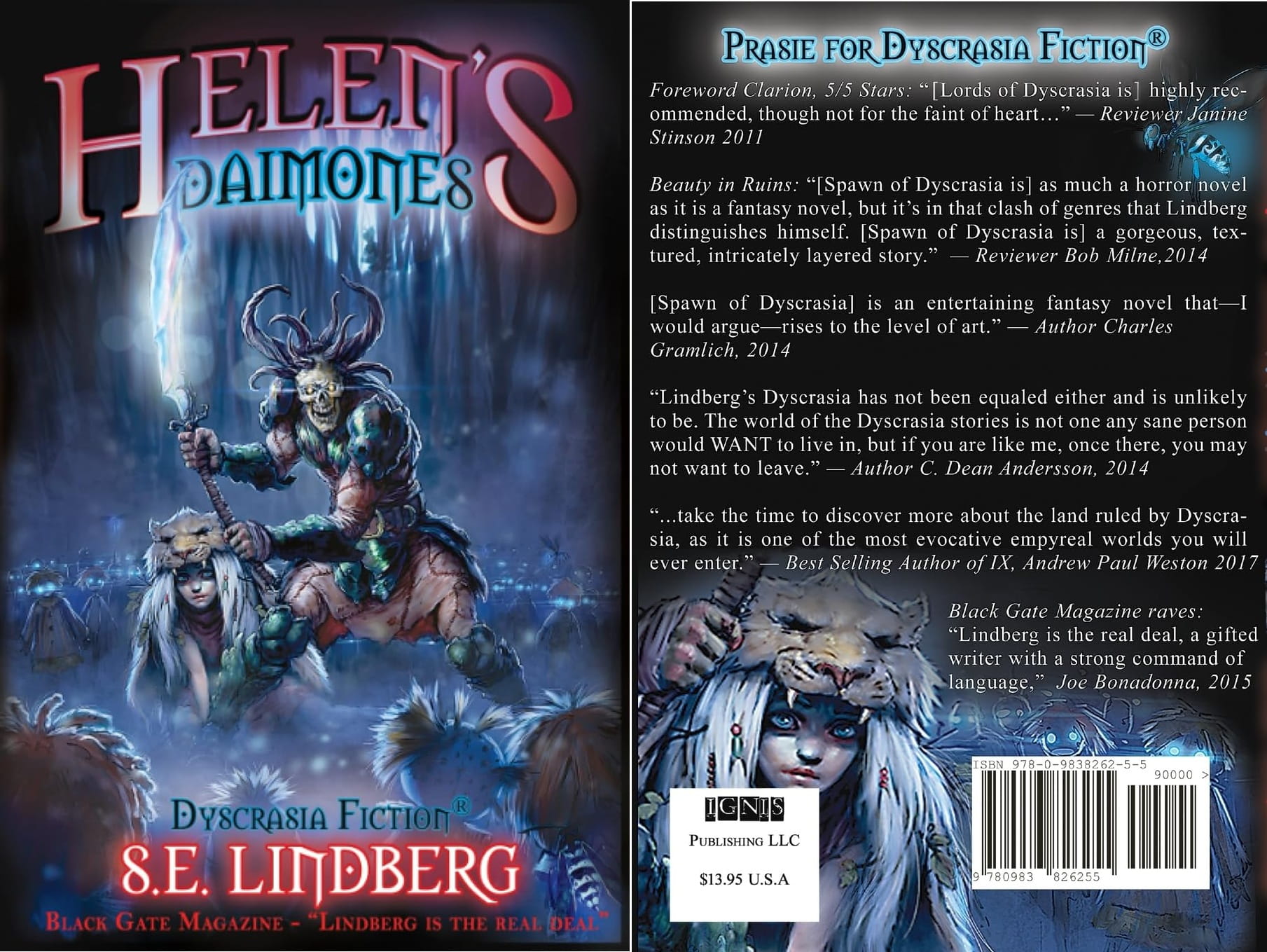 Helen’s Daimones by S. E. Lindberg (IGNIS Publishing, September 22, 2017). Cover by Daniel Landerman
The three novels available now are
Lords of Dyscrasia (2011)
Spawn of Dyscrasia (2014)
Helen’s Daimones (2017)
Although Helen’s Daimones was the most recently published, Lindberg suggests new readers start with it since it sets the tone for the other books.
Wherever you start, though, you’ll find a combination of beautiful language and powerful imagination. These works are hallucinogenic, dream-like, full of wraiths and apparitions — and sometimes horrors. Ideas and images pile one on top of another with an intensity that is far from common in fantasy literature.
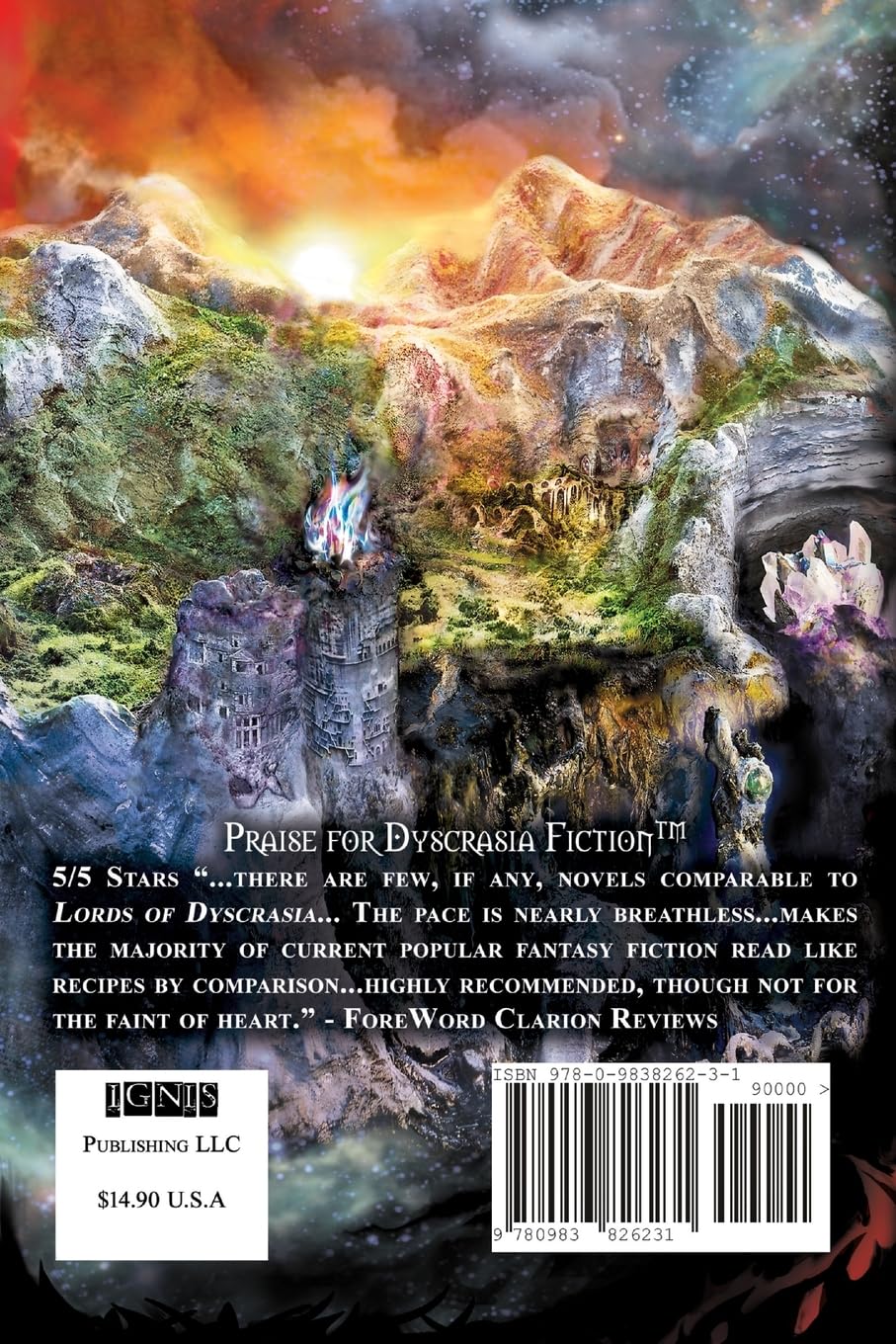
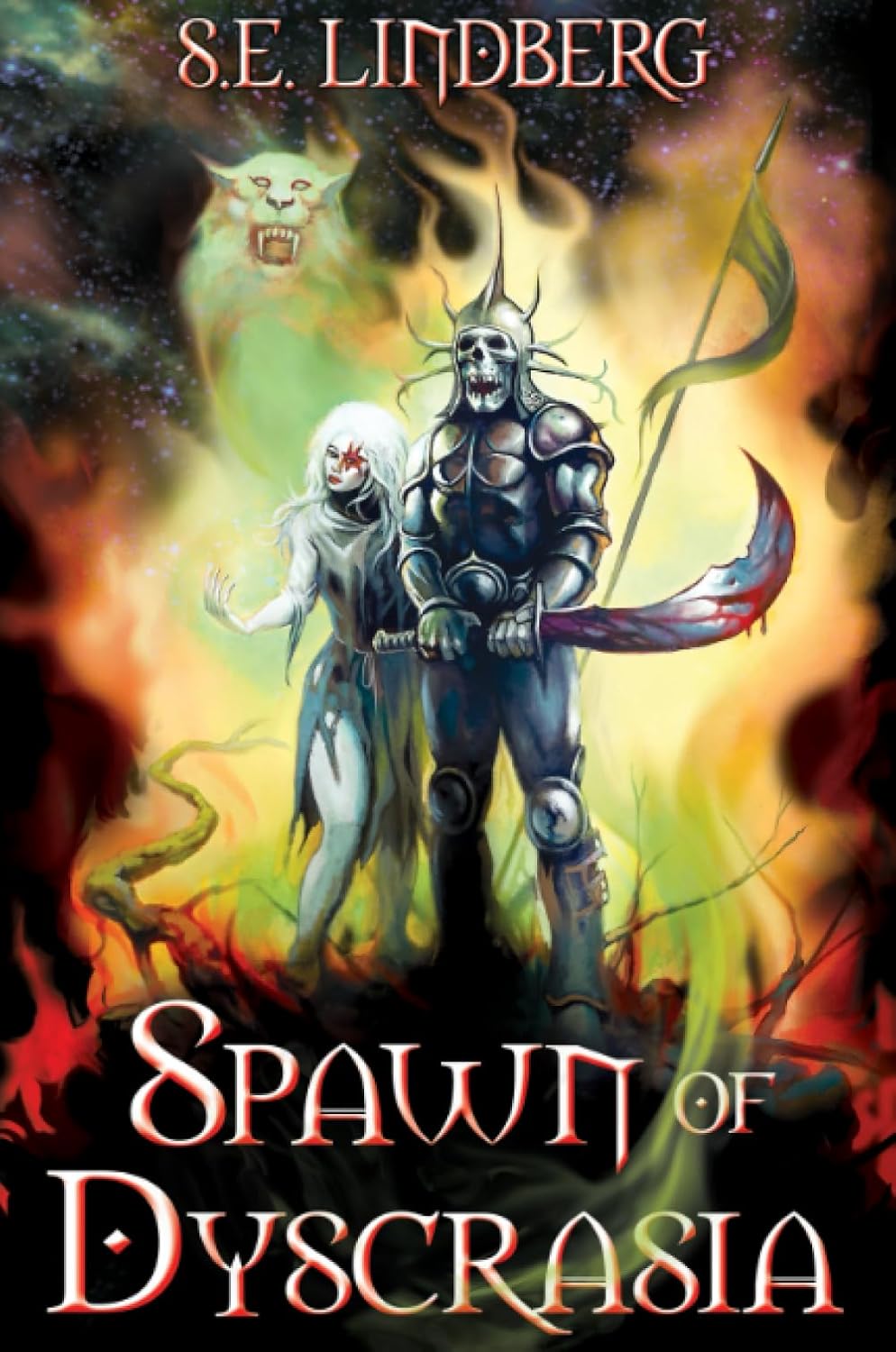
Spawn of Dyscrasia (IGNIS Publishing, July 17, 2015). Cover by Ken Kelly
I admire the author’s ability to maintain that intensity throughout his works; his world-building never stumbles, and the result is a unique fantasy vision that rises to the level of art.
A word about the covers for these books. The first was created by Lindberg himself, who also has other artistic skills in addition to writing. Spawn of Dyscrasia has an amazing cover by Ken Kelly, and Helen’s Daimones has a great cover by Daniel Landerman.
There are also a number of short stories tied to the Dyscrasia setting. For more information, check out Seth’s webpage or his Facebook page, or have a look at Joe Bonadonna’s 2015 review of Lords of Dyscrasia, here at Black Gate.
Charles Gramlich administers The Swords & Planet League group on Facebook, where this post first appeared. His last article for us was a review of The Barbarian Swordsmen, edited by Peter Haining. See all of his recent posts for Black Gate here.
Categories: Fantasy Books
Women in SF&F Month: Nghi Vo
Today’s Women in SF&F Month guest is Nghi Vo! Her short stories and novelettes include the Hugo Award winner “Stitched to Skin like Family Is” and the Shirley Jackson Award winner “What the Dead Know.” She is also the author of the fantasy novels Siren Queen, which was a World Fantasy, Locus, and Ignyte Award finalist, and The City in Glass, which was a finalist for the Mythopoeic Fantasy and Locus Awards plus the Ursula K. Le Guin Prize. Her next […]
The post Women in SF&F Month: Nghi Vo first appeared on Fantasy Cafe.
Categories: Fantasy Books
7 Author Shoutouts | Authors We Love To Recommend

Here are 7 Author Shoutouts for this week. Find your favorite author or discover an…
The post 7 Author Shoutouts | Authors We Love To Recommend appeared first on LitStack.
Categories: Fantasy Books
Books I Was Once Too Cool to Read
Lewis Buzbee calls us out with Books I Was Once To Cool To Read. Maybe…
The post Books I Was Once Too Cool to Read appeared first on LitStack.
Categories: Fantasy Books
Excalibur: The Holy Grail of King Arthur Movies
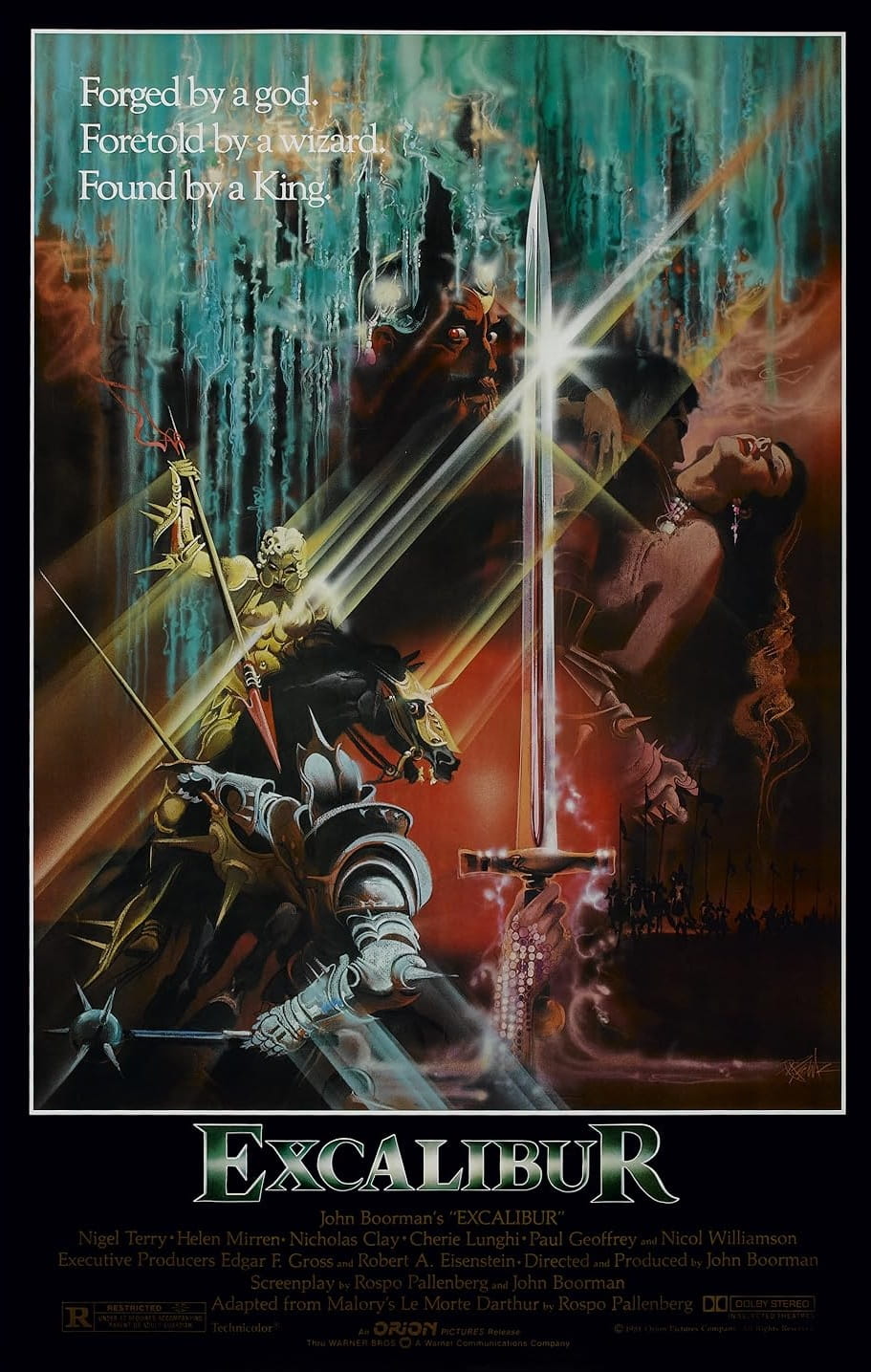 Excalibur (Warner Bros, April 10, 1981)
Excalibur (141 minutes; 1981)
Excalibur (Warner Bros, April 10, 1981)
Excalibur (141 minutes; 1981)
Written by Rospo Pallenberg and John Boorman. Directed by John Boorman.
Loosely based on Le Morte d’Arthur by Thomas Malory.
What is it?A classic telling of the story of King Arthur, the Knights of the Round Table, the quest for the Holy Grail, and the magical sword Excalibur.
Many filmed adaptations of that story have followed. This one, however, with its heightened sense of wonder and layers of magic woven throughout, probably remains the best-loved, most visually stunning, and most talked-about of them all.
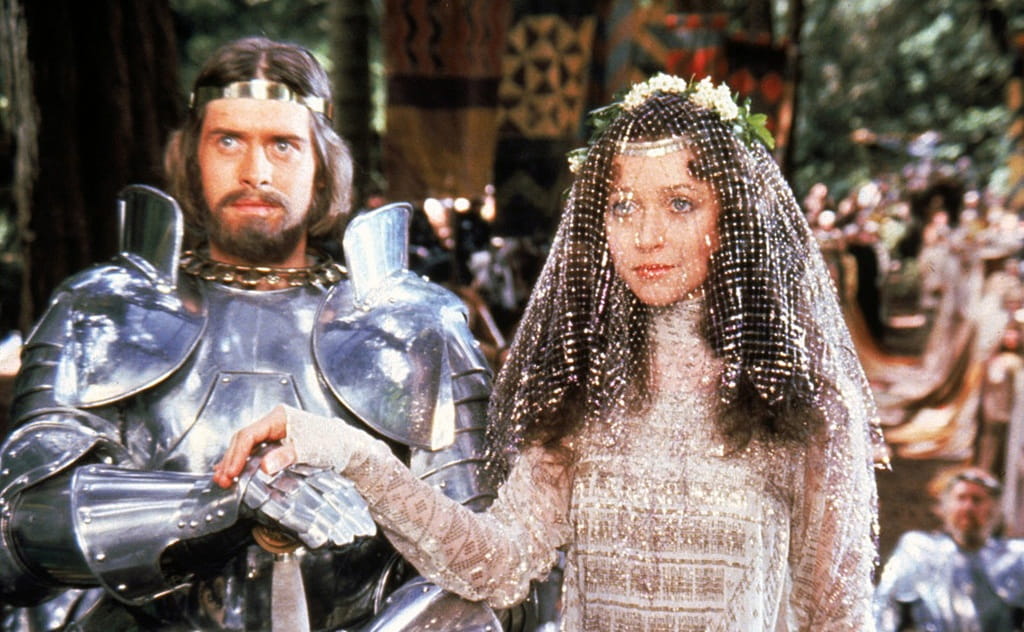 Arthur and Guenevere in Excalibur
Noteworthy
Arthur and Guenevere in Excalibur
Noteworthy
The story goes that Boorman, legendary director of films as lofty as Hope and Glory (1987) and as derided as Zardoz (1974), brought the idea of a film about King Arthur to United Artists in 1969. The studio rejected his original script, which ran three hours, on the grounds of its enormous expected cost to produce. They suggested he make an adaptation of The Lord of the Rings instead. Because that would’ve been shorter and cost less money–?!
Boorman briefly went along with the Rings idea, at least long enough that costume and set designs for Middle-Earth were drafted. Some of these would later be recycled for use on Excalibur.
It took him the entire decade of the Seventies to do it, but eventually he raised enough funds and support to begin work on the movie he’d wanted to make all along.
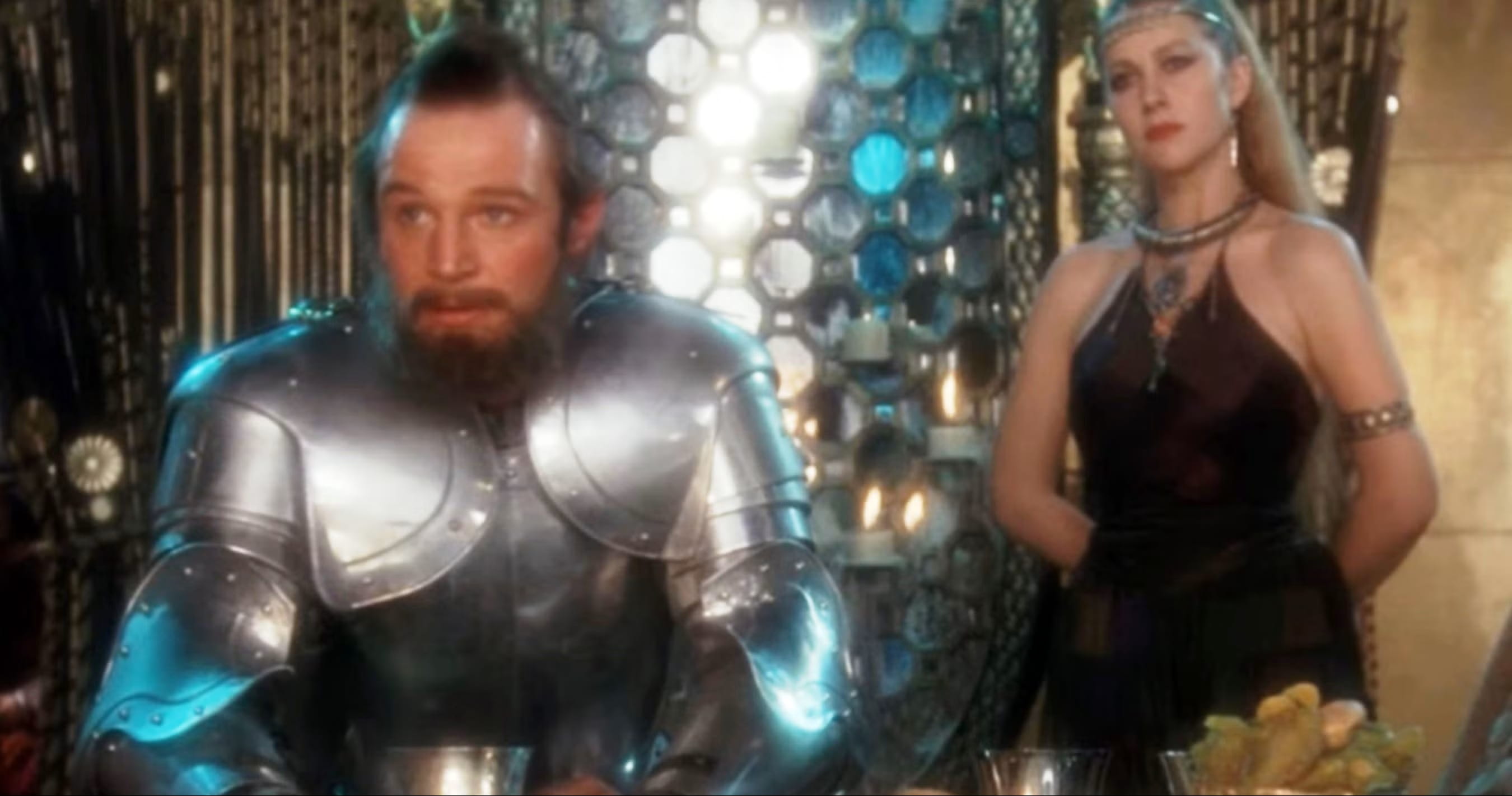 Liam Neeson and Helen Mirren in Excalibur
Boorman couldn’t afford the top actors of the day, so instead he did a remarkable job of finding the top actors of tomorrow, and fitting them into his budget. We therefore get the likes of Liam Neeson, Gabriel Byrne, Ciaran Hinds and Patrick Stewart, all in minor supporting roles. The film’s actual leads include Nigel Terry as Arthur (from teen to aged), Helen Mirren as Morgana, Nicholas Clay as Lancelot, Cherie Lunghi as Guenevere, Paul Geoffrey as Perceval and Nicol Williamson as Merlin.
On a budget of $11 million ($41 million in 2026), Excalibur brought in $35 million ($131 million today) at the North American box office. And of course it went on to become a staple on cable TV.
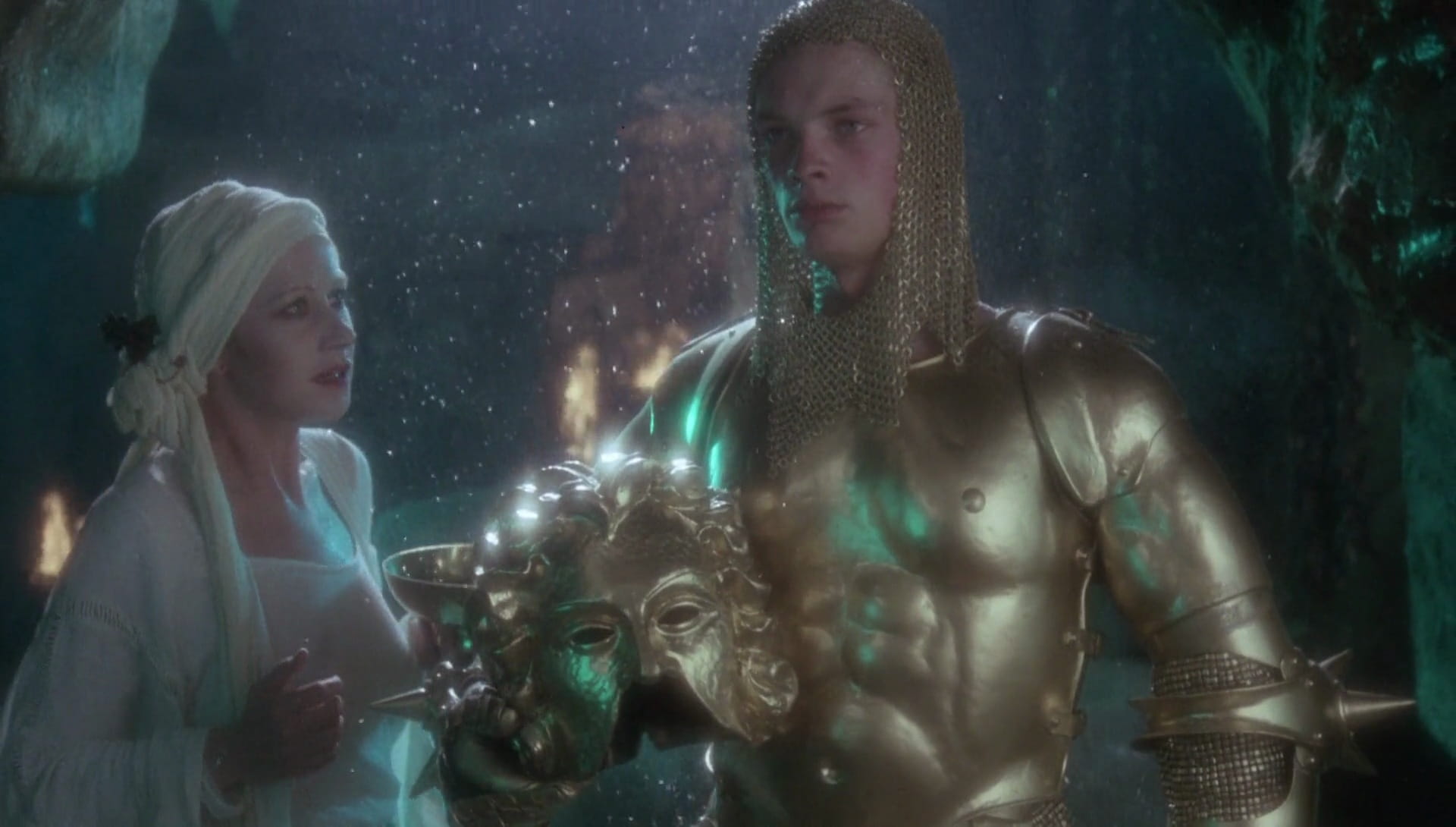 Morgana and Mordred
At Cannes in 1981, it won for “Best Artistic Contribution.” It received an Oscar nomination for “Best Cinematography” and a BAFTA nomination for “Best Costume Design.”
Appropriately enough, Boorman was himself knighted by Queen Elizabeth in 2022.
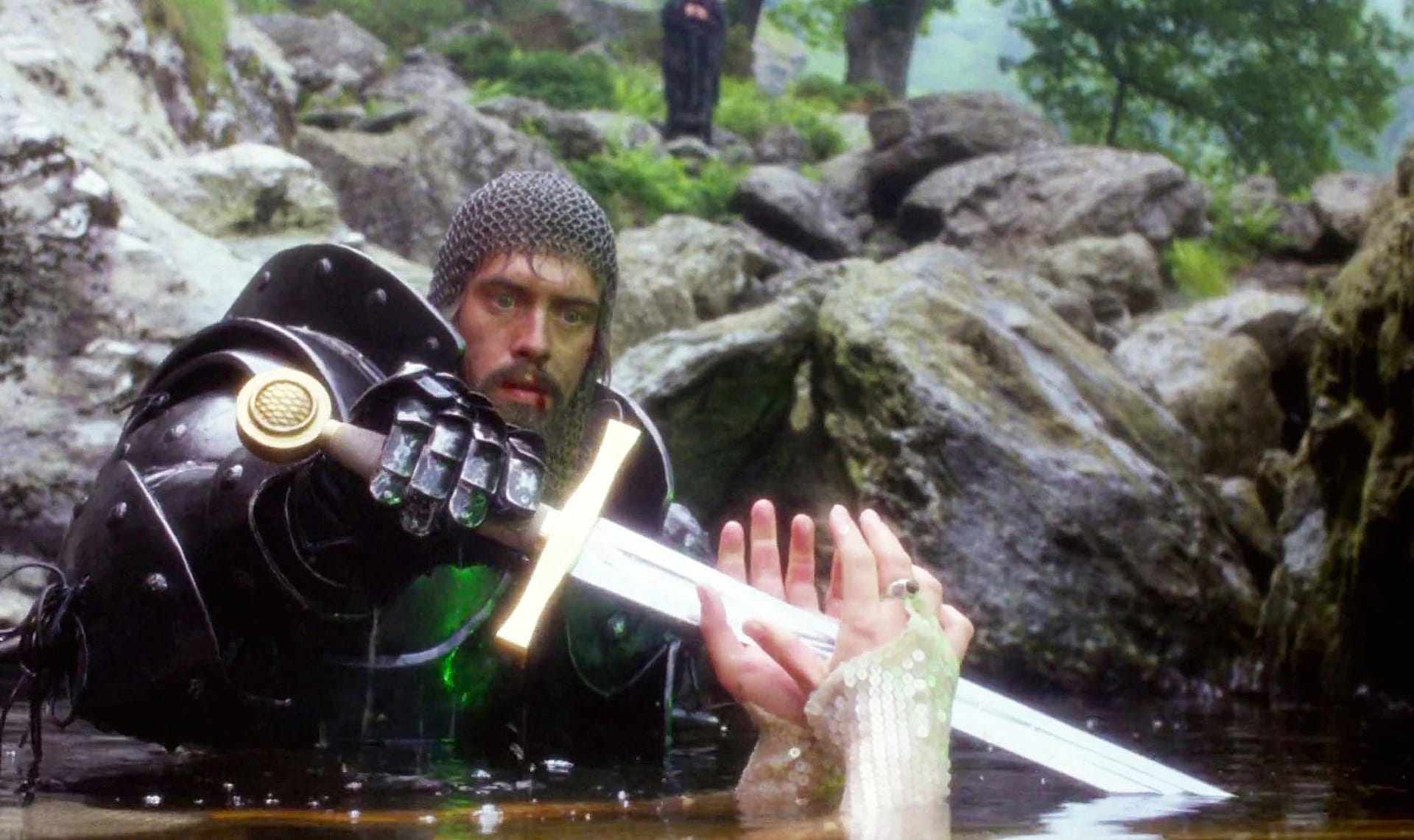 Uthur receives the sword
Quick and Dirty Summary
Uthur receives the sword
Quick and Dirty Summary
The wizard Merlin receives the magical sword Excalibur from the mystical force known as the Lady of the Lake and gives it to Arthur’s future father, Uther Pendragon. Uther uses it to conquer and unify the kingdom. Through Merlin’s magic, Uther seduces a rival’s queen and she gives birth to Arthur. Merlin takes young Arthur away to be raised by another nobleman. Uther implants Excalibur into a stone, and only the future king can draw it out. (Though, like folks lining up to try to lift Thor’s hammer, everyone takes a shot at it.)
A young Arthur draws the sword from the stone, becomes king, unifies the kingdom and creates the Round Table for his knights.
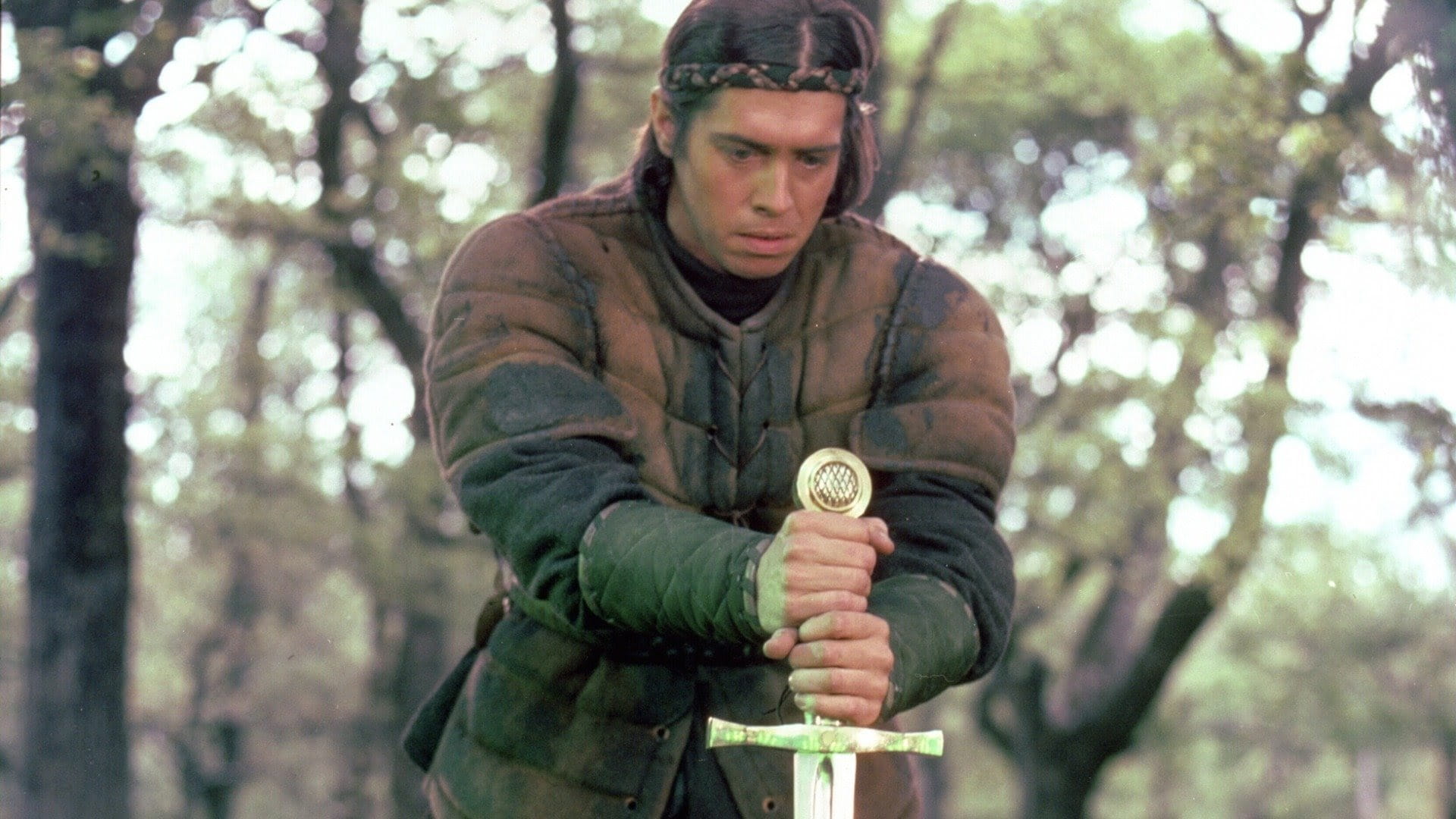 Arthur draws the sword
Conflict arises from various quarters. There’s a quest for the Holy Grail, more great battles and more sorcery.
Eventually most of the main characters square off against one another, in clashes of swords and magic. Merlin overcomes the sorceress Morgana’s spells, Arthur’s son Mordred kills his mother (it’s complicated), and then he and his father slay one another in battle. Before he dies, Arthur orders the sword Excalibur returned to the Lady of the Lake, where it will await the next time England finds itself in need of its power.
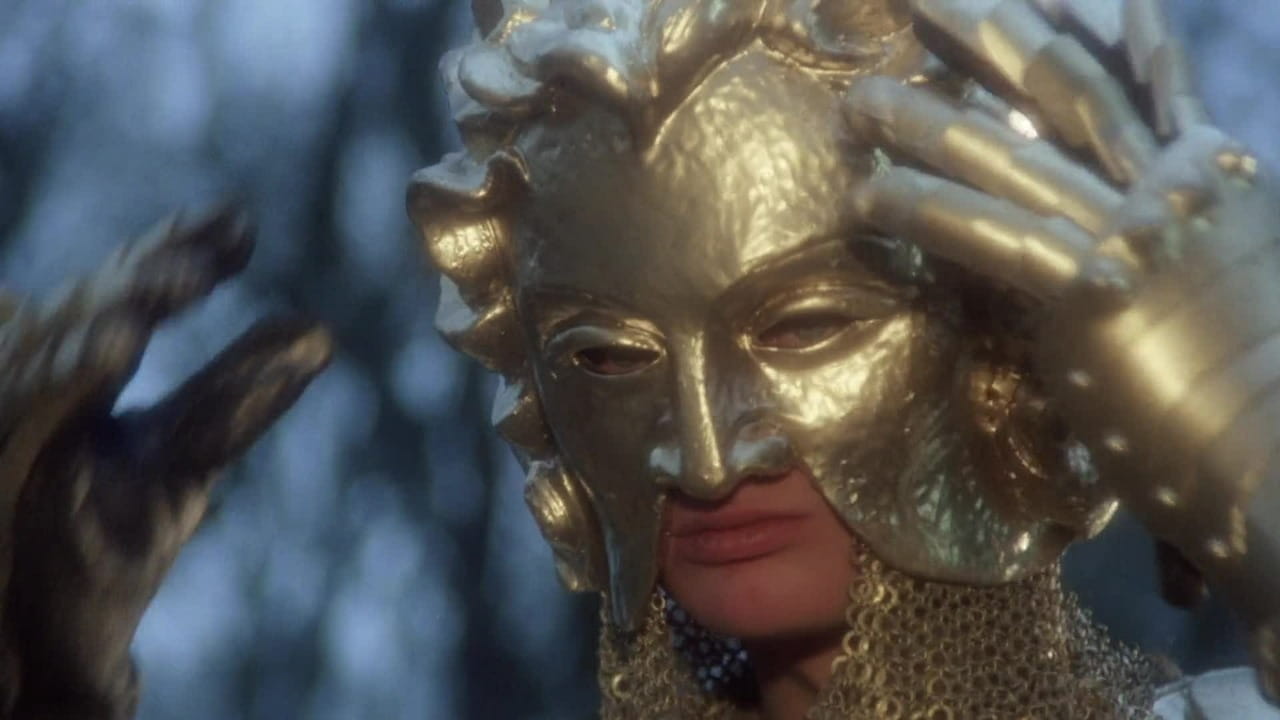 Mordred dons the armor
In addition to being an awesome saga of knights and wizards and battles, the story reflects a deeper idea about the relationship between the people, the land and the king. Here, King Arthur, the sword Excalibur, and the land of England are all tied together in mystical fashion, such that harm to one harms the others, and jealousy and bad actions by the king result in misery and unhappiness for the people and the land. Only by redeeming himself can Arthur restore the land and people to health and prosperity.
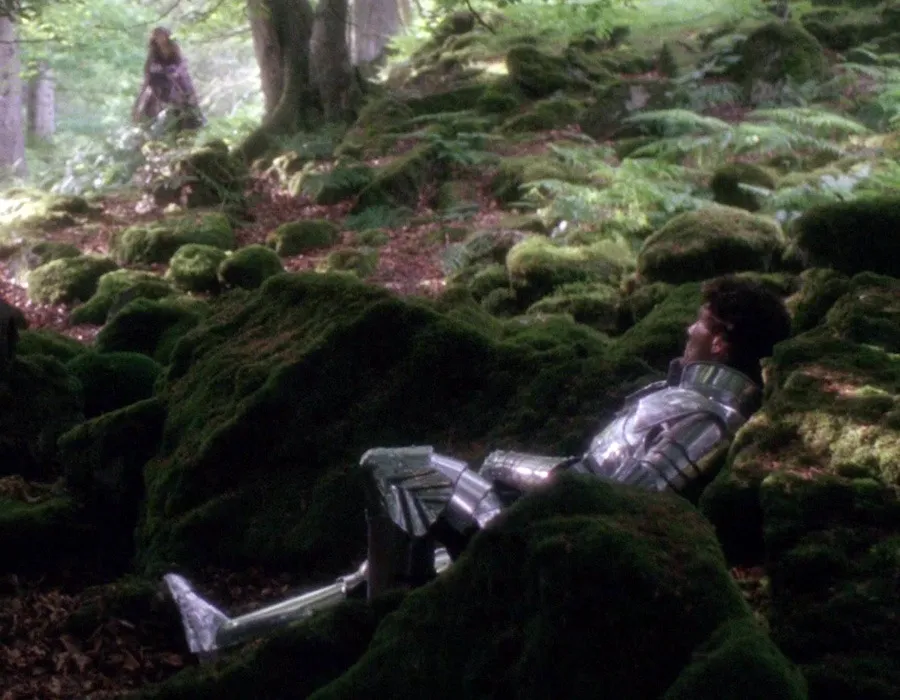 Guenevere comes to Lancelot
Fantasy/SF/Sword & Sorcery Elements
Guenevere comes to Lancelot
Fantasy/SF/Sword & Sorcery Elements
The most obvious examples are Merlin and Morgana and their use of magical powers. The fact that everyone else takes completely for granted the fact that magic is real and is being used around them constantly, including on the battlefield, only reinforces the sense that this is a different England from the one we know. Sorcery is rather commonplace and expected in and around Camelot.
Excalibur itself is a magical weapon. Other supernatural elements include Mordred’s golden armor that cannot be harmed by any weapon forged by Man; the Lady of the Lake distributing magical swords from her watery confines; and the fact that the land suffers when Arthur is low and prospers when he is redeemed.
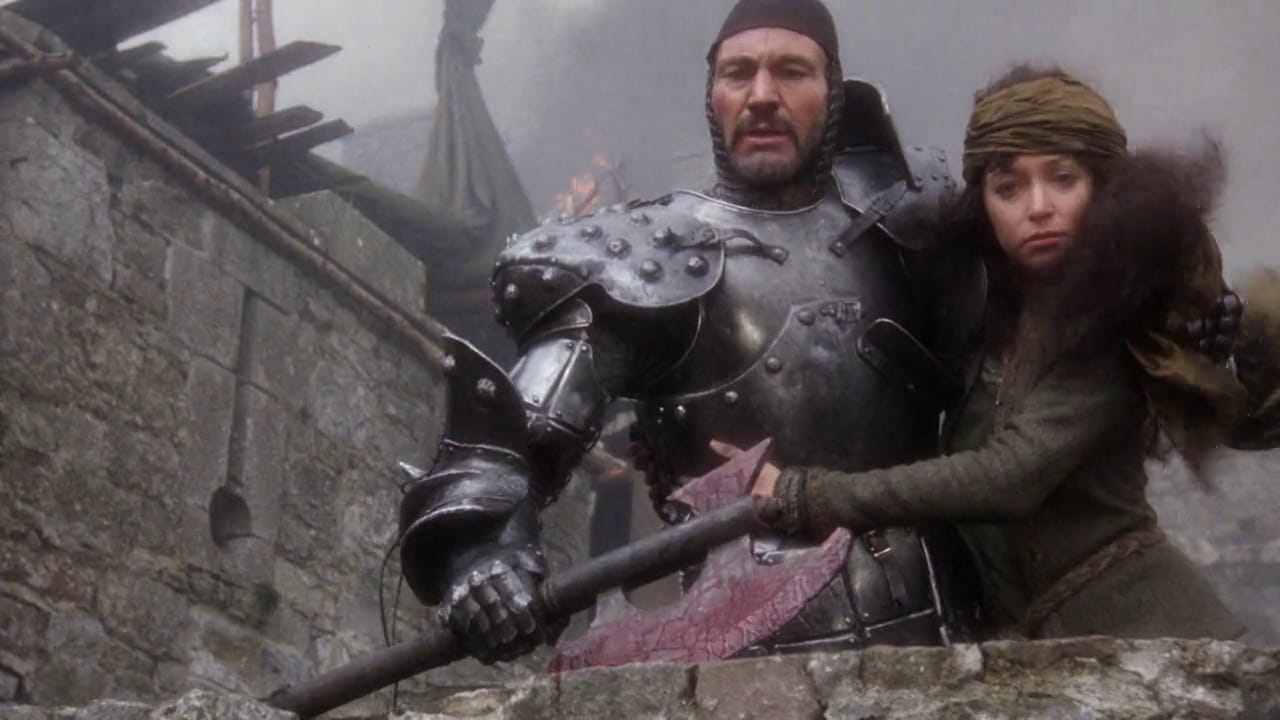 Patrick Stewart and Cherie Lunghi in Excalibur
High Point
Patrick Stewart and Cherie Lunghi in Excalibur
High Point
There are many to choose from, but my favorite has always been the moment when a young Arthur is part of an army besieging a castle commanded by a rival nobleman. Arthur, at this point still in the simple garb of a squire, confronts one of the enemy’s vassal knights. Arthur demands the knight swear fealty to him, but the knight scoffs that he couldn’t even if he desired to, because Arthur is but a squire.
This represents no real hurdle for Arthur. He simply hands Excalibur to the knight and commands his enemy to knight him, there on the battlefield. Arthur has thus rendered himself unarmed and defenseless, and has given over the great sword of kings to his enemy.
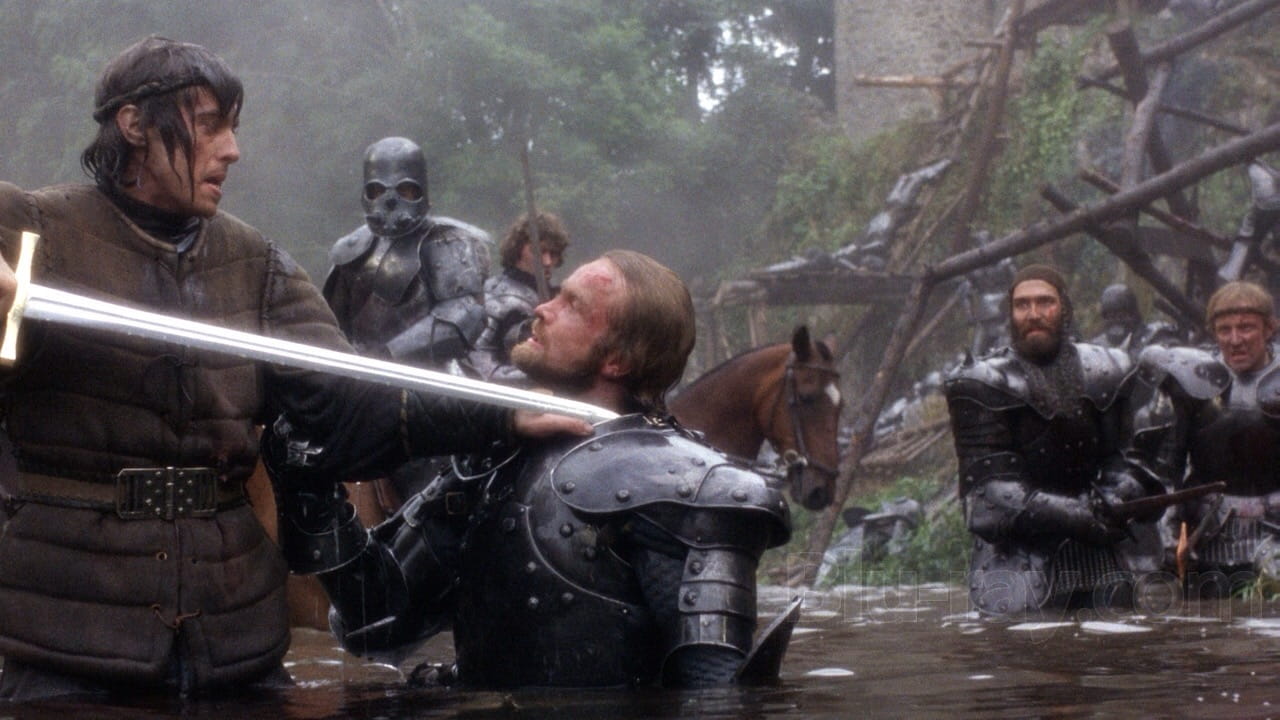 Arthur asks to be knighted
The battle comes to a very abrupt halt as knights and soldiers all around look on in astonishment. Everyone clearly expects the knight to strike foolish Arthur down with Excalibur and claim the sword as his own. The knight even appears resolved to follow that course of action.
He raises Excalibur to deliver the killing stroke. But then, whether from the compulsion of some magical force or out of simple respect for Arthur’s bravery, he finds he cannot do so. Instead he brings the sword down on Arthur’s shoulders and speaks the words, knighting him. Arthur, for his part, takes this all in stride, reclaims Excalibur from the bewildered knight, and declares victory.
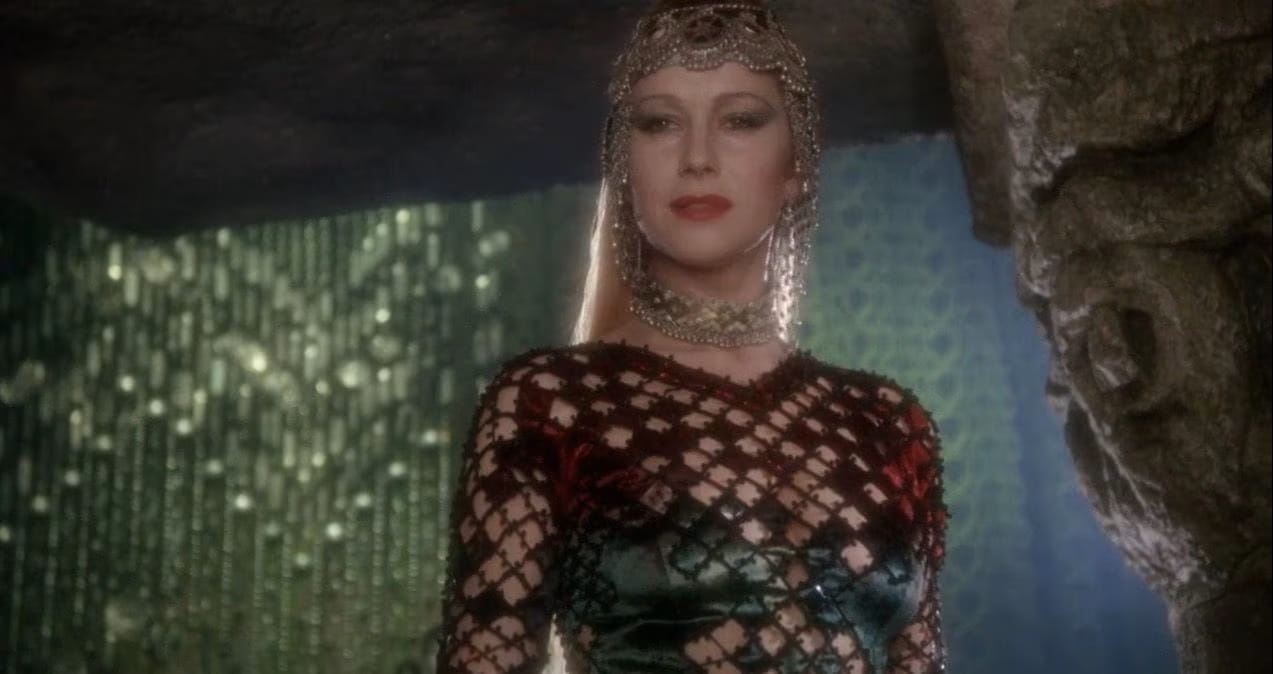 Helen Mirren as Morgana
Low Point
Helen Mirren as Morgana
Low Point
If there is a low point, perhaps it is in how Gabriel Byrne’s Uther reacts upon first laying eyes upon Igrayne, the queen whom he will later trick into sleeping with him. Uther loses his fool mind, declares that he will move heaven and earth to have one night with the lass, and demands that Merlin use his spells to make it happen.
This question arises: Why does Merlin not only go along with this foul act but actually enable what is without question rape? If Merlin knew that Igrayne bearing Uther’s child was vital to the future of the realm, it seems there are many other ways that such a thing could’ve been arranged, none of which need include outright deception and violation in this manner. Indeed, Merlin behaves as if it is all quite unexpected and he wants nothing to do with it, yet he actually facilitates it.
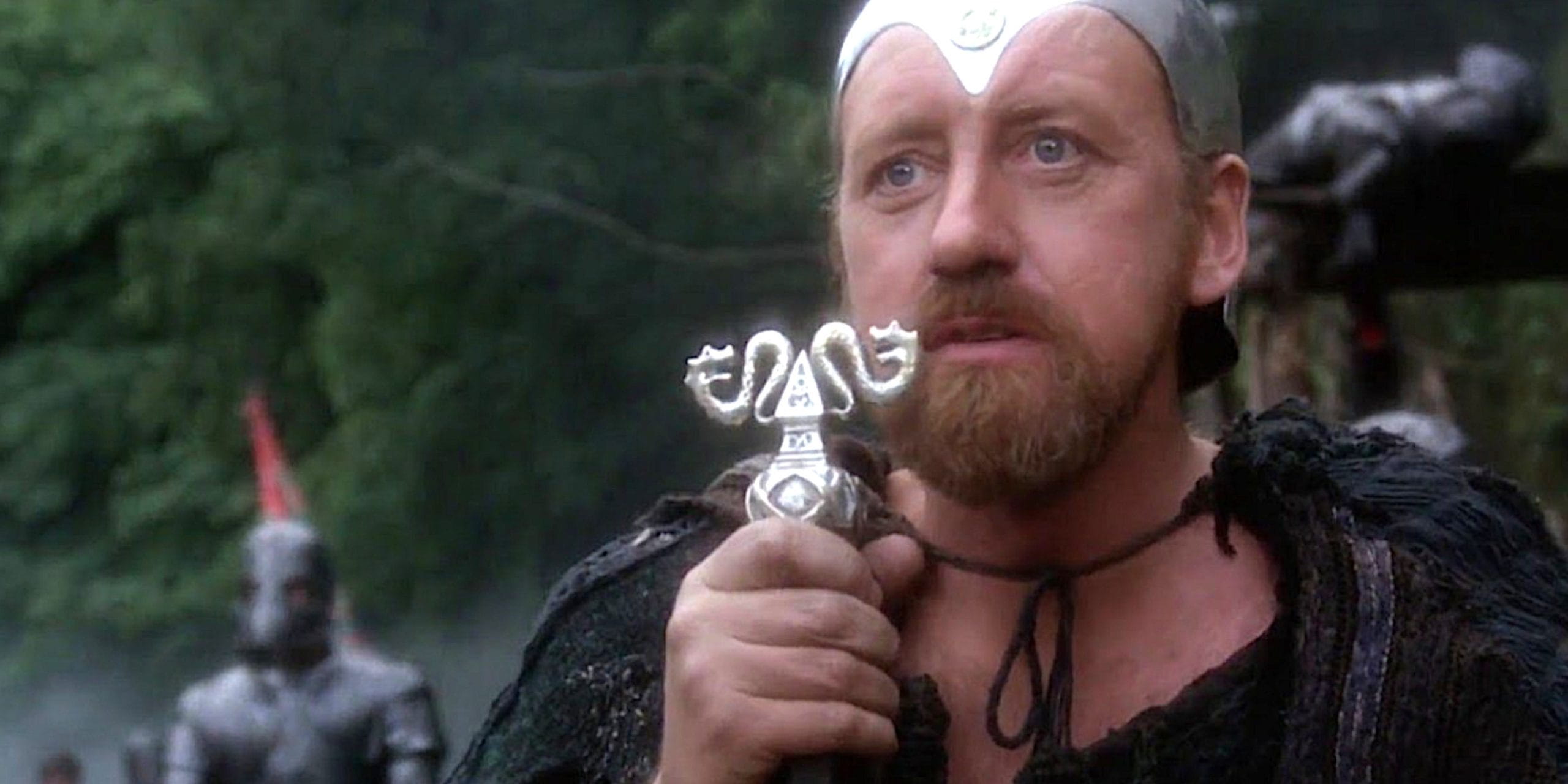 Nicol Williamson as Merlin in Excalibur
Standout Performance
Nicol Williamson as Merlin in Excalibur
Standout Performance
In a movie that includes the likes of Neeson, Stewart and Mirren, can there be any question that Nicol Williamson absolutely dominates the screen any time he appears? What he achieves here places Merlin on par with such legendary and movie-stealing supporting performances as Val Kilmer’s “Doc Holliday” in Tombstone and Alan Rickman’s “Hans Gruber” in Die Hard.
Williamson is by turns menacing, silly, vulnerable, outraged, commanding, and hilarious. He spends most of the movie warning Arthur about the dangers of various women, then falls into the trap of one himself.
That relationship – Merlin and Morgana, played by Helen Mirren – was fiery off-screen as well as on. Boorman intentionally cast Mirren in the role because he knew she and Williamson couldn’t stand one another. He anticipated fireworks as a result, and he got them.
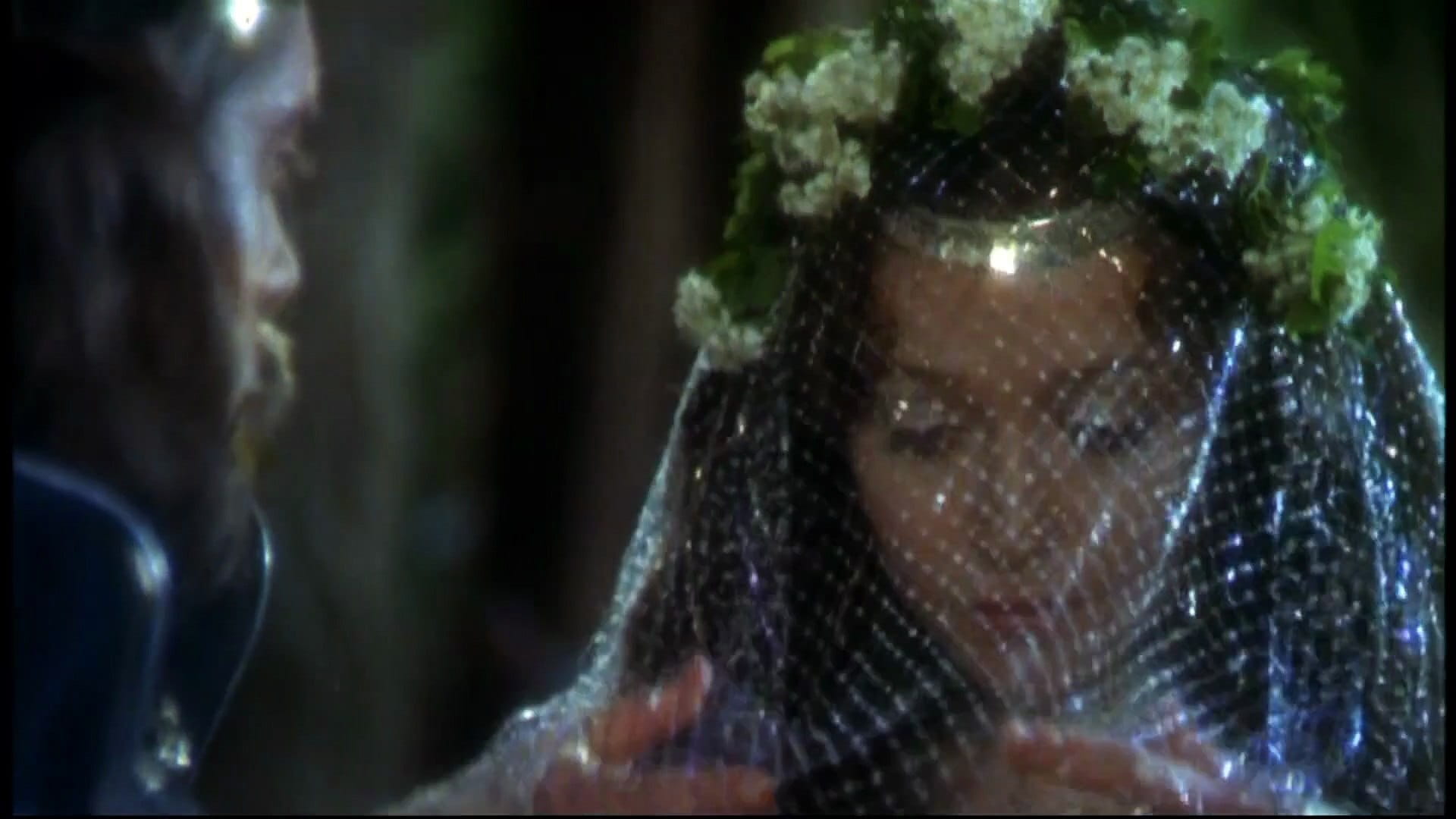 Arthur and Guenevere
Overall Evaluation as a Movie and as Fantasy/SF/Sword & Sorcery
Arthur and Guenevere
Overall Evaluation as a Movie and as Fantasy/SF/Sword & Sorcery
Excalibur exists in a strange in-between realm. On the one hand, it very much looks like a product of the early Eighties; in places, almost like a glorified stage play. On the other, the performances by a cadre of legendary actors still jump off the screen, and the cinematography and visuals (with no CGI!) remain radiant and lush to this day.
It’s a timeless tale, well-told by Boorman and company. Watching it again in 2026, the armor still gleams, Excalibur’s magic yet flashes, and the Williamson-Mirren sparks continue to fly.
All told, it’s for the best Boorman chose the sword over the ring.
Van Allen Plexico is a member of the Science Fiction and Fantasy Writers of America (SFWA), a Grand Master of Pulp Literature (2025 class) and a multiple-award-winning author of more than two dozen novels and anthologies, ranging from space opera to Kaiju to crime fiction to superheroes to military SF. He notably edited, co-created and co-wrote the Sword and Sorcery anthology GIDEON CAIN: DEMON HUNTER. Find all of his works on Amazon and at Plexico.net.
Categories: Fantasy Books
THE DEMON KING (Nightfall #3) by Peter V. Brett
The Demon King is the third and final installment of Peter V. Brett’s Nightfall saga, closing the saga of Olive Paper and Darin Bales, as well as the world introduced in The Warded Man, the first Demon Cycle novel. For now, at least. The second installment, The Hidden Queen left readers in a lurch, with…
Categories: Fantasy Books
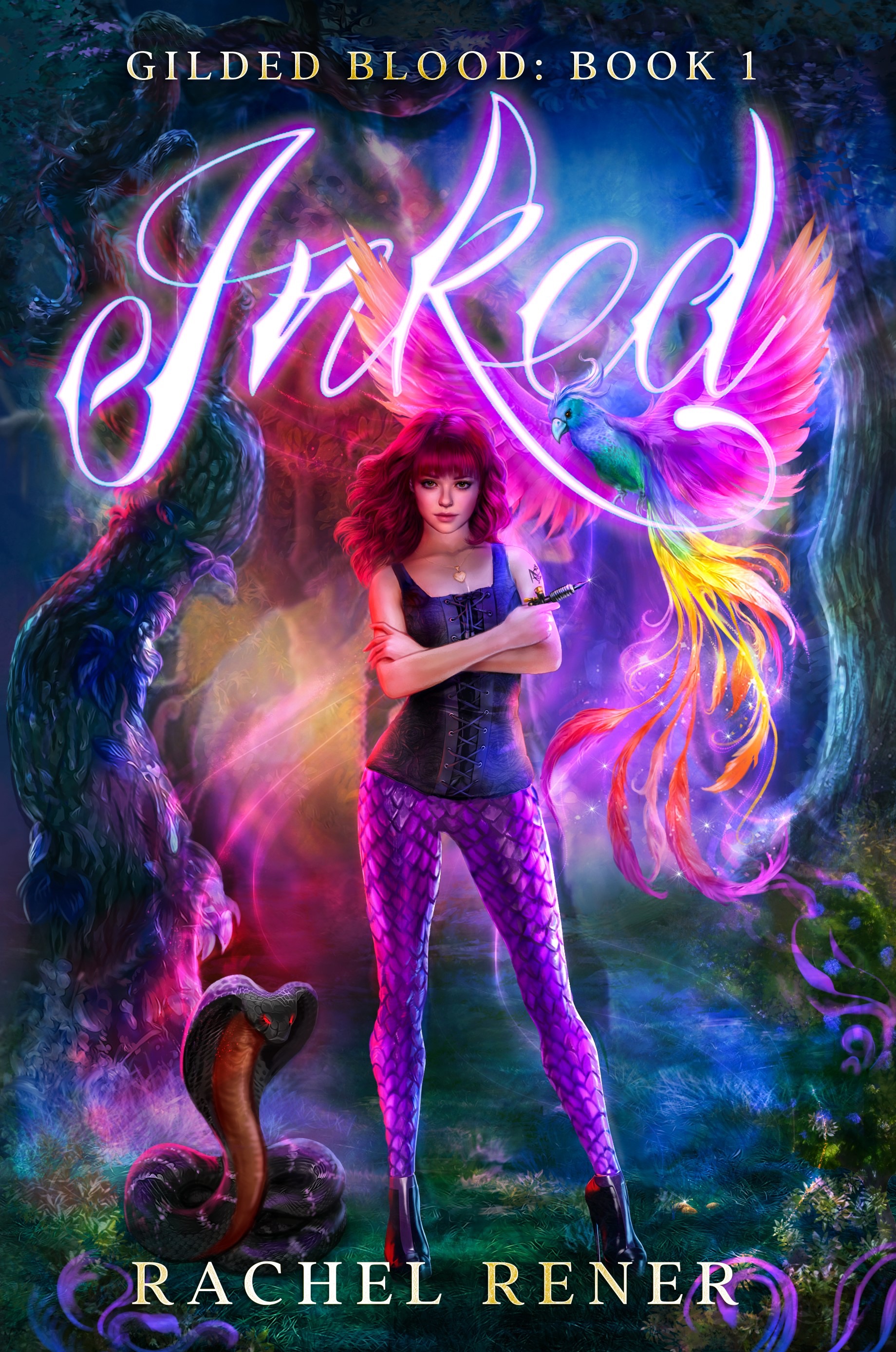
Inked (by Rachel Rener)
Tattoo artist Talia is inking her last customer of the night with a hideous snake on his butt when she runs out of ink. With little option she enters her boss’s office and swipes a little of the ink she is forbidden from using.
And suddenly the snake that was a tattoo, is no longer a tattoo but a very real snake hissing at her.
–––––––––––––––––––––––––––––––––––––––––––––––––––––––––––––––––––––––––
At first I wasn’t really feeling this book. I picked it up in a sale at audible and honestly if it wasn’t on special I probably would not have bought it.
But I’m man enough to admit when I was wrong.
This is a great book. Took a while to suck me in, but suck me in it did and I ended up loving it.
Categories: Fantasy Books
Women in SF&F Month: Isabel J. Kim
It’s a new week of Women in SF&F Month, starting with a new guest post by Isabel J. Kim! Her short fiction has been selected for inclusion in The Best American Science Fiction and Fantasy 2023, 2024, and 2025, and it has been on the Locus Recommended Reading List multiple times. Some of her more recent short stories are “Why Don’t We Just Kill the Kid in the Omelas Hole,” a Nebula, Locus, and BSFA Award winner and Hugo Award […]
The post Women in SF&F Month: Isabel J. Kim first appeared on Fantasy Cafe.
Categories: Fantasy Books
Spotlight on “Glyph” by Ali Smith
LitStack Spots Ali Smith Here are a few other titles Litstack spotted and are adding…
The post Spotlight on “Glyph” by Ali Smith appeared first on LitStack.
Categories: Fantasy Books
John Cleese Does Sherlock Holmes (and better, the first time)
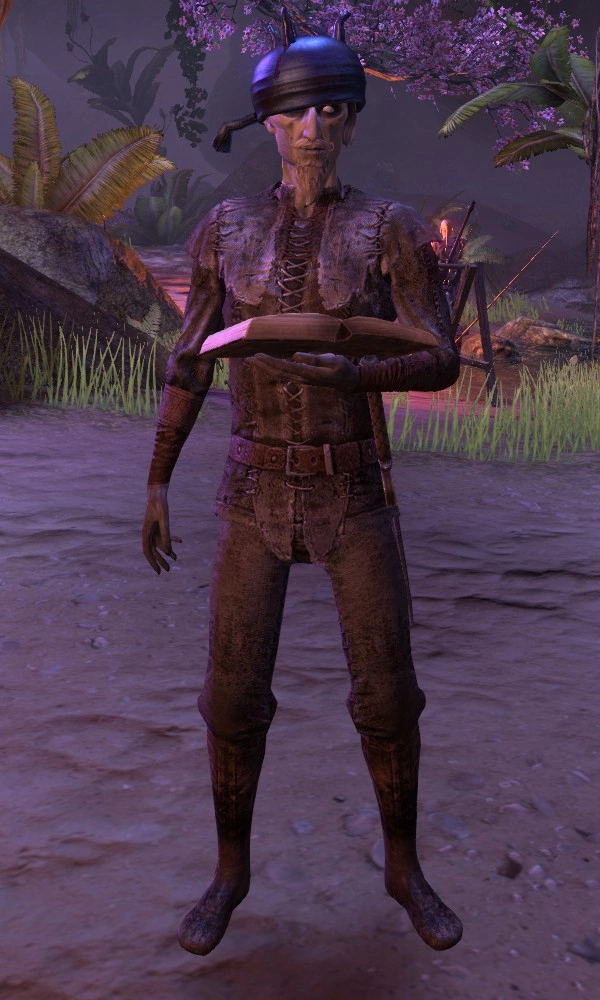
 I reinstalled Elder Scrolls Online, which is a rabbit hole I jump down periodically. I usually do side, and zone, quests. But when I decide to follow some of the main storyline, I am delighted to come across John Cleese’s Sir Cadwell. He is the a rather mad soul shriven who guides the characters in Cleese’s inimitable style. Every scene with Cleese is fun, and he also plays a part in one of the large DLCs.
Here’s a short ‘official’ video on the creation of the character. I think you’ll get the feel of this erratic character. Includes Cleese talking about it.
It’s a blessing he is still with us; active at 86.
Some folks are aware of his The Strange Case of the End of Civilization as We Know It (discussed at the end of this post). I set out to write about that awful Sherlock Holmes parody movie. I wrote this essay instead. And ten years later, I still have no interest in re-watching and writing an essay on Strange Case. It is just too dumb.
However, I do think folks who like Cleese, should give a watch to a better Sherlock Holmes project he did four years before Strange Case. It’s out there on YouTube. And while it’s not brilliant, I found it entertaining Cleese. And I will always watch something John Cleese, which makes me smile. He’s genuinely a feel-good kind of guy. So, read on about Elementary: My Dear Watson.
John Cleese is best known, of course, as the sardonic Q opposite Daniel Craig’s James Bond in Die Another Day. He’s not as well remembered for his role in the British comedy troupe, Monty Python. I’m kidding!
On January 18, 1973, the final episode of Python’s third season aired. It was Cleese’s last episode with the group, which would continue on for one more season. That very same day, Cleese’s next project aired – Comedy Playhouse Presents: Elementary, My Dear Watson. It was produced by Barry Took, who had brought the Python members together.
 I’m going to tackle the Achilles heel (really, it’s more like the entire torso) of this show, the plot: or rather, the lack of one. It’s barely a story. Try to stick with me, and no, I’m not leaving things out: it really goes like this…
SPOILER – THIS IS THE STORY. YOU CAN GO WATCH FIRST, OR KEEP READING.
The show opens in a room full of dead lawyers, slumped over their desks, each with a knife in the back. Thus the show’s subtitle, The Strange Case of the Dead Solicitors. A policeman and a secretary exchange what are intended to be witty comments, which immediately brings the lame laugh track to the viewer’s attention.
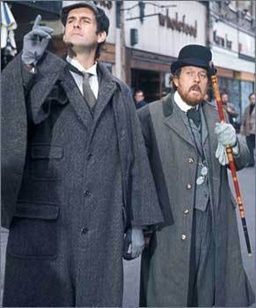
The scene switches to Baker Street where Cleese (an acceptable looking Holmes) is dining with his Watson, well played by William Rushton. Though there is no audience laughter, I enjoyed Watson’s comment about frequently neglecting his practice to dash off on one of Holmes’ hair-brained schemes, while still living comfortably.
After asking Watson what year it is (he looks at his watch and replies, “1973”), Holmes summons a cab, which pulls up to the curb: it’s a horse-drawn hansom and Holmes makes a reference to Doyle, letting us know that they know they’re in a television show. There’s more of that.
Holmes has been summoned by a Lady Cynthia to a country estate where the old family curse of a deadly rattlesnake has started up again. The snake is killing various animals. What?
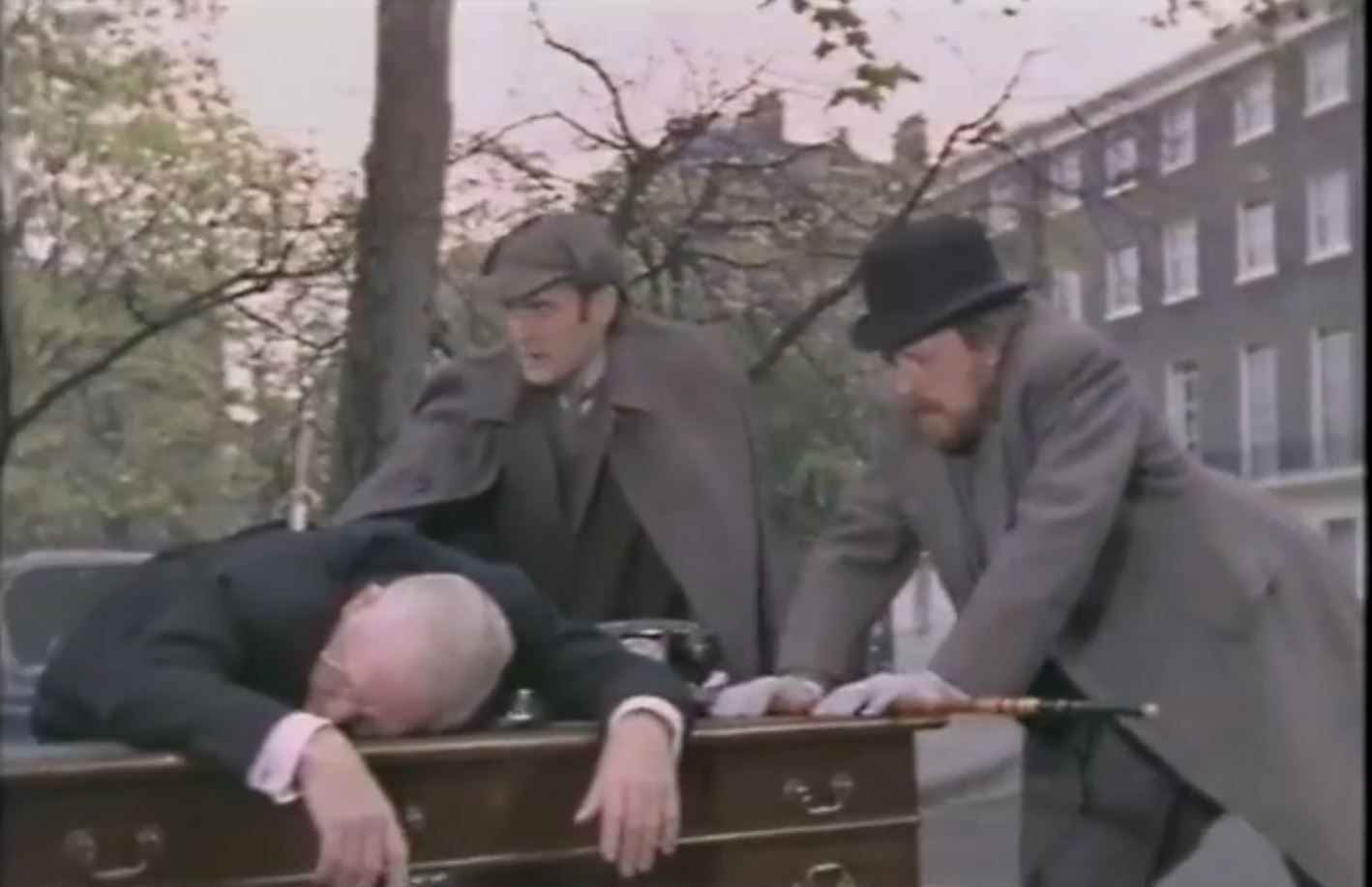
But en route, Holmes and Watson are pulled into the case of the dead solicitors. While they are pushing a desk with a dead solicitor from London to Manchester to the studios of the tv game show, Call My Bluff, (the actual cast appears and lampoons their own show) Fu Manchu gets into the act.
I’m not making this up!
Fu Manchu ends up with the desk and body, while Holmes gets confused over the Euston and Paddington train stations and he and Watson end up riding back and forth all over England.
Holmes, annoyed with his deerstalker, throws it out of the train window and it lands on the dead solicitor being pushed along by Fu Manchu and his henchman. They fear Holmes is on to them! Inexplicably, Holmes had sewed the letter with Lady Cynthia’s address into the hat, and now they won’t be able to find her house. So, they go back and look for it. Um…
Animals keep dying at Lady Cynthia’s estate (all in the same room…) and she fears her son will be the next victim. Her frantic calls to the police provide no help. The train mishaps have resulted in Holmes and Watson spending three days en route and finally her son is bitten and dies. Soon, all her animals and son dead, we see her menaced by a rattlesnake as she tells it a story to try and distract it.
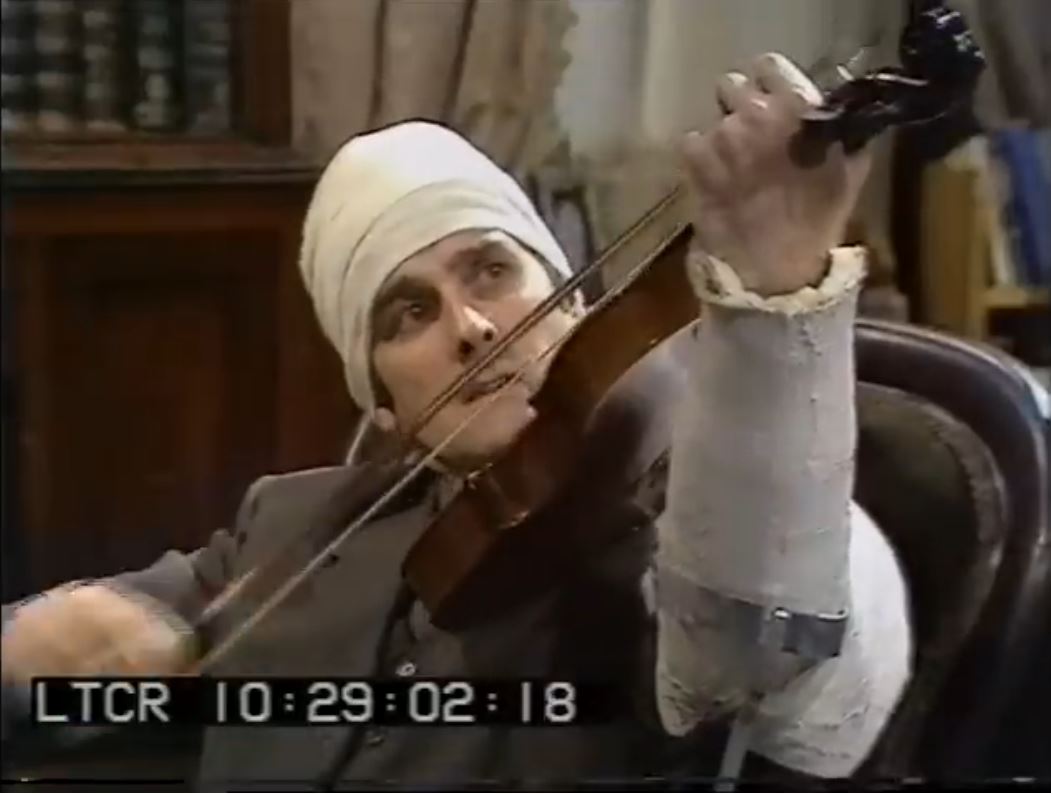 Holmes makes a wild series of deductions with no logic whatsoever, yells “There’s not a moment to lose” and rushes out the door: falling right off the train.
In a full-leg cast, arm in a cast, and head wrapped from the fall, Holmes and Watson confront Frank Potter, a reformed piano tuner who is actually Moriarty in Elizabethan drag. There’s something about piano tuning, which is the offense that put Potter in jail. Piano tuning is a crime? They convince Potter/Moriarty to come with them to help tune a piano. I don’t get it.Of course, you can tuna piano, but you can’t tuna fish (little classic rock joke for you).
We shift to Fu Manchu, loading five crates, labeled as dead solicitors with knives in backs, onto an airplane. Lady Cynthia, on the phone with the police screams. The snake had killed her as well. Everyone there is dead.
Watson is now dressed as Cyrano De Bergerac (I think) so that all three men look ridiculous and if confronted, can pretend they’re escapees from the nearby asylum.
Moriarty gets a phone call on the way and stays behind. He’s being booked for a show at the London Palladium. The less-than-dynamic duo arrives at the airport as Manchu’s plane takes off and Watson observes that they are too late. “I think not, Watson. Reverse the film!”
And yes, the film runs backwards, the evil doctor backs right into a police van, which takes him away, and the case is solved. Uh huh. The Prime Minister goes on television, congratulating the film editors for saving the day, under instructions from Holmes.
At Baker Street, Holmes tells Watson that Frank Potter/Moriarty had nothing to do with the case. He was a red herring to fill in time so that the script wouldn’t be five minutes short. Watson drinks from a glass in each hand, tells Holmes that he never ceases to amaze him and Holmes says, “Elementary, my dear Watson.” And the show ends.
END SPOILER
John Cleese clearly knows sketch comedy. And he was just wrapping up his brilliant run in Monty Python. But a thirty-minute collection of “bits” with a practically non-existent plot doesn’t really make a television show. I’ll let you watch it to find out why Fu Manchu was trying to get five dead solicitors, slumped over their desks with knives in their backs, to China. Hint – they are presents.
 Some things aren’t funny, or just don’t make sense, or both. Why is Jack the Ripper constantly calling Scotland Yard to make a statement? At his house, Moriarty makes a lewd comment and shoos out a blonde wearing only a towel. Watson leers at her as she goes up the stairs and he has to be called in to the other room by Holmes.
However, there is some humor in this show and it’s worth watching. Holmes’ observation of a particular type of mud found on Manchu’s elbow is an amusing dig at Doyle’s penchant for that type of thing. I think that Watson’s comments are among the best lines throughout the show and Rushton is a pretty good parody Watson without being a bumbling fool.
Josephine Tewson, playing Lady Cynthia, appeared in another Holmes parody. She played the nun in the miserable Peter Cook/Dudley Moore Hound of the Baskervilles. THAT was a dog.
It isn’t much of a surprise that the show did not get picked up. I can’t imagine what they would do on a weekly basis when they couldn’t even come up with a plot for a thirty-minute pilot. Two years later, Cleese would star in the short-lived but much funnier Fawlty Towers. Which he is working on a new play about, with his daughter.
Elementary, My Dear Watson, was not Cleese’s only attempt at spoofing Holmes, though it was his best. In 1975, he played Arthur Sherlock Holmes (the detective’s grandson) in The Strange Case of the End of Civilization as We Know It. The only reason I don’t call it the worst Holmes-related film ever, is because I’m not sure whether the aforementioned Cook/Moore Hound deserves the title, or if Strange Case (next week’s topic) does. Or if that should be given to Will Ferrell’s Holmes and Watson (ugh). Maybe Strange Case was funny for its time (Henry Kissinger is gunned down by Arabs at the beginning), but I don’t think I laughed once, the entire movie.
Elementary, My Dear Watson does have enough funny bits to make it worthwhile. And as I said, John Cleese has a way of making you smile, even if if later you think ‘That was odd.” But as a thirty-minute comedy show, it came up short of making me want to see more. But I’ll watch this over Strange Case, any day. And I did smile as I re-watched it for this post. It is fun.
 Bob Byrne’s ‘A (Black) Gat in the Hand’ made its Black Gate debut in 2018 and has returned every summer since.
His ‘The Public Life of Sherlock Holmes’ column ran every Monday morning at Black Gate from March, 2014 through March, 2017. And he irregularly posts on Rex Stout’s gargantuan detective in ‘Nero Wolfe’s Brownstone.’ He is a member of the Praed Street Irregulars, and founded www.SolarPons.com (the only website dedicated to the ‘Sherlock Holmes of Praed Street’).
He organized Black Gate’s award-nominated ‘Discovering Robert E. Howard’ series, as well as the award-winning ‘Hither Came Conan’ series. Which is now part of THE Definitive guide to Conan. He also organized 2023’s ‘Talking Tolkien.’
He has contributed stories to The MX Book of New Sherlock Holmes Stories — Parts III, IV, V, VI, XXI, and XXXIII.
He has written introductions for Steeger Books, and appeared in several magazines, including Black Mask, Sherlock Holmes Mystery Magazine, The Strand Magazine, and Sherlock Magazine.
You can definitely ‘experience the Bobness’ at Jason Waltz’s ’24? in 42′ podcast.
Categories: Fantasy Books
Another Classic Sword & Sorcery Anthology: The Barbarian Swordsmen, edited by Sean Richards (AKA Peter Haining)
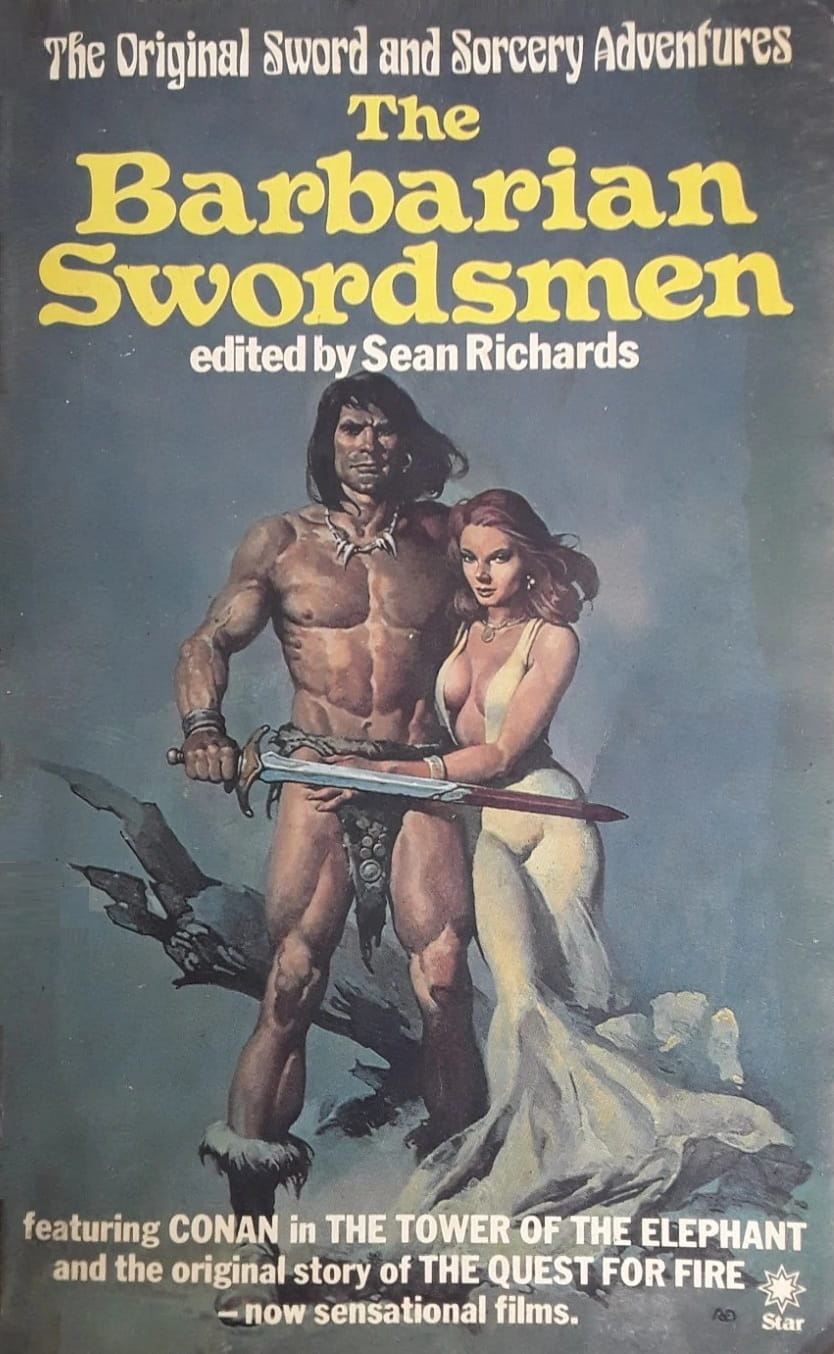
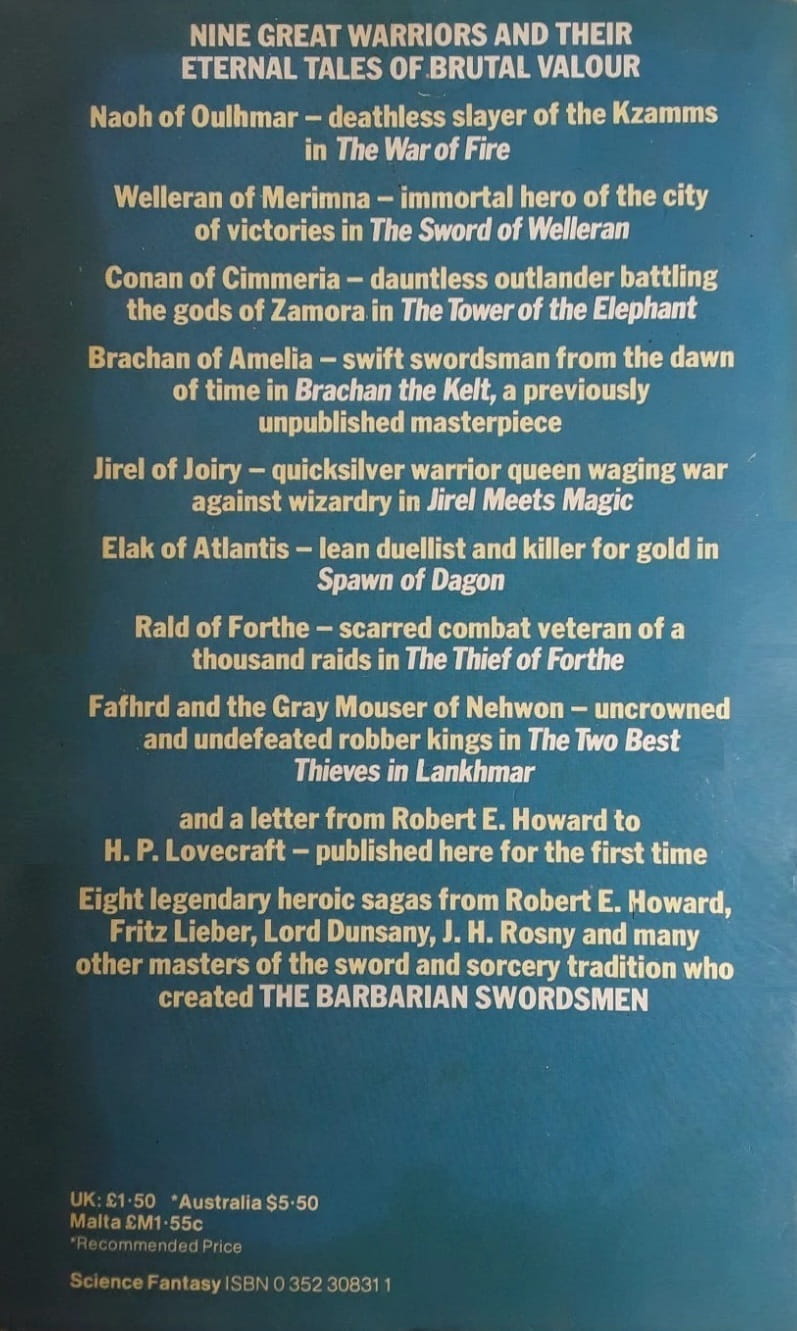
The Barbarian Swordsmen (Star, 1981). Cover by Gino D’Achille
The Barbarian Swordsmen, edited by Sean Richards, Star publishers, a British press, 1981, cool cover by Gino D’Achille. A collection of Sword & Sorcery (S&S) tales that likely wouldn’t exist except for Robert E. Howard.
I couldn’t find out much about Mr. Richards but Toby Hooper revealed to me that Richards has been reported as a pseudonym for Peter Haining and that appears to be true. His intro here doesn’t reveal anything.
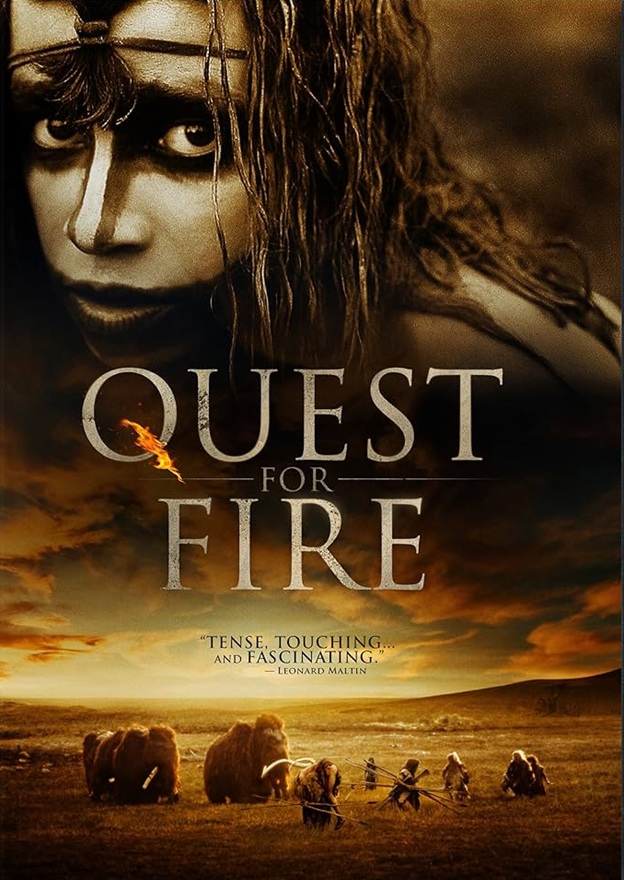 Quest for Fire (20th Century-Fox, December 16, 1981)
The stories are:
“The War of Fire,” by J. H. Rosny. An exciting excerpt from The Quest for Fire, which was also made into a fine movie. J. H. Rosny was a pseudonym, often used by two brothers, Joseph Henri Boex, and Justin Boex. From what I understand, though, Quest for Fire was written solely by Joseph, the elder. The movie does a good job distilling the book but the writing is still enjoyable. We have a primitive cave man named Naoh, what we’d call a Cro-magnon, whose tribe loses its fire. Since they can’t make fire, only maintain it, they have to seek out fire from another tribe, and Naoh and his companions have many adventures doing so, including a battle with Neanderthals. That’s the piece featured in this book.
“The Sword of Welleran,” by Lord Dunsany. Lord Dunsany, an Irishman, is well known to fans of S&S. His fantasy work certainly skated the edge of that genre and he helped develop some of the tropes that later became important. He is said to have influenced Tolkien. His work is rather slowly paced and turgid for modern readers but I find it enjoyable. “The Sword of Welleran” is one of his most approachable tales.
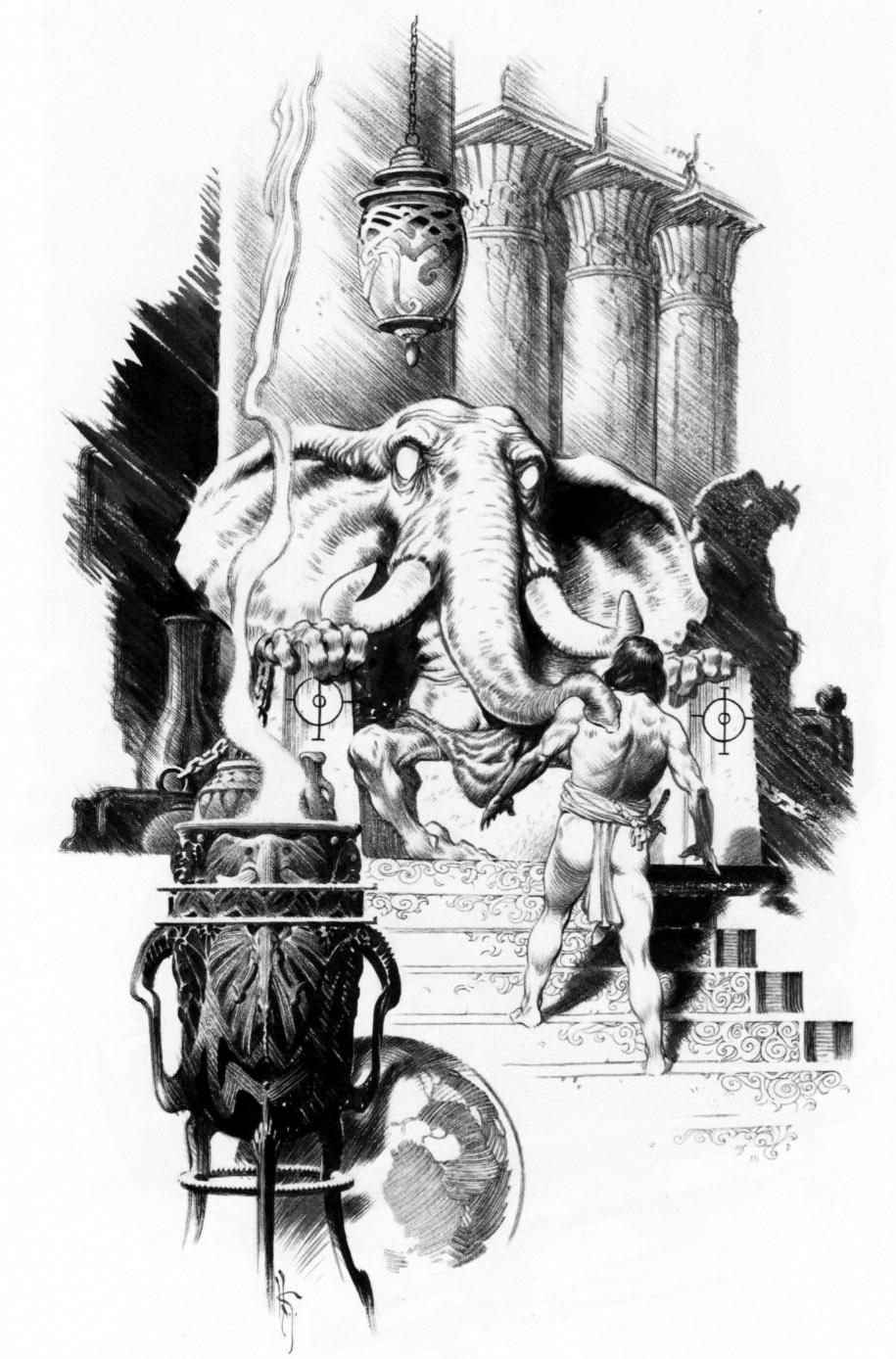 Art for “The Tower of The Elephant” by Mark Schultz
“The Tower of the Elephant,” by Robert E. Howard. I consider this the strangest of the Conan stories. It certainly breaks ranks with most of the other Cimmerian tales in that there’s a strong SF element. I was much taken with it when I first read it, years ago.
“Brachan the Kelt,” by Robert E. Howard. Howard wrote a number of stories involving reincarnation, and several featured the character James Allison, a modern man capable of remembering his past lives. This is a short piece and definitely not fully developed, but it shows the power of Howard’s prose. Allison recalls being a wandering warrior from a time before history was recorded, when the first white-skinned tribes were entering Europe. As Brachan, he must defeat a beast that makes one think of the yeti.
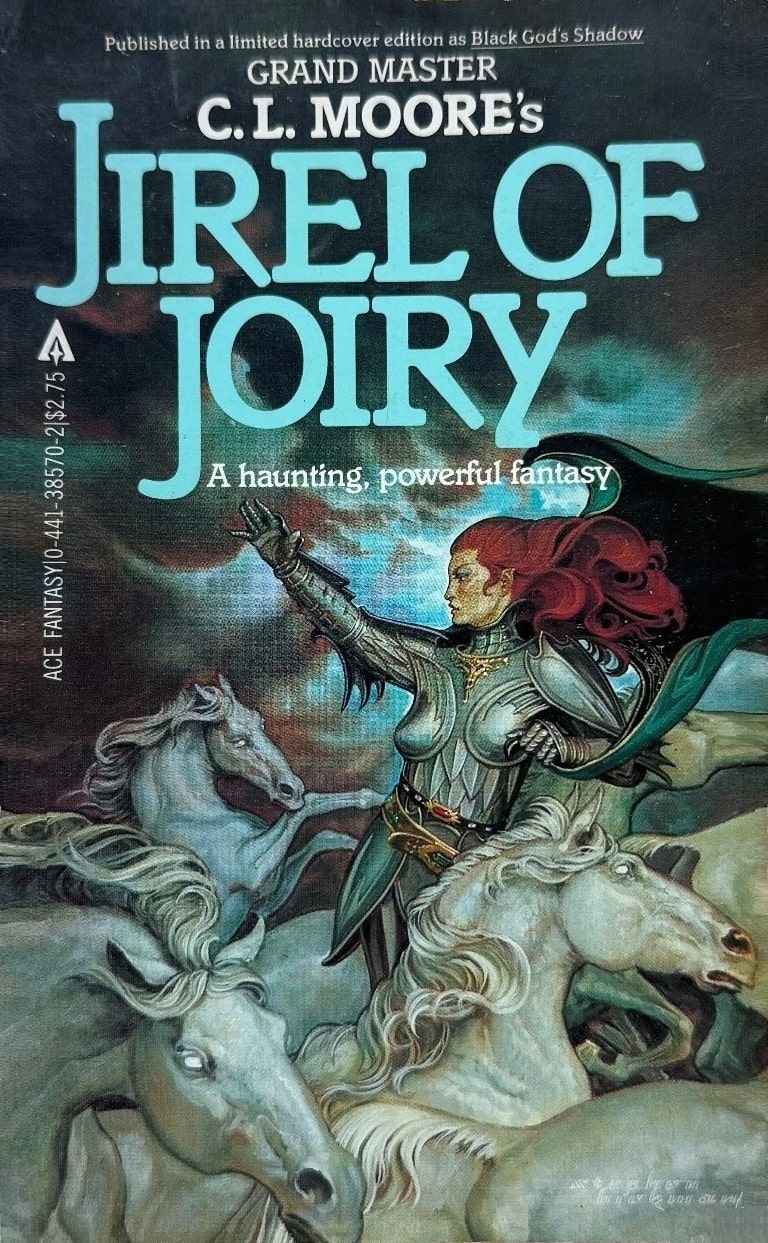 Jirel of Joiry (Ace Books, November 1982). Cover by Stephen Hickman
“Jirel Meets Magic,” by C. L. Moore. Catherine Moore was just a superb writer and her stories of Jirel of Joiry are outstanding S&S tales. Beautifully written and emotionally charged. Jirel is one of the very first fire-tressed female warriors of fantasy fiction. This is not my favorite of the Jirel stories but it’s close. Moore was influenced by Howard, though most of the influence was in subject matter rather than story effects.
“Spawn of Dagon,” by Henry Kuttner. Kuttner married C. L. Moore and after that they mostly wrote as a team. I think Moore was the better writer but Kuttner was more prolific and very professional. Kuttner alone wrote a series of tales about Elak, a prince of Atlantis, and this is one of the best of those. Elak was certainly influenced by Conan but is his own character.
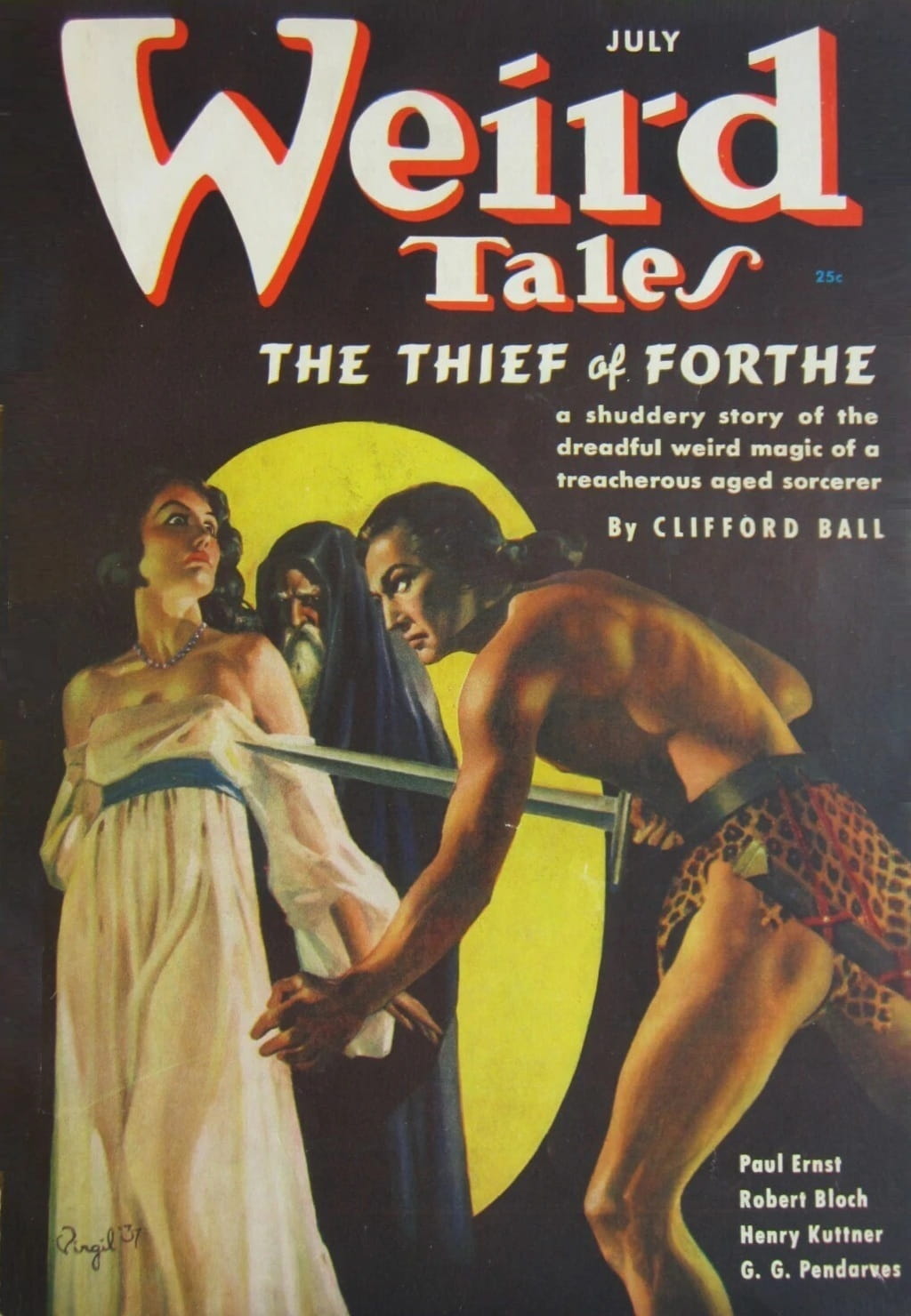 Weird Tales, July 1937, featuring cover story “The Thief of Forthe” by Clifford Ball. Cover by Virgil Finlay
“The Thief of Forthe,” by Clifford Ball. Ball was another writer strongly influenced by REH, which is clearly seen in this tale. It was still well written and enjoyable. Apparently, Ball created an earlier character who was essentially a pastiche Conan, but “Rald,” the “Thief of Forthe” shows some originality. I haven’t read much of Ball’s work but will seek out more.
“The Two Best Thieves in Lankhmar” by Fritz Leiber. Leiber is another writer who was influenced by Howard as to subject matter, but who in no way appears to be an REH clone. His characters and settings are unique and there is a lot more humor in Leiber’s tales than in the Conan stories. Leiber’s characters are Fafhrd, a giant of a man, a barbarian warrior, and the Gray Mouser, a dark and slender thief. They are unlikely friends but friends they are. All these stories are enjoyable.
Appendix is: The Man Who Influenced Robert E. Howard. This is an excerpt from a letter written from Robert Howard to H. P. Lovecraft in which Howard indicates his admiration for the poetry of Alfred Noyes.
Charles Gramlich administers The Swords & Planet League group on Facebook, where this post first appeared. His last article for us was a look at The Mighty Sword & Sorcery Anthologies of Hans Stefan Santesson. See all of his recent posts for Black Gate here.
Categories: Fantasy Books
Women in SF&F Month: Week 4 Schedule & Week in Review
The fifteenth annual Women in SF&F Month continues with three new guest posts coming up this week, starting with a new one tomorrow. Thank you so much to last week’s guests for another wonderful week of essays! The new guest posts will be going up on Monday, Wednesday, and Friday this week, but before announcing the upcoming schedule, here are last week’s essays in case you missed any of them. All guest posts from April 2026 can be found here, […]
The post Women in SF&F Month: Week 4 Schedule & Week in Review first appeared on Fantasy Cafe.
Categories: Fantasy Books
Book Review: Two Truths and A Lie by Mark Stevens
I received a review copy from the publisher. This does not affect the contents of my review and all opinions are my own.
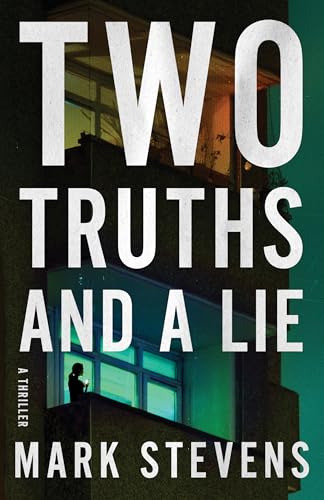 Two Truths and A Lie by Mark Stevens
Mogsy’s Rating: 3.5 of 5 stars
Genre: Thriller, Mystery
Series: Book 2 of Flynn Martin
Publisher: Thomas & Mercer (April 7, 2026)
Length: 459 pages
Author Information: Website
After having such an enjoyable time with Mark Stevens’s No Lie Lasts Forever, I went into the sequel Two Truths and a Lie expecting more of that same sharp cat-and-mouse tension. The good news is, I still received an engaging thriller. That said, this one didn’t quite hit me in the same way as the first book. While it’s still a great follow-up with plenty to like, I just think it was missing some of what made the original feel so tight and suspenseful.
The story picks up with the return of series protagonist Flynn Martin, a Denver journalist who finds herself back in the spotlight following her role in capturing the PDQ Killer, the man who terrorized the city fifteen years ago by murdering three women. At least this time, she’s making headlines for the right reasons, earning back the trust of her employer. But that high doesn’t last long. When a family of four disappears under suspicious circumstances, Flynn seizes the opportunity to prove herself, digging into what at first looks like a tragic but routine missing persons case. However, it quickly becomes clear that there’s far more to the story.
At the same time, Flynn begins receiving unsettling messages, written in a way that immediately brings the PDQ Killer to mind, even though he’s supposedly behind bars and no longer a threat. Or is he? The possibility that she’s being watched again leaves her fearing for her family’s safety, and that personal threat adds a new sense of urgency to the investigation. As Flynn follows the trail, the case begins to branch in multiple directions, pulling in connections to a powerful local church, whispers of corruption, and a web of secrets that may all be connected.
Much like the first book, what continues to work really well here is Stevens’ writing style. The prose is clean and direct, built for speed. It makes for another easy, bingeable read. The newsroom angle remains a strong hook, and I like how the case plays out like a police procedural while approaching it from a different perspective through Flynn’s role. Not being in law enforcement does limit her in some ways, but at the same time, her position as a journalist opens doors and gives her access to sources she might not otherwise reach. The high-octane, punchy pacing highlights the need for instant action as Flynn chases downs leads and puts the pieces of the puzzle together, giving the story a sharp edge.
That said, the structure of this sequel feels noticeably busier. There is simply so much happening all at once, it’s not always clear which thread is the main one, so the end result feels a bit scattered. Compared to the first book, where both the central conflict and the villain were sharply defined, this one comes across as more of a jumble. While it does keep things unpredictable and opens up a wider web of possibilities, this approach also ends up diluting some of the tension, especially when the antagonist and the story’s direction feel less focused.
Flynn herself remains a compelling protagonist, but frequently still manages to get under my skin. More often than not, she ends up being her own worst enemy, and it’s a lesson she’s failed to learn since the first book. And even though I understand it comes with the territory of her job, some of her methods for chasing information also leave a bad taste in my mouth. There are plenty of moments where her decisions feel frustrating, especially when she’s clearly worried about her own safety and her son’s, yet in the very next scene, she’s charging straight into another dangerous situation instead of pulling back. Yes, it creates tension, but it also makes it harder to fully get behind her choices, leaving her character caught somewhere between being admirable and idiotic.
Still, I had a good time with this one. Overall, Two Truths and a Lie is a solid if slightly less focused follow-up that continues Flynn Martin’s story in an engaging and meaningful way. Where the first book felt like a tight psychological showdown, you might find this one to be a broader, more chaotic mystery. Not necessarily a bad trade-off, but it does sometimes feel like it’s juggling a few too many ideas at once. Even so, while it may not reach the heights as No Lie Lasts Forever, it remains a worthwhile sequel that keeps you invested in both the characters and the world.
More on The BiblioSanctum:
Review of No Lie Lasts Forever (Book 1)
Categories: Fantasy Books
Pages

Recent comments