
Fantasy Books
Snake-Eater - Book Review
 Snake-Eaterby T. Kingfisher
What is it about:From New York Times bestselling and Hugo Award–winning author T. Kingfisher comes an enthralling contemporary fantasy seeped in horror about a woman trying to escape her past by moving to the remote US desert—only to find herself beholden to the wrath of a vengeful god.
With only a few dollars to her name and her beloved dog Copper by her side, Selena flees her past in the city to claim her late aunt’s house in the desert town of Quartz Creek. The scorpions and spiders are better than what she left behind.
Because in Quartz Creek, there’s a strange beauty to everything, from the landscape to new friends, and more blue sky than Selena’s ever seen. But something lurks beneath the surface. Like the desert gods and spirits lingering outside Selena’s house at night, keeping watch. Mostly benevolent, says her neighbor Grandma Billy. That doesn’t ease the prickly sense that one of them watches too closely and wants something from Selena she can’t begin to imagine. And when Selena’s search for answers leads her to journal entries that her aunt left behind, she discovers a sinister truth about her new home: It’s the haunting grounds of an ancient god known simply as “Snake-Eater,” who her late aunt made a promise to that remains unfulfilled.
Snake-Eater has taken a liking to Selena, an obsession of sorts that turns sinister. And now that Selena is the new owner of his home, he’s hell-bent on collecting everything he’s owed.
What did I think of it:If it's possible to call something cozy horror, this book is it.
I love Kingfisher's writing style, fell in love with her horror books, then fell in love with her Fairy Tale reimaginings, her Fantasy Romance, and now this book.
It's mostly cozy magical realism with hints to something more horrific, but for me it never got too dark.I loved discovering Quartz Creek and its inhabitants together with Selena. There are a couple of really interesting and fun characters, as well as some surprises I didn't see coming. There's a pleasant cozy pace to this story and world, only disturbed by Snake-Eater. ( I will confess I felt some sympathy towards Snake-Eater even while realizing Snake-Eater is the evil that needs to be banished for Selena to find happiness.)All in all a story and setting I totally fell in love with. I hope Kingfisher keeps the books coining, because I want more.
Why should you read it:It's lovely, cozy horror.

Categories: Fantasy Books
Forgotten Authors: Raymond F. Jones
 Raymond F. Jones was born in Salt Lake City on November 15, 1915. He studied engineer and English at the University of Utah before working as a radio engineer. He later suggested that getting an English degree is one of the worst things a writer could do. He had a reasonable amount of success as an author, with his novel This Island Earth being the work he is best known for. It was adapted into a film in 1955, starring Jeff Morrow and featuring Russell Johnson, who would go on to portray the Professor on Gilligan’s Island, and Richard Deacon, who played Mel Cooley on The Dick van Dyke Show.
According to Jones, he was introduced to science fiction in 1927 when he read H.G. Wells’ War of the Worlds. He decided he never wanted to read it again because he was afraid it couldn’t live up to the “thrill of that first contact with the realm of imagined science.”
After graduating college, he served on a mission in Galveston, Texas and worked installing telephone exchange equipment for Western Electric in Texas, but after marrying Elaine Kimball on June 27, 1940, he took a job with the Weather Bureau to cut down on travel. During World War II, he used his radio engineering degree at Bendix Radio in Baltimore before settling in Arizona after the war.
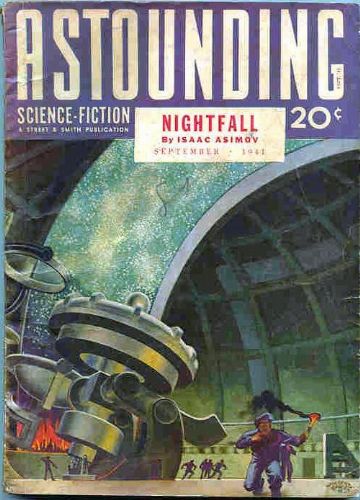
Jones’ first short story, “Test of the Gods,” was published in the September 1941 issue of Astounding, in which it was overshadowed by the cover story, Isaac Asimov’s “Nightfall.” This is a pattern that would be repeated, leading Gerald W. Page to note that while Jones was a “writer of surprising versatility. But the price of this seems to be that too often he came on the scene with a perfectly good story that was still second best to the similar works of someone else.”
Jones wrote 15 novels in addition to This Island Earth, beginning in 1951 with the novel Renaissance (which was reprinted as Man of Two Worlds).
In addition to This Island Earth, two other stories by Jones were adapted by Hollywood. “The Children’s Room,” originally published in 1947, was an episode of the anthology series Tales of Tomorrow in 1952, and 1950’s “Divided We Fall” was adapted for the anthology series Out of This World in 1962.
 His 1950 story “Tools of the Trade” is believed to be the first description of 3D printing.
Jones not only wrote science fiction, he also wrote non-fiction, with four juvenile science books ranging from The World of Weather to Animals of Long Ago. He also wrote the study Ice Formation on Aircraft.
Jones was a Hugo finalist in 1967 for his short story “Rat Race,” which lost to Larry Niven’s “Neutron Star.” In 1996, his story “Correspondence Course,” was remembered by enough people to earn him a Retro-Hugo nomination, where he lost to Hal Clement’s “Common Sense.”
Elaine died on July 23, 1970 and on May 2, 1973, Jones married Lillian Wats. Jones and Elaine had five children and eighteen grandchildren. When he married Lillian, he gained five step-children.
Jones died in Sandy, Utah on January 24, 1994 after suffering from pancreatic cancer. For no reason other than the same first name, I tend to think of Jones along with author Raymond Z. Gallun (1911-1994). Coincidentally, both of their obituaries appeared in the same issue of Locus, with Jones coming in second to Gallun’s.
I reviewed Jones’ short story “Death Eternal” in 2018 as part of my Birthday Reviews series on Blackgate.
 Steven H Silver is a twenty-one-time Hugo Award nominee and was the publisher of the Hugo-nominated fanzine Argentus as well as the editor and publisher of ISFiC Press for eight years. He has also edited books for DAW, NESFA Press, and ZNB. His most recent anthology is Alternate Peace and his novel After Hastings was published in 2020. Steven has chaired the first Midwest Construction, Windycon three times, and the SFWA Nebula Conference numerous times. He was programming chair for Chicon 2000 and Vice Chair of Chicon 7.
Categories: Fantasy Books
Review – Contracts & Cats (Meow: Magical Emporium of Wares Book 1) by Toni Binns (4/5 stars)

Reading Level: Adult
Genre: Cozy Fantasy
Length: 538 pages
Publisher: Self-Published
Release Date: November 4, 2025
ASIN: B0FW17TZ45
Stand Alone or Series: 1st book in the Meow: Magical Emporium of Wares series
Source: eGalley from Netgalley
Rating: 4/5 stars
“When Sable answers a too-good-to-be-true job posting—cozy bookshop, perfect espresso machine, adorable black cat, and an apartment upstairs—she thought she’d finally caught a break from her crushing student loans.
But the ink on the deal is barely dry when Sable realizes that the contract is very literal. She cannot leave. Also, her new feline companion talks, the bookstore itself is a sentient enigma with an excellent espresso machine, and magic isn’t just for storybooks–it’s woven into her new reality.
Bound to the shop as the mystical Cat’s voice and hands in the human world, the bookstore’s true purpose begins to unfold, and Sable must choose. Will she embrace the impossible magic blooming around her, or cling to the mundane life she thought she wanted, risking the fate of the shop and its curious inhabitants?”
Series Info/Source: This is the first book in the Meow: Magical Emporium of Wares series. I got a copy of this on ebook from NetGalley from review.
Thoughts: I really liked the premise behind this book and really enjoyed the day to day adventures and intriguing characters. I definitely plan on continuing the series. My only complaint is that the story started to drag some in the middle and started to feel a bit repetitive.
Sable shows up for a job interview at an amazing bookshop that appears too good to be true. The pay and benefits are wonderful, and there is an adorable cat in the store. She gets the job on the spot and can’t believe her luck. However, maybe she should have read the contract a bit better. Sable is not allowed to leave MEOW (Magical Emporium of Wares) for a year and must answer to The Cat. Suddenly, Sable’s days are filled with odd magical visitors and events and she never knows what to except next!
This book has serious cozy vibes, and I really enjoyed the characters and how you never knew what was going to happen from day to day. I loved how Sable just rolled with all the odd day to day happenings in the shop. Initially, the story starts with Sable being anxious and surprised by the next encounter each day brings, some of them fairly normal and some of them of the more magical variety. All the while, Sable is trying to figure out the mystery of The Cat and the bookshop itself. The layout of the bookstore changes, dishes are washed, and it’s all very mysterious.
Initially this is very light on characters, you have Sable and you have The Cat. However, as the book continues, we are introduced to more and more intriguing characters. I really enjoyed them all. This book has a very adventuring feel to it despite the fact that Sable can’t leave the book store, and I really enjoyed that. I also liked the glimpses I got of Sable’s family but hope we get to see more of her family as well in future books.
The only downside to this book for me was that the day-to-day format started to feel a bit repetitive despite each day being somewhat different. The story picked up towards the end of the book again as Sable learns more about The Cat and gets pulled into a broader story. So while I adored the concept and the characters, and enjoyed the story as well, I thought the pacing was a bit off. However, the way things picked up at the end really had me intrigued to read more of this series.
My Summary (4/5): Overall I really enjoyed this book it is a fun and cozy read with a creative concept, intriguing characters, and an entertaining story. It does drag a bit in the middle, but it quickly picks up again towards the end and really had me wanting to read more about this magical book store and these characters. The second book is supposed to release in early February (so very soon) and will be titled “Keeper and Kindred”. If you enjoy cozy fantasy with cats, books, dragons, and magic, I would recommend!

Categories: Fantasy Books
A Game of Classic Science Fiction: Terraforming Mars by Jacob Fryxelius
 Terraforming Mars by Jacob Fryxelius (FryxGames/Stronghold Games, 2016)
About a year ago, I added Terraforming Mars to my collection of board games, fascinated by the premise. At the very end of the year, a local friend proposed to get together and try playing it. On 2 January, three of us sat down to a first game, using the beginner option of everyone playing a standard corporation and keeping all ten of their initial cards without having to pay for them. Four and a half hours later, we started counting up scores.
Terraforming Mars is a game about economic investment and its returns, like Race for the Galaxy, one of my long-time favorites. The premise is fairly hard science fiction: Several corporations have been granted charters by Earth’s world government to begin — as the title says — terraforming the planet Mars: raising its temperature and oxygen and giving it bodies of water. When these reach specific designated values, the game ends and score is taken. There are no violations of fundamental laws of physics such as faster-than-light travel; the departure, so far as there is one is not qualitative but quantitative, in the rapid progress of terraforming, though in some compensation, play is divided into “generations,” which implies a time scale on the order of centuries.
[Click the images to terraform them.]
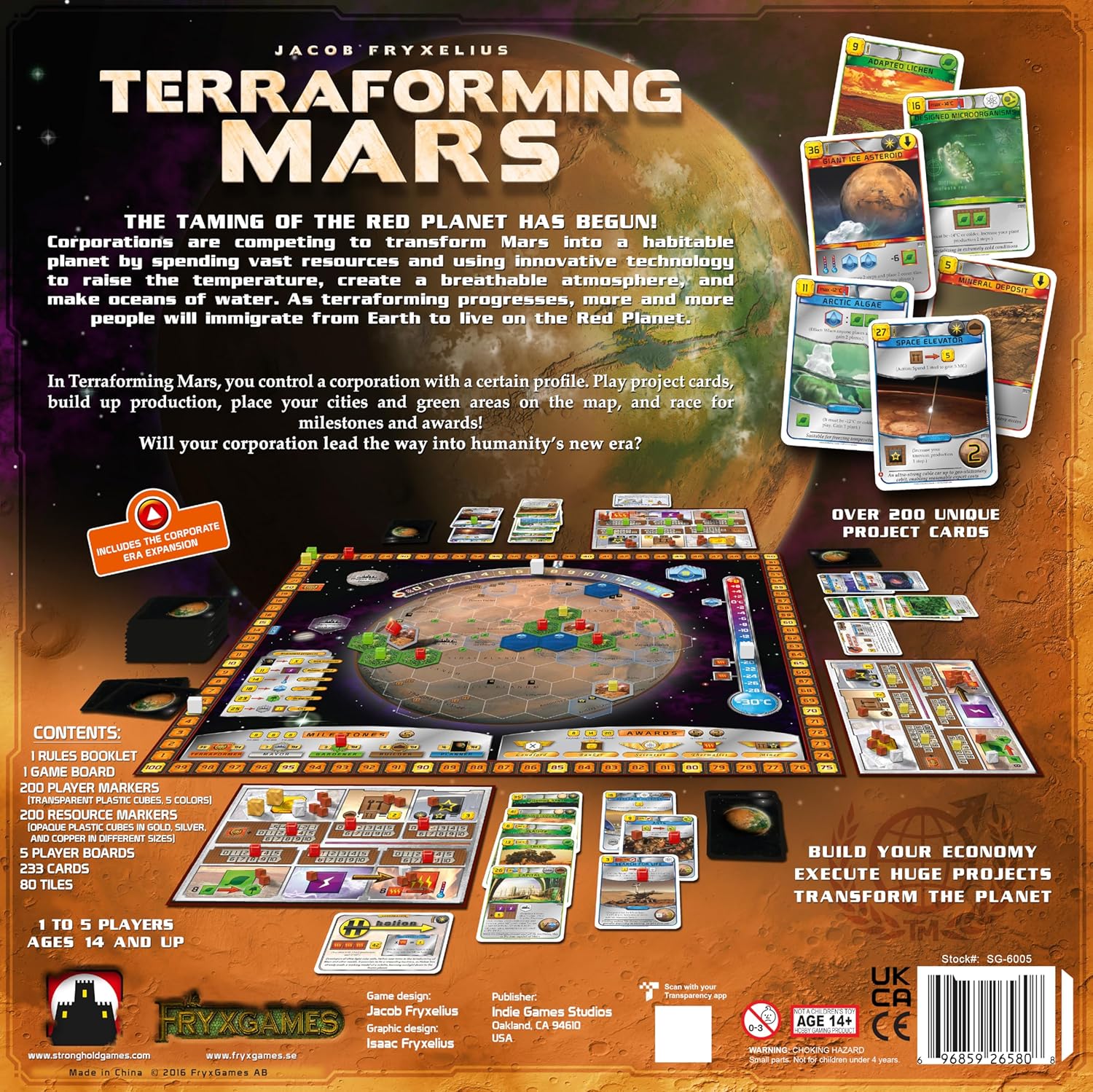 Back cover of Terraforming Mars
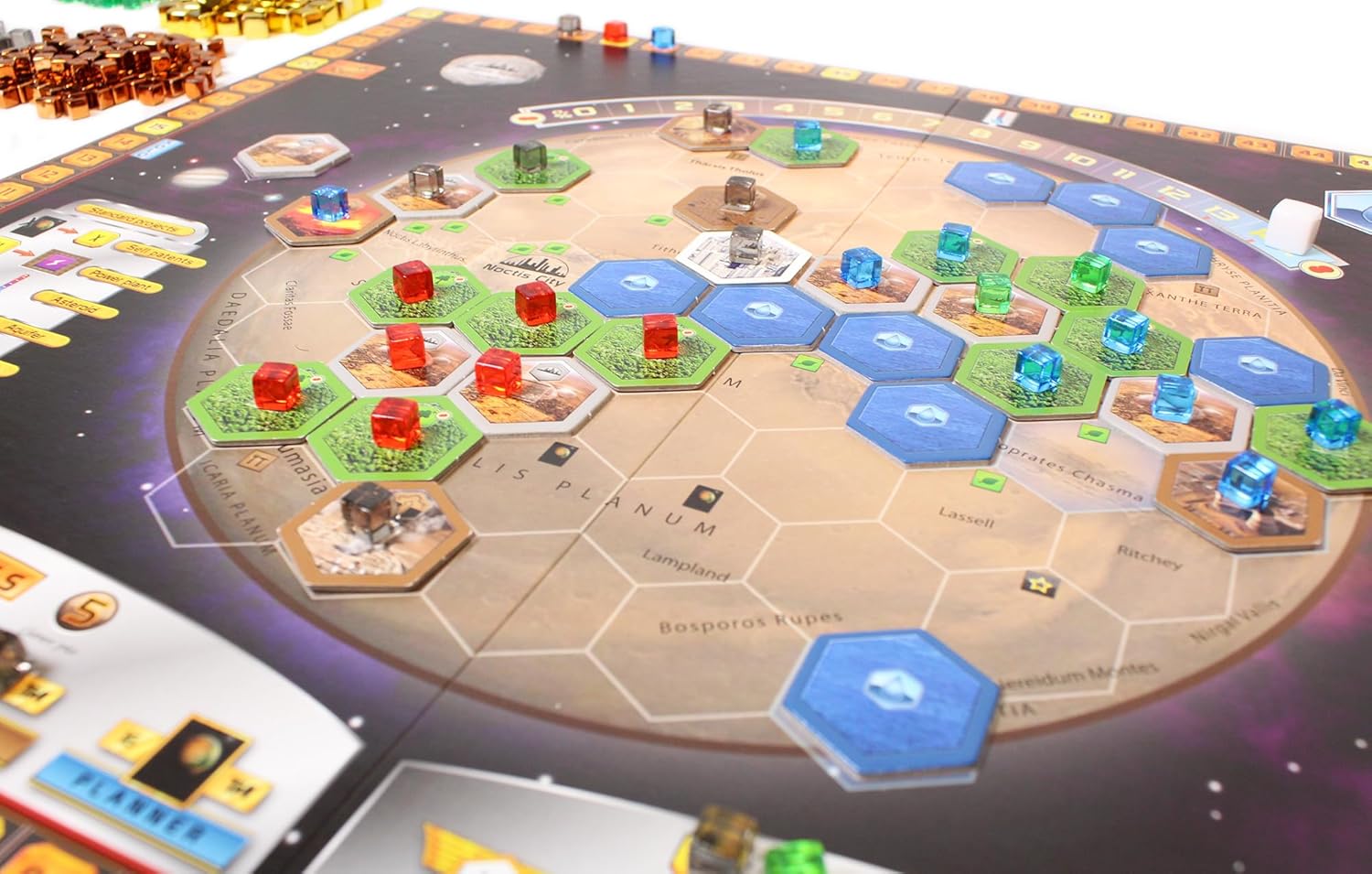
The rule book for the game is 16 pages, but that includes introductory material, illustrations, and several game variants, including a solitaire version. The actual rules are in easily readable type and can be read through in a few minutes. Most of the complexities are strategic and are expressed in the text and graphics of game cards. Along with these cards, each player has a personal game board that keeps track of resources, and players share a larger board that’s a map of one hemisphere of Mars, where tiles can be placed to represent cities, oceans, vegetation, and other special achievements.
The map is also used to keep track of various scores and accomplishments. Reading the map is a little complicated, like watching the screen for character status in a computer game; on this first session we took a while to figure out some of its sections. But I think it can become familiar quickly.
In a way comparable to Race for the Galaxy, each generation in Terraforming Mars is divided into phases. A generation begins with each corporation receiving four cards from a deck, which represent newly acquired capabilities if the player wants to pay for them (“‘Take what you like,’ said God; ‘take it, and pay for it.'”) After that, players perform various actions, many but not all enabled by the cards, and some of which add tiles to the large board. Spatial arrangement of tiles is important and is partly restricted by the game rules.

Race For the Galaxy by Tom Lehmann (Rio Grande Games, 2007)
Some cards are used up by one action; some are kept and displayed in front of the player, and some of these can be used for a new action in each generation. All of this costs credits, and sometimes other resources! At the end of the generation, players engage in “production,” which provides more credits (based partly on their terraforming scores) and sometimes other resources that can be used to advance terraforming, directly or indirectly.
One thing that’s largely omitted from the game is violent conflict; most of the time, the various corporations are competing in an enterprise that theoretically benefits all of them (moving them toward a fully terraformed planet). There are a few moves that advance one player while imposing costs on another. An economist would call these “externalities”; a historian might call them “acts of war.” But as with, for example, Settlers of Catan (another European game), players have the option either of cutthroat competition or of deciding that that makes playing the game less fun, and avoiding it.
One of the three of us found the game rules a bit too complicated and hard to follow, so this may not be a game for everybody. It’s certainly not a casual game! But the other two of us enjoyed it a lot. In The Psychology of Everyday Things (published 1988), Donald O. Norman set out principles for ease of use, and pointed out that well designed games are deliberately a little difficult to “use” successfully (that is, to win); otherwise they become boring when the player solves them. I don’t see Terraforming Mars as likely to become boring.
Many games have an implied story. Sometimes this is very abstract, as with chess (a game about feudal warfare) or bridge (a game about capitalistic competition and cooperation); sometimes a kind of story emerges from the play of the game. (And sometimes, as with Dungeons and Dragons, telling bits of story is an actual move in the game.) Terraforming Mars has a fairly strong story aspect: It tells about how humanity moves out into the solar system and makes other planets humanly livable, in the style of classic science fiction writers (a clever joke in the rule book is to give examples of play with three players named Kim, Stanley, and Robinson!), of recent video series such as For All Mankind, or of the proposals of billionaires.
If you like that premise, or are willing to accept it, you’ll find Terraforming Mars a well thought out representation of a lot of its scientific details. I expect that as we play more games, and move on to using more than the standard starting corporations, we’ll find interesting bits of added flavor in the profiles of other corporations. And I may try playing the solo version when I have a few hours free; it seems likely to be entertaining.
William H. Stoddard is a professional copy editor specializing in scholarly and scientific publications. As a secondary career, he has written more than two dozen books for Steve Jackson Games, starting in 2000 with GURPS Steampunk. He lives in Lawrence, Kansas with his wife, their cat (a ginger tabby), and a hundred shelf feet of books, including large amounts of science fiction, fantasy, and graphic novels. His last piece for Black Gate was a review of Whose Body? by Dorothy Sayers
Categories: Fantasy Books
Spotlight on “Kin” by Tayari Jones

LitStack Spots – Other Titles by Tayari Jones Other titles we recommend by Tayari Jones,…
The post Spotlight on “Kin” by Tayari Jones appeared first on LitStack.
Categories: Fantasy Books
On McPig's Radar - Sea of Charms
 Sea of Charms (Spellshop #3)by Sarah Beth Durst
Marin is a supply runner with her own boat that she sails from island to island, delivering whatever anyone will pay her to deliver: letters, flour, even the occasional enchanted lemur. It’s a lonely life, but it’s hers, and she wouldn’t trade the freedom of the sea for anything. Her only companion is a sea serpent, Perri, whom she saved from a fisherfolk’s net.
One day, she sails to Alyssium and discovers the city is on fire. There’s been a revolution, and the empire has fallen. Marin, with Perri, begins transporting refugees, finding them new homes where they can start over. One such refugee is Dax, a composer who refuses to leave behind his instruments, no matter how much she tries to emphasize the gravity of the situation. Intrigued by his stubbornness, his passion for stories, and his charming smile, Marin discovers perhaps she isn’t saving him ― maybe it’s the other way around.
Expected publication July 28, 2026
Categories: Fantasy Books
7 Author Shoutouts | Authors We Love To Recommend

Here are seven author shoutouts for this week. Find your favorite author or discover an…
The post 7 Author Shoutouts | Authors We Love To Recommend appeared first on LitStack.
Categories: Fantasy Books
Paladin's Hope - Book Review
 Paladin's Hope (The Saint of Steel #3)by T. Kingfisher
What is it about:Piper is a lich-doctor, a physician who works among the dead, determining causes of death for the city guard's investigations. It's a peaceful, if solitary profession…until the day when he's called to the river to examine the latest in a series of mysterious bodies, mangled by some unknown force.
Galen is a paladin of a dead god, lost to holiness and no longer entirely sane. He has long since given up on any hope of love. But when the two men and a brave gnole constable are drawn into the web of the mysterious killer, it's Galen's job to protect Piper from the traps that await them.
He's just not sure if he can protect Piper from the most dangerous threat of all…
What did I think of it:This is my favorite in this series so far!
I fell in love with Piper in Paladin's Grace, so seeing him getting his own book in this series made me so happy. Galen is a worthy love interest, and I loved seeing the two pine for each other. They're the sweetest couple yet, imoI also loved learning more about gnole society, loved the gnole constable who asks Galen and Piper to join him on an investigation, loved seeing Brindle again... well, love for all things gnolish all around!The overall story was suspenseful and fun. I had a great time with the weird situations they get into.
All in all a delightful read.I'll get to the last book soon, I hope.
Why should you read it:It's a very enjoyable Fantasy Romance
Categories: Fantasy Books
Audiobook Review – Tattoos and Clues (Mitzy Moon Mysteries, Book 2) by Trixie Silvertale, Narrated by Coleen Marlo (3/5 stars)

Reading Level: Adult
Genre: Paranormal Mystery
Length: 286 pages
Publisher: Sittin’ On A Goldmine Productions LLC
Release Date: November 19, 2019
ASIN: B07YR6RSSH
Stand Alone or Series: 2nd book in the Mitzy Moon Mysteries series
Source: eGalley from Netgalley
Rating: 3/5 stars
“A beachside stroll. A deadly discovery. Will this psychic sleuth swim or sink?
Mitzy wishes she could turn a blind third eye to her hit-or-miss powers. Instead, while taking her fiendish feline for a walk, they make a stomach-churning find on shore. Despite her loss of appetite, she can’t help but get a closer look at the unique ink etched into the corpse.
Before she can track down the killer, Mitzy must sweet-talk her way off the sexy sheriff’s suspect list. And once again her meddling Ghost-ma is dying to interfere with the case. But when the trail leads to dangerous smugglers who shoot first and don’t ask questions, she could end up in over her head.
Can Mitzy uncover the truth, or will hers be the next body to float to the surface?”
Series Info/Source: This is the second book in the Mitzy Moon Mysteries series. I got this on Audiobook from Audible.com.
Thoughts: This is the second book in the Mitzy Moon Mysteries. I got this as a three book bundle on audiobook. Both this book and the first book were okay. They have some fun paranormal elements to them and a who-dun-it style murder mystery. They are fairly short and simple and predictable. The author keeps saying in the afterward that readers say things get a lot better and more engaging from book 3 on. Since I have the third book I will go ahead and listen to it.
Mitzy had a rough start with the police force in Pin Cherry Harbor so imagine her mortification when she and her feline find a dead body washed up on the beach. She just can’t get a break. The dead body is someone well known to the town. Of course it’s a drowning…or is it? Mitzy just can’t stay out of the mystery and uses her amateur sleuthing skills to get herself deep into trouble.
This was okay. The mystery is a bit predictable. I do enjoy the subtle paranormal aspects to the story…Mitzy can speak to ghosts and is showing some budding paranormal abilities. I am still struggling to like or relate to Mitzy as a character. She just seems really immature to me, and the constant lusting after the sheriff got old fast. I would like to say she showed a lot of character growth and started to take her life and responsibilities a bit more seriously, but she really didn’t in this book. I like a lot of the side characters better than Mitzy, but none of them have a lot of depth to their personalities.
This was a cute and quick read that was easy to listen to. I have no complaints about the narration of the audiobook. I specifically picked this paranormal mystery book pack because the books are shorter and they have solid reviews.
My Summary (3/5): Overall this was okay. It’s a cute and quick paranormal mystery read. I just also found this very forgettable. Mitzy is a pretty generic free spirited 20 something, the mystery was pretty ho-hum, and Pin Cherry Harbor could be any small town. Part of the issue is that I don’t really like Mitzy as our main protagonist; she seems really immature for her age. However, I did enjoy some of the side characters more. I do have the third book already, so I will give it a listen and see if it draws me in more than the first two books did.

Categories: Fantasy Books
Book Review: The Murder at World’s End by Ross Montgomery
I received a review copy from the publisher. This does not affect the contents of my review and all opinions are my own.
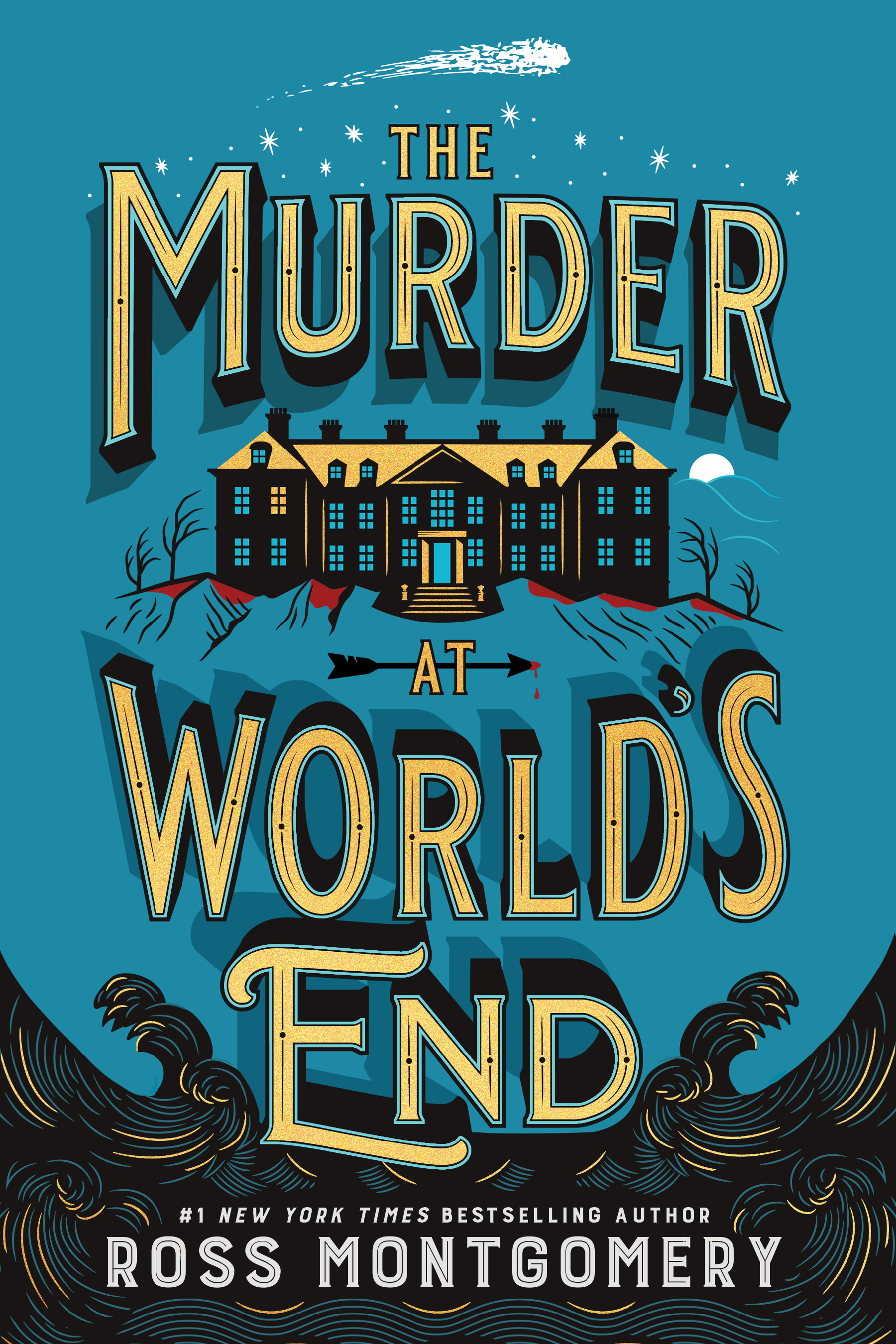 The Murder at World’s End by Ross Montgomery
Mogsy’s Rating: 5 of 5 stars
Genre: Mystery, Historical Fiction
Series: Book 1 of Stockingham & Pike
Publisher: William Morrow (January 6, 2026)
Length: 336 pages
Author Information: Website
And just like that, I already have my first contender for best read of 2026 and it’s a straight-up old-fashioned whodunit. There’s just something deeply satisfying about a mystery that knows exactly what it wants to do, and Murder at World’s End absolutely nails it, delivering a treasure that feels like a love letter to the Golden Age of detective fiction.
The novel is set in Cornwall in 1910, the same year Halley’s Comet sparked widespread panic as a sensationalist media warned that all life would perish as Earth passed through the comet’s poisonous tail. Ensconced in his remote island estate ominously named World’s End, the Viscount of Tithe Hall has a plan for himself and his family to survive the apocalypse. Every window, door, and chimney will be sealed down to the tiniest keyhole, supposedly to protect the manor’s guests and servants from all kinds of dangerous gases or noxious space dust falling from the heavens.
On the eve of Halley’s expected appearance, an earnest young man named Steven Pike arrives at Tithe Hall and steps into a world of utter chaos. Recently released from prison for a crime he didn’t commit, he has come desperately in search of work, knowing how slim his chances are due to his questionable past. With the pre-comet preparations in full swing, however, the place is short-staffed and Steven is hired on the spot. He is then given the curious task of chaperoning Miss Decima Stockingham, the Viscount’s curmudgeonly and foul-mouthed octogenarian aunt who has already driven away all her lady’s maids. Warned that the old lady might not be entirely in possession of her marbles, Steven is surprised to find Miss Decima is in fact far less unhinged than her reputation suggests, with a mind as sharp as her interest in science, though her spectacular temper and lack of tact are unfortunately very real.
Obviously, the world has not ended by the time morning arrives, and the houseguests all emerge from their sealed rooms in a state of collective bemusement and relief—all except one. Sometime in the night, the Viscount was murdered, and his body is discovered alone in a room that had been sealed from the inside. On the surface, the crime appears impossible, though with the island cut off by the high tide, the only certainty is that the killer is someone already at World’s End. As the newest arrival and a former convict, suspicion immediately lands on Steven, but with the help of Miss Decima, the two set out to clear his name by solving the case.
Eccentric suspects, multiple nefarious motives, a literal locked room—The Murder at World’s End has it all. From the very first page, it had me completely hooked, and by its end, I was already giddy with excitement to find this is only the first of hopefully many more Stockingham & Pike books to come. What I loved about the story is how unapologetically classic it feels. This is a proper mystery where the clues matter, the motivations make sense, and the reader is invited to play along rather than be distracted by spectacle. Of course, there are red herrings aplenty, but in my opinion, they are fair ones where the plot never resorts to outrageous twists or last-minute revelations to force a surprise. Instead, the novel features sensible detective work that unfolds with patience and care, rewarding close attention and logical thinking, which made the ending all the more satisfying.
Also, I truly enjoyed the unlikely detective duo of Miss Decima and Steven. The latter’s gradual development is wonderfully handled, portraying his transformation from a skittish young man into a confident go-getter who learns to trust his instincts. And how I loved Miss Decima! Witty, brilliant, and having absolutely no patience for bullshit, she steals every scene she’s in and completely owns it, and yet, while she can certainly be a lot, it never feels too forced or over-the-top like it’s tipping into caricature. What really makes it work, though, is the dynamic between the two characters. Their partnership forms naturally, initially built on shared curiosity and then later mutual respect, eventually evolving into a friendship that was easily the highlight of the entire book.
Historical fiction fans will further appreciate the setting. The looming presence of Halley’s Comet and the hysteria surrounding it serve as such a cool backdrop for the story, giving it an eerie and almost mystical atmosphere. Tithe Hall itself stands as an intimidating presence, and the author uses the environment—the surrounding sea, the dark woods nearby, and even an honest-to-goodness hedge maze—to incredible effect.
In the end, The Murder at World’s End is exactly the kind of mystery I’ve been craving. I could hardly put it down, and every time I was forced to, I found myself jonesing for the next time I could pick it up again. Clever without being convoluted, charming without being pretentious, and most importantly rooted firmly in the traditions of classic detective fiction, this novel is a perfect reminder of why the genre is so beloved and enduring. I would happily follow Steven Pike and Miss Decima Stockingham into as many investigations as Ross Montgomery is willing to write.


Categories: Fantasy Books
Guest Post by Fantasy Author Katie Hallahan
I’m delighted to have a guest post by Katie Hallahan to share with you today! She is the author of McKenna Ellerbeck, a contemporary fantasy series starting with The Twice-Sold Soul, which is described as a “queer fantasy romance set in a magical high school reunion” for “fans of Buffy and Charmed.” The second and newest book in her series, The Twice-Wanted Witch, is out in trade paperback and ebook today—and you can read more about some of her favorite […]
The post Guest Post by Fantasy Author Katie Hallahan first appeared on Fantasy Cafe.
Categories: Fantasy Books
Teaser Tuesdays - Masquerade of Mirrors

Feeling returns to my fingers and toes in tiny shocks, cascading like cold water up my limbs. Strange smoke muffles my ears. Something rumbles beneath me, steady and rhythmic.(14% into digital ARC, Masquerade of Mirrors by Samantha Hartwood)(releases February 17th, 2026)
---------
Teaser Tuesdays is a weekly bookish meme, previously hosted by MizB of Should Be Reading. Anyone can play along! Just do the following: - Grab your current read - Open to a random page - Share two (2) “teaser” sentences from somewhere on that page BE CAREFUL NOT TO INCLUDE SPOILERS! (make sure that what you share doesn’t give too much away! You don’t want to ruin the book for others!) - Share the title & author, too, so that other TT participants can add the book to their TBR Lists if they like your teasers!
Categories: Fantasy Books
Book review: The Autumn Springs Retirement Home Massacre by Philip Fracassi

ABOUT THE AUTHOR: Philip Fracassi is the Bram Stoker and British Fantasy Award-nominated author of the novels Don’t Let Them Get You Down, A Child Alone with Strangers, Gothic, and Boys in the Valley. His upcoming books include the novels The Third Rule of Time Travel, The Autumn Springs Retirement Home Massacre, and Sarafina.
Publisher: Tor Nightfire (September 30, 2025) Page count: 416 Formats: audiobook, ebook, paperback
I loved this book.
The Autumn Springs Retirement Home Massacre is, basically, a slasher horror set in a retirement home.
Rose DuBois is a fantastic protagonist. She’s in her late seventies, but still sharp, and tired of nonsense. She's also a little lonely, and carrying a lifetime of quiet damage she doesn’t talk about much. When residents at Autumn Springs start dying, she first mourns her friends. That's the thing with a retirement home - people die there all the time. But with deaths piling up, Rose decides to investigate.
The book is quick to read thanks to shot chapters and brisk pacing. I also enjoyed the setting. Life in Autumn Springs revolves around schedules, medications, compromises, and small social ecosystems. People know each other’s habits. They notice when someone doesn’t show up. They also know how easy it is for a death to slide by unquestioned. That tension between community closeness and institutional indifference plays an important role.
Since it's a slasher, you know there'll be violence. It's not extreme or gratuitous, but characters you'll root for will die. The violence isn’t goofy or exaggerated. It’s ugly, abrupt, and often sad. The story switches between cozy-ish mystery and slasher brutality. The investigation side, mostly driven by Rose and her friend Miller, is fun and their relationship adds warmth without tipping into sentimentality. Then the killings arrive and snap that comfort in half. The violence isn’t goofy or exaggerated. It’s ugly, abrupt, and often sad. I'll emphasize that Fracassi respects his characters too much to treat them as fodder. Most deaths sting, true, but they're well written.
The mystery holds together. You’re given enough to speculate without being led by the nose, and suspicion moves as new information comes out. The eventual reveal makes sense. There’s a light supernatural touch to it that some readers may wish were either pushed further or cut entirely.
You’ll like this if you prefer horror character-driven and if you enjoy mysteries where character matters more than clever twists, and if the idea of a slower, observant final girl appeals to you.
Categories: Fantasy Books
Spotlight on “Adrift” by Will Dean
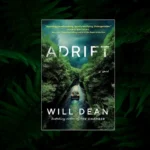
LitStack Spots – Titles by Will Dean Here are some titles by Will Dean that…
The post Spotlight on “Adrift” by Will Dean appeared first on LitStack.
Categories: Fantasy Books
Blue Beard, Red Hood - Book Review by Voodoo Bride
 Blue Beard, Red Hood (Beloved Villains #6)Rebecca F. Kenney
What is it about:A spicy, adult romantasy retelling of "Bluebeard" and "Little Red Riding Hood," two of Charles Perrault's most famous stories.
Sybil Fallon has a habit of summoning demons unintentionally and at the most inconvenient times. When she, her mother, and her sister are invited to an upcoming dinner at the estate of the mysterious Theron Beresford, Sybil is desperate to ensure that her ability won't manifest and ruin the evening. But when she seeks help from her reclusive former mentor, Grandmother Riquet, she discovers that the old woman has changed in dangerous and disturbing ways... and so has the forest in which she lives.
As Sybil struggles to control an ability she doesn't understand, she becomes strongly attracted to Beresford, the brawny, handsome estate owner. His distinctive blue beard isn't his only unusual trait. In addition to socially acceptable dinner parties, he also likes to host secret gatherings in the refurbished barn on his property. Sybil's first invitation to one of his naughty midnight parties opens her mind to a world of new pleasures. But with local disappearances inciting the suspicion of the neighbors, and Beresford's secretive nature raising questions in her own mind, Sybil must navigate an increasingly treacherous path through the forest of her circumstances in pursuit of the future she wants.
What did Voodoo Bride think of it:Yes, I totally went on a Rebecca F. Kenney Binge.This one I got as an ARC, but I bought the ebook as well, because I didn't get to reading/reviewing before the release.
I've always thought Bluebeard would be a great fairy tale to reimagine into something more sensual. And here it is!
I really enjoyed this mashup of Bluebeard and Little Red Riding Hood. I liked Sybil, and was as intrigued by Beresford as she was. There lots of deliciousness, some creepy things, and lots of suspense. There's elements of both fairy tales, but once again Kenney weaves them into a wonderful reimagining all her own. I had a great time with this and it won't be the last book by Kenney I will read.
Why should you read it:It's a sensual, suspenseful fairy tale mashup.
Categories: Fantasy Books
Review – The Magic of Untamed Hearts (Wild Magic, Book 3) by Raquel Vasquez Gilliland (4/5 stars)

Reading Level: Adult
Genre: Paranormal Romance
Length: 368 pages
Publisher: Berkley
Release Date: January 13, 2026
ASIN: B0F4Q7YQXK
Stand Alone or Series: 3rd book in Wild Magic series
Source: ebook from NetGalley for Review
Rating: 4/5 stars
“Like her sisters, Sage and Teal, Sky Flores has a touch of magic, and it’s caused nothing but heartache. Not only did she disappear into the woods years ago and reappear with no rational explanation, she’s also more comfortable talking to animals than to people. Different and misunderstood, Sky is shunned in the small town of Cranberry.
Sky’s neighbor, Adam Noemi, has his own problems. After being laid off from a prestigious newspaper, Adam, ever the ambitious reporter, needs a big headline to redeem his career. Enter Sky, a girl with a story that news outlets have been chasing for years. Sky agrees to grant Adam an exclusive interview on one condition: that he befriend Sky, in a very public way, to prove to everyone in Cranberry that she’s not an outcast.
As Sky shares her experiences with Adam, something much bigger than a simple agreement begins to grow between them. But for love to take root, Adam will have to take a leap towards a life that defies expectations, and Sky must open her heart – full of flora and fauna and mystical energies – to his curious mind.”
Series Info/Source: This is third book in the Wild Magic series. I got a copy of this to review on ebook from NetGalley.
Thoughts: This was a well done continuation of this series. I enjoyed reading about Sky’s story. My favorite book in this series remains the first book, but I enjoyed this one as well. You really feel for Sky and all that she’s been through; I thought her autism was well represented too.
Sky has a touch of magic; she can talk to animals. Unfortunately, with her long absence, she is more comfortable talking to animals than people, and the people of Cranberry town have not been kind to her. She feels like a burden on those around her. Sage and Teal have both moved on with their lives but still feel like they have to baby Sky. Sky is doing okay though; she has her job at the library and a couple of friends. She wants more and is trying to put herself out there. After some horrible experiences in an online dating app she finally clicks with someone online. Simultaneously, she keeps running into Adam. He was horrible to her in high school and is now the big time famous reporter (who seems to be down on his luck). Him and Sky have one thing in common, his father who is struggling with onset dementia. As Adam and Sky end up spending more time together via Adam’s father, they start to find out that they have more in common than they previously knew.
This was a cute story and I enjoyed it. I was excited to finally get Sky’s story, and she is by far the most timid of the sisters. I really felt for her and her feelings of loneliness, not fitting in, and of being a burden on those around her. I enjoyed watching her grow and find her footing throughout the story.
Sky has autism and this is represented throughout the story; she is sensitive to certain sensation and fabrics, has trouble with natural conversation and reading cues but she is trying to own it. I thought Gilliland did a great job representing this throughout the story. Sky is a high functioning individual who just needs to interact with people and things a bit differently. Adam comes off as a bit of a jerk initially, but I grew to enjoy his character more as the story progressed. The two end up having excellent chemistry together.
This story felt a bit slower than the previous two books. Sky had a mystery of a secret coven that she was trying to unravel but that was very much in the background and kept being forgotten throughout the story. There just didn’t seem to be as much to drive this story forward as there were in the first two books. I also love the Flores family, but they seem very scattered in this book. They do come together at times, but Sky felt very much on her own because she was very much on her own for a lot of the book. All the other members of the Flores family had valid but different priorities (new baby, new business, etc).
This was easy to read and cute and funny. I enjoyed it and think it was a decent close to this series about these magical sisters.
My Summary (4/5): Overall I liked this and thought it was a quick, cute, and fun read. It was a bit slower than the previous two books and I didn’t click with Sky as a character quite as well. However, I did like learning more about Sky and watching her grow and get her happiness. I would recommend this series to those who enjoy paranormal magic with a cozy feel; all of these books have an emphasis on family and finding happiness. I will definitely keep an eye out for Gilliland’s future books.
Categories: Fantasy Books
Colm Tóibín’s “Nora Webster” | Recovering Her Lost Self
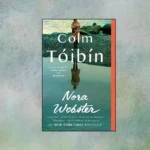
The post Colm Tóibín’s “Nora Webster” | Recovering Her Lost Self appeared first on LitStack.
Categories: Fantasy Books
Friday Musings: Our Latest Adventure In Home Ownership
Last week, our septic system died. It had been giving us trouble for a while, making dyspeptic noises when we did the laundry or ran too much water through the pipes, draining too slowly, and generally seeming not well. You might say the whole thing crapped out on us. But shit happens….
We had someone come in to check it, and they told us the tank needed pumping. But when we had another someone come in to do that, they discovered that the tank, which is made out of cement, was broken, and had been KNOWN to be broken by the previous owners of the house, who had set up some weird makeshift patches over the broken section to hide or at least mitigate the problem. So, that was something of a pisser….
Then we had a third someone come in to remove the broken tank and replace it with one that, well, wasn’t broken. This was set to cost us a great deal of money — a butt-load, if you will. And they discovered that the broken tank was actually resting on a second tank, which was deeper in the ground. At which point, their already-substantial estimate ballooned further. That really stank. It felt like we were just flushing money down the toilet….
 And actually, we had previously — as in just a couple of weeks ago — had to replace our hot water heater. Hence, you might say that the septic issues were our number two problem….
Okay, I’ll stop now with the terribly immature scatological humor. The septic problems were real — not something I made up to work in these awful jokes. Fortunately, the work is done, the expense has been borne, the bird feeders are back up, and the yard has been patched, though it will take a while for it to recover fully. The guys doing the tank replacement (who were great — professional, considerate, friendly, reliable, and determined to get the work done quickly) had to bring in some heavy equipment. There was nothing to be done about the lawn.
But that’s a small matter. Everything (for now) is working as it’s supposed to. You might even say that our problems are behind us now….
Enjoy your weekend!
Categories: Fantasy Books
A Tale of Vines and Vengeance - Quick Review by Voodoo Bride
 A Tale of Vines and Vengeance (Wicked Darlings #3.5)by Rebecca F. Kenney
What is it about:This is not a full novel, it is a short story connected to the Wicked Darlings series. It is meant to be read after you've completed all three of the main novels in the series, starting with A Court of Sugar and Spice. It contains some spoilers for the series.If you loved Clara and her handsome Sugarplum Faerie, Finias, you'll enjoy this small glimpse into their life after the events of the series.
What did Voodoo Bride think of it:I'm a rebel. I totally skipped over the third book in this series to read this short story about Clara and Fin.
And it's a quick read with both suspense and lots of deliciousness. If you loved Clara and her Sugarplum Faerie as much as I do, this is a must read!There's spoilers for the first two books, and maybe minor spoilers for the third book.
Why should you read it:It's fun and delicious.
Categories: Fantasy Books
Audiobook Review – Emergence (Eclipsed Evolution, Book 3) by Kim Harrison, Narrated by Xe Sands (3/5 stars)

Reading Level: Adult
Genre: Science Fiction/Paranormal
Length: 6 hours and 12 minutes
Publisher: Penguin Audio
Release Date: June 04, 2024
ASIN: B0CKWGFGHW
Stand Alone or Series: 3rd book in the Eclipsed Evolution series
Source: Audiobook from Audible.com
Rating: 3/5 stars
“As time has passed, Dr. Renee Caisson has begun to see the demonic, alien August as more than a research subject or an unlikely colleague—they’ve become friends. And together she and August have helped the two societies of Nextdoor and Earth through the confusion of first contact, the danger of misunderstandings, and the anger of mistreatment.
But when a popular blogger and conspiracy theorist twists August’s words, an uproar ensues, turning a powerful section of human society against the Neighbors—and resulting in Renee’s house arrest. Her could-be boyfriend, Major Jackson, says it’s to protect her, though that’s not how Renee sees it.
Torn between duty and friendship, August jumps Renee to freedom, fully aware that the journey might reveal more to her than she should know. The wily Neighbor has pieced together that Renee has been unconsciously using their magic, a fact that, if revealed, will cause more, not less, conflict between the humans and Neighbors.
For if the people of Earth can master magic and exile August’s people again, the Neighbors will not survive. . . .”
Series Info/Source: This is the third book in the Eclipsed Evolution series. I bought a copy of this on audiobook from Audible.
Thoughts: I am a bit torn about this series. I like the idea behind it and do enjoy some of the characters. However, it is really predictable and moves really slow (the novella format might have something to do with that). I got the first three of these on audiobook because I was looking for some shorter audiobooks that I could listen to during a car trip. The audiobook is okay; the narrator has a kind of raspy voice that can be tough to hear if there is a lot of background noise where I am listening (for example, in the car). I got these as a bundle deal and probably wouldn’t have kept reading after the first book if I hadn’t done that.
This book picks up right after where the second book in the series left off. Renee and August are starting to work on research projects together, and the Neighbors are now known to the rest of the world. When a popular blogger starts to twist the story, an uproar ensues and Renee ends up under house arrest. August jumps her out. However, the fact that Renee may be unconsciously using the neighbor’s spark magic has both human and neighbor sides concerned.
I like the idea behind this whole series; it is an intriguing blend of science fiction and paranormal elements. I also continue to like the characters; they are smart and kind, if a bit vanilla at times. I will also say that characters come across as very world-weary as well. I just feel like the story drags; the way things play out is exactly how I would expect them to play out. The actions characters take feel a bit underwhelming, and nothing is surprising. This makes the story feel strangely unoriginal (even though the premise is unique) and a bit tired.
Everything about this is okay but not great. I originally thought this was a trilogy and that this book would wrap up the series, however I was wrong. Nothing is resolved in this book, and there will definitely be more books in this series.
My Summary (5/5): Overall I find this series underwhelming. I like the premise and the characters, but struggle with how predictable and tired the story feels. If I hadn’t bought all three of these together, I probably wouldn’t have read past the first book. Now that I have the three released books in this series, I am still feeling underwhelmed and don’t plan on reading additional books in this series. This is definitely not Harrison’s finest. Despite the creative premise, this story has been very slow, predictable, and tired.
Categories: Fantasy Books
Pages

Recent comments