
https://www.blackgate.com/

Tom’s Crossing by Mark Z. Danielewski: A Really Big Book
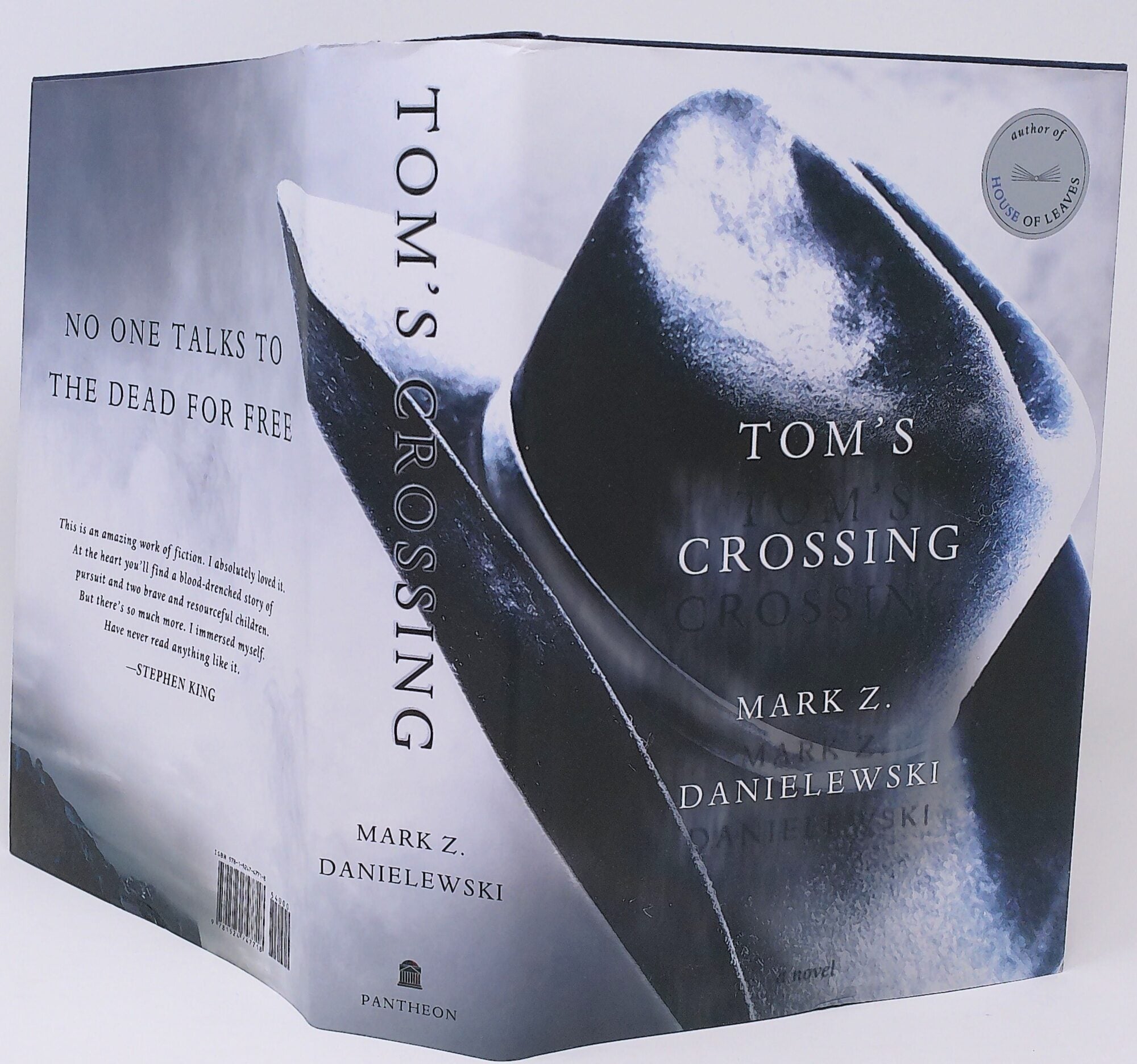
Tom’s Crossing (Pantheon, October 28, 2025)
Every now and then I reach for a copy of Anna Karenina on my TBR bookshelf, but hesitate to wonder, “Do I really have time to get into this kind of heavy reading of some 800 plus pages right now?” So far, the answer has been, “No.” I really do intend to get to it at some point because, well, it’s Anna Karenina. Just not quite now.
Why then, did I pick up the 1,227 page opus by Mark Z. Danielewski, Tom’s Crossing?
Mainly because of the one and only blurb on the book jacket:
This is an amazing work of fiction. I absolutely loved it. At the heart you’ll find a blood drenched story of pursuit and two brave and resourceful children. But there’s so much more. I immersed myself in. Have never ready anything like it.
So, despite what we know about glad-handing you-blurb-my-book and I’ll blurb yours endorsements, this is the only blurb on a book by an author with a low profile and cult status, and the if it’s genuinely that great a read for Stephen King, it’s certainly good enough for me. (And, besides, I was going on a long trip where it made as much sense to take one big book rather than several. Sorry Tolstoy.)
So who is Tom and what is he crossing?
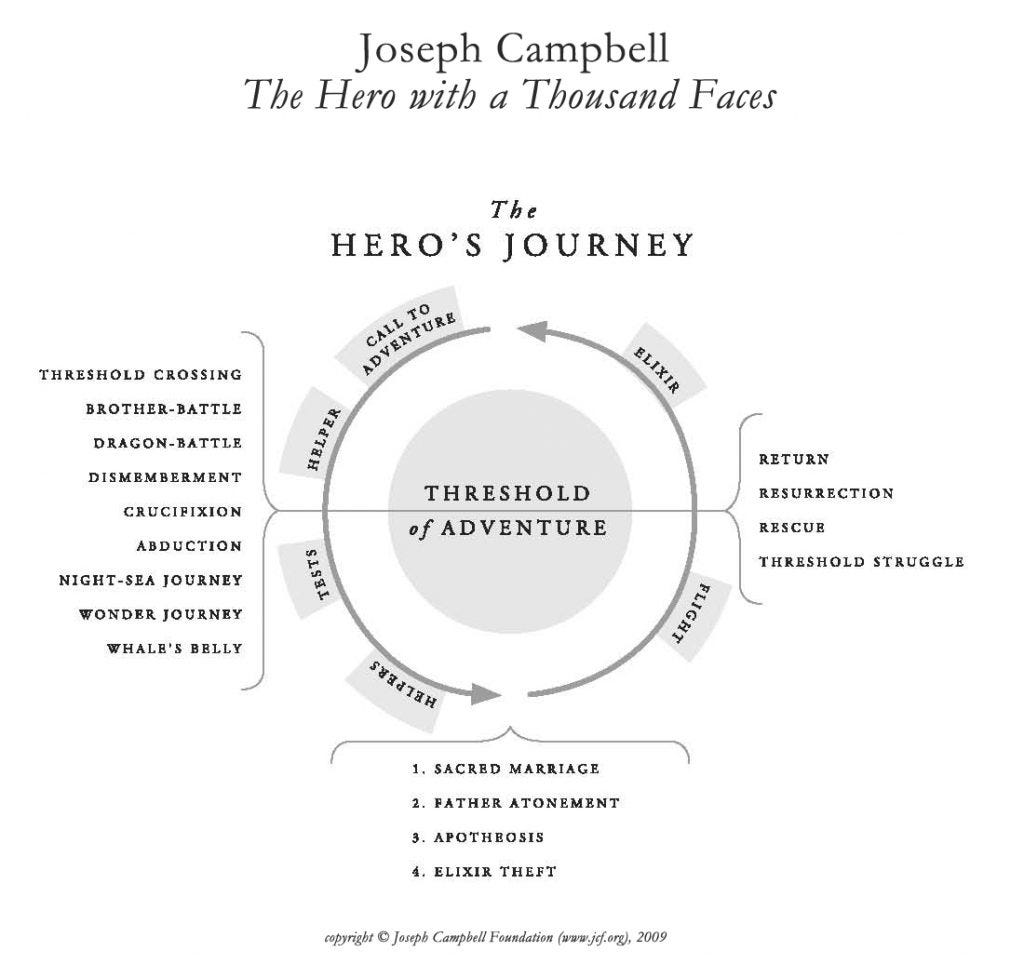
Tom is a Gatestone, a family that has a generational McCoy-Hatfield feud with the Porches. The story takes place in 1982 in Orvop (an anagram for Provo), Utah and neighboring Orem (i.e., Rome) amidst the mountains of Mt. Katanogos (Timpanagos) in the Isatch (Wasatch). Why the need for a slightly alternative universe? Possibly to convey a heightened sense of the mythological. Add to this a mild dissection of the Church of Latter-Day Saints and some Native American folklore, but, most essentially, references to Homer’s Odyssey. For, indeed, this is a hero’s trails and tribulations quest in the classic Joseph Campbell sense.
The crossing refers both to a treacherous mountain expedition to fulfill an oath as well as the transition from life to death — indeed, the eponymous Tom dies by page 37:
Tom always said he was gonna die young. The way he described it, with a glee his mother abhorred, he’d be hung up on some mighty bull, hand caught in the ropes tied by his own division, swung this way, that way, until he was broken, scraped off, gored, ground down, and finally stamped into an icy black dream, and in front of thousands too, maybe even on television, Gone like that and not even twenty-seven.
Gored by cancer rather than a bull, Tom is not entirely gone. Only his physical presence. Tom becomes a spiritual guide from the grave, albeit not all-seeing, a ghost to escort travelers to safety, even while sometimes unsure of how to get there. (So while not strictly speaking a fantasy, the ghostly presence and narrative foreboding of horrors to come — “Hard to figure how so much awful horror could have started out” is the opening line — I think qualifies it as Black Gate adjacent. Plus if Stephen King likes it, Black Gate readers should.)
On his deathbed, Tom extracts a promise from his friend Kalin March, like Tom a natural equestrian, to rescue a pair of horses set for slaughter and take them across the mountains to the safety of “the Crossin.” (The omniscient narrator, possesses a sophisticated command of English mixed with hick slang and spellings, such as dropping the “g” in “ing” ending words; somewhere toward the last 100 pages or so you’ll begin to guess who the narrator is, though how the narrator knows as much about events to which they are not present only becomes evident at the end. Note that the title page identifies the “author” as E.L.M. and to an anonymous transcription.) This request reflects how Tom had earlier rescued Kalin from a bullying attack, and that “aside from Tom, no one else welcomed him into their fold.”
Kalin is the true outsider, neither Gaestone nor Porch, the archetypical, if even a teenaged one, Western hero (the novel’s subtitle is “A Western”). Kalin is also the naive protagonist in the tradition of Huckleberry Finn, eager to do the right thing despite societal pressures to do otherwise. Indeed, Tom’s indefatigable good humor is somewhat reminiscent of the mischievous Tom Sawyer.
Tom is Kalin’s literal spiritual guide from the grave, though not all-seeing, a ghost that helps escort Katlin and the horses across the mountains to “the Crossin,” even while sometimes unsure of how to get there. (So while not strictly speaking a fantasy, the ghostly presence and narrative foreboding of horrors to come — “Hard to figure how so much awful horror could have started out” is the opening line — I think qualifies it as Black Gate adjacent.)
Navigating steep mountainous terrain during winter is a challenging enough pursuit, but further complicating matters for Katlin is the unwanted addition to the treacherous journey of Tom’s sister, Landry, who serves simultaneously as sidekick, cheerleader, adolescent crush, and, ultimately, redeemer. A rescue mission of another kind is also underway by the respective mothers of the two adolescents, who bond despite their different religious views and that Katlin is (falsely) accused of a murder and the kidnapping of Landry.
It wouldn’t be a Western without the bad guys, of which there are more than a few. The patriarch Old Porch, whose set-to-be-butchered ponies Kalin has “stolen” (it can’t get any more of a Western story than a horse rustling), in a fit of rage commits a murder he attempts to blames on Kalin. Old Porch and his for the most part equally no-good sons set out to follow Katlin, Landry and the horses ostensibly to gain vengeance and return of their property, though actually to cover up their father’s crime.
Further adding to the tales’ fabulism are constant references, sometimes including extensive description of their often unpleasant demises, to various local folks who’ve painted or sketched depictions of key events during these escapades. For example:
Both Marsha Taylor, a baker, and Lou Keele, a florist, would in 1985 admirably render this moment on thick sheets of cotton paper, watercolors for Marsha, colored pencil for Lou…
These works of arts at some point go on display, are destroyed in a fire, and somehow resurrected as part of a memorial art show. There are also re-enactment ceremonies of the Crossing events among the “many commentators”:
Not entirely on their own in the creative retellins, rants, iterative speculations, and musins regardin the events that transpired in and around the Isatch Canyon and Katanogos massif that late October in 1982.
These “musins”serve as a sort of Greek chorus, lamenting how fate dictates bad outcomes that could have been avoided, if only if:
Kay Shroeppel would many years hence, and in an empty theater in Helsinki, in 2028 in fact, declare to her friend Gaylene Zobell, who was just then visitin from Belgrade, Serbia… that if only Old Porch had embraced his thespian inclinations, he might’ve lived a more fulfillin life.
And because this is a Western, there is a stolen gun of seeming worth. And in keeping with Chekov, since there is a gun, it eventually goes off.
How the narrator somehow knows all these things and the way they are conveyed may prove annoying to some readers. And given that this is the proverbial doorstep of a book, these readers might be inclined to abandon the journey.
That would be their loss. Like another not always easy-to-read novel, Moby Dick, the hunt must be seen to its conclusion. As any worthy journey must.
David Soyka is one of the founding bloggers at Black Gate. He’s written over 200 articles for us since 2008. See them all here.
Categories: Fantasy Books
Forgotten Authors: S.P. Meek
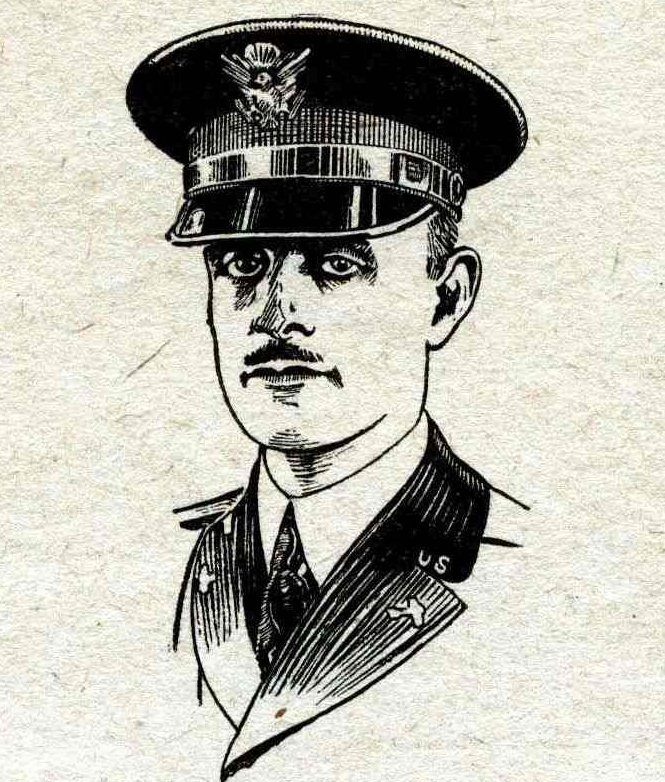 S.P. Meek
Sterner St. Paul Meek was born in Chicago, Illinois on April 8, 1894. He earned as associate of science degree from the University of Chicago in 1914 and continued his education at the University of Alabama, becoming a member of Phi Beta Kappa and earned a bachelor of science in metallurgical engineering. In 1916, he transferred to the University of Wisconsin, but joined the army in 1917. Although he attended the Massachusetts Institute of Technology between 1921 and 1923, he remained in the army for his entire career.
While attending college, he also served as a football coach at Kirkley Junior College in Texas, as a chemist for the Western Electric Company, and at Deuvitt Laboratories, all of which went by the wayside when he joined the military. Originally stationed in the Philippines, he would go on the direct small arms ammunition research from 1923 to 1926, serve as the chief publications officer for the Ordnance Department from 1941-1944. He retired from the military in 1947 due to disability. He holds patents for tracer ammunition.
Meek married Edna Burnadge Nobel in 1927 and the couple had one son.
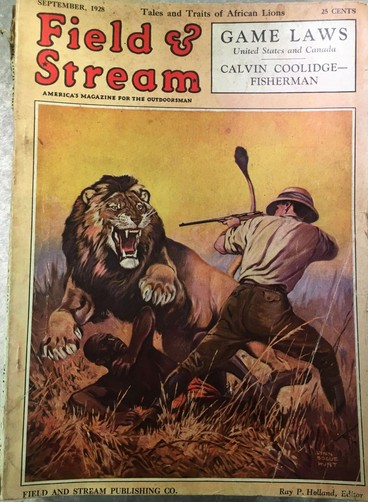 September 1928 Field and Stream
Meek’s first story, “Taming Poachers” to Field and Stream of all places, and it appeared in the September 1928 issue. His first story of genre interest, “The Murgatroyd Experiment,” was published in the Winter 1929 issue of Amazing Stories Quarterly and dealt with the issue of overpopulation in the year 2060. Given that Meek often used his rank as part of his byline, it isn’t surprising that he also wrote about the future of warfare, with “The Red Peril” and “The Last War” exploring germ warfare between the Soviet Union and the United States.
Many of his stories published between 1930 and 1932focused on Doctor Bird and the Bureau of Standards. Although Meek wrote fifteen stories in the series, only eleven were included in the 2010 collection The Astounding Adventures of Dr. Bird.
Meek wrote mostly at short length, although two of his works, were serialized novels. The Drums of Tapajos appeared in Amazing Stories between November 1930 and January 1931, and its sequel, Troyana, was published in Amazing Stories from February through April 1932. These novels were a lost race series set in Brazil.
During his lifetime, there was only one collection of Meek’s stories, The Monkeys Have No Tails in Zamboanga, which included fourteen of his humorous stories and was published in 1934. Two other stories were published in Arctic Bride in 1944, which only ran to 36 pages.
In addition to his science fiction, Meek published a series of animal books for children, beginning with Jerry: The Adventures of an Army Dog. He published about twenty books along those lines by 1956, including Midnight: A Cow Pony, Surfman: Adventures of a Coast Guard Dog, and Pierre of the Big Top: The Story of a Circus Poodle. He also published the nonfiction So, You’re Going to Get a Puppy in 1947.
Readers could follow Meek’s advancement through the army. From 1929 through the start of World War II, his byline indicated he was Captain S.P. Meek. After the war his byline changes to indicate he had obtained the rank of Major, and by the 1960s, he was Colonel S.P. Meek.
According to Julius Schwartz and Mort Weisinger, writing in 1933, some of Meek’s stories were revised and polished by Laurence D’Orsay, a professional literary critic, who died in 1947. D’Orsay also ran a literary agency and in the mid-1930s, he employed Henry Kuttner. A writing course D’Orsay ran helped spur Leigh Brackett’s writing career. In Silent Interviews: On Language, Race, Sex, Science Fiction, and Some Comics, Samuel R. Delany used Meek’s writing as an example of writers who were “unbelievably bad,” comparing him to other authors like Stanley G. Weinbaum who was “extraordinarily fine” and Edward E. Smith who “while bad, still had something going.”
Meek died on June 10, 1972 in Palm Beach, Florida.
 Steven H Silver is a twenty-one-time Hugo Award nominee and was the publisher of the Hugo-nominated fanzine Argentus as well as the editor and publisher of ISFiC Press for eight years. He has also edited books for DAW, NESFA Press, and ZNB. His most recent anthology is Alternate Peace and his novel After Hastings was published in 2020. Steven has chaired the first Midwest Construction, Windycon three times, and the SFWA Nebula Conference numerous times. He was programming chair for Chicon 2000 and Vice Chair of Chicon 7.
Categories: Fantasy Books
Dark Muse News: Sword & Sorcery Chain Story (#14-#18)
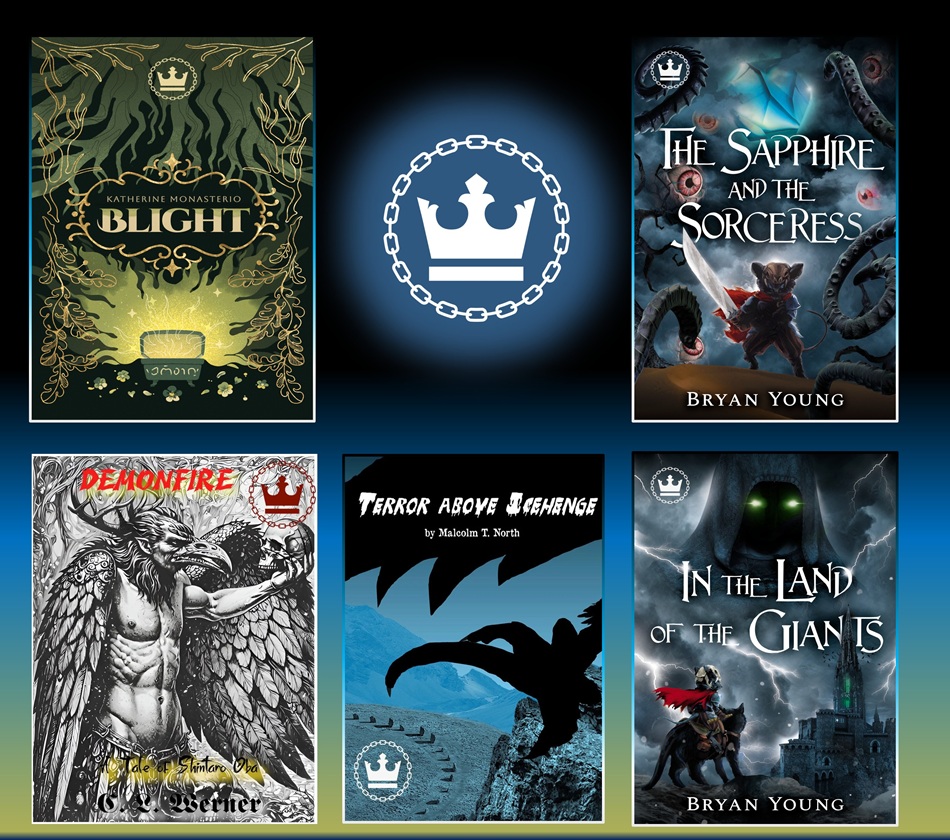
- A standalone tale
- Readable in any order
- Free to read
- Interconnected via a theme involving a Crown
- 14 Blight by Katherine Monasterio
- 15 In The Land of the Giants, by Bryan Young (second in the series via the chain!))
- 16 Demonfire: A Tale of Shintaro Oba by C. L. Werner
- 17 Terror Above Icehenge by Malcolm T. North
- 18 The Sapphire and the Sorceress by Bryan Young (third in the series via the chain!)
- The Chain Story 2 – Sword and Sorcery Entries 1-3 (Aug 2025)
- The Chain Story 2 – Sword and Sorcery – Episodes 4-8 (Oct 2025)
- The Chain Story 2 – Sword and Sorcery – Episodes 9-13 (Nov 2025)
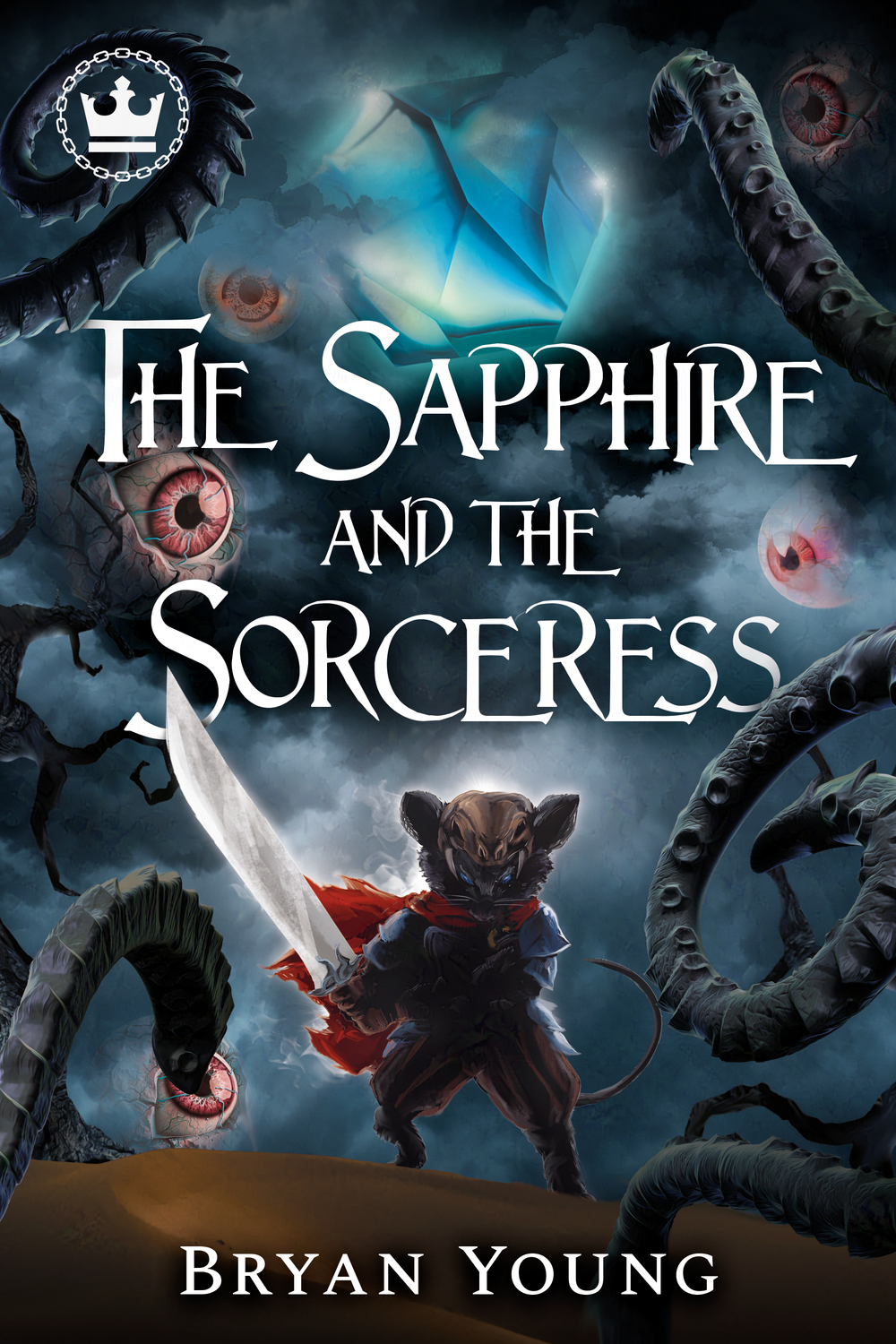
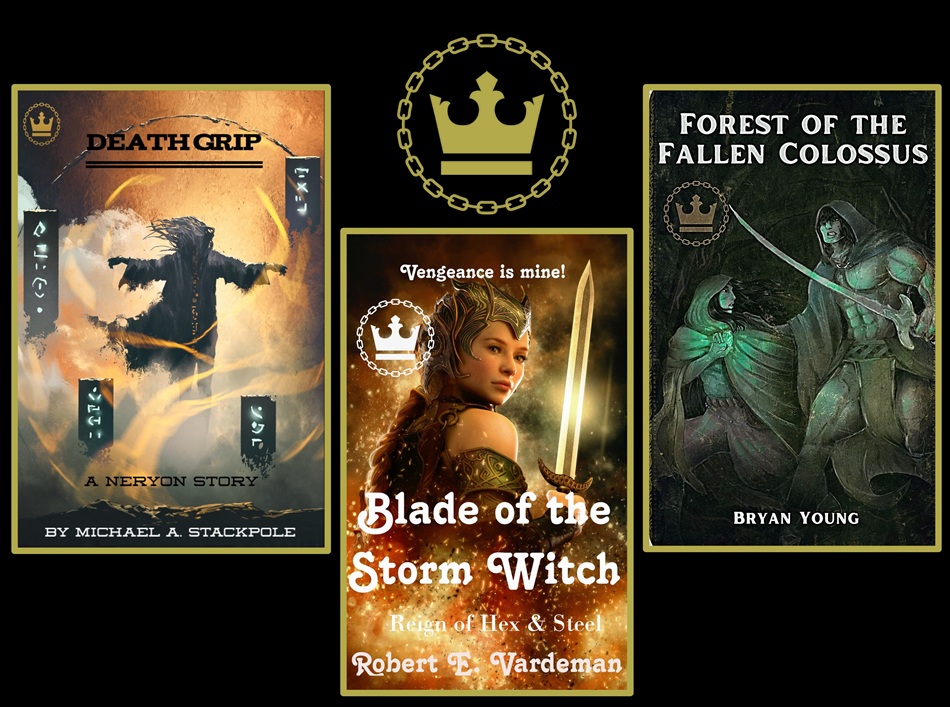
As with all good heroes, Pip does not shrink from danger and adventure. Still, there are times when it would be good to relax at home. But Pip is far from home, and is searching for a powerful sorceress who can help him on his way.
17 January 14, 2026 Terror Above Icehenge Malcolm T. NorthTo reach her, however, he’ll have to venture through the Chaos Realm and, as every true hero knows if you undertake that journey lightly, it will end quickly. But Pip has no choice, and therein our adventure begins.
16 December 31, 2025 Demonfire: A Tale of Shintaro Oba C. L. WernerA forbidden ritual conducted in secret, bathed in blood and death enables a demon to grasp unimaginable power—the power to destroy all enemies and raise himself above all others.
15 December 24, 2025 In The Land of the Giants, Bryan YoungA Samurai, whose duty calls for him to hunt down such a creature. A destiny he must pursue even as the world burns around him.
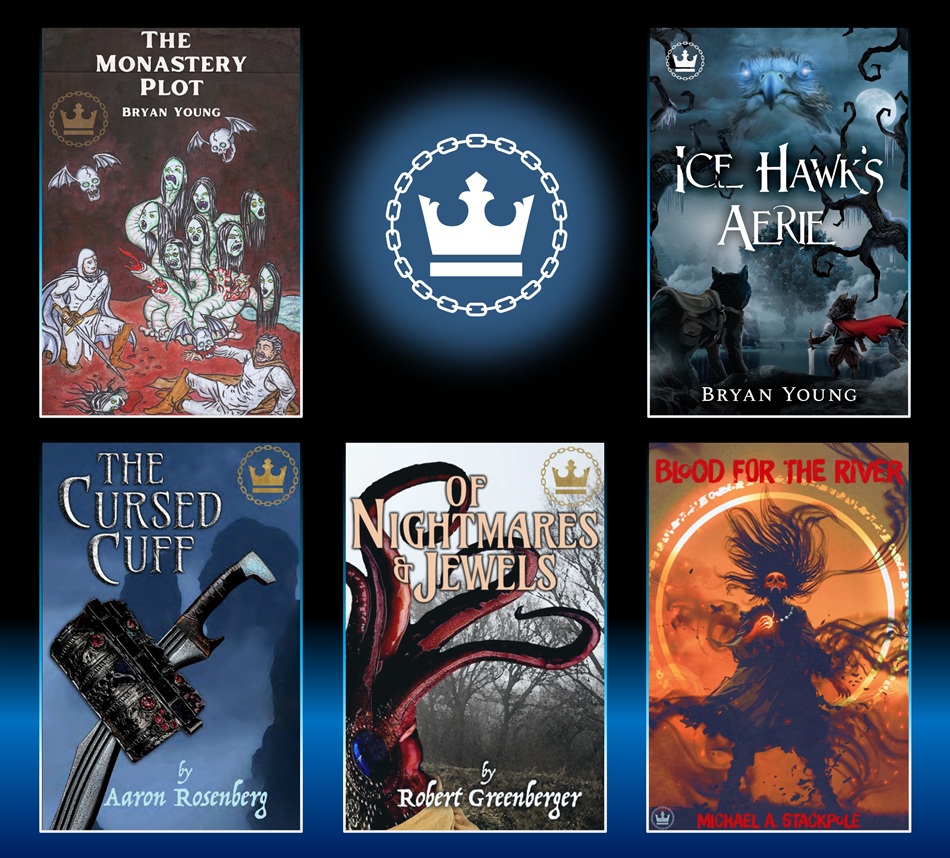
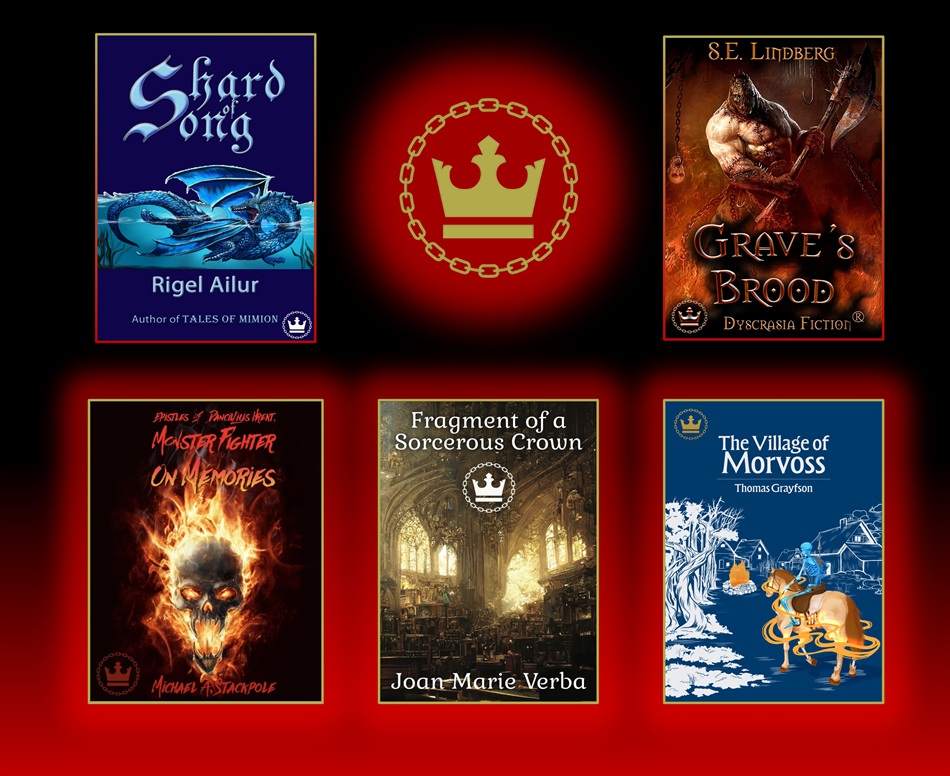
14 December 10, 2025 Blight Katherine Monasterio Forest Ranger Hazel Boncliff is a Green Speaker, a person with the magical ability to commune with plants. When the king summons Hazel and her assistant to the capital to heal the strange blight affecting his hunting grounds, she’s reluctant to help—least of all because he’s insisting his inexperienced secretary go along for the journey. But with a reward she can’t refuse and the blight’s effects more harrowing by the moment, she’ll take all the help she can get. 13 November 26, 2025 Ice Hawk’s Aerie Bryan Young A chance meeting in the dark forest. A tale of woe and injustice.Pip Strongpaw, the last of the fabled Great Catriders, must once again wield the runed-sword Feathersbane, to end the chilling menace threatening to destroy the hamlet of Riveroak. A menace of sorcerous origins against which even the bravest of heroes may not prevail. 12 November 12, 2025 Blood for the River Michael Stackpole Chased into a swamp by homicidal cultists, Kellach and Serinna encounter a fire mage who saves their lives, and then leads them on an adventure that is sure to get them killed. 11 October 14, 2025 Of Nightmares & Jewels Robert Greenberger Something drew the mage onward, always toward the northwest, through restless evenings and dark dreams of ill portent. Yet when Jareth’s traveling companion, the swordswoman Talin, asks him why, he has no idea.
And then they reached a tiny town at the edge of nowhere, wherein lurked an evil with roots sunk deep in times beyond remembering; an evil that has chosen their visit as a time to awaken. 10 October 14, 2025 The Cursed Cuff Aaron Rosenberg She came to them spinning a tale of woe. An army of undead lay siege to the Manor she called home. She had barely escaped and sough adventurers brave enough to free her people.
But to do that Birr Blackjaw and his companions would have to wrest an ancient artifact from the hands of a cult leader who had his own army, and a hellish pet none could hope to defeat. 9 October 1, 2025 The Monastery Plot Bryan Young Shield Maiden and legendary sleuth Sister Agatha, accompanied by her faithful initiate, Brother Dominguez, sought to enjoy peace and quiet at the Monastery of St. Maryam.Despite their desires, they soon find themselves investigating twin murders. Murders which become all that much more bizarre when the name Tarru-Syn turns up, and their search leads them into the very bowels of the earth, to face a foe from beyond their reality. 8 September 24, 2025 On Memories Michael Stackpole Dancillius Hrekt is fairly new to the world of Monster Fighting. All he wants to do is to make a good impression with his peers. And all they want is for him and his best friend to die. 7 September 10, 2025 The Village of Morvoss Thomas Grayfson In this new Kavion adventure, our tormented knight clings to the last threads of family and sanity as he navigates the mysterious Village of Morvoss. Haunted by fractured memories, he must confront the darkness around him—and within. 6 August 27, 2025 Fragment of a Sorcerous Crown Joan Marie Verba In this tale from the Chronicles of the Library of Sorcery, the sorcerers investigate a dangerous magical artifact of mysterious origin. Can the sorcerers uncover the truth?Sorcerer Serena is called to investigate an enormous, carnivorous plant. She finds that a mysterious magical artifact is behind the phenomenon. To find out where the artifact came from and what its properties might be, she consults the Library of Sorcery, where she uncovers the answers, but not on the Library shelves. Can the artifact be banished from the sorcerous regions before it becomes a more deathly threat? 5 August 13, 2025 Grave’s Brood S.E. Lindberg Doktor Grave sends Brood to recover a crown from the Red Orchard, only for Brood to find it is the source of a bloody plague caused by Grave’s experiments. Facing vampiric plants and their loyal clan, Brood must confront his past and question whether he can trust Grave or escape the nightmare himself. 4 July 28, 2025 Shard of Song Rigel Ailur Two wizards search desperately for a way to stave off a vicious magical-musical attack before the dragons succumb. A powerful relic ancient beyond memory calls to them, but do they dare use it? 3 July 16, 2025 Forest of the Fallen Colossus Bryan Young A dying robber hands Laila and Zaki a mysterious artifact in the middle of a fae-haunted wood. “Danger,” the robber manages before dying. Suddenly sister and brother find themselves safeguarding an unwanted gift—on the run for their lives in the Forest of the Fallen Colossus. 2 July 3, 2025 Death Grip Michael Stackpole The man hadn’t died easily.A smoking hole sat where his heart should have been. Terror twisted his features, and he clutched an emerald reeking of magick as if would somehow save him. Neryon and Magistrate-Martial Logan find themselves in a race to find the killer before he has a chance to harvest more victims. But, with the amount of power used on his first target, there was a big gulf between finding and stopping; and no guarantee he wouldn’t kill them, too. 1 July 3, 2025 Blade of the Storm Witch Robert E. Vardeman Her vengeance became elemental! The Conqueror-King’s minion murdered her pirate husband. The Lady Rennata was condemned to follow him into a watery grave—until wind and wave swept her to a magical blade that commands all of Nature.
S.E. Lindberg is a Managing Editor at Black Gate, regularly reviewing books and interviewing authors on the topic of “Beauty & Art in Weird-Fantasy Fiction.” He has taken lead roles organizing the Gen Con Writers’ Symposium (chairing it in 2023), is the lead moderator of the Goodreads Sword & Sorcery Group, and was an intern for Tales from the Magician’s Skull magazine. As for crafting stories, he has contributed eight entries across Perseid Press’s Heroes in Hell and Heroika series, and has an entry in Weirdbook Annual #3: Zombies. He independently publishes novels under the banner Dyscrasia Fiction; short stories of Dyscrasia Fiction have appeared in Whetstone Amateur S&S Magazine, Swords & Sorcery online magazine, Rogues In the House Podcast’s A Book of Blades Vol I & II, DMR’s Terra Incognita, the 9th issue of Tales From the Magician’s Skull, Savage Realms Magazine, and Michael Stackpole’s S&S Chain Story 2 Project.
Categories: Fantasy Books
Two More Sword & Sorcery Anthologies: Savage Heroes edited by Eric Pendragon, and Heroic Fantasy, edited by Gerald W. Page and Hank Reinhardt
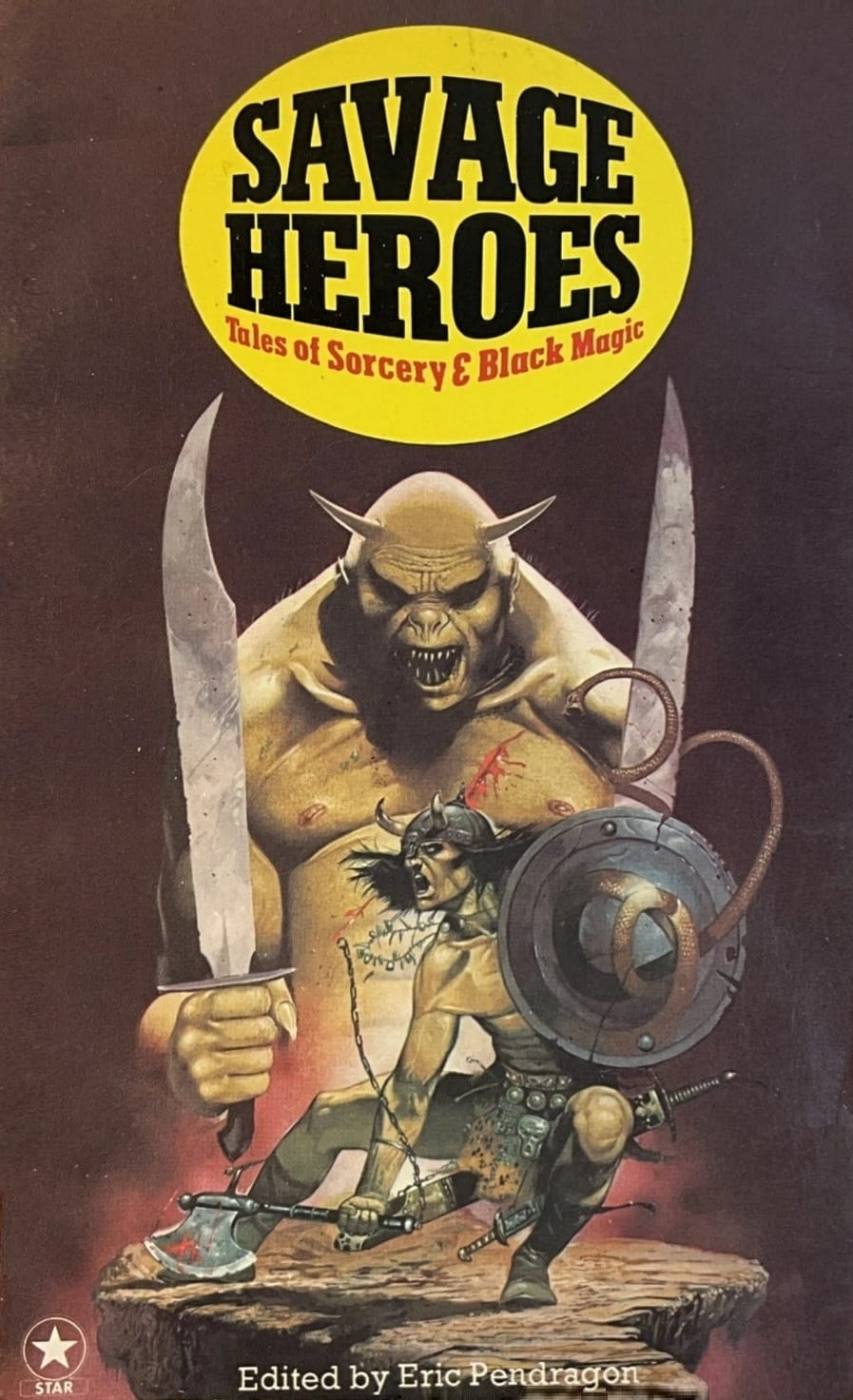
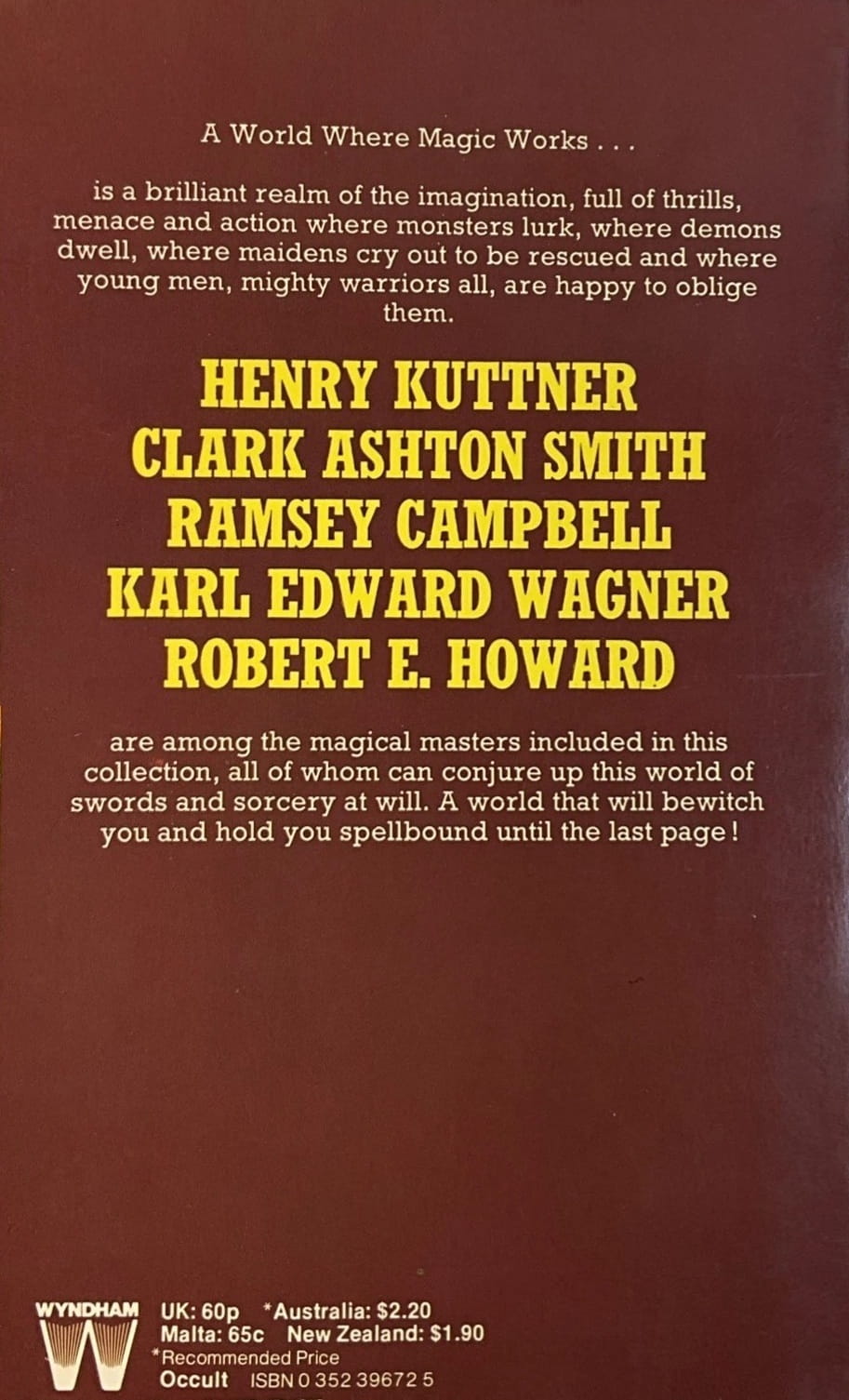
Savage Heroes (Star, February 1977). Cover by Les Edwards
A couple more Sword & Sorcery anthology reviews: first up is Savage Heroes (Subtitled Tales of Sorcery & Black Magic) (1977), from British Publisher Star, edited by Eric Pendragon and illustrated by the great Jim Pitts, who is still working today. The cover looks to have been done by Les Edwards, however.
It contains stories by C. L. Moore (Jirel), Henry Kuttner (Elak), Clark Ashton Smith, Clifford Ball, Ramsey Campbell, Daphne Castell, Karl Edward Wagner (Kane), David Drake, and Robert E. Howard. The REH tale is “The Temple of the Abomination,” a Cormac Mac Art tale.
[Click the images for savage versions.]
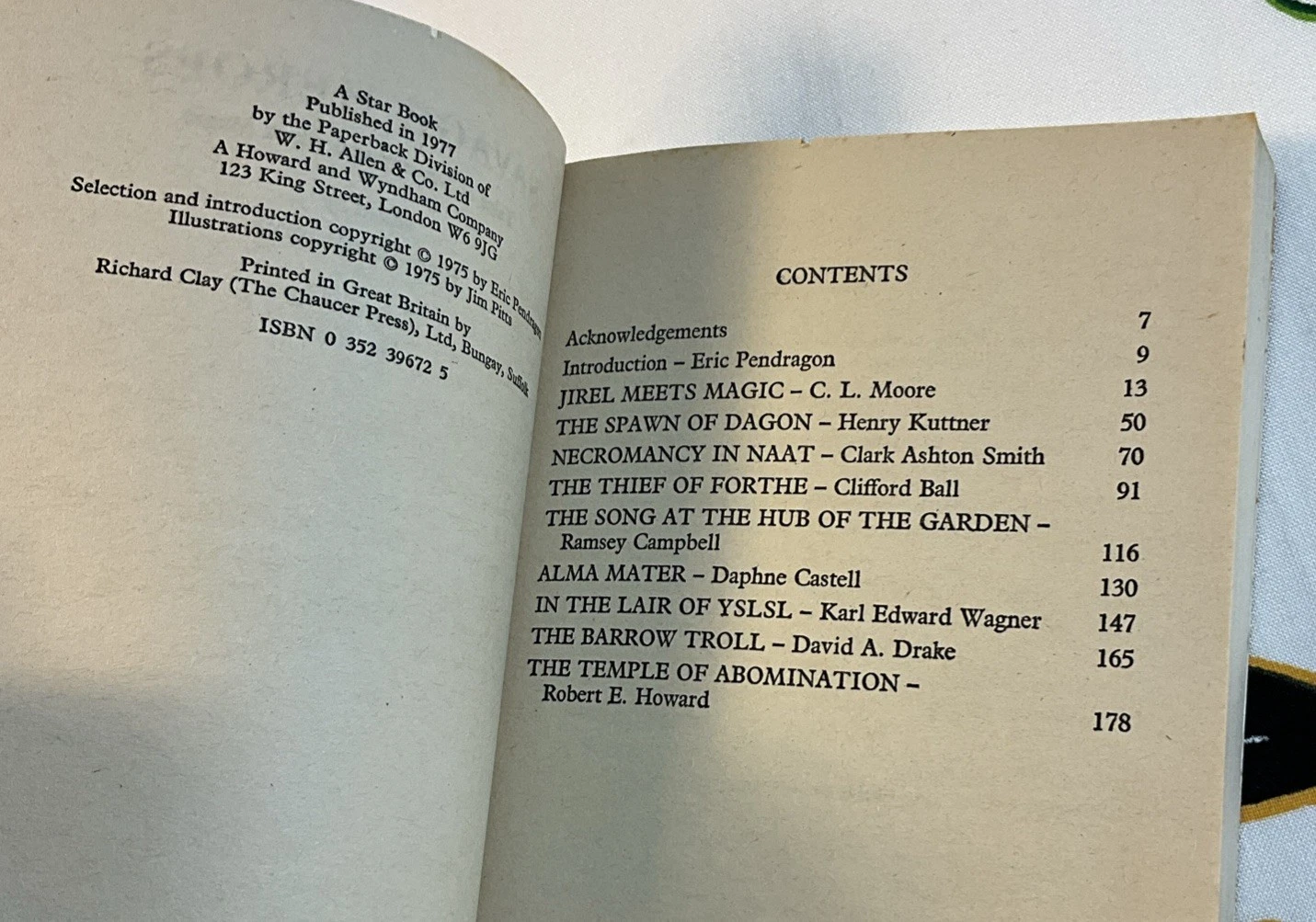 Savage Heroes Table of Contents
A solid collection, though probably not the absolute best stories by these authors. Drake’s “The Barrow Troll” is one of his better ones. I remember being disappointed a little in this collection because I had almost all these stories already in other collections.
Second up, Heroic Fantasy (1979), from DAW with a cover by Jad. Edited by Gerald W. Page and Hank Reinhardt. A much thicker collection than Savage Heroes and it scratched an itch the other didn’t because it was all new heroic fantasy stories (at the time).
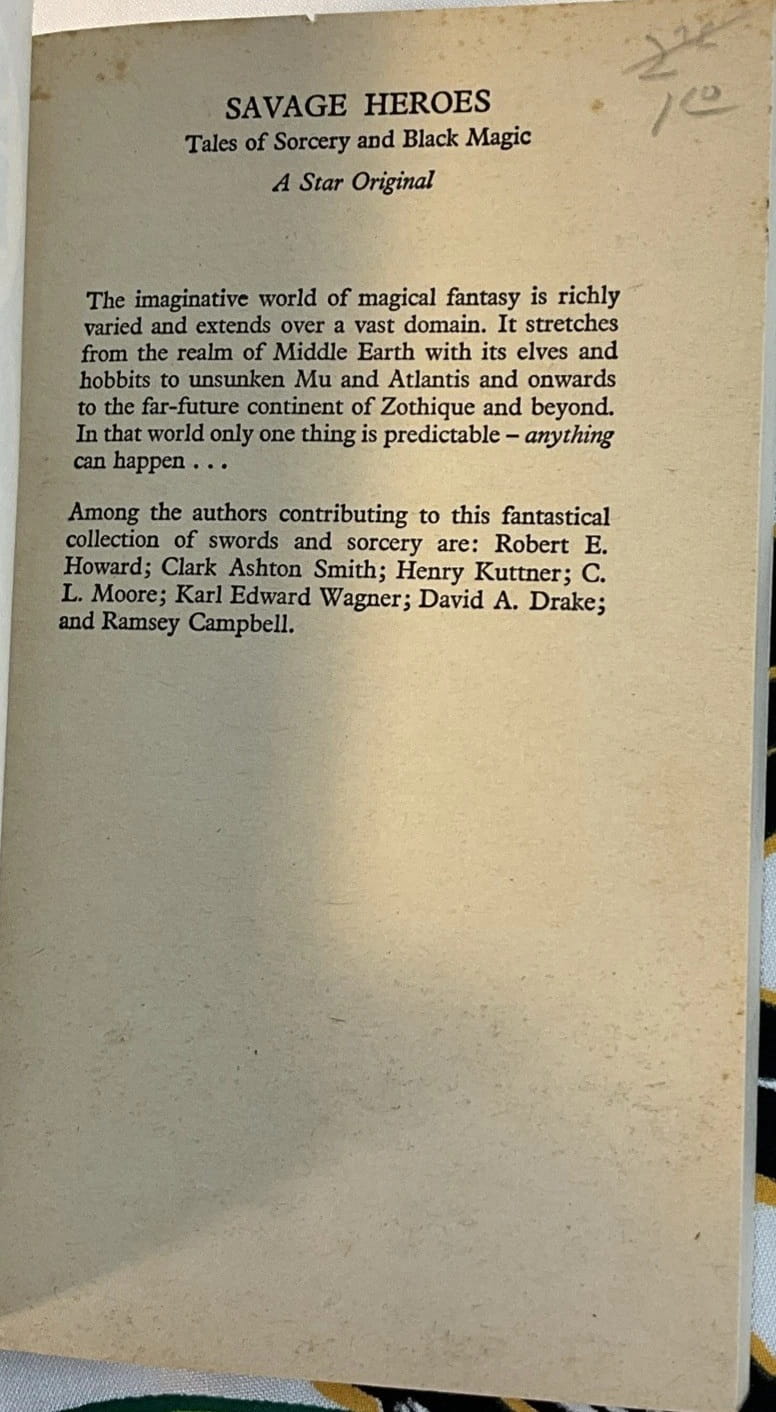
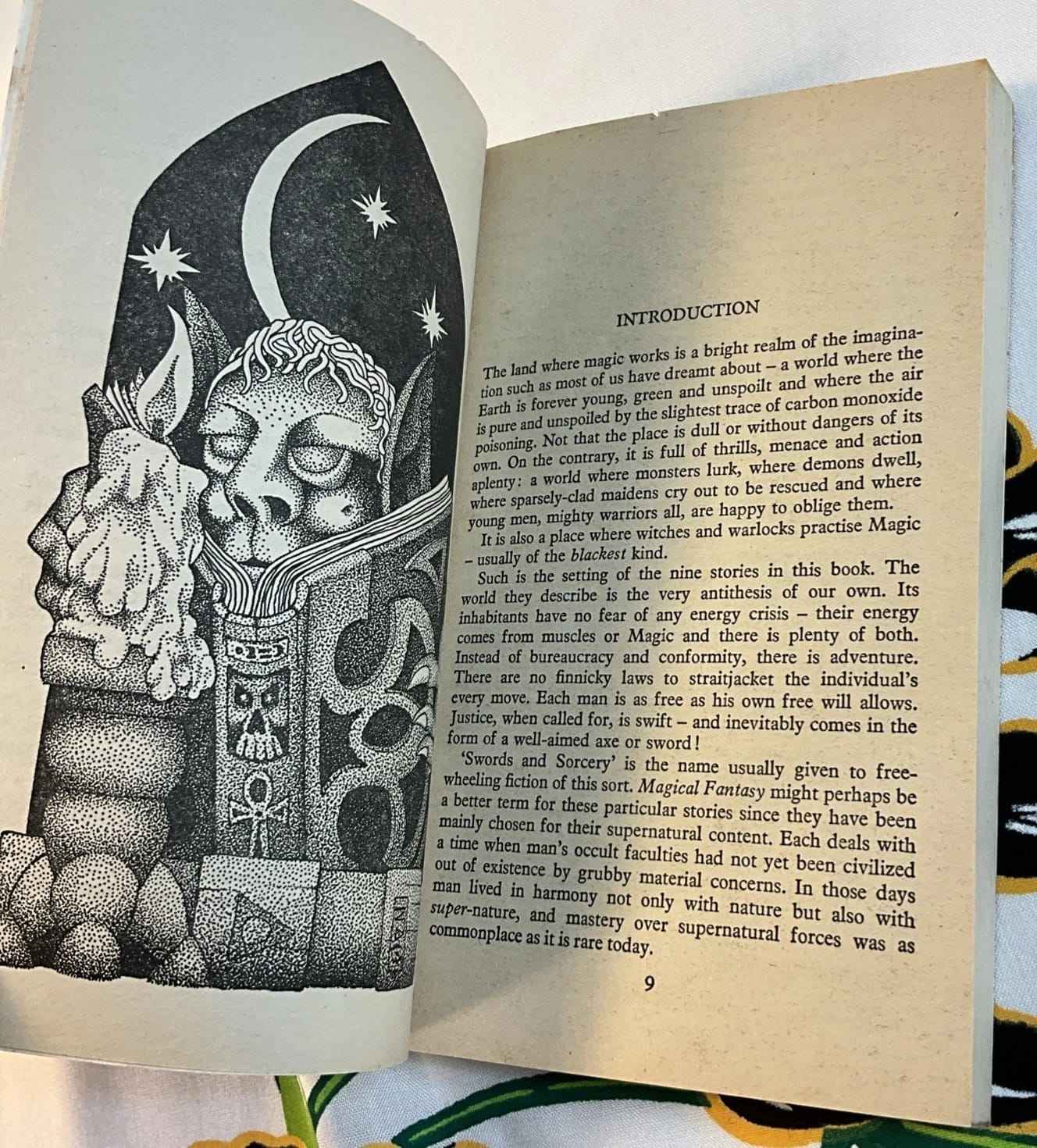
Inside cover and introduction for Savage Heroes. Illustration by Jim Pitts
It contains:
“Sand Sister” by Andre Norton (Witch World)
“The Valley of the Sorrows” by Galad Elflandsson
“Ghoul’s-Head” by Donald J. Walsh, Jr.
“Astral Stray” by Adrian Cole (Voidal Tale)
“Blood in the Mist” by E. C. Tubb
“The Murderous Dove” by Tanith Lee
“Death in Jukun” by Charles R. Saunders (Imaro)
“The De Pertriche Ring” by H. Warner Munn
“The Hero Who Returned” by Gerald W. Page
“The Riddle of the Horn” by Darrell Schweitzer
“The Age of the Warrior” by Hank Reinhardt
“The Mistaken Oracle” by A. E. Silas
“Demonsong” by F. Paul Wilson
“The Seeker in the Fortress” by Manly Wade Wellman (Kardios tale)
It also contained three nonfiction essays, which I liked: Commentary on Swords and Swordplay, Commentary on Armor, and Commentary on Courage and Heroism, all by Hank Reinhardt.
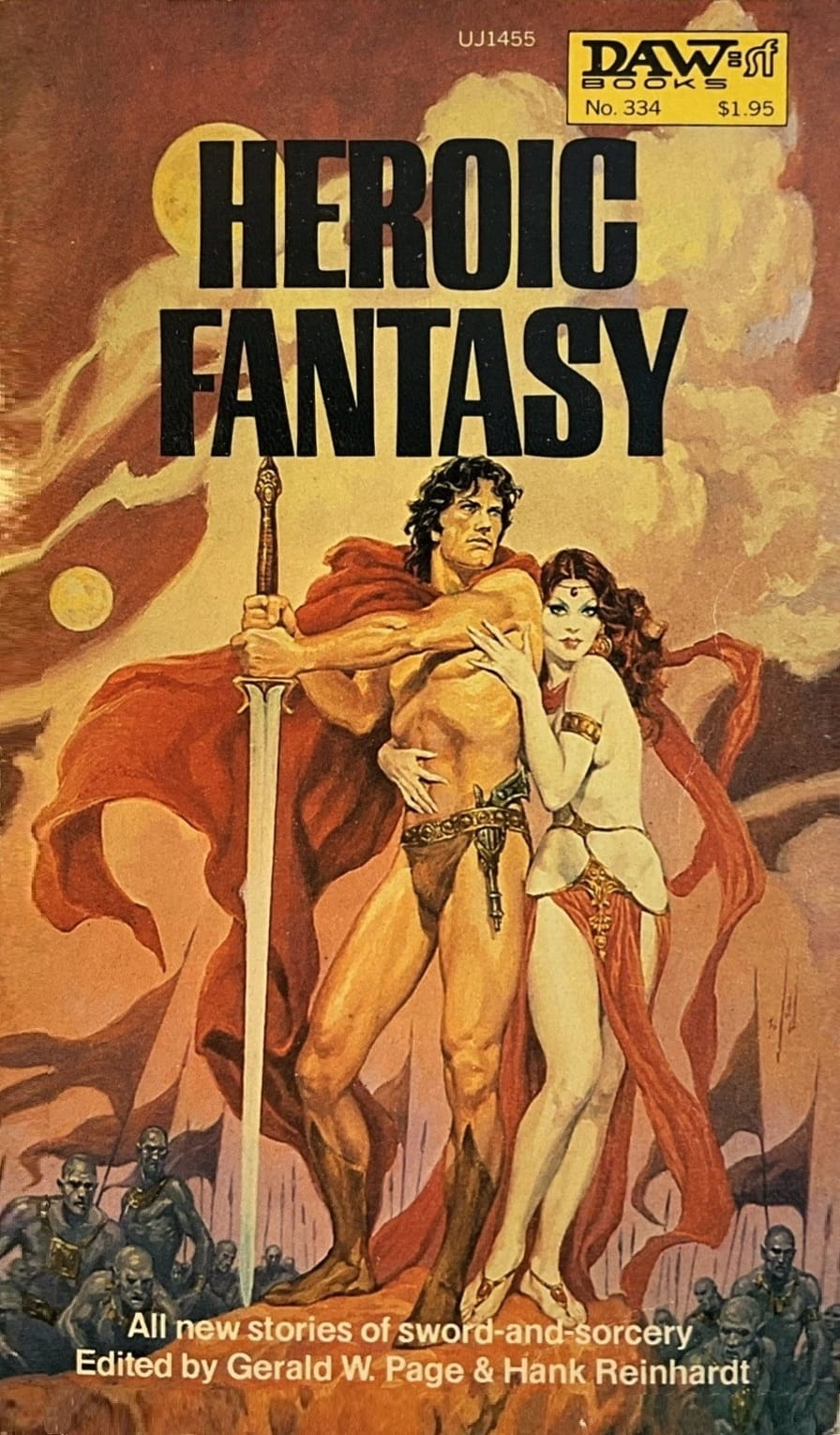
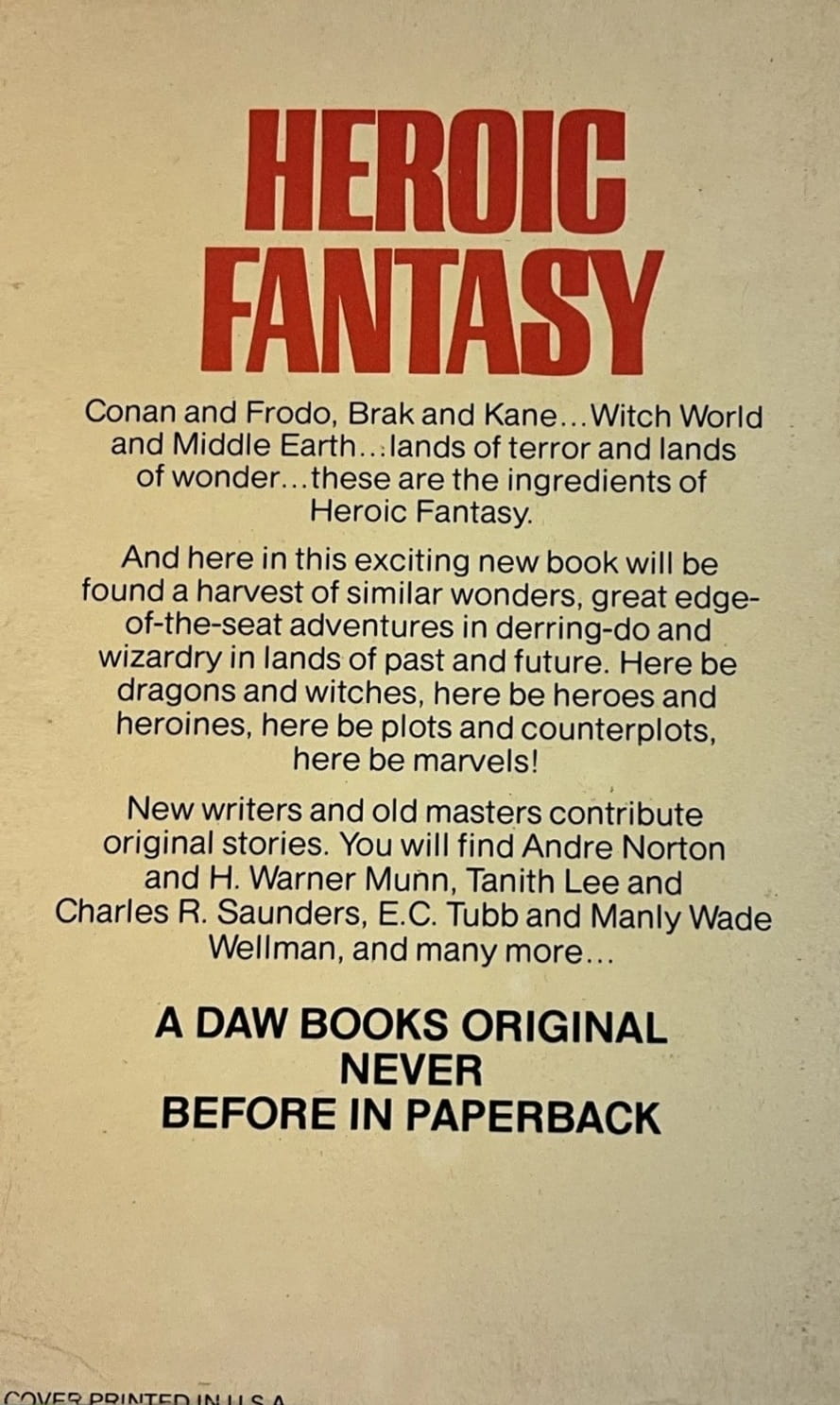
Heroic Fantasy (DAW Books, April 1979). Cover by Jad
This was my first introduction to Charles Saunders’ Imaro character and it was a dynamite story that made me an instant fan. I also particularly enjoyed the Gerald Page and Adrian Cole stories, but my favorite was E. C. Tubb’s tale. I’d read a lot of his Dumarest stories but this was Sword & Sorcery and I loved it. It was third in a series Tubb did about this character, “Malkar.”
The Malkar stories seem to have been gathered in print in 1999 in two volumes, Death God’s Doom and The Sleeping City, but the prices are pretty outrageous so I haven’t bought them. BTW, I thought the weakest story in the book was the ending tale by Manly Wade Wellman.
Charles Gramlich administers The Swords & Planet League group on Facebook, where this post first appeared. His last article for us was A Sword and Planet Quiz. See all of his recent posts for Black Gate here.
Categories: Fantasy Books
Is There Indeed a Change in the Air?
 Image by Gerd Altmann from Pixabay
Good afterevenmorn, Readers!
Since the release of Iron Lung, the independent film adaptation of the equally independent video game of the same name, I have been awash in articles, interviews and reviews about the piece. The algorithm has decided that that’s all I’ll get for now until the end of time. Well, that and general tarot readings, for some reason. I must admit, I have been following the story for a while, so it’s partially my fault. And it has also let me down the wonderful warren that is upcoming video game adaptations. And I want to talk about it.
Some of these are from games might all recognise – video games by the big studios that are or have been part of the cultural milieu for a while now – Mortal Kombat, Sonic the Hedgehog, Street Fighter, Silent Hill (the return to which released early this year and was not well-received. I did not watch it, so I can’t comment). The list goes on.
With the exception of Mortal Kombat (the most recent movie was meh, but I am absolutely going to go see this next one, due out in May. I think attaching Karl Urban to the lead role, and following Johnny Cage will make for a fun, if ultimately frivolous movie-going experience), I’m not particularly excited about any of these releases. I am incredibly excited for others, though. Ghost of Tsushima was an excellent game, with a brilliant story that I cannot wait to share with my non-gaming father. I will be at the cinema when it is released. And I will be dragging him with me. I am equally excited about God of War. The original games were fun nonsense, but the reworking of Kratos and his story in the 2018 game (and on) was a brilliant piece of storytelling as well as being a fantastic game. I will be there will bells on whenever that series is released (2027 is the projected year, with filming to begin in March of this year).
Both of those games rank among my top five games I’ve played.
I have to admit, my excitement is a little tempered. Not all video game adaptations have been much good. In fact, very few of them are, I feel. But that is changing. The Last of Us has proven that video games can become really brilliant television shows, giving me hope of God of War. While not for everyone, I thought Iron Lung was excellent, and with the director attached to Ghost of Tsushima (Chad Stahelski of John Wick fame), I’m optimistic about that film being something as special as the game was.
The point is, good adaptations of video games are possible. They key here, I think, is to respect the original games and their stories. Not all film makers can or will. But I’m certain that as long as they do, the adaptations will be good.
That’s not really why I’m here, though. I’m here to cheer on the independents. A surprising number of these promised adaptations are of independently produced video games; passionate work by passionate people who don’t have the benefit of recognisable studios or distributors behind them. This is glad tidings for me; not because I’ve played these games, necessarily, but because it proves that if people are left alone to craft what they want to, and not what some suit relying on sterile numbers demands, excellent stories can and will be produced. There is hope for story-telling out there; in every medium.
So, here is a couple of independent video games (other than Five Nights at Freddie’s, which is another independent success story) that have been or will be given adaptations that I am thrilled to see, even if I may not check them out:

First up is The Exit 8 (also sometimes just called Exit 8). Developed and published by Kotake Create/Kotakenotokeke, this game is essentially a spooky spot the difference. Seen through the player’s perspective (first person), the player is given simple instructions: If everything looks normal or is the same as before, continue to the next level/exit. Otherwise, turn back. The differences can range between jump scares to just the extremely creepy. The game is simple enough, but very atmospheric. I did not think it would be enough for an adaptation, but I was mistaken. It was given one. Directed and co-written by Genki Kawamura, the film released in Japan August of last year. And it is coming to cinemas this year. Distributed by Neon, it will be released in April.
I think I will make this one my April date-for-one movie. I’m not a horror girly by any stretch, but this looks to be more psychological, and I’m keenly interested in seeing how they managed to make this simple game into a film.

Phasmaphobia is another independent game (by British independent studio Kinetic Games) that has rumours of an adaptation surrounding it. I say rumours because although it’s been reported that Blumhouse has acquired the rights for adaptation, development hell exists, so until it starts filming, I will remain hopeful but realistic. Designed to be a multi-player co-op game, the team is hired to investigate haunted locations and, depending on the evidence they accrue, identify the thing that is haunting the place. Presumably so that someone else can go in to perform the correct exorcism? I don’t know. The players are not expected to exorcise the thing, just identify it.
I have not played this game, but is has given rise to one of my favourite gaming moments that I have ever had the pleasure of watching:
It still makes me laugh. Really hard.
While a fun game to play, there really isn’t a defined story in this one; just a bunch of missions/jobs. Still, it is easier is see how it would be adapted into a film; provided that the writers are good (there has been a writing problem in films of late. Perhaps I’ll rant about that in a later post, if I’m feeling cranky enough about it). It is also a much more traditional horror, so I might give this one a miss when it comes out. This is the kind of thing that would give me nightmares. If the story can manage to be compelling enough, however, maybe I’ll just suck it up. I’m undecided. The script will be everything here.
Perhaps the biggest independent title being given an adaptation is the 2025 smash hit RPG game Clair Obscur: Expedition 33 .
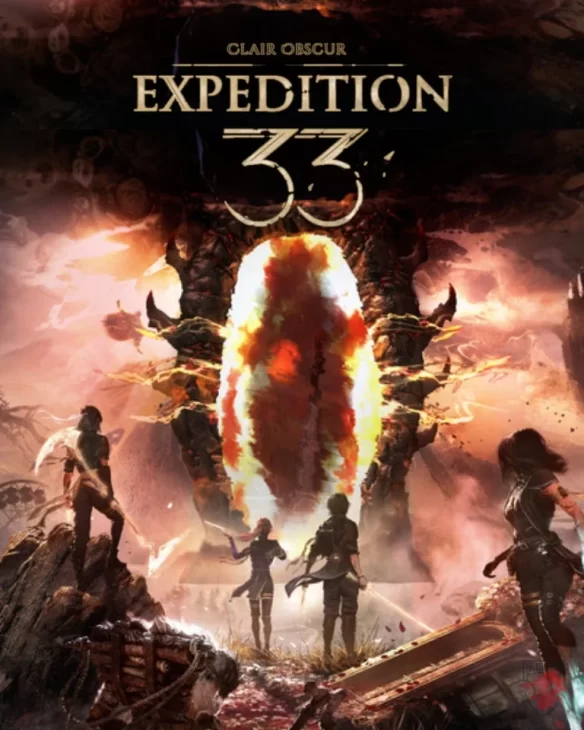
Developed by French studio Sandfall Interactive, this game made waves in the scene. It won nine awards, including Game of the Year in the Game Awards 2025, was nominated for a slew of others in other awards, winning five of their eight nominations, including Game of the Year again for the Academy of Interactive Arts and Sciences. This is one I have not yet played (though I really want to), but I have heard nothing but exceptional things from the gamers I have in my life. I don’t know much about the plot of this one. I have been trying very hard not to learn too much about it, because I want to discover it for myself when I finally do get to play it. You know, when I can finally afford a PS5.
Anyway, I’m really excited about this one, just because I’ve heard so many good things about the game.
This is just a few examples of video game adaptations that are in the works. Granted, that list is still dominated by the big name games from the big game studios, but the prevalence of independent games getting seen and (dare I hope) respected by those who are adapting the stories from video games. While the opportunity to make bank is still the biggest deciding factor, I feel, I am also seeing an openness to those stories that capture the imagination, and a willingness to listen to voices that don’t have the biggest budgets behind them. This lets me hope that some people do still care about craft and story, and not just their wallets.
It’s heartening.
Are there any adaptations you’re particularly looking forward to? I’d be interested to hear. I know I’ve missed many.
When S.M. Carrière isn’t brutally killing your favorite characters, she spends her time teaching martial arts, live streaming video games, and sometimes painting. In other words, she spends her time teaching others to kill, streaming her digital kills… and sometimes relaxing. Her most recent titles include Daughters of Britain, Skylark and Human. The Timbercreek Incident is free to read on Wattpad.
Categories: Fantasy Books
Cape Fear: John D. MacDonald is BACK!!!!!
 I have not been active in the John D. MacDonald world for awhile. Time is limited, and interests are many. I recently jumped down the Columbo rabbit hole (I wrote about him back in 2016, and I’ve got a big project in the works for 2027). And I’ve been watching that seventies show, Emergency!. That holds up way better than you might expect!
Which is all to say, I actually exclaimed in joy last week when I discovered a new ten-episode streaming series of Cape Fear is coming!! (You can see I’m still excited!). It will air on Apple TV, every Friday from June 5 through July 26.
Hopefully you’ve read some of my John MacD writings here at Black Gate. I even have a landing page where I collected my writings on him. I was late to the Robert E. Howard party, and Two-Gun Bob has risen to number two on my all-time favorite writers list. But John D. MacDonald is the one author he hasn’t passed. And I don’t think he ever will.
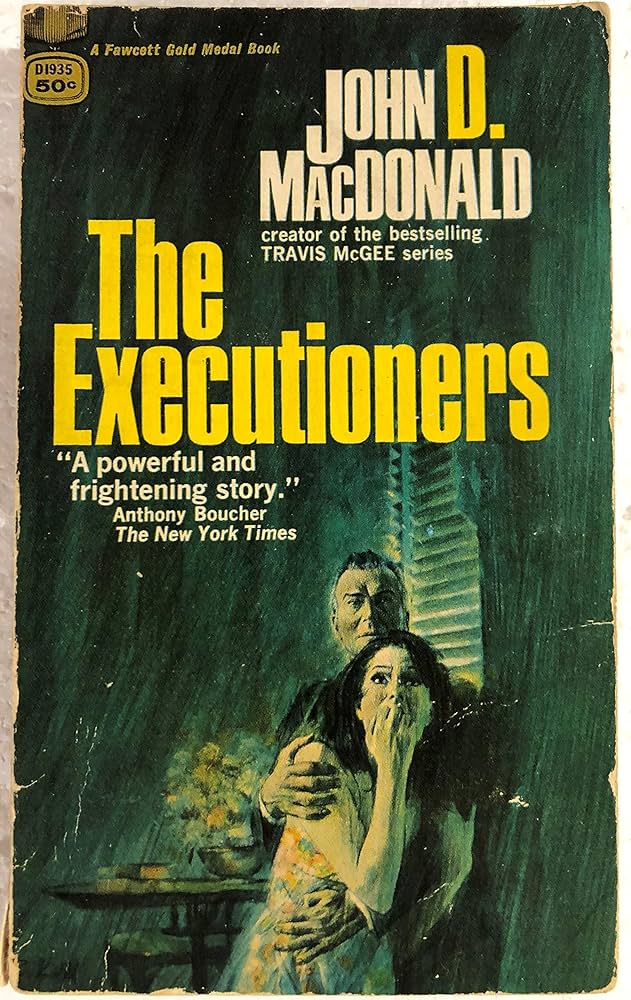
THE EXECUTIONERS
There was a writers community in Sarasota, Florida, in the fifties. MacDonald moved there in 1951, and the dean of the group was MacKinley Kantor, who wrote the Pulitzer Prize winner, Andersonville. He became JDM’s friend, and mentor. In 1957, at one of the gatherings, Kantor was needling MacDonald about the quality of his writing. All he wrote were mysteries and other paperback trash. Why didn’t he write a real book?
MacDonald got mad. He bet Kantor $50 that he would write a book within thirty days. A book that would be serialized in magazines, be a book club selection, and be turned into a movie. Kantor accepted.
MacDonald had written almost two dozen books, mostly paperback originals. MacDonald was popular, but the books were of a type. British critic and novelist Julian Symons later called his books “…production line efficient fast-moving American thrillers.” But he also said, “..there are interesting ideas about the nature of corruption and the increasingly mechanical form of life in America.”
Kantor saw that MacDonald had more in him. Something that would stand out from the good but similar book after book (I like what he was writing, but I’m also not a Pulitzer Prize winner, either).
 There were a a few notable thriller writers, like Dorothy B. Hughes (In a Lonely Place), David Goodis (Dark Passage), and of course, Cornell Woolrich. I think of it as these works as the transition from Hardboiled to Noir (this isn’t the place for THAT deep discussion).
MacDonald took the noir thriller and moved it from urban streets to the suburbs. And he did it with The Executioners. It’s a quick, absorbing, scary read. Thrillers use suspense, not horror, to induce fear. Alfred Hitchcock was the master of this. The building fear and suspense in The Executioners bears witness to MacDonald growing as a writer. Kantor was correct.
The book is readily available in paperback, digital, and audio form. Though, under the title Cape Fear.
CAPE FEAR (1962)
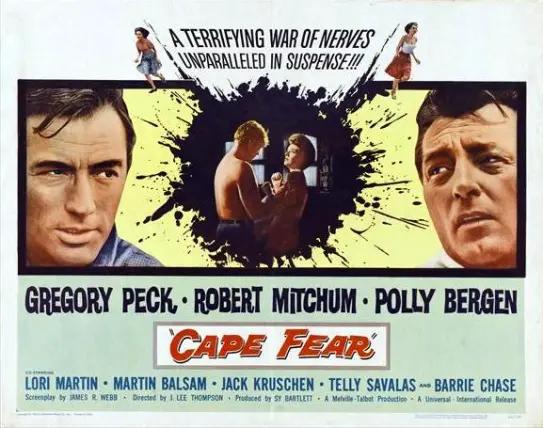
That’s right – it became a movie, which was part of JDM winning his bet with Kantor. Gregory Peck (Sam Bowden) and Robert Mitchum (Max Cady) starred in a 1962 big screen effort (88% on Rotten Tomatoes). I’ve seen this once, and it’s a good movie. Director J. Lee Thompson directed The Guns of Navarone, and two of the Planet of the Apes movies. He masterfully builds up the tension and the suspense, step-by-step.
And Robert Mitchum is a dastardly villain. If you like black and white thrillers, this is one that you should check out. When you’ve got Peck and Mitchum at the top the bill, you’re going to see some damn good acting. Peck was a huge star, and he co-produced it through is own production company. He was a fan and wanted this movie to be made.
I’m on record as a HUGE JDM fan. But I’m not a fanboy, and I’ve called him out in writing for his ‘bitter old man’ intro to Norbert Davis’ works. Likewise, he was snobbish towards this movie.
MacDonald was like many writers who disapprove of adaptations of their works. “…a dreary moving, I mean unmoving picture.” And “…Artistically, the movie warped the concept of the novel.”
In fact, he holds forth rather obnoxiously in a 1965 letter about ‘artistic control in other mediums.’ He’s not the first nor the last author to look down on what other people did with his work. Clive Cussler (who I love) was another. Whatever.
CAPE FEAR (1991)
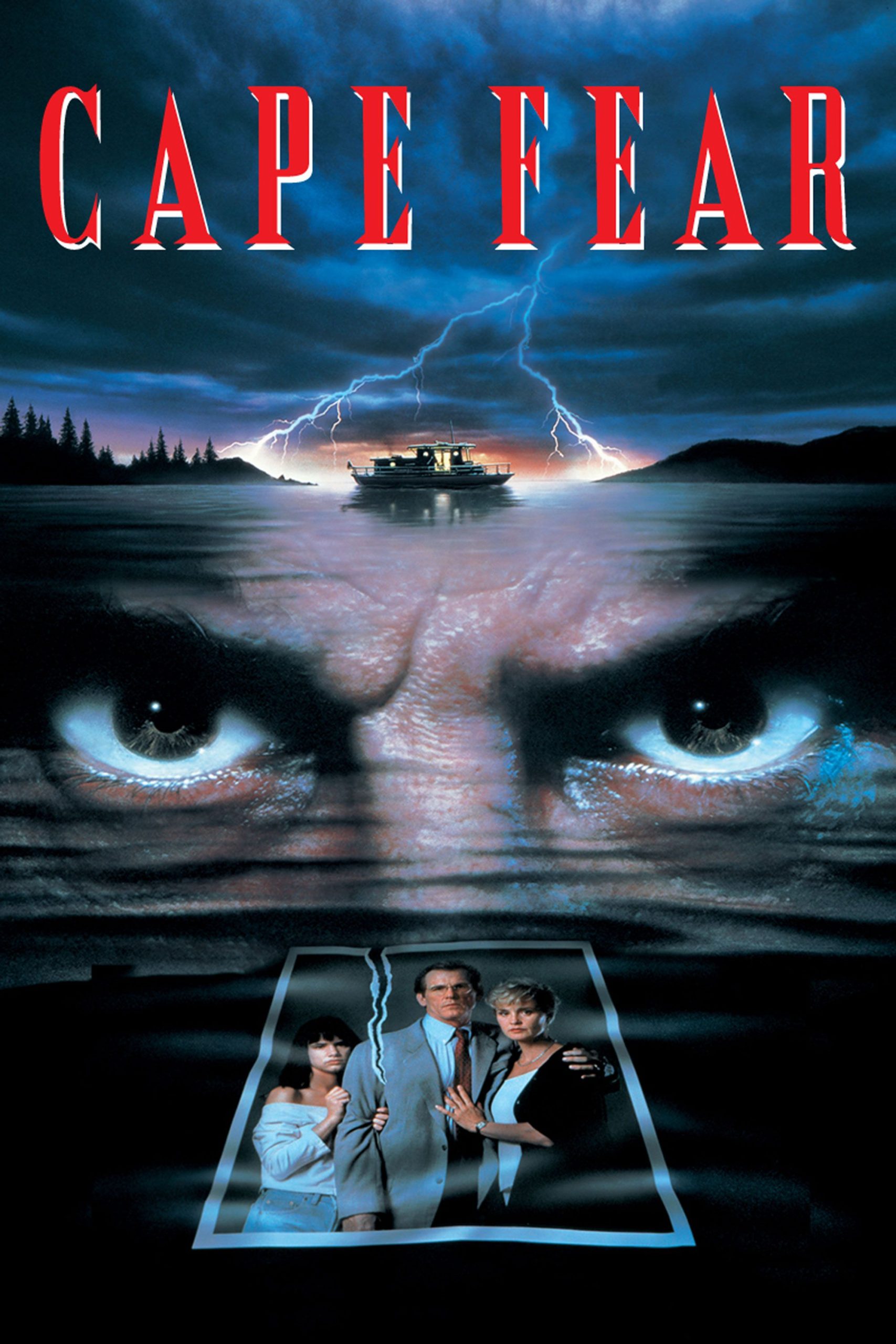 Martin Scorsese is one of the legends of our lifetime. 1990 saw the release of Good Fellas. The following year, he directed the remake of a 29 year-old black and white movie (Steven Spielberg was an uncredited executive producer).
And in a brilliant casting decision, Robert DeNiro was selected for the Mitchum role. Nick Nolte was perfect to succeed Peck. But few who have seen this movie can forget DeNiro’s masterpiece of evil.
And an 18 year-old Juliette Lewis launched her career to star level.
Scorsese included Peck, Mitchum, and also Martin Balsam, from the prior version, which was a wonderful move. If you’ve never seen this movie, you’re missing out on a classic thriller. Proving that box office results don’t tell the whole story, it finished #18 in domestic gross, about $2 million behind Kindergarten Cop (ugh). But with Silence of the Lambs, and Sleeping With the Enemy, it was a good year for the suspense thriller.
If you’ve seen Cape Fear, you know what a standout this is. I’m not gonna reveal spoilers. Other than to point out that there is one significant difference between the book and the two movies. In the novel, the final confrontation takes place at a farmhouse. It works fine in the book. And I wouldn’t think about it being anywhere else.
Except I do think about it being elsewhere. Because the 1962 movie moved it to a houseboat. The remake adds a terrific storm to that. And visually, the houseboat is a better choice than the farmhouse. The finale of the DeNiro movie is absolutely spellbinding to watch.
SUMMER 2026
Scorsese and Steven Spielberg are executive producers of the new Apple+ series. That is a high-level title. Think a creative and fiscal role. And sometimes it’s a financial incentive or reward. It’s not uncommon for someone who was involved in a movie to be given that credit when it is remade.
The Producer actually manages the movie day-to-day. So, this isn’t Scorsese and Spielberg making a movie together, one directing on set. But having said that, it’s from Amblin Television, which Spielberg founded as part of his movie-making empire. Given their history with the 1991 film, I think it’s safe to say they were involved in how this project was developed, and what we’re gonna see on screen.
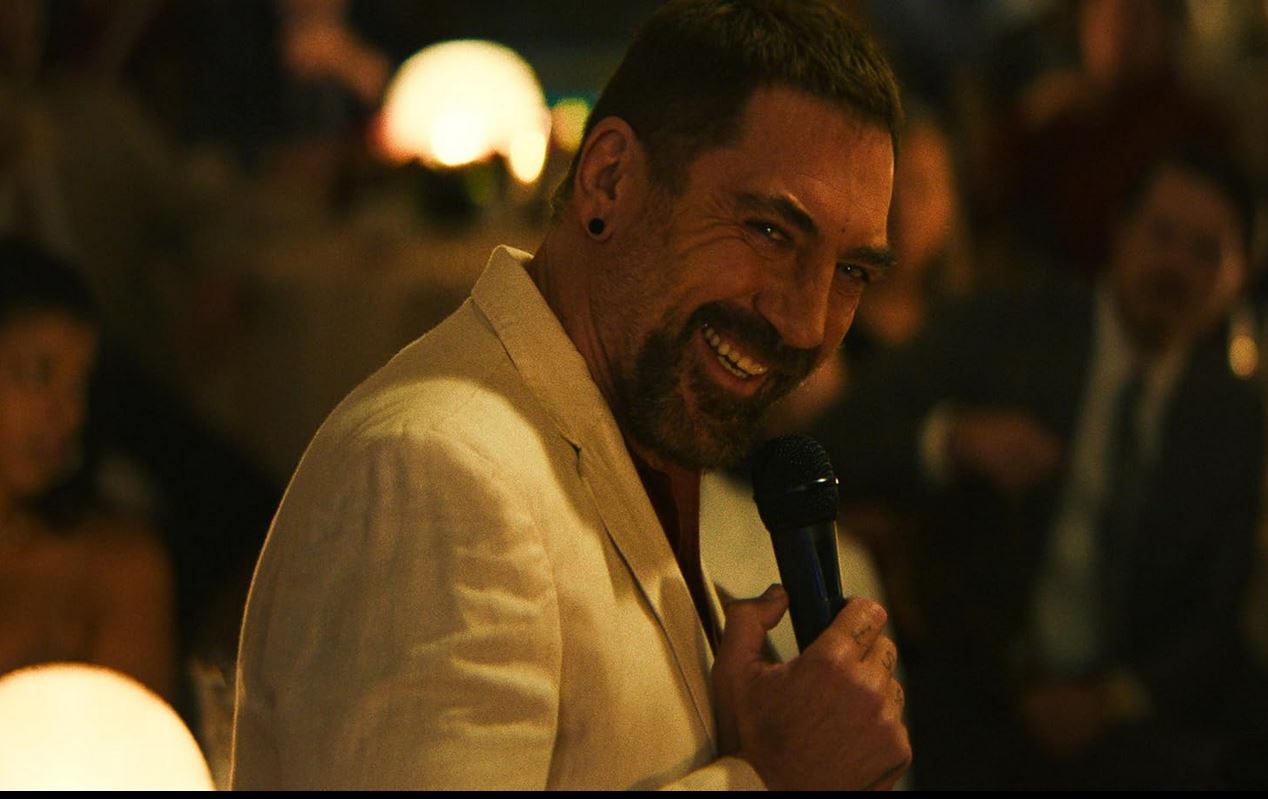
 Amy Adams is touted as the star, which is interesting. Anna Bowden is Tom Bowden’s wife. That’s at best the third main character. Jessica Lange had the part in 1991. Javier Bardem is Max Cady. It’s been nineteen years, but the bad guy from No Country for Old Men, certainly qualifies him for this part. Interesting she’s the lead over him. Patrick Wilson is Tom (not Sam) Bowden. I’ve seen him in things like Aquaman, but I had to look him up. No clue on name alone. It’s not Gregory Peck, or Nick Nolte, star power.
I don’t know much about the new production. But I’m sure as heck looking forward to it. Good book, good movie, great movie. That’s a pretty good pedigree – though no guarantee of success of course.
There have been quite a few MacDonald adaptations over the years, but none since 1993. That was Linda, based on Border Town Girl, and starring a sultry Virginia Madsen. For a guy who reportedly sold 75 million books before he died (in the pre-Internet age), he’s been forgotten. I am really excited to see this project.
Christian Bale was cast as Travis McGee for The Deep Blue Goodbye, when he tore his ACL. By the time things shook out, he couldn’t do the Leonardo DiCaprio project, and it was scrapped. They had even made a Busted Flush and shipped it to Florida for filming.
You can read this link to see what I think about MacDonald’s writing. I SO hope this is a good version.
And all of my JDM-related posts are here at this page.
And one more note: The Simpsons did a brilliant homage, Cape Feare, with Sideshow Bob after Bart. I will NEVER forget Bob explaining away his ‘Die, Bart, Die’ chest tattoo as just German for ‘The, Bart, The.’
 Bob Byrne’s ‘A (Black) Gat in the Hand’ made its Black Gate debut in 2018 and has returned every summer since.
His ‘The Public Life of Sherlock Holmes’ column ran every Monday morning at Black Gate from March, 2014 through March, 2017. And he irregularly posts on Rex Stout’s gargantuan detective in ‘Nero Wolfe’s Brownstone.’ He is a member of the Praed Street Irregulars, and founded www.SolarPons.com (the only website dedicated to the ‘Sherlock Holmes of Praed Street’).
He organized Black Gate’s award-nominated ‘Discovering Robert E. Howard’ series, as well as the award-winning ‘Hither Came Conan’ series. Which is now part of THE Definitive guide to Conan. He also organized 2023’s ‘Talking Tolkien.’
He has contributed stories to The MX Book of New Sherlock Holmes Stories — Parts III, IV, V, VI, XXI, and XXXIII.
He has written introductions for Steeger Books, and appeared in several magazines, including Black Mask, Sherlock Holmes Mystery Magazine, The Strand Magazine, and Sherlock Magazine.
You can definitely ‘experience the Bobness’ at Jason Waltz’s ’24? in 42′ podcast.
Categories: Fantasy Books
My Top Thirty Films, Part 3
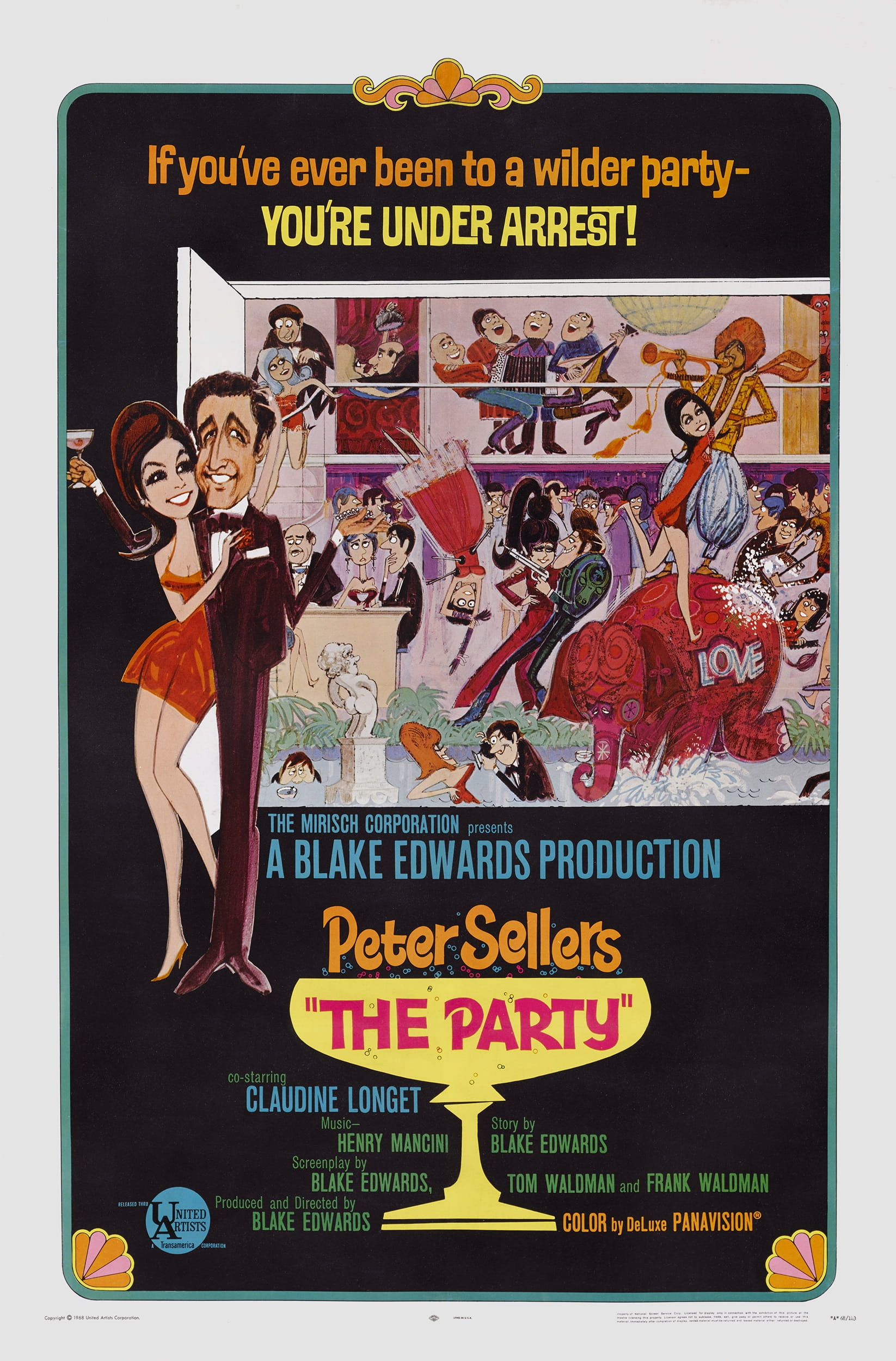 The Party (United Artists, April 4, 1968)
Following the excellent Starship Troopers feedback last week, here’s a selection that might be a little less controversial.
Kidding.
The Party (1968) Who’s in it?Peter Sellers, Claudine Longet, Steve Franken, Denny Miller
What’s it about?Hrundi V. Bakshi (Sellers) is an up and coming Indian actor who dreams of the big time. Unfortunately, being prone to mishaps leads to him blowing up a very expensive film set, and he is fired on the spot. Due to a clerical error though, he ends up on the guest list to a party being thrown by the film’s producer, and he attends in the hope that he can apologize in person. Through no fault of his own, Bakshi stumbles through one surreal incident after another, ultimately leading to the partial destruction of a Hollywood mansion, and a blossoming romance with a young French starlet.
Why do I love it?A perennial family favorite and endlessly quotable; “Birdie num num,” and “I would have been most disappointed if you had not crushed my hand,” are a couple that we use in any given situation.
Of course we should address the painted elephant in the room — Sellers is playing an Indian actor, complete with brown-face and head gestures, so incredibly taboo in this day and age, and there’s nothing I can say to defend it. I will venture one small snippet though with the fact that this film was a huge hit in India, and a favourite of the then PM, Indira Gandhi, who was prone to quote it herself. So there’s that.
Moving on, Sellers’ performance aside (he is, of course, Jacques Tati-inspired perfection), for me the star of this daft slice of celluloid is Steve Franken, who plays Levinson, the increasingly inebriated server. While Levinson is keeping the party guests lubricated, he is also secretly draining any leftovers he happens upon, and is soon three sheets to the wind. Franken’s physical comedy chops are on full display here as he staggers and weaves around the house, baffling guests and infuriating his boss who finally snaps and tries to throttle him in the kitchen, a tableau only revealed to us in a living triptych as the kitchen door swings open and shut during the struggle.
I can’t forget the beautiful score by Henry Mancini either, especially the dreamy song ‘Nothing to Lose’ wistfully sung by Longet at the midway point. A sheer delight.
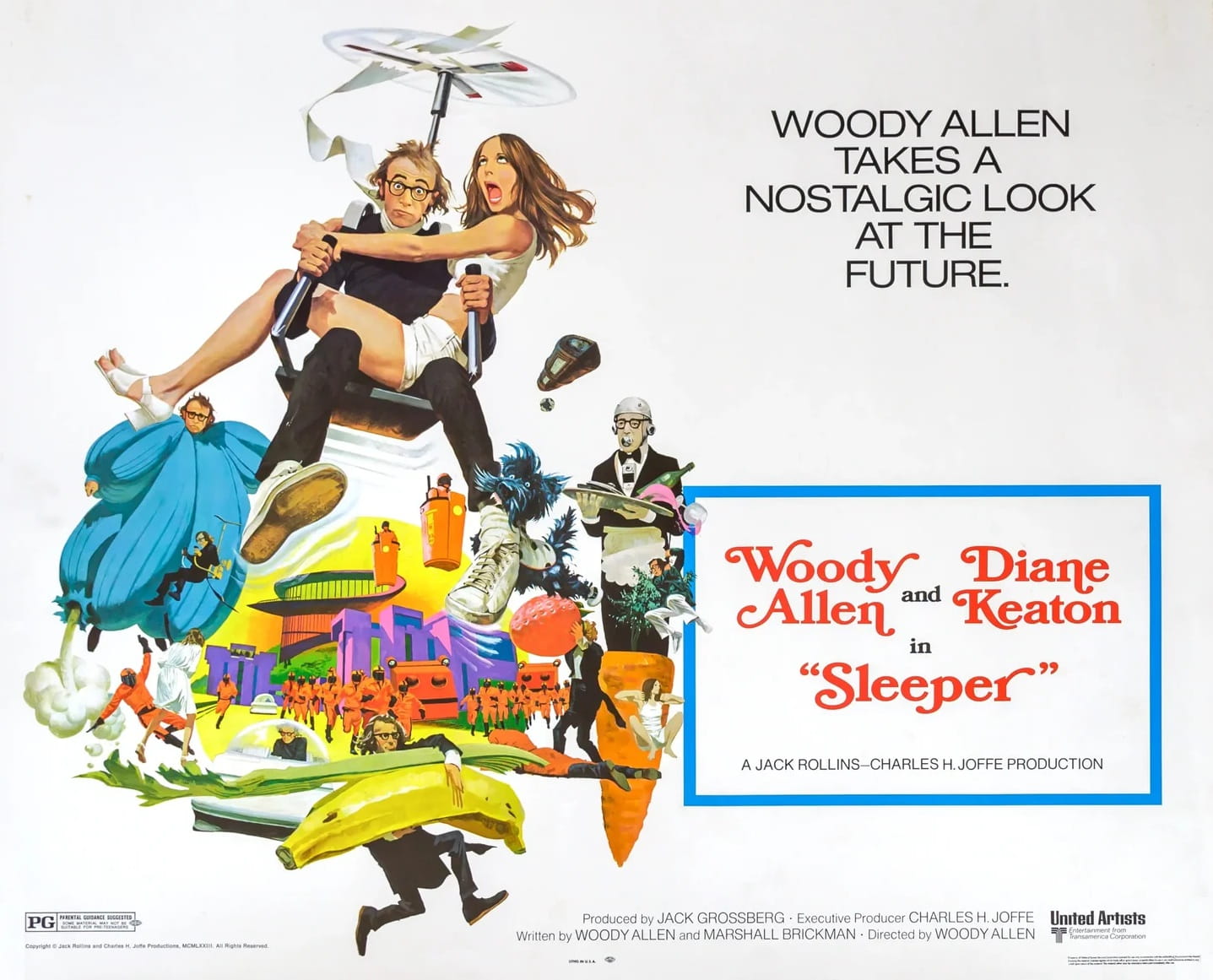 Sleeper (United Artists, December 17, 1973)
Sleeper (1973)
Who’s in it?
Sleeper (United Artists, December 17, 1973)
Sleeper (1973)
Who’s in it?
Woody Allen, Diane Keaton, Jon Beck, Don Keefer
What’s it about?Miles Monroe (Allen), a mild-mannered owner of a health food store, goes into hospital for a routine operation, which goes wrong. He is placed in a cryogenic chamber and forgotten about, only revived 200 years later when rebel scientists need an unidentifiable citizen to infiltrate the tyrannical government in an effort to bring down their ‘Leader.’ Monroe is forced to go on the run after the rebels are captured by the police state, and ends up entwined with socialite slacker, Luna Schlosser (Keaton). Through a series of misadventures they both end up back with the rebels, where Luna falls for the rebel leader, Erno (Beck). After accidentally foiling the government’s efforts to clone the Leader from his only remaining body part, his nose, Monroe and Luna go back on the run again, knowing that staying with the rebellion would only lead to more political power grabbing.
Why do I love it?Speaking of questionable films and filmmakers, if I found it hard to separate the artists from their art then I wouldn’t have read half the books I have, so I have no problem shoving a Woody Allen comedy onto this list.
Sleeper is one of a trio of his early films that I adore (the others being Bananas (1971) and Love and Death (1975)), and it’s the Allen film I return to time and time again. I’ve seen other reviews of Sleeper describe it as Allen’s most Chaplin or Keaton-like, and it’s hard to disagree. The physical comedy, running around, balancing on a ladder, certainly channels Buster Keaton at his best, and he reserves the Charlie Chaplin influence for close-ups to great effect, but it’s not all fighting off sentient puddings or slipping on genetically mutated banana peels. Allen peppers the script with his usual wry observations and self-deprecation and, as was his wont in the early films, usually ties it all back to sex (or lack of it).
It’s the physical comedy for me though; the hapless police and their useless weapons, the flying machine (which made me laugh like a drain when I contemplated him being stuck, rotating in a tree’s branches until the battery ran out), and the ‘Orgasmatron’ plus bonus ‘sex orb’. Diane Keaton showed what a brilliant comedian she was, holding her own in improvised scenes and perfecting the vacant stare, and Allen’s jazz soundtrack is to die for.
Also, did you ever realize that ‘God’ spelled backwards is ‘dog’?
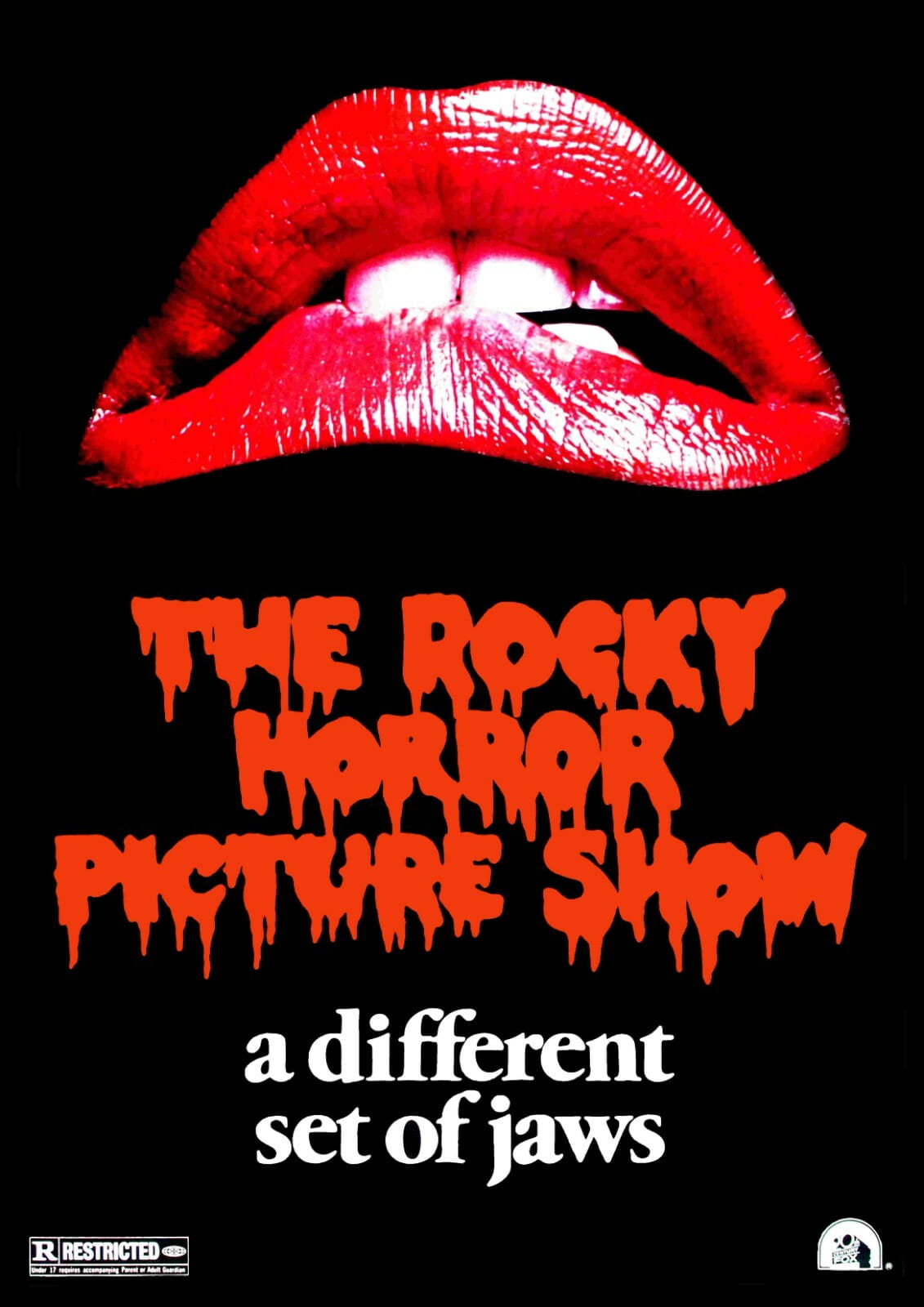 The Rocky Horror Picture Show (20th Century Fox, August 14, 1975)
The Rocky Horror Picture Show (1975)
Who’s in it?
The Rocky Horror Picture Show (20th Century Fox, August 14, 1975)
The Rocky Horror Picture Show (1975)
Who’s in it?
Richard O’Brien, Tim Curry, Susan Sarandon, Barry Bostwick
What’s it about?An innocent young couple, Janet Weiss (Sartandon) and Brad Majors (Bostwick) are on their way to their university professor’s home to celebrate their new engagement when their car suddenly breaks down in a terrible thunderstorm. They run to the closest house in the hopes of finding a phone, but this house is inhabited by an assortment of glorious weirdos who appear to be dedicated to partying and free sex. This throng is led by the fabulous Dr. Frank N. Furter (Curry), a transvestite scientist in the process of building the perfect man. As Brad and Janet try to survive the night, their innocence is shattered by the highly charged energy of the place, and they both undergo sexual awakenings thrust upon them by the aliens who run the place. Hijinks ensue.
Why do I love it?I’m not a fan of musicals, although I make an exception for this one (and Little Shop of Horrors (1986)), purely because everyone seems to be having a lovely time, and the lyrics are hilarious. I saw Rocky Horror in 1983 at a good age, 16, when teens are legally obliged to be discovering who they really are, and it turned out that I was a kid in love with Susan Sarandon who rather enjoyed wearing fancy clothes to the subsequent stage productions I took myself off to. Confusing times!
Still, the main reason I adore this film is, of course, Tim Curry. I had seen him as the Pirate King in The Pirates of Penzance one year earlier and his stage presence, let alone his astonishing voice, was still fresh in my mind. What a whiplash when I saw him not as an overtly rogueish ne’er-do-well, but as a maniacal, fragile, highly sexual ‘sweet transvestite.’ Cue more confusion for teenage me.
Curry is hypnotic, and as much as I enjoy all the preamble and set-up at the start of the film, when I watch his stomping high heel descending in the elevator I know I can finally settle in and let myself go with the flow. I watched it again recently after quite a break, and it truly felt like slipping on a comfortable old pair of fishnets. Ha! Take that, slippers. The songs were as fresh as ever (my personal favourite is the beautifully haunting ‘Over at the Frankenstein Place’), the frantic direction was energetic and subversive, and it still made me feel like I shouldn’t be watching it. Time to show my kids.
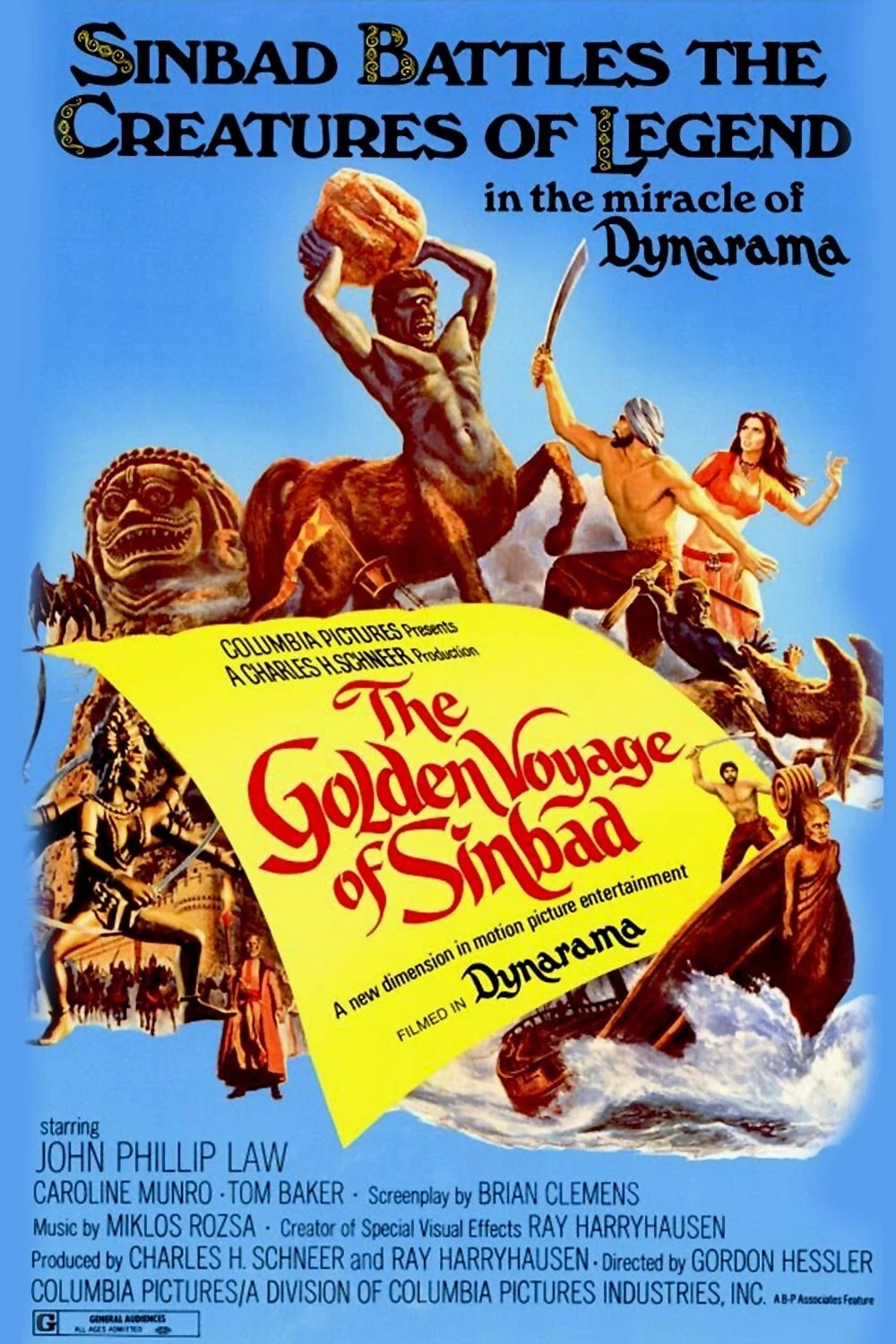 The Golden Voyage of Sinbad (Columbia Pictures, January 25, 1974)
The Golden Voyage of Sinbad (1973)
Who’s in it?
The Golden Voyage of Sinbad (Columbia Pictures, January 25, 1974)
The Golden Voyage of Sinbad (1973)
Who’s in it?
John Phillip Law, Caroline Munro, Tom Baker, Martin Shaw.
What’s it about?When Sinbad (Law) intercepts a homunculus messenger from the evil sorcerer Koura (Baker) it leads him to the Grand Vizir of Marabia, who requests Sinbad’s help in stopping Koura from acquiring the three pieces of a golden artifact that will lead the owner to the Fountain of Destiny and provide them with immortality, invisibility, and riches. A servant girl, Margiana (Munro), joins them on this quest, as she was born with the mark of an eye on her palm, which seems connected to the artifact. So off they sail, encountering several Harryhausen beasties along the way, in an effort to defeat Koura, protect the kingdom of Marabia, and uncover the secret of the eye.
Why do I love it?Two of the films on this list of thirty are true comfort films for me (you’ll meet the other in the final spot) — films that feel like old friends, always there to cheer me up when I’m down, or distract me when I’m sick. Like any sensible child, I adored all of the films that featured Harryhausen’s wizardry, but this one is my absolute favorite, due to arguably his best bit of stop-motion, Kali (yes, I’m putting her over Jason’s skeletons), and then there’s the little rubbery homunculus, the wooden ship figurehead (the sound design here is fantastic, all squeaks and splinters), and a battle royal between a cyclopean centaur and a (sadly underused) griffin.
Golden Voyage has the best cast of any of the films. Law is a fantastic Sinbad, masculine, respectful, wily, and he is ably supported by a crew that is not just there as fodder for monsters. Shaw’s Rachid feels like a true shipmate, you get the sense they have seen a lot together, and he acts as the voice of reason to Sinbad’s whims. Then there’s Tom Baker’s tortured turn as Koura, all wild eyes and gnashing teeth. Baker sells it in his usual extravagant manner, but never takes it too far, and then we have Caroline Munro. Good lord. I recently made a list of all of my comfort films from every genre, and Munro appears in seven out of twenty of them! I’m sure it’s just a coincidence.
Fun fact: that weird, goat-faced oracle that Sinbad and his chums confront in the temple well? That’s an uncredited Robert Shaw.
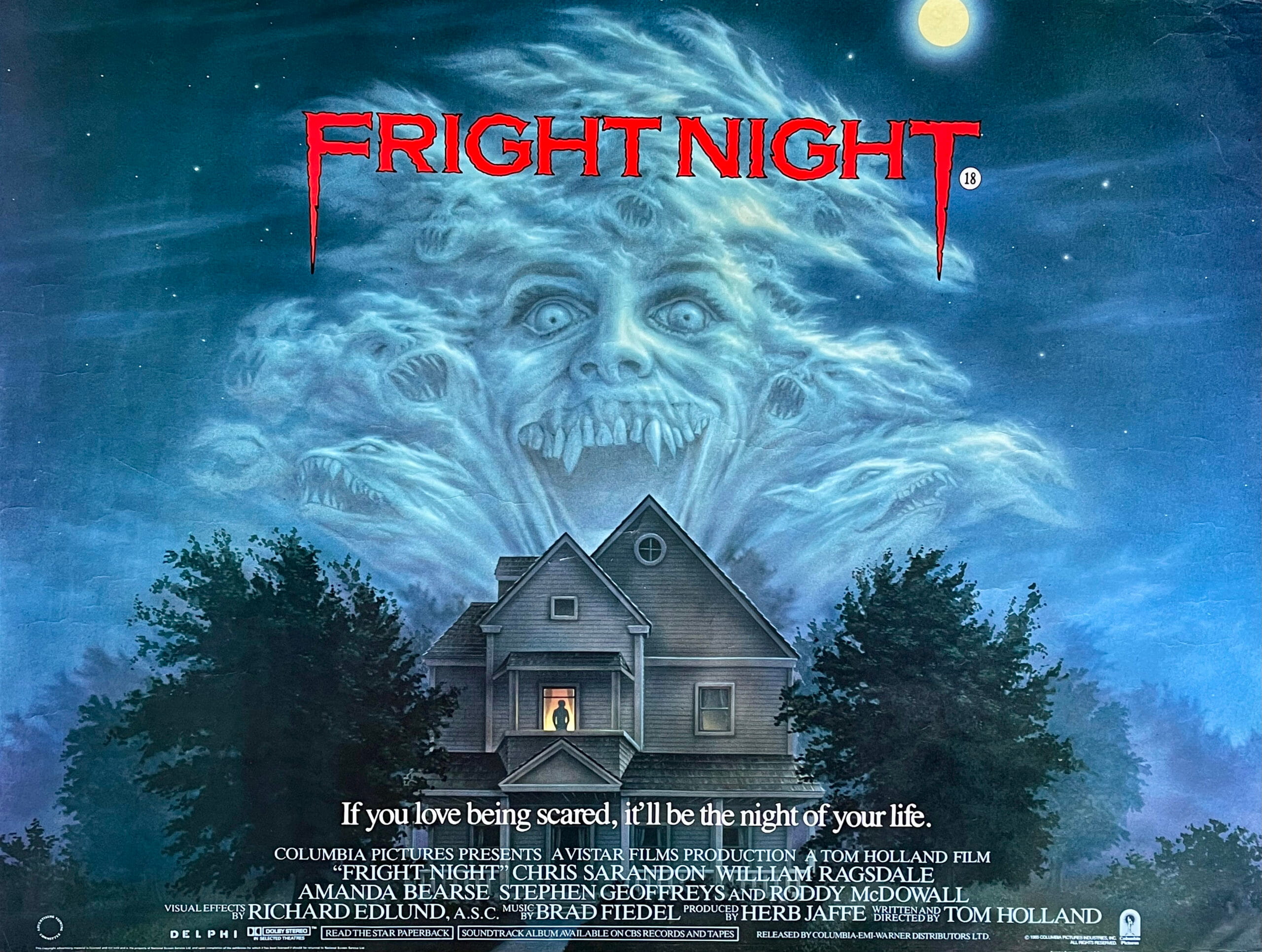 Fright Night (Columbia Pictures, August 2, 1985)
Fright Night (1985)
Who’s in it?
Fright Night (Columbia Pictures, August 2, 1985)
Fright Night (1985)
Who’s in it?
Chris Sarandon, Roddy McDowell, William Ragsdale, Amanda Bearse
What’s it about?Charlie Brewster (Ragsdale) is a horror nut, obsessed with a cheesy TV show that features old horror flicks, introduced by second-rate actor Peter Vincent (McDowell). When he suspects that a vampire (Sarandon) has moved in next door, Charlie eventually recruits Vincent to help him eradicate the monster before it can put the moves on Charlie’s girlfriend, Amy (Bearse). Armed with an encyclopedic knowledge of vampire lore, and some hokey slayer tools, Charlie and Vincent enter the vampire’s lair, ill-prepared and unready to face the monsters within.
Why do I love it?I was at art college when this was released, and had a best friend who was as heavily into horror films as I. We had a mutual love for Hammer and Amicus, hosted regular video parties, and used college resources to practice make up effects. Our first love however was vampire flicks, and every teased image from Fright Night just whetted our appetites even more. Plus, it featured Roddy McDowell, and as huge Planet of the Apes fans, we would watch anything he was in.
The film was playing for one week in the cinema closest to the college, The State Cinema, a 1930’s picture house complete with a wurlitzer organ and scary ticket booth lady. We went to see the film every night that week, steeping ourselves in its gently humorous lore and seductive undertones, to the point that we scared ourselves stupid one night when some leaves rustled in the cemetery we had to walk through to get to the train station. Ah, happy times.
Everything about this film hits the spot; Brad Fiedel’s aggressively boppy score, McDowell’s cowardly custard actor and his redemption arc, Charlie Brewster being a horror freak ‘just like us,’ and the gnarly, blood soaked effects. However, the film belongs to Chris Sarandon. I would argue that there has never been a sexier vampire than his portrayal of Jerry Dandrige. Every word, every move, is precise and effortless (until he gets thoroughly miffed at the end), and he oozes sexual confidence, whether cozying up to his live-in familiar, Billy Cole, or ensnaring Charlie’s girlfriend, Amy, in his nightclub sweater.
The make up and creature effects, headed by Steve Johnson, also make me extremely happy, and this was at a time when we were spoiled for vampire prosthetics (see The Lost Boys (1986), Vamp (1987), Lifeforce (1985) et al). At once hilarious and horrifying, the plethora of creatures on show, vampires, giant bats, an almost cute werewolf, look great and are filmed with appropriate energy by horror legend Tom Holland.
Another one to finally show my kids.
Previous Murky Movie surveys from Neil Baker include:
My Top Thirty Films, Part 1
My Top Thirty Films, Part 2
The Star Warses
Just When You Thought It Was Safe
Tech Tok
The Weyland-Yutaniverse
Foreign Bodies
Mummy Issues
Ch-Ch-Ch-Ch-Changes
Monster Mayhem
It’s All Rather Hit-or-Mythos
You Can’t Handle the Tooth
Tubi Dive
What Possessed You?
See all of Neil Baker’s Black Gate film reviews here. Neil spends his days watching dodgy movies, most of them terrible, in the hope that you might be inspired to watch them too. He is often asked why he doesn’t watch ‘proper’ films, and he honestly doesn’t have a good answer. He is an author, illustrator, teacher, and sculptor of turtle exhibits.
Categories: Fantasy Books
Forgotten Authors: Robert Moore Williams
 Robert Moore Williams
Robert Moore Williams was born in Farmington, Missouri on June 19, 1907 and attended the Missouri School of Journalism, from which he graduated in 1931 with a Bachelor of Arts in journalism. He married Margaret Jelley in 1938 and they had one daughter. The couple divorced in 1952.
Williams published his first short story, “Zero as a Limit” in the July 1937 issue of Astounding Science Fiction, at the time still edited by F. Orlin Tremaine. Later in 1937, he published a story in Thrilling Wonder Stories, edited by Mort Weissinger, and his third story, “Flight of the Dawn Star” appeared in the March 1938 issue of Astounding, now edited by John W. Campbell, Jr. By the end of 1938, he added Amazing Stories, edited by Raymond A. Palmer to the list of magazines and editors he sold to.
In addition to science fiction, Williams published in a variety of other genres, occasionally using pseudonyms, including John S. Browning, H.H. Harmon, and Russell Storm. He also used the house name E.K. Jarvis on some stories written for the Ziff-Davis magazines, such as “Hickson’s Strange Adventure.” Although Williams was the most prolific (and possibly only) author to use the Jarvis name in the 40s, Robert Bloch used it most often in the 50s, with seven stories appearing under that byline. Other authors to use it included Paul W. Fairman, Harlan Ellison, Robert Silverberg, and Henry Slesar.
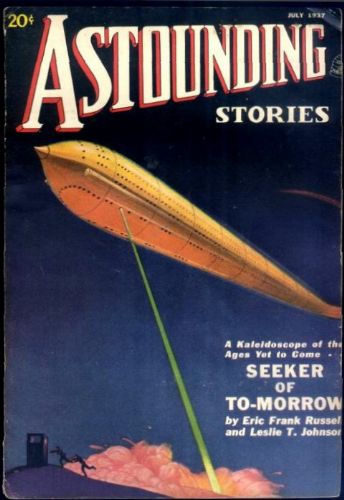 By the end of the 1950s, Williams had sold more than 120 stories to the magazines, and would consider selling short stories throughout most of the decade. He published his first novel, The Chaos Fighters, in 1955, after which he focused primarily on novels, although he had several short stories continue to appear through the end of the decade. Ten of his stories appeared as part of the Ace Doubles series between 1955 and 1964, backed with authors included Leigh Brackett, Eric Frank Russell, John Brunner, Keith Laumer, Terry Carr, and Samuel R. Delany.
While most of the novels Williams published were standalone novels, he did publish novels in two series. The three Jongor novels, which started as novellas published in Fantastic Adventures between 1940 and 1951, were published in book form in 1970 and are a Tarzanesque series focusing on Jongor (born John Gordon) in an Africanized Australia.
His other series, four books about Zanthar, was published as original novels between 1967 and 1969. Just as the Jangor novels were a pastiche of Tarzan, Zanthar is more in line with Burrough’s Barsoom novels, setting human physicist John Zanthar to a foreign and primitive planet courtesy of a cyclotron.
His 1970 novel, Love Is Forever—We are For Tonight has been described by multiple sources as autobiographical and shows a man who has subscribed to Dianetics and Scientology. Other, more science fictional works of the last years of Williams life also have a tendency towards fringe theories. When describing Love Is Forever—We are For Tonight in a Curiosities piece publishe din the January 2007 issue of F&SF, Graham Andrews wrote it “captures his surely unique blend of madness and/or vision in its simon-pure form.”
Gerald W. Page noted that Williams “doesn’t seem to have very often probed deeply into any of his ideas or themes, and this makes some of his work, while perfectly readable on the surface, seem disturbingly incomplete.”
Williams died in Dateland, Arizona on May 12, 1977.
Don D’Ammassa reviewed Williams’ novels on his website, concluding that “Despite his many faults as a writer, Williams is above average for the pulp SF adventure of the 1940s and 1950s. His reputation began to slip during the 1960s as standards for publication rose…”
Steven H Silver is a twenty-one-time Hugo Award nominee and was the publisher of the Hugo-nominated fanzine Argentus as well as the editor and publisher of ISFiC Press for eight years. He has also edited books for DAW, NESFA Press, and ZNB. His most recent anthology is Alternate Peace and his novel After Hastings was published in 2020. Steven has chaired the first Midwest Construction, Windycon three times, and the SFWA Nebula Conference numerous times. He was programming chair for Chicon 2000 and Vice Chair of Chicon 7.
Categories: Fantasy Books
Dark Muse News: Anna Smith Spark’s A Sword of Bronze and Ashes
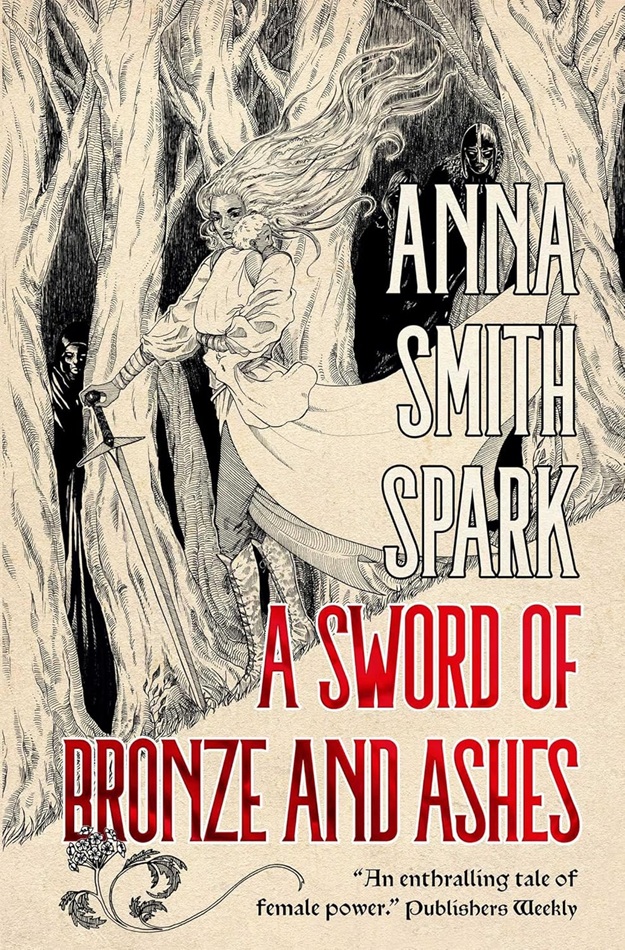 A Sword of Bronze and Ashes, September 12, 2023, FLAME TREE PRESS (Cover illustration by Broci)
Welcome to more Dark Muse News. This post reviews Anna Smith Spark’s A Sword of Bronze and Ashes. It was released in September 2023 (Flame Tree Press, cover illustration by Broci) and is the first book of the series The Making of This World: Ruined. The sequel, A Sword of Gold and Ruin, was recently published in October, 2025.
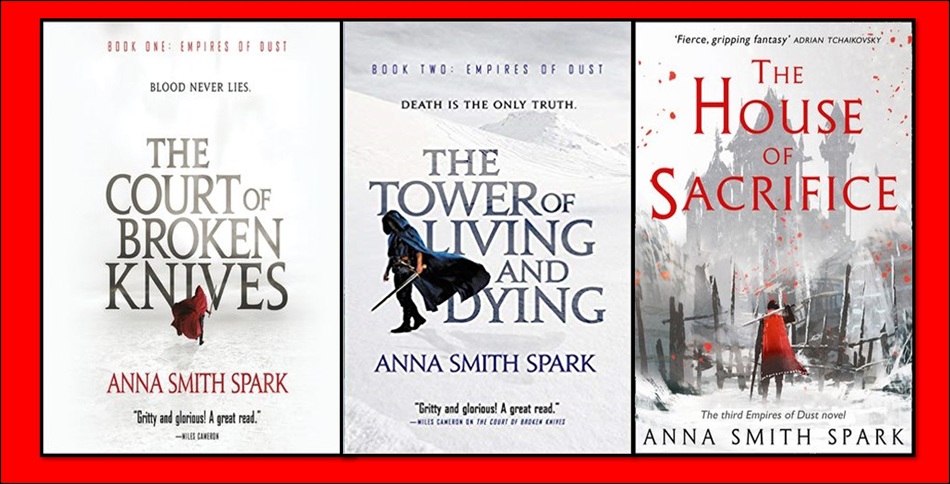
Anna Smith Spark is known as the Queen of Grimdark, a moniker she acquired with her Empires of Dust series. You can expect the same poetic brutality here. Her style and approach are very unique but are reminiscent of Tanith Lee. Literary wording may keep you distanced as a reader, but the raw emotion expressed throughout is so real that it makes the fantasy feel real, too. We interviewed Anna Smith Spark in 2019 – Disgust and Desire as part of our Beauty in Weird Fiction series, where she revealed all sorts of muses and inspirations. That year, we hosted a Q&A Session at Gen Con; there, she, John O’Neill, and I showed off our footwear (link); Anna’s footwear won hands down!
Anyway, this post reviews the book, offers excerpts, and explains a few new blurbs we posit:
- A Sword of Bronze and Ashes could easily represent Hellblade 3: Family Edition!
- If Lewis Caroll’s Alice lived within Little House on the Prairie, infected by Silent Hill, you would experience A Sword of Bronze and Ashes!
A Sword of Bronze and Ashes combines the fierce beauty of Celtic myth with grimdark battle violence. It’s a lyrical, folk horror high fantasy.
Kanda has a good life until shadows from her past return threatening everything she loves. And Kanda, like any parent, has things in her past she does not want her children to know. Red war is coming: pursued by an ancient evil, Kanda must call upon all her strength to protect her family. But how can she keep her children safe, if they want to stand as warriors beside her when the light fades and darkness rises?
Introducing Ikandera Thygethyn (Kandra)Kandra is the dominant protagonist. She is haunted by memories of her mythological past. At first, it seems she is an unreliable narrator, perhaps a mentally ill one, whom her family, and you as a reader, must trust simply because she is mom. The antagonizing forces do not just affect her, though, and the family embarks on a quest for sirvavil together. This is really fresh stuff. How often have you read a book with these qualities:
- Female protagonist… not a warrior like Jirel of Joiry or Marcel’s Black Widow, but a mother living in a remote homestead
- She is aging… not in her young prime
- Having an identity crisis… not a confident heroine, but one full of doubts and insecurities, fighting memories and dreams
- Accompanied by her family (three young daughters and a passive, farmer husband)… not a sword-wielding buddy or party of four adventurers
As surely as Kandra wrestles with aging and her identity evolving, she must endure watching her children become independent as they all confront supernatural horrors. Kandra is battling with self-talk and arguments with ghosts. She was once a warrior, but now she is an old mother. Check out Kandra’s description of herself in the Excerpts below. Strangely, I was reminded of Kate McKinnon’s performance on Saturday Night Live with her Gifts from Mom skit, where she plays the stereotypical apologetic, insecure mother. This book is far from comedy, but Kandra is definitely dealing with similar emotions.
Kandra, with her husband Dellet, has three daughters: the oldest is Sal, who is empathetic and quieter compared to the middle child, Calian. Calian is spunky and channels similar powers as her mom; her coming of age as a de facto apprentice sparks much parental grief. The youngest, Morna, offers an innocent perspective and vulnerability.
The mystery of what Kandra did/experienced before marrying Dellet is carefully revealed chapter by chapter. It is tough for her and her family to discern fantasy from reality. Some spell casting is traditional, but one particular mechanic really plays with your mind. As Kandra’s horrors and past threaten her family, she protects them by telling stories. Somehow, the act of storytelling literally creates a shieldwall against lingering nightmares. The implication is wildly fantastic: fiction protects people from supernatural horrors that are becoming real!
If Lewis Caroll’s Alice lived within Little House on the Prairie, infected by Silent Hill, you would experience A Sword of Bronze and Ashes!Millieu
I am not a native of England or Wales, but as an outsider, the setting screams Celtic and Welsh vibes. Actually, with the potentially psychotic Ikandera Thygethyn in the lead, with disembodied voices and haunting memories stalking her across the Hall of Roven and the mountainous Mal Amwen, I was reminded of the video game series from Nija Theory, Hellblade: Senua’s Sacrifice and Saga. That game series features Senu, a Pict warrior, on a haunting journey to Vikingesque Helheim to save her lover’s sou known for highlighting mental health through auditory and visual hallucinations, brutal combat, and perception-based puzzles. Rumor has it that a third game is in the works, and there is no reason to think Anna Smith Spark is involved (thought that would be cool); however, A Sword of Bronze and Ashes could easily function as Hell Blade 3: Family Edition. Think of Senua going through the same horrors, facing similar sword battles, but with a family in tow!
A Sword of Bronze and Ashes could easily function as Hellblade 3: Family Edition!Excerpts: Kandra Describes Herself:
“I wet myself when I laugh too hard, Geiamnyn, I have stretch marks from my armpits to my kneecaps, every other month my bleed is so heavy I should strap a cauldron between my legs. You forgot to mention those things. I’m sure my husband could tell you more about me, if you ask him, I sweat in my sleep so the blanket needs washing, I snore, I fart in my sleep, sometimes I piss and fart when I come.” – p103
Fighting with a Family in TowKandra’s sword clashed against the faceless woman’s white blade. The woman too shrieked in joy. White fire crashed around them, the shock of it crashed through Kandra. So long. Too long. A vast shape rising before her, tall as the sky, all she could see. Arms of white fire, wings of white fire, a sword of fire, a crown of gold flames. She saw it with her eyes closed and burning. She tried to raise her sword, her arms were on fire, her sword was melting, glowing, the bronze glowed and dripped. She could hear the children screaming. through pain she lashed out, felt the blade meet and open long-dead bloodless flesh. “Dellet!” she screamed. “Dellet, get away. The children, Dellet!” -p23
Weird Conflict & MeleeKandra came to meet the [a “hodden”, think scarecrow with a horse skull]. The broken sword was out, the sword met the stone hand with a stroke so mighty chips of stone flew up. It towered over her, the length of its wooden arms was twicethe twice the length of her sword blade. She spun back, hacked low at its legs. Her sword caught its left leg and sank into it, sending out a shower of rotten wood dust. It neighed, its teeth clacked. A flint hand came down heavily against the shoulder, pain blossomed, she twisted away drgggin the sword out. She tried not hear her family’s cries as they saw she was bleeding. She staggered, struck again. Harder! Harder! A shower of wood dust that made her choke. Splinters of rotten wood in her mouth. Now Kandra gagged and rethced. The hodden lumbered forward, smashed Kandra sideways. She grasped its arm, the wood crumbling under her hand, driving splinters into her skin… -p52
Sequel just arrived October 21, 2025: A Sword of Gold and Ruin Cover BlurbThe sequel to the masterpiece folk horror high fantasy A Sword of Bronze and Ashes, a lyrical blend of epic myth and daily life.
Kanda and her family are on a quest to rebuild the glory that was Roven. Mother and daughters stand together as a light against the darkness. But mother and daughters both have hands that are stained red with blood. They walk a path that is stranger and more beautiful than even Kanda dared imagine, bright with joy, bitter with grief. Ghosts and monsters dog their footsteps – but the greatest monsters lie in their hearts.
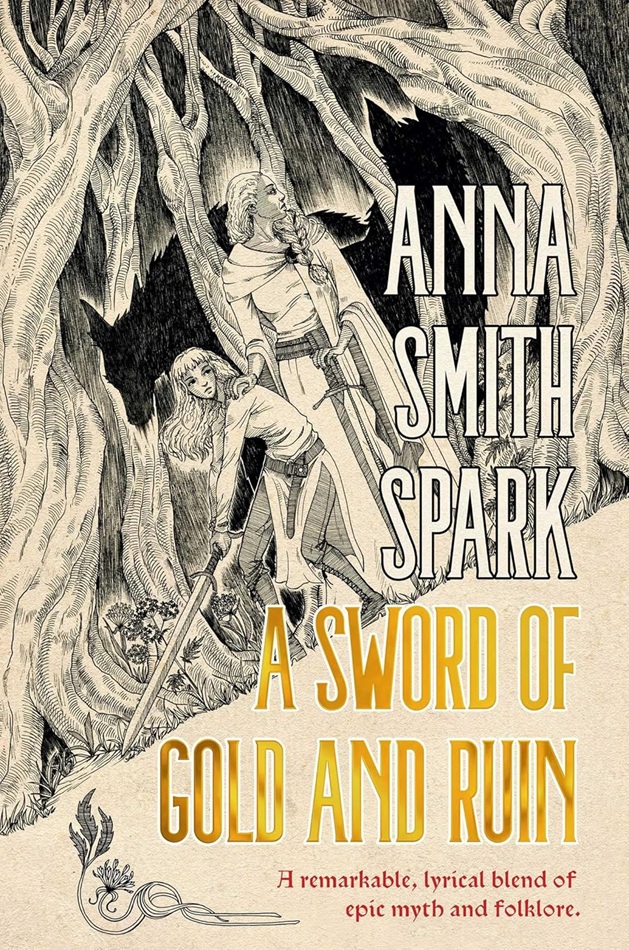
Anna Smith Spark is a critically acclaimed, multi-award short-listedgrimdark epic fantasy novelist. She writes lyrical prose-poetry about war, love, landscapes, and war. Her writing has been described as ‘a masterwork’ by Nightmarish Conjurings, ‘an experience like no other series in fantasy’ by Grimdark Magazine, ‘literary Game of Thrones’ by the Sunday Times, and ‘howls like early Moorcock, converses like the best of Le Guin’ by the Daily Mail. Her favourite authors are Mary Renault, R Scott Bakker and M. John Harrison
S.E. Lindberg is a Managing Editor at Black Gate, regularly reviewing books and interviewing authors on the topic of “Beauty & Art in Weird-Fantasy Fiction.” He has taken lead roles organizing the Gen Con Writers’ Symposium (chairing it in 2023), is the lead moderator of the Goodreads Sword & Sorcery Group, and was an intern for Tales from the Magician’s Skull magazine. As for crafting stories, he has contributed eight entries across Perseid Press’s Heroes in Hell and Heroika series, and has an entry in Weirdbook Annual #3: Zombies. He independently publishes novels under the banner Dyscrasia Fiction; short stories of Dyscrasia Fiction have appeared in Whetstone Amateur S&S Magazine, Swords & Sorcery online magazine, Rogues In the House Podcast’s A Book of Blades Vol I & II, DMR’s Terra Incognita, the 9th issue of Tales From the Magician’s Skull, Savage Realms Magazine, and Michael Stackpole’s S&S Chain Story 2 Project.
Categories: Fantasy Books
The Conan novels of John Maddox Roberts
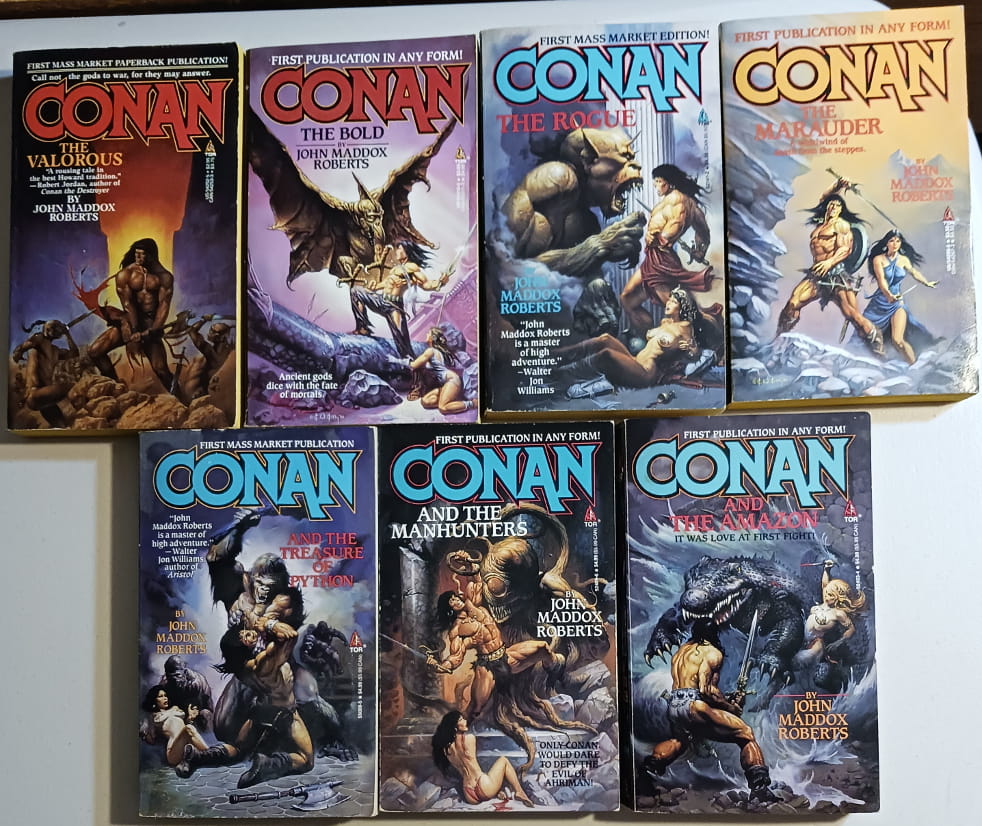 The Conan novels of John Maddox Roberts (Tor Books, 1985-1995). Covers by Boris, Ken Kelly, and Julie Bell
The name John Maddox Roberts (1947 – ) first came to my attention as a writer of Conan sword & sorcery pastiches from Tor. He wrote eight, and when I talk to other REH fans Roberts’ name is almost always listed near the top of the Conan pastiche writers.
Of the pastiches that were published by Tor between 1982 and 2004, I’d have to agree, although I like the earlier pastiches by Andy Offutt and Karl Edward Wagner better.
Roberts’ pastiches were:
Conan the Valorous — 1985 (Boris or Les Edwards cover)
Conan the Champion — 1987 (Ken Kelly cover)
Conan the Marauder — 1988 (Ken Kelly cover)
Conan the Bold — 1989 (Ken Kelly cover)
Conan the Rogue — 1991 (Ken Kelly cover)
Conan and the Treasure of Python — 1993 (Julie Bell Cover)
Conan and the Manhunters — 1994 (Ken Kelly cover)
Conan and the Amazon — 1995 (Ken Kelly cover)
Some quick notes on the books. I’ve read all but The Champion, which I don’t own. There’s some confusion about the Conan the Valorous cover. My copy lists Boris as the artist inside but there’s no signature and it doesn’t look like Boris to me. Another source claims Les Edwards as the artist and I suspect that’s correct.
As for plots and details, Conan the Rogue is a retelling of A Fistful of Dollars, which was a retelling of Yojimbo, a Samuri movie by Akira Kurosawa. Overall, Roberts’ Conan is more controlled and less impetuous than REH’s Cimmerian at this early time in his career. However, Roberts catches the “barbaric” strain of the character better than any of the other TOR pastichers.
All the TOR Conans are a little too long, including these. That’s probably not the authors’ fault, since I imagine they had pretty specific word counts to hit. I think that sword and sorcery works best at novella length.
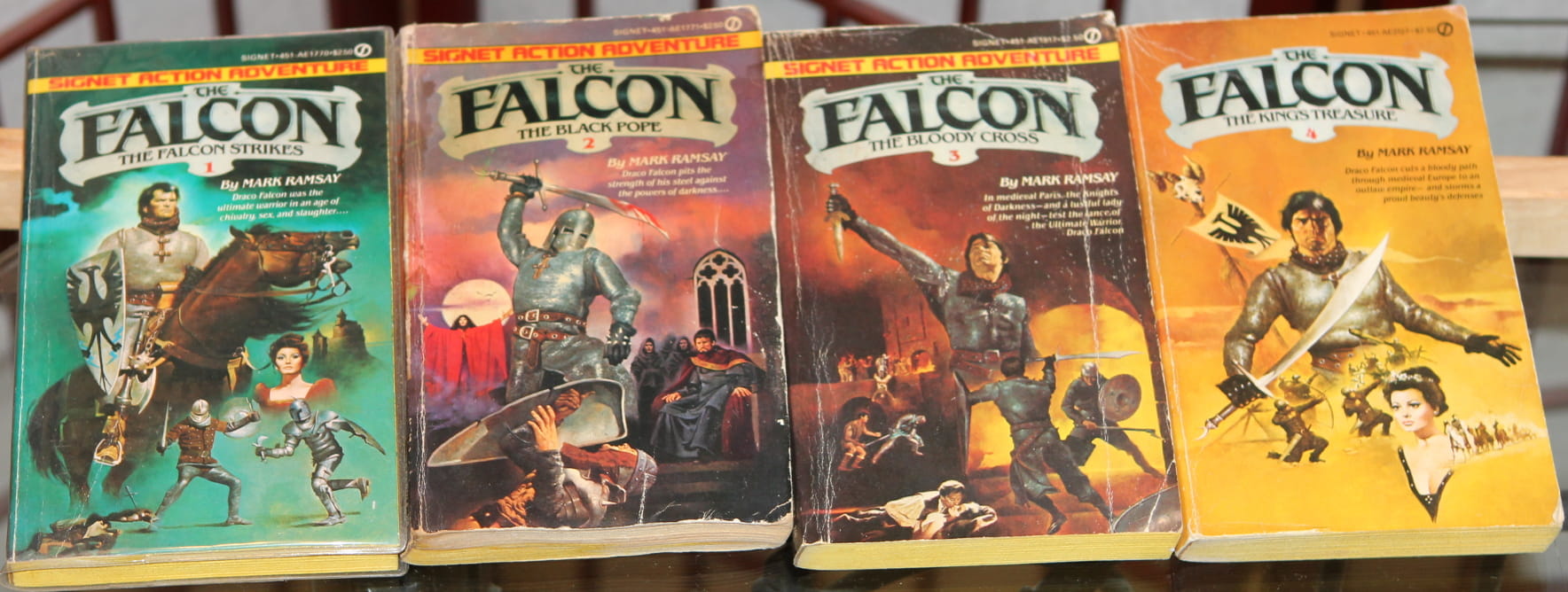 The Falcon series by John Maddox Roberts (Signet, 1982-1983)
Years before I read my first John Maddox Roberts Conan pastiche, I read a violent series about a crusader named Draco Falcon, written by an author named Mark Ramsay. This was certainly not Sword & Planet, nor even Sword & Sorcery. It was/is historical fiction in the tradition of Harold Lamb and Talbot Mundy, though with a bit more adult content. It featured a young knight named Draco Falcon who returns from a crusade to the Holy Land to seek vengeance on those who betrayed him there.
Mark Ramsay turned out to be a pseudonym for John Maddox Roberts. The four books in the series, all from Signet, are:
The Falcon Strikes, 1982
The Black Pope, 1982
The Bloody Cross, 1982
The King’s Treasure, 1983
I was unable to find any information about the cover artists. They look as if they could have all been done by the same person.
Signet certainly intended to continue the series. In the back of Book #4 is a teaser chapter for a Book #5, which was to be entitled Greek Fire. It never happened and I don’t know why. I wish it had. The series has the feel of authentic history (exaggerated, of course), and is quite brutal and full of battles. Draco himself is a Conan type figure, although less of a loner.
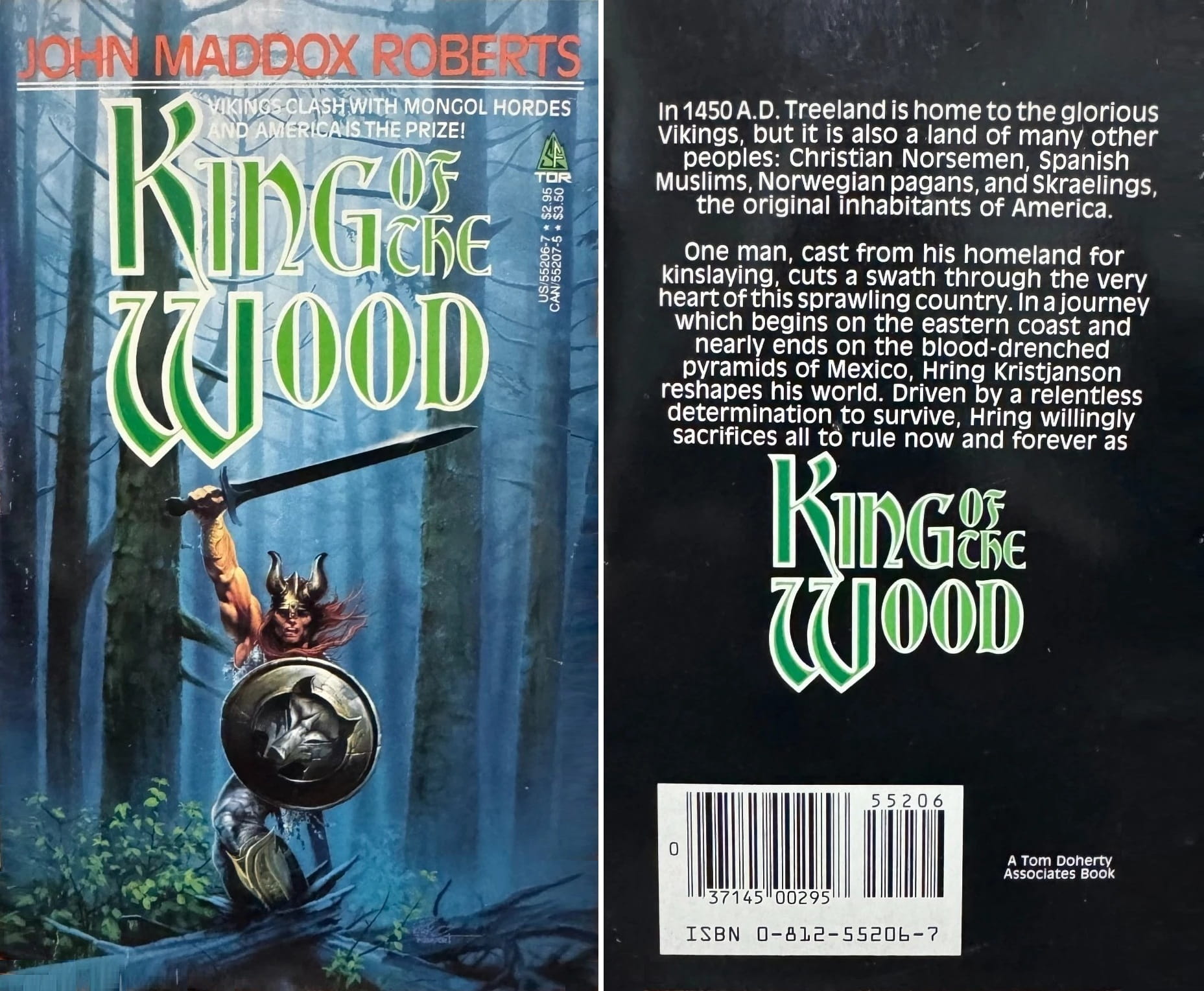 King of the Wood by John Maddox Roberts (Tor, April 1986). Cover by Kirk Reinert
I have several more of Roberts’ books in my collection and will probably get around to reading them one day. The only other one I’ve read is King of the Wood, which is an alternate history in which North America has been settled by Vikings, Mongols, and other old-world populations. I classify it as sword & sorcery and liked it pretty well.
Charles Gramlich administers The Swords & Planet League group on Facebook, where this post first appeared. His last article for us was a review of Frank Frazetta’s Death Dealer. See all of his recent posts for Black Gate here.
Categories: Fantasy Books
Dave Hook on The Island of Dr. Death and Other Stories and Other Stories by Gene Wolfe
 The Island of Doctor Death and Other Stories and Other Stories (Pocket Books, June 1980). Cover by Don Maitz)
It’s still January, which means I haven’t yet abandoned my ambitious New Year’s Resolution to get caught up on my favorite blogs. I started with Rich Horton’s excellent Strange at Ecbatan, and this week I’ve been spending time at Dave Hook’s book blog A Deep Look by Dave Hook.
As the name implies, Dave spends his time on his reviews, with deep dives that usually include a lot of biographical information and entertaining anecdotes. His recent reviews include looks at David G. Hartwell & Kathryn Cramer’s groundbreaking 2002 anthology The Hard SF Renaissance, Alastair Reynolds’ 2021 collection Belladonna Nights and Other Stories, and a long-forgotten SF anthology from 1954, Sam Moskowitz’s Editor’s Choice in Science Fiction.
With all that (and much more) to choose from, the piece I started with was of course his review of Gene Wolfe’s first collection, one of the most famous science fiction collections of the 20th Century, The Island of Dr. Death and Other Stories and Other Stories (and no, that’s not a typo), first published by Pocket Books in June 1980.
The Island of Doctor Death and Other Stories and Other Stories includes all three tales in Gene Wolfe’s Archipelago sequence, the Nebula-nominated title story and two ‘sequel’ novellas, unrelated (or are they?) except for the reordered natures of their titles.
“The Island of Doctor Death and Other Stories” (Orbit 7, June 1970) – Nebula nominee
“The Death of Dr. Island” (Universe 3, October 1973) – novella, Nebula and Locus Award winner, Hugo nominee
“The Doctor of Death Island” (Immortal: Short Novels of the Transhuman Future, May 1978) – novella
It also includes three other novellas, including Nebula nominee “The Eyeflash Miracles,” and Hugo and Nebula-nominated “Seven American Nights.” Here’s the rest of the TOC.
“Alien Stones” (Orbit 11, October 1972)
“La Befana” (Galaxy, January-February 1973)
“The Hero As Werwolf” (The New Improved Sun, September 1975)
“Three Fingers” (New Constellations: An Anthology of Tomorrow’s Mythologies, November 1976)
“Feather Tigers” (Edge, Autumn/Winter 1973)
“Hour of Trust” (Bad Moon Rising, 1973)
“Tracking Song” (In the Wake of Man, August 1975) – novella
“The Toy Theater” (Orbit 9, October 1971)
“Cues” (The Far Side of Time, 1974)
“The Eyeflash Miracles” (Future Power, April 1976) – novella, Nebula nominee
“Seven American Nights” (Orbit 20, March 1978) – novella, Nebula and Hugo nominee
One of the things I appreciate about Dave is that, in keeping with his ‘deep dive’ philosophy, he researches what other notables have said about his selections. Here’s Rich Horton on “Tracking Song,” in a comment on a 2011 Jo Walton post at Tor.com on the 1976 Hugo Nominees.
And the best novella of the year, ignored either because it was in an Elwood anthology or because that anthology, regardless of editor, just wasn’t that much seen, was another utterly amazing story by Gene Wolfe: ‘Tracking Song.’ That would be my choice, at this remove, for the best novella of 1975.
And Gardner Dozois on “The Hero as Werwolf,” commenting on the same article.
In novelette, ‘The Borderland of Sol’ is a weak winner. The clear winner for me here is ‘The Hero as Werewolf,’ one of my favorite Wolfe stories; I liked it better than ‘Tracking Song,’ which I liked, but always got the uneasy feeling from that I didn’t really understand it (Michael Swanwick and I once sat down and spent about an hour trying to puzzle out what was really happening in ‘Tracking Song,’ and ultimately failed).
Ah, the enigmatic appeal of Gene Wolfe. It’s comforting that, at least at times, Gardner Dozois doesn’t have any more success than I at deciphering Wolfe’s fiction.
Dave includes his usual well-researched commentary, and eventually gets around to a few brief comments on the stories themselves. Here’s a taste.
When The Island of Doctor Death and Other Stories and Other Stories was released in 1980, Gene Wolfe was a major, happening author for both novels and short fiction that a lot of people were paying attention to. It finished fourth in the Locus Best Single Author Collection Award for 1981. My overall average rating… is 3.76/5, or “Very good.” I loved reading several stories that were new to me, and enjoyed all but one. Recommended, with one caveat.
The Island of Doctor Death and Other Stories, an Archipelago short story. I enjoyed this fantasy about a child whose life comes to interact with several characters from literature, perhaps inspired by The Island of Dr. Moreau by H. G. Wells. Great characters, love the writing. On latest reread, “Great” on reread, a lot of fantasy and rather meta fiction, perhaps, and substantial drug abuse. I love Wolfe’s afterword in The Best of Gene Wolfe: A Definitive Retrospective of His Finest Short Fiction, where he tells the story of Isaac Asimov mistakenly attempting to give him the Nebula Award for this story when he was a Nebula Award finalist for it. Rated 3.9/5, or “Great.”
“Alien Stones,“ a novelette. An interesting story of space and exploring an alien ship, with both ships giant, with crew way spread out, and with artificial intelligence. This story was new to me, and I am glad I read it. Rated 3.7/5, or “Very good.”
“The Death of Dr. Island,“ an Archipelago novella. A great story, inspired by a comment by John Jakes from when Asimov mistakenly announced Wolfe a Nebula Award award winner for “The Island of Doctor Death and Other Stories.” Jakes said, “You know, Gene, if you’d just write ‘The Death of Doctor Island’ now, you’d win.” The protagonist is a therapy patient in the outer system who has been transported to a satellite where therapy will occur. He meets two other patients and Doctor Island, an AI. One of them dies to heal the other, and the protagonist is very changed. This is quite a story; I don’t see how I missed reading this before. Rated 3.9/5, or “Great.”
“Tracking Song,” a novella. A superb story of a person who has substantial amnesia in a post-human world, with cyborgs and many related human-like sapients and a few frozen robots. He goes on a journey, and discovers things. One hell of a story, definitely great early Wolfe. I was surprised that this story had no award nominations. Rich Horton suggested this was because of Roger Elwood as editor, and the Elwood anthology was not seen much (see above for quotes by Horton and Dozois). Gardner Dozois liked it also but not quite as much, and also mentioned not really understanding the story. I agree with Dozois that at the end I am not really sure I understand the story either, but I love it. Granted that it’s a 60 page (estimated) novella, but I am surprised this has only been reprinted in this Wolfe collection and in German and Croatian anthologies. Rated 4/5, or “Great.”
Read Dave’s complete review here, and check out his excellent blog A Deep Look by Dave Hook.
Categories: Fantasy Books
Five Things I Think I Think (January, 2026)
 It’s been quite a while since I’ve shared some Things I Think. Since I just jumped back down the Castle rabbit hole, and finished off the associated Nikki Heat books, I had the basis for this column. And away we go!
Nathan Fillion was a big name on the nerd convention circuit (you know I was a nerd way back when it got you laughed at in school) due to the cult favorite, Firefly. He’d had some attention in more mainstream things such as Two Guys, a Girl, and a Pizza Place, but in 2009 a buddy cop show launched him to stardom. He was Richard Castle, a James Patterson-like writer who works with NYC detective Kate Beckett (Stana Katic). It’s an odd couple pairing, with the immature Castle constantly annoying the professional driven Beckett.
I like a drama buddy cop show with humor, and Castle is one of the best. There are some over-arching story-lines, and even a big cast change. Humor, original crimes, good cast: this show worked. I’m on season two of my first-ever re-watch, and this is still a favorite show. It holds up, and Fillion really shines. It’s got more humor than his current hit show, The Rookie, which I also watch.
The show ran eight seasons, with viewership trending downward, as is often the case in long-running ones. But it got to where Fillion and Stanic were not even speaking off camera. It was abruptly announced that the show would continue without Katic – only Fillion. Not long after that, it was canceled outright. Several Castle co-stars have appeared on The Rookie. Katic has not been one of them. But you can’t go wrong watching Castle.
 2 – HOW ABOUT NIKKI HEAT?
So, on the show, Richard Castle is a thriller writer. He achieved fame with novels about Derrick Storm, a spy-type stud. He kills off Storm in season one, and begins writing about a hot, tough, NYC detective named Nikki Heat. And she’s openly based on Beckett.
Tom Straw, writing as Richard Castle, turned out three Derrick Storm novels, and ten Nikki Heat books. There were also short stories, and graphic novels in the mix.
The Heat novels are essentially like bonus episodes of the show. It’s easy to envision Stana Katic as Heat, and Nathan Fillion as Jameson Rook. The book characters aren’t exact duplicates of the TV show, but pretty similar. The books hit a ‘jump the shark’ period in books eight and nine, but recovered. There were crossovers with Storm, and it was a bit much. But I think any Castle fan will enjoy Nikki Heat.
3 – GRIM DAWN IS PRETTY COOL
I played a TON of Diablo 1, and 2, back in the day. I replaced Diablo with Titan Quest, a really cool ARPG I got many hours on. I finally got around to D3, last year. I liked it well enough. I set aside the Reaper of Souls expansion, however. I then bought Titan Quest II in early access. TQII set aside it’s proprietary engine to use the Unreal Engine. It looks pretty, but it doesn’t have the charm of TQ1.
Which makes it somewhat ironic that I abandoned Titan Quest II, for Grim Dark. The 2016 ARPG was built using the Titan Quest 1 engine, by some former developers of TQ1. And I am enjoying this game far more than I was TQ2.
It’s a mix of pre-Victorian, horror, alien, cowboy, fantasy settings. Which all combine pretty neat. I have a large axe for melee, and a two handed musket for ranged. You can make some decisions with limited impacts on the storyline. Which is pretty railroad. But I like rr. There are side quests, as well as bounties from different factions, so you an mix things up.
 You multi-class at level 10, so you can tailor your character to play a couple different ways if you want. Point-and-click games don’t capture me the way they did in D1 and D2 days. But I’m pretty into Grim Dawn. I was looking for something after LA Noire, and this is working for me. Leaving Reaper of Souls, and Titan Quest 2, on the shelf.
4 – AUDIOBOOKS COUNT AS READING
This is a distinction mostly made by obnoxious twits, who want to argue semantics. I am not going to use the term ‘consume books’ so that doofuses who wanna expound on the difference between seeing/reading, and listening.
Yes, reading is a specific experience. But for purposes of enjoying a book, ‘reading’ is a generic term, unless you want to specify a difference. People who get into ‘the listening experience is different’ are exhausting. Like so many on social media.
In January, I finished 9 audiobooks, 4 physical books, and 2 e-books. I would not have been able to get to those nine books, ‘reading.’ 7 of the 9 were first reads. I’d have completely missed out on those.
I just block people who start on about this. It’s not even worth arguing.
5 – DOUGLAS ADAMS WAS A TREASURE
I re-read the first two books of The Hitchchiker’s Guide, listened to audiobooks of them, listeneed to the entire radio series, and continue to listen to the BBC radio plays of the two Dirk Gently novels. And Douglas Adams never grows old for me. The latter Hitchchiker’s books are uneven, for well-documented reasons.
But Adams’ works age well. He had an insatiable curiosity about many things, along with keen insights. I will never outgrow Adams, or Terry Pratchett. I’m going to do a regular column on Aams quotes. Mostly his real life – not his book characters. Douglas Adams wass a rare treasure for our lifetimes. The Black Gate Landing Page, for Adams.
Prior Ten Things I Think I Think
Four Things I Think I Think (May 2025)
Six Things I Think I Think (March 2025)
Ten Things I Think I Think (January 2025)
Ten Things I Think I Think (December 2024)
Nine Things I Think I Think (October 2024)
Five More Things I Think: Marvel Edition (September 2024)
Ten Things I Think I Think: Marvel Edition ( September 2024)
Five Things I Think I Think (January 2024)
Seven Things I Think I Think (December 2023)
Talking Tolkien: TenThings I Think I Think (August 2023)
A (Black) Gat in the Hand: Ten Things I Think I think (August 2023)
5 More Things I Think (March 2023)
10 Things I Think I Think (March 2023)
Bob Byrne’s ‘A (Black) Gat in the Hand’ made its Black Gate debut in 2018 and has returned every summer since.
His ‘The Public Life of Sherlock Holmes’ column ran every Monday morning at Black Gate from March, 2014 through March, 2017. And he irregularly posts on Rex Stout’s gargantuan detective in ‘Nero Wolfe’s Brownstone.’ He is a member of the Praed Street Irregulars, and founded www.SolarPons.com (the only website dedicated to the ‘Sherlock Holmes of Praed Street’).
He organized Black Gate’s award-nominated ‘Discovering Robert E. Howard’ series, as well as the award-winning ‘Hither Came Conan’ series. Which is now part of THE Definitive guide to Conan. He also organized 2023’s ‘Talking Tolkien.’
He has contributed stories to The MX Book of New Sherlock Holmes Stories — Parts III, IV, V, VI, XXI, and XXXIII.
He has written introductions for Steeger Books, and appeared in several magazines, including Black Mask, Sherlock Holmes Mystery Magazine, The Strand Magazine, and Sherlock Magazine.
You can definitely ‘experience the Bobness’ at Jason Waltz’s ’24? in 42′ podcast.
Categories: Fantasy Books
My Top Thirty Films, Part 2
 Silent Running (Universal Pictures, March 10, 1972)
I’ve had a little think about my favorite films, and what makes them my favorites. As you will see, my choices are on the whole rather fluffy, but these are the films that I return to time and time again for comfort, or as a way to reset my brain. I’d be very interested to find out if any of my favorites align with any of your own – please let me know in the comments below!
Read Part 1 here. Without further ado, in no particular order, and no ratings (because they are all 10s), let’s get cracking!
 Taxi Driver (Columbia Pictures, February 8, 1976)
Taxi Driver (1976)
Who’s in it?
Taxi Driver (Columbia Pictures, February 8, 1976)
Taxi Driver (1976)
Who’s in it?
Robert De Niro, Jodie Foster, Harvey Keitel, Cybill Shepherd
What’s it about?Travis Bickle (De Niro) is a Vietnam Vet, suffering from PTSD, driving a cab for a living, and growing increasingly detached from reality day by day. He lives alone, on a diet of cornflakes and scotch, and writes in his diary the thoughts that trouble him nightly; the state of the New York City streets, the perceived inhumanity of its residents, and brief phrases and idioms to live his life by.
When he meets Betsy (Shepherd), a campaign assistant for a presidential candidate, he is fascinated by her, and attempts to take her on a date. The failure of their unformed relationship is due to his social awkwardness and choice of venue (an adult film theatre). Rejected by Betsy, he falls further into delirium as he becomes obsessed with ‘saving’ a child prostitute (Foster) from her pimp (Keitel). His mental breakdown concludes in the botched assassination of the candidate, and the successful liberation of the young girl in a bloody shootout.
Why do I love it?Everyone remembers their first Scorsese, and this was mine. It is still my favourite Scorsese film, and the fella has made quite a few good ones (sarcasm)!
Taxi Driver is an utterly dreamy film for me, not in the gossamer nightgown and watercolour pastures sense, nor in the David Lynch stream of consciousness sense, but more of an intangible mosaic of sound and light and shadow. Just thinking about it now, having not actually watched in over a decade, I can see the neon-drenched streets and hear the melancholy wail of Herrmann’s brass (my favourite score of his, completed mere weeks before his death).
I fell in love instantly with Cybill Shepherd and wanted to take her out for a coffee and apple pie with a slice of cheese (which still seems utterly alien to me), although I had a hard time separating Jodie Foster from Bugsy Malone. De Niro’s raw performance, years before he became a facsimile of himself, is hypnotic, and although I couldn’t possibly identify with him, I could certainly empathise.
There are so many quirky elements in this film that add to the dreamstate; the afore-mentioned cheese slice, corn flakes and scotch, custom wrist holsters, and Bickle’s own reaction to pornography, and these have all lingered with me like half-forgotten personal memories.
 Silent Running (Universal Pictures, March 10, 1972)
Silent Running (1972)
Who’s in it?
Silent Running (Universal Pictures, March 10, 1972)
Silent Running (1972)
Who’s in it?
Bruce Dern, Cliff Potts, Ron Rifkin, Jesse Vint
What’s it about?In the future, all of nature on Earth has been eradicated by the advancement of humanity, and the last remaining forests, along with a clutch of animals, have been sent into space in vast geodesic domes attached to giant star freighters. The custodians of these last biomes are a motley bunch of blue-collar workers, including an obsessive biologist who seemingly prefers nature over humans, Freeman Lowell (Dern), and a trio of robotic gardener drones, Huey, Dewey, and Louis. When the order comes through to destroy the habitats (for ‘business’ reasons), Lowell flips and turns on his crewmates, determined to keep the forests alive.
Why do I love it?There have not been many films that made me blub uncontrollably at the end (Merry Christmas Mr. Lawrence (1983) is one of them), but when Joan Baez’s ‘Rejoice in the Sun’ kicks in as we watch Dewey, the last surviving drone, caring for a little garden with Lowell’s old watering can, the waterworks inevitably begin. It’s an ending both depressing and profoundly optimistic, and caps off a truly groundbreaking hard sci-fi flick that paved the way for many cultural touchstones, not least R2-D2, the stoned bomb operators of Dark Star (1974), and the crew of the Nostromo.
Following Star Wars, little me devoured any and all science-fiction I could find, and Silent Running felt like one of the few ‘realistic’ settings; less catsuits and rayguns, more industrial grime and hardware. It certainly helped that director Douglas Trumball shot many of the interiors in a real-life decommissioned aircraft carrier, the USS Valley Forge, blending the claustrophobic corridors and cabins with stunning, large-scale, greeblie-heavy spaceship models, and the talented performers, all bilateral amputees, imbued the little drones with so much character that they became more than machines, they were the characters that we empathized with the most. A stunning film.
 Re-Animator (Empire International Pictures, October 18, 1985)
Re-Animator (1985)
Who’s in it?
Re-Animator (Empire International Pictures, October 18, 1985)
Re-Animator (1985)
Who’s in it?
Jeffrey Combs, Barbara Crampton, Bruce Abbott, David Gale
What’s it about?VERY loosely based on H.P. Lovecraft’s 1922 novelette “Herbert West – Reanimator,” this version features West (Combs) as a brilliant, obsessive, young scientist who has developed a glowing green serum that can reanimate dead things.
Having secured a spot as a medical student at the famed Miskatonic University, West ropes his fellow student, Dan Cain (Abbott) into a series of experiments that soon grow wildly out of control. When one of the professors, Dr. Hill (Gale) learns of West’s discovery, he covets it for himself, but soon falls foul of West’s vengeance. However, death doesn’t stop him from continuing his quest to steal not only the formula, but Dan’s girlfriend, Megan (Crampton), and he literally unleashes bloody hell upon the university in his efforts.
Why do I love it?The first of Brian Gordon’s utterly bonkers reinventions of Lovecraft classics (see also From Beyond (1986), Castle Freak (1995), and Dagon (2001)), Re-Animator popped onto the scene when I had just hit 18, and was one of the first legitimate ‘adult’ certificate films I went to see. I was already frothing at the mouth having had the film’s insane effects teased by Fangoria magazine, but I really wasn’t prepared for the sheer sticky madness of the whole affair. Not only was it gory as all heck, but the gore itself was used in such an imaginative and hilarious way, that it altered my brain chemistry forever. Remember, this is a kid who grew up with the horny grue of Hammer films, so I was used to a little more restraint in the bloodletting (barring the occasional The Thing (1982) highlight).
Re-Animator however decided to not just disembowel someone, but then had their reanimated entrails loop out and grab someone, it had a headless corpse steady its own head by slamming it onto a desk paper spike, the undead are dispatched with bone saws. Of course, much of this visceral lunacy would be turned up to 11 in the better of the two sequels, Bride of Re-Animator (1990), but this film was the O.G. — the one that kicked off my passion for over-the-top gore, and my enduring infatuation with Barbara Crampton.
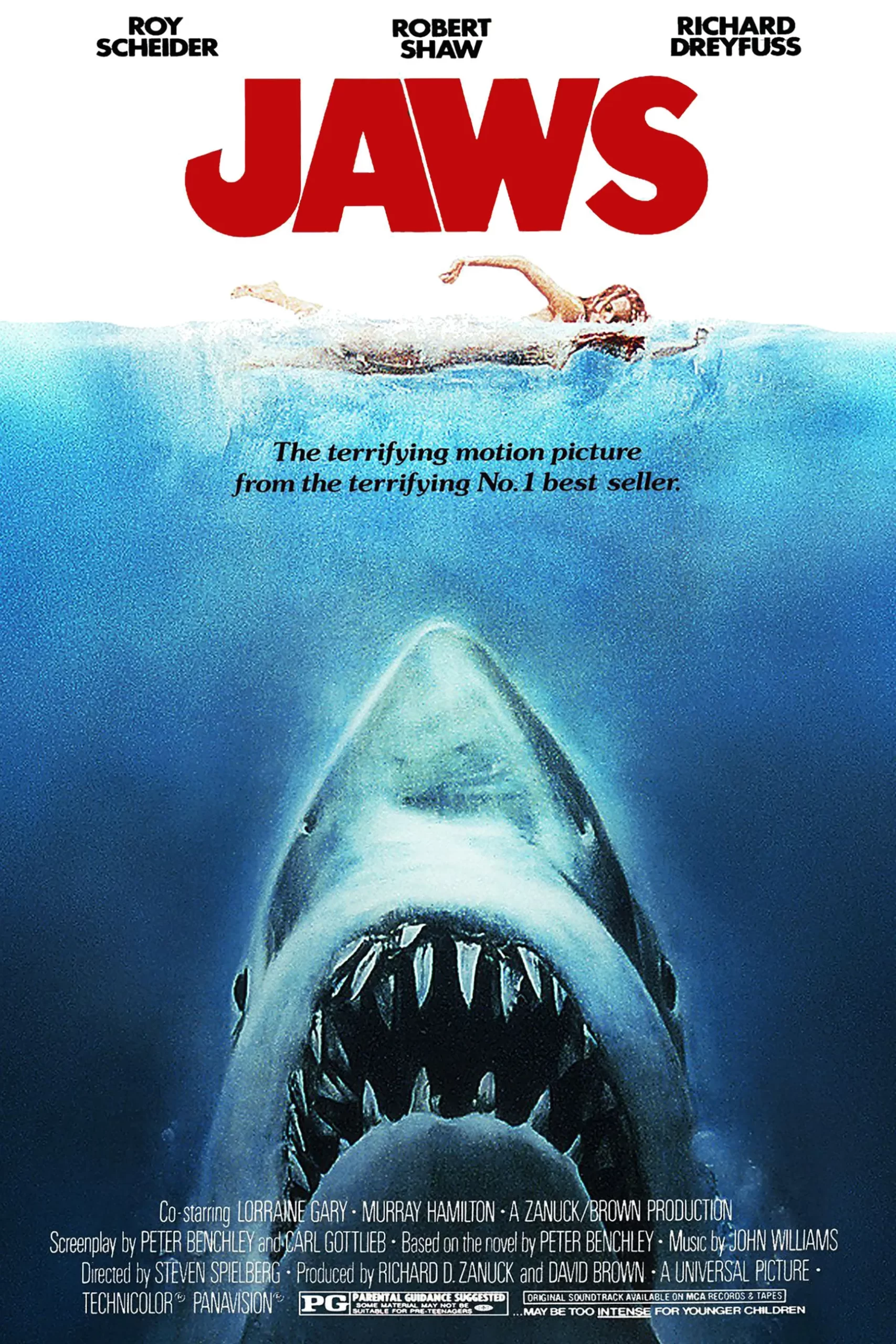 Jaws (Universal Pictures, June 20, 1975)
Jaws (1975)
Who’s in it?
Jaws (Universal Pictures, June 20, 1975)
Jaws (1975)
Who’s in it?
Roy Scheider, Robert Shaw, Richard Dreyfuss, Lorraine Gary
What’s it about?When the sleepy seaside town of Amity Island in New England is rocked by a shark attack, the local sheriff, Martin Brody (Scheider), must contend with the town mayor who wants to keep the beaches open for the 4th of July, while trying to convince the townsfolk of the very real danger of stepping into the ocean. A failed shark hunt leads him to recruit a student oceanographer, Matt Hooper (Dreyfuss), and a grizzled seadog, Quint (Shaw), in a last desperate attempt to destroy the toothsome terror before it can do more snacking.
Why do I love it?In this complete list of favourite movies, I would argue that all of them are fantastic, but only a handful of them are perfect. Jaws is undoubtedly one of the perfect ones.
My dad (in one of his rare moments of doing something cool with me) took me when I was 9 to see Jaws in the cinema. This was in the first week of release, when the hysteria hadn’t quite kicked in yet, and it had an ‘A’ certificate (the UK equivalent of a PG film), shortly before it was recertified to ‘AA’ (no one under 14 allowed). Naturally it scared seven colours out of me, especially old Ben Gardner’s noggin popping out of the boat hull.
Later that year we holidayed in Cornwall, and I recall the sheer panic when someone yelled “Shark!” at the beach and the sunburned throng erupted from the surf, mimicking a scene from Spielberg’s masterpiece. We did indeed see a dorsal fin, but it was probably a basking shark, harmless. We don’t get great whites off the English coast. Still, it was a lovely snapshot of the ongoing shark obsession that had gripped the world, and a perversely happy memory for me.
Jaws is a regular watch for me, it’s one of those comfort films that I can put on and just wallow in the mastery of all concerned; the stellar cast, the music, the cinematography, and Spielberg’s supernatural blocking skills. The film means so much to me, and has been present in key moments in my life — my early introduction to horror, as a learning tool in film school, as a teaching tool for my own son. I think I’d like it to be one the last things I watch before finally shuffling off. Guess I should be making plans.
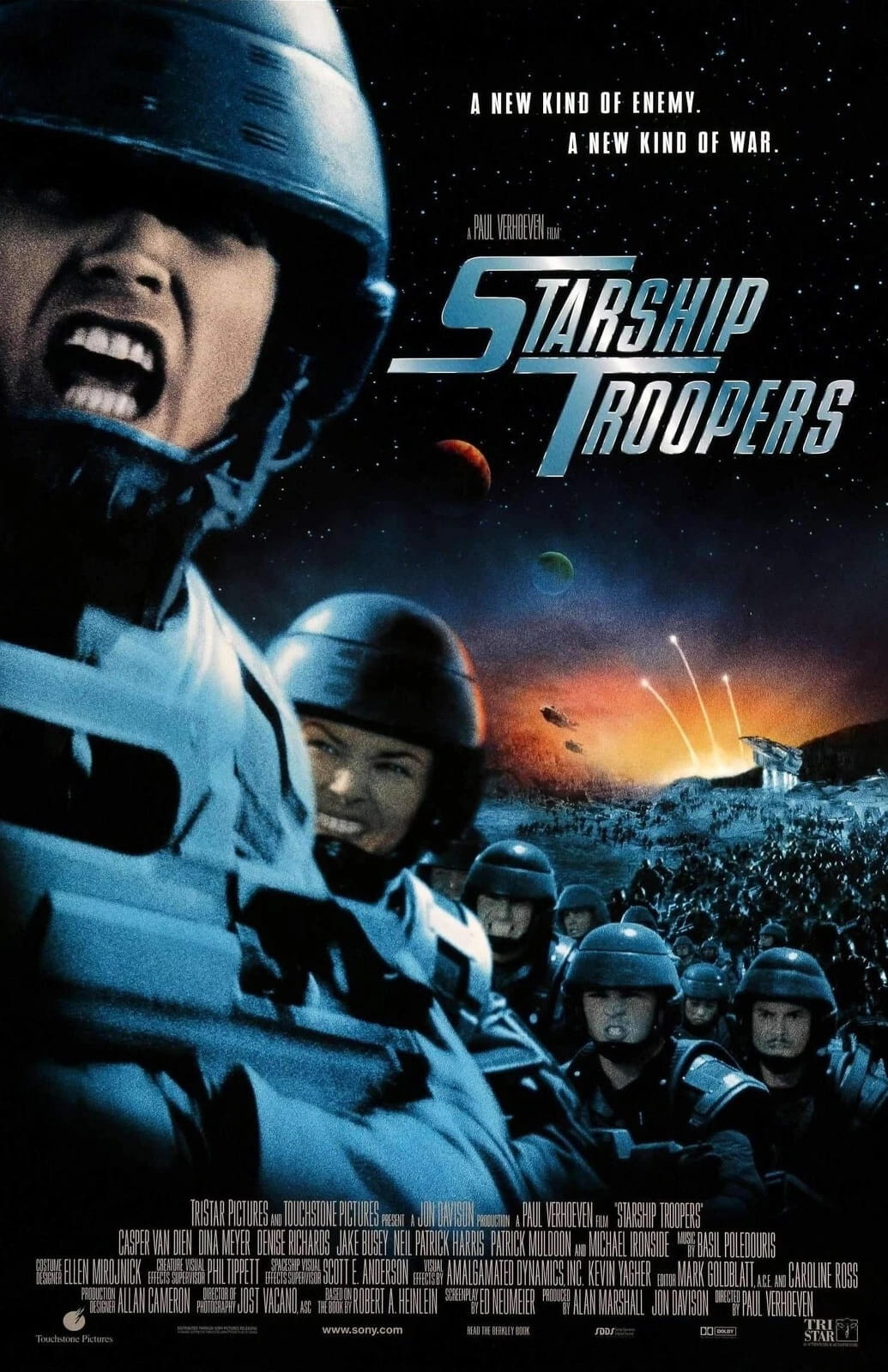 Starship Troopers (TriStar Pictures, November 7, 1997)
Starship Troopers (1997)
Who’s in it?
Starship Troopers (TriStar Pictures, November 7, 1997)
Starship Troopers (1997)
Who’s in it?
Casper Van Dien, Denise Richards, Neil Patrick Harris, Dina Meyer
What’s it about?The future expansion of the human race has brought us into contact with a highly-evolved alien insect species, which is now hellbent on destroying our planet. The war with the ‘Arachnids’ is ongoing, and the world government, run by a fascist corporation born from the ashes of a failed democracy, puts military service above all else. Only through fighting for your planet can you truly be perceived to be a citizen, and thus embrace the benefits that come with that status.
Into the fray is thrown Johnny Rico (Van Dien), a blond-haired, blue-eyed jock who doesn’t quite have the smarts for officer material, but is a good fit for the fodder known as the General Infantry. Rico enlists partly to impress his crush, Carmen (Richards), but is fully onboard after his parents and home town are destroyed in a bug attack. Once thrust into the brutality of close combat with the Arachnids, all that remains is for Rico to try to survive each encounter, save his friends, and eradicate the bug menace once and for all (spoiler alert — two out of three ain’t bad).
Why do I love it?The third in the holy Verhoeven trilogy, following Robocop (1987) and Total Recall (1990), and although I love the others equally, Starship Troopers is the one I’ve returned to the most times (and that’s saying something).
For all of my inherent anti-war feelings, I am always completely swept away on a jingoist wave of blood lust when this film gets going — much like rooting for the Colonial Marines when a swarm of xenomorphs is advancing. Nothing beats this film for sheer, bombastic military mayhem, and yet at its core are some sneaky anti-fascist themes, sandwiched between the violent layers like warm syrup in a stroopwaffle. Verhoeven’s great at this, he did something similar with Robocop, and here he manipulates (let’s face it) a Beverly Hills soap cast in a savage deconstruction of the military machine and Robert A. Heinlein’s alleged right-wing fantasies in his original 1957 novel on which this film is based.
But enough of my pseudo-analysis of themes, what really probes my brain bug are the effects, stunning for the time and further proof that for the best CG effects you need to place them in the hands of a traditional artist. Phil Tippett’s bugs still hold up today — it’s hard not to marvel at the swarms of Arachnids thundering across the rocky plateaus on their way to slice and dice the hopelessly outnumbered soldiers. Add to this spectacle some of the best military vehicles ever put on screen, gnarly animatronic gore, and Michael Ironside shoving his metal fingers into a hollowed out bonce and growling, “they sucked out his brains,” and you have the recipe for a damned good time. POPCORN, STAT!
Previous Murky Movie surveys from Neil Baker include:
My Top Thirty Films, Part 1
The Star Warses
Just When You Thought It Was Safe
Tech Tok
The Weyland-Yutaniverse
Foreign Bodies
Mummy Issues
Ch-Ch-Ch-Ch-Changes
Monster Mayhem
It’s All Rather Hit-or-Mythos
You Can’t Handle the Tooth
Tubi Dive
What Possessed You?
See all of Neil Baker’s Black Gate film reviews here. Neil spends his days watching dodgy movies, most of them terrible, in the hope that you might be inspired to watch them too. He is often asked why he doesn’t watch ‘proper’ films, and he honestly doesn’t have a good answer. He is an author, illustrator, teacher, and sculptor of turtle exhibits.
Categories: Fantasy Books
The Problem of the Invincible Warrior: Frank Frazetta’s Death Dealer by James Silke
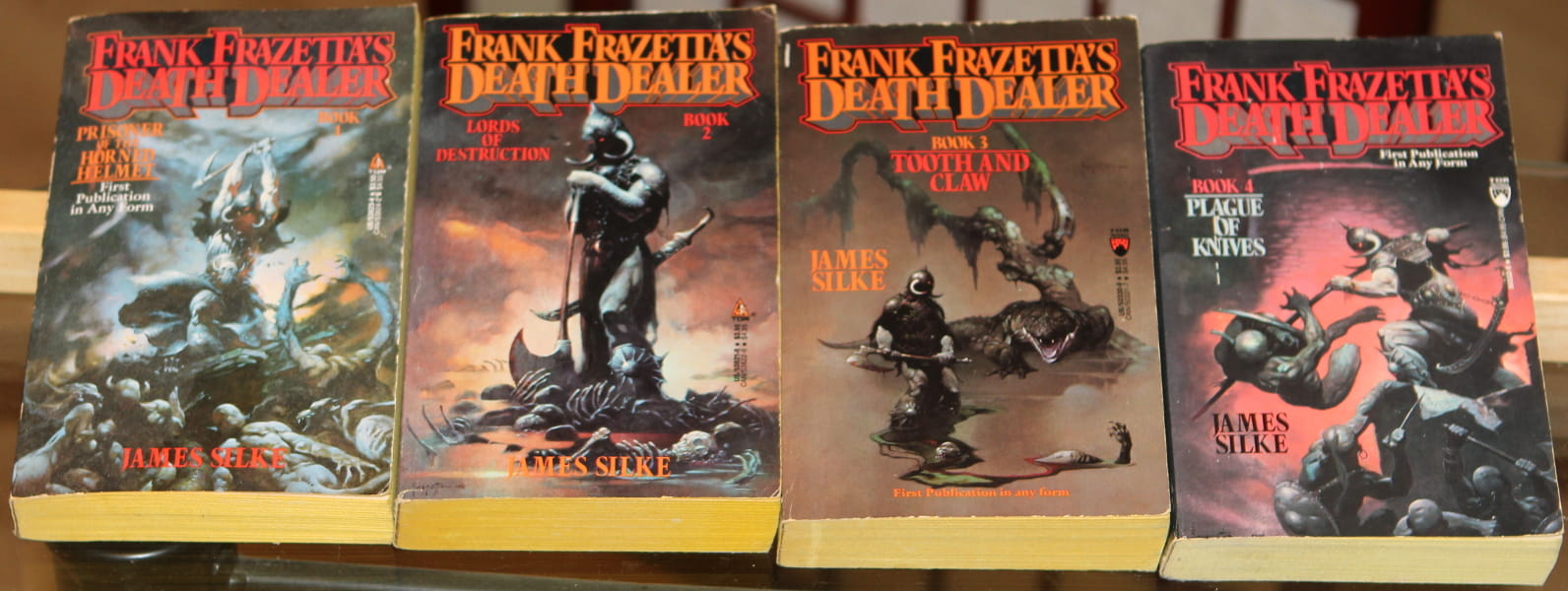 Frank Frazetta’s Death Dealer, Volumes 1-4, by James Silke (Tor Books, 1988-1990). Covers by Frank Frazetta
James Silke (1931 – ) is something of a renaissance man in the arts. He’s a visual artist and prose writer, a set and costume designer, photographer, and comic book guy. Most people who I meet recognize him as a comic artist/writer, although I’ve never read any of his graphic stuff.
I’ve seen a few of the movies he’s worked on, including King Solomon’s Mines and The Barbarians. My only experience with Silke’s writing is the four Sword & Sorcery books in the Frank Frazetta Death Dealer series.
These are:
1 Prisoner of the Horned Helmet (February 1988)
2 Lords of Destruction (January 1989)
3 Tooth and Claw (November 1989)
4 Plague of Knives (June 1990)
There’s also a book called Rise of the Death Dealer, with a Frazetta Cover (shown below), but I’ve never seen a physical copy, and from what I understand it’s not a 5th book in the series. According to Fantastic Fiction, it’s an omnibus volume that collects the first two books. Fantastic Fiction has been pretty accurate in my experience.
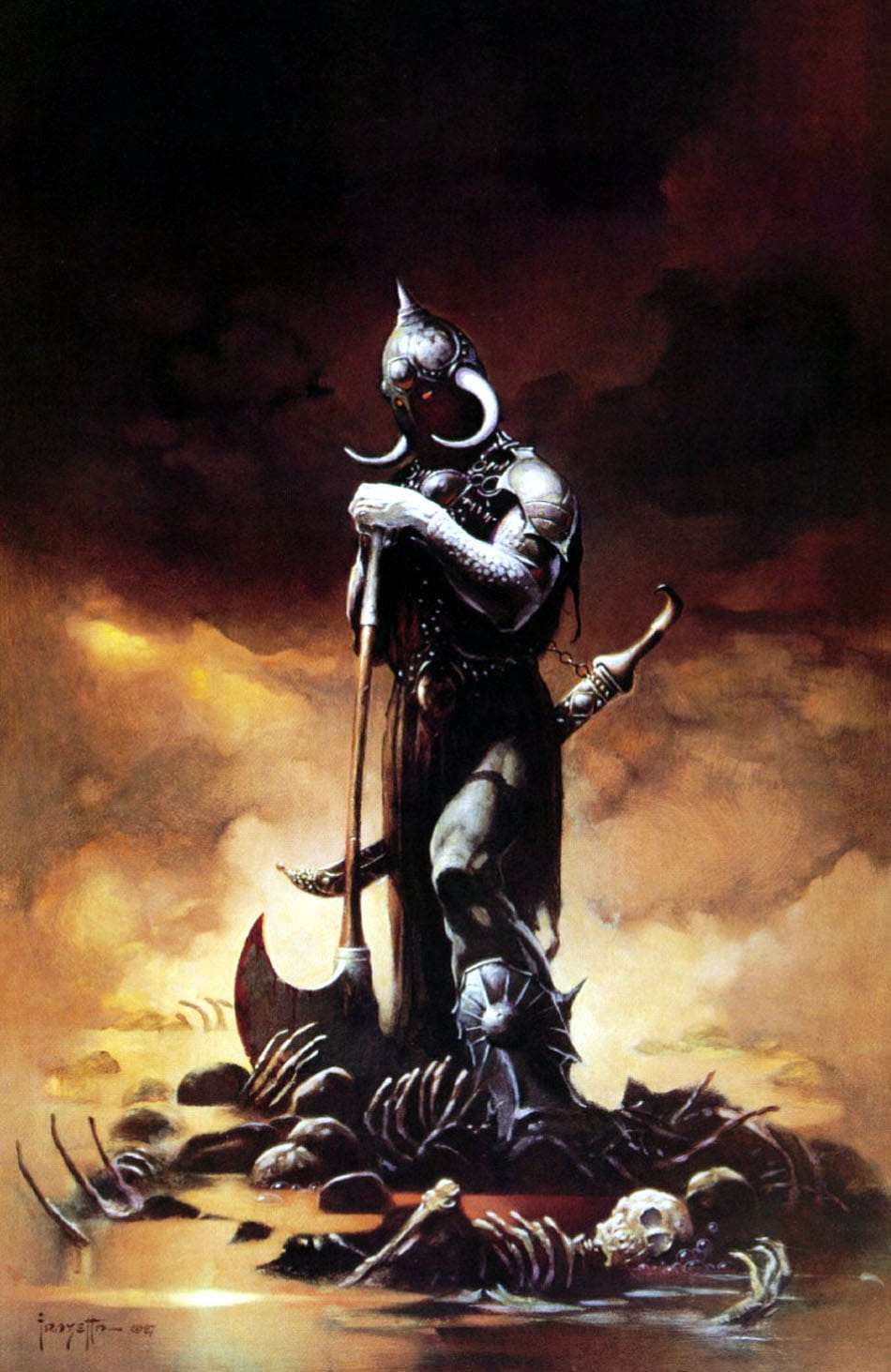 Frank Frazetta’s Rise of the Death Dealer, omnibus edition (Tor Books, March 2005). Cover by Frank Frazetta
As far as I understand, Frazetta provided the Death Dealer character and the covers and Silke wrote stories about the warrior, including an origin story in Prisoner of the Horned Helmet. I don’t know whether Frazetta offered any story ideas but the prose is Silke.
The series features a character named Gath of Baal, a young but powerful warrior at the beginning of the series, who acquires a horned helmet imbued with great sorcery. He doesn’t realize that once he puts it on he’ll become its prisoner and will become the Death Dealer.
I enjoyed the series quite a lot. There are some strong visuals and some bloody, gory fights. The prose is serviceable but not outstanding. There are some very modern phrasings that occasionally threw me out of the story. I was hoping for more Robert E. Howard style poetic prose but didn’t get it.
The pacing is not as fast as it could have been either, mainly because the books are too long. Cutting fifty pages out of each of these volumes would have really helped. At some point I’ll also talk about the “problem” of the invincible warrior and how it diminishes tension in a tale.
Charles Gramlich administers The Swords & Planet League group on Facebook, where this post first appeared. His last article for us was Erich von Däniken’s Chariots of the Gods? and the Pseudoscience Bestsellers of the 1970s. See all of his recent posts for Black Gate here.
Categories: Fantasy Books
Forgotten Authors: Raymond F. Jones
 Raymond F. Jones was born in Salt Lake City on November 15, 1915. He studied engineer and English at the University of Utah before working as a radio engineer. He later suggested that getting an English degree is one of the worst things a writer could do. He had a reasonable amount of success as an author, with his novel This Island Earth being the work he is best known for. It was adapted into a film in 1955, starring Jeff Morrow and featuring Russell Johnson, who would go on to portray the Professor on Gilligan’s Island, and Richard Deacon, who played Mel Cooley on The Dick van Dyke Show.
According to Jones, he was introduced to science fiction in 1927 when he read H.G. Wells’ War of the Worlds. He decided he never wanted to read it again because he was afraid it couldn’t live up to the “thrill of that first contact with the realm of imagined science.”
After graduating college, he served on a mission in Galveston, Texas and worked installing telephone exchange equipment for Western Electric in Texas, but after marrying Elaine Kimball on June 27, 1940, he took a job with the Weather Bureau to cut down on travel. During World War II, he used his radio engineering degree at Bendix Radio in Baltimore before settling in Arizona after the war.
Jones’ first short story, “Test of the Gods,” was published in the September 1941 issue of Astounding, in which it was overshadowed by the cover story, Isaac Asimov’s “Nightfall.” This is a pattern that would be repeated, leading Gerald W. Page to note that while Jones was a “writer of surprising versatility. But the price of this seems to be that too often he came on the scene with a perfectly good story that was still second best to the similar works of someone else.”
Jones wrote 15 novels in addition to This Island Earth, beginning in 1951 with the novel Renaissance (which was reprinted as Man of Two Worlds).
In addition to This Island Earth, two other stories by Jones were adapted by Hollywood. “The Children’s Room,” originally published in 1947, was an episode of the anthology series Tales of Tomorrow in 1952, and 1950’s “Divided We Fall” was adapted for the anthology series Out of This World in 1962.
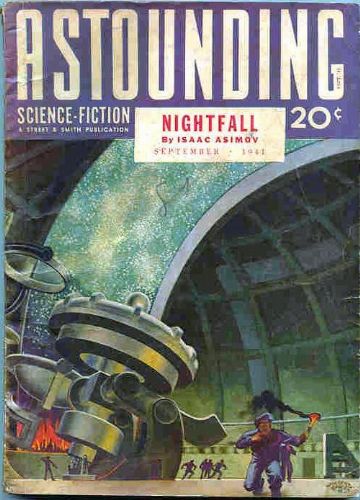 His 1950 story “Tools of the Trade” is believed to be the first description of 3D printing.
Jones not only wrote science fiction, he also wrote non-fiction, with four juvenile science books ranging from The World of Weather to Animals of Long Ago. He also wrote the study Ice Formation on Aircraft.
Jones was a Hugo finalist in 1967 for his short story “Rat Race,” which lost to Larry Niven’s “Neutron Star.” In 1996, his story “Correspondence Course,” was remembered by enough people to earn him a Retro-Hugo nomination, where he lost to Hal Clement’s “Common Sense.”
Elaine died on July 23, 1970 and on May 2, 1973, Jones married Lillian Wats. Jones and Elaine had five children and eighteen grandchildren. When he married Lillian, he gained five step-children.
Jones died in Sandy, Utah on January 24, 1994 after suffering from pancreatic cancer. For no reason other than the same first name, I tend to think of Jones along with author Raymond Z. Gallun (1911-1994). Coincidentally, both of their obituaries appeared in the same issue of Locus, with Jones coming in second to Gallun’s.
I reviewed Jones’ short story “Death Eternal” in 2018 as part of my Birthday Reviews series on Blackgate.
Steven H Silver is a twenty-one-time Hugo Award nominee and was the publisher of the Hugo-nominated fanzine Argentus as well as the editor and publisher of ISFiC Press for eight years. He has also edited books for DAW, NESFA Press, and ZNB. His most recent anthology is Alternate Peace and his novel After Hastings was published in 2020. Steven has chaired the first Midwest Construction, Windycon three times, and the SFWA Nebula Conference numerous times. He was programming chair for Chicon 2000 and Vice Chair of Chicon 7.
Categories: Fantasy Books
A Game of Classic Science Fiction: Terraforming Mars by Jacob Fryxelius
 Terraforming Mars by Jacob Fryxelius (FryxGames/Stronghold Games, 2016)
About a year ago, I added Terraforming Mars to my collection of board games, fascinated by the premise. At the very end of the year, a local friend proposed to get together and try playing it. On 2 January, three of us sat down to a first game, using the beginner option of everyone playing a standard corporation and keeping all ten of their initial cards without having to pay for them. Four and a half hours later, we started counting up scores.
Terraforming Mars is a game about economic investment and its returns, like Race for the Galaxy, one of my long-time favorites. The premise is fairly hard science fiction: Several corporations have been granted charters by Earth’s world government to begin — as the title says — terraforming the planet Mars: raising its temperature and oxygen and giving it bodies of water. When these reach specific designated values, the game ends and score is taken. There are no violations of fundamental laws of physics such as faster-than-light travel; the departure, so far as there is one is not qualitative but quantitative, in the rapid progress of terraforming, though in some compensation, play is divided into “generations,” which implies a time scale on the order of centuries.
[Click the images to terraform them.]
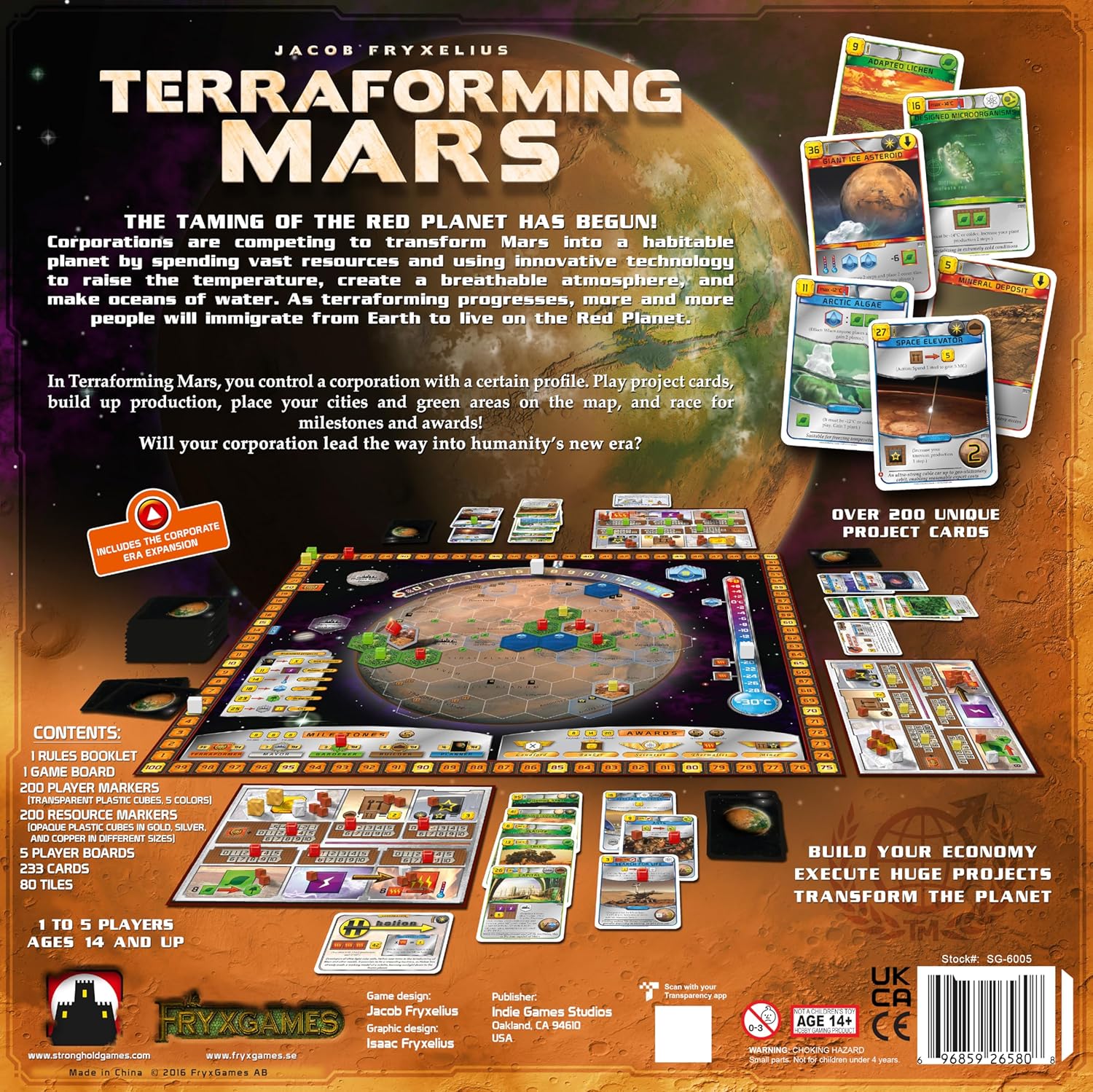 Back cover of Terraforming Mars
The rule book for the game is 16 pages, but that includes introductory material, illustrations, and several game variants, including a solitaire version. The actual rules are in easily readable type and can be read through in a few minutes. Most of the complexities are strategic and are expressed in the text and graphics of game cards. Along with these cards, each player has a personal game board that keeps track of resources, and players share a larger board that’s a map of one hemisphere of Mars, where tiles can be placed to represent cities, oceans, vegetation, and other special achievements.
The map is also used to keep track of various scores and accomplishments. Reading the map is a little complicated, like watching the screen for character status in a computer game; on this first session we took a while to figure out some of its sections. But I think it can become familiar quickly.
In a way comparable to Race for the Galaxy, each generation in Terraforming Mars is divided into phases. A generation begins with each corporation receiving four cards from a deck, which represent newly acquired capabilities if the player wants to pay for them (“‘Take what you like,’ said God; ‘take it, and pay for it.'”) After that, players perform various actions, many but not all enabled by the cards, and some of which add tiles to the large board. Spatial arrangement of tiles is important and is partly restricted by the game rules.
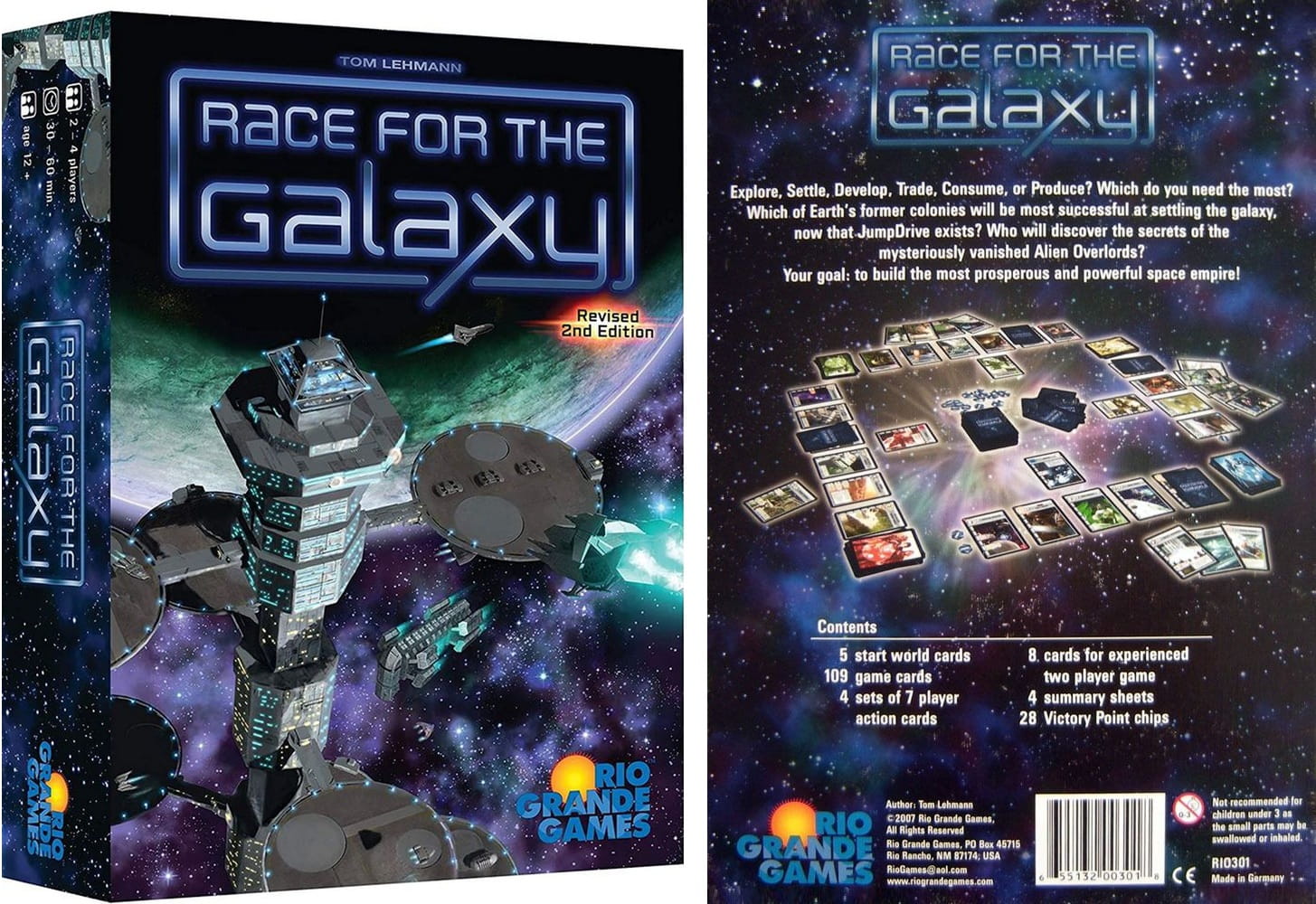
Race For the Galaxy by Tom Lehmann (Rio Grande Games, 2007)
Some cards are used up by one action; some are kept and displayed in front of the player, and some of these can be used for a new action in each generation. All of this costs credits, and sometimes other resources! At the end of the generation, players engage in “production,” which provides more credits (based partly on their terraforming scores) and sometimes other resources that can be used to advance terraforming, directly or indirectly.
One thing that’s largely omitted from the game is violent conflict; most of the time, the various corporations are competing in an enterprise that theoretically benefits all of them (moving them toward a fully terraformed planet). There are a few moves that advance one player while imposing costs on another. An economist would call these “externalities”; a historian might call them “acts of war.” But as with, for example, Settlers of Catan (another European game), players have the option either of cutthroat competition or of deciding that that makes playing the game less fun, and avoiding it.

One of the three of us found the game rules a bit too complicated and hard to follow, so this may not be a game for everybody. It’s certainly not a casual game! But the other two of us enjoyed it a lot. In The Psychology of Everyday Things (published 1988), Donald O. Norman set out principles for ease of use, and pointed out that well designed games are deliberately a little difficult to “use” successfully (that is, to win); otherwise they become boring when the player solves them. I don’t see Terraforming Mars as likely to become boring.
Many games have an implied story. Sometimes this is very abstract, as with chess (a game about feudal warfare) or bridge (a game about capitalistic competition and cooperation); sometimes a kind of story emerges from the play of the game. (And sometimes, as with Dungeons and Dragons, telling bits of story is an actual move in the game.) Terraforming Mars has a fairly strong story aspect: It tells about how humanity moves out into the solar system and makes other planets humanly livable, in the style of classic science fiction writers (a clever joke in the rule book is to give examples of play with three players named Kim, Stanley, and Robinson!), of recent video series such as For All Mankind, or of the proposals of billionaires.
If you like that premise, or are willing to accept it, you’ll find Terraforming Mars a well thought out representation of a lot of its scientific details. I expect that as we play more games, and move on to using more than the standard starting corporations, we’ll find interesting bits of added flavor in the profiles of other corporations. And I may try playing the solo version when I have a few hours free; it seems likely to be entertaining.
William H. Stoddard is a professional copy editor specializing in scholarly and scientific publications. As a secondary career, he has written more than two dozen books for Steve Jackson Games, starting in 2000 with GURPS Steampunk. He lives in Lawrence, Kansas with his wife, their cat (a ginger tabby), and a hundred shelf feet of books, including large amounts of science fiction, fantasy, and graphic novels. His last piece for Black Gate was a review of Whose Body? by Dorothy Sayers
Categories: Fantasy Books
Pages
- « first
- ‹ previous
- 1
- 2
- 3
- 4
Recent comments