
https://www.blackgate.com/

Dark Muse News: Reviewing Arcane Arts and Cold Steel by David C. Smith
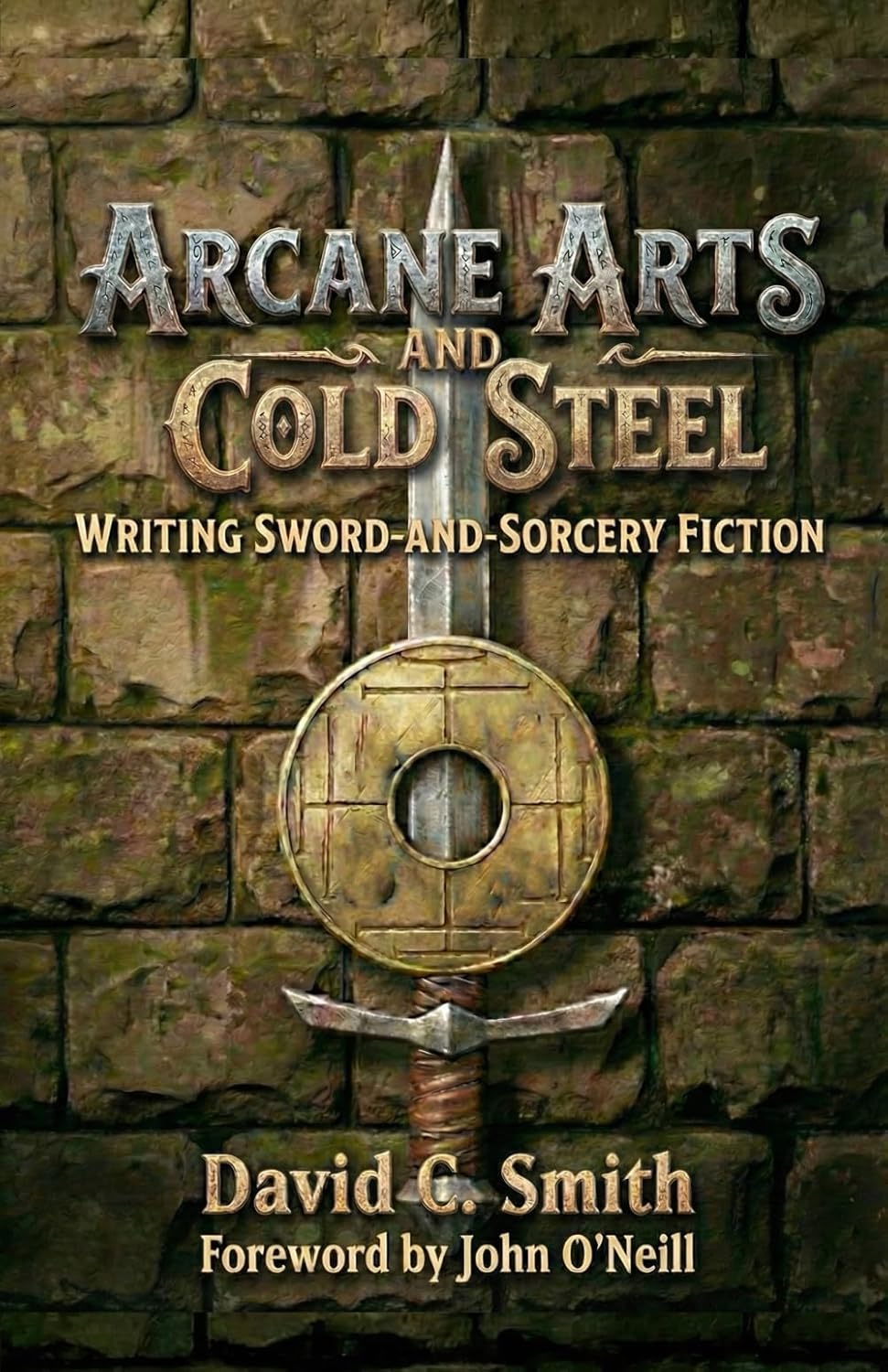
Arcane Arts and Cold Steel (Pulp Hero Press, December 24, 2025)
In 2019, Pulp Hero Press published Brian Murphy’s Flame and Crimson: A History of Sword-and-Sorcery, which was notably covered by David C. Smith (link to review) and John O’Neill (link) on Black Gate. O’Neill highlighted that Brian Murphy was one of the earliest contributors to Black Gate, from way back in 2012! Six years have passed since the publication of Flame and Crimson; whereas the subtitle and focus of that was a history of Sword & Sorcery (S&S), Pulp Hero Press just followed with a sequel focused on writing it, penned by David C. Smith with a foreword by John O’Neill.
This post covers the complementary book Arcane Arts and Cold Steel: Writing Sword-and-Sorcery Fiction (Pulp Hero Press 2025, 298 pages). Greg Mele recently posted a Black Gate article on how this book is The Literary Sorcerer’s Toolkit; read that to learn more about the author.
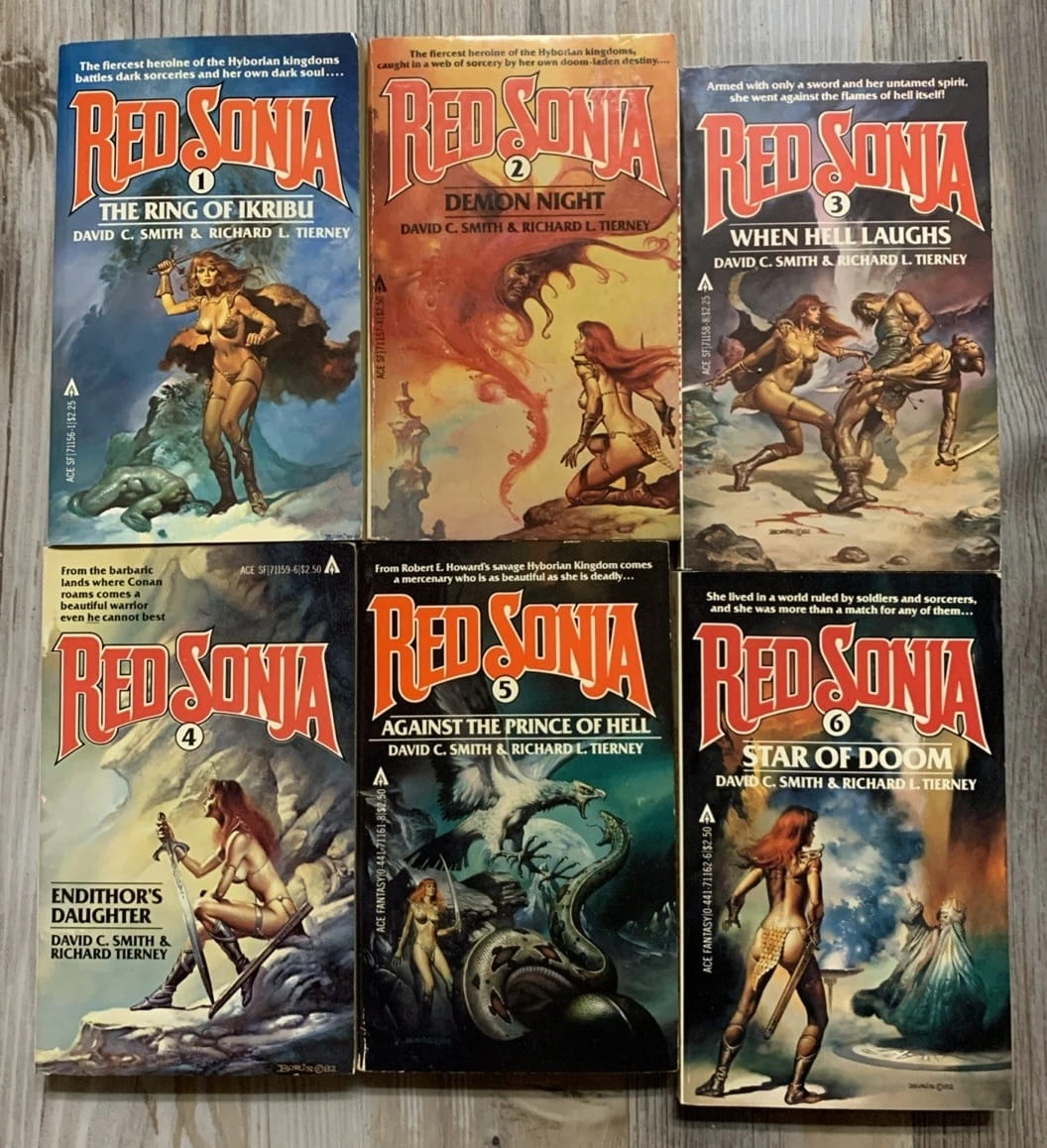 The Red Sonja series by David C. Smith and Richard L. Tierney (Ace Books, December 1981-May 1983). Covers by Boris Vallejo
In short, David C. Smith (Wikipedia page) is a writer of horror, historical, and suspense fiction, and is also a medical editor and essayist. He is best known for his heroic fantasy novels (i.e., Oron and the Attluma books), including his collaborations with Richard L. Tierney featuring Robert E. Howard’s Red Sonja heroine. He has written plenty of nonfiction, too, and won the 2018 Atlantean Award from the Robert E. Howard Foundation for Outstanding Achievement, Book, for Robert E. Howard: A Literary Biography.
Read this to learn the contents of the Arcane Arts and Cold Steel in more detail.
Frankly, it feels like John O’Neill has been moderating a panel on Sword & Sorcery since 2019, Brian Murphy covered the history of S&S, while David C. Smith covered writing perspectives, and Pulp Hero Press captured the transcript in book form.Let us quickly recap some of Flame and Crimson to set up Arcane Arts and Cold Steel content.
What Sword-and-Sorcery is, and What it is NotBrian Murphy opened with a chapter defining “What is Sword-and-Sorcery” before following with eight chapters on the linear history of it. He quoted David C. Smith from the very beginning!
We can give you clues to what it is — and what it is not. It is not high fantasy. High fantasy dresses up life and offers comfort; it is romantic. Our fiction is dark, often very dark, in the same way that unsettling dreams are never far from nightmares, and not at all comforting.
– David C. Smith, “Introduction,” Swords of Steel
- Men (and women) of action
- Dark and dangerous magic
- Personal and/or mercenary motivations
- Horror/Lovecraftian influence
- Short episodic stories
- Inspired by history
- Outsider heroes
At long last, we have a history of the sword-and-sorcery genre, and a very welcome and erudite study it is. Brian Murphy is to be commended for his honest appreciation of our frequently dismissed and often mocked genre. He intelligently surveys the expanse of the sword-and-sorcery field warts and all, low points and high, putting the genre into its proper literary perspective.
To present a linear history of the sword-and-sorcery genre is, in fact, to dissect a Yggdrasil of many branches, which is precisely what Murphy has done here…
He bookends his study with two important chapters, with his initial question “What is Sword-and-Sorcery?” ultimately addressed in the final chapter, “Why Sword-and-Sorcery?” In between, he takes us on a journey beginning with the roots of what is to come
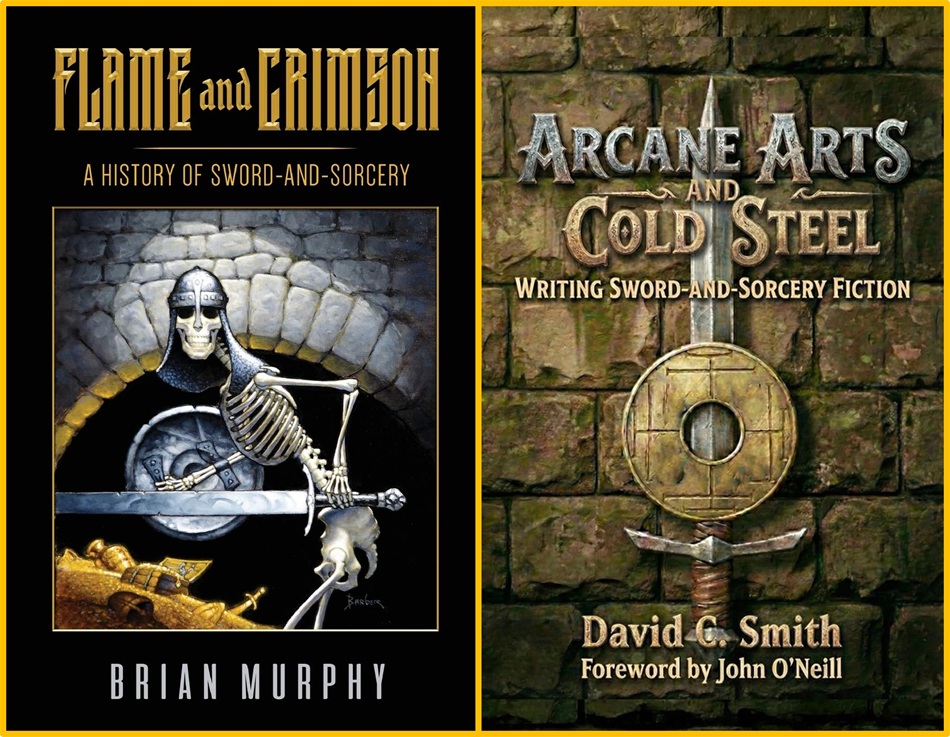 Pulp Hero Press books. Flame and Crimson: A History of Sword-and-Sorcery by Brian Murphy (2019). Arcane Arts and Cold Steel: Writing Sword-and-Sorcery Fiction, David C Smith (2025).
Arcane Arts and Cold Steel
Motivated to Write, and Lie!
Pulp Hero Press books. Flame and Crimson: A History of Sword-and-Sorcery by Brian Murphy (2019). Arcane Arts and Cold Steel: Writing Sword-and-Sorcery Fiction, David C Smith (2025).
Arcane Arts and Cold Steel
Motivated to Write, and Lie!
John O’Neill’s introduction to Arcane Arts and Cold Steel clarifies our loves of lies! He covers humans’ need for storytelling, converging from 17,000-year-old cave paintings summarizing wild hunting expeditions, to 5,000-year-old astronomical myths guiding the evolution of civilizations, to general fiction, and our need for heroic myths. To paraphrase, “there is potential inside us to accomplish things we can hardly dream of” and heroic myths fuel our fire.
O’Neill writes:
What tools do we have to teach [our children] to resist in the face of a terrible, implacable, or unexpected foe? You already know the answer. The answer is myth. Story. Fiction. Lies.
Expect a review of writing approaches, not a step-by-step S&S writing workshopArcana Arts and Cold Steel is about writing, but it is not a stringent workbook for the reader to follow. It is more of a compendium of reviews, collections of excerpts and quotes, and even reviews of other reviews. It is a free-form cookbook that simultaneously showcases over a hundred writers’ and reviewers’ work while categorizing examples for the writer to model. If you do not intend to write, you will walk away with a detailed survey of S&S literature and its fan base, and expand your perspectives of what S&S literature has become (and what it can be). Writers will gain access to countless examples of characters, plots, milieus, practical applications, and styles.
Over three years ago, I had the chance to peruse a draft of Arcana Arts and Cold Steel, and I encouraged David Smith to consider a more direct step-by-step guide. He replied kindly to me via email about that approach: “Who has the right to tell someone how to be their own writer?” Well, he had the credentials for that, but not the ego. Yet he was still driven to compose a book about writing S&S. In the end, the book is a splendid mix of David Smith’s insight blended with so many representations from the broader S&S community that it feels like an encyclopedic love letter to the entire fan base. The Appendix Author Interview relates his development and approach toward the book.
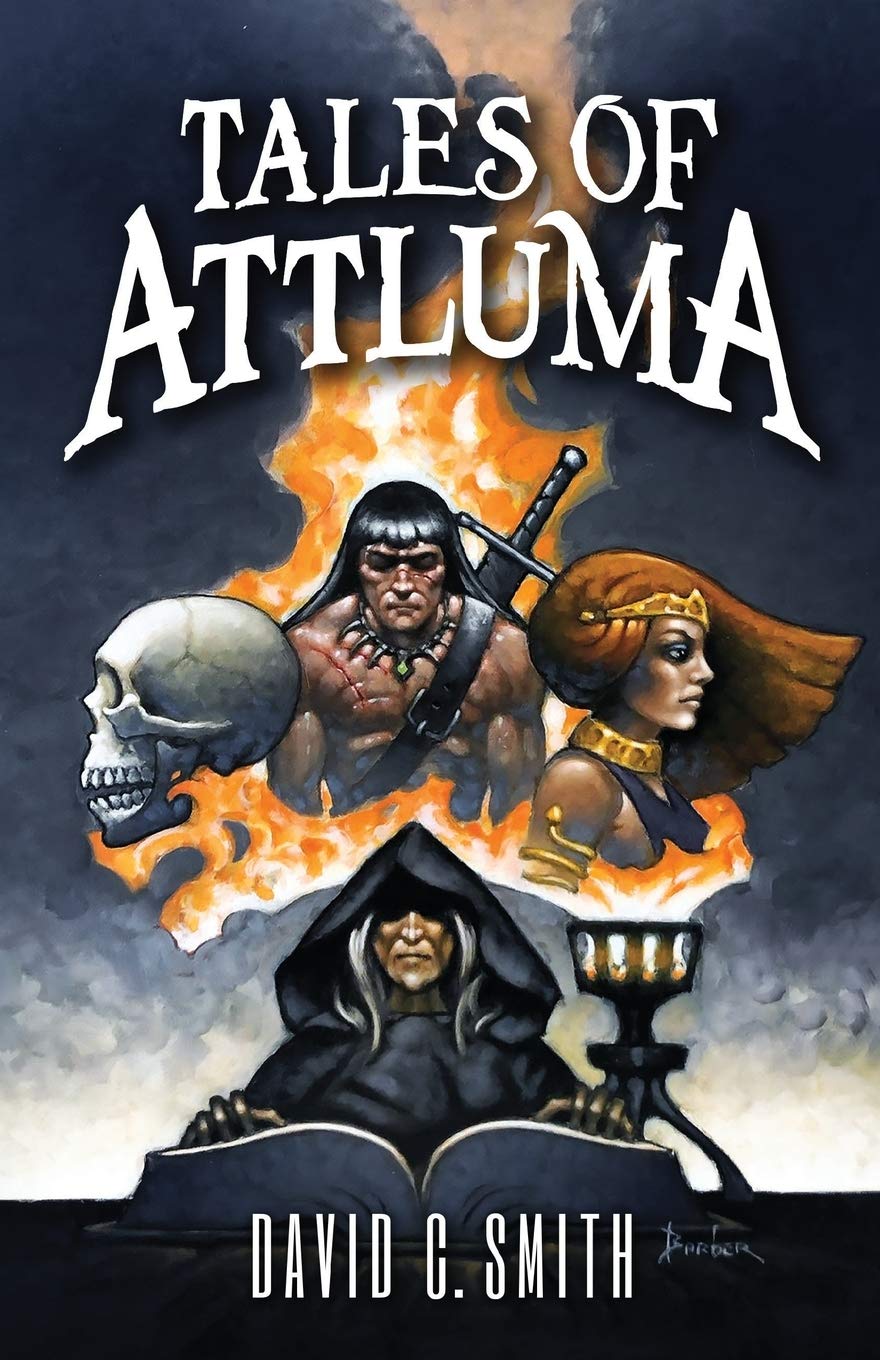
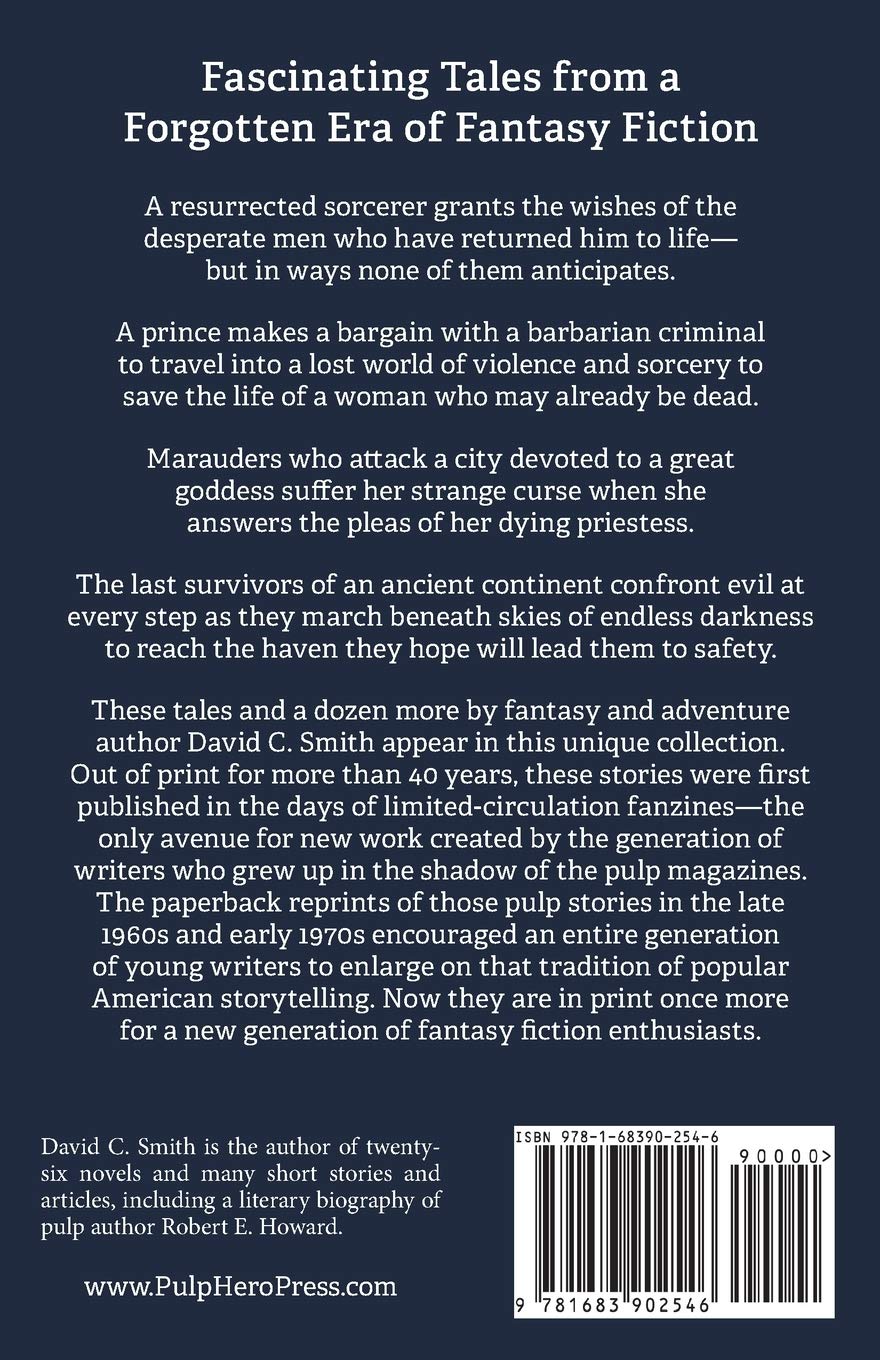
Tales of Attluma by David C. Smith (Pulp Hero Press, December 24, 2025). Cover by Tom Barber
I did. Who am I to tell anyone how to write? You sit down, you start, you learn by doing while referring to writers you like by dissecting how they’ve done what they’ve done. But my friends kept calling it Dave’s “how-to write sword-and-sorcery” book and made the case that offering guidance or ideas to readers would be helpful. Why write a book called “Writing Sword-and-sorcery Fiction” without giving people some ideas about actually writing sword-and-sorcery fiction? They were right. So I added the section doing that to complement the material in the main text.
I’d already come up with the ideas years ago on creating characters. Wrote it for an online writing group. So I had that, and when I reviewed it, I found some good common sense ideas in there. It wasn’t strictly prescriptive. I have a think skin whenever I hear a voice that sounds even vaguely imperative or prescriptive. Don’t tell me what to do! But when I thought of it as giving helpful advice or suggestions, I was fine with it. Started typing and went to town with a lot of ideas. So I hope those pages are worthwhile.
David C. Smith — Page 260-261
Arcane Arts and Cold Steel Contents 1. Sword & Sorcery Fiction: What it is and what it is not (pages 1-72)This is a 70-page, condensed (and less chronological) version of Flame and Crimson‘s history that sets the stage for writing S&S.
2. Story Structure (pages 73-186)- Character and Setting
- Must a protagonist be human?
- Flat and round characters
- Plots and scenes
- Style, voice, and tone
- Theme
In this section, David Smith surveys the rapidly diverging contemporary flavors of Sword & Sorcery. Howard Andrew Jones (HAJ, our beloved champion of S&S and its fan base, who passed in January 2025) coined the term “New Edge” to capture a rebirth of sword and sorcery. In 2008, as Managing Editor at Black Gate, HAJ posted his ‘manifesto’ regarding a resurgence brewing in Sword & Sorcery fiction: Honing A New Edge Part 1 & Part 2 (these originally appeared in the introductory editorials Issue 3 & 4 as “The New Edge”).
This sentiment resonated with many authors and editors, and a decade after its posting, directly inspired the creation of New Edge Sword & Sorcery Magazine (though editor Oliver Brackenbury has a slightly different definition than that of HAJ, read Oliver’s interview at BG for more).
4. Final Words- Appendix I: Writing Sword-and-Sorcery Fiction (p231-252)
- Appendix II: Recommended Reading (p253-256)
- Interview with the Author (p257-264)
As complete as Arcane Arts and Cold Steel is, there is more in David Smith’s head to tap. As an editor and literature guru, he has keen takes on syntax, which he sprinkles throughout the book. I privately hoped for a reprint, or relook, of his “The Writer’s Style: Sound and Syntax in Howard’s Sentences” (published in The Dark Man, February 2013). That essay, like many of The Dark Man (The Journal of Robert E. Howard Studies)‘s articles, delved into Robert E. Howard’s writing. Reading Smith’s Arcane Arts and Cold Steel motivated me to reread Smith’s article which dissects the Father of S&S’s syntax:
- Natural Order of Sentences and Plain Style
- Alliterative Devices, Conventional Phrases, archaic Flourishes, and Diction (poetic
- Color
- Use of Present Tense (mixed with past)
— David C. Smith
S.E. Lindberg is a Managing Editor at Black Gate, regularly reviewing books and interviewing authors on the topic of “Beauty & Art in Weird-Fantasy Fiction.” He has taken lead roles organizing the Gen Con Writers’ Symposium (chairing it in 2023), is the lead moderator of the Goodreads Sword & Sorcery Group, and was an intern for Tales from the Magician’s Skull magazine. As for crafting stories, he has contributed eight entries across Perseid Press’s Heroes in Hell and Heroika series, and has an entry in Weirdbook Annual #3: Zombies. He independently publishes novels under the banner Dyscrasia Fiction; short stories of Dyscrasia Fiction have appeared in Whetstone Amateur S&S Magazine, Swords & Sorcery online magazine, Rogues In the House Podcast’s A Book of Blades Vol I & II, DMR’s Terra Incognita, the 9th issue of Tales From the Magician’s Skull, Savage Realms Magazine, and Michael Stackpole’s S&S Chain Story 2 Project.
Categories: Fantasy Books
Swords & Sorcery and The Fantastic Swordsmen, edited by L. Sprague de Camp
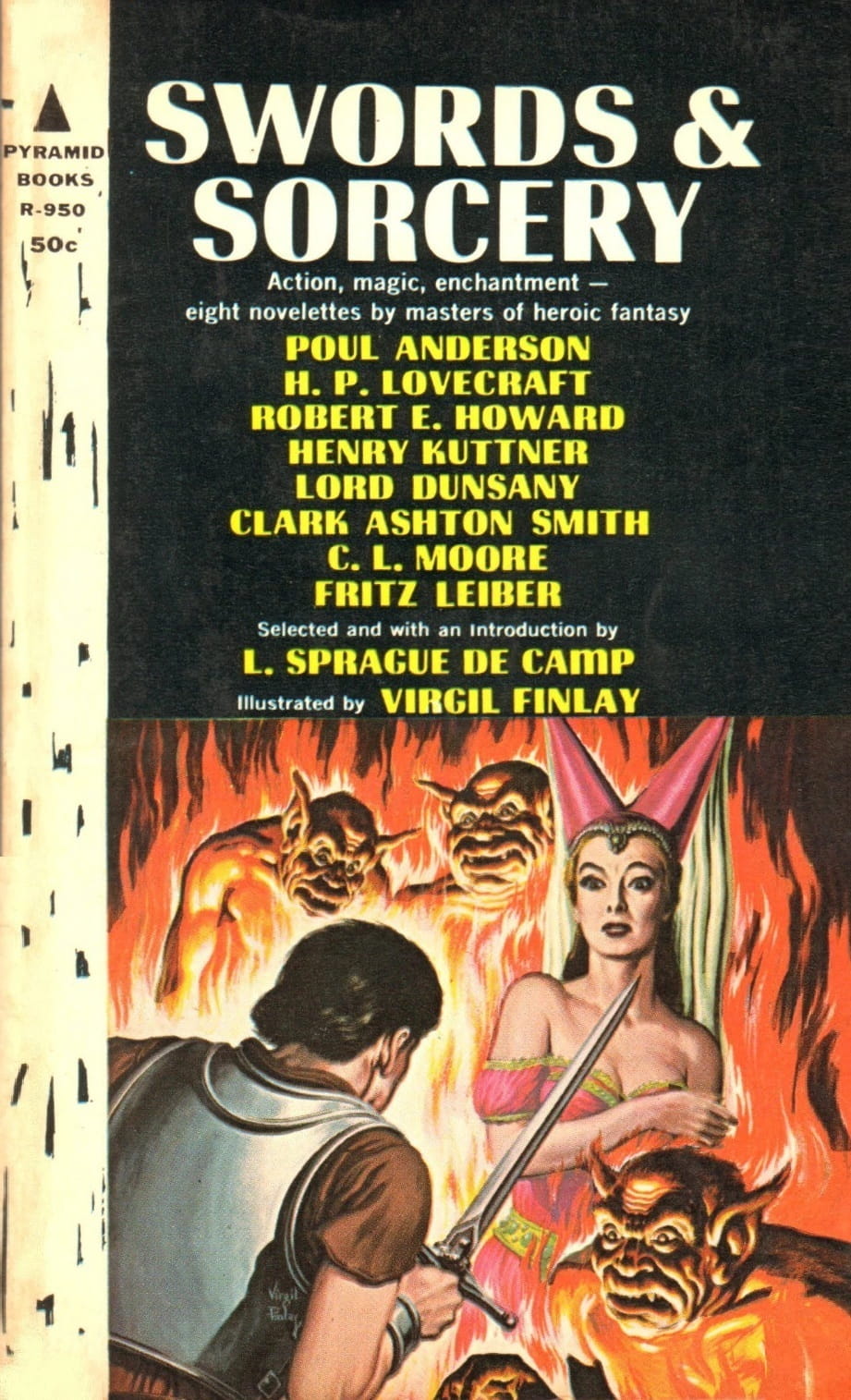
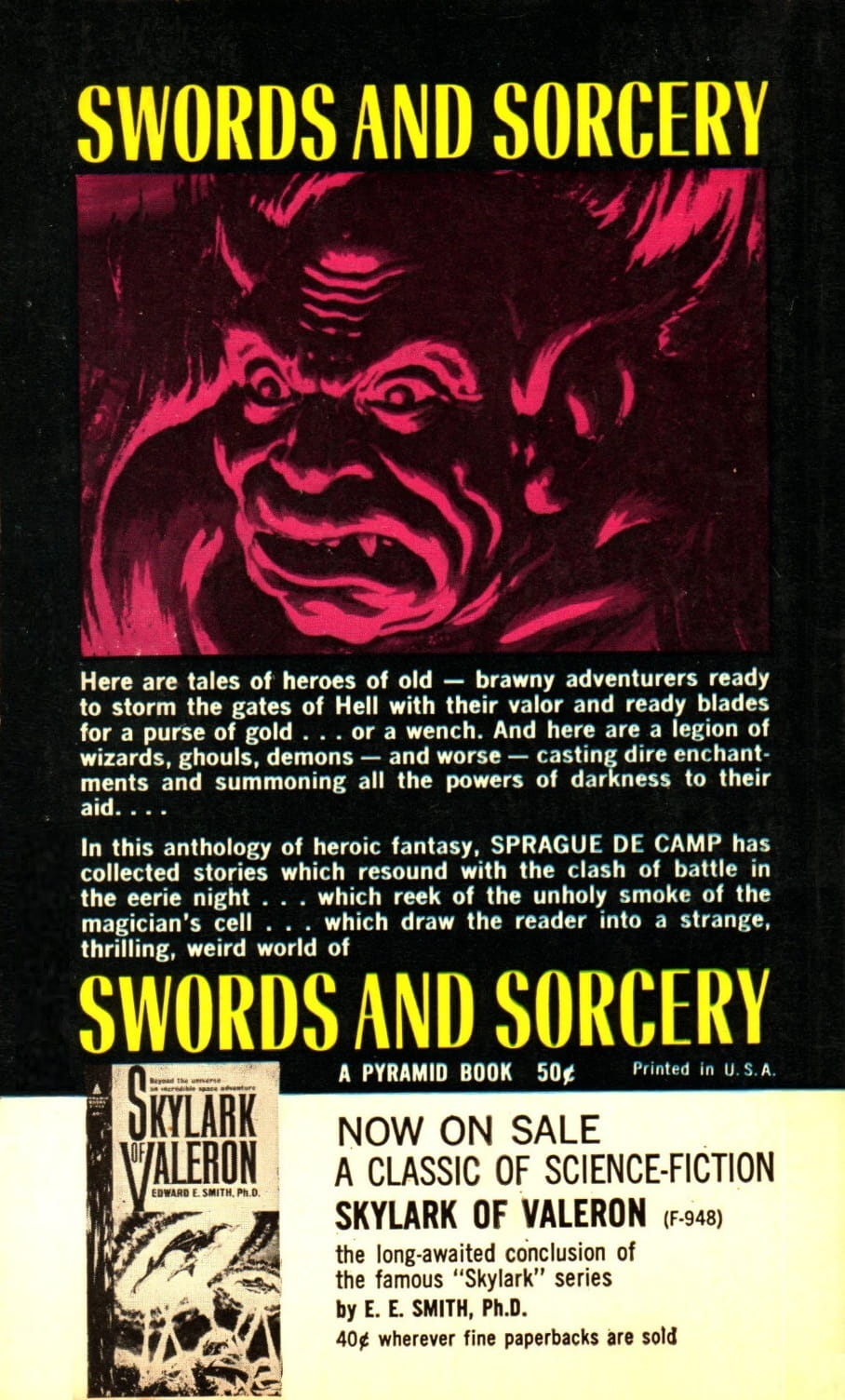
Swords and Sorcery: Stories of Heroic Fantasy, edited by L. Sprague de Camp
(Pyramid Books, December 1963). Cover by Virgil Finlay
Here are two more Sword & Sorcery anthologies edited by L. Sprague de Camp. Both are from Pyramid Books. Swords & Sorcery is 1963, with interior illustrations by Virgil Finlay. ISFDB indicates the cover is by Finlay as well, although it looks to me very much in the cover style of the second book, The Fantastic Swordsmen (1967), where the cover is attributed to Jack Gaughan. Some of the experts who visit this page probably know the truth.
1. Swords & Sorcery is a nice collection. It contains “Shadows in the Moonlight” (Conan) by Robert E. Howard, and stories by Poul Anderson (the excellent “Valor of Cappen Varra”), Fritz Leiber (Fafhrd, Gray Mouser), Kuttner (Prince Raynor), Lord Dunsany, C. L. Moore (Jirel), Clark Ashton Smith, and Lovecraft (“The Doom that Came to Sarnath”). The introduction on “Heroic Fantasy” by de Camp tends to piss some people off that I know, although I’m not one of those particularly. It suggests that S&S is purely escapist reading. I think it does make for a good escape from life’s mundanities but there’s more to it than just that.
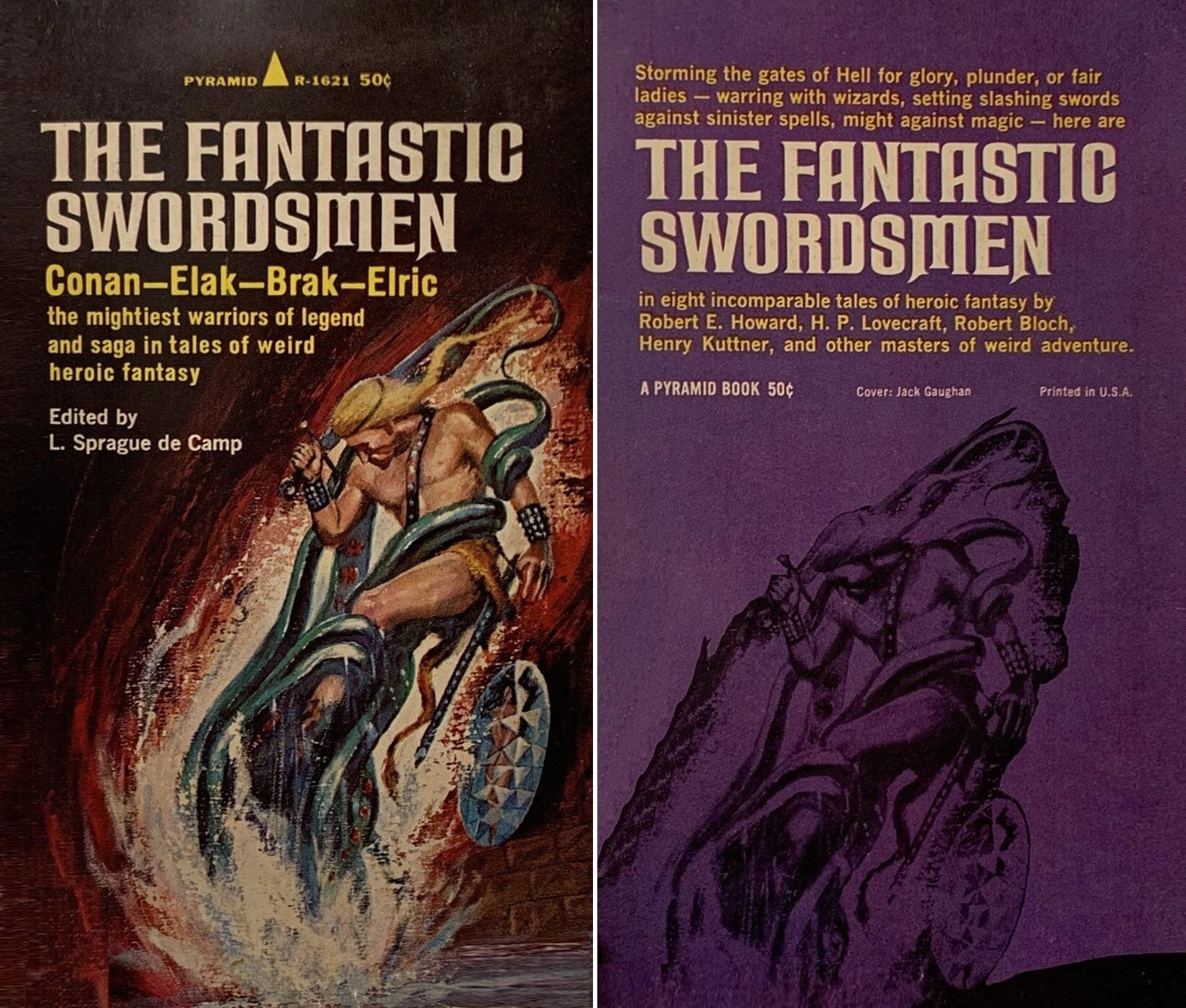 The Fantastic Swordsmen , edited by L. Sprague de Camp (Pyramid Books, May 1967). Cover by Jack Gaughan
2. The Fantastic Swordsmen is also a pretty good collection, with stories about Conan, Elak, Brak, and Elric, along with a few new items. The cover shows us Brak. The Conan story is one that de Camp finished from a Howard outline and isn’t terribly strong. There’s also a very early story by Robert Bloch, which, while well written, shows his lack of storytelling experience at the time.
Fantastic Swordsmen also contains:
“Tellers of Tales” an intro by L. Sprague de Camp
“Black Lotus” by Robert Bloch
“The Fortress Unvanquishable, Save for Sacnoth” by Lord Dunsany
“Drums of Tombalku” by REH and L. Sprague de Camp
“The Girl in the Gem” by John Jakes (Brak)
“Dragon Moon ” by Henry Kuttner (Elak of Atlantis)
“The Other Gods” by H.P. Lovecraft
“The Singing Citadel” by Michael Moorcock (Elric & Moonglum)
“The Tower” by Luigi De Pascalis, who also wrote an Afterword
Charles Gramlich administers The Swords & Planet League group on Facebook, where this post first appeared. His last article for us was a review of The Imaro Saga by Charles Saunders. See all of his recent posts for Black Gate here.
Categories: Fantasy Books
Conan the Barbarian: Lamentations of a 35-Foot Snake
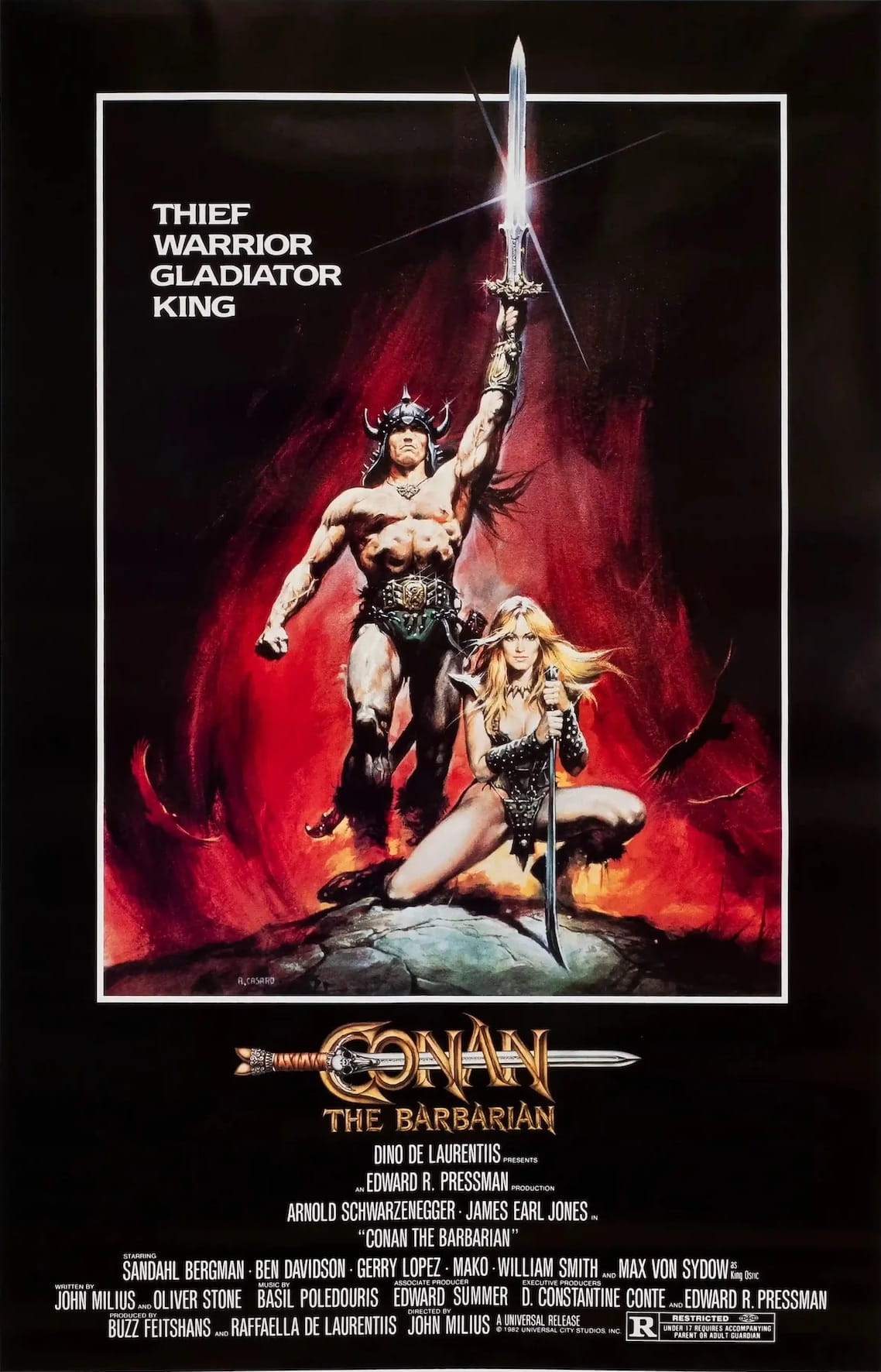 Conan the Barbarian (Universal Pictures, May 14, 1982)
Conan the Barbarian (129 minutes; 1982)
Conan the Barbarian (Universal Pictures, May 14, 1982)
Conan the Barbarian (129 minutes; 1982)
Written by John Milius and Oliver Stone. Directed by John Milius.
Based on the Conan stories by Robert E. Howard.
The first film adaptation of Robert E Howard’s greatest creation: the Cimmerian warrior who was a thief, soldier, pirate, mercenary and king. We get at least a glimpse of most of those here, even if in a somewhat distorted form.
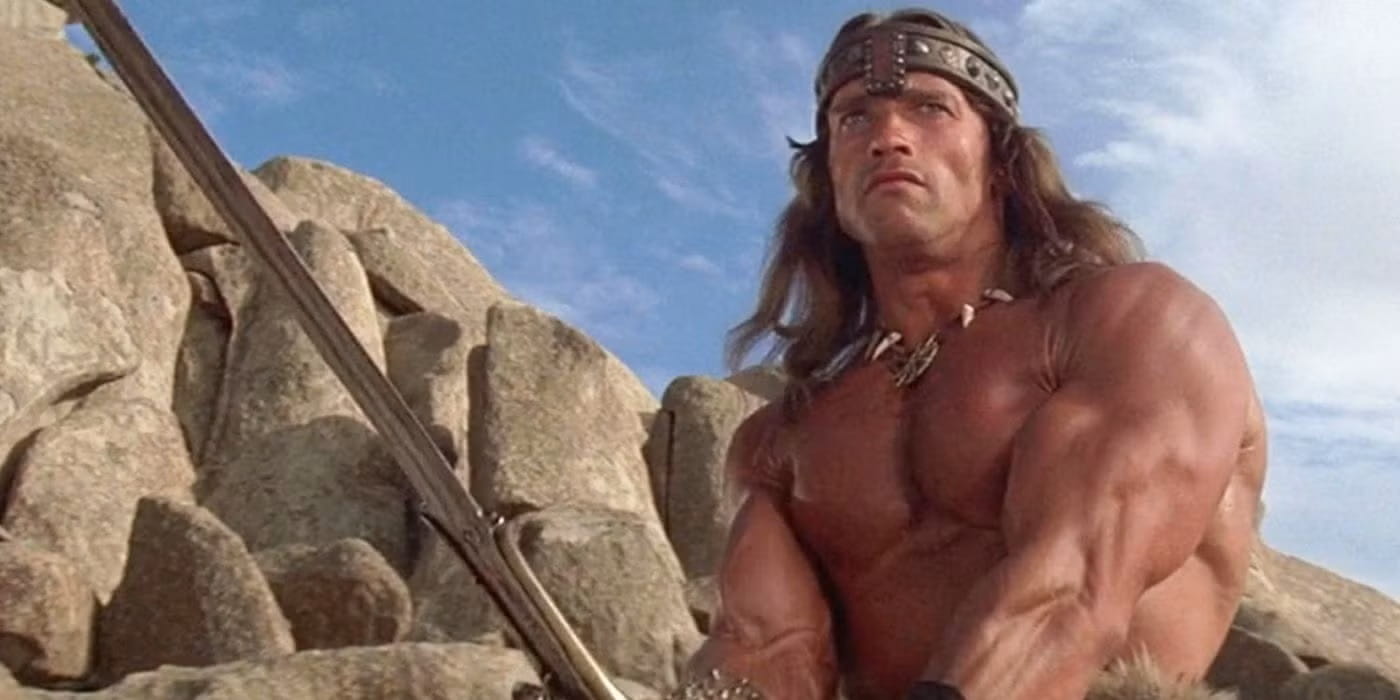 Arnold Schwarzenegger as Conan
Noteworthy
Arnold Schwarzenegger as Conan
Noteworthy
The original script for the movie was written by Oliver Stone (Platoon; JFK) under the influence of a whole lot of drugs. It would’ve run at least four hours, and featured Conan in a sort of Thundarr the Barbarian post-apocalyptic future hellscape, battling an army of 10,000 mutants.
The production company struggled to find a suitable director, at one point considering Stone and also looking at Ridley Scott. Scott, coming off the filming of the first Alien movie, turned them down. (There’s an alternate timeline where we got Alien vs Conan. And I would’ve been there for it.)
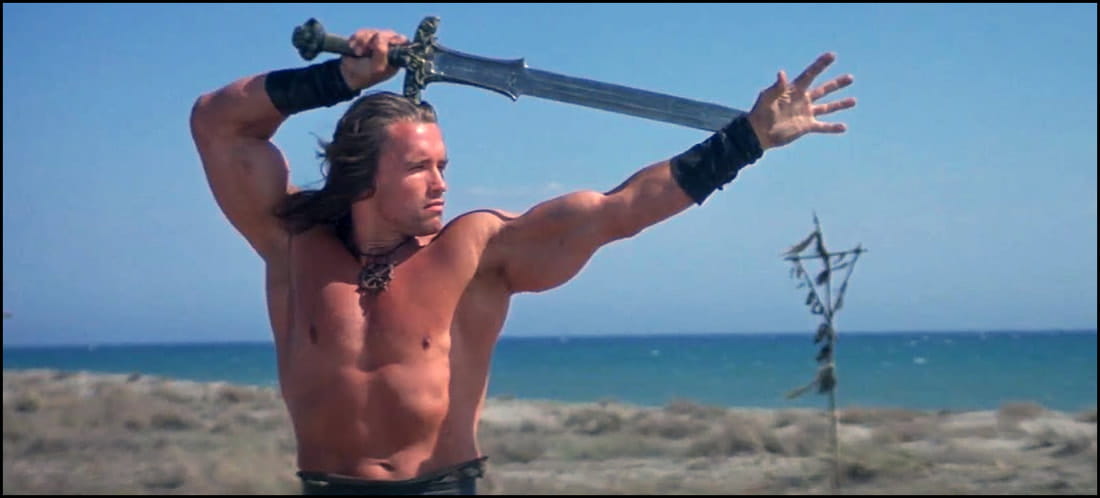
Finally John Milius, who had written the screenplays for Clint Eastwood’s Dirty Harry (1971) and Magnum Force (1973), agreed to direct the film — if he could rewrite Stone’s screenplay. No one objected to that idea. Milius was already contracted to do his next film for Dino De Laurentiis, so he convinced the producer to make Conan that movie.
Milius combined elements from various Conan stories by Robert E. Howard for his rewrite of the script, as well as borrowing the villain (Thulsa Doom) from the stories of another Howard creation, Kull the Conqueror.
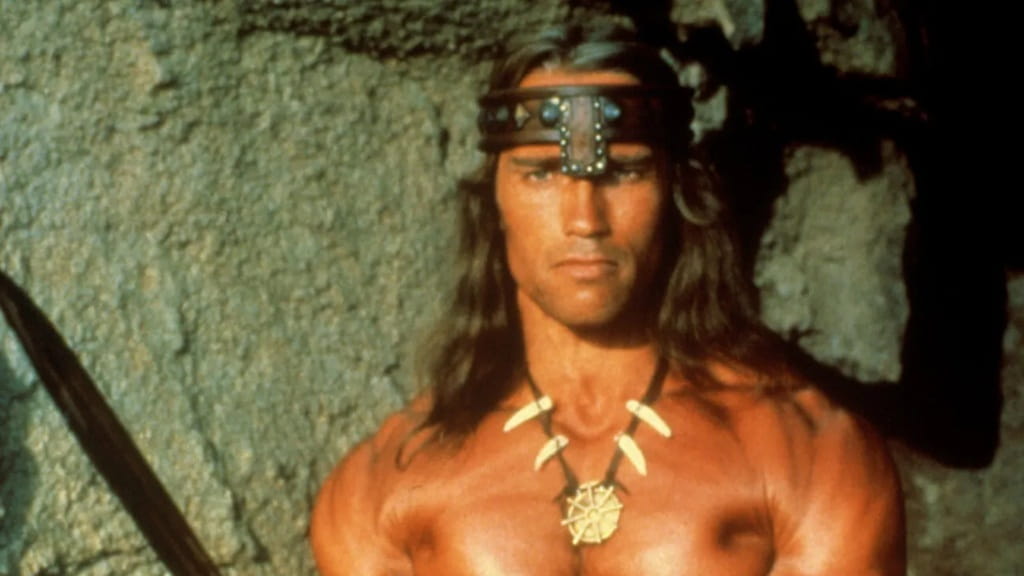
After the producers saw Arnold Schwarzenegger’s bodybuilding film, Pumping Iron, they agreed he was the clear choice for the title role. They did, however, require him to slim down from a massive, muscular 240 to a more lithe 210 pounds, through a regimen of rope climbing, horseback riding and swimming.
This was the breakout role for Schwarzenegger, who would go on to dominate action cinema for years. Other actors who were considered include Charles Bronson, Lou Ferrigno and Sylvester Stallone. Ferrigno and Stallone are predictable, but a Charles Bronson Conan would certainly have been… something. I’m not sure what, though. He might have made a better Subotai.
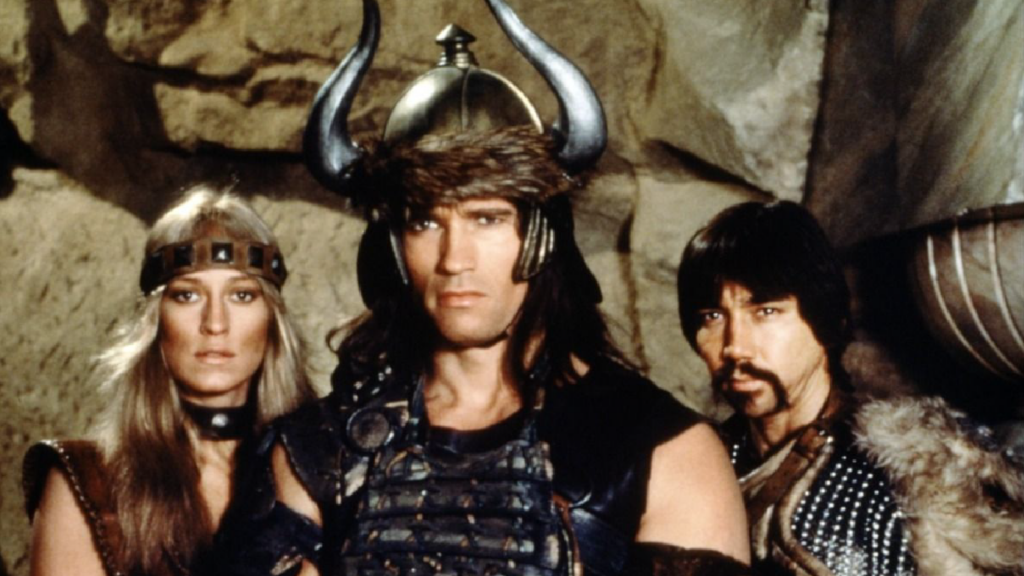 Sandahl Bergman as Valeria, Arnold Schwarzenegger as Conan, and Gerry Lopez as Subotai
Interestingly, Conan’s two allies in the film were also played by relative newcomers. While Schwarzenegger’s background was bodybuilding, Gerry Lopez (Subotai) was a champion surfer, and Sandahl Bergman (Valeria) was a dancer who had appeared in Bob Fosse’s All That Jazz. All three performed their own stunts, but none of them pleased Milius with their initial acting performances. Schwarzenegger was subjected to intensive speech training in a (failed) attempt to reduce his heavy Austrian accent, while Lopez’s lines ultimately were overdubbed by another actor. When James Earl Jones joined the cast, he began helping coach Arnold on his line delivery.
Four carbon steel copies each were forged of Conan’s father’s sword and the Atlantean sword he finds in a tomb, at a cost of $10,000 each. These were used for closeup filming. Lighter versions used in combat scenes were made from aluminum and fiberglass. Some were able to retract their blades to simulate a killing blow, and others could spray blood from their tips.
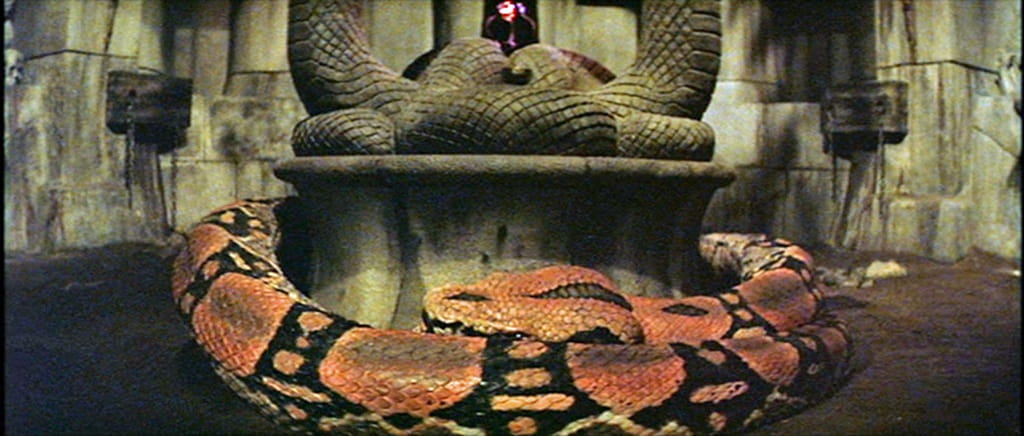 Conan the Barbarian: The giant snake
The giant snake Conan kills was over 35 feet long and cost $20,000 to create. It was so large it would not fit onto the set, so only part of it is ever shown on screen. Its skeleton was made from the same material used to build aircraft frames.
Some action scenes were filmed using a remote-controlled camera crane system originally created by Nick Allder during the filming of Dragonslayer.
The movie was shot in five months in various locations in Spain. It took over a year to edit. During that time, editor C. Timothy O’Meara removed several particularly violent scenes to which the studio objected. He then had to piece the movie back together without them, and keep the story comprehensible in the process.
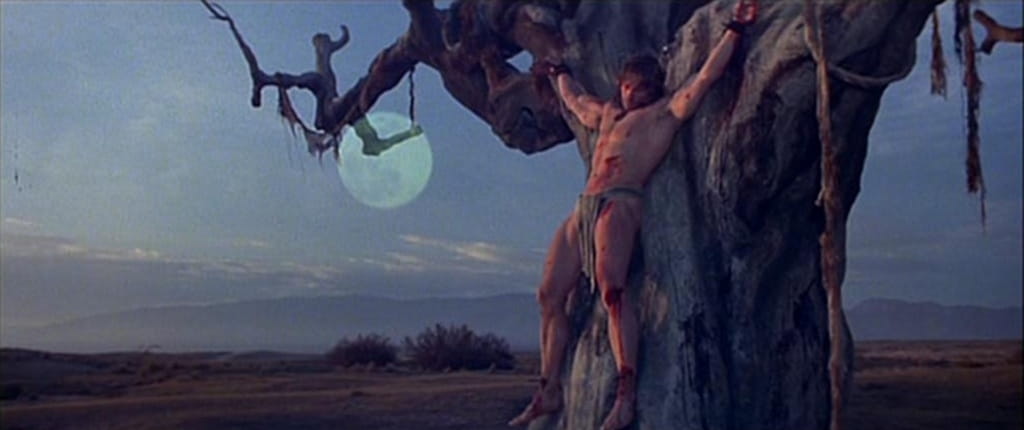 Conan on the Tree of Woe
The musical score for the film, composed by Basil Poledouris, is spectacular and memorable. It was the first film to list Musync, a newly developed music and tempo editing software package, in the credits. Musync allowed Poledouris to compose much of the music before filming had even wrapped, and then alter it to fit the various scenes after they were completed. It was the last film released by a major studio with a mono soundtrack, because producers balked at the extra tens of thousands of dollars required for a stereo score, and because they felt at the time not enough theaters were equipped to handle that anyway.
The film earned around $75 million (on a $20 million budget) in its initial theatrical release. This was considered successful enough that a sequel, Conan the Destroyer, was released two years later. (We’ll cover it soon.)
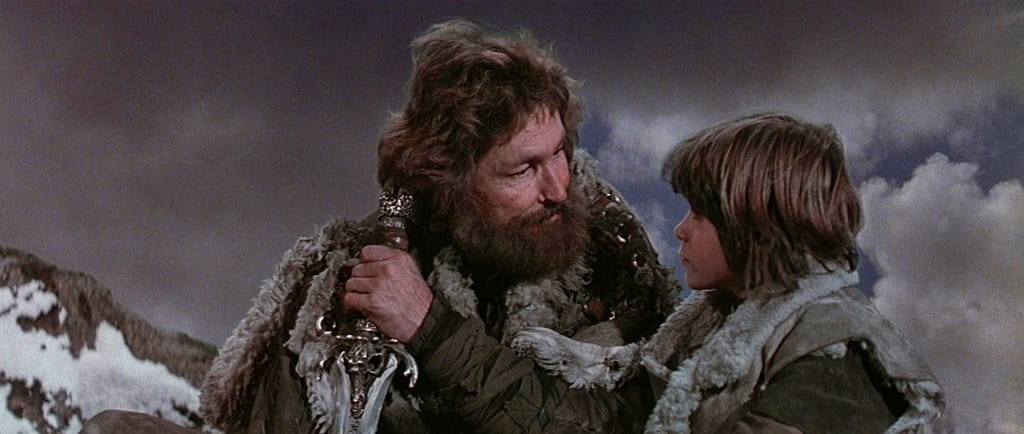 Young Conan and his father
Quick and Dirty Summary
Young Conan and his father
Quick and Dirty Summary
A young barbarian vows revenge on the snake cult leader who killed his parents and destroyed his village. He grows up to be a powerful warrior with a heavy Austrian accent, and teams up with a pair of thieves moonlighting from their surfing and dancing jobs. Eventually he gets the chance to exact his vengeance, slaying the snake cult leader and destroying his temple – but at a price.
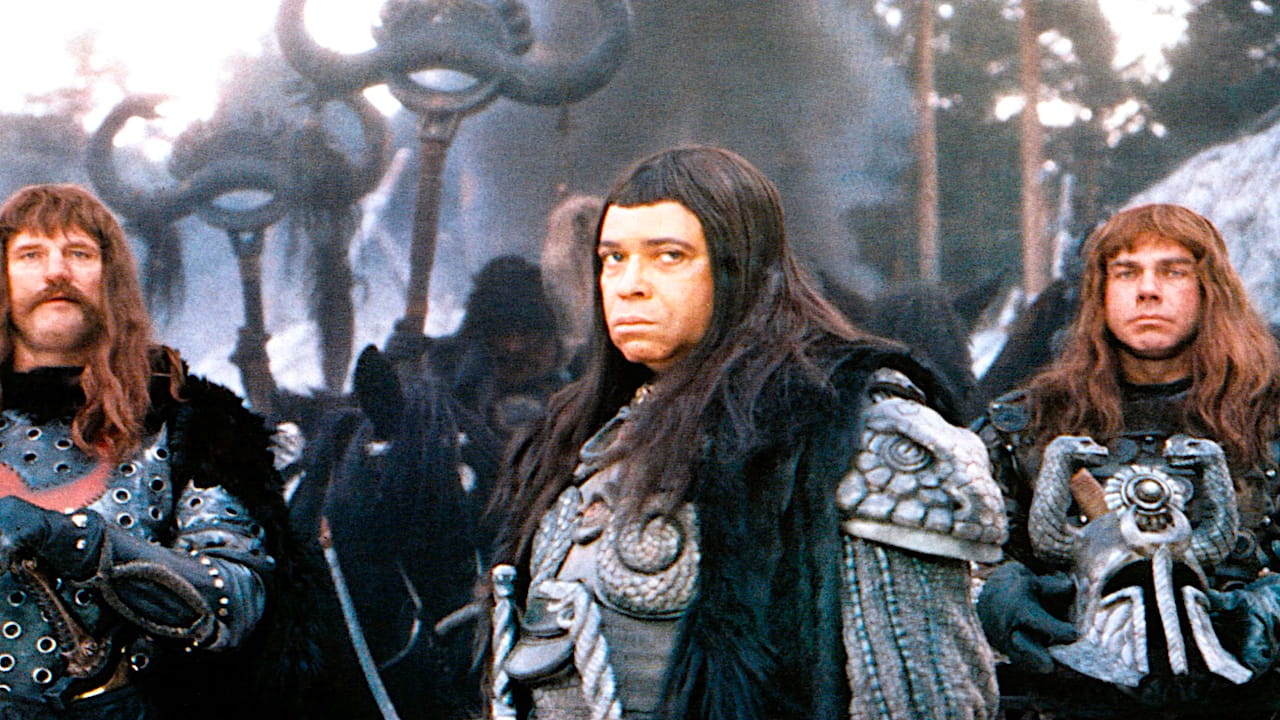 James Earl Jones as Thulsa Doom
Fantasy/SF/Sword & Sorcery Elements
James Earl Jones as Thulsa Doom
Fantasy/SF/Sword & Sorcery Elements
Robert E. Howard literally wrote the book on muscles and steel triumphing over sorcerers, monsters and evil gods. And Conan is the prototypical Sword & Sorcery hero. He greatly dislikes sorcery, but he seems to fare pretty well against it.
This film overflows with Sword & Sorcery elements. The battle with the giant snake is memorable, as is Conan’s showdown with Thulsa Doom’s henchmen. Doom’s slow transformation into a giant snake himself – a remarkable achievement of practical special effects in the days before CGI – comes out of nowhere and shakes things up again.
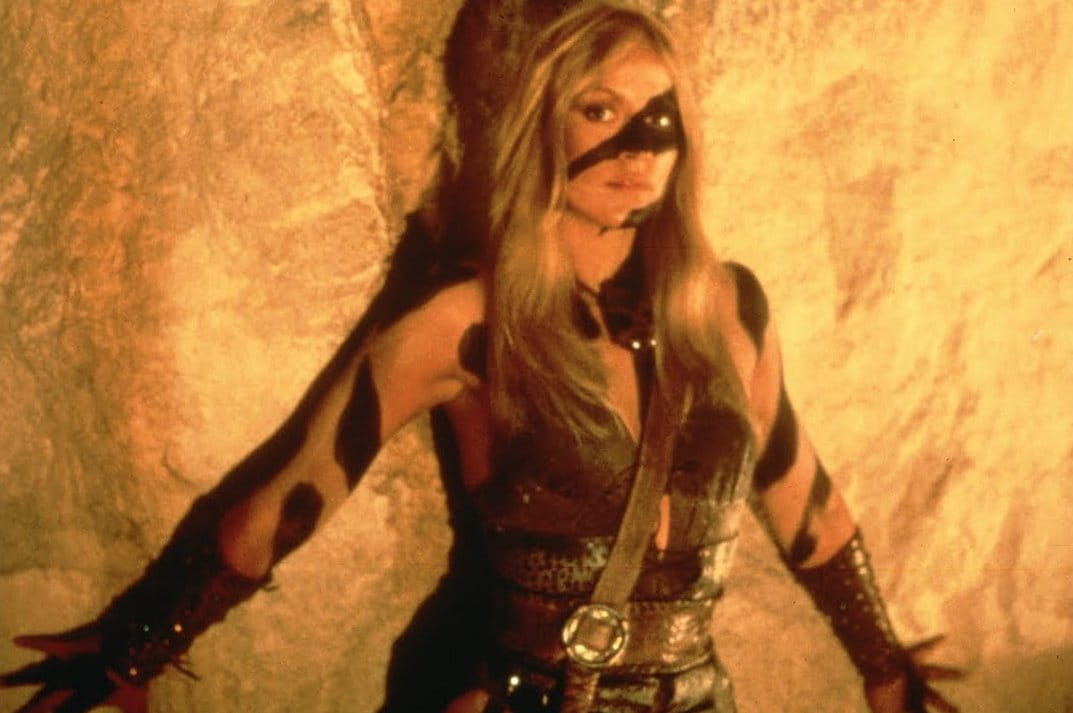 Sandahl Bergman in Conan the Barbarian
High Point
Sandahl Bergman in Conan the Barbarian
High Point
Once Conan becomes “grown-man warrior Conan,” the plot remains fun but it becomes fairly predictable. Full-on Conan isn’t going to lose to anybody in his debut film. At that point, the only questions are, “How will he kill them all?” and “Will any of his allies die along the way?”
I would argue the most interesting portion of the movie is actually the first third, as we watch a young Conan transition from scene to scene in slavery, as a gladiator, and a survivor, all the while learning about the world around him and looking for the cultists who wiped out his village.
And of course there’s the classic moment where he reminds us all what is best in life: “To crush your enemies, see them driven before you, and hear the lamentations of the women!”
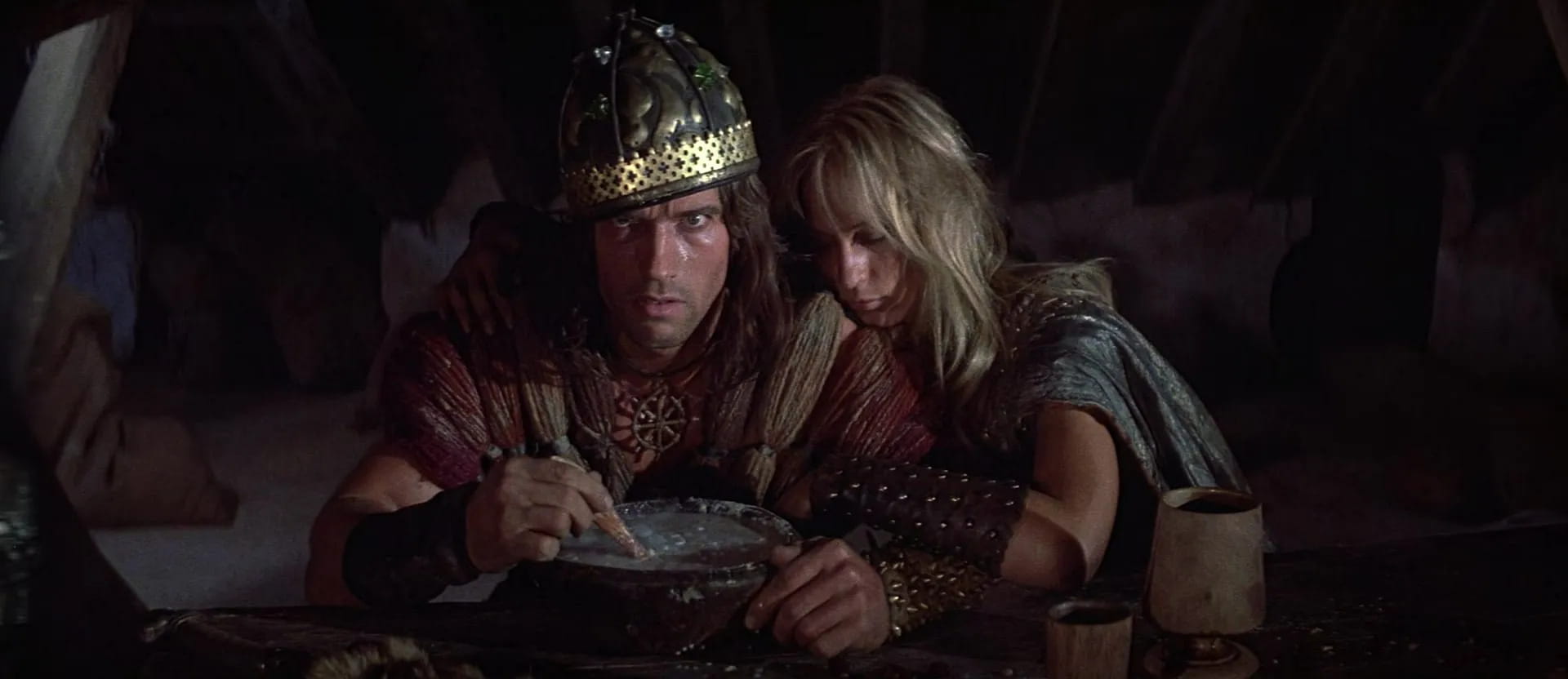 Conan and Valeria
Low Point
Conan and Valeria
Low Point
There’s no question that Schwarzenegger’s performance here, at the very start of his career, is iconic and enjoyable. But it’s a situation similar to “movie James Bond vs book James Bond.” In both cases, the movie version of the character is significantly altered from the literary version. Arnold’s Conan is dumbed down. He’s mostly muscle and brute force. At one point, he punches a camel. His reactions are often comical, and some are played for comedy. Howard’s Conan was always capable of winning a fight with his muscles and his sword, but he was also a serious, clever and canny guy, endowed with native smarts and charisma.
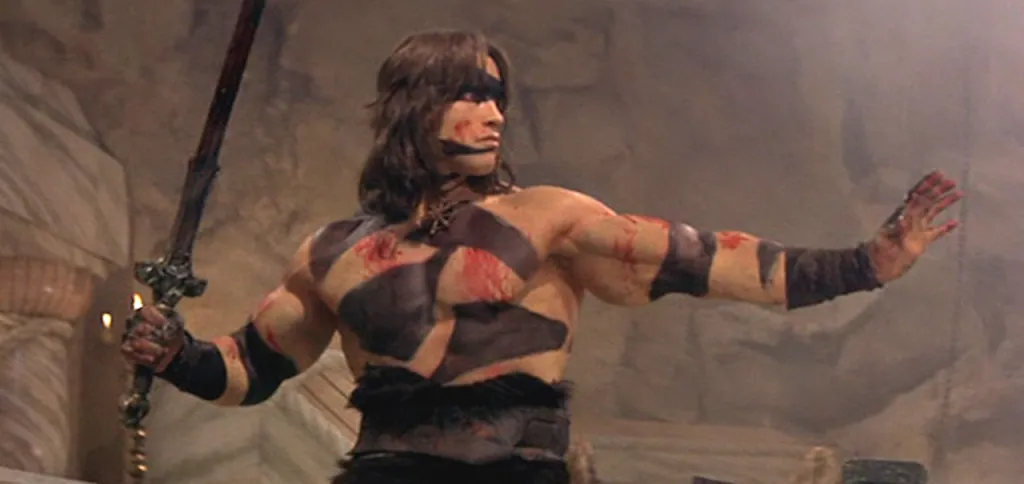
All of the above said, it would be a crime not to give the nod here to Schwarzenegger. This movie would not be half of what it is without his unforgettable presence looming over nearly every frame. He may not exactly be Howard’s Conan, but he’s mesmerizing, entertaining, and entirely awesome.
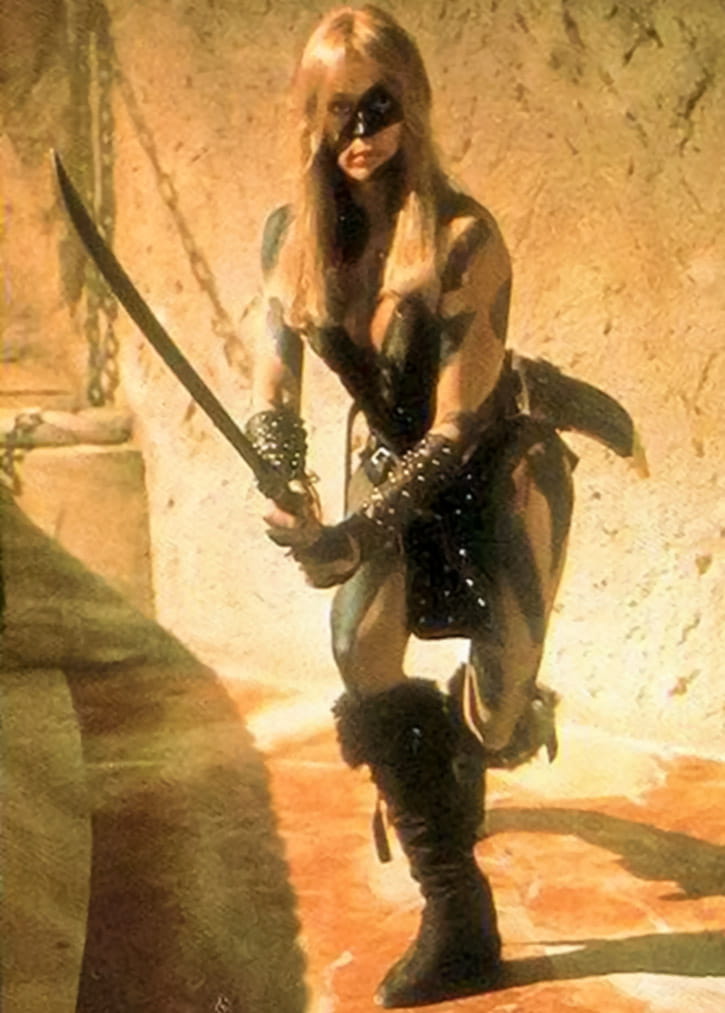 Valeria in action
Overall Evaluation as a Movie and as Fantasy/SF/Sword & Sorcery
Valeria in action
Overall Evaluation as a Movie and as Fantasy/SF/Sword & Sorcery
Conan the Barbarian is an excellent action/adventure movie in general, but it is on the “Mt. Rushmore” of Sword & Sorcery films. It has to be. It brought the greatest hero of the genre to the big screen for the first time. It gave him a worthy opponent and high stakes. It combined drama, action, character and violence, with a touch of humor along the way.
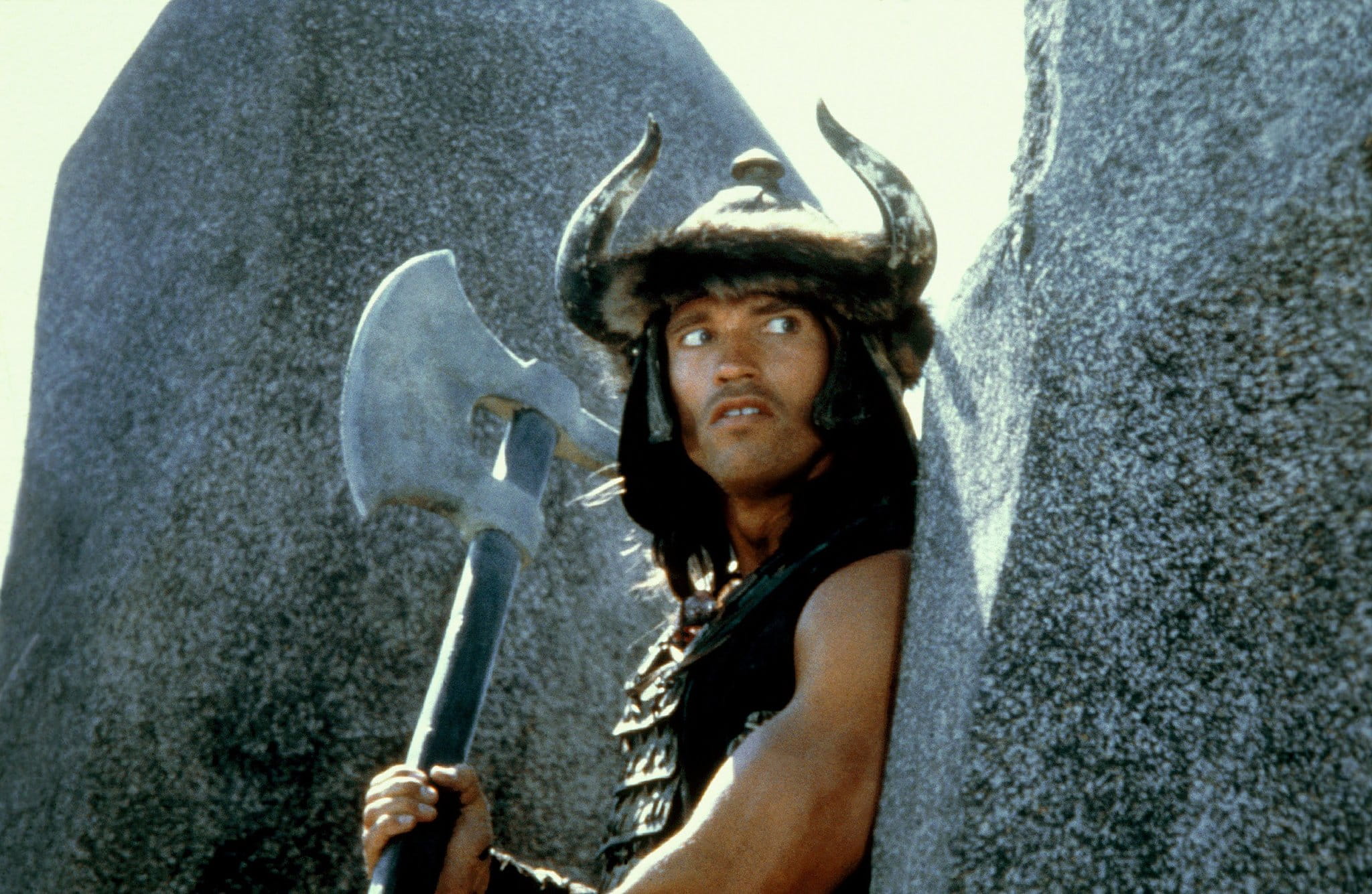
To paraphrase Conan’s prayer to his Cimmerian god: Valor pleases Crom, so perhaps he will grant me one request: That those of you who have not watched this movie will give it a shot.
And if you do not love it, then to hell with you!
Van Allen Plexico is a member of the Science Fiction and Fantasy Writers of America (SFWA), a Grand Master of Pulp Literature (2025 class) and a multiple-award-winning author of more than two dozen novels and anthologies, ranging from space opera to Kaiju to crime fiction to superheroes to military SF. He notably edited, co-created and co-wrote the Sword and Sorcery anthology GIDEON CAIN: DEMON HUNTER. Find all of his works on Amazon and at Plexico.net.
Categories: Fantasy Books
Twin Peaks Meets Arthur Conan Doyle
 Mark Frost co-created, co-wrote, and co-produced, Twin Peaks. That includes the 2017 reboot (which I abandoned early on. I’m a huge fan of the original series, but the restart did nothing for me.
He also wrote the two Fantastic Four films with Jessica Alba (which I said here, are better than people give it credit), as well as 42 episodes of Hill Street Blues, which was an extremely influential cop show in the eighties.
Frost wrote the dark James Spader movie, Storyville after Twin Peaks ended. And he also wrote a novel, which came out in 1993.
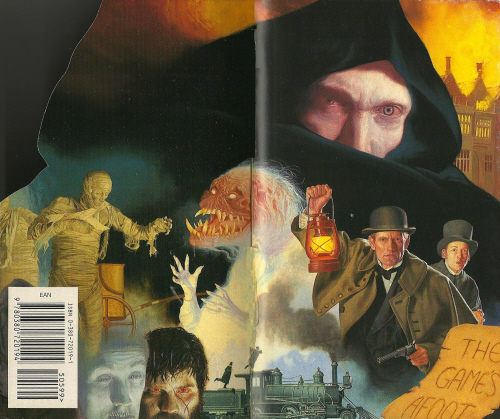
The List of 7 came about because Frost is a Sherlock Holmes fan. Not only is the novel’s protagonist none other than Arthur Conan Doyle and bits of his life are scattered throughout, but there are Holmes-isms aplenty. Thus, the book is a type of pastiche, though darker than any straight Holmes tale I’ve read.
A struggling young doctor who hasn’t yet created Holmes, Doyle receives a mysterious summons to what turns out to be a séance. Really creepy stuff happens, people die, a mysterious rescuer appears, and Doyle spends the rest of the book on the run from a dark conspiracy. Turns out that his completely fictional novel submission, The Dark Brotherhood, exactly mirrors a real group. And as you can guess by the name, it’s a really evil secret organization. Man, don’t you hate it when that happens!
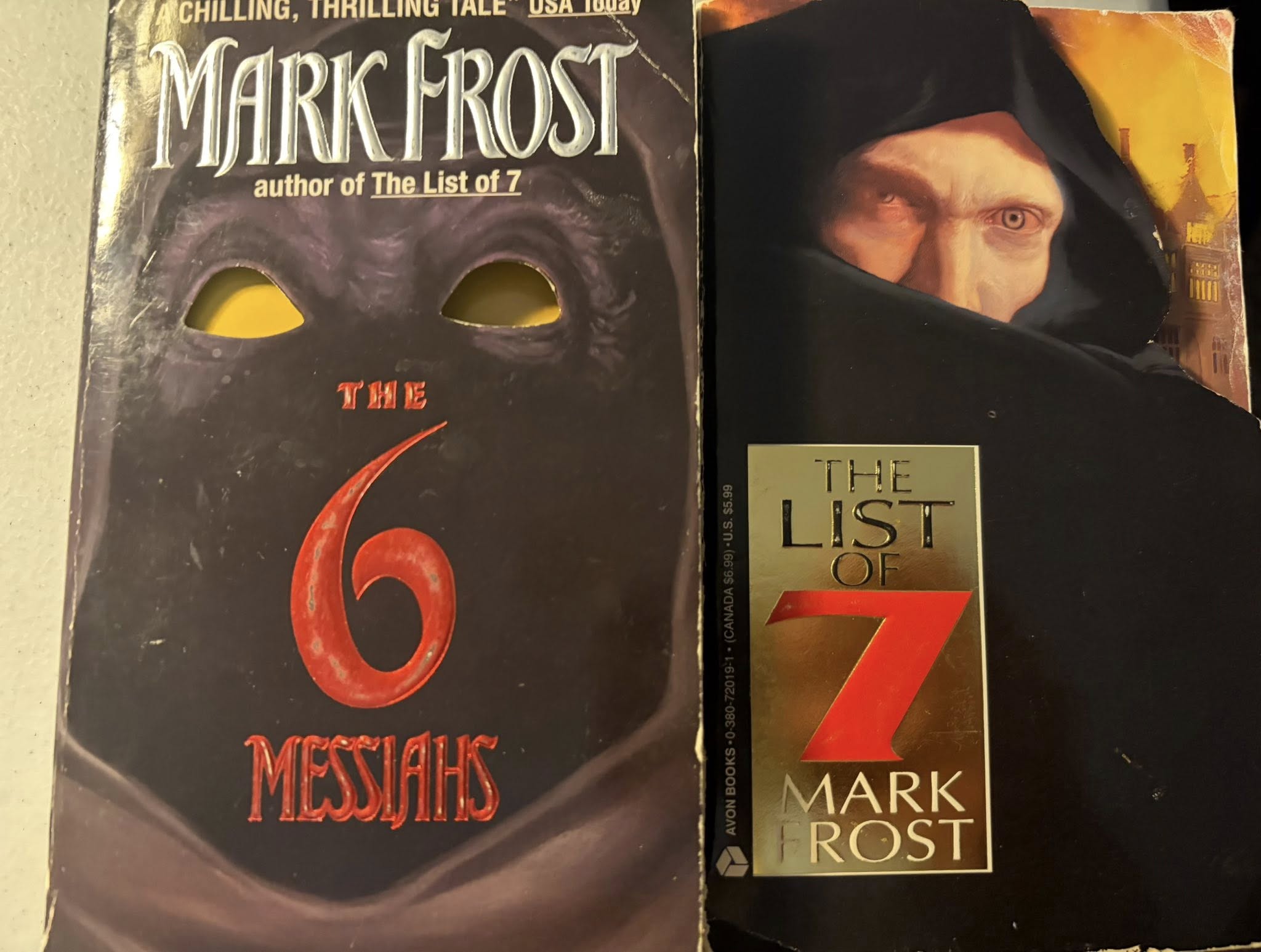 Doyle’s rescuer, Jack Sparks, clearly has a lot of Sherlock Holmes in him, with some James Bond thrown in. And the main villain certainly brings to mind a ruthless Moriarty. Doyle is a pretty good version of, well, himself.
This is a pulp style horror yarn: More Clark Ashton Smith than Arthur Conan Doyle. It’s lathered in supernatural like a cheap medium in fake ectoplasm. Four hundred pages long, it rollicks along at a breakneck pace: another pulp characteristic. I think that Frost is an over-writer. He uses lots and lots of words. I don’t particularly mind his style, but it certainly feels a bit wordy. This book could be leaner. It works, but it’s noticeable.
I’m not much of a horror fan, but I am a great fan of Robert R. McCammon (I wrote about his nearly flawless ‘coming of age’ novel, Boy’s Life, here). The antagonist brought to mind the villain from his novel, Baal. And that ain’t nice. There is some unpleasant stuff in this book: there’s just no way around it. This secret group is evil.
Now, along with Doyle, we meet Bram Stoker, Prince Edward Albert, and a slightly renamed Sir William Gull (the latter two figuring prominently in the Royal Conspiracy theories about Jack the Ripper).
But you can’t finish a chapter without running into something Sherlockian, which is fun. Sparks has a place on Montague Street, he uses cocaine, he’s brilliant, he has a brilliant brother: you get the idea. The story also nicely dovetails into Doyle’s actual life.
After the main problem has been resolved, there are still a couple of nice little surprises left. If you don’t mind a supernatural edge to your Holmes-like story, this is a pretty good read. Frost really does keep things moving forward at a brisk pace.
I recommend The List of 7 as as a Pulp-style, supernatural thriller with a Sherlock Holmes/Arthur Conan Doyle overlay. That definitely works for me.
THE SEQUELTwo years later, Frost followed up with a sequel, The 6 Messiahs.
Doyle is now an international success, though constantly pestered to bring Holmes back from his supposed death at the Reichenbach Falls. Jack Sparks and Eileen Temple, from the first book, had vanished from his life.
Doyle, accompanied by his (real-life) younger brother, Innes, is off to America for a speaking tour. Shenanigans on shipboard (I like that turn of phrase) draw Doyle into a plan to steal great religious texts as part of an evil plot. Really, Doyle can’t turn around without coming up against some great evil trying to take over the world. It’s like Miss Marple or bakers on Hallmark, finding a dead body every time they leave the house!
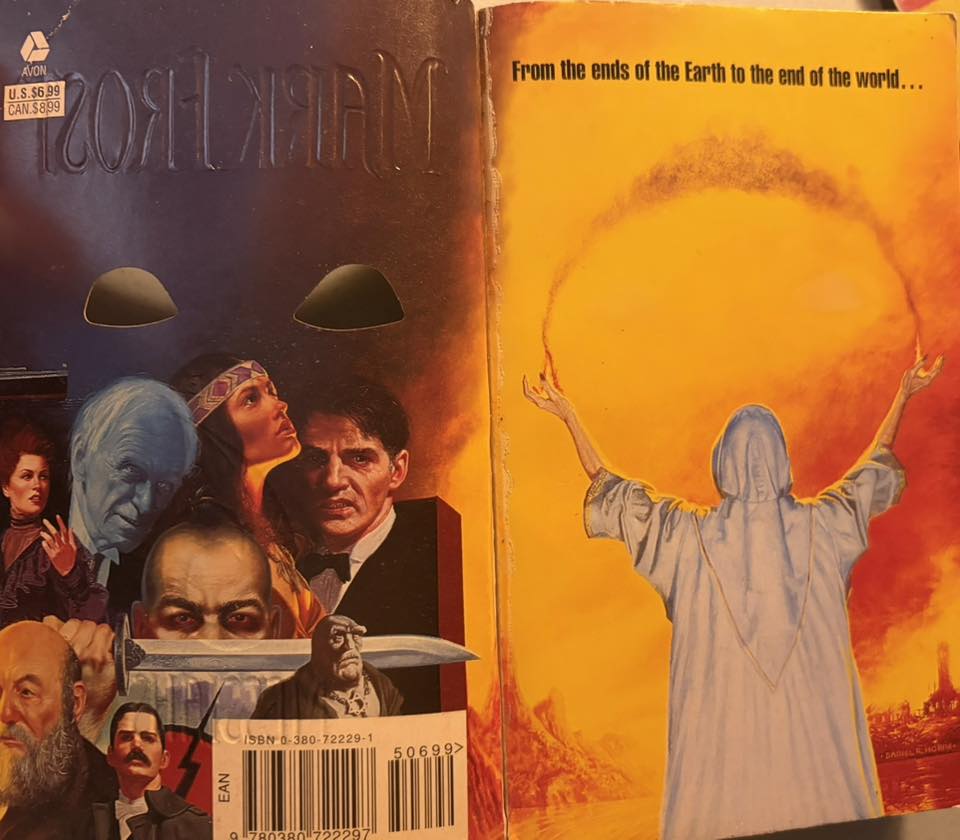 Turns out five folks have had dreams of a great black tower rising out of the desert and events bring heroes and villains together for an epic showdown. “Five,” you say? Yep, you’ll have to guess who the sixth messiah is.
Unlike List, Messiahs is very much an American/Old West adventure. And there’s a Mormon feel to the religious commune. It doesn’t feel as action-packed as its predecessor. This one moves forward at a more leisurely pace. I think it’s in part because there’s much less a sense of imminent danger for Doyle this time around.
Anyone who enjoyed List should certainly read Messiahs, though I think it is markedly the lesser of the two. Nothing wrong with it, just not as good a book.
Mark Frost will forever be known (with David Lynch) for Twin Peaks. But he’s also got a foot in the Holmes door with these two dark, Pulpy novels about Arthur Conan Doyle. I’d certainly like to see it become a trilogy, but after thirty years of silence about it, I don’t think so.
Check out The List of 7. You won’t be disappointed.
 Bob Byrne’s ‘A (Black) Gat in the Hand’ made its Black Gate debut in 2018 and has returned every summer since.
His ‘The Public Life of Sherlock Holmes’ column ran every Monday morning at Black Gate from March, 2014 through March, 2017. And he irregularly posts on Rex Stout’s gargantuan detective in ‘Nero Wolfe’s Brownstone.’ He is a member of the Praed Street Irregulars, and founded www.SolarPons.com (the only website dedicated to the ‘Sherlock Holmes of Praed Street’).
He organized Black Gate’s award-nominated ‘Discovering Robert E. Howard’ series, as well as the award-winning ‘Hither Came Conan’ series. Which is now part of THE Definitive guide to Conan. He also organized 2023’s ‘Talking Tolkien.’
He has contributed stories to The MX Book of New Sherlock Holmes Stories — Parts III, IV, V, VI, XXI, and XXXIII.
He has written introductions for Steeger Books, and appeared in several magazines, including Black Mask, Sherlock Holmes Mystery Magazine, The Strand Magazine, and Sherlock Magazine.
You can definitely ‘experience the Bobness’ at Jason Waltz’s ’24? in 42′ podcast.
Categories: Fantasy Books
Military Cyborgs, Alien Plants, and Desert Heists: January-February 2026 Print Science Fiction Magazines
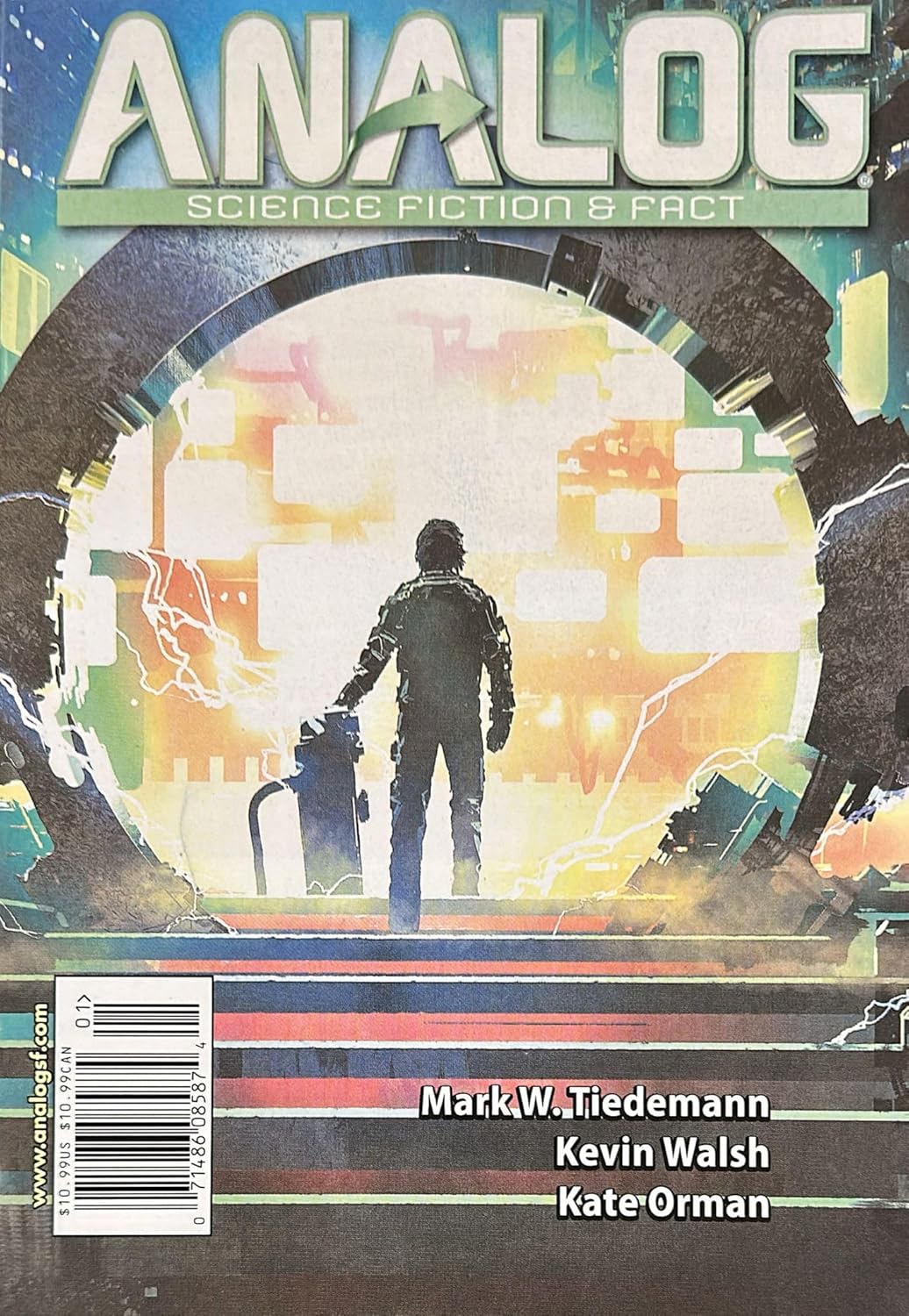

The January-February issues of Analog Science Fiction & Fact and
Asimov’s Science Fiction. Cover art by Tithi Luadthong and Dominic Harman
We’ve settled into a new reality with Analog and Asimov’s SF. Both magazines are consistently running more than two months late, but both are at least on a predictable schedule, arriving regularly in two-month intervals. Readers more observant than I have pointed out that the publisher, Must Read Magazines, has removed the cover date and Next Issue date from the covers entirely, which was probably a good idea.
They do provide semi-regular updates online, and on March 31st Emily Alta Hockaday, Managing Editor at Dell Magazines, posted this in the Analog Science Fiction and Fact Magazine Fan Club on Facebook in response to a question on postal delivery.
We’re in the process of switching printers — both because of print quality and the delays we’ve experienced with them. Once we have the contract with the new printer figured out, I’ll have warehouse dates to share for both March/April and May/June.
Hopefully that change will help them gradually get back on schedule. In other news, Sheila Williams continues to recover from the brain aneurysm she suffered two months ago. She remains hospitalized, but her family posts occasional updates, including the delightful photo of Sheila below.
 The unstoppable Sheila Williams, in a photo posted by her daughter Irene (with the caption “Felt cute might delete later”). That stare!
Until Sheila returns, Emily Hockaday continues to act as interim editor of Asimov’s.
As usual, the latest issues have plenty to offer science fiction fans, including new stories by Alexander Jablokov, William Preston, Adam-Troy Castro, Susan Palwick, Sean Monaghan (twice!), Jack Skillingstead, Will Ludwigsen, Lavie Tidhar, James Sallis, Mark W. Tierdermann, Geoffrey Hart, Matt McHugh, Jo Miles, Rich Larson, and many more.
Victoria Silverwolf at Tangent Online enjoyed the latest Analog.
“Sin Eaters” by Mark W. Tiedemann is the lead novelette. A police officer rescues alien children from a man who kidnapped and tortured them. The adult aliens refuse to press charges. The officer tries to figure out the motives of the man and the aliens, while dealing with his own emotional trauma. This is a powerful story that deals with issues of guilt, atonement, and psychological healing in a thoughtful and mature fashion. It also provides an example of true, profound friendship, rarely seen in fiction.
In the novelette “The Origami Man” by Doug Franklin, a fishing boat discovers what seems to be a drowned man in the middle of the ocean. The being turns out to be alive, and something other than human. It goes on to interact with the man who found it in a special way. At first, the mood is that of a horror story, with the entity compared to a zombie or a shape-shifting alien. The conclusion changes the tone drastically, in a way that some may find a bit too sentimental. The story is most notable for a vivid portrait of its Alaskan setting.
“You Who Sought the Stars’ Distant Light” by Stewart C. Baker is narrated by what was once the mind of a human being, now the consciousness of a starship. It defends itself against an intruder, only to discover its former relationship with the person invading it. The revelation of the narrator’s previous life, now forgotten, offers emotional appeal.
“Unsung” by Derrick Boden features a man who has been genetically engineered and prosthetically enhanced to become a military cyborg, destined to be a hero in a war taking place across the solar system. He participates in many battles, becoming less human each time, until he learns the truth about his origin and purpose. This is a dark, cynical story, with multiple deceptions involved in the plot.
The title character in “And She is Content” by Frank Ward is an artificial intelligence running a starship while the crew and passengers are in hibernation. Once a century during the long voyage the people wake up and enjoy the pleasures of a city created for them. The AI panics when the journey is complete, now that she has no purpose and will lose the company of the ship’s commander. This is a romantic science fiction story, reminiscent of Anne McCaffrey’s 1961 story “The Ship Who Sang” and its sequels. The once-a-century city is compared to the one featured in the 1947 musical Brigadoon. The AI and the Commander are referred to as the famous medieval lovers Heloise and Abelard. These allusions create a wistful, nostalgic mood that will appeal to softhearted readers.
“Linka’s Out” by Rich Larson takes place on a mining planet. The protagonist travels to the planet’s prison to meet the title character when she is released. The reunion leads to a shocking conclusion. This is a gloomy and hopeless tale, set on a harsh world dominated by an autocratic corporation. A hint to the story’s mood appears very early in the text, when the reader learns that the bodies of dead workers are recycled into raw material. The discovery that the main character makes at the prison is particularly gruesome.
All the characters in “Iron Star Swing” by Kate Orman are beings made up of subatomic particles, although they appear to each other as people or even as inanimate objects. They live on the surface of the sun, which is now a black dwarf in the immensely far future. They feed on neutrinos that reach the sun from stars that become novae. The plot involves a wounded warrior in a war that has lasted trillions of years and a young being who sometimes takes the form of a boy and sometimes of a firetruck. As can be seen, this story is most notable for its bizarre setting and characters.
Read Victoria’s complete review here.
The new Asimov’s is reviewed by Mina at Tangent Online. Here’s an excerpt.
“The Greenway” by Susan Palwick is an odd story, but it grows on you. The narrator is alone with her two children when the caravan comes bringing the “greenway” with it. We learn that all people eventually begin to sprout plants (a new meaning for “gone to seed”), which slowly kills them. But the sprouting bodies bring a new fertility that is spread every spring by the caravan. The bitter-sweet ending stays with you.
“Ecobomb” by Alexander Jablokov is an invasion story that doesn’t take itself too seriously. The aliens are truly alien, sending “ecobombs” to change the ecosystems on the planet they are invading. But the humans on the Earth adapt to the changes and start working with the new flora and fauna to create hybrids. They create biocomputers and, through cooperation, they not only survive but are ready when the alien invaders arrive. The story grows on you like an unpleasant fungus.
“The Man with the Ruined Hand” by Sean Monaghan starts with a heist in the middle of a desert of a distant planet. Cliff is sent to catch the thief but finds himself in the middle of a double cross. It feels like the author wanted to create a Philip Marlowe vibe, but Raymond Chandler did it better.
In “Replacement Theory” by Jack Skillingstead, Tyler suddenly starts seeing everyone around him as monsters, including his girlfriend Emma. Does he have a brain defect or is he surrounded by aliens? Then he meets someone else with the same problem. But who can he trust?
“The Imaginative Youngster’s Handbook to UFOs” by Will Ludwigsen is one of those short stories I really like — a wonderful surprise. What starts off reading like a book for intelligent and imaginative youngsters slowly gains an emotional depth that is truly heart-rending. We begin to care very much about one particular child, who experiences abuse and bullying in their daily life, yet who manages to keep wonder alive inside themselves despite their loneliness. There is gentle humour and questioning of things adults hold to be self-evident but, mostly, there is compassion and a desire not to be a person who hurts others just because you have been hurt yourself. What’s particularly well done is the mix of a child’s logic with adult understanding. I would read this more than twice!
“As Long As We’re Still Here, We Might As Well Dance” by Adam-Troy Castro continues our descent into grimness. We watch the last moments of two people who did not flee when the Nihilators arrived to destroy and “repurpose” their city, including anyone left alive in it. We see love and defiance, and an unwillingness to die. The real tragedy is that both protagonists stayed because each in their own way believed they deserved to be damned.
“The Lady in Camo” by John Richard Trtek is a detective story with references to Blade Runner, Chandler, and Sherlock Holmes. Jack Twice is hired to find a missing person. It’s a world filled with clones, soft deaths and partial resurrections. I wanted to like this story but just couldn’t fully engage with it. The last few lines are good, making you wish the rest of the story had lived up to them.
Read Mina’s complete review here.
Here’s all the details on the latest SF print mags.
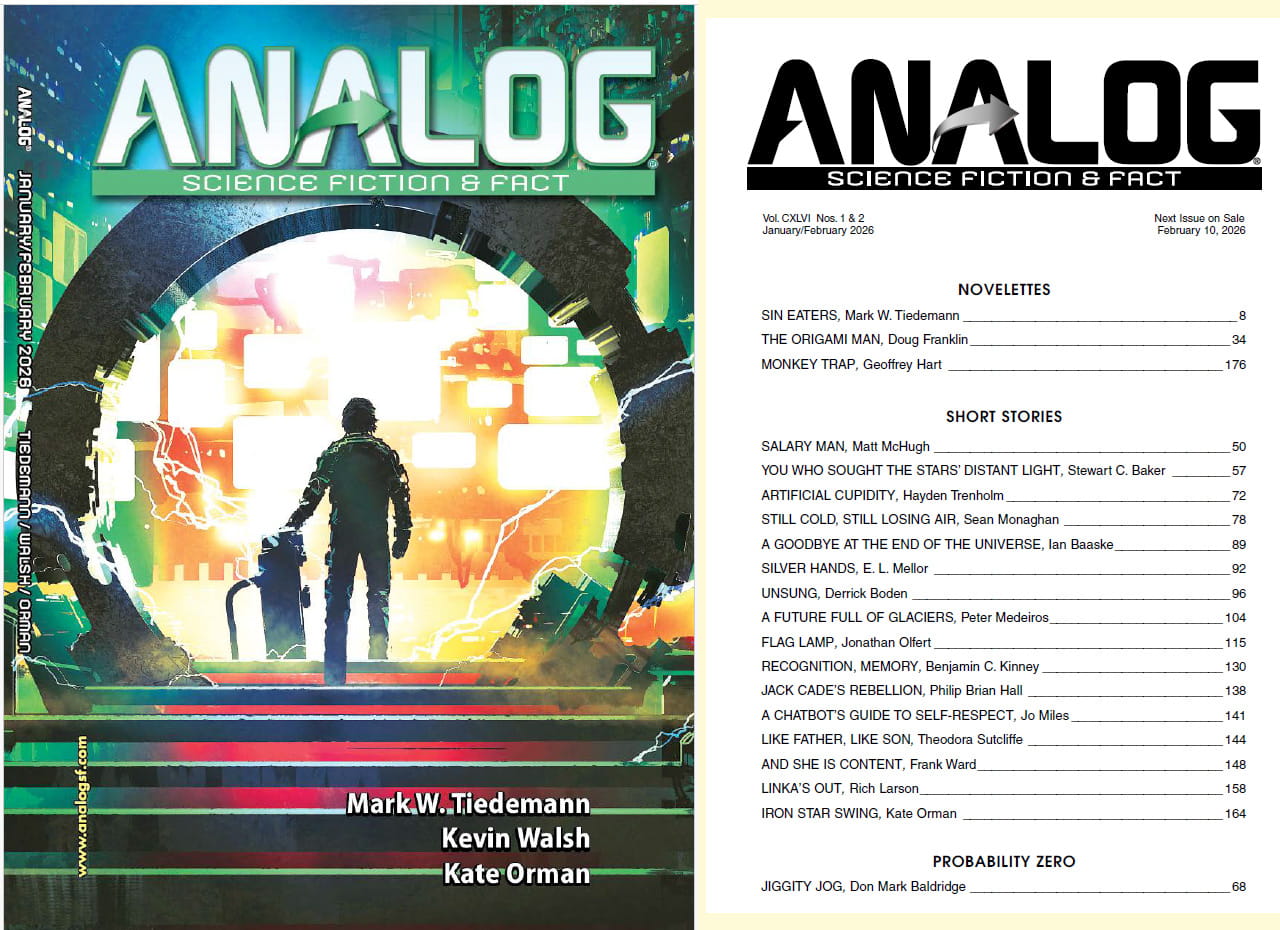 Analog Science Fiction & Fact Magazine January/February 2026 contents
Analog Science Fiction & Science Fact
Analog Science Fiction & Fact Magazine January/February 2026 contents
Analog Science Fiction & Science Fact
Editor Trevor Quachri gives us a tantalizing summary of the current issue online, as usual.
This issue’s opening salvo of 2026 stories continues right on into a furious fusillade of fiction next issue, including:
“Sin Eaters,” by Mark W. Tiedemann: how do you investigate — let alone prosecute — a crime when the societal standards violated are so alien that we can hardly recognize them?; A slick interstellar heist (…or is it?) in “The Starworthy Slip,” by AC Koch; a particle-scaled solar fable in “Iron Star Swing” by Kate Orman; a sweet burgeoning romance that mingles with a perspective on a deep geological timescale to reveal something else entirely, in Peter Medeiros’ “A Future Full of Glaciers”; a salvage crew that thinks they’ve found signs of intelligent life only to realize that the life may have anticipated them more keenly then they’d like, in Geoffrey Hart’s “Monkey Trap”; a look at the realities of building permanent settlements on the Moon, in “Homes Away From Home,” our Fact Article for the issue, by Michael W. Carroll; and more, from Doug Franklin, Howard V. Hendrix, Theodora Suttcliffe, Sean Monaghan, Matt McHugh, and others, plus, of course, all our regular columns, including an additional Guest Alternate View from Richard A. Lovett on AI and conspiracy theories (sadly, ever more relevant by the day); as well as our annual Index and Analytical Laboratory ballot.
Here’s the full TOC.
Novelettes
“Sin Eaters” by Mark W. Tierdermann
“The Origami Man” by Doug Franklin
“Monkey Trap” by Geoffrey Hart
Short Stories
“Salary Man” by Matt McHugh
“You Who Sought the Star’s Distant Light” by Stewart C. Baker
“Artificial Cupidity” by Hayden Trenholm
“Still Cold, Still Losing Air” by Sean Monaghan
“A Goodbye at the End of the Universe” by Ian Baaske
“Silver Hands” by E.L. Mellor
“Unsung” by Derrick Boden
“A Future Full of Glaciers” by Peter Medeiros
“Flag Lamp” by Jonathan Olfert
“Recognition Memory” by Benjamin C. Kinney
“Jack Cade’s Rebellion” by Philip Brian Hall
“A Chatbot’s Guide to Self-Respect” by Jo Miles
“Like Father, Like Son” by Theodora Sutcliffe
“And She is Content” by Frank Ward
“Linka’s Out” by Rich Larson
“Iron Star Swing” by Kate Orman
Probability Zero
“Jiggity Jog” by Dan Mark Baldridge
Science Fact
Nor Any Drop to Drink by Kevin Walsh
Special Features
The War, Astounding, and Campbell by Edward M. Wysocki, Jr.
Me-N-You-Genics by Howard V. Hendrix
Poetry
Escape Pod by S.L. Johnson
The Bones They Left by Stanley Poole
Reader’s Departments
Editorial: The State of the Union by Trevor Quachri
In Times to Come
The Alternate View by John G. Cramer
In Memoriam: J.T. Sharrah by Emily Hockaday
In Memoriam: Bruce Boston by Emily Hockaday
Guest Alternate View by Richard A. Lovett
Unknowns, edited by Alec Nevala-Lee: Time Lapse by Todd McClary
The Reference Library by Sean CW Korsgaard
Brass Tacks
2025 Index
Analytical Laboratory Ballot
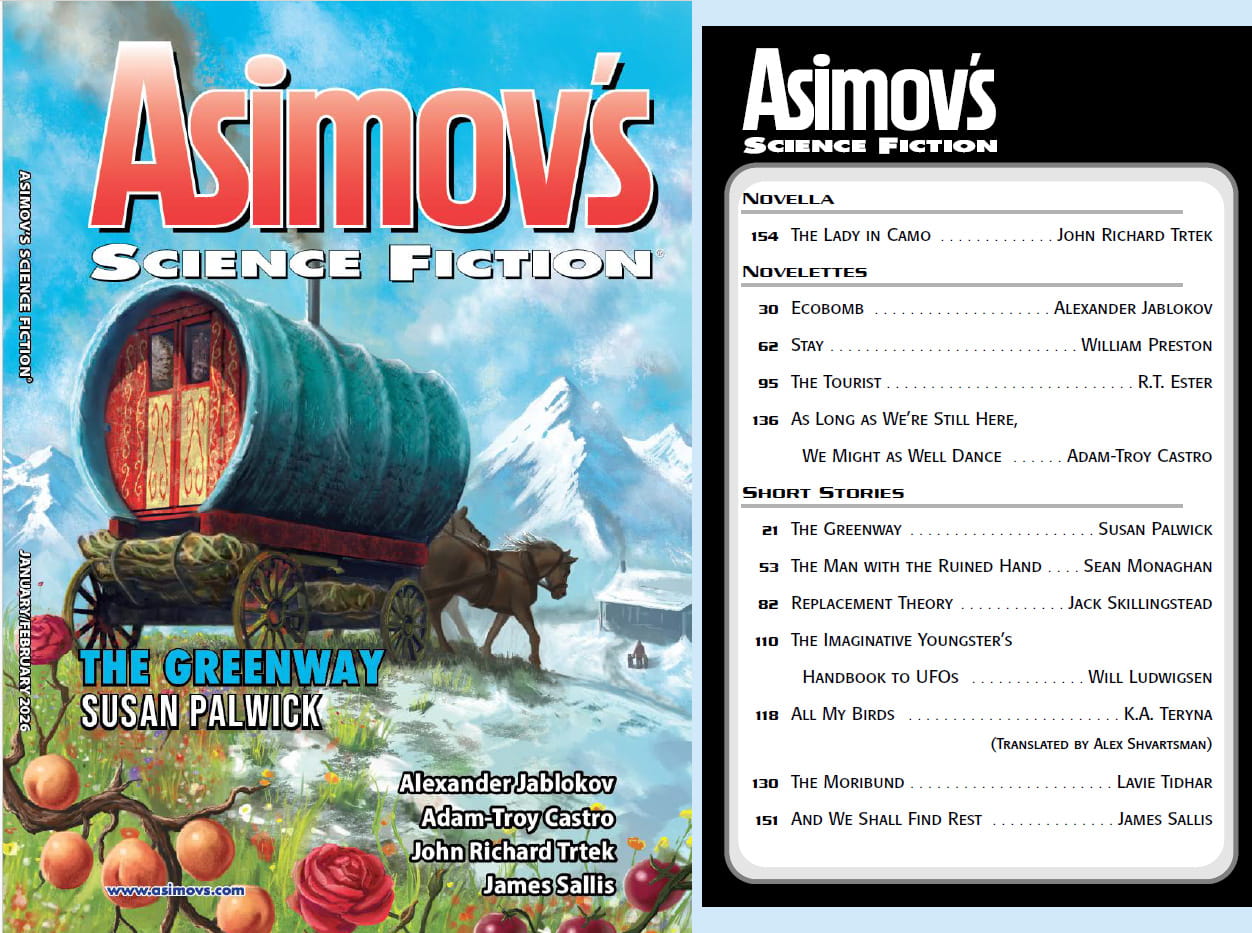 Asimov’s Science Fiction Magazine January/February 2026 contents
Asimov’s Science Fiction
Asimov’s Science Fiction Magazine January/February 2026 contents
Asimov’s Science Fiction
Sheila Williams provides a brief summary of the latest issue of Asimov’s at the website.
We have a lively bunch of stories in our January/February 2026 issue! John Richard Trtek’s novella teems with intrigue, deceit, danger, and the mystery of “The Lady in Camo,” while Alexander Jablokov’s novelette, “Ecobomb,” is a tense yet often amusing tale about the unanticipated consequences of an alien invasion!
William Preston tells a moving story about a dying man, his sister, his robot double, and his best friend in “Stay”; James Sallis’s characters calmly face alien visitors and the death of half of humanity in “And We Will Find Rest”; in his first sale to Asimov’s, R.T. Ester tells a complicated tale about “The Tourist”; also new to Asimov’s, well-known author Adam-Troy Castro’s characters enjoy a final day of freedom in “As long as We’re Still Here, We Might as Well Dance”; some young men experience serious breakdowns in Jack Skillingstead’s “Replacement Theory”; a woman faces an unusual condition in K.A. Teryna’s lovely story about “All My Birds” (this tale was translated from Russian by Alex Shvartsman); another woman faces mysterious strangers and an illness along “The Greenway” in Susan Palwick’s new story; Sean Monaghan reveals why you shouldn’t trust “The Man with the Ruined Hand”; a woman copes with an extreme fetish in “The Moribund” by Lavie Tidhar; and Will Ludwigsen charms us with “The Imaginative Youngster’s Handbook to UFOs.”
Robert Silverberg’s Reflections considers: “The Multiplicity of Mermaids”; James Patrick Kelly’s On the Net looks at AI audio and says, “Welcome to Just Okay”; Kelly Jennings’s On Books reviews works by Mary Soon Lee, Ray Nayler, Chuck Tingle, Charlie Jane Anders, and others; Kelly Lagor’s Thought Experiment shines a light on “Bradbury and Truffaut’s Empathy in Fahrenheit 451”; plus we’ll have an array of poetry, our yearly Index, and our 40th Annual Readers’ Award ballot!
You’ll find our January/February 2026 issue on sale at newsstands on December 8, 2025. Or subscribe to Asimov’s—in paper format or our own downloadable varieties — by visiting us online at www.asimovs.com. We’re also available individually or by subscription via Amazon.com’s Kindle Unlimited, BarnesandNoble.com’s Nook, and Magzter.com/magazines!
Here’s the complete Table of Contents.
Novella
“The Lady in Camo” by John Richard Trtek
Novelettes
“Ecobomb” by Alexander Jablokov
“Stay” by William Preston
“The Tourist” by R.T. Ester
“As Long as We’re Still Here, We Might as Well Dance” by Adam-Troy Castro
Short Stories
“The Greenway” by Susan Palwick
“The Man with the Ruined Hand” by Sean Monaghan
“Replacement Theory” by Jack Skillingstead
“The Imaginative Youngster’s Handbook to UFOs” by Will Ludwigsen
“All My Birds” by K.A. Teryna (Translated by Alex Shvartsman)
“The Moribund” by Lavie Tidhar
“And We Shall Find Rest” by James Sallis
Poetry
Monster by Megan Branning
The Freetown Bar and Bookstore by M.C. Childs
Thirty-Six Views of the Milky Way by Connor Yeck
Closing Time by Brian U. Garrison
Humans Make Anything Their Pets by Dawn Vogel
Departments
Editorial: WorldCon Extraganza by Sheila Williams
Reflections: The Multiplicity of Mermaids by Robert Silverberg
On the Net: Welcome to Just Okay by James Patrick Kelly
Thought Experiment: Bradbury and Truffaut’s Empathy in Fahrenheit 451 by Kelly Lagor
2025 Index
Asimov’s Readers’ Awards Ballot
On Books by Kelly Jennings
Next Issue
Analog, Asimov’s Science Fiction and The Magazine of Fantasy & Science Fiction are available wherever magazines are sold, and at various online outlets. Buy single issues and subscriptions at the links below.
Asimov’s Science Fiction (208 pages, $9.99 per issue, one year sub $57.75 in the US) — edited by Sheila Williams
Analog Science Fiction and Fact (208 pages, $10.99 per issue, one year sub $57.75 in the US) — edited by Trevor Quachri
The Magazine of Fantasy & Science Fiction (208 pages, $12.99 per issue, one year sub $46.95 in the US) — edited by Sheree Renée Thomas
The January-February issues of Asimov’s and Analog are officially on sale until mid-February, but since that was almost two months ago and the magazines are still on sale, I suspect they’ll be on shelves a little longer than that. No word on when to expect the next F&SF, but let’s say 2027 to be on the safe side.
See our coverage of the November-December 2025 issues here, and all our recent magazine coverage here.
Categories: Fantasy Books
Sumptuous visuals and brilliant writing in an Indie RPG? Clair Obscur: Expedition 33 Has it All
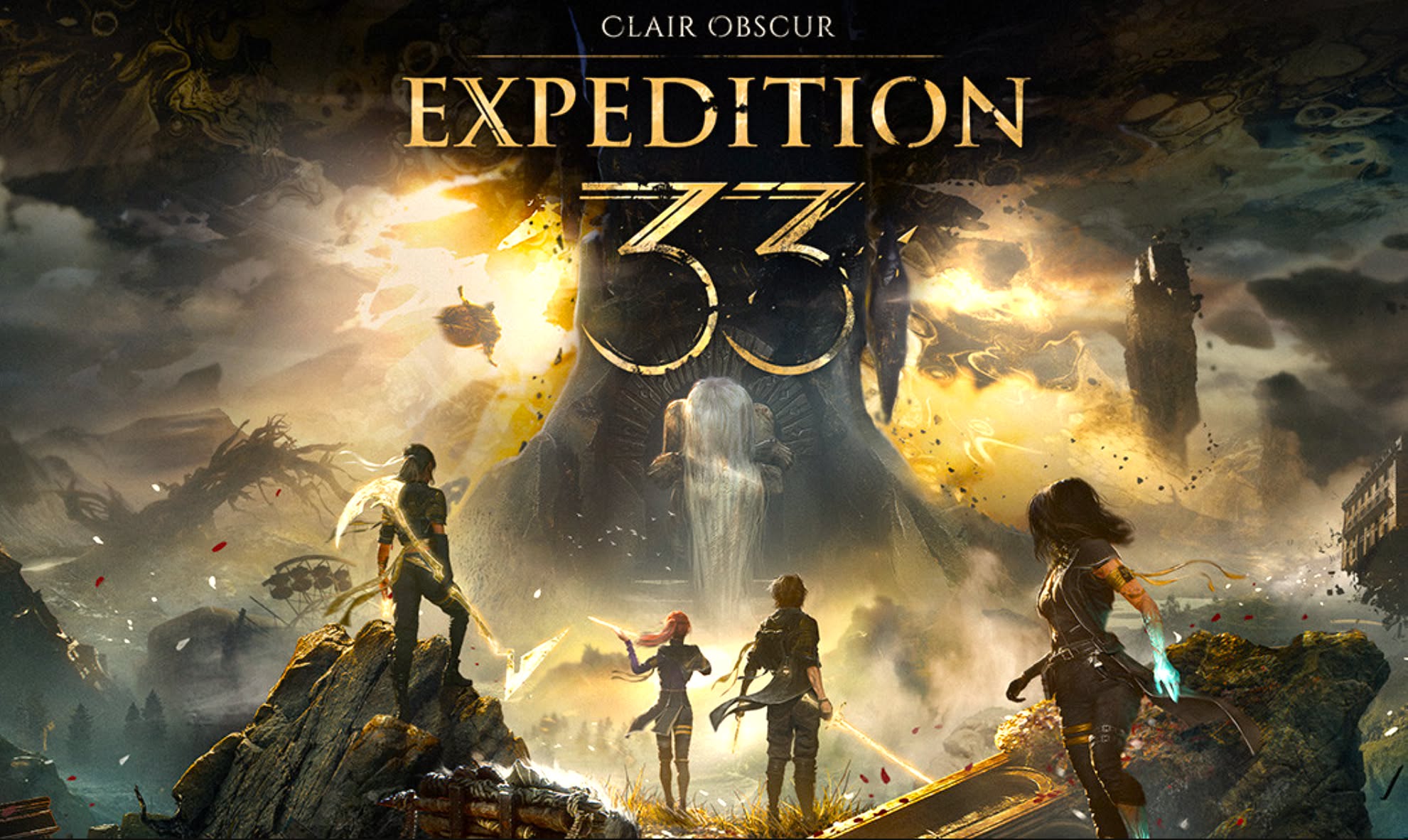 Clair Obscur Expedition 33, developed Sandfall Interactive and published by Kepler Interactive April 24, 2025
So… if you are an enthusiast of single player RPGs and have not spent any time thoroughly engrossed in this modern masterpiece, you’re either buried under a pile of rubble or not allowing yourself enough time for brilliant escapism.
In either case, you’re missing out on what was unequivocally the 2025 GOTY.
I’ll work up a proper review at some point but am simply too busy playing this stunning piece of interactive art with all of my spare time to do so now.
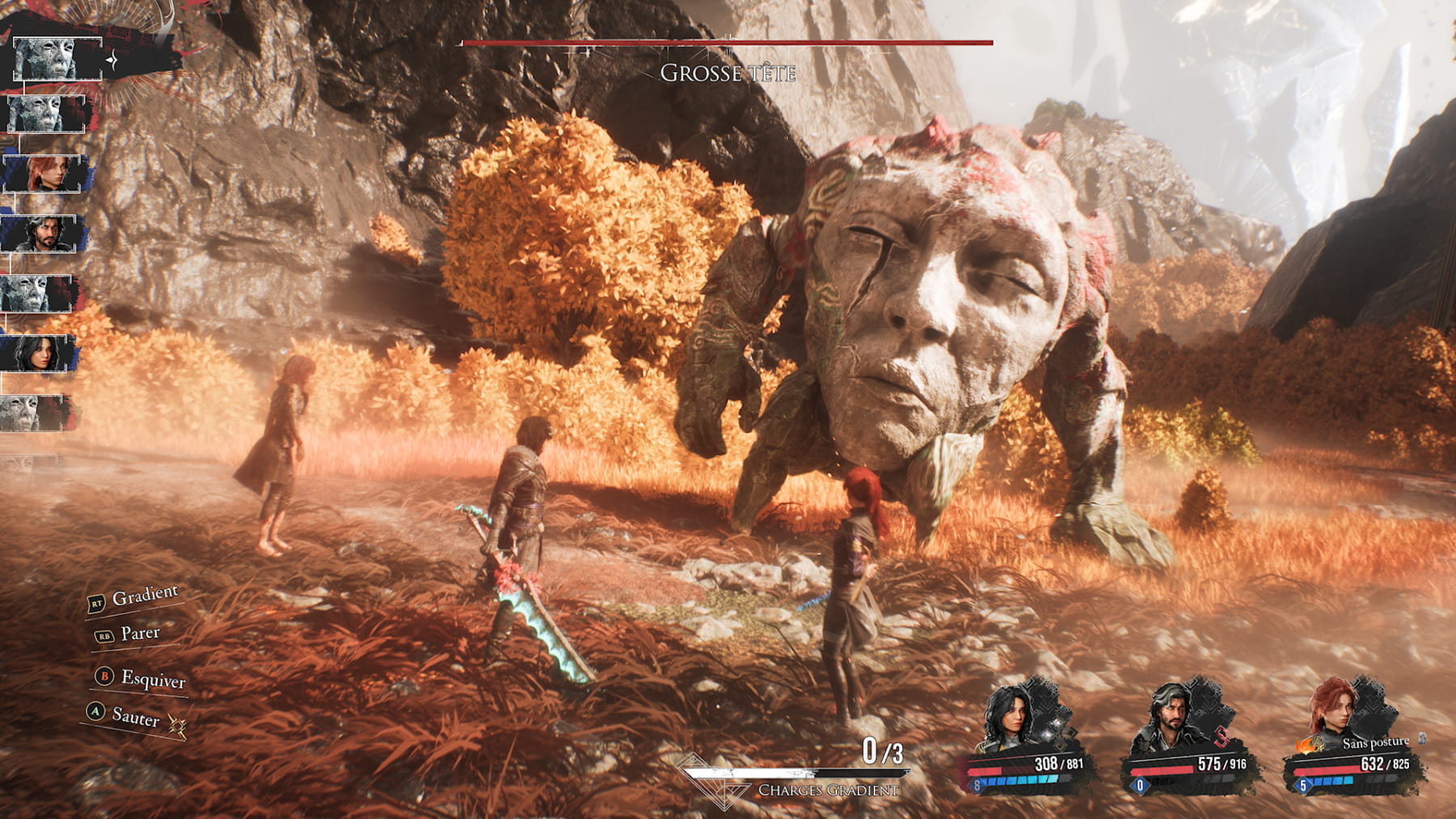 Fighting the giant head in Clair Obscur: Expedition 33
My very short take, aside from the above, is that this is essentially the game that Square Enix has been wishing they could have produced over the last two decades. I truly do not remember the last time I played a game that checked every box I have on my list of desired qualities after a lifetime of video games.
Fresh, engaging mechanics, sumptuous visuals, deeply developed world-building, top shelf voice acting, brilliant writing with staggering emotional depth, and the most phenomenal score since Final Fantasy VII.
All from a tiny French studio with barely more than 30 team members, most of whom are Ubisoft refugees.
Buy it, play it, support Sandfall Interactive. But even if they never produce another game again, their debut masterwork will prove to be an enduring legacy in the field for decades to come.
Joshua Dinges’s last game review for Black Gate was Return of the Obra Dinn.
Categories: Fantasy Books
Forgotten Authors: P. Schuyler Miller
 P. Schuyler Miller
Peter Schuyler Miller was born on February 21, 1912 in Troy, New York. He earned a Master of Science from Union College and worked as a technical writer for General Electric and the Fisher Scientific Company.
Miller had a lifelong interest in archaeology and was a member of the New York State Archaeological Association.
His first published short story “The Red Plague,” appeared in the July 1930 issue of Wonder Stories. Based on the cover of the magazine’s January issue, it was the first winner of a contest Wonder Stories ran, earning Miller publication and $150. Sam Moskowitz described the story as “more of a well-written plot synopsis for a novel than a short story.”
Miller participated in multiple collaborations. In the early 1930s, he wrote two stories with Walter Dennis and Paul McDemott: “The Red Spot of Jupiter” and “The Duel on the Asteroid.” These two stories were the only fiction Dennis and Dermott published, but Dennis was the co-editor, with Raymond A. Palmer, of The Comet, often cited as the first fanzine.
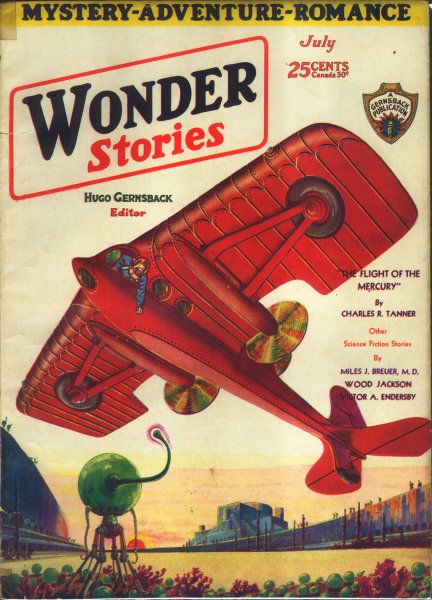 Wonder Stories, July 1930, Cover by Frank R. Paul
In 1934, he took part in the collaborative novel Cosmos, for which he wrote “Chapter 14: The Fate of the Neptunians.” In 1950, he collaborated with L. Sprague de Camp on the 1950 novel Genus Homo, which took advantage of Miller’s interest in archaeology. In late 1933, he began publishing the 11 part serial “Alice in Blunderland” under the pseudonym “Nihil.”
Willy Ley attacked Miller’s 1931 story “Tetrahedra in Space” for its scientific inaccuracies and Miller responded that the physical chemistry described in the story was accurate. Everett F. Bleiler had a low opinion of Miller’s stories in general, suggesting that his 1936 story “The Chrysalis,” published in Astounding was his only story worth reading.
After 1951, Miller became best known for writing reviews for Astounding’s “The Reference Library” until his death om 1974. He had very little fiction output once he began reviewing books. His reviews tended to look for the good in the stories and novels he was reviewing, often including mini essays of this historical and literary context of the works under review. In 1963, he won a Special Hugo Award for his book reviews.
Miller died in Parkersburg, West Virginia on October 13, 1974 while on an archaological tour of the Fort Ancient culture and was buried in the Elmwood Cemetery in Schaghticoke, New York.
His papers formed the bases of the P. Schuyler Miller Memorial Library at the Carnegie Museum in Pittsburgh, Pennsylvania.
 Steven H Silver is a twenty-one-time Hugo Award nominee and was the publisher of the Hugo-nominated fanzine Argentus as well as the editor and publisher of ISFiC Press for eight years. He has also edited books for DAW, NESFA Press, and ZNB. His most recent anthology is Alternate Peace and his novel After Hastings was published in 2020. Steven has chaired the first Midwest Construction, Windycon three times, and the SFWA Nebula Conference numerous times. He was programming chair for Chicon 2000 and Vice Chair of Chicon 7.
Categories: Fantasy Books
A Curious Amalgam: Joan and Peter by H.G. Wells
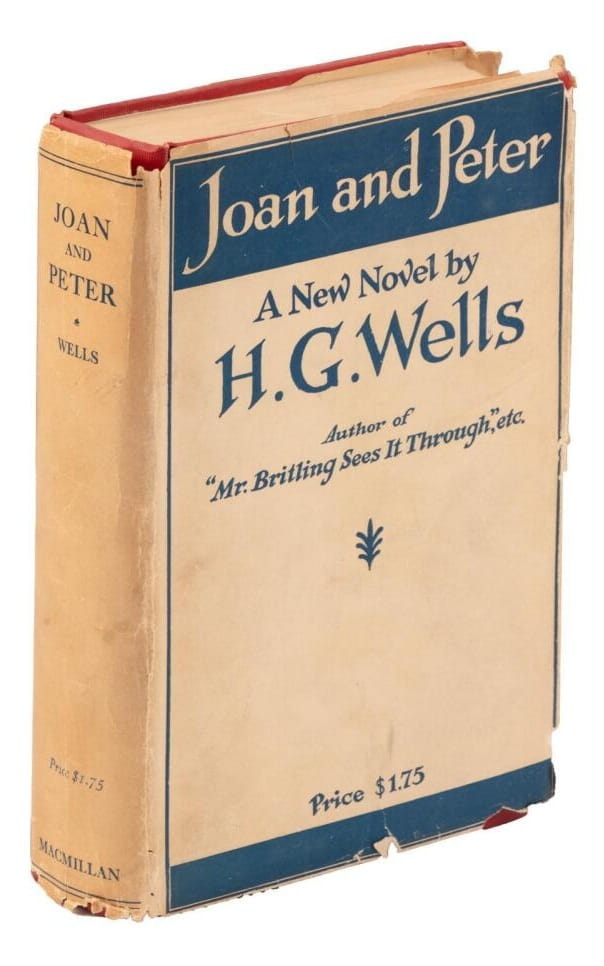 Joan and Peter by H.G. Wells (Macmillian, first American edition, 1918)
Science fiction fans naturally know H.G. Wells best for his scientific romances. But after 1905, he wrote relatively little in that genre. Instead, he turned his efforts variously to the Fabian Society, Britain’s indigenous socialist movement; to surveys of human knowledge for general audiences, in the style later followed by Isaac Asimov (I read my grandmother’s copy of The Outline of History, and I still have the four volumes of The Science of Life); and to realistic novels, starting with Love and Mr. Lewisham in 1900.
Joan and Peter is a curious amalgam of these interests — a realistic novel about changing class relations and cultural attitudes in England, much of whose storyline focuses on the problems of the English educational system as experienced by its title characters. This gives Wells a chance to explain things to his readers, though he’s often fairly good at enlivening the presentation beyond big lumps of exposition.
[Click the images to embiggen.]
 The books of HG Wells
When I say “realistic” here, I mean it in a mostly literary sense: fiction that avoids scientific speculation, marvelous inventions, supernatural powers, and other exotica. Joan and Peter’s characters are human beings living in a human world. However, some of its narrative turns seem to show the influence of older romantic themes.
The foundation for this story is a pair of English families with different origins and qualities. On one hand, the Stublands: Solidly middle class, in the older sense that meant “six hundred a year” and no need to work, thanks to ancestors who made a success in textiles. Ancestrally Quaker, they drifted over time among various non-established churches, and by the start of the novel, they’re spiritual without being religious, and many of them are artistic. On the other hand, the Sydenhams: County people, generally conservative, and prolific enough to have little money for their younger generation.
Dolly Sydenham, a vicar’s daughter, has a deep attachment to her cousin Oswald — but loses track of it temporarily in the excitement of meeting Arthur Stubland (“whom everyone called Stubbo,” Wells says, but in fact the nickname is used only half a dozen times, all in the first chapter). Arthur and Dolly marry and have a son, Peter. A couple of years later Dolly’s brother, an alcoholic reactionary journalist, dies and leaves her to care for his bastard daughter Joan.
And that gives us our core cast. This kind of family tableau seems exactly the sort of thing English novelists favored as a setup, though Wells may have been a little hasty with his: I tried to draw family trees and couldn’t make either the Stublands or the Sydenhams entirely consistent on the basis of Wells’s statements.
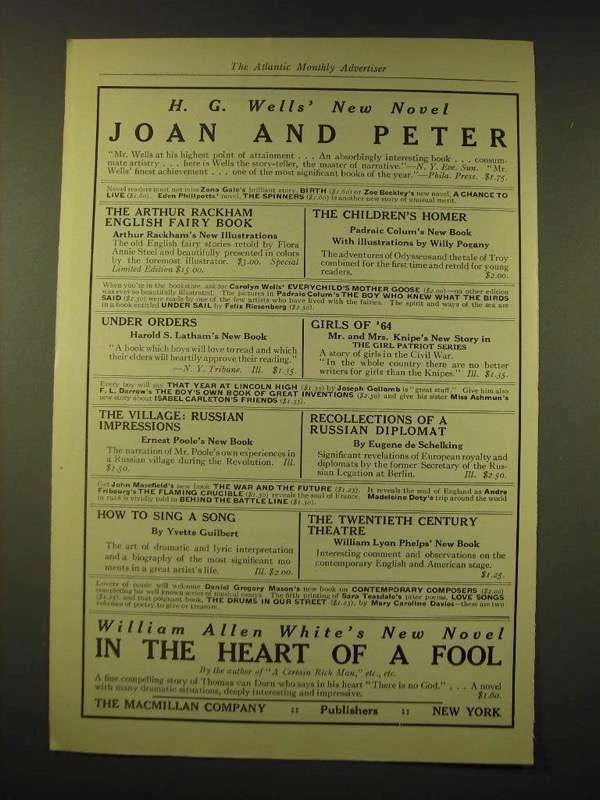 1918 Macmillan Company advertisment for Joan and Peter by HG Wells
From this foundation, Joan and Peter develops in three main parts.
In the first part, Peter is born, in a house designed by Arthur (one of only two), and Oswald comes from Africa to visit and, learning that Peter is not to be christened unless he asks to be, offers to be his godfather “pour rire,” and pledge that he shall be taught French, German, mathematics, chemistry, and biology and that he shall renounce the Devil and all his works. After he departs, Arthur and Dolly have a bicycling accident and consider who would become Peter’s guardian if they were both killed; after a little while Arthur thinks of Oswald.
A few years later, Oswald comes for another visit, after Joan has become part of the household. By this time, Arthur has been unfaithful to Dolly, “on principle,” Wells says, and goes on to hint at the affair to Dolly (a century later he would have said “polyamory”), who reacts very unhappily and indeed is tempted to return Oswald’s previously unconfessed love for her, perhaps even to go to Africa with him. Finally Dolly and Arthur are dramatically reconciled, and go on a trip to Italy, while Arthur’s sisters Phoebe and Phyllis move in to look after the children. During the trip they both drown in the waters off Capri.
By this point, it’s clear that Oswald is Wells’s real hero, and he has the right attributes for one: Enlisted young in the Navy, he receives the Victoria Cross at twenty for courage in battle — a battle that blinds one eye and scars half his face. No longer able to serve in the Navy, he eventually ends up in Nyasaland as a British agent, with the idea of serving humanity and the British Empire, suppressing slavery and despotic local rulers, but also with the idea that civilization is essentially an educational enterprise.
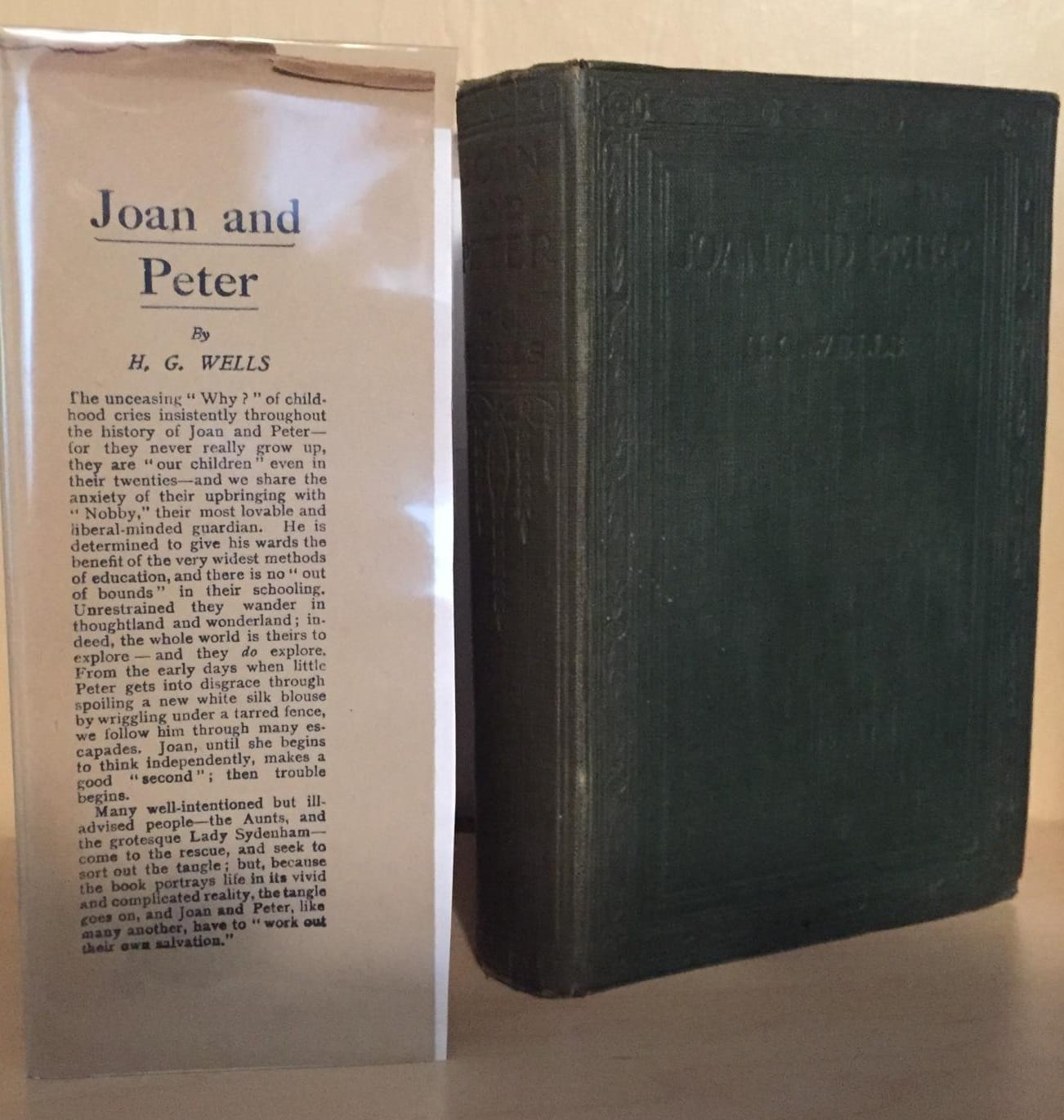 Joan and Peter inside flap (Cassell, 1918)
All of this actually makes Wells sounds more Kiplingesque than he’s often thought of as being. On his second visit to England, Peter gives him the nickname “Nobby,” after his favorite toy, a Dutch doll half of whose face was smashed off while Peter was playing with him and then painted black; the two of them fuse into a central figure in Peter’s private mythology. It’s as that myth that he appears in the second part.
All of that part’s complications derive from Arthur’s will, as he revised it before the trip to Italy — without telling Dolly! He appoints his two sisters as joint guardians with Oswald, and then, not wanting Oswald outvoted all the time, he adds Oswald’s aunt by marriage, Lady Charlotte, a wealthy and conservative widow, “one of those large, ignorant, ruthless, low-church, wealthy, and well-born ladies who did so much to make England what it was in the days before the Great War.”
This leads to a long series of conflicts over Joan and Peter’s upbringing, their schooling, and their religious instruction, carried out partly through solicitors, and eventually by Lady Charlotte’s agents taking Joan and Peter from their school to dispose of them more suitably (as Lady Charlotte sees it), when Peter has reached the age of ten.
At this point, Oswald comes back to England, for two reasons: first, he’s been warned that if he stays in Africa, blackwater fever will kill him; second, witnesses have been found to Arthur and Dolly’s deaths, and while the courts normally assume that the woman will drown first, being “the weaker vessel,” their testimony shows that Dolly went on swimming long after Arthur sank — so her will prevails, and Oswald is the only guardian after all.
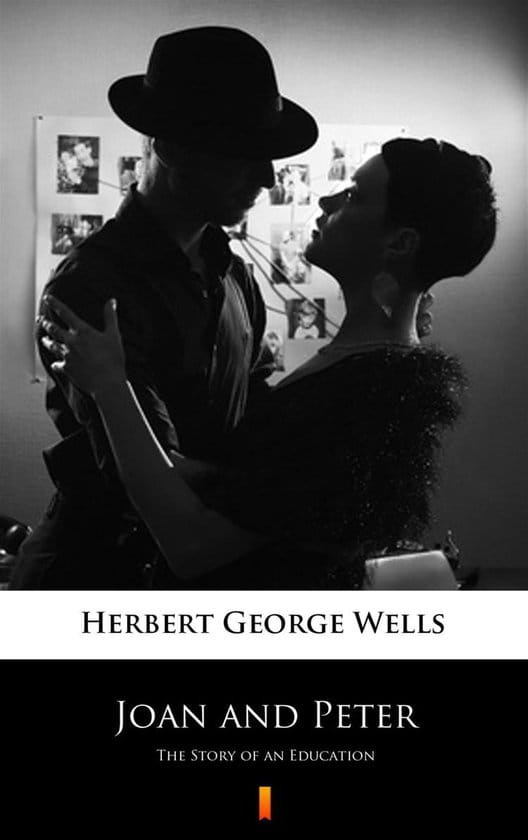 Joan and Peter paperback edition
The third part then jumps forward a decade, to when Peter and Joan are nearing majority, though with flashbacks to Oswald’s arrangements for their schooling. They get caught up in the Great War, and also in sexual passions — and Joan learns that Peter isn’t her brother, or even her half brother, but her first cousin, whom she can think of marrying, while Oswald puzzles over what a mess his wards are making of the whole matter.
On one hand, for American readers, these attachments of cousins may seem peculiar and even creepy: Oswald and Dolly are first cousins, and so are Peter and Joan, and there’s even a scene of unspoken romantic attraction between Oswald and Joan, who’s his first cousin once removed and thirty-two years younger. Wells treats it as a matter of course, though, and American writers once did so: Louisa May Alcott’s Rose Campbell (in Eight Cousins and Rose in Bloom) never even considers a suitor who’s not one of her male first cousins.
On another, having been raised together, and even thought each other to be half-siblings since infancy, Joan and Peter may not be a plausible romantic couple, and making them so may owe more to romantic poets like Shelley than to actual observation. The Westermarck effect had been recognized about when Wells began writing fiction. I also noticed several scenes of same-sex attraction; it’s visible that Wells makes male–male attraction much more disturbing than female–female.
But all of this is something of a side issue to Wells’s real plot, which is didactic. Key scenes involve his characters encountering the peculiarities of a sample of schools of various English types.
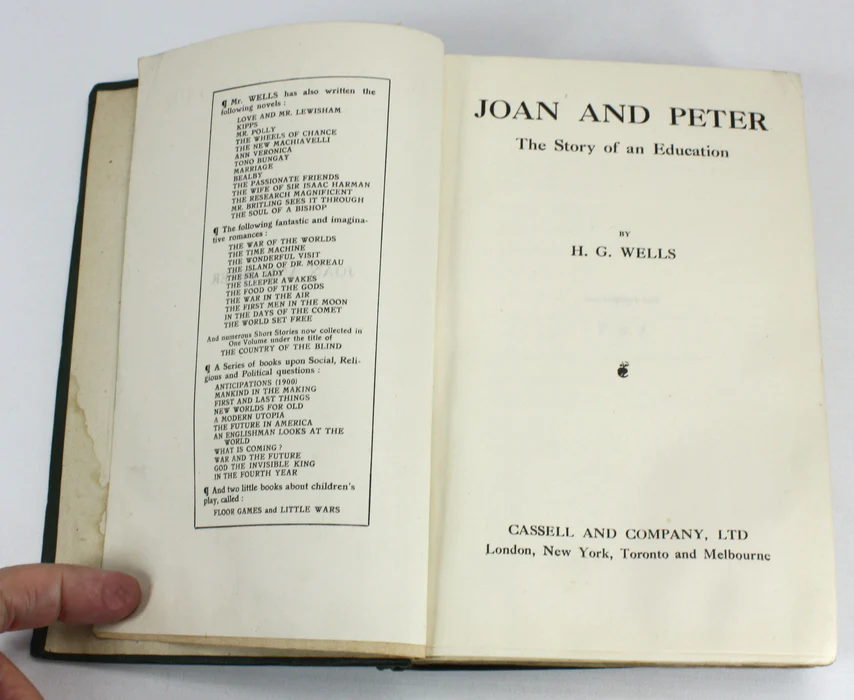 Joan and Peter: The Story of an Education (Cassell, 1918)
The School of St. George and the Venerable Bede, which Joan and Peter both attend from early childhood, has what we might now call a New Age flavor: children wear robes called djibbahs, and the curriculum is rather freeform and experimental, with artistic activities such as performing A Midsummer Night’s Dream. Wells makes a point of reading being taught by the “look–say” method and arithmetic by a process that emphasizes understanding rather than memorization, much like New Math or current approaches to mathematics — unfortunately the young woman who teaches arithmetic is a little confused about some of it. (These were things I thought came in after World War II, and maybe they did — in the United States.)
High Cross School is a much more traditional school, with a headmaster who was good at sports and never really mastered the classical languages he mainly teaches. After being harassed by other boys and caned by the headmaster (for not answering to the headmaster’s newly invented nickname for him) Peter runs away and finds his way home (and one of the boys sent out to search for him expresses extravagant, sentimental grief when it appears that he drowned). Peter calls on the name of “Nobby” during the caning and fantasizes about him while running away. Joan, in the meantime, isn’t sent to school at all; as a bastard she’s thought best suited to domestic service — and then she catches measles.
After this, Oswald undertakes a long search for better schools, of which we hear most about the ones for boys. Peter ends up at Caxton, a fairly progressive school for boys, and Joan at Highmorton, a school for girls run by suffragettes. And during this phase Wells gives us a passage where the headmaster of a preparatory school that readies Peter for Caxton bemoans the limits placed on him by parents’ demands for the standard sort of education.
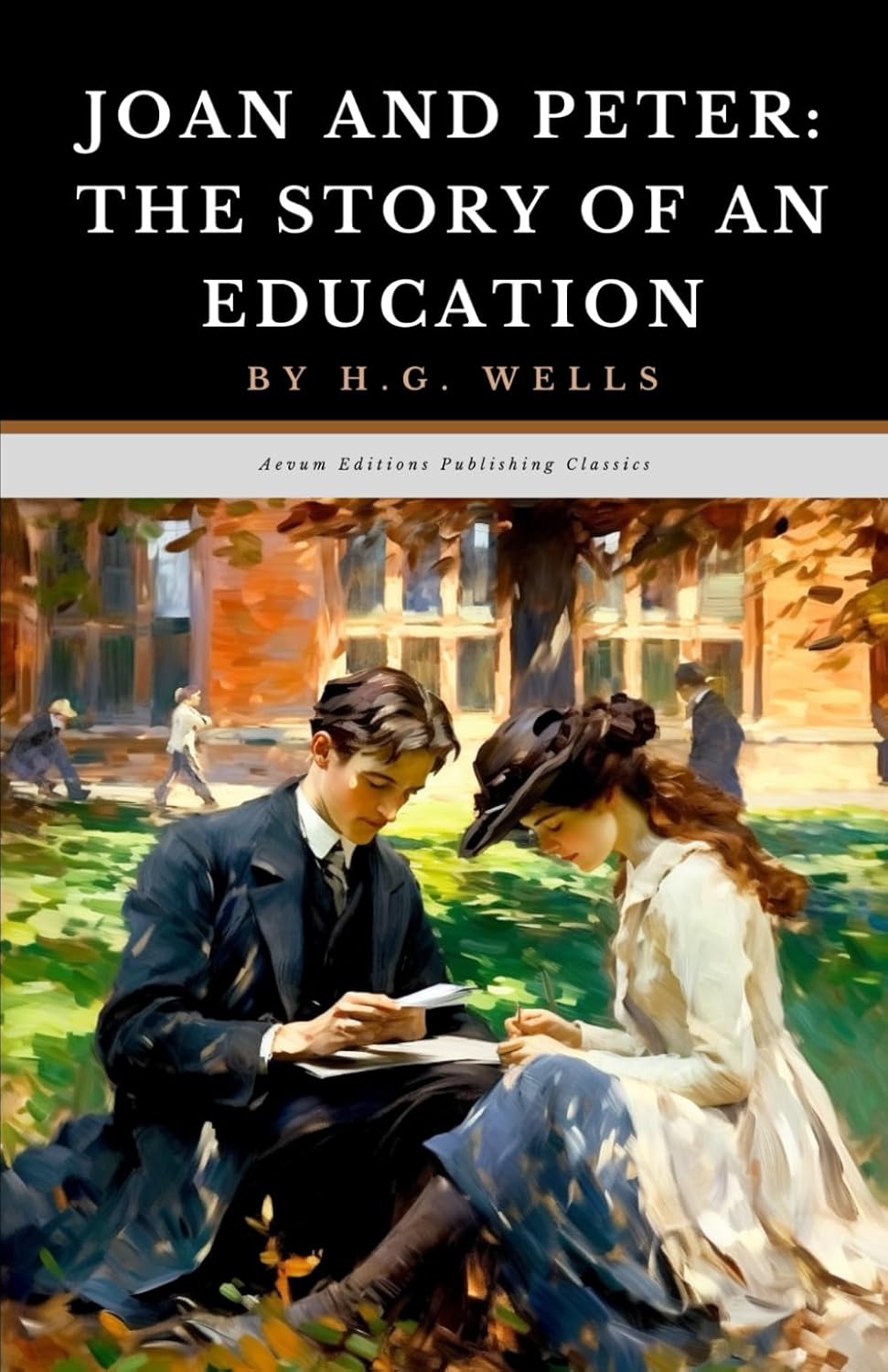
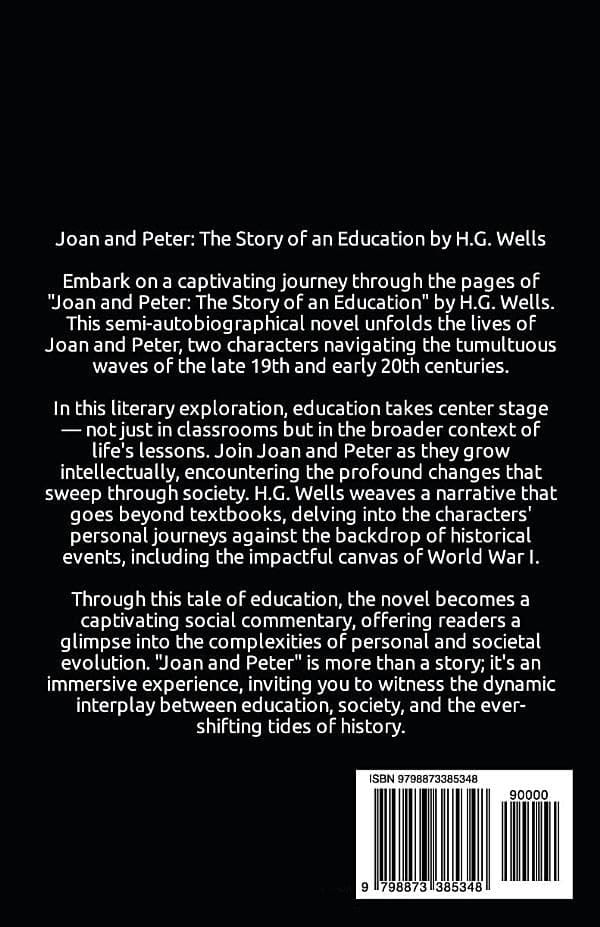
Joan and Peter The Story of an Education (Aevum Editions Publishing, December 30, 2023)
Behind all this is a clash of philosophies of education, presented in a conversation during Peter’s infancy: Arthur and Dr. Fremisson, the family doctor, are all for a natural childhood, in the spirit of Rousseau or William Morris, but Oswald thinks that human planning can improve nature considerably. This leads to a debate over whether plowed fields are artificial or natural:
“I’d like to know just what does belong to the natural life of man and what is artificial,” said Oswald. “If a ploughed field belongs then a plough belongs. And if a plough belongs a foundry belongs — and a coal mine. And you wouldn’t plough in bare feet — not in those Weald Clays down there? You want good stout boots for those. And you’d let your ploughman read at least a calendar? Boots and books come in, you see.”
“You’re a perfect lawyer, Mr. Sydenham,” said the doctor, and pretended the discussion had become fanciful…
The whole thing was remarkably like a Heinlein character’s rant about technophobes! Wells really was an ancestor to classic science fiction.
In a charmingly comedic scene, Arthur tries to get the children to build cooperatively with toy bricks, following Kropotkin’s theories, only to be frustrated by each one wanting to do the whole job: “Dadda not put any more bricks. No. Peter finish it.” The housemaid, Mary — a socially enlightened household has to have at least one servant, who actually spends more time with the children than either parent — finds it simpler to draw a line across the floor and give each child half the bricks, letting them play side by side. (Mary quietly vanishes from the story sometime after Oswald’s return.)
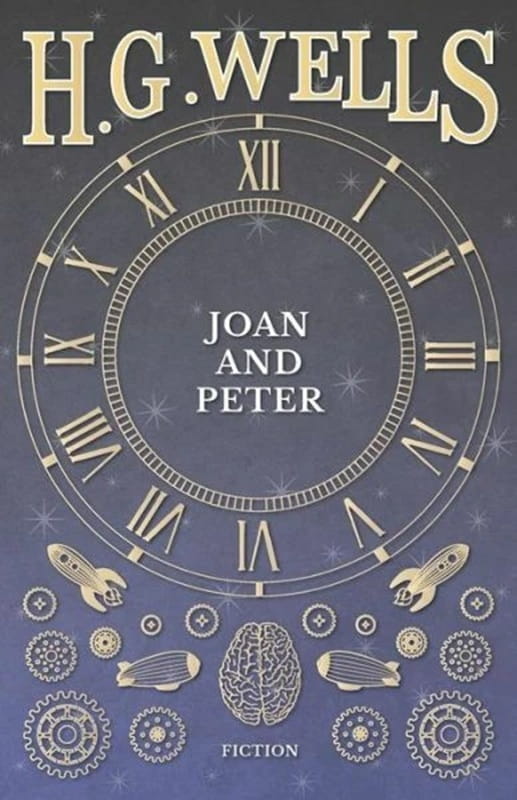 Joan and Peter trade paperback edition (Read Books, 2008)
A final chapter has Oswald setting out to give Joan and Peter a valediction, an apology for his own life and what he’s made of it, and a philosophy of education. But he doesn’t get to deliver much of what he’s lain awake rehearsing; no sooner does he ask his rhetorical introductory question, “What is education up to?” than Peter jumps in and offers his own answers. In the end Oswald, sitting in the dark in his study, reflects on his own life, and his feelings for Dolly and Joan, and then gets up to light his reading lamp and go to work.
I suppose literarily this is more plausible, and livelier, than Socrates giving a long speech while his young admirers say, “Yes, Socrates!” but I ended up feeling that it was a little too inconclusive. (And Plato would have explicitly linked erotic attraction to education in a way that Wells hints at but doesn’t quite make clear.) The whole project is a kind of amphibious entity, half a novel and half a tract, and both halves are interesting, but they don’t quite mix.
It had not thitherto occurred to Oswald that his ward had the most beautiful neck and shoulders in the world, or that Joan was as like what Dolly once had been as a wild beast is like a cherished tame one.
William H. Stoddard is a professional copy editor specializing in scholarly and scientific publications. As a secondary career, he has written more than two dozen books for Steve Jackson Games, starting in 2000 with GURPS Steampunk. He lives in Lawrence, Kansas with his wife, their cat (a ginger tabby), and a hundred shelf feet of books, including large amounts of science fiction, fantasy, and graphic novels.
Categories: Fantasy Books
The Imaro Saga by Charles Saunders
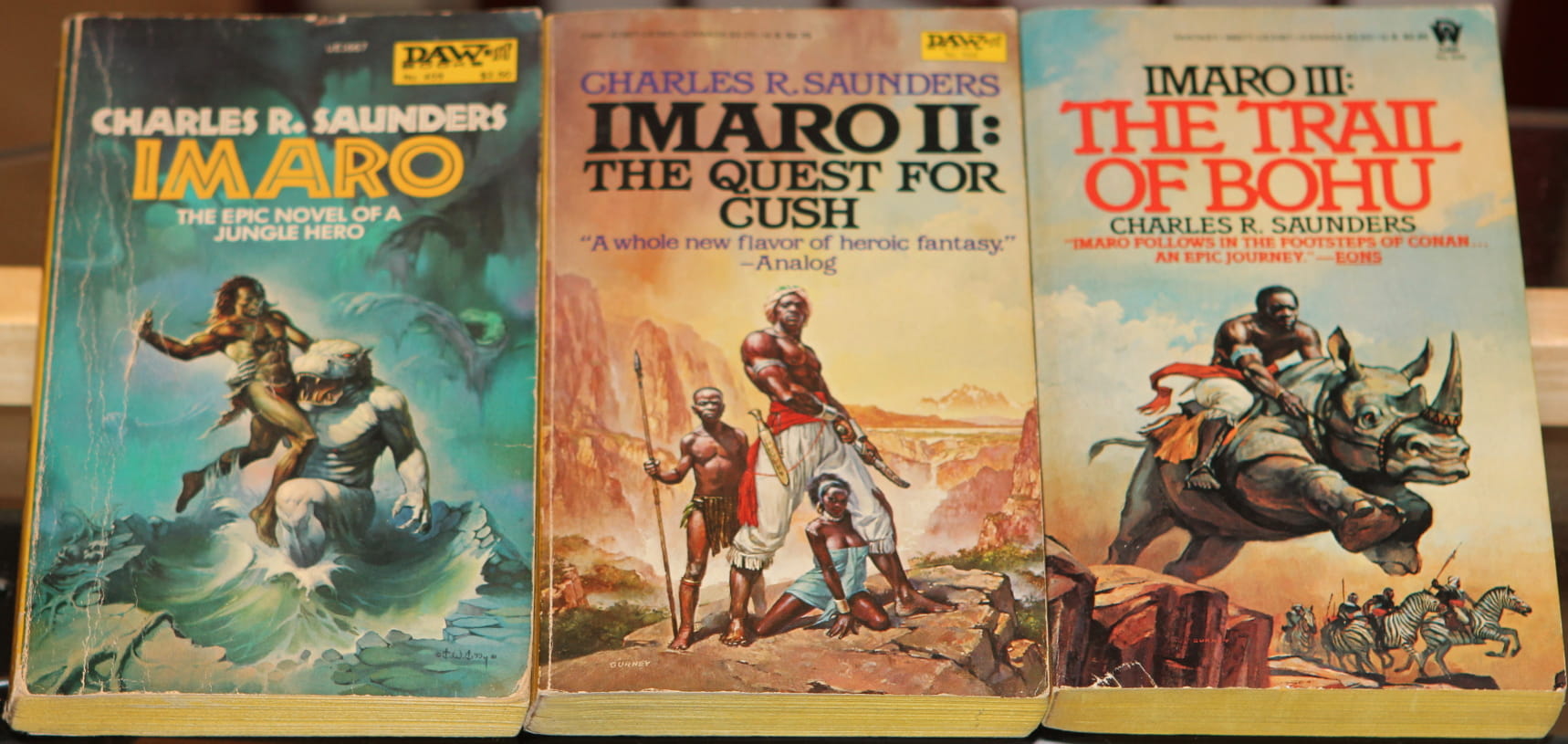 The Imaro trilogy by Charles Saunders, all from DAW Books: Imaro (November 1981), The Quest for Cush (February 1984) and The Trail of Bohu (October 1985). Covers: Ken Kelly and James Gurney
Charles Saunders (1946 – 2020) was one of two men who established a sub-genre of Sword & Sorcery that has come to be called Sword & Soul. The other was Samuel Delany (1942 – ). Saunders was born in the USA but moved to Canada as a conscientious objector after being drafted for Vietnam. He became a journalist and wrote a lot of nonfiction, much of it dealing with the lives of Blacks in Canada.
Around 1974, Saunders created a fictionalized Africa called Nyumbani and began writing S&S stories set there about a hero named Imaro. These were published in a small magazine but the first one was reprinted by Lin Carter in his 1975 edition of Year’s Best Fantasy. By 1981, some of these stories had been connected into novel form and were published as Imaro, by DAW books (Ken Kelly cover). Two more books followed, The Quest for Cush (1984) and The Trail of Bohu (1985), both with excellent and more appropriate-to-the-character covers by James Gurney.
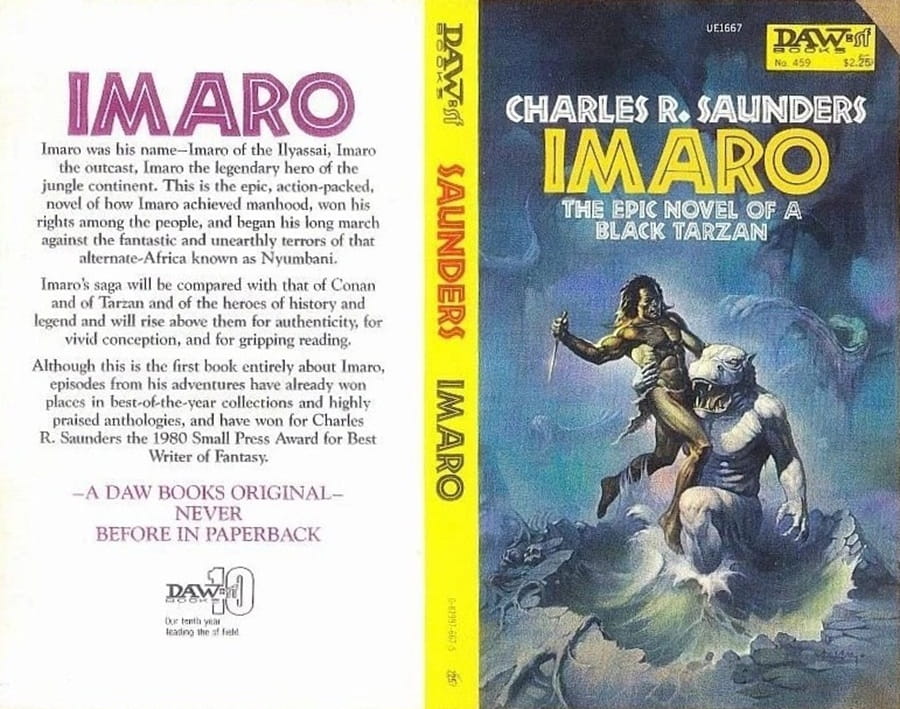 DAW’s original cover for Imaro, with tag line The Epic Novel of a Black Tarzan, withdrawn and reprinted after a complaint from the estate of Edgar Rice Burroughs
DAW didn’t know how to market a black S&S hero like Imaro and initially the character was compared to Tarzan, probably because of the African connection. Imaro, however, is much more Conan than Tarzan, although he is a unique character and no “clonan.” DAW realized their error and made the better connection, quoting on the back of Imaro:
Imaro’s saga will be compared with that of Conan and other heroes of history and legend…
(An aside about this quote: Conan is implied to be a hero of ‘history and legend.’ That’s a little odd.)
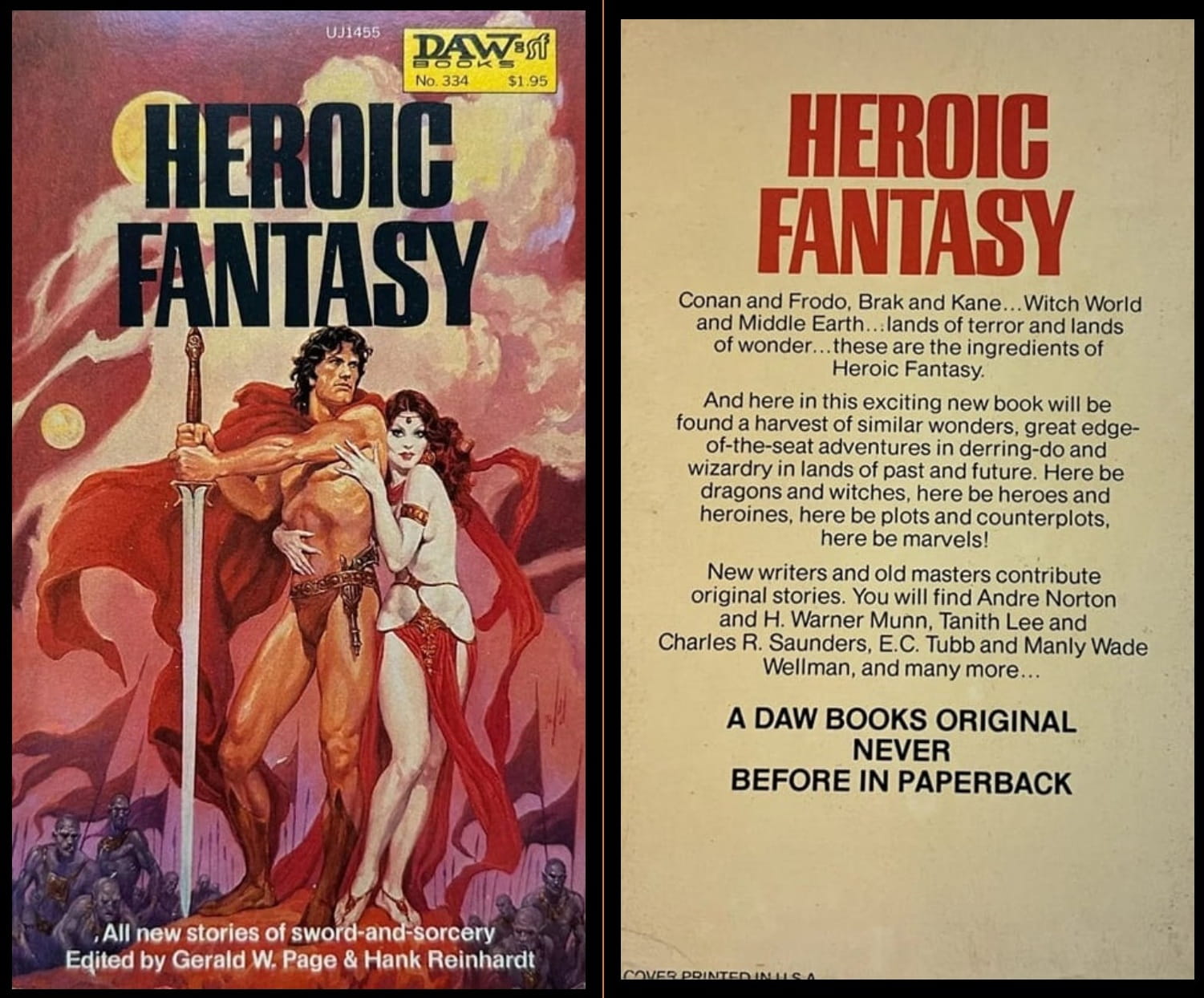 Heroic Fantasy edited by Gerald W. Page & Hank Reinhardt (DAW Books, April 1979). Cover by Jad
Imaro III: The Trail of Bohu has a cover quote:
Imaro follows in the footsteps of Conan
I first discovered Imaro in an anthology I’ve mentioned before called Heroic Fantasy. This led me to the first Imaro novel, although it took a while to find #2 and #3. They make a nice, solid body of work.
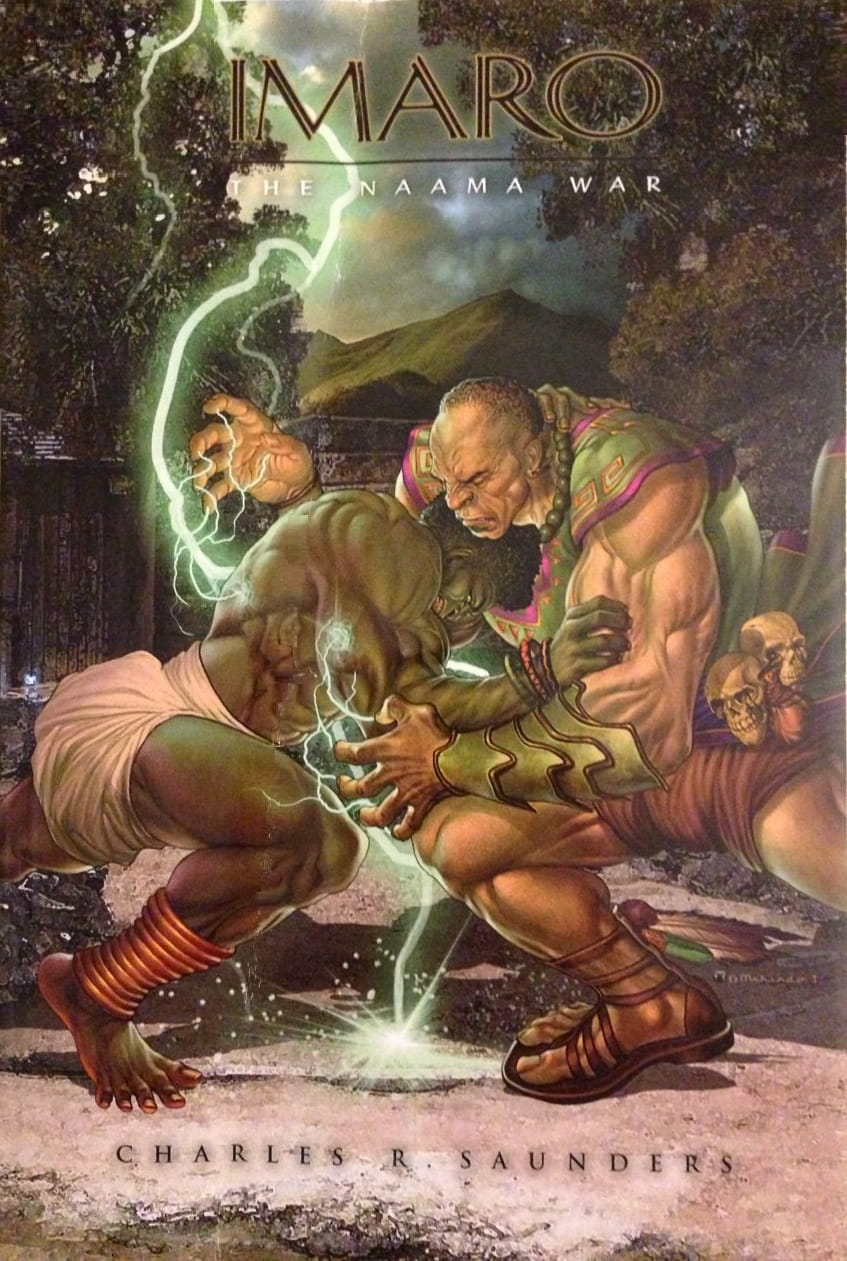 Imaro: The Naama War (Sword and Soul Media, December 29, 2009). Cover by Mshindo Kuumba
In 2009, Saunders self-published a fourth Imaro novel called The Naama War, through Lulu. Unfortunately, I didn’t immediately pull the trigger to buy it and now it’s unavailable. I’ve shown the cover pic by Mshindo Kuumba above.
There’s also a short story collection called Nyumbani Tales set in Imaro’s world (below), but the copies I’ve seen are used ones for nearly 150 bucks.
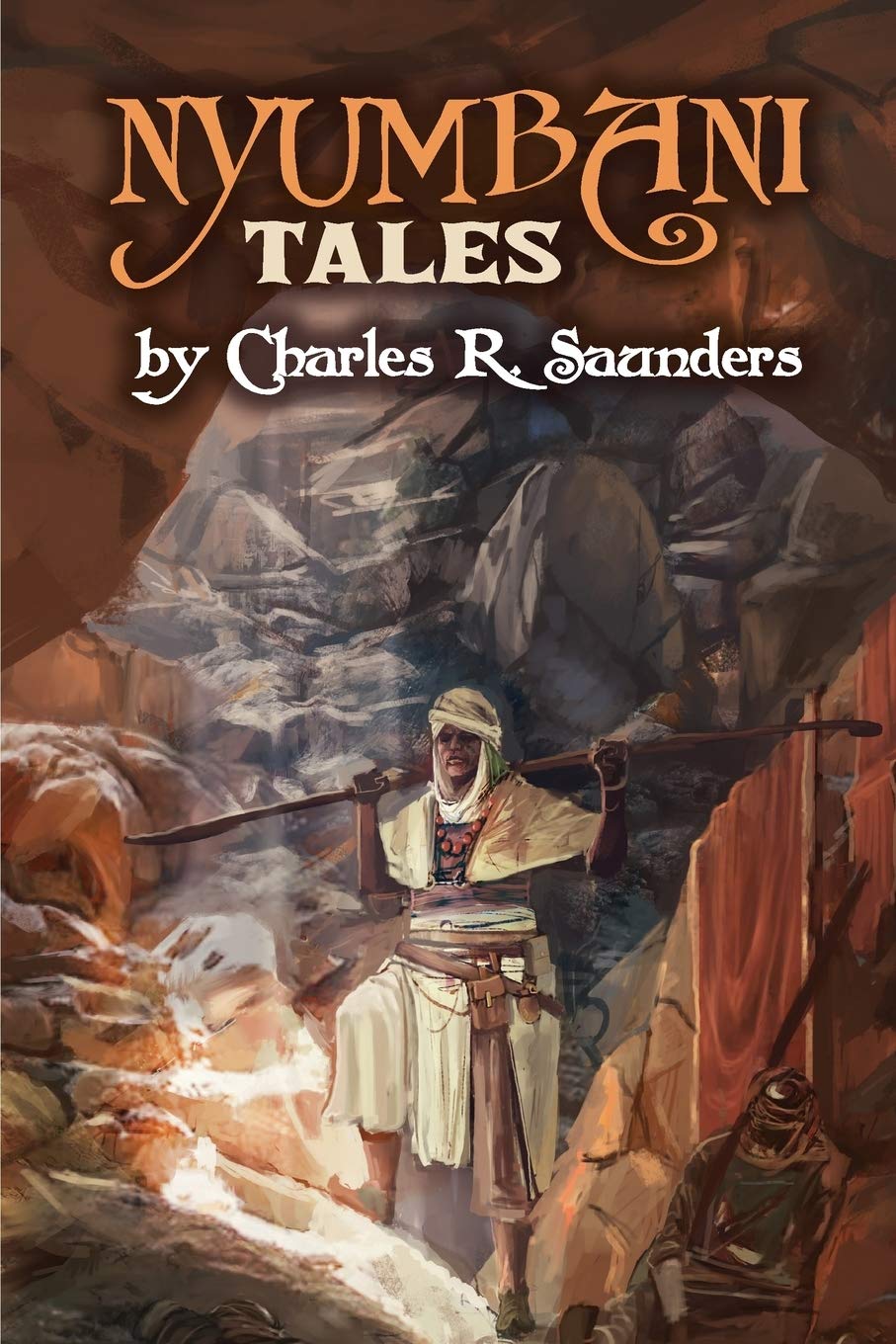
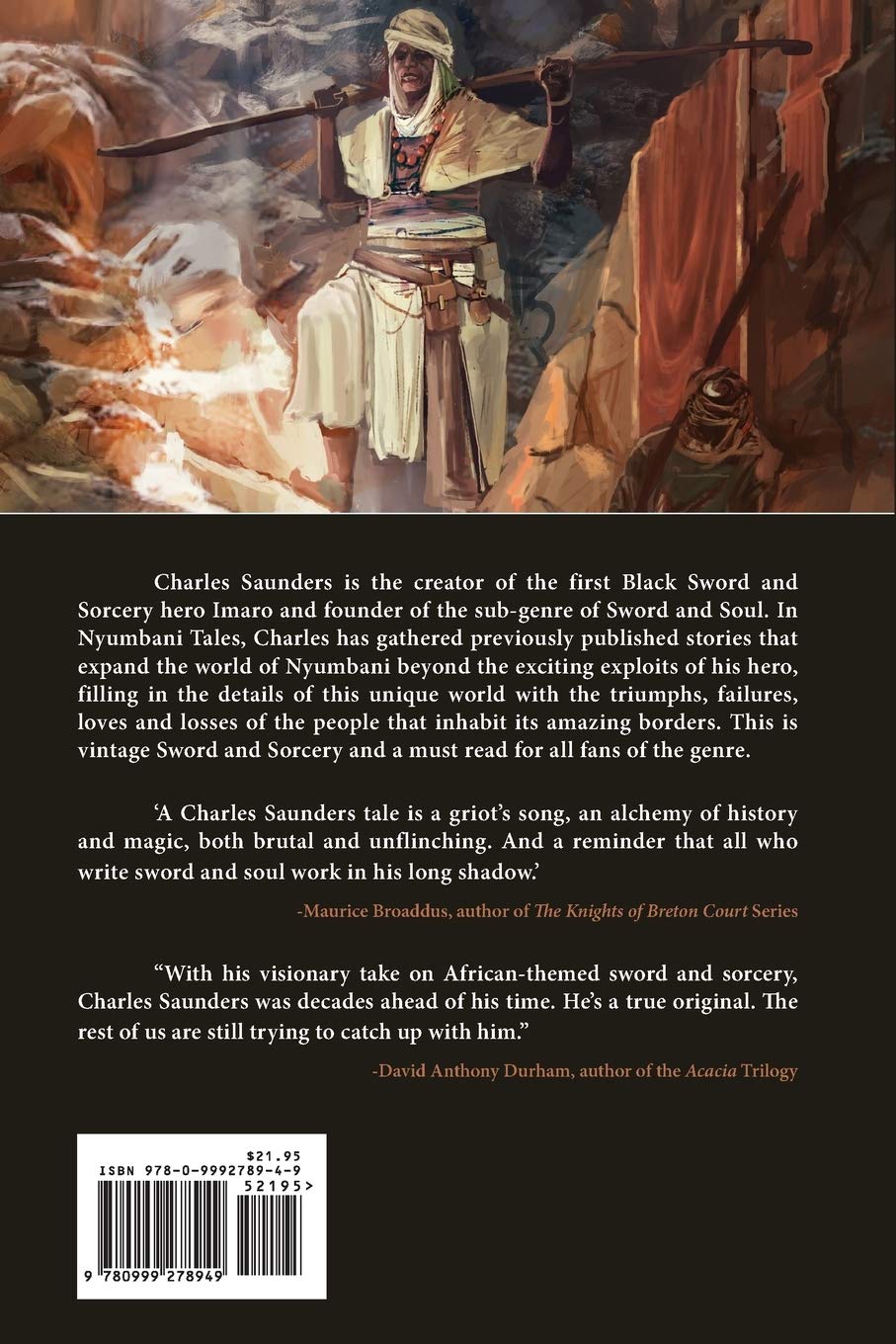
Nyumbani Tales (MVmedia, May 19, 2017). Cover by Edison Moody
Updated versions of the first two Imaro novels (re-edited by Saunders) were published in the early 2000s, although I don’t have them (see below). Saunders also wrote stories about a woman warrior named Dossouye. I read one of these, which was quite good, but the collection is currently unavailable.
I remember hearing of Saunder’s death several months after it occurred and being shocked. His writing, fine as it was, had not brought him any comfortable financial situation.
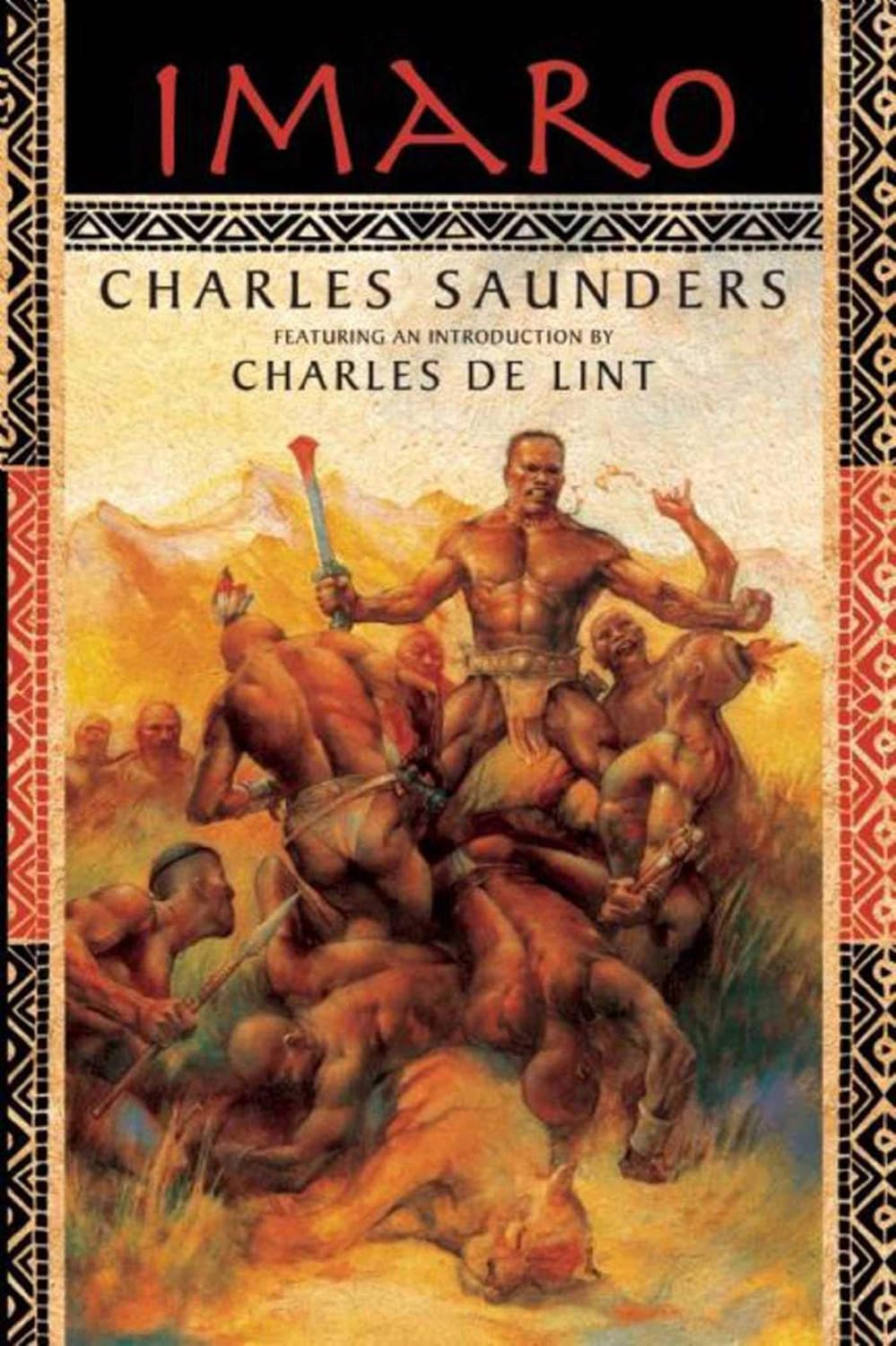
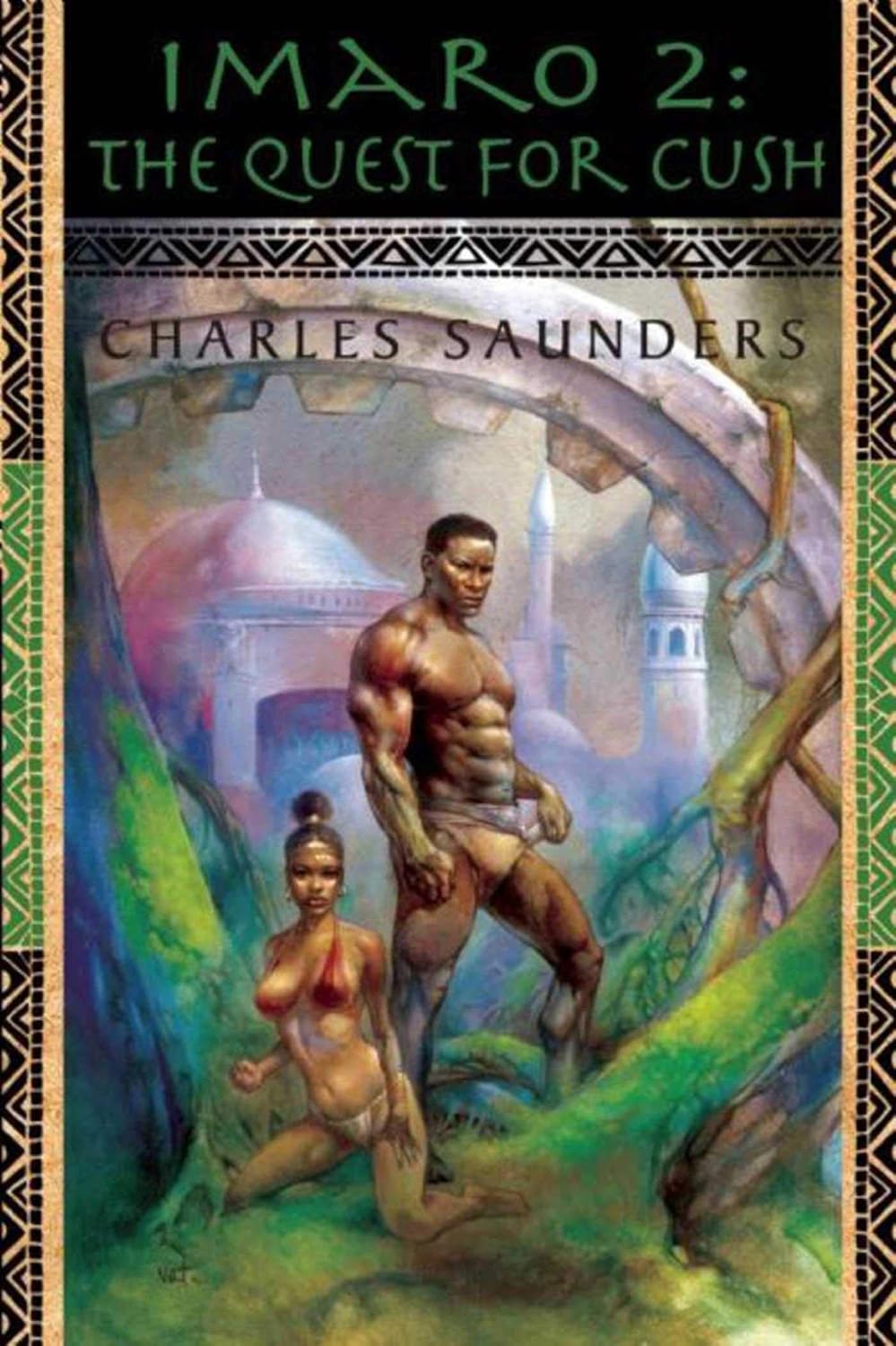
Reprint editions of Imaro and Imaro 2: The Quest for Cush from
Night Shade Books (February 15, 2006, and January 2007). Covers by Vince Evans
He died in a small apartment with no phone or internet connection, and apparently with no one close enough to him to check on his whereabouts. We can at least hope he’ll be better remembered after his death than he seemingly was before.
Charles Gramlich administers The Swords & Planet League group on Facebook, where this post first appeared. His last article for us was a review of two S&S anthologies, both titled Warlocks and Warriors, edited by Donald M. Grant. See all of his recent posts for Black Gate here.
Categories: Fantasy Books
Proven Wrong… Joyfully
 Image by kalhh from Pixabay
Good afterevenmorn, Readers!
Everyone has a preference, right? Preferences show up all the time; in food, in friends, in partners, in art, films, and books. I, for example, like my food relatively spicy. My father will take it so damned hot any normal person will hallucinate pink elephants for hours. Not my preference. Sharing an Indian meal with him is sometimes a challenge. I prefer whiskey to most other alcoholic beverages, though I’ll happily have a rum and coke on occasion. I am a huge fan of surrealism in art, and find expressionism a little dull (controversial take alert). And when it comes to my books, I do not like first person perspective narratives, or LitRPGs, and I’m very particular about my humour.
Well, there are two books/series now that have absolutely slapped me in the face and called me a liar. And I’m here to admit I have (joyfully) been proven so very wrong.
 Image by Ylanite Koppens from Pixabay
First, I have to mention that I had struggled with reading for years and years and years. In fact, reading for pleasure became in credibly difficult during and after my university years. I just could not find it in me to pick up a book and start reading. There are some books that pulled me out of the slump momentarily (thank you Malazan Book of the Fallen), but on the whole, I’ve not been able to read.
I have no idea what the block was about. I did try to overcome it last year, attempting to force myself to read just before bed. While I did read more books last year (I think the number was four) than I had in previous years, it was still an absolute slog. This made me incredibly sad, as I had, prior to university, devoured books by the dozens in a year. I loved reading. Or I did. So why couldn’t I read?
Something this year shifted. For some reason, I have been much better about reading. As I don’t really have much spare time, I’ve kept my reading time for the times I’m on public transit, which is usually just Tuesdays, Thursdays and Saturdays (when I head to and from martial arts training). This appears to have worked a bloody miracle. I set my reading goal for twelve books in the year. I figured one book a month was more than doable with my schedule.
I have, as of this weekend just done, finished my tenth book. I don’t know why I’m suddenly devouring books again, but I’m not sad about it… because I have read some stellar books of late. My wallet, however…
The first book that took me by surprise in my new reading feast was this one:
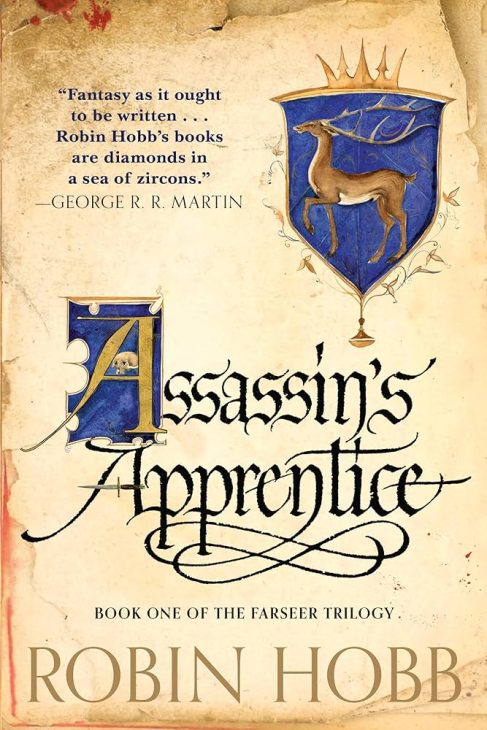
I had heard from a few ‘BookTok’ creators that this was a good read (though BookTok appears to have ben swallowed whole by Romantasy at present, some folks are recommending different books). The first book in the Farseer Triology, The Assassin’s Apprentice by Robin Hobb is written in one of my least favourite perspectives – first person. I was not thrilled, to be honest, when I read the first page. Until I hit the second. And then I was all in on this story. I cried three times before chapter five. This was an absolute five star read for me. And it took me by surprise. I was not expecting something written in the first person to be as affecting as it was.
I chalked it up to a fluke. One exception to the rule due to an exceptional writer.
And then, and then, and THEN I read this:
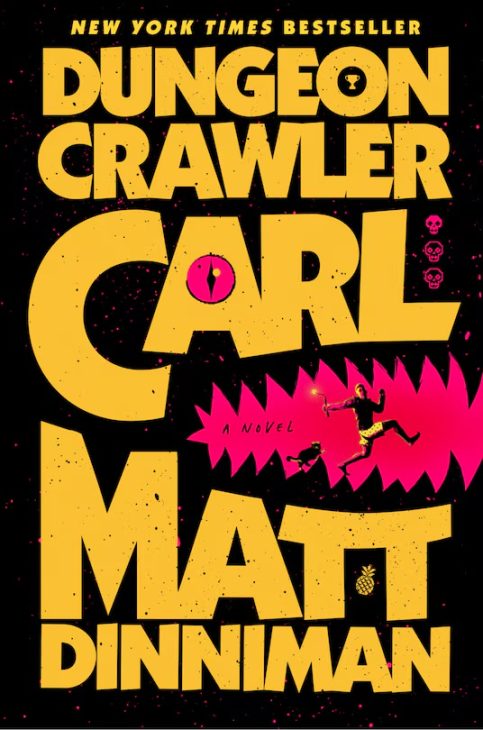
I admit, I was influenced. A number of people in my circles had mentioned how good this book was. It did not seem like my thing. I am not a fan of LitRPGs, and worse, it was first person. So, not something I would enjoy. Still, folks were taking about how good this book was, so I resolved to give it a chance.
I. Loved. It.
This book is funny, and earnest, and somehow able to maintain some incredible tension. The situation was absolutely ridiculous, yet I managed to be filled with compassion for some of the ‘mobs,’ charmed by characters who could be incredibly annoying if mishandled, and absolutely holding my breath in some of the scenes.
This was my second five star read that I absolutely did not expect. Twice now I’ve been made a liar, and this book made me a liar twice over. A first person LitRPG that I loved? Impossible!
This is, of course, because both Hobb and Dinniman are exception writers, who have both created complicated, fascinating and charming characters, with styles very appropriate to the stories they are telling. While I did not cry during Dungeon Crawler Carl (usually a prerequisite for a five star rating from me), I was so thoroughly entertained, I could not help but rate it highly. For the record, I did tear up a bit in the afterword, which was something I did not know I needed.
You will not break me. Those who’ve read it will understand, I think.

My experience with both first person perspectives as a young reader had coloured my opinion, as these things tend to. It didn’t help that more recent books written in that perspective that got wildly popular were… not very well written in my estimation. If I hear the words ‘Inner Goddess’ one more time, I will absolutely lose what’s left of my sanity. LitRPGs similarly proved disappointing reads before now, and I’ve found them boring or so silly that I cannot get into the story.
Given the poor experiences in the past, it cannot be a surprise that I was hesitant to read these books, and sceptical of their popularity as well (and I have found a lot of books that became wildly popular not really to my tastes besides). Turns out, they’re exceptional, and I am now a liar, liar, pants on fire. I do like first person perspective books, and at least one LitRPG. I should have kept a more open mind.
There’s no really point to this post, except to say that maybe we should all be giving more books a chance, and maybe take some time to test our preferences every once in a while. We might end up very pleasantly surprised… and a little poorer because now I need these books and the entirety of their associated series on my shelf. They bring me joy.
It could be drugs. At least it’s not drugs. Besides, I’ve started walking to work again now that my flu has passed and my lungs are supporting movement again, so there will be less time on public transit. That should slow my reading and spare my wallet a bit…
In any case, I hope you’ll all accept this mea culpa. First person perspectives and LitRPGs are not inherently bad reads. Turns out, like every other genre and perspective, there are good books and bad ones, and a fair number of middling ones. I’m sorry for instinctively turning my nose at them.
Have you read these books? What did you think of them? What kinds of books are your preference? I love talking books. Sound off below!
When S.M. Carrière isn’t brutally killing your favorite characters, she spends her time teaching martial arts, live streaming video games, and sometimes painting. In other words, she spends her time teaching others to kill, streaming her digital kills, and sometimes relaxing. Her most recent titles include Daughters of Britain, Skylark and Human. The Timbercreek Incident is free to read on Wattpad.
Categories: Fantasy Books
8 Things I Think I Think: March 2026
1– BATTLEFRONT II IS PRETTY COOL
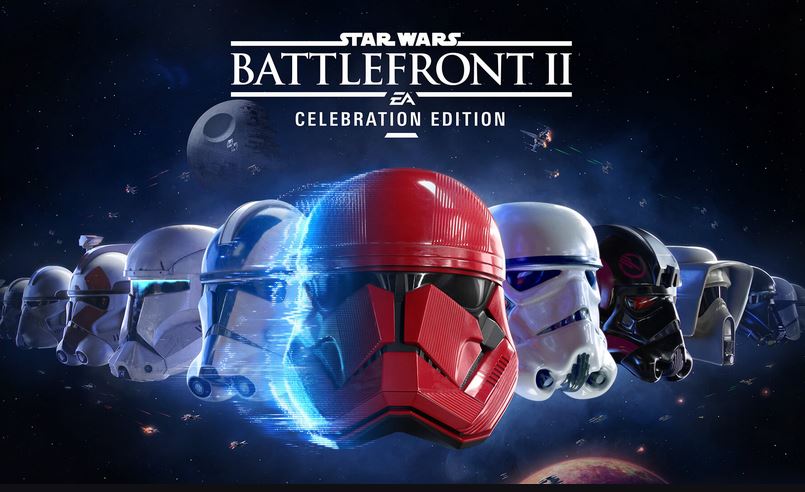 I’ve posted before that Fortnite is my kind of shooter. Fast-paced, high action games like Marvel Rivals, and Call of Duty, aren’t fun for me. And I pretty much just die. Fast and often. I’d rather go play a Solo RPG or something. I had been stuck since finishing Grim Dawn (which I wrote about here). I tried a couple games, including getting into Red Dead Redemption II (which I like, it just hasn’t grabbed me like LA Noire did). I false-started a half dozen games.
My son likes Star Wars: Battlefront II, which I briefly tried. Died repeatedly. Quit. But I decided to give it another go. It’s got a single player campaign mode, with multiple missions, as well as a few other solo options. But it was developed as a Multiplayer shooter, reminiscent of Team Fortress 2.
There was a huge controversy upon release in 2017, regarding micro transactions, and Electronic Arts stopped new content and support, in 2020. But the game has had a couple of resurgences and hit an all-time high in concurrent players last Summer. The game is what it is, and there’s a lot of content for the frequent $3.99 sale price.
I played the entire Solo campaign, in which you are primarily Iden Versio, leader of an Empire elite special forces unit. You have a wakening of the conscience and go to work for the Rebel Alliance. It’s often challenging, but fun. There are also individual Solo scenarios for the Light and Dark sides, where you can play a wide array of SW heroes and villains.
And I’ve played myself up to level 13 in Multiplayer. These are usually large-scale battles of a couple different types, along with options for smaller (down to 4v4) options. I die a lot, but you just re-spawn and continue. I’ve only encountered one blatant cheater so far.
I just wanna say, visually, this game is TREMENDOUS. It’s now 9 years old, and I love how it looks. The cut scenes are like mini-movies. Game play looks great. In space, on ships, on planets: this is a beautiful Star Wars game. I had the Dos-based X-Wing, in the early 90s. Battlefront II is a treat just to watch.
I wish there was more to the Solo campaign (it includes a short sequel), but that was never the heart of the game. The Multiplayer works well enough for me that I’m playing it regularly. It’s not as fun as Fortnite (or maybe, Fortnite is far less frustrating), but the Star Wars immersion is so deep I’m loading it up and blasting away. Check it out on sale and see if it’s your kind of Star Wars thing. The solo campaign was worth $4 alone.
2 – CARL HIASSEN IS A SMILE IN THESE MESSED-UP TIMES I was a Carl Hiassen fan after he broke big back in the 80s. The Miami newspaper columnist wrote funny crime novels that captured what has become the Florida craziness. Strip Tease was a big-screen movie with Demi Moore. Recently, Apple+ made a Vince Vaughan show from Bad Monkey.
There’s a new Florida PI show, RJ Decker, on Tuesday nights. The character, if not the plots, is from Hiassens’ second novel, Double Whammy. I like the show, though after the first two episodes, they’ve significantly dropped the humor level, and it’s in danger of becoming just another cop show. Hope they get back on track.
There’s a character named Skink, in the book. He’s the former governor of Florida who simply walked away from the corruption and the office and lives in the swamps, eating fresh roadkill. He’s in several Hiassen books, though the show left him out.
Since I really liked the Decker pilot; and since the world is a dumpster fire that keeps getting hotter, I decided to revisit Hiassen.
Hiassen satirizes the absurdity of Florida life – which is also to say, people in general. Hiassen can be laugh-out-loud funny. In a different way from Douglas Adams, and Terry Pratchett. He exacerbates situations, but you don’t dismiss them. Because people are too ‘people-ish.’ They can be that dumb, or shallow, or evil.
What really appeals to me right now is that bad guys get their come-uppance. Often in fitting and hilarious ways. Not always SFW, either. You’ll never forget what a bottlenose dolphin does to a steroided-up security guard in Native Tongue. Bad things happen to ‘good’ folks during the books, but the villains pay their price in the end. And I need that these days.
Hiassen was a newspaper writer for years, and he had co-authored three thrillers, before he started writing funny Florida crime novels. I have re-read/re-listened to six of his first eight novels, and they are still really good, decades later. And they’re still fun. He’s an insightful writer, and a good one.
I started to be less enthralled around book ten, back when. We’ll see how many more I tackle. I know I haven’t read his two most recent adult books (he also writes young fiction) – maybe I should.
I unreservedly recommend Douglas Adams and Terry Pratchett. I think Red Dwarf fits in there, too, if a bit less, for me. I really think you should give Hiassen a try. I’d start with Tourist Season, or Double Whammy. But you don’t need to read them in order. Not even the Skink books (recommended for those, though). Or try Strip Tease if you remember the movie.
The laughs, and the bad guys paying for their crimes, is what I need right now. Hiassen delivers.
3 – JAMES LEE BURKE IS A MASTER OF HARDBOILEDI caught up on some Clive Cussler (well, his continuators) in January and February. Now, I last read a James Lee Burke novel. Back in 2020. Swan Peak is book number 17 in his Cajun hardboiled series about Dave Robicheaux. It was from 2008, so I was a bit behind. Well, that series will be up to 25, later this year.
Before jumping down the Carl Hiassen rabbit hold, I read the next book in the series: 2010’s The Glass Rainbow. And I re-listened to the first, The Neon Rain. Two things about James Lee Burke have held true for almost forty years.
One is that he’s a superb writer. Probably my vote for the best modern hardboiled writer. I know Elmore Leonard has his supporters, and Donald Westlake was terrific. There are several excellent ones. I’m just saying that I’m a Burke guy.
The second thing, is that his books are dark. Disturbingly dark. Very bad things happen to people. Worse than ‘just’ death. Death is a release. Robicheaux – and often his buddy, Clete Purcel – go to great lengths to punish bad guys. But a Burke novel is the polar opposite of a Hiassen one, as far as crime books go. Having said that, The Glass Rainbow is classic Robicheaux. As of 2010, Burke was still a superior writer. I have the next book in the series. But I’d had enough dark for a while. I’ve liked almost every novel I’ve read, including some non-Robicheaux. But I have to be mentally ‘in a place’ for Burke. This isn’t like reading Cussler, or Higgins, or even John D. MacDonald. But The Glass Rainbow was a good read, and I will go on to Creole Belle.
And if you can find the unabridged audiobooks by Will Patton (seems mostly just abridged are out there now), get those. I really didn’t care for the guy reading them now.
4 – NATHAN FILLION IS THE KIND OF GUY WE NEED Fillion turned 55 last week. He started out on a soap opera, briefly flew on Firefly, was Captain Hammer (corporate tool), became a mainstream star on Castle, and is currently heading up The Rookie. He’s both a ‘star’ and a nerd. And he revels in it all. He recently started a podcast with real-life buddy Alan Tudyk – Once We Were Spacemen. Which I wrote about here.
I wrote about the Firefly buzz a couple weeks ago (zero comments? C’mon, Byrne fans!). Hopefully the animated series project will find a home. I’m almost done with this re-watch of Firefly, with Serenity to follow. I watched Dr. Horrible’s Sing-Along-Blog again last week, and it’s still delightful.
If you see other people talk about Fillion (ie, Katie Sackhoff on her own podcast), there is nary a discouraging word. It’s like EVERYBODY knows him from his wide-ranging career. And to a person, they say he’s genuinely nice. He treats people like they matter. Not just powerful people. Fans, crew, people he runs into: everyone has nice things to say about him.
His coworkers (not named Stana Katic) praise how he makes everyone comfortable as part of the team. Jewel Staite says she calls him for professional advice. You hear story after story praising him.
Our culture loves to cancel people we deem ‘not nice.’ Legacies are tarnished or destroyed – not always justifiably. Fillion is the guy people want to be around. And that’s cool to see.
I am a fan of Firefly, Dr Horrible, Castle, Con Man (which I talked about here), and I liked him on Desperate Housewives. When you listen to Once We Were Spacemen, you hear all these great stories from his life. And about him and Tudyk buddying around in real life. Bruce Campbell and Nathan Fillion are two actors I like rooting for and watching.
Go to Youtube and pick a couple Spacemen episodes. They’ve had guests from their careers on, including most of the Firefly bunch. I recommend the Felicia Day one a few weeks ago. That was really fun. But honestly, they all are.
And watch a couple interviews he does. You’ll see how people feel about him. It’s cool.
5 – I CANCELED ALMOST ALL MY STREAMING SUBSSo, There are too Many Subscriptions was my fifth item on the February Five Things. I talked about how I was fed up with how many subscriptions I seemed to need to watch and listen to stuff. So much for ‘cutting the cable.’ So, I had canceled Paramount+ and Peacock. And Audible, and Kindle Unlimited. And I switched home Wifi, cutting that bill in half.
Well, I continued on, pulling the plug on Hulu LiveTV (meaning no Disney or ESPN), and Spotify. Along with a credit card I didn’t need, I knocked off $225 a month for stuff I could live without.
I did buy a digital antenna, which picks up my local area stations. And I kept Prime – partly because my son buys more stuff on it than I do. I am using Roku’s Life TV, Pluto, and Plex; all of which are free. I’ve dug out shows like Emergency!, and Simon and Simon. With Prime I can watch Castle, and Poirot. Plus whatever movies they haven’t started charging for. Yet.
I basically gave up on hockey and soccer, and mostly baseball. Won’t be much football, either. But I’ve watched a lifetime of sports. I can leave them behind to avoid paying multiple platforms to see them. I’ll check online for standings and news.
I haven’t bought a DVR system (and my TV requires a USB port to use an SSD drive, which is already tied up), so no recording anything. I actually sit down at 8 PM on Tuesday night and watch Best Medicine, running to pee during the commercials. And then RJ Decker at 10. Just like the cavemen watched TV!
In Ohio, the Public Utilities Commission is corrupt as FIFA, and my electric bill has more than doubled, with another rate increase approved last week. So, that’s eating up these savings. But the whole ‘cut the cable and save money with streaming’ was fools gold. I ended up paying more for even more channels I never watched. I finally said “No thanks.”
6 – JAMES TOLKAN COULD BE ONE SERIOUS DUDEActor James Tolkan died last week. He might be best known as the guy who told Maverick (Tom Cruise) “Your ego is writing checks your body can’t cash” in Top Gun. He had mastered that ‘no-nonsense’ role way back in War Games. And he delivered more of the same as Vice-Principal Strickland in Back to the Future. He had no use for slackers!
I’ve written about A&E’s terrific A Nero Wolfe Mystery (back when A&E wasn’t a garbage network). Tolkan was a key part of that ensemble cast, appearing in 14 of the 20 stories which were adapted. He was his typical self as FBI Special Agent in Charge Richard Wragg. But he got to branch out, like he did as Avery Ballou. He oddly had a Sherlock Holmes deerstalker on as a dog handler in Die Like a Dog. Speaking of Sherlock Holmes, he had a minor role in They Might Be Giants.
And he was an utterly despicable old man in an episode of Leverage. Talk about rooting against the bad guy in that one! Tolkan had a long career of performing well on screen.
7 – I’M READY FOR THE MANDALORIAN & GROGU I’ve shared my feelings about Andor (loved Rogue One, but I’d rather re-read Splinter of the Mind’s Eye, and I haven’t encountered so much pretentiousness since the last time I had an Amazon return at Whole Foods).
I am SOOOOO looking forward to The Mandalorian movie hitting theaters in May. I shall be in attendance. This fun, action flick is exactly the Star Wars I need. Live-action Zeb is cool (loved Rebels), and every part of the trailer worked for me. I’m not a theater guy anymore, but Star Wars will always bring me to a big screen.
And if you ask, I DNFed Skeleton Crew. Couldn’t have been less interested. I don’t begrudge people liking something. Good for them. But I’m not drinking anybody’s Flavor Aid. I’ll just wait for something I like.
I expect The Mandalorian and Grogu to fully meet my Star Wars expectations. My first post about that great show.
8 -YOU SHOULD WATCH DR. HORRIBLE’S SING-ALONG BLOG I absolutely will be doing a post dedicated to this gem of a web series, which grew out of the 2007-2008 Writers Guild of America strike. It’s not streaming anywhere, which is silly. But I pull it up on youtube and cast it to my 50” TV. The soundtrack is out there, including on Spotify.
It is 45 minutes of pure fun. Neil Patrick Harris is fantastic. Watching him is a treat. And the guy can sing. Nathan Fillion delights as Captain Hammer (corporate tool). He can sing, as well. Felicia Day shines as the girl between them. And she actually went to school on a violin scholarship. She knows music.
I was hooked in the very opening scene (ha haaa ha ha ha haaaaaa). Harris’ monologue is great. And things just keep getting better as Penny, and then Captain Hammer, enter the story. Simply put, this is my favorite musical. I can watch it on back-to-back days and it’s still fresh and fun. The music is great. And while Fillion and Day are so good, Neil Patrick Harris understatedly dominates every scene he’s in. You see the shift in his character at the 25 minute mark, on his face. He’s an outstanding actor. Love his singing voice, too.
I praise Con Man in my nerd circles. It’s a sci-fi homage any fan (especially of Firefly) should enjoy. Dr. Horrible is less than an hour out of your day, and it’s worth every second of it.
Prior Things I Think I Think
Five Things I Think I Think (February 2026)
Five Things I Think I Think (January 2026)
Four Things I Think I Think (May 2025)
 Six Things I Think I Think (March 2025)
Ten Things I Think I Think (January 2025)
Ten Things I Think I Think (December 2024)
Nine Things I Think I Think (October 2024)
Five More Things I Think: Marvel Edition (September 2024)
Ten Things I Think I Think: Marvel Edition ( September 2024)
Five Things I Think I Think (January 2024)
Seven Things I Think I Think (December 2023)
Talking Tolkien: TenThings I Think I Think (August 2023)
A (Black) Gat in the Hand: Ten Things I Think I think (August 2023)
5 More Things I Think (March 2023)
10 Things I Think I Think (March 2023)
Bob Byrne’s ‘A (Black) Gat in the Hand’ made its Black Gate debut in 2018 and has returned every summer since.
His ‘The Public Life of Sherlock Holmes’ column ran every Monday morning at Black Gate from March, 2014 through March, 2017. And he irregularly posts on Rex Stout’s gargantuan detective in ‘Nero Wolfe’s Brownstone.’ He is a member of the Praed Street Irregulars, and founded www.SolarPons.com (the only website dedicated to the ‘Sherlock Holmes of Praed Street’).
He organized Black Gate’s award-nominated ‘Discovering Robert E. Howard’ series, as well as the award-winning ‘Hither Came Conan’ series. Which is now part of THE Definitive guide to Conan. He also organized 2023’s ‘Talking Tolkien.’
He has contributed stories to The MX Book of New Sherlock Holmes Stories — Parts III, IV, V, VI, XXI, and XXXIII.
He has written introductions for Steeger Books, and appeared in several magazines, including Black Mask, Sherlock Holmes Mystery Magazine, The Strand Magazine, and Sherlock Magazine.
You can definitely ‘experience the Bobness’ at Jason Waltz’s ’24? in 42′ podcast.
Categories: Fantasy Books
Probing Questions, Part 2
 No One Will Save You (Hulu, September 19, 2023)
Hold onto your butts — my new watch-a-thon continues! You can find Part 1 here.
Who likes alien abduction flicks? I’ll soon fix that.
No One Will Save You (2023)Kicking off the second half of this truncated list with the best invader film by far, 2023’s No One Will Save You, which had a somewhat muted limited theatrical release and subsequently can be found on Disney+/Hulu, but should not be overlooked.
Brynn (played brilliantly by Kaitlin Dever) is a young woman coming to terms with the death of her best friend and her mother. Her friend’s death is partly her fault, and for this reason she has been ostracized by the nearby town and is now living a solitary life in an expansive inherited farmhouse. Her grief is rudely interrupted by a home intruder, who only turns out to be a flippin’ alien.
After successfully fending the creature off, her life rapidly spirals into a deadly game of cat and mouse with more invaders, and a town overrun with mind controlling parasites.
This is a solidly made film, with genuine creepiness running throughout and impressive effects. The plot takes a couple of unexpected turns, and gets a little too frantic for my liking in the third act, but the build up is great, and the final payoff is thought-provoking. Definitely worth a watch.
9/10
 Watch the Sky (ROC Film Partners, 2017)
Watch the Sky (2017)
Watch the Sky (ROC Film Partners, 2017)
Watch the Sky (2017)
Apparently this one was based on a YA novel, and you get the feeling that the filmmakers just took all the dull character introduction paragraphs and threw them into a screenplay blender.
The premise isn’t bad; a pair of brothers send a camera into the stratosphere strapped to a weather balloon to get some shots of our fair planet, but their actions gain the unwanted attention of a gaggle of cow-fiddling aliens, and a government agency that believes boys should be poking frogs with sticks, not doing ‘science stuff’.
This flick has a bit of a faith-based tinge, combined with a coming-of-age flavor, covered with sprinkles of teen emotions, and is therefore all over the place, taking its sweet time to get to any actual alien stuff, and fluffing the catch when it does so. You’ll be delighted to learn that not only does the film end abruptly and leave itself open for a sequel, but I can’t find any evidence that a sequel is being made.
4/10
 Alien Hunter (Columbia TriStar Home Video, July 19, 2003)
Alien Hunter (2003)
Alien Hunter (Columbia TriStar Home Video, July 19, 2003)
Alien Hunter (2003)
This American/Bulgarian production is one of those forgotten films that you suddenly realize you’ve never seen, seek out, and then regret. Ah, but I’m being a little harsh, for as daft as much of it is, there are some gems to be unearthed along the way, so let’s dig in.
James Spader plays Julian Rome, the horniest cryptologist the University at Berkeley has ever known. We know this because during his introduction he delightedly receives an email with the subject line ‘SEX’, and the message ‘I WANT YOU.’ Before he can bang another student however, he is yanked off to an Antarctic research base to aid a team who have just discovered a weird, pod-like structure in the ice, and who presumably have never watched The Thing.
This object is emanating a signal sound, which Rome is tasked to decipher. Naturally he does so (it translates to ‘Do Not Open’) just as the team opens it. An alien emerges from the shell along with a ghastly liquid virus that kills most of the team, and now, in a rare moment of solidarity, the US government has asked a Russian sub to launch a nuclear missile at the facility.
Can Julian Rome find out what the alien’s agenda is? Will they all die in a fiery inferno? Is that student still waiting for a reply?
Only good for Spader completists.
6/10
 Flatwoods (Ghost Cat Films, April 5, 2022)
Flatwoods (2022)
Flatwoods (Ghost Cat Films, April 5, 2022)
Flatwoods (2022)
Here’s a film that can’t decide if it wants to be a serious expose of the Flatwoods Monster based on West Virginia folklore, a documentary of one woman’s struggle to uncover the truth, or a mockumentary chock full of tropes and poor filmmaking decisions, and fails at all three.
Mandy June Simpson plays Carol James, a documentarian on the hunt for the truth about the Flatwoods Monster, a creature as elusive as Bigfoot’s accountant. She visits the Flatwoods Monster Museum (a real place) and takes in a plethora of rubbish drawings, blurry photos and expensive souvenirs, while talking to local residents and obligatory weirdos. The film jumps from scene to scene with nary a care for stylistic continuity or progression, and the final reveal is limper than a piece of kelp in a carwash.
I very nearly didn’t finish this one, but I hate-watched it to the end purely because I’m dedicated to my craft.
3/10
 Monsters of California (Screen Media, June 10, 2023)
Monsters of California (2023)
Monsters of California (Screen Media, June 10, 2023)
Monsters of California (2023)
Tom DeLonge of Blink-182 sets out to make an epic sci-fi/monster mash, and turns in quite the atrocious mess. Well done, Tom.
We are introduced to a group of stoner dudes and dudettes who are trying to Scooby-Doo the shit out of a supposedly haunted house and get their asses handed to them by a ghost, or something. This does nothing to curtail their paranormal investigations though, and we are ‘treated’ to various scenes of them doing other spooky stuff, including a spectacularly cringe-worthy sasquatch encounter.
When the most sensible one out of them, Dallas (played by Jack Sampson), stumbles across a military macguffin, the gang must fend off the government, aliens, and dick punches, as they blunder from one horribly scripted moment to the next. The dialogue is terrible, the pacing all over the place, and a couple of fun actors, Casper Van Dien and Richard Kind, are thoroughly wasted. The big reveal, that aliens are already among us and helping humanity to advance, begs the question ‘how long is this advancement going to take?’, because by God all the characters in this film need a helping hand.
A great time for anyone who likes mom jokes, spying on sunbathing girls, and dick punching.
4/10
 Explorer From Another World (Piranha Drama, October 30, 2024)
Bonus: Explorer from Another World (2024)
Explorer From Another World (Piranha Drama, October 30, 2024)
Bonus: Explorer from Another World (2024)
I just watched this 45-min short and wanted to slip it in as it meets the criteria just as vaguely as some of the other entries on this list.
I nearly turned it off after 30 seconds as I was convinced I’d stumbled across an A.I. generated film, but aside from some suspicious moments, the film is generally a human effort. The story is slight (alien explorer visits Earths, chaos ensues), the script is purposefully tongue-in-cheek, the acting ranges from okayish to terrible, and the wigs are awful in that shiny nylon way (there are a LOT of wigs).
I don’t mind a pastiche, but I can’t forgive average filmmaking, and the shot choices and editing left a lot to be desired. However, I also can’t stay mad at it, because the filmmakers leaned into the practical gore effects with gusto, and I chortled once or twice as the human fodder got offed in ascending levels of grue and stickiness.
If you’ve got a little bit of popcorn left at the bottom of your Project Hail Mary popcorn bucket, stick this on and suck on those kernels.
6/10
Previous Murky Movie surveys from Neil Baker include:
Probing Questions, Part 1
My Top Thirty Films
The Star Warses
Just When You Thought It Was Safe
Tech Tok
The Weyland-Yutaniverse
Foreign Bodies
Mummy Issues
Ch-Ch-Ch-Ch-Changes
Monster Mayhem
It’s All Rather Hit-or-Mythos
You Can’t Handle the Tooth
Tubi Dive
What Possessed You?
See all of Neil Baker’s Black Gate film reviews here. Neil spends his days watching dodgy movies, most of them terrible, in the hope that you might be inspired to watch them too. He is often asked why he doesn’t watch ‘proper’ films, and he honestly doesn’t have a good answer. He is an author, illustrator, teacher, and sculptor of turtle exhibits.
Categories: Fantasy Books
Neverwhens: Existential Horror and Medieval Mystery Play meet in Between Two Fires
Last week, I had the dumb good luck to be sitting to dinner with Christopher Buehlman just after the news came out that Nightfire’s new edition of Between Two Fires had hit #4 on the Bestseller list.
I want the record to show I was on the BTF train long before that.
Indeed, Buehlman, who’s garnered a lot of (deserved) attention for his recent fantasy novels The Black Tongue Thief and The Daughter’s War, had a previous career writing horror, including some of the most creative horror novels (IMO) of the 21st century I have had the privilege to read, and definitely one of the best vampire novels of all time (The Lesser Dead).
But any student of the fantasy genre knows that horror and fantasy, especially the sort of “street level” fantasy found in Sword & Sorcery or Grimdark, shares a large dose of its literary DNA with horror. And so, over a dozen years ago, Christopher Buehlman penned his first fantasy novel under the guise of horror (or is it horror under the guise of fantasy?): Between Two Towers. The premise was brilliant: what if what medieval people believed was simply… true… and the Black Death was a supernatural event, devils running amok on Earth.
The year is 1348. Thomas, a disgraced knight, has found a young girl alone in a dead Norman village. An orphan of the Black Death, and an almost unnerving picture of innocence, she tells Thomas that plague is only part of a larger cataclysm — that the fallen angels under Lucifer are rising in a second war on heaven, and that the world of men has fallen behind the lines of conflict.
Is it delirium or is it faith? She believes she has seen the angels of God. She believes the righteous dead speak to her in dreams. And now she has convinced the faithless Thomas to shepherd her across a depraved landscape to Avignon. There, she tells Thomas, she will fulfill her mission to confront the evil that has devastated the earth, and to restore to this betrayed, murderous knight the nobility and hope of salvation he long abandoned.
As hell unleashes its wrath, and as the true nature of the girl is revealed, Thomas will find himself on a macabre battleground of angels and demons, saints, and the risen dead, and in the midst of a desperate struggle for nothing less than the soul of man.
Sexy, right?
Unfortunately, the book crashed-and-burned in the realm of sales, stalled its author’s career in the horror genre and really was only known by those who were already fans — 14th-century history geeks like me.
Flash forward to two successful fantasy novels and Tor suddenly gets the brilliant idea it should re-release the novel (via its horror imprint) in a hardcover with sprayed pages and fancy endpapers and voila! A success. It should be. It always should have been. You should read it. Because, although the above synopsis is spot on covering the plot, it only sort of tells you what the novel is about.
Certainly, this is a book with some big action sequences, following the format of a quest novel as our characters travel down a river and make their way to Avignon. But you know, The Heart of Darkness is a “journey down a river” story too, and yet a lot more is going on inside the narrator’s head and in the eventual meeting at journey’s end, than the plot about steamer trip down the Congo with an attack by natives, and a very much failed attempt to bring the missing man back.
In a very similar vein, BTF is far more Heart of Darkness than Lord of the Rings: each of our characters are very much on a journey inward as they outwardly travel, and the very palpable, very real manifestations of Hell have the powers they do because of what lives in the human heart. Along the way, the author is creating a story comprised of common genre tropes and turns them all on their heads.
We know this one: a young, pre-pubescent girl or boy is the unbeknownst savior of humanity and must make some dangerous journey. Along the way they are befriended by a grizzled, disenchanted or unlikely warrior past his prime, forming an odd couple. Name your story and characters here: from the original intent of Strider vis-a-vis Frodo to John Connor and the T800 in Terminator 2: Judgment Day, to the tale of Arya Stark and the Hound in A Song of Ice and Fire.
Eragon has this. The movie Ladyhawke has a lower-stakes version of it, with a love-story thrown in. Hell, you can probably wedge Luke and Han in there, because Luke’s such a youthful innocent in Episode 4. Point is, it’s been done, a lot, with lots of variations.
Yet BTF’s Delphine is literally not that pre-pubescent heroine (for reasons I will withhold) and she really may be mad. Also, in this case our tale is told far more from the PoV of the disgraced knight-turned-routier, Thomas, so we can debate who is truly assisting whom…
Trope #2 The Embittered Hero-Despite-HimselfThomas is our *primary* PoV character, which is unusual in the Young Savior story, but the embittered, fallen man who suddenly finds himself with a chance to be something more “this one last time” is not. This story has played out so many times, in so many ways, I’d waste my time listing them but think of much of Clint Eastwood’s later film career from Unforgiven forward, about half of the noir cannon, and so forth.
But tropes are only problematic when they have nothing new to give and there is a great deal here. All I will say is that anyone will see some of themselves in Thomas if they can recall being 20 and full of dreams, then one day being middle-aged and not sure how they got there; or has had a marriage fail or lost a dear friend and knows they own some of that failure; or who finds themselves struggling to believe in a higher purpose or ideals in a world that seems increasingly not just callous, but actively ruled by the hostile. Like the best of “literature,” BTF is being driven by these characters, whom you will come to love and worry about, and whatever they are. Only, unlike a lot of modern literature, it actually uses the workings of plot to help tell their tale.
Trope #3 The QuestI mean, duh. It’s literally a journey to bring a message to the Pope from God (or not). Quests are old as time, and they are often linear. The in-world name of The Hobbit is literally “There and Back Again.” One could argue that a linear journey “there and back” is all that drives The Lord of the Rings, or in Woodrow Coll and Gus Macrae’s long journey in the greatest American quest novel, Lonesome Dove. (Maybe someday I will sit down and write a column on why the real “American Tolkien” is not white-bearded, former TV-writer with an unfinished hack-job of the War of the Roses with elements directly lifted from better writers but Larry McMurtry, but I digress.)
But without doing a Joseph Campbell deep-dive, the “quest” tale is a mythic version of the pilgrimage — a journey part and parcel to the Medieval lived experience, and still lived today. Santiago de Campostella, Rome, Jersualem — theses were the great destinations, but many more existed from Chartes to Canterbury. The Quest, expressly the Grail Quest, had dominated medieval literature since the 12th century and was decidedly popular in the 14th, and southern France, site of the fallen “Languedoc” with its Cathars, and Marian-cult, its Courtly Love — and a lot of the Grail literature, is where the French popes had set up shop. Sauron squatting in Minas Tirith.
This makes Avignon the PERFECT place for our heroes to travel in a world in which the devils of Hell are literally running amok. Avignon was *not* a pilgrim’s destination; rather it was the seat of the Babylonian Captivity of the Church, a vast, beautiful papal residence that had begun as a forced retreat for the Bishop of Rome, and then the gilded cage where the papal institution found itself captive to the ambitions of French kings and French cardinals. The damage caused in the fight to return the papacy to Rome cast a long shadow that takes us to the deadly Wars of Religion in the 16th century. In a way, nothing could be more the Mordor of Christendom, whatever the pope’s role as Vicar of Christ on Earth.
So now, imagine if Frodo’s job was to go find Sauron and say, “hey buddy, I know you and the Valar had a falling out, but I have a message from Eru the One, and he needs you to listen so you can save us from Morgoth.” Gonzo, right?
Trope #4: The DevilThis is the biggie. Lucifer the Lightbringer, Satan, Old Nick — the Adversary is a recurrent theme in literature who really only lost his power as a compelling villain in the post-modern world, which sometimes struggles to even acknowledge the idea of *evil*. The modern literary Devil’s largely relegated to film, which needs to make its supernatural villains easily understandable to wide audiences, or he is “contemporized” as one more dark god in a universe with counterparts like Loki, Set, Hades, yadda yadda (see, for example, the way Lucifer fits in to the DC Universe in Hellblazer or The Sandman). Sometimes, he’s even just a chummy ne’er-do-well you can’t help but like, as in the novel Good Omens. Even a lot of modern possession stories just choose to dodge an explanation of Devil or Hell — Demons are “something otherworldly” and malevolent, and that’s that.
The only major exception to this I can think of in novels is so-called “Christian Lit” where the Devil is very much real, there’s very much a battle, but it is also all very black and white… and strangely it all makes exactly sense via the lens of American conservative Evangelicalism. The Devil is pretty much behind everything bad about the modern world, and the angels those sweet, lovely people you see in card shops….
Yeah, forget all of that.
To understand what is happening in Buehlman’s world, you need to look at evil and Hell through medieval eyes. These are the tormentors of Dante, and the fever dreams of Bosch; these are the fallen angels in the famous 14th-centurty Apocalypse Tapestries in Anger and the tempters of medieval romance: monsters horrible to behold, wielders of glamour and deception, doomed creatures eternally hopeful of overthrowing their Creator — or to at least have vengeance via the destruction of His favored creature: Mankind. You cannot reason with them, you cannot win a contest of bargaining, they are incapable of mercy, and you cannot truly comprehend them for they are made of a different sort of spiritual stuff than you are.
But worst of all, the Devil “doesn’t make you do it.” You do it because the capacity for Evil is in you, and devils merely know just how to bring that out.
And the Angels?
Sure, angels sometimes walk among men in human form — see the Annunciation — but that is not their true form, nor how they appear when they represent the Creator’s divine wrath. The angels you will meet herein are the cherubim and seraphim that destroyed Sodom and Gomorrah, the heavenly warriors of Revelations and the Book of Daniel — creatures so powerful and alien to the mortal world that they are “terrible to behold.”
Lovecraft has nothing on them with his servitors of the Outer Gods in terms of weirdness, and when Heaven does make its presence known, it is decidedly not Gandalf’s arrival on the third day with the Rohirrim at Helm’s Deep. Instead, readers become reminded how the words awe and awful are related terms.
But what makes Between Two Fires so much more than the sum of its parts isn’t the way Buehlman reworks these tropes, but instead, well-versed in Tudor literature and medieval history, how he casts his story in the form of a medieval saints play and a medieval morality play.
Saints plays were stories highlighting the moments in a Saint’s life that were notable to their elevation — their martyrdom, miracles, etc. — and was a creative way to teach such to the faithful, although the plays themselves soon became secular. On one hand, this is very much the story of Delphine, who claims to talk to God, and who, if she is not mad, is the one person with the knowledge to prevent Hell’s triumph.
Morality plays, were more complex: an allegory, told through drama, and like most medieval quest literature, was written to be understood on more than one level. Its characters are personified abstractions with a protagonist who represents either humanity as a whole (Everyman) or an entire social class (as in Magnificence). Antagonists and supporting characters are not individuals, per se, but rather personifications of abstract virtues or vices, especially the seven deadly sins. Most often, morality plays were an externalized dramatization of a psychological or spiritual struggle: “The battle between the forces of good and evil in the human soul.”
The driving force is the hero’s own internal flaws and his struggle to overcome them. Perhaps the most famous of these, The Castle of Perseverance, is one of the oldest and is about the battle between vice and virtue, the mixing of allegorical and diabolical figures, and the enactment of Death and Judgment, with Good and Bad Angels on either side. This is literally the ride we are on with Thomas during the novel’s course.
I am not sure whether or not this was all consciously in Buehlman’s mind as he wrote, but it does not matter: a medieval morality play is exactly what he has written, only for the modern agnostic living in a world very much sure of its materialism, not always comfortable with its inner life. Between Two Towers is packed not with assurance, but with crisis. This is a story about inner struggle — with failure, with self-worth and self-identity, with hope, and indeed, with faith. That seems an odd thought in a story where literal devils are running amok, but as we are told at the start of the tale…”and Heaven made no answer.”
There is much of that problem in this story: how does one believe in God, or let us say godliness, when so much evil prevails. It’s a very inward-looking novel… told in the midst of a dark fantasy with monsters and battles. It is not a religious novel — the story will take its shots at religion, but also ruminate on its worth, but it is a deeply spiritual one in the oldest sense of that word.
That’s the best you can ask from a novel.
I have to emphasize that while I’ve called this Buehlman’s first fantasy novel, the horrific elements are truly horrible. I will not tell you much other than to say that from a literal “noble court of the damned” to a river monster, to the final denouement in Avignon, the scenes with the powers of Heaven & Hell are truly disturbing, relentless and at times, terrifying — the stuff of nightmares.
But then, what devils are more terrible than those that dance inside our own troubled minds?
Categories: Fantasy Books
Forgotten Authors: F. Anstey
 F. Anstey
Thomas Anstey Guthrie was born in London on August 8, 1856. He attended King’s College School and studied at Trinity Hall in Cambridge. Over the course of his career, he used multiple pseudonyms, including Hope Bandoff, William Monarch Jones, and the one most associated with his genre work, F. Anstey. He had meant to publish under his first initial and middle name, but a typo rendered the initial F and he elected to keep it.
Anstey studied law and briefly practiced beginning in 1880, but gave it up to write, with numerous short humorous pieces appearing in Punch. He was also known for writing humorous novels, the most famous of which, Vice Versa, originally published in 1882, was adapted into a play by Anstey in 1883. He similarly adapted several other of his novels and short stories into plays, as well as adapting multiple of Molière’s works into English.
 The Strand, December 1905
His novels and short stories are explorations of normal, bourgeois English life when they are touch by elements of the fantastic and magic. Many of his stories show the influence of William S. Gilbert, not only his plays like The Sorcerer, but also his short stories and The Bab Ballads.
Anstey anonymously published the story “The Wraith of Barnjum” in the March 1879 issue of Temple Bar, reprinting it under his byline in his 1884 collection of short fiction, The Black Poodle and Other Tales. His stories not only appeared in Punch, but in other Victorian magazines, and as Anstey built a reputation for incorporating magic into his stories, he would sometimes use that reputation to subvert the readers’ expectations by hinting at the possibility of magic, but writing a story without any fantastic elements.
His novels The Brass Bottle, The Tinted Venus. The Man from Blankley’s, and Vice Versa have been filmed multiple times, with two versions of The Brass Bottle filmed during Anstey’s lifetime (1914 and 1923) and The Man from Blankley’s released in 1930 and 1934. The earliest version of Vice Versa filmed in 1916 and The Tinted Venus in 1921. Vice Versa was also filmed in 1948 featuring a sixteen year old Petula Clark, and in 1988, starring Judge Reinhold and Fred Savage. It was also adapted for television at least four times.
Popular throughout the Victorian period, writing for adults and children, his style of writing influenced authors who would follow him, and his style became known as Ansteyan fantasy. However, the Edwardian era was not as enamored in his style of Victorian writing or morality and, while his writing remained influential on other humorists who followed, such as P.G. Wodehouse, his general popularity waned.
Guthrie died on March 10, 1934. He is buried in St Peter Churchyard in East Blatchington in East Sussex.
Steven H Silver is a twenty-one-time Hugo Award nominee and was the publisher of the Hugo-nominated fanzine Argentus as well as the editor and publisher of ISFiC Press for eight years. He has also edited books for DAW, NESFA Press, and ZNB. His most recent anthology is Alternate Peace and his novel After Hastings was published in 2020. Steven has chaired the first Midwest Construction, Windycon three times, and the SFWA Nebula Conference numerous times. He was programming chair for Chicon 2000 and Vice Chair of Chicon 7.
Categories: Fantasy Books
Dark Muse News: Horrific Art – Interviewing Tim Waggoner
This Dark Muse News column continues its coverage of Beauty in Weird Fiction/Art via interviews (a series that began in 2014 on my author blog and was taken up by Black Gate in 2018). We’ve hosted authors such as Carol Berg, Anna Smith Spark, Darrell Schweitzer, CSE Cooney, Scott Oden, CS Friedman, Bryn Hammond…. and many more… the latest being Waclaw Traier.
Now we corner author Tim Waggoner, who has published over sixty novels and eight collections of short stories. He’s a four-time winner of the Bram Stoker Award, a two-time winner of the Scribe Award, and he’s been a finalist for the Shirley Jackson Award and the Splatterpunk Award. He’s also a full-time tenured professor who teaches creative writing and composition at Sinclair College in Dayton, Ohio.
Waggoner has been getting a lot of press, and an award, for his novelization of the Terrifier movies that feature the serial killer named Art. You’ll learn more about that in this interview. Check out the juxtaposition of Art (the Terrifier on the Left, for clarity) and Tim Waggoner (innocent author on the Right). What wonderful hats they have!
Sword & Sorcery fans are also excited that Waggoner penned a Conan novel, just released from Titan Books, called Spawn of the Serpent God (Black Gate review ink). Being a fan of S&S and horrific art, I jumped at the chance to learn more about Tim Waggoner’s perspectives on craft.
 rom Terrifier #2!).
Art is the scary clown archetype combined with the slasher archetype, and he’s an especially brutal one. He’s silent like Michael Myers and Jason Voorhees, but he’s far more expressive physically. He can be playful in a dark, sadistic way, like Freddy Krueger, and his kills are bloody and violent, like Leatherface. He has a childlike quality that can be strangely endearing, but when he drops his façade, we can see the cold, empty evil that lies at his core. All these aspects combine to make him the most effective horror villain to come along in years.
I’ve done ten novelizations at this point in my career, and a movie script doesn’t provide enough material for a full-length novel. Most editors want at least 80,000 words, and a movie script usually results in 40,000 to 50,000 words of prose. So you have to add quite a bit of material to create a full novel. I look for areas in the script that could be explored further. In Terrifier 2, Art has a van, but we don’t know how he gets it, so I wrote a sequence showing that. In Terrifier 3, we know that Sienna has spent some time in a psychiatric hospital, so I explored that aspect of the script. I also developed the supporting characters further, in order to make them seem more like real people and not just prey for Art. In both novelizations, I added details about what lies behind the mystery of Art – what exactly he is, where he came from, why he’s allied with what seems to be a demon, etc. I extrapolated these details from hints in the script since only Damien Leone, the writer/director, really knows what’s going on!
Well, we need to talk about the hats now! Any comments on your fedora or Art’s top hat?My wife and I attended the World Horror Convention in 2013 in New Orleans, and I brought a straw fedora to wear when we were wandering around the French Quarter so I wouldn’t get a sunburned head. People mostly ran into each other in the hotel lobby, so I was usually wearing my hat when people saw me. But during and after panels, people would ask me why I wasn’t wearing my hat, and I’d think, ‘Because I’m not outside!’ During the Bram Stoker Awards afterparty, I was talking with editor Leah Hultenschmidt. I told her how everyone kept asking me about my hat, as if it was a hall costume or something. Leah said I should keep wearing the hat at cons as a branding method. She said that since I was tall, people would always be able to find me because of the hat. “I challenge you to wear it for a year,” she said. I was reluctant, but I promised I would, and I did. I’ve worn it at conventions and author appearances ever since. I call it My Stupid Author-Branding Hat.
You covered effective monster-making on your blog regarding “Art Appreciation.” Do you think Art is an artist?Art doesn’t display his kills the way some horror villains do, but he’s definitely creative in the way he commits his murders. And he’s creative when it comes to his clown/mime antics. I don’t know if he was named “Art” because he’s a kind of an artist, but it was something I leaned into when writing the books.
Any tips on creating “Monsters” in general? Is there any beauty in these creatures who typically villainize protagonists?One of the best ways to create an effective monster is to drill down to what their core archetype is and then find a new way to express that archetype. For example, in the early sixties, Alfred Hitchcock made Psycho, based on Robert Bloch’s novel. Norman Bates is a version of the werewolf archetype – a human who transforms into a savage monster – recreated for the modern world. Using this technique, you can keep the power of an archetype without any of the baggage that might’ve become attached to it over the years through books, comics, movies, and TV shows.
You can also combine aspects of archetypes. George Romero and John A. Russo did this when they created the zombies in Night of the Living Dead. Their zombies are a combination of the living dead, ghouls that eat flesh, vampires that spread their contagion, humans that become alien, and a horde of monsters. Putting all these pieces together resulted in an iconic monster that’s become part of the pantheon of legendary horrors.
I do find beauty in the monstrous. It has a power and a dark majesty that I’ve been attracted to all my life as a reader and viewer. For some reason, the monstrous stimulates my imagination more than anything else. The great thing about the dark is that anything could be in it – anything at all.
You contributed to THE BEAUTY OF DEATH – Vol.1: The Gargantuan Book of Horror with a bunch of other horror masters. The collection’s title resonates with the topic of Beauty in Horror. What was your contribution?I’m not sure why publisher Alessandro Manzetti used The Beauty of Death as a title. The anthology’s theme was horror stories relating to water. I wrote a story called “Fathomless Tides,” which deals with a couple having trouble in their relationship, along with the man’s fear of sharks. I often try to find the beauty in the grotesque in my horror stories, and I did this in “Fathomless Tides,” especially at the end.
“Writing in the Dark” is the name of your blog and your book(s) on how to write horror. Can you highlight your guides to writing?Writing in the Dark is a book on writing horror. Writing in the Dark: The Workbook is a companion to the first book, which presents horror-writing exercises. Let Me Tell You a Story is a book about writing short fiction, using stories from throughout my career as examples. Just Add Writer is a book about writing media tie-in fiction. They’re all published by Raw Dog Screaming Press.
There have been so many! In the fields of science fiction, fantasy, and horror, “pay it forward” isn’t merely a platitude – it’s a core value. I was in a writers’ group with Dennis for several years, and I learned a ton about the craft and business of writing from him. He was kind enough to introduce me to writers and editors at various World Fantasy Conventions, and he also recommended me to his agent, Jonathan Matson, who took me on as a client. We worked together for nineteen years until his death.
Mort Castle has helped so many writers over the years, both as a professional writer and writing teacher. Before he immolated his career, Thomas F. Monteleone mentored dozens of writers, including me. Jonathan Maberry is so generous with his time and advice, and he’s supportive of all writers. Dawn Dunn taught me how to network at conventions. And I’ve learned a ton just by listening to writers on panels during conventions over the years and following them on social media. I learned a vast amount about being a professional from the late Mike Resnick, and I read Lawrence Block’s columns and books on writing religiously. I learned more about writing from him than anyone else. That’s why I dedicated Writing in the Dark to him.
I’ve been writing and teaching for forty years now, and I’ve done my best to honor my mentors and pay it forward to new writers, and I hope they, in turn, will do the same.
Sword and Sorcery fiction and horror go great together, so horror appears throughout Spawn of the Serpent God. There are serpent men, the evil god Set, giant spiders, an undead woman who was Conan’s girlfriend when he was younger, intelligent apes, ancient monsters, possession, shadow-snake zombies, a god-cursed warrior… Whether these horror elements are beautiful is up to the reader, I suppose. They’re beautiful to me, but then I wrote the book!
Tim Waggoner in 2019“Years ago, a student asked me why I write horror. “You seem like such a pleasant person,” she said.
I looked into her eyes and smiled.
“Writing horror is what keeps me pleasant.
I meant it as a joke, but I think it’s as good an explanation as any, and probably the closest to the truth.”
There is a fun anecdote from your Kendall 2019 interview to explore more (excerpt above). How does horror bring joy/pleasantries?
There’s the carnival thrill-ride aspect. Scary stories are fun! There’s also a deeper emotional catharsis you can reach as you emotionally wrestle with some of the darkest aspects of human existence. Perhaps the greatest thing that horror can do is help us confront the most serious existential question that we face as mortal beings: We all know that we’re going to die eventually, so how do we go on living with that knowledge? How can we find meaning in a universe that is dying all around us? Characters in horror stories, whether they survive or not, contend with darkness, fight back against it… They keep living until their very last moments – and we can do the same. I find that idea very comforting.
One of your blog posts indicated that “the worst thing artists can experience is indifference to their work.” How do you balance being empathetic while intentionally disturbing the reader?I write with a close point of view, so readers can understand what a character is thinking and feeling, even during the most intense scenes. I believe in giving every character his or her dignity, even if they only spend a short time onstage. A number of reviews I’ve seen about my Terrifier books discuss how they’re even more intense than the movies. That’s because I stay in the characters’ point of view when they suffer and die, and I invite readers to do the same.
You have a fascination with dark fantasy. Can you explain your muse, like where it originated and where it takes you?When I was in my early twenties, I wondered why horror writers’ stories were so limited when they had the whole realm of the supernatural to explore, and I wondered why fantasy writers’ stories didn’t take more advantage of magic in their worlds. Their worlds and magic systems tended to be similar. I eventually ran across the work of Charles DeLint and Robert Holdstock, and their fantasy fiction had strong elements of horror. Bradbury did a much better job of this fusion in his fiction. I decided to explore blending horror and fantasy in my own work, and then in my mid-twenties, I began reading Clive Barker’s novels. Not only did he blend horror and fantasy to great effect, is novels had an epic scope and world-building as well. Shortly after this, Twin Peaks came on the air, and I loved it so much, I checked out all of David Lynch’s films and became a lifelong fan. I think Lynch’s work is an ultimate expression of fantasy fused with horror (along with mystery and noir elements).
One example I’d give is Richard Matheson’s short story “Born of Man and Woman.” I first read it in high school, and it had a huge impact on me. It’s written as a series of short diary entries from a monstrous child whose human parents keep them (a gender is never specified) locked up in the basement. The child has only rudimentary language and simplistic thoughts from having been isolated all its life. Sadness permeates the story, which is a metaphor for child abuse/neglect. It’s also the story of how monsters are made, not born.
Do you see beauty in the things that terrorize/scare you?I’ve been a horror fan all my life, so horror media of any kind doesn’t scare me. The real horrors of the world can be too hard to look at straight on, like an eclipse, and horror lets us look indirectly at darkness, through imagery and metaphor. That’s what I think the true beauty of horror is.
Tim Waggoner in 2026“The real horrors of the world can be too hard to look at straight on, like an eclipse, and horror lets us look indirectly at darkness, through imagery and metaphor. That’s what I think the true beauty of horror is.”
Have you any other muses besides writing (music, drawing, pottery…)? Can we share any of those here via images/links?Here’s a list of bizarre/surreal films I find inspiring:
- Brightwood
- Resolution
- The Endless
- Something in the Dirt
- Vivarium
- Titane
- Berberian Sound Studio
- The Editor
- Men
- Hostile Dimensions
- Koko-Di, Koko-Dah
- Strange Factories
- Caught
- Dark City
- Lost Highway
- Yellowbrick Road
- The Attic Expeditions
- In the Mouth of Madness
- Triangle
- Drive Back
- Dead End
- mother!
- Being John Malkovich
- Tetsuo: The Iron Man
- Dave Made a Maze
- Naked Lunch
- Jacob’s Ladder
- Mad God
- Gozu
- The TV show From
My first published novel was an erotic novel called Dying For It, which I wrote for the long-defunct Foggy Windows Press. Foggy Windows’ brand was erotic stories about married couples. I wrote about husband-and-wife private investigators who have trouble keeping their hands off each other while they’re working. I couldn’t take the whole thing seriously, so I made the book a comedy, too.
Any new releases in 2026?Winding Road Stories will be releasing a reprint of my novel Beneath the Bones, as well as a new sequel called The Gatherum. I’ll also have a new horror novelization out, but it hasn’t been officially announced yet. I’ll have a handful of short stories out in anthologies, too.
Tim Waggoner
Tim Waggoner has published over sixty novels and eight collections of short stories. He writes original dark fantasy and horror, as well as media tie-ins, and his articles on writing have appeared in numerous publications. He’s a four-time winner of the Bram Stoker Award, a two-time winner of the Scribe Award, and he’s been a finalist for the Shirley Jackson Award and the Splatterpunk Award. He’s also a full-time tenured professor who teaches creative writing and composition at Sinclair College in Dayton, Ohio. His papers are collected by the University of Pittsburgh’s Horror Studies Program.
- Four-Time Bram Stoker Award-Winning Author
- Website: timwaggoner.com
Blog: http://writinginthedarktw.blogspot.com/
Facebook: http://www.facebook.com/#!/tim.waggoner.9
Instagram: tim.waggoner.scribe - Threads: @waggoner.scribe@threads.net
- Bluesky: @timwaggoner.bsky.social
- YouTube Channel: https://www.youtube.com/channel/UCZEz6_ALPrV3tdC0V3peKNw
S.E. Lindberg is a Managing Editor at Black Gate, regularly reviewing books and interviewing authors on the topic of “Beauty & Art in Weird-Fantasy Fiction.” He has taken lead roles organizing the Gen Con Writers’ Symposium (chairing it in 2023), is the lead moderator of the Goodreads Sword & Sorcery Group, and was an intern for Tales from the Magician’s Skull magazine. As for crafting stories, he has contributed eight entries across Perseid Press’s Heroes in Hell and Heroika series, and has an entry in Weirdbook Annual #3: Zombies. He independently publishes novels under the banner Dyscrasia Fiction; short stories of Dyscrasia Fiction have appeared in Whetstone Amateur S&S Magazine, Swords & Sorcery online magazine, Rogues In the House Podcast’s A Book of Blades Vol I & II, DMR’s Terra Incognita, the 9th issue of Tales From the Magician’s Skull, Savage Realms Magazine, and Michael Stackpole’s S&S Chain Story 2 Project.
Categories: Fantasy Books
Warlocks and Warriors: Two Sword & Sorcery Anthologies edited by L. Sprague De Camp and Douglas Hill
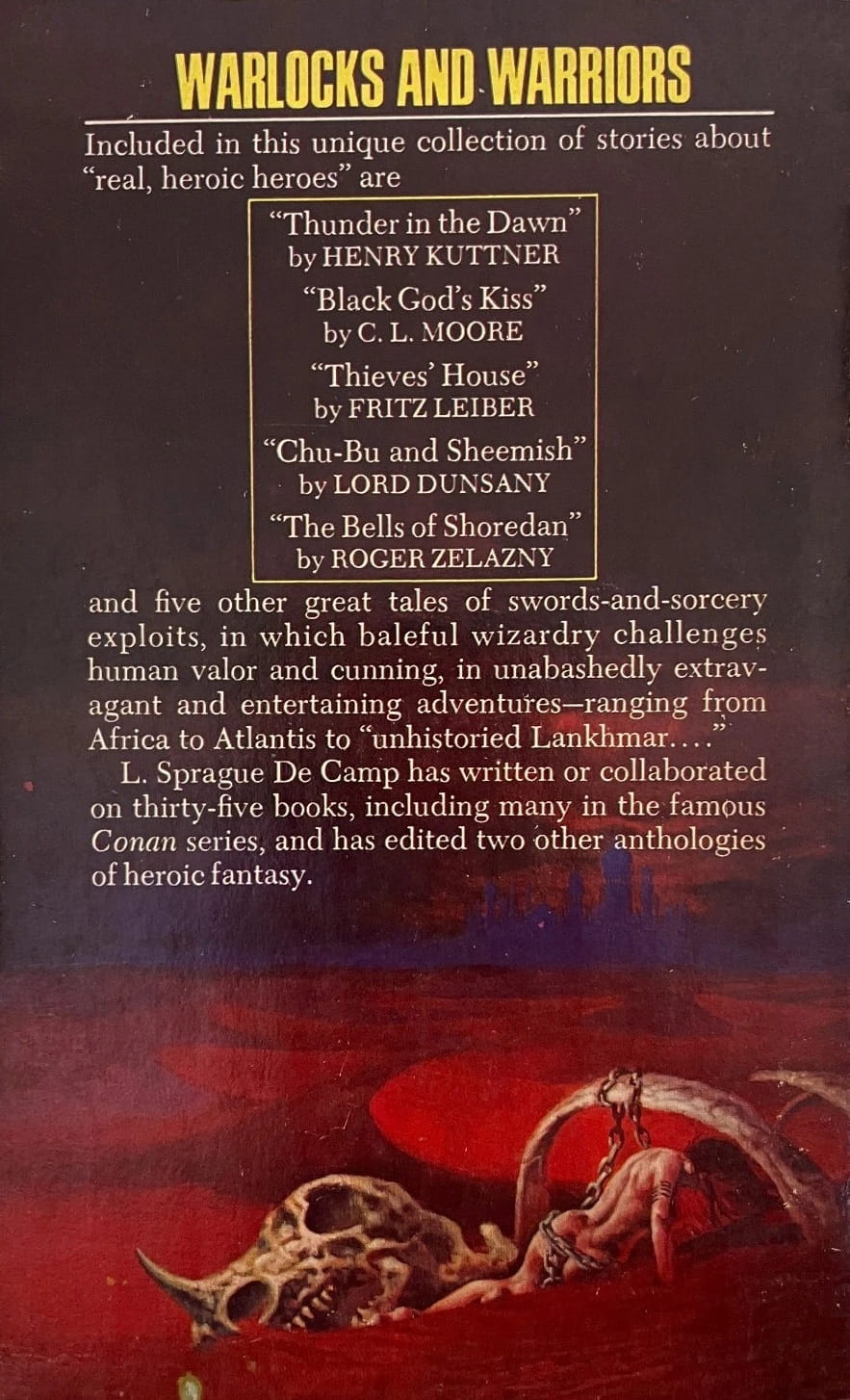
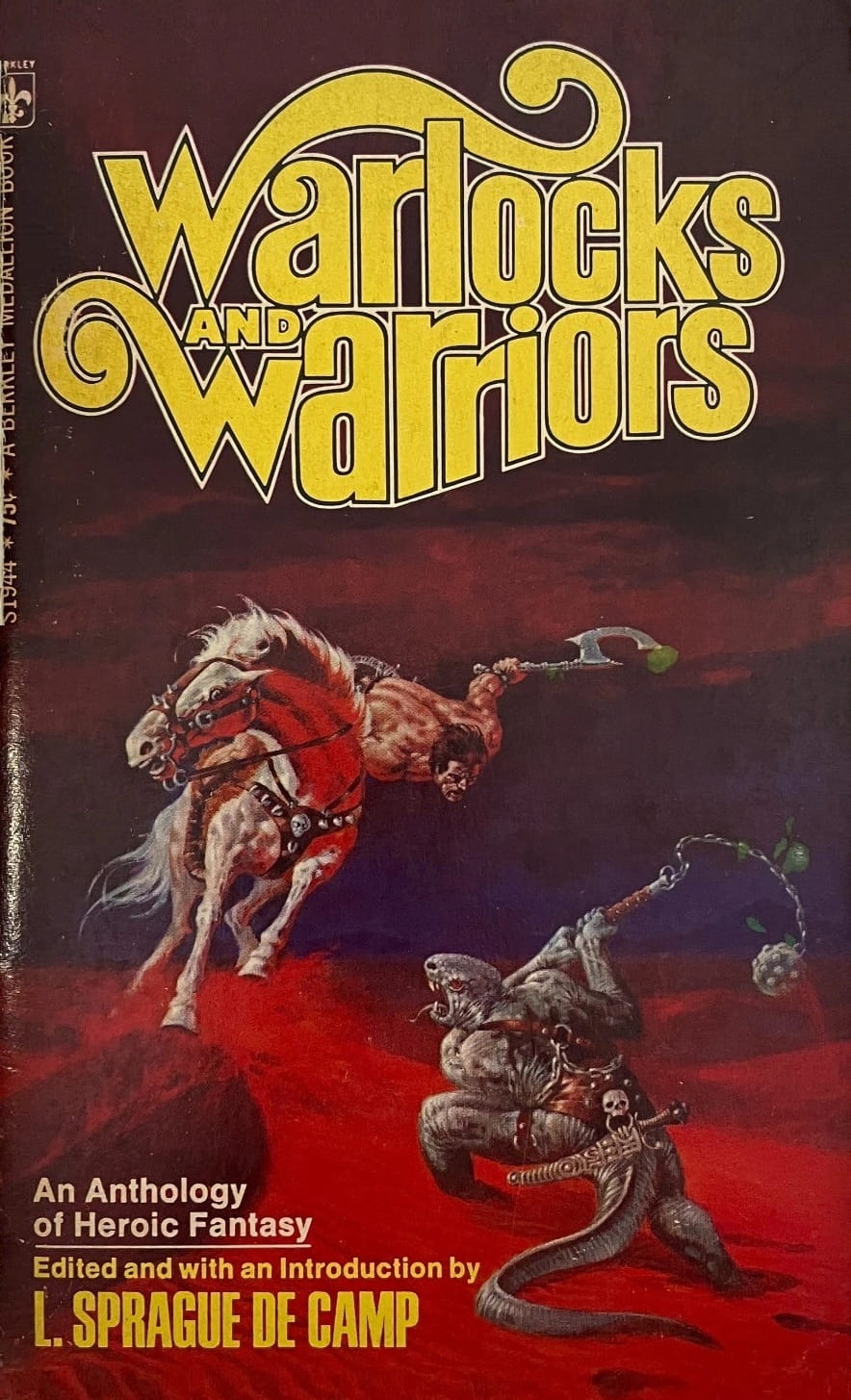
Warlocks and Warriors, edited by L. Sprague De Camp
(Berkley Medallion, January 1971). Cover by Jim Steranko
Warlocks and Warriors (1970) was edited by L. Sprague De Camp, who did quite a few anthologies around this time while also busy editing and rewriting Robert E. Howard’s Conan tales. It’s certainly a good collection, and quite varied, though not all these fit the heroic fantasy label associated with the collection. Certainly, not all are Sword & Sorcery (S&S). The cover is by the great Jim Steranko.
The anthology contains:
An intro by de Camp
“Turutal” by Ray Capella
“The Gods of Niom Parma” by Lin Carter
“The Hills of the Dead” by Robert E. Howard (a Solomon Kane tale)
“Thunder in the Dawn” by Henry Kuttner (Elak of Atlantis)
“Thieves’ House” by Fritz Leiber (Fafhrd & the Gray Mouser)
“Black God’s Kiss” by C. L. Moore (Jirel of Joiry)
“Chu-Bu and Sheemish” by Lord Dunsany
“The Master of the Crabs” by Clark Ashton Smith (Zothique)
“The Valley of the Spiders” by H. G. Wells
“The Bells of Shoredan” by Roger Zelazny (Dilvish)
The Ray Capella story, “Tutural,” is set in Robert Howard’s Hyborian Age but is not about Conan or a “Clonan.” One might consider it fan work but it’s quite well written. Capella’s full name was Raul Garcia-Capella (1933 – 2010), and you’ll sometimes see his work under just Raul Capella.
 Solomon Kane: The Hills of the Dead by Robert E. Howard (Bantam Books, March 1979). Cover by Bob Larkin
The Howard contribution, “The Hills of the Dead,” is one of his Solomon Kane stories. The Solomon Kane tales were written before REH started working on Conan and they feature a very different kind of hero. I like them a lot.
Moore’s “Black God’s Kiss” is a Jirel of Joiry tale and my favorite piece here. Henry Kuttner was married to C. L. Moore. His tale here is his longest piece about Elak, which is well worth reading. Fritz Leiber seemed to be in just about every anthology that appeared around this time with his Fafhrd and Gray Mouser tales. This is another one. Wells’ story here is fantasy rather than SF and quite fun.
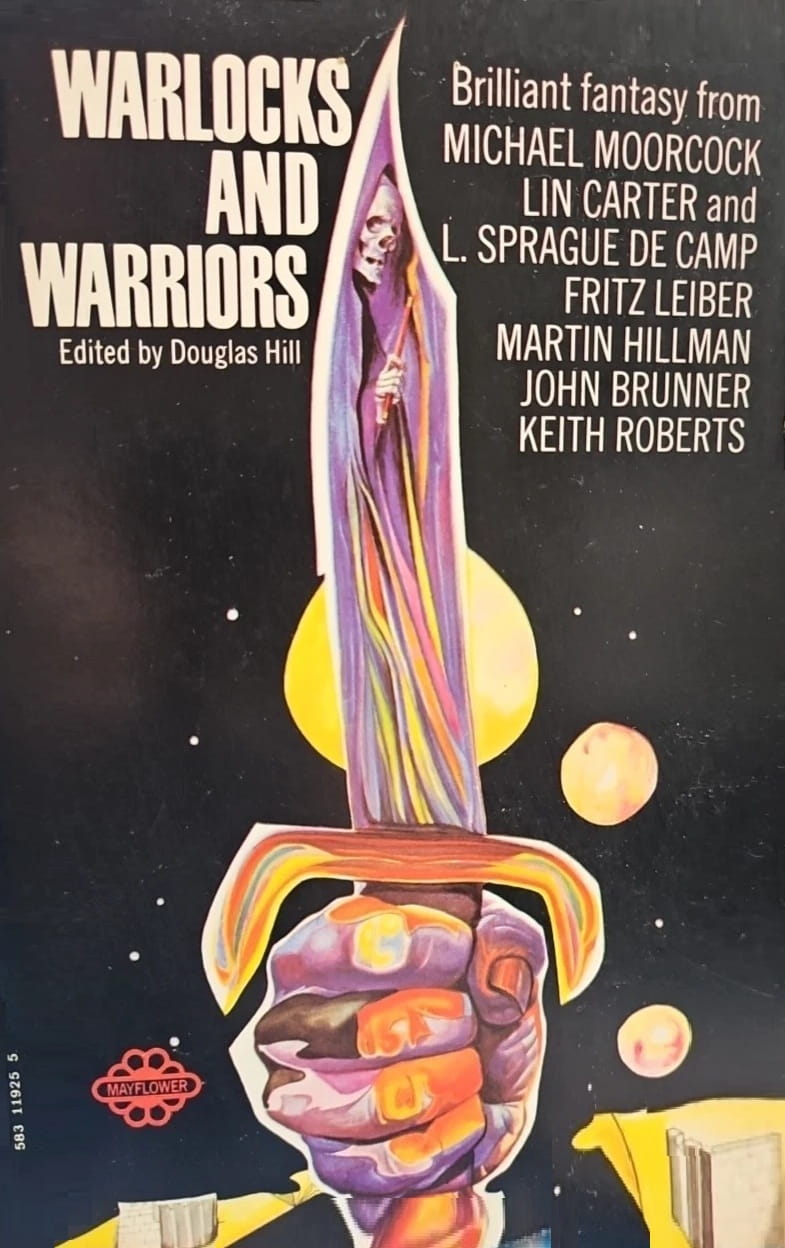
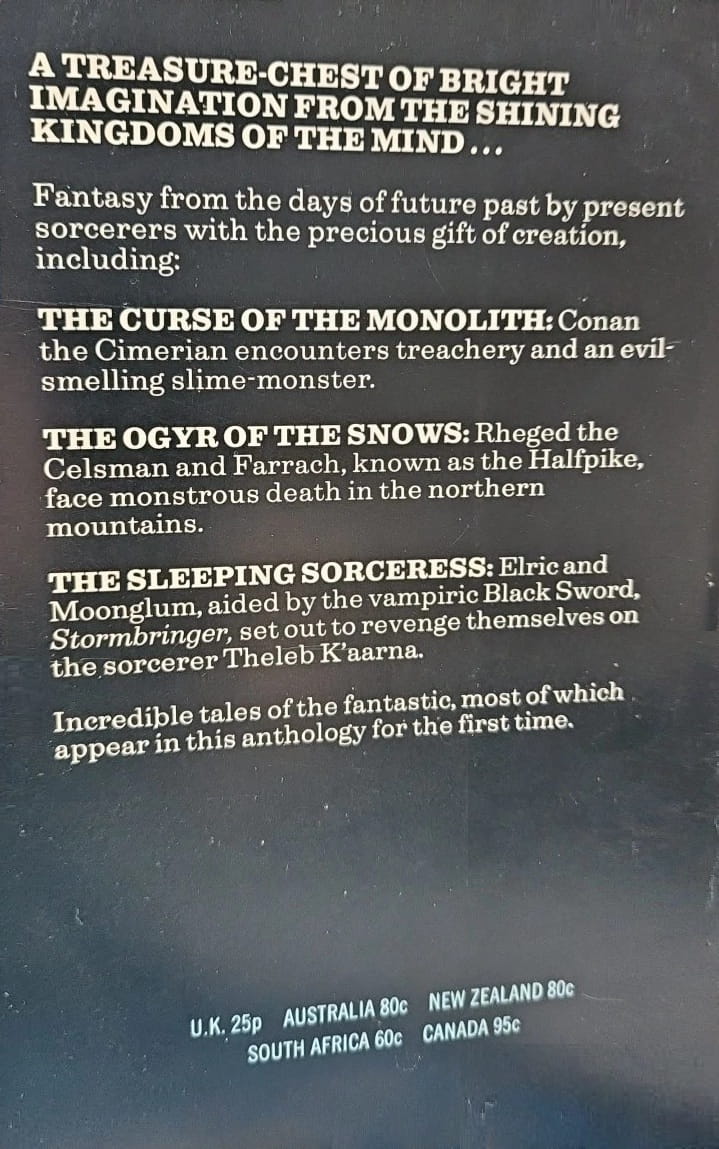
Warlocks and Warriors, edited by Douglas Hill (Mayflower, 1971). Cover by Josh Kirby
A second, very different book with the title Warlocks and Warriors appeared in 1971. It was edited by Douglas Hill (1935 – 2007) and published by Mayflower books in London. It has a very simplistic cover, artist unknown, although the reflection in the knife is kind of cool. Hill apparently wrote a number of books of his own, though I haven’t read any.
After Hill’s short introduction we have the following stories:
“The Sleeping Sorceress” by Michael Moorcock (an Elric tale)
“The Curse of the Monolith” by Lin Carter and L. Sprague De Camp (Conan)
The Ogyr of the Snows” by Martin Hillman
“The Wages Lost by Winning” by John Brunner (The Traveler in Black)
“The Wreck of the Kissing Bitch” by Keith Roberts (The Ice Schooner)
“The Unholy Grail” by Fritz Leiber (The Gray Mouser)
I’d read “The Sleeping Sorceress” before. This is an early Elric and Moonglum story by Moorcock and is quite good. I’d also read “The Curse of the Monolith,” which is a Conan pastiche by Carter and De Camp. Not quite Howard’s Conan but it was an OK tale.
I also had previously read “The Unholy Grail” by Leiber. This tale recounts the earliest adventure of the Gray Mouser, of Fafhrd and the Gray Mouser fame. Not my favorite of the series, probably because I like the Fafhrd character better than the Mouser character.
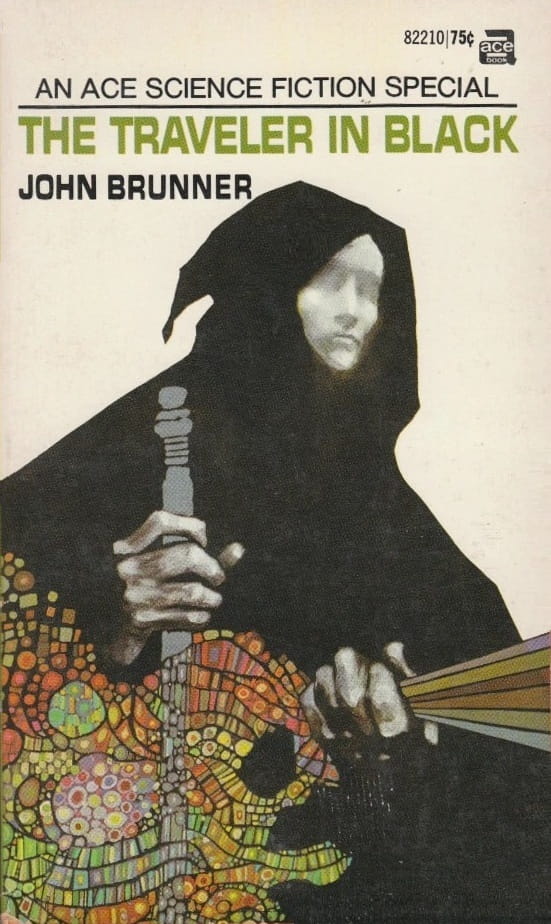
The Traveler in Black by John Brunner (Ace Books, January 1971). Cover by Diane and Leo Dillon
What were new to me were the tales by Hillman, Brunner, and Roberts, and all three were quite good. Brunner, I know, of course. I’ve read a lot of his SF. This is a story of the “Traveler in Black,” definitely fantasy though not Sword & Sorcery. The Traveler is a kind of mixed angel/devil character with the power to grant people’s desires. I’d not previously read these tales. It was beautifully written but meandered until it got to the main plot.
Martin Hillman’s “The Ogyr of the Snows” is definitely S&S, and a well written piece. The hero is Conanesque but wins the day mostly by wit. According to the introduction, this tale was extracted from a “novel in progress” by Hillman, but it turns out Hillman was Douglas Hill’s pseudonym. I looked through a list of Hill’s books but am not sure which one this piece may have come from.
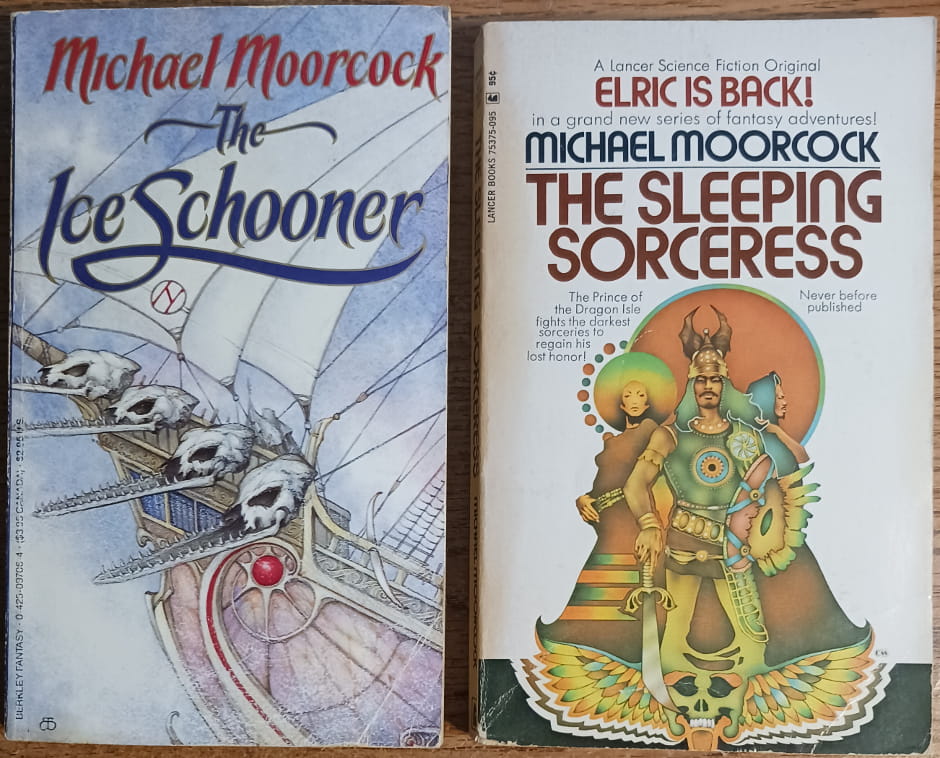 The Ice Schooner (Berkley Books, May 1987) and The Sleeping Sorceress (Lancer Books, September 1972), both by Michael Moorcock. Cover art: unknown, and Charles Moll
The greatest treasure in this collection is “The Wreck of the Kissing Bitch” by Keith Roberts. This tale is set in the world created by Moorcock for The Ice Schooner. The world was already beautifully conceived and Roberts does a fine job playing in the same universe. My favorite tale in the collection, concluding with a tense and exciting chase scene of sailing ships across the great ice seas.
I’ll be talking a lot about Moorcock down the line but above is a little tease in a picture of two of his books mentioned in this post (The Ice Schooner – cover artist unknown: The Sleeping Sorceress – cover by Charles Moll).
Charles Gramlich administers The Swords & Planet League group on Facebook, where this post first appeared. His last article for us was a review of Swordsmen and Supermen, edited by Donald M. Grant. See all of his recent posts for Black Gate here.
Categories: Fantasy Books
Molding Rebellion: Alien Clay by Adrian Tchaikovsky
Alien Clay (Orbit, September 17, 2024). Cover design by Yuko Shimizu
Mushrooms in the cellar. Brood parasites. Puppet masters. Body snatchers. The Borg.
Resistance is futile.
But what, exactly, are we resisting?
Possession by alien entities into some kind of hive mind may have been inspired by studies of the social behaviors of ants; indeed, aliens are often depicted as bugs that threaten to unseat humankind’s self-awarded seat at the top of the evolutionary pyramid.
 Invasion of the Body Snatchers (Allied Artists Pictures, February 5, 1956)
The invasion of body snatchers held particular appeal during the Red Scare of the 1950s and the supposed threat of sleeping Communist cells dedicated to destroying the American Way of Life (which was its own variety of hive mind) and instituting mindless collectivism (a fear to this day stoked by right wingers). The 1956 film about the pod people, based on the Jack Finney novel, is a classic depiction of insidious conformity and the inability of the individual to withstand it.
A trope that Adrian Tchaikovsky subverts in Alien Clay.
The first person narrator is Professor Arton Daghdev (whose last name is frequently mispronounced, something I expect the author as a fellow descendant of Polish ancestry also experiences). Daghdev is a dissident biologist challenging an academic orthodoxy demanded by the fascist Earth government termed the Mandate. For the “crime” of questioning whether humanity is the evolutionary pinnacle, Daghdev is sentenced to the exoplanet Kiln, a penal colony charged with investigating what appears to be the archeological remnants of an alien civilization.
For a scientist, such a punishment might seem to have an upside. There are two problem, though. The first is that any findings must adhere, any evidence to the contrary, to Mandate authorized dogma. More significantly, harsh environmental conditions on Kiln render any on site excursions extremely hazardous. Which is why they are using prison labor. Of which there is always a plentiful supply from a home planet bent on crushing those who don’t toe the autocratic line.
There was a time where I might have had trouble with this premise. Why would an authoritarian regime commit resources, even expendable resources, on a scientific mission for which conclusions are preordained with unclear benefits? But these days, with health policies determined by unsupported dictates and political correctness, it seems perfectly appropriate.
Alien Clay (Tor UK, March 28, 2024). Cover uncredited
Of course, once a revolutionary, always a revolutionary, except maybe when you question not only your own commitment and sufferance to the cause, but also who among you is likely to sell you and your comrades out. Or that your comrades might think you are the one doing the selling out.
So there is an attempted insurrection, one that is quickly smashed thanks to a betrayal. For his participation, Daghdev is removed from relatively safe bureaucratic chores conducted within the safety of the camp compound and assigned to Excursions, teams sent out to explore the alien ruins exposed to the highly infectious Kiln atmosphere. While they are issued some protective gear, they are prisoners, so expense is spared. Infection is expected. A saving grace is periodic three-day decontamination to forestall contagion. A process that sometimes is withheld as punishment.
Should an Excursion team not return to camp within minimal “safety levels” and suffer long-term exposure to Kiln’s strangely recombinant biologics, as happens to Daghdev’s team, no rescue mission sent out. Excursions are also Expendables.
In another type of story, the infected rise to absorb the rest of humanity. Here is where Tchaikovsky flips the script. Infection leads not to madness, but evolutionary jumpstart. Where the hive mind isn’t the embodiment of totalitarianism, but its enemy.
The alien clay here is actually human, on a planet named after an oven that transmutes clay into hardened finished material. A transmutation that has a ways to go before it can be considered finished.
David Soyka is one of the founding bloggers at Black Gate. He’s written over 200 articles for us since 2008. See them all here.
Categories: Fantasy Books
Eddie and the Cruisers: The Novel You’ve Missed Out on All These Years
 I LOVE the movie, Eddie and the Cruisers. I’ve seen the flick, about a short-lived Jersey bar band, at least a dozen times. And it’s got a terrific soundtrack by John Cafferty and the Beaver Brown band. I like Cafferty more than I do the much more famous Bruce Springsteen, who he kinda sounds like. To each their own.
Eddie and the Cruisers was the #110 box office film of 1983. With a budget of $5 million, its domestic gross was $4.7. It was Embassy Pictures’ first ever try at distribution, and they pulled it from theaters after only three weeks. Needless to say (though I’m saying it anyways…) there was no international release. Pretty damn poor choice by producer Martin Davidson, who admitted he selected them – knowing they had zero experience – because they offered the most money.
Then it ran on HBO in 1984 and became a cult classic. I was part of that happening. On the Dark Side had charted at #64 when the movie came out. The HBO success prompted a re-release and it hit #7 on the Billboard 100 – and #1 on the mainstream charts. For a movie that nobody saw in the theaters, for the next three+ decades, EVERYBODY knew Eddie and the Cruisers. It was only in the past ten-ish years that I have started running across folks who have never heard of it. Truly a cult classic.
It’s adapted from P.F. Kluge’s novel of the same name. Kluge also wrote Dog Day Afternoon, which became a smash hit movie in 1975 (it made about 25 times its budget at the box office). A few weeks ago, I finally decided to read the book. I finished it in two days – and I worked on both days.
This was my first Kluge. There’s a lot more to this book than there is in the movie. Keep in mind I love that flick, so I’m not disparaging it. But they massively changed the tone of the novel. There’s a very different vibe. And I get why: it wouldn’t become a hit movie, ‘as written.’ Unless I specify otherwise, I’m talking about the novel from here on in.
The book is told from Frank ‘Wordman’ Ridgeway’s point of view: Tom Berenger’s character in the movie. He and the other characters are far more developed, which is essential to the story.
First off: this is much darker than the film. There’s murder. There’s a world-weary cynicism to Frank which reminds me a little of Raymond Chandler’s Philip Marlowe. As in the movie, time shifts between the present and the past. And that’s thematically at the center of Frank’s narration. That summer on the Jersey shore, was a moment. There was a road of fame and accomplishment and…a life, ahead, for each of them. But a flaming car crash (no bridge involved in the book) detoured all of the Cruisers to back roads and other paths. Not shiny (a little Firefly for you, as I’m immersed in that ongoing story), Hallmark ones, either.
 Frank walked away from music and became a high school literature teacher. Words and music. Eddie was the music, and to borrow from Don McLean, Eddie’s car wreck was the day the music died. Frank had only his words, now. Silent, bereft of their place. You can guess how receptive high schoolers were to his words, day after day. Year after year.
But as you move through the book, chapter-by-chapter, Kluge – somewhat subtly – shows that they are living lives with an echo of what could have been. Not of quiet desperation (well, Sal maybe). Beyond the ‘words and music’ scene which is repeated in the movie (and it’s brief, on screen and on the page), the book leads us in Frank’s wake as he moves through the shadows that part of his life, which he had left completely behind, are casting on him now. The echoes become louder, rising to a violent crescendo.
The differences from the movie are big enough that I don’t want to drop a bunch of spoilers. I already mentioned there’s a murder. And instead of Seasons in Hell and the lost master tape, it’s a search for secret recording sessions that only Wendell was at with Eddie. There’s an actual funeral for Eddie; his body doesn’t go missing after the accident.
As Frank digs deeper into the mystery of what happened at the mysterious Lakehurst sessions, he traces the paths which each Cruiser (it’s ‘Eddie and the Farway Cruisers in the book) went down after the band broke up after the funeral. All of their lives changed completely. Wendell didn’t take a fatal overdose while the band is still together. I think his fate is actually harder in the book. As Eddie (unrelatedly) says in the sequel movie, he got away by dying.
And it’s Frank reflecting on his own life, while he reconnects with the band members, which gives this book its depth, its weight. It’s gravitas. It’s not a wistful ‘what might have been.’ It’s more about the lesser lives that resulted for each of them, because Eddie was the heart of the body that was Eddie and the Cruisers. And when he died, that life as Cruisers died.
A little of it comes through in the movie. Fragments of the scene with Sal after his oldies band show, when he talks about how mad he gets at Eddie. There’s another layer to that. And Sal wanted to continue the band, with a look-alike. He’s done with all of them when they say ‘No’ and he’s forced to go down the ‘Holiday Inn Lounge’ oldies approach instead. That makes Frank visiting him again a dubious move, and as I keep saying, there’s more to it.
Or the walk with Kenny where he talks about Wendell’s drug overdose. Kenny is a womanizing party goer in the book. He becomes a married minister. When Frank visits him, and is told “It wasn’t all good stuff,” that’s just a few seconds on screen. But it furthers the mystery in the book. And again, there’s a lot involved with that.
These are just tidbits in the movie, but they’re part of the theme that weaves throughout the novel and holds it together. Kluge really was a good writer.
If you’re looking for happy stories, you’re in the wrong book. Frank doesn’t ‘find’ himself. Eddie doesn’t live happily ever after. People die (though not Wendell). The vibe is more like Hemingway than it is the movie.
Martin Davidson optioned the book, wrote, and directed the original movie. He wanted nothing to do with the proposed sequel. The second movie has zilch to do with Kluge and the original novel, other than Eddie Wilson was a Jersey rocker. Eddie and the Cruisers is a gourmet meal. The sequel is greasy fast food. Even the soundtrack is just okay, and I’m a big John Cafferty fan. I only watched Eddie and the Cruisers II: Eddie Lives, once. Even writing this essay, I have no inclination to revisit it.
You know I’m a Pulp guy. I bristle when I see critics of the time dismiss it as garbage: not ‘literature,’ said with nose stuck up in the air. You’ve run across that dismissive attitude for some genre things you like. Fantasy fans had to put up with it before it became mainstream. I see it today with pretentious twits who like to say “Andor is Star Wars for intelligent people,” like being slow-paced and dull makes it better than the action-packed Mandalorian. I’d rather re-read Splinter of the Mind’s Eye, than watch an episode of Andor. That’s fine if you like it – but I have no use for people who think it’s on some higher plane than the rest of Star Wars. They’re the same type who looked down on Hammett, Louis L’Amour, and comic books.
So, acknowledging that I dislike those distinctions which use ‘a classification to look down on another one,’ the novel is more literature, than ‘just’ fiction. The fact that it brings to mind The Great Gatsby (which is mentioned more than once) and Hemingway, is indicative of that. It doesn’t make it superior to the movie. But it absolutely adds depth that got dropped in the film. It’s a fuller experience of the characters.
If you remember the “I like the caesura” scene, it shouldn’t be a huge surprise that things are a bit high-browed, at least thematically. Frank is the book. Sal is the movie.
This is really a mystery novel, as the Lakehurst sessions become the central plot point. Many elements were transferred to the movie, but the tone is different. Be warned: it turns pretty dark at the end. And the movie tacked on the happy ending, which I like. But reading Eddie and the Cruisers is a different experience from watching it.
The fact that I tore through this read in two days tells you that I liked it. A lot. I prefer the movie because I’ve been a fan for decades, and it’s not as depressing. And I listen to the soundtrack on its own.
But Kluge is a good writer. The book moves along, and I was pulled into the story the longer it went on. Knowing what happens in the movie, I was curious where the Lakehurst sessions element was going. We definitely find out.
The premise that maybe Eddie’s not really dead comes along fairly late in the book. As I read this, I saw the actors from the film. But many of the scenes were different. So I saw them, but I wasn’t just replaying parts of the movie in my mind as I went on. The film changes what you’re reading a fair amount. And Ellen Barkin is actually an obnoxious young guy Rolling Stone reporter in the book. Kruge drops in a lot of the Garden State; not just where they lived and played. I imagine that Jersey-ites familiar with places from the sixties and seventies saw a lot they recognized. Lifestyle, and locations.
For me, Eddie’s “Monument to nothing” speech at the junkyard castle is one of the great scenes of the movie, and it presages what is coming. It’s based on a real place called the Palace of Depression, which was bulldozed in 1983. Those lines embody Eddie’s emotions and musical aspirations, and they fit the movie perfectly.
His speech is different in the book. His working title for his secret project is Palace of Depression – like the guy who fused a bunch of stuff together to try and make something useful. Even though it all came to nothing. But Eddie changes the title to Leaves of Grass. Walt Whitman’s poetry. And that has a strand throughout the novel.
It wouldn’t have fit the movie at all. But because Kluge is a good writer, it helps tie together the novel. So, two different meanings from the same thing, but both work. And for me, typifies that I love the movie and also really like the book, on their own merits.
Maybe I’ll do a movie-centric post and dig into it from that side. Go watch it. Read the book. Absolutely listen to the music. Follow-up with Eddie and the Cruisers II, if you’re so inclined. Though I believe you’re okay leaving out the sequel and just doing an Eddie Wilson trilogy (book, movie I, soundtrack).
As for the possibility of a third film, Pare is 67. Make of that what you will. He said a few years ago, the rights are in a very murky state, apparently owned by someone in France. Sounds like somebody would have to do some work to sort them out, then acquire them. After II, I hope they don’t even try a III.
But you know what?
Eddie lives!Bob Byrne’s ‘A (Black) Gat in the Hand’ made its Black Gate debut in 2018 and has returned every summer since.
His ‘The Public Life of Sherlock Holmes’ column ran every Monday morning at Black Gate from March, 2014 through March, 2017. And he irregularly posts on Rex Stout’s gargantuan detective in ‘Nero Wolfe’s Brownstone.’ He is a member of the Praed Street Irregulars, and founded www.SolarPons.com (the only website dedicated to the ‘Sherlock Holmes of Praed Street’).
He organized Black Gate’s award-nominated ‘Discovering Robert E. Howard’ series, as well as the award-winning ‘Hither Came Conan’ series. Which is now part of THE Definitive guide to Conan. He also organized 2023’s ‘Talking Tolkien.’
He has contributed stories to The MX Book of New Sherlock Holmes Stories — Parts III, IV, V, VI, XXI, and XXXIII.
He has written introductions for Steeger Books, and appeared in several magazines, including Black Mask, Sherlock Holmes Mystery Magazine, The Strand Magazine, and Sherlock Magazine.
You can definitely ‘experience the Bobness’ at Jason Waltz’s ’24? in 42′ podcast.
Categories: Fantasy Books
Portrait of an Artist: A Chat With Nghi Vo
Siren Queen (Tor.com, May 2022). Cover design by Julianna Lee
Nghi Vo isn’t your typical award-winning writer of speculative fiction. Don’t take my word for it. Flip threw her oeuvre and select a story around at random: your bound to wind up reading something that will leave you spellbound. That’s exactly what happened to me when I first read Siren Queen over a year ago and most recently with the short story “Stitched To Skin Like Family Is” (which can be read for free on Uncanny Magazine‘s website).
Her rise has been steady, some might even say as subtle as the plots and characters that have attracted readers to Vo over the years. I had the privilege of interviewing the author about her career, craft, and so much more.
First things first, where did your journey as a writer start?My journey as a writer basically started when I was a kid and my teacher showed me my very first dictionary. It was like one of those old, enormous blocks of paper and she told me that every word in English was in there and everyone that came out used words from that dictionary. I was tiny and thought, “that’s all a book is, I just need to get the words in the right order and that is all the material I need.”
It’s not entirely right but it’s kind of right. It was the discovery that words are very modular and the joy of writing was the fact that there was no buy in, no equipment. Its literally just pen, paper, and the words that you have.
It was a very cheap craft to get into! That was part of it. I wish I could give you something more romantic but that’s where it started.
You have writing credits that go back to 2005. I believe you have short stories that came out back then. What was the process like going from a writer trying to get short stories published to an author with their first book deal?It was less of a journey and sort of like stumbling through the world and falling flat on my face a few times. I actually don’t have any training in writing. When I was in school, I was in school for for media studies and political science. I briefly flirted with law school then realized I would have to spend my whole life surrounded by lawyers and maybe I didn’t want to do that. I didn’t have the endurance for that!
I got out of college and was working tech support. The thing about tech support is there’s a lot of free time and I went back to the fact that you don’t need money to write a story. You know I had my ancient laptop and I saw a call for submissions and I’m like, “I can do this, I have time, I can write 2,000, 3,000, 4,000 words. So, I started writing and submitting, honestly because it was fun, because I thought it was interesting.
If you look at my bibliography, you’ll notice at the time it wasn’t consistent at all. It wasn’t like I was trying to do a certain number of stories a year. I was just trying to write between keeping my job, making sure my family’s taken care of, hanging out with my friends, all the stuff you’re doing in the early aughts.
Then I saw a call for submissions from Angry Robot Publishers. This would have been about 2016 or so. It was a contest for a novel and it was unagented. So I wrote Siren Queen, they passed on it but sent me this lovely rejection which said, “Usually we’d give you critique here but you mostly know what you’re doing.” I’m like, “that’s not true,” but I started doing the agent rounds, sending it off to agents to see where it would go.
While I was submitting to agents Tor.com, who is my current publisher who I owe a lot to, they put out a submissions call for unagented novellas. I said, “I don’t have an agent, I can probably write 20,000 words.” And so in about six weeks I wrote The Empress of Salt and Fortune, I sent it to them, and then I didn’t think about it very much. I was trying to pay a lot of rent at that time, made a lot of bad housing decisions (laughs). Made some bad romantics decisions (more laughter) too.
 The first five books in The Singing Hills Cycle, all published by Tor.com: The Empress of Salt and Fortune (2020), When the Tiger Came Down the Mountain (2020), Into the Riverlands (2022), Mammoths at the Gates (2023), and The Brides of High Hill (2024)
Then what happened was within the same week I got two offers of interest from agents and then I got this email from Rouxi Chen who is my editor at Tor.com and it was this long letter. I was like wow, this is the nicest rejections letter I’ve ever gotten! She was saying how passionate she was about it, how much she likes it, and then that she wants to acquire it!
It was a lot of falling on my face, I was doing a lot of writing. I was in tech support, I did freelance writing for a while. It was writing but not fiction. I was more or less writing what people paid me to write, things like cockroach care guides and articles about why you can’t ride bears. That was a real thing I wrote!
It was really funny because when I look back on it, I was really quite bad at all of this. My agent and I have been together for about seven years now. She finally told me a few years on, “did you know that your submission letter was deeply mediocre!” That’s the word she used and she still signed me, so there’s hope for all of us.
I’m flabbergasted because Siren Queen is the first story of yours I read. The thing I really love about it is how, though it’s set in a modern setting, it feels ethereal and magical. It feels enchanting. It’s one of those books where, when I got to the end, I just wanted more!Thank you so much for telling me that. If you like I can tell you why that book was written.
Please!What happened was suddenly I realized that the whole system of studios from the time period giving their stars new names and new pasts sounded like fairies kidnapping people, like changelings. I kind of got on this thing when my friend was trying to convince me to have dinner. She’s telling me “Nghi, what do you want to eat” and I keep saying, “there’s so many more parallels! You don’t understand!”
My friends have always been patient when I suddenly have an idea. I have a lot of good ideas and that was just the one that happened to be a novel. I’ve always loved Golden Age Hollywood. Have you heard of The Animaniacs?
Yes.Have you heard of Slappy Squirrel?
Yes.That was one of the places Siren Queen comes from!
Wow! Well, if you look at bookshelves right now, a lot of people, myself included, would say we are in a Golden Age. I feel part of that is because, if you go back 20 years ago, the kind of people getting signed and the types of books that came out weren’t anywhere near as diverse. Now the field is so much bigger, so much richer. How does it feel to be able to write and sell stories featuring leads from wherever you want them to be and still get recognized? How does it feel to appeal to readers without needing to navigate the kind of mazes writers back in the day had to?It feels a lot of different ways. It feels wonderful to have my stories be things that are wanted. It feels wonderful to reach out to people who are in situations a great deal like I was when I grew up. At the same time there is this sort of ocean of grief underneath it because we’ve had a century of modern publishing in the US and you think about how many voices we lost who had amazing stories we will never get to hear. Sometimes that’s very heavy and feels like this responsibility that we have to live up to the people who came before us. It is both true and not true.
We’re working in a business and we’re trying to make a living. But at the same time, we are making art and art has a great deal of responsibility to those that came before us or, one thing I spend a lot of time thinking about, those that should have come before us but weren’t allowed to. For me as a writer its stories all the way down. As I do this job I keep running into readers who have stories, readers who are going to be writers and storytellers, and all I can think is how bright the future is because we’re talking about it, we can see these stories form. At the same time while there is this weight of grief there’s also this sense of hope that we are going into a future where we have more stories than we have ever had before.
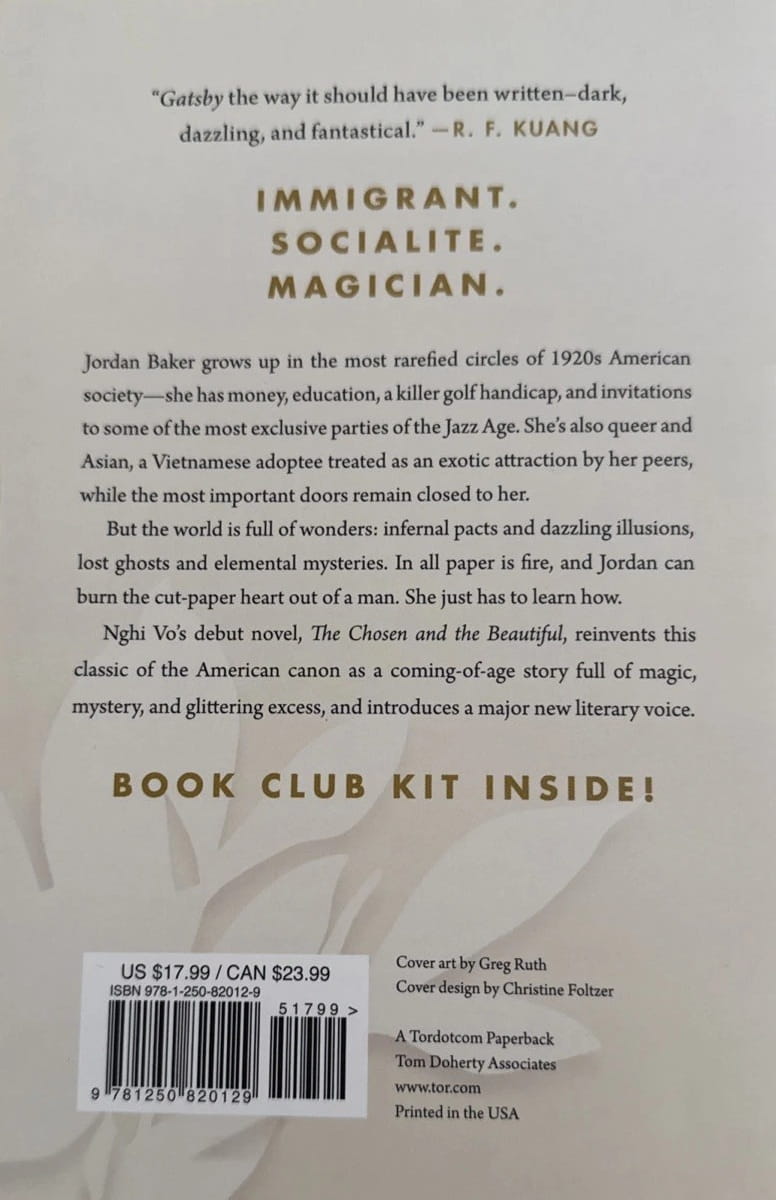
The Chosen and The Beautiful (Tor.com, June 1, 2021). Cover by Greg Ruth
Well, my first published novel was The Chosen and The Beautiful which is a sort of take on The Great Gatsby featuring a Jordan Baker who is Asian American, queer, and made of magic. One of the first things anyone told me about it is they called it a joyless cash grab! My first reaction was “No this is an extremely joyful cash grab!” And it is, I’m in this to make money. This is how I pay my rent.
This is the thing. I was asked recently if I felt threatened by AI as an artist. I’m like, look, the minute I start writing I’m throwing myself against every writer that came before. Because I start typing, because I put pen to paper, because I have the nerve to sell my stuff, I have always been putting myself against competition. So, I don’t see why it’s any different.
In terms of being intimidated, they should be! How about that?
Well said! Now, I wanted to ask a bit about your background. Has it had any impact on your work and if so how?Vietnamese is one of the many things I am. I have given up on the idea of having any sort of unified selfhood when it comes to identity. I am Asian-American, I am Vietnamese-Chinese, I am queer… it’s a long list of things. It is something that as an adult I’ve had to corral and accept. While there is the hope of some sort of unified picture, I don’t know if that is a thing that is possible. It is important to me to offer both respect and acknowledgement of the various things that I am and to enjoy the privilege that I do have of being open about it.
 The Saint (Paramount Pictures, April 4, 1997)
Way back in the 60s or 70s, there was a spy series called The Saint, there was a Val Kilmer movie about it, it was a huge series. I didn’t realize for a longtime that the author was half Asian. It was not in any of the biographies or anything like that. The idea that I have the intense privilege of being openly who I am, that it is my picture on the books, that there is no question about what pseudonym I have to use… every part of me that I can show I will because so many people before me haven’t been able to do so.
It’s a little dicey sometimes. This is my favorite Margaret Cho quote. Someone once asked her something like, “Aren’t you worried your Asian parents are ashamed of what you’re doing?” Her response was, “Man, I kind of assumed every parent would be ashamed of what I’m doing.” It’s a fine line to walk.
Let’s go back to your books. One thing I love about your bibliography is it is full of short stories, novellas, novels, novelettes, entire series… when you initially get an idea how do you decide if its going to be a short story or something longer?These days I ask my agent (laughs). Historically what I do is ask myself how much time do I want to spend with an idea, how much work is going to go into expressing it? Sometimes it’s a matter of how much is covered in the story to do it justice. Sometimes it’s a matter of ‘wow, that’s a really cool idea that will only last 2,000 words before someone starts asking questions that I cannot answer.’
There’s a certain reality to how much ground you can cover in a short story compared to a novel. This isn’t to say you can’t cover thousands of years in a short story or have novels that take place in a novel. But it depends on what I want to do with it, what I think is fun. Like Siren Queen which was a huge amount of fun to write. I know you said it’s short but I write short because I get bored quickly. But it was good to spend more time with Luli (main character of Siren Queen). There was “Stitched to Skin like Family Is” is which is about a woman that sort of magically communicates with clothes and that one has historical serial killers in it.
 Uncanny Magazine, March-April 2024, containing “Stitched to Skin like Family Is”
That was published by Uncanny Magazine!
Uncanny Magazine, March-April 2024, containing “Stitched to Skin like Family Is”
That was published by Uncanny Magazine!
Yeh.
It won a Hugo right?It won something (laughs). I don’t know.
My next question is about craft. What would you say were the big milestones going from a short story writer sending out those manuscripts to getting your first deal. Were there any moments where you realized ‘I can do this’?Every day is a new surprise, it really is. The big milestones never show up or hit the way you think it will. The Empress of Salt and Fortune came out during the pandemic. The shutdowns happened and my book came out. I didn’t know what was happening and no one else knew either. No parties, no getting to see my book in the store for some time. But the first fan letter was very cool. (The milestones) just keep coming. One of my books is going to be published in Vietnamese sometime in the next couple of years and that gave me so many moments because that means so many of my relatives can read my book if they want to. That’s if they want to, they don’t have to, it’s okay.
I think this job… and I’ve had quit a few jobs, there’s so much weirdness and so much joy in it that the milestones definitely sneak up on you. They aren’t things that you can really work for. I also realized I published like 10 books in the last five years and my brain might not work well anymore! Sometimes I’m like, this is a thing happening to me again! I may not be the right person to ask.
For me, it seems like the milestones sneak up on me. They’re special and I’ll know immediately that they’re special, but I can’t always predict them
I will say this: some of it was the fact that they don’t really stop me from putting what I want in my acknowledgements. So recently, when I was typing up my acknowledgements, I was telling them about the fact that my agent stopped me from putting a half-man half-stove hybrid in one of the books that is coming out soon. She stopped me from that and I got to talk about that and it was weirdly special.
It was in The Scarlet Ball, which will be out later this year, and the best story I can tell about it is I was writing it very fast, there’s this character that is a duke, and he’s like half-human half-stove. I was trying to make a point about overconsumption and the predatory nature of nobility and the industrialization of England. I thought I was being smart and then one day my agent calls me and says, “Nghi, why the fuck is the duke a stove!” She made me stop and upon further reflection that was the right call to make.
You started sending out manuscripts while in tech support. Any advice to anyone trying to balance working a regular job with their dream of getting their writing published?That is a very hard question and in some ways it’s a deeply unfair question. Not that its unfair to ask but in the answers I can give. I am sitting where I am because I am profoundly lucky. I had a tech support job that essentially allowed me to make money while making money. I was healthy, most of my school was subsidized through scholarships, I’m mentally healthy, I didn’t have kids to support, I’ve been very lucky with the relationships that I’ve had largely. A lot of it is luck. What I can tell people who are trying to do something similar is if you see an advantage, seize it. If you have a connection, use that connection. If you have someone willing to put you up while you work on your novel, take advantage of that.
I like my job a great deal. It is not always easy, it is not always fair. It is very, very important to remember that it is a job. You can love this job and this job will not love you back. I’m saying this as someone who is surrounded by professionals who care deeply about stories, who I’m genuinely willing to say care about me as a person, but if you go into this job trying to give it everything you are you are going to lose. And when you lose it can be very dark and dramatic. You are the most important person in this equation and that is the thing you can never forget as someone trying to be a working artist.
The Empress of Salt and Fortune (Tor.com, March 24, 2020). Cover by Alyssa Winans
It can be brutally unfair. There’s nothing more important than yourself as an artist and yourself as a person. You must take care of yourself. That’s what I’ve been trying to say for a while, because I’ve been talking to other people about this. We are not a life support system for stories; our stories are a life support system for us. That’s the way it has to go.
My next question kind of ties into self-care. Do you ever deal with writer’s block or anything like it?This isn’t to brag but I will say that when I was freelance writing I was like the McDonalds of freelancing! I was doing tiny descriptions of vacuum cleaner parts, I was turning over about 6,000 words a day. That is what it took to get my bills paid. I do know what its like to stare at a page and not know what comes next. But you start putting things on the page anyway.
Here’s the thing I’ve learned about writer’s block: what you think of as writer’s block is a lot of the time that is burnout. A lot of the time that’s people pushing themselves too hard or there’s that little voice in there head that says there’s a time limit on how its going to go. That freezes them up, your not going to go anywhere, and that sucks.
When it comes to writer’s block, I know I keep coming back to it but this is how I pay my rent. I can’t afford it! But I will say this, if you don’t know what comes next a lot of the times the problem isn’t what you’re writing that minute. Go back and try just temporarily removing the last 500 words you wrote. Start from there again. That is one thing that has been helping me when I feel like I don’t know what comes next and gets you things like men that are half-man, half-stove.
Be careful thinking that it is a creative issue when it is just the fact that you have nothing in the tank.
 The Scarlet Ball by Nghi Vo, forthcoming from Tor Books on October 6, 2026
You have novel coming out in May, right? Can you tell us a bit about that book and any other projects we can look forward to?
The Scarlet Ball by Nghi Vo, forthcoming from Tor Books on October 6, 2026
You have novel coming out in May, right? Can you tell us a bit about that book and any other projects we can look forward to?
Yeh so we have actually announced that in May we have coming out A Long and Speaking Silence which is the seventh book in The Singing Hills Cycle series. It is hard to say ‘well this one is very important’ when they’re all important stories to me, I wrote them. But I love this one. This is Cleric Chee, our storytelling cleric, with their friend Almost Brilliant the talking bird. This is them at the earliest point in their journey when they are learning to be a storytelling cleric and are quite bad at it. It’s a story about food, veneration, parties, good stuff and bad stuff….I think its hilarious but not everyone is going to agree with me.
And this October we’re going into The Scarlet Ball, which is the story that no longer has a half-man half-stove, once again I was forced to take that out! But it’s the story of a half-French half-Vietnamese courtesan who comes to the united states on the run who gets a deal from a very rich white woman that is one of the New York 400 in 1890. This woman is missing a grand daughter. If my main character Judith is willing to put on a white girls face and go dance with demons, she can go and marry a storm. I’m looking forward to that one, it was not an easy book to write and I can’t wait for people to see it. Its gory, messed up, I like to think it is kind of sexy and just tons of fun.
 A Long and Speaking Silence, volume 7 in The Singing Hills Cycle, forthcoming from Tor.com on May 5, 2026
It sounds a ton of fun but I want to go back to the A Long and Speaking Silence you mentioned. That is the seventh book in its series. Most series don’t last that long. What sustained it? What is it you love most about that setting.
A Long and Speaking Silence, volume 7 in The Singing Hills Cycle, forthcoming from Tor.com on May 5, 2026
It sounds a ton of fun but I want to go back to the A Long and Speaking Silence you mentioned. That is the seventh book in its series. Most series don’t last that long. What sustained it? What is it you love most about that setting.
I’m going to tell you how The Singing Hill Cycle Series came about. When I wrote The Empress of Salt and Fortune, I had no idea it was going to be a series. My editor at the time, Rouxi, she comes to me when we are going to pub and she says, can this be a series? Here’s the thing, as a freelancer, you don’t say yes to a project when you’re 100% sure you can do it. You say yes at 90%, at 80%. If you are kind of hungry and have rent that needs to get paid you say yes at 60%. So what I said was yes, this can be a series!
Literally I’m on the phone with her and saying, “Yes it can be a series, each book will be standalone, and they’ll all be stories about stories”. It kind of snuck up on me because this is something I did because I wanted to be a novelist… I wanted this job. I was kind of coming up with it on the fly. Part of it is I didn’t expect to love it as much as I did. I didn’t think that I was going to fall in love with these characters or the world. I got lucky when I made the main character Chih who is kind, who mostly wants to hear and tell stories and I love them. That’s my favorite thing about them, how the love came and how unexpected it was.
Love segues nicely into my last question. Our readers at Black Gate magazine love speculative fiction as I’m sure you do. But I’ve got to ask: why do you choose to write speculative works as opposed to any other genre?The answer is: if I can have a dragon, a mechanical horse, talking birds, entire worlds, demons who love cities, girls who wear other girls’ faces why the hell wouldn’t I? This is the most fun you can have while writing so why wouldn’t I?
Categories: Fantasy Books
Probing Questions
 The McPherson Tape (Axiom Films, 1989)
Hold onto your butts — a new watch-a-thon starts today!
Who likes alien abduction flicks? I’ll soon fix that.
The McPherson Tape — 1989 – TubiThe youngest of a trio of brothers has acquired a new video camera, and makes his directorial debut at a birthday party for his young niece in a remote Montana farmhouse. As the family jovially bickers and gets ready for cake, the lights suddenly go out, and the three men head out to the woodshed to check out the fuse box. Outside they witness a red light in the sky and, following its trajectory, stumble upon what looks like a landed spacecraft complete with little aliens mooching around. They rush back to the farm, arm themselves, and settle in for an evening of glimpsed faces at windows, strange noises, and family breakdowns.
Coming in at a brief 66 minutes, and made for little more than $6K, this is director Dean Alioto’s first run at a story that he would return to a decade later with a new name and bigger budget (Alien Abduction: Incident in Lake County, which I’ll be watching later).
Allegedly, this film was considered a classic ‘hoax’ film, although I very much doubt anyone was really taken in by the children in alien costumes and the mostly improvised dialogue of the family members. However, as a found footage flick, it ticks all the boxes; lack of focus when really needed, underlit, all the detailed clarity of a bowl of squid ink ravioli in a coal mine.
It’s all rather shouty and tedious, but I have to admire it for getting made for next to nothing, and inspiring a slew of dodgy knock-offs, most of which I’ll be reviewing.
4/10
 Alien Invasion (Creatures of the Dark, August 16, 2019)
Alien Invasion (AKA After the Lethargy) — 2019 – Prime
Alien Invasion (Creatures of the Dark, August 16, 2019)
Alien Invasion (AKA After the Lethargy) — 2019 – Prime
Intrepid journalist Sara Hamilton has a slight obsession with an incident that happened in Tetis County somewhere in the Rockies. Much like Roswell, a ship allegedly crashed and a bunch of little fellas were found strewn around the wreckage. However, one went missing. Through lengthy bouts of exposition sandwiched between bursts of grimy characters running from pixels, we learn that a remote military barracks was being used for experiments, primarily by the nefarious Dr. Marshall and his wife, in an attempt to create alien hybrids. Hamilton goes to the site to investigate, and assorted ghastliness ensues.
This is a Spanish production and first film for Marc Carreté, who I suspect did not have a lot of Euros to play with. Though grateful for the title change, this is hardly an invasion, more of an X-Files episode where running and screaming take the place of bickering and sleuthing.
Andrea Guasch does a good job as Sara, put through the wringer to ever increasing degrees, although there are a couple of actors who play it a little more over-the-top than required. The film is billed as a horror comedy, but aside from one character who spends most of the film hilariously mumbling like Gabby Johnson from Blazing Saddles, there’s very to laugh at, especially since the central premise is women being kidnapped, raped, and forced to give birth to hybrid abominations. A real rib-tickler.
Not great, but not terrible either.
4/10
 Hangar 10 (Newscope Films, October 22, 2014)
Hangar 10 — 2014 – YouTube
Hangar 10 (Newscope Films, October 22, 2014)
Hangar 10 — 2014 – YouTube
Never let it be said that I ignore the follower(s) of these projects, for here is a suggestion from fellow Canuck and purveyor of weird shit, Mark, who thought I should check this one out as it almost meets the criteria. Good enough for me.
Three UK metal detector nerds, Gus, Sally, and Jake, head out to Suffolk to look for treasure, although Jake is only tagging along because he a) fancies Sally, and b) is interested in the Rendlesham Incident, a decades-old UFO event in the same area.
After a good deal of traipsing around in a very orderly forest, punctuated by occasional spurts of bickering, things finally kick off when the trio witness some spooky lights in the clouds, and everything goes to pot deep inside a military installation. Extraterrestrial shenanigans ensue.
This is a found footage film, so it already had an uphill battle when it came to keeping me engaged, and although it is a lot better than many of the other genre films I’ve hate-watched, it still suffers from underexposed/unfocused scenes, and ‘spontaneous’ dialogue. Hangar 10 managed to bring me back under its folds though with some beautifully realized effects shots, and some interesting scenes in the spooky base, which were unfortunately relegated to the last 25 mins or so.
Worth a look if you like this sort of thing, but left me craving a film that might have used a tripod.
6/10
 The Recall (Minds Eye Entertainment, June 2, 2017)
The Recall — 2017 – Prime
The Recall (Minds Eye Entertainment, June 2, 2017)
The Recall — 2017 – Prime
No, not a film about something going wrong on a Volkswagen, rather this is a jolly romp that threads its way through several genres before settling on a good old fashioned ‘kick the alien butt’ flick.
A group of five friends head to a luxury cabin in the woods for a spot of rumpy pumpy and other youthful distractions. During the trip there, they are aware of strange atmospheric disturbances (not that they pay any attention), and one of them, Brenden (Breaking Bad‘s R.J. Mitte), upsets a local hunter at a gas station (played by Wesley Snipes, having the time of his life). They finally reach the cabin, then find another ghastly shack in the forest with photos of the hunter in his former life as an astronaut. So far, so Wrong Turn.
Then the story turns into a home invasion as presumably the hunter is attacking them, but it turns out to be malevolent aliens hellbent on abducting and possessing the chums.
Once all the threads are tied together, we can settle down for a bit of bish bash bosh as the surviving teens fight back against their aggressors, and the film concludes with big ideas and some X-Men shenanigans.
As bonkers as this all sounds, I had a fun time with this one, helped by a decent cast and solid effects. Sure, it’s all over the place, but at least its not boring, and that’s all I can ask for these days.
Check it out!
7/10
 Scary Movie 4 (Dimension Films, April 14, 2006)
Scary Movie 4 — 2006 – Tubi
Scary Movie 4 (Dimension Films, April 14, 2006)
Scary Movie 4 — 2006 – Tubi
A bit of a swerve for the next film in my wildly ignored project, but work deadlines have been kicking my butt and preventing movie watching, and it does at least have a War of the Worlds section, so I’m sticking with it.
The Scary Movie franchise has not aged well, not that I ever really liked it to begin with, but the dated pop-culture references and tired direction really makes this one a slog. I really don’t understand why this is so bad. David Zucker, one third of ZAZ who brought us one of the top three comedies of all time (Airplane!), and the sublime daftness of Police Squad! is the solo director on this, although the ‘A’ in ZAZ, Jim Abrahams, co-wrote it.
Yes, I get the notion that these films are meant to lampoon whatever was popular in the few years preceding it (in this case, War of the Worlds, The Village, The Grudge, Saw, and Tom Cruise couch jumping), and that’s not the issue. It’s the approach to the set-ups and landings that kill it. In Airplane!, I’m trying to think of a moment when someone breaks the fourth wall, perhaps there was one moment when someone looks to camera (please illuminate me in the comments), but otherwise it is played straight as an arrow.
In Scary Movie 4, characters look to camera all the time, as if to tell us, “Hey, isn’t this funny and weird?”, and then the gag is repeated to the point where even a dead horse would resurrect itself and walk off.
It is possible that I chortled twice — I definitely recall making a noise- – but I can’t remember what at. If these films are your bag, all power to you, I don’t want to poo-poo your enjoyment, but I’d be happy to never watch one of these again.
2/10
Previous Murky Movie surveys from Neil Baker include:
My Top Thirty Films
The Star Warses
Just When You Thought It Was Safe
Tech Tok
The Weyland-Yutaniverse
Foreign Bodies
Mummy Issues
Ch-Ch-Ch-Ch-Changes
Monster Mayhem
It’s All Rather Hit-or-Mythos
You Can’t Handle the Tooth
Tubi Dive
What Possessed You?
See all of Neil Baker’s Black Gate film reviews here. Neil spends his days watching dodgy movies, most of them terrible, in the hope that you might be inspired to watch them too. He is often asked why he doesn’t watch ‘proper’ films, and he honestly doesn’t have a good answer. He is an author, illustrator, teacher, and sculptor of turtle exhibits.
Categories: Fantasy Books
Recent comments