
Feed aggregator
Will we see Ty interacting with Irene in TLKOF? Is she just left with Anush? (I love Irene so much ❤️)
I also love Irene, but alas, you cannot take a lynx on a read trip easily. It does not mean Ty will never meet Irene tho.
Categories: Authors
hey cassie, hope you’re doing well!! i was just curious, how involved is livvy going to be in tlkof in trying to mediate between kit & ty once they reunite? is she trying to get them to talk about things or is she just trying to let them work things...
She does think they should work things out, but she isn't really meddling. She at some point does warn Kit not to break her brother's heart (again) but otherwise she doesn't interfere, probably because she realizes that if they were to mend things with each other, it would have to be their decisions on their own terms.
Categories: Authors
Hello Cassie, hope your well. I’m sure you are tired BVD questions and I know it can’t be published (or written) until after LKF because of the timeline. I was just wondering, since you are working on LPH now, if BVD is in the beginning stages of...
Hi! Well, BVD takes place in the time period between book 2 and book 3 of The Wicked Powers. So it can't be published until after book 2 regardless of schedule — you're right that working out a schedule for a co-written book is doubly complicated since you have to work with two people's schedules!
Categories: Authors
Steve Crisp artwork for sale
In the market for some original art used for Robert McCammon novels? Artist Steve Crisp illustrated gobs of book covers in the UK in the ’80s and ’90s, and many of his pieces are being exhibited on IX Gallery. His original art pieces used for the UK paperback editions of BAAL, BETHANY’S SIN, and MYSTERY WALK are included in the exhibit and are available for purchase.
Penny Dreadful: The Classic Horror Art of Steve Crisp
Even if you’re not looking to purchase, the exhibition is a lot of fun to see!
Robert McCammon (and I) have nothing to do with this sale, I just thought you’d be interested in seeing it, at least.
Categories: Authors
Women in SF&F Month: Lorraine Wilson
Women in SF&F Month 2026 officially starts today with a guest post by Lorraine Wilson! Her short fiction includes “Bathymetry” (winner of the British Fantasy Award) and “Mhairi Aird” (published in the British Fantasy Award–nominated anthology Nova Scotia: New Speculative Fiction from Scotland, Volume 2). Her first novel, This Is Our Undoing, won the SCKA for Best Debut and was a finalist for the Kavya Prize as well as the British Fantasy Awards for Best Novel and Best Newcomer. Her […]
The post Women in SF&F Month: Lorraine Wilson first appeared on Fantasy Cafe.
Categories: Fantasy Books
Bonus Scene: Is She a Lady
Thank you all for such an incredible release. The turnout, the messages, charts performance and the flood of enthusiasm have launched a thousand Mod R squeees. It’s been wonderful to watch the story resonate with the people it was written for.
And we are being absolutely spoiled today in recognition of our formidable fluffiness!
A brand new character art reveal from Helena Elias, plus an entire bonus scene featuring reigning fan-favorite, Clover.
Spoiler safe after Page 130 Chapter 13, first scene
“So, explain your lady to me.” Shana wiped the table down with a wet rag. “Is she a noble or is she not? Because she’s confusing me.”
Clover sighed. It was a fair question.
They were sitting in the kitchen. The sun had barely risen, and the tea in her cup was hot and aromatic. She’d made a pot this morning, and it had turned out just right. Shana had taken over the kitchen, but they both agreed that Clover’s tea brewing skills were superior.

When Shana showed up in the chainmail and carrying a mace, Clover wasn’t sure they would get along. It took her less than 24 hours to realize that when it came to household staff, they couldn’t do better. Shana was experienced, practical, and capable and she was… solid, somehow. There was something about Shana that said “Mom” to her, although her mother and Shana looked nothing alike.
Back home, she and her mother butted heads. There was a time she couldn’t wait to get out. When the Maid Mother came with the offer to take her to the capital, Clover had jumped on that chance. She could still remember her mom crying when she was leaving, but her own eyes were dry. She’d been too excited and eager. Divine, she was such a stupid baby five years ago.
Now… There were times when she wanted her mom so intensely, she cried quietly into her pillow. Too much had happened, and most of it wasn’t good. There was a time in Derog’s basement when the loneliness tried to strangle her, and she thought her life was over. And then Lady Maggie came, and everything changed.
It was important that Shana understood that Lady Maggie was special.
“She is a lady,” Clover said. “Without a doubt. She looks you in the eye when she talks, and she keeps forgetting to bow her head, like she isn’t used to it. She is very educated. She knows things others don’t, and she can’t do her own hair. When she needs it put away, she makes a three-part plait like she is a child. She has great teeth, and her hands are soft.”
“But?” Shana asked.
“But she carries herself as if she isn’t.”
“Why?”
Clover sighed again. “I don’t know. When we took the house from the slavers, she cleaned the kitchen with me.”
Shana paused. “This kitchen?”
Clover nodded. “On her hands and knees with a rag. Like it was nothing. I tried to stop her, but she wouldn’t listen. I really tried. She just…”
Clover imitated holding a rag and scrubbed the invisible floor with it.
Shana stared at her.
“She washed the blood off and everything.”
“Are you serious?”
“It happened. There is more.”
Clover hesitated. This was a very sore point, but she’d been struggling with it for days now, and it was so nice to confide in someone.
She leaned forward and lowered her voice.
“I went to dump the dirty water. When I came back, she was in the bathroom. Scrubbing the toilets.”
Shana blinked. “Divine, preserve us.”
“She told me that we had to clean the house top to bottom to make it ours.”
Shana frowned. “I would have scrubbed the house too, just to get the stink of those fuckers out, but she is a lady. Toilets?”
Clover nodded slowly.
“If you don’t stop her, she will try to do things. Brew her own tea, cook, try to do the laundry…”
“Does she not understand it’s an insult to our skills?”
“I don’t think she does.” Clover gave her a slightly helpless smile. “I think she wants to help.”
Shana put her hands on her hips. “Oh no. This stops now. She is not cooking in my kitchen, I’ll tell you that. I have never needed a noble woman’s help to do my job, and I am not about to start now. Everyone has their duty. I’m the cook, you are the lady’s maid, and she is the lady. She needs to stay in her own carriage.”
Clover sighed. “If only.”
Shana reached over and patted her shoulder. “Don’t worry, sweetheart. There are two of us now. We will steer her back on the road. If you have any trouble, come and get me. I will set her straight right quick.”
That was right. She was no longer alone. She had Maggie and Kaiden, and Reynald, who could kill anything, and now the Magnars. It felt like she’d been wandering in a dark forest for so long, she couldn’t even remember what the sun felt like and then stumbled out into a clearing with a fortress in it. The fortress wasn’t in perfect repair, but it was solid and strong, and there was sun shining on it, and everyone inside would defend it with their lives.
Clover smiled and sipped her tea.
P.S. Mod R: Now that we’ve had our goodies,
The US and UK editions of This Kingdom Will Not Kill Me are separate releases, from separate publishers. If your copy is arriving on the 2nd of April, that means you are expecting the UK edition. That timing is correct, not a publisher error or issue as I have seen confusion in the comments.
The post Bonus Scene: Is She a Lady first appeared on ILONA ANDREWS.
Categories: Authors
7 Author Shoutouts | Authors We Love To Recommend

Here are 7 Author Shoutouts for this week. Find your favorite author or discover an…
The post 7 Author Shoutouts | Authors We Love To Recommend appeared first on LitStack.
Categories: Fantasy Books
Monthly Review – March 2025

I started the following series:
- None
I finished the following series:
- Redemptor (Raybearer, Book 2) by Jordan Ifueko (5/5 stars)
My Favorite Books of the Month Were:
- Agnes Aubert’s Mystical Cat Shelter by Heather Fawcett (5/5 stars)
- Redemptor (Raybearer, Book 2) by Jordan Ifueko (5/5 stars)
- Dreams Lie Beneath by Rebecca Ross (5/5 stars)
The full list of books that I read this month are shown below:
1. The Glowing Life of Leeann Wu by Mindy Hung (3/5 stars)
2. Agnes Aubert’s Mystical Cat Shelter by Heather Fawcett (5/5 stars)
3. So Far Away by Kat Mellon (4/5 stars)
4. Silver and Lead (October Daye, Book 19) by Seanan McGuire (3.5/5 stars)
5. Hollow Gods (Monstress, Vol 10) by Marjorie Liu, Sana Takeda (4/5 stars)
6. Redemptor (Raybearer, Book 2) by Jordan Ifueko (5/5 stars)
7. Wings and Broken Things (Mitzy Moon, Book 3) by Trixie Silvertale, Narrator Coleen Marlo (4/5 stars)
8. Keeper & Kindred (Meow: Magical Emporium of Wares, Book 2) by Toni Binns (4/5 stars)
9. Dreams Lie Beneath by Rebecca Ross (5/5 stars)
10. The Faraway Inn by Sarah Beth Durst (4/5 stars)
Categories: Fantasy Books
Comment on A Beginner’s Guide to Drucraft #44: Life Sigls (I) by Kevin Nuckols
In reply to Benedict.
Meant to say how not why!
Hopefully I got most of them right, I am a little unsure of what rank Ivy’s are and perhaps Lucella used a different more nastier sigl.
Plus little things like this help the wiki, it really is quite impressive I don’t think Alex Verus has one!
Categories: Authors
Comment on A Beginner’s Guide to Drucraft #44: Life Sigls (I) by Benedict
In reply to Kevin.
Pretty good!
Categories: Authors
Comment on A Beginner’s Guide to Drucraft #44: Life Sigls (I) by Kevin
Hey along with being a wonderful edition to the series I think we have seen all these sigls before! I think these characters have the following
Scar and Disel B rank Strength sigl/Ajax.
I guess maybe A to S Rank increases your strength to 2 to 3 times what you can lift?
Calhoun B rank Reflex.
Given that it can help with adrenaline I see why Calhoun prefers this over a Motion sigl that could do the same.
Lucella C+ Rank Stun
I think this was the Life Effect she used in Book One?
Ivy C rank Stun and D+ rank Cat’s eye.
The only one who has two Life sigls, I guess she is good at Light and Life? She might have a higher’s Cat’s Eye if her family is wealthy but I get the feeling they might not be too generous. Or Ivy would rather do itself and accept the bare minimum?
How close why I guessing the sigls?
Categories: Authors
What Did I Do In March?
Archeologists have debated for centuries: what exactly was Will Wight up to in March, 2026? After examining fragments of pottery and some ancient runes, I believe I have a hypothesis.
I suspect that, over the month of March, I wrote a rough draft of The Commander.
I know, I sense your skepticism.
"Where's the evidence?" you ask.
"Is Will Wight even real?"
"Did you do any carbon dating?"
Trust me, I was skeptical myself. But when I compared the text chiseled into the stone tablets of the mausoleum where Will Wight once lived to the funerary urn containing my ceremonially liquefied body, I can come to no other conclusion. I must have written the first draft of The Commander during this time.
Of course, it's tough to do an archeological examination of my own life so many centuries after my death, but that's the kind of dedication that real history requires.
-Will
I suspect that, over the month of March, I wrote a rough draft of The Commander.
I know, I sense your skepticism.
"Where's the evidence?" you ask.
"Is Will Wight even real?"
"Did you do any carbon dating?"
Trust me, I was skeptical myself. But when I compared the text chiseled into the stone tablets of the mausoleum where Will Wight once lived to the funerary urn containing my ceremonially liquefied body, I can come to no other conclusion. I must have written the first draft of The Commander during this time.
Of course, it's tough to do an archeological examination of my own life so many centuries after my death, but that's the kind of dedication that real history requires.
-Will
Categories: Authors
Comment on A Beginner’s Guide to Drucraft #44: Life Sigls (I) by Bill
Thanks for another very insightful summary of the major Life Sigl effects. I am very much looking forward to the story continuing in Book#4 but it still seems a long way in the future…
I hope that you restarted penning Book#5 and that it is well on schedule for a November 27 release!
Categories: Authors
Hi Cassie! I was hoping you could clear something up for us! I’ve seen a lot of people pretty confused about Ash’s age, since apparently he grew up pretty fast (or a longer time went by in Faerie than in the mortal world which is why he is around 13 in...
Ash is actually around eighteen in TLKOF. I don't know if that changes the calculations!
Categories: Authors
Hello Cassie, Very excited for The Last King of Faerie. My question is: does Ash still have that chinchilla, or was it cut? Best wishes!
The chinchilla did not make it into the book, though there is a hint about it if you're looking closely. The chinchilla is angry about being cut and its agent is arguing that it should get a larger role in the next book, or at least a credit as executive producer.
Categories: Authors
Hi Ms. Clare, I have noticed from the time you announced TWP trilogy obviously a lot of things have changed. I just need to confirm, Ty, Kit, Dru and Ash are in fact the main characters while Jaime, and the others are mostly supporting cast?
Ty, Kit, Dru and Ash are still the main characters; I wouldn't say any of the other characters are main characters.
Categories: Authors
Happy Birthday to THIS KINGDOM WILL NOT KILL ME and Spoiler Thread
This Kingdom Will Not Kill Me is here.
Happy release day to the first volume in the Maggie the Undying trilogy!
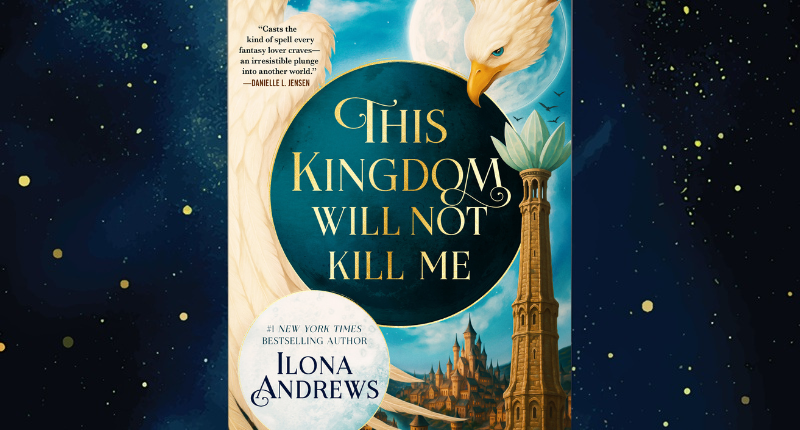
Here are some of the retailer links for your convenience. This Kingdom is available in ebook, audiobook and hardback formats. Paperback format is currently exclusive to the UK edition (April 2nd release).




 A Letter from House Andrews
Dear BDH,
This Kingdom is finally here.
You know we don’t do feelings, because we are professionals and all that, but this release is unlike any other we’ve had. So much time has passed between the first clumsy idea of Maggie and today, filled with work, pressure, and sheer effort.
It doesn’t seem real.
Any time you do something different as a writer, you take a risk. And this one is different. It’s an entirely new world, completely unlike our own reality. We filled it with fantastic creatures, strange magic, and archetypes: the Golden Knight, the Noble Assassin, the Fire Mage, the Mad King. The side characters are heroes of their own stories. We wanted to condense the essence of what makes fantasy books… well, fantasy.
We hope you’ll enjoy a plunge into the world of Rellas. It is our sincerest hope that it reminds you of why you love fantastic worlds and the strange people who inhabit them.
And now House Andrews has made us all emotional compromised… release day without treats? Not on my watch.
The unbelievably talented Helena Elias has another character reveal for us.
You’ve probably met him already in the Garden of Soft Blossoms…
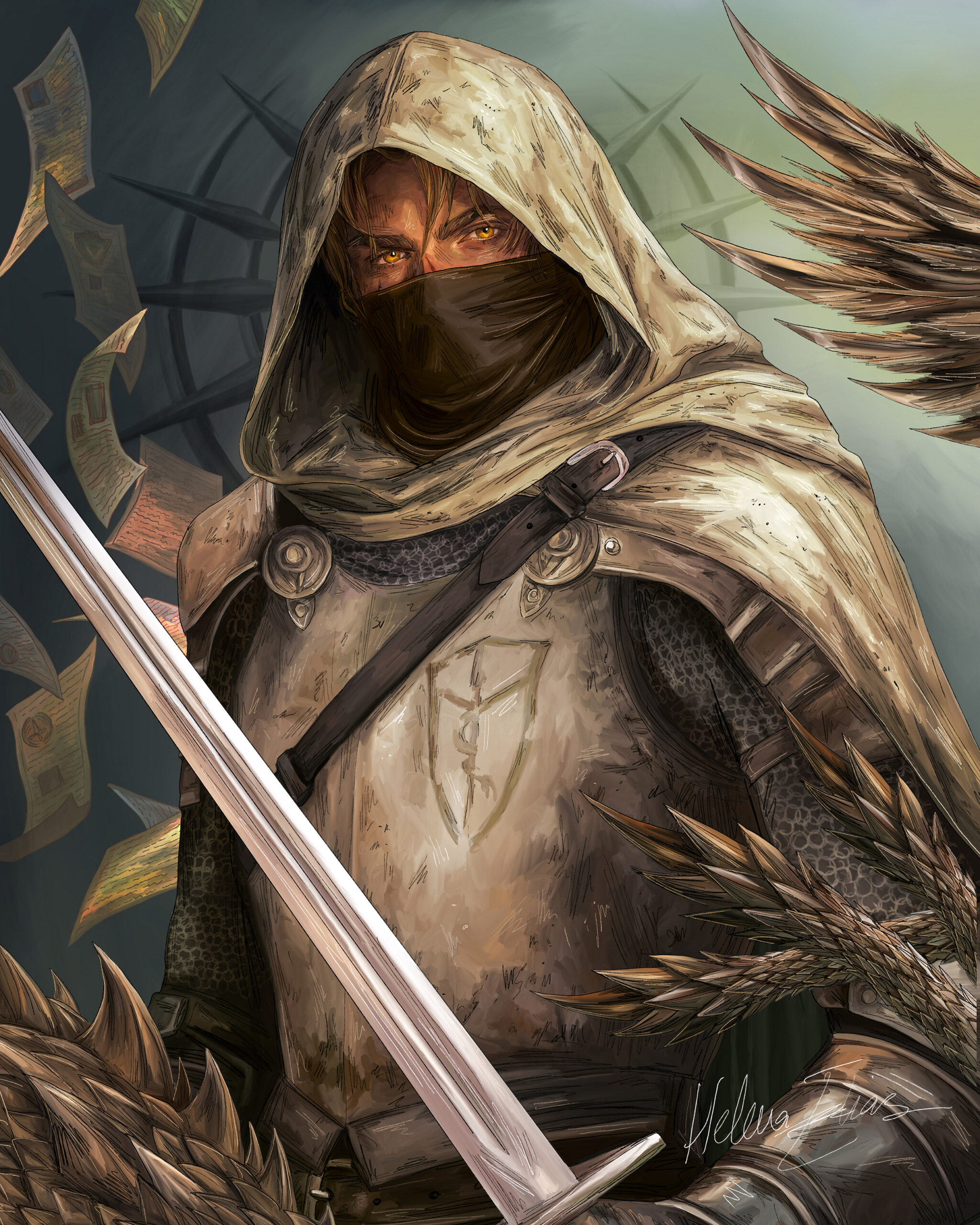 The Man from the Garden. Click to enlarge – those eyes are worth it
Now that the book is out in the world, this is the place to talk about his secrets and everything else in Kair Toren. Reactions, theories, favorite moments, things you need to scream about, whether you’ve just started reading or already devoured the book – we’re here for all of it.
I’ll also be collecting your questions for House Andrews, who will answer them on the blog or in the Zoom release Q&A we’re planning in April.
This is your official This Kingdom Will Not Kill Me discussion thread.Attention!
There are spoilers in the comments below.
There is one specific plot twist in Chapter 23 we’re asking you not to discuss just yet until everyone catches up. Thank you for your cooperation.
New Here?If you’ve just discovered Ilona Andrews through this release and you want more, welcome! You’re surrounded by people who understand exactly how you feel.
There’s a Start Here button now on the homepage just for you.
Reading guides, series breakdowns, freebies, quizzes, and so many wonderful adventures await you.
See you in the comments.
The post Happy Birthday to THIS KINGDOM WILL NOT KILL ME and Spoiler Thread first appeared on ILONA ANDREWS.
Categories: Authors
Proven Wrong… Joyfully
 Image by kalhh from Pixabay
Good afterevenmorn, Readers!
Everyone has a preference, right? Preferences show up all the time; in food, in friends, in partners, in art, films, and books. I, for example, like my food relatively spicy. My father will take it so damned hot any normal person will hallucinate pink elephants for hours. Not my preference. Sharing an Indian meal with him is sometimes a challenge. I prefer whiskey to most other alcoholic beverages, though I’ll happily have a rum and coke on occasion. I am a huge fan of surrealism in art, and find expressionism a little dull (controversial take alert). And when it comes to my books, I do not like first person perspective narratives, or LitRPGs, and I’m very particular about my humour.
Well, there are two books/series now that have absolutely slapped me in the face and called me a liar. And I’m here to admit I have (joyfully) been proven so very wrong.
 Image by Ylanite Koppens from Pixabay
First, I have to mention that I had struggled with reading for years and years and years. In fact, reading for pleasure became in credibly difficult during and after my university years. I just could not find it in me to pick up a book and start reading. There are some books that pulled me out of the slump momentarily (thank you Malazan Book of the Fallen), but on the whole, I’ve not been able to read.
I have no idea what the block was about. I did try to overcome it last year, attempting to force myself to read just before bed. While I did read more books last year (I think the number was four) than I had in previous years, it was still an absolute slog. This made me incredibly sad, as I had, prior to university, devoured books by the dozens in a year. I loved reading. Or I did. So why couldn’t I read?
Something this year shifted. For some reason, I have been much better about reading. As I don’t really have much spare time, I’ve kept my reading time for the times I’m on public transit, which is usually just Tuesdays, Thursdays and Saturdays (when I head to and from martial arts training). This appears to have worked a bloody miracle. I set my reading goal for twelve books in the year. I figured one book a month was more than doable with my schedule.
I have, as of this weekend just done, finished my tenth book. I don’t know why I’m suddenly devouring books again, but I’m not sad about it… because I have read some stellar books of late. My wallet, however…
The first book that took me by surprise in my new reading feast was this one:
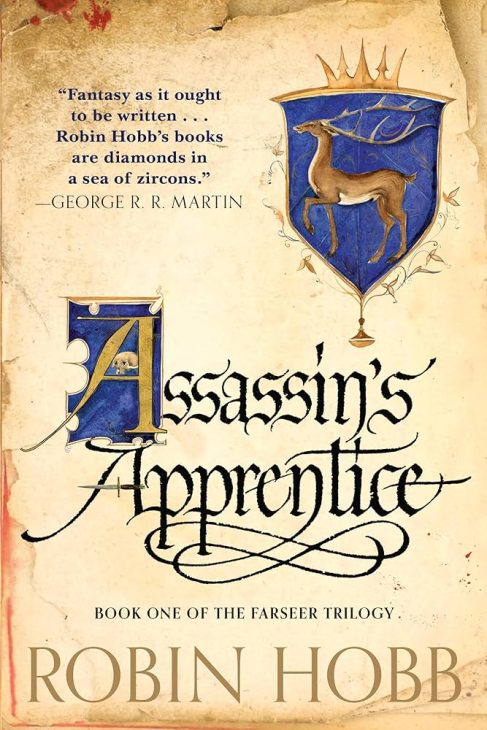
I had heard from a few ‘BookTok’ creators that this was a good read (though BookTok appears to have ben swallowed whole by Romantasy at present, some folks are recommending different books). The first book in the Farseer Triology, The Assassin’s Apprentice by Robin Hobb is written in one of my least favourite perspectives – first person. I was not thrilled, to be honest, when I read the first page. Until I hit the second. And then I was all in on this story. I cried three times before chapter five. This was an absolute five star read for me. And it took me by surprise. I was not expecting something written in the first person to be as affecting as it was.
I chalked it up to a fluke. One exception to the rule due to an exceptional writer.
And then, and then, and THEN I read this:
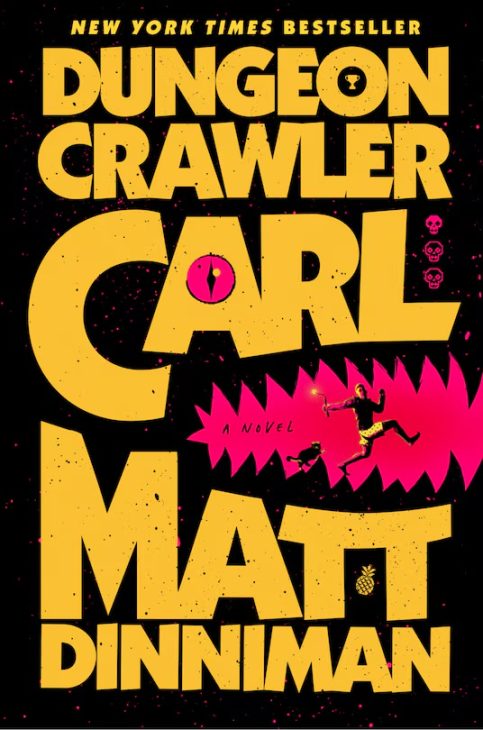
I admit, I was influenced. A number of people in my circles had mentioned how good this book was. It did not seem like my thing. I am not a fan of LitRPGs, and worse, it was first person. So, not something I would enjoy. Still, folks were taking about how good this book was, so I resolved to give it a chance.
I. Loved. It.
This book is funny, and earnest, and somehow able to maintain some incredible tension. The situation was absolutely ridiculous, yet I managed to be filled with compassion for some of the ‘mobs,’ charmed by characters who could be incredibly annoying if mishandled, and absolutely holding my breath in some of the scenes.
This was my second five star read that I absolutely did not expect. Twice now I’ve been made a liar, and this book made me a liar twice over. A first person LitRPG that I loved? Impossible!
This is, of course, because both Hobb and Dinniman are exception writers, who have both created complicated, fascinating and charming characters, with styles very appropriate to the stories they are telling. While I did not cry during Dungeon Crawler Carl (usually a prerequisite for a five star rating from me), I was so thoroughly entertained, I could not help but rate it highly. For the record, I did tear up a bit in the afterword, which was something I did not know I needed.
You will not break me. Those who’ve read it will understand, I think.

My experience with both first person perspectives as a young reader had coloured my opinion, as these things tend to. It didn’t help that more recent books written in that perspective that got wildly popular were… not very well written in my estimation. If I hear the words ‘Inner Goddess’ one more time, I will absolutely lose what’s left of my sanity. LitRPGs similarly proved disappointing reads before now, and I’ve found them boring or so silly that I cannot get into the story.
Given the poor experiences in the past, it cannot be a surprise that I was hesitant to read these books, and sceptical of their popularity as well (and I have found a lot of books that became wildly popular not really to my tastes besides). Turns out, they’re exceptional, and I am now a liar, liar, pants on fire. I do like first person perspective books, and at least one LitRPG. I should have kept a more open mind.
There’s no really point to this post, except to say that maybe we should all be giving more books a chance, and maybe take some time to test our preferences every once in a while. We might end up very pleasantly surprised… and a little poorer because now I need these books and the entirety of their associated series on my shelf. They bring me joy.
It could be drugs. At least it’s not drugs. Besides, I’ve started walking to work again now that my flu has passed and my lungs are supporting movement again, so there will be less time on public transit. That should slow my reading and spare my wallet a bit…
In any case, I hope you’ll all accept this mea culpa. First person perspectives and LitRPGs are not inherently bad reads. Turns out, like every other genre and perspective, there are good books and bad ones, and a fair number of middling ones. I’m sorry for instinctively turning my nose at them.
Have you read these books? What did you think of them? What kinds of books are your preference? I love talking books. Sound off below!
When S.M. Carrière isn’t brutally killing your favorite characters, she spends her time teaching martial arts, live streaming video games, and sometimes painting. In other words, she spends her time teaching others to kill, streaming her digital kills, and sometimes relaxing. Her most recent titles include Daughters of Britain, Skylark and Human. The Timbercreek Incident is free to read on Wattpad.
Categories: Fantasy Books
GREEN & DEADLY THINGS by Jenn Lyons
Jenn Lyons has published a slew of well-received epic fantasy novels over the last few years (she launched a 5-book series in 2019 with The Ruin of Kings [click the title for a link to my review] that concluded in 2022), an epic standalone and now Green & Deadly Things, a dark-fantasy standalone about dead…
Categories: Fantasy Books
Free Fiction Monday: Going Native
When a journalist on assignment visits a convention held by a fringe group who believes that teleportation has changed them—he wonders how he will manage to complete his assignment. But the more he talks to the TVSo?s, the more he becomes convinced they might not be crazy—they might just be right.
Finalist for the Best Fiction Maggie Award given by the Western Publications Association.
“Going Native” is free on this site for one week only. You can download your own copy of the story on any e-book site or by clicking here. Enjoy!
Going Native Kristine Kathryn Rusch
“God, could you find a duller way to travel?” asks my leggy companion, the luscious Ruth. She has this weekend off, and she insisted on coming with me on my assignment. It’ll be fun, she said, and then followed that up with, how can I know what you’re doing unless I come along with you on occasion? I listened to the logic of that, and now I find myself trapped in a 5-foot-by-six-foot moving room with a woman who finds train travel passé.
Me, I’m afraid that the Amtrak trip up the mountain will be the best part of this assignment. I work for eight online editors, and all of them called me last week to ask for an article on the annual TVS convention. Such a uniformity of requests has only happened once before in my career, and that was when a woman that I sat beside in grade school, tormented in middle school, and dated in high school was inaugurated as president of the United States. Suddenly my memoirs had value.
Somehow, I doubt that this essay has the same sort of import.
I also had my doubts about bringing Ruth to kooksville and now, when we’re still two hours away from our destination, I know I’ve made the Wrong Decision. She is lying on the bottom berth, her bare feet against the dirty plastic wall, her skirt pooled around her waist, and she is not thinking of sex.
Neither am I.
“I mean, we’ve been on this train for hours. How did people travel like this?”
They made love, they ate, they read books. But I do not tell Ruth that. She would see it as a slap, an insult to her great intelligence. In real life, Ruth is a receptionist for a lawyer, but she prefers to call herself a paralegal. She uses legalese, mispronouncing most of it, and pretends that she knows as much as someone who has a law degree.
I’ve never told her about mine. But then, why should I? It would ruin the sleazy nature of the relationship, the fact that I’m dating her for her deliciously man-made breasts and she’s dating me because I know the secrets of the universe.
She believes that’s because I’m a journalist. The old-fashioned print kind, even though what we print is done online. I’m paid by the download, which is why I’m on this train trip instead of, say, investigating the latest bombing in downtown Seattle. No matter how idealistic you start, you soon learn that it’s paranoia that sells.
Which is why we’re on a train instead of teleporting. There are no teleportation stations in this part of the Cascades. Rumor has it that the first teleportation technician who ventured into this part of Oregon was shot. Whether he lived or died depends on which rumor you believe.
Ruth knew we were heading into no man’s land when she decided to come with me, but the closer we get the less I believe she actually understood it. I think she thought we’d look at the crazy yokels and then go home.
I think I thought she could handle anything.
Check that. I think I knew, deep down, she was contemplating Marriage, and I wanted to convince her that breaking up was her idea. But that’s hindsight. Going in, I was simply concerned about the lack of sex.
“Once,” I say, gazing out the window at the snow beside the tracks, “this was the fastest way to travel in the whole world.”
“Yeah.” She flops an arm over her eyes, missing the deer that stand by a group of trees, staring at us. A 19th century vision in the 21st. “Sad, isn’t it?”
I’m not sure. I’m enough of a romantic to enjoy the view. I’m enough of a romantic to wish that she’d enjoy it with me.
***
The assignment, if you look at it historically (which is one of the few things that I’ve retained from law school, a sense of historical perspective), is a perennial: Go look at the fringe and report back to the masses. Around the turn of the last century, that meant going to carnivals and fairs to examine the bearded women, the two-headed chickens, and the stillborn fetuses that looked like fish. In my grandfather’s day, a reporter on this beat might go to see the mysterious Area 51, thought to be a repository for Unidentified Flying Objects (things so familiar they were known by their acronym UFO) and for the little green men who flew them. Me, I get assigned the annual meeting of the Teleportation Victims Society whose own acronym is TVS, but who is known in newsrooms nationwide as TVSo?. I should’ve known I was in trouble when I tried to explain this little joke to Ruth and she’d stared at me blankly, not even threatening to smile.
The TVSo?s meet every year in Harbor, Oregon, which used to be a 1990s survivalist camp between Bend and Klamath Falls. The area’s only attraction, or so I could glean before I arrived, is that it has no teleportation station, and none is planned. If someone wants to travel in that part of the Cascade Range, they either have to go to Bend, fifty miles to the north, or Klamath Falls, over 60 miles to the south. Then they have to take whatever ground transportation is available, provided, of course, they can get it. Amtrak still serves this part of the country, partly because the sparse population can’t justify the teleportation system, and partly because the tracks have existed for nearly two hundred years. It’s the only form of public transportation between those two stations, and mostly it’s used by the low-income folks who can’t afford the cost of speedier travel.
I insisted on taking the train all the way from Seattle, over Ruth’s protests, because I wanted my experience at the annual meeting to reflect the experience of all the other TVSo?s. I had secretly hoped I’d meet a few of them on this ride, but Ruth has kept me chained to the room, demanding room service, and not paying for it in the way that I had hoped.
Still I manage to sneak to the club car once, and there I see exactly what I expect, a group of tired, smelly people, most of whom are too drunk to look at the magnificent scenery whizzing past. I realize that, in my new khakis and bomber jacket, I am overdressed and as conspicuous as a rich man in Olympia. No one will talk to me. They barely manage to look at me.
And, for the first time, I worry about how I’ll pull this assignment off.
***
I should say at this stage of article research, I always worry about how I’ll pull the assignment off. Even though what I write is dictated into my wrist-top, edited on a larger screen at home, and e-mailed directly to my editor, what I do is really not much different from the work, say, Mark Twain did almost two hundred years ago. He ventured out into places unknown and reported back.
Ernest Hemingway did that, so did Ernie Pyle, and Peter Arnett. The great journalists thrived in times of war. When there is no war—or no war America is interested in—we are stuck with perennials. And no journalist ever became famous by risking his life at a TVSo? convention.
I simply want to go in, find a few things that are amusing, see if I can discover the secret behind the victimology, and return to home base with all parts intact. I know that, by Sunday evening, I will have a story. I’m just not sure if it’s the kind of story Hemingway would have dispatched from Spain.
In fact, I know it’s not the moment the train pulls into Harbor, Oregon.
***
When Ruthie and I get off the train at the small white station nestled against a snow-covered ridge, we are greeted like visiting royalty. I made no secret of my job as a journalist, but it’s really Ruthie they want to see. It seems, on the e-slip she sent with her fee, that she listed her employment as she always does.
A paralegal and a journalist. We are a dream couple for the TVSo?s.
I am not the only journalist in this place. Every major television reporter, radio commentator, vid producer, and holotechnician is here to record the loonies in action. I am one of the few print people, and the only one with enough awards to make me semi-famous. Every TVSo? wants to tell me his story, to introduce me to little Jonnie or Suzy or Uncle Billy, and to show me what makes them different.
When I get off the train, I realize I am not ready for this. The grasping hands, the slightly desperate gaze. I insist on going to the hotel before meeting people, and Ruth gives me her I-can’t-believe-you’re-doing-this look. That’s when I realize she’s not upset about the location or the people. She’s upset that I want to leave them. She not only relishes the attention, she believes she can give these people advice. She doesn’t realize how dangerous the situation can be. She’s with the only people in the world who might take her seriously. I grip her arm and follow our host to the Compound, our hotel.
The Compound was the former survivalist’s camp, and looks it. The outbuildings are made of wood hammered together by people who clearly didn’t know what they were doing. The main building, where the restaurant and gift shop reside, was once a ranch-style house, built in the mid-twentieth century, complete with front-facing garage. The building had been added onto, once during its survivalist camp days—that was evident by the concrete bunker in the back—and once by the hotel, the brass and wood façade that tried to make everything upscale.
Our room isn’t really a room. It was cabin Number 8. A plaque on the door tells us that it had once been used by the house’s original owners as a storage shed, and was remodeled into a cabin when the camp started in the early 1980s. The plaque tells us proudly that eight people lived in this space; I’m wondering how Ruth and I will manage for a weekend.
The room is square, with an area carved out for a bathroom with an ancient shower and plastic tub. The sink has motion detectors instead of computer controls, and the toilet actually has a handle for flushing. Ruth is charmed, but I wonder if that will last into the middle of the night, when one of us stumbles in there and initiates the gurgle and grunt of the ancient plumbing.
We unpack, and then Ruth wants to reenter the fray. I’m more interested in checking out the dining facilities. The reconstituted chicken I had on the train didn’t last me long.
Outside, we see several blue-and-white signs, pointing to various cabins. Most signs are hand-lettered and made specifically for the conference: Registration is to our left; Legal advice is to our right; and Testimonials is straight ahead. Other signs show us the way to improve our Education, covering everything from Technological Secrets to the History of Transportation. Many of these, I know, are ongoing programs, and I will check them out through the weekend. It’s the guest speakers I am most interested in, and those are going to be the hardest events to see.
***
In the registration line I learn that the TVSo?s aren’t all low-income poorly educated folks like the research had led me to expect. The man in front of me is a doctor from Philadelphia who has documentation on “differences” and was willing to call it up on his wrist-top right there in the frigid Oregon mud. The slender, pretty woman behind me is a reasonably well known vid personality whose career went into a decline, she says, after she teleported 65 times in one month. I talk to both of them at some length. Ruth has left me alone in line while she went on to the lodge for drinks.
She has been gone a long time.
I draw the same sort of crowd I drew at the train station. I am uncomfortable, used to being the observer, not the observed. Everyone wants to tell me a story; everyone wants me to know how teleportation changes people, how it creates differences where there were none before.
Some of the stories are just silly, like the vid personality’s. She claims she lost a little bit of charisma each time she teleported from one place to another. Some are strange, like the woman who has me examine holograms of her now-estranged husband, a man whose eye color changed in the space of one afternoon from green to brown.
The rest are merely sad. Many are from people who claim that their spouses are no longer the same people they married, and they blame use of public teleportation. Others show evidence of medical conditions they claim were caused by teleporting, and still some have tales of close loved ones who died soon after traveling in a teleportation device.
I have read the literature; I am familiar with all variations on these stories and more. I even know their origins.
I ask the eye color woman why she believes her husband’s eyes were the only thing to change.
“I didn’t say they were the only thing, now did I?” she says angrily.
I turn away, afraid to follow up.
***
The first big breakthrough in teleportation occurred in the late 1990s when a team of Austrian scientists successfully completed a transfer on the sub-atomic level. The physics of the breakthrough was too complex to explain to the layman in the popular newspapers of the day, so many journalists attempted (unsuccessfully) to put the discovery in layman’s terms.
I have tried to hunt down the origin of the example used for the laymen and have been, to date, unsuccessful. I suspect either one of the scientists got exasperated with the journalists’ stupid questions and used the example to explain, poorly, what was going on, or a journalist attempted to translate what he thought he understood into language that he thought other people could understand.
Their experiment, said the news organizations of the day, was as if the scientists had taken a red ball in one room, made it disappear, and then reappear in another room—although what was teleported was not the ball itself, but the quality of redness which was then transferred onto another ball.
It is not what we experience. We experience the teleportation first imagined in pulp fiction stories of over a hundred years ago. Our bodies literally disassemble in one location, are transferred to another location, and are then reassembled. There are documented cases of malfunctions, most dating from the early days of the technology and almost all of them having to do with apes who arrived dead. These deaths were not pretty or simple: they had to do with parts being reassembled in the wrong order, rather like taking a puzzle apart, then trying to put it together by placing all the corners in the middle. Those details were resolved long before any human being stepped onto a teleportation pad. The things we must worry about are simpler: power failures and computer malfunctions, both of which can lose us mid-transfer. This problem is the greatest in Third World countries, in devices built out of scrap metal, most likely, by the operator’s Uncle Ralph. Teleportation is not sanctioned to those countries, or is done purely at the user’s own risk. Here and in “approved” countries, every device is scrutinized, overhauled, and replaced more often than anything else in our technologically advanced society.
This is what the literature tells me. It is what exists in all published reports, the meetings before Congress, and in several teleportation companies’ legal databases. I know there can be problems—we all do. The problems are called “acceptable risk,” something we all assume when we step on a teleportation pad, or even when we walk out our front door. What varies from person to person is how acceptable some risks are.
It is the idea that we can be disassembled and reassembled that unnerves people the most. A large number of people (actual estimates vary, depending on the reporting agency) refuse to use teleportation, allowing other forms of mass transit to remain in business. Most of these people are not TVSo?s. They simply don’t like the idea of being taken apart and put back together without it being necessary, and are not willing to sacrifice their original unity for the sake of instantaneous travel.
Others cannot imagine traveling any other way. Frequent teleporters receive a discount on each trip. “Frequent” is defined in the industry as anyone making more than ten trips per day. I have only hit the ten trip in one day milestone once, and it left me feeling disoriented and unnerved—not, I hasten to add, because I was disassembled so many times, but because, after five different teleportation stations, I lost track of my surroundings. Later I learned that frequent travelers set their wrist-top to remind them of their location and their purpose for being there upon arrival.
I have read all the literature, examined all the records, and while I still feel a twinge of nerves when I step on the platform, I prefer the instantaneous shift, the delight at having been in Manhattan one moment and Rome the next. It is not different, my grandmother once told me, than that frisson of fear she used to feel whenever an airplane’s wheels left the ground or whenever a train went over a particularly high and narrow bridge.
It is human nature to worry about the accidental, the unexpected, the unknown. It is also human nature to magnify those things into problems so strange as to be somehow plausible.
***
The TVSo?s have three banquets at their weekend meeting, and I have bought tickets to all three. Ruth did not want to eat at the banquets. In fact, she soon made it clear that she did not want to spend time with me. She says my attitude is too cynical, my remarks too cutting. She is already right. I am already thinking in the tone I’ve decided to take for this article, a tone that my brain established while part of it tried to concentrate on the seriousness of the vid personality’s loss of charisma.
The first banquet is on Friday night, and there I am happily surprised. The food is excellent. It is free-range chicken, brought in from a nearby ranch, local vegetables grown and stored here, marinated in local wine, mixed with spices grown in the chef’s own herb garden.
Nothing was shipped in: no risk of teleportation tainting the food. And somehow it does seem fresher. Or perhaps the chef, a world-renowned man who refused to allow me to use his name in this article, has simply lived up to his spectacular reputation.
The speaker that night is a transportation historian who is, believe it or not, duller than he sounds. He reads his speech off the TelePrompTer modification in his contact lenses, probably much as he does in class, which forces him to stare straight ahead. That, combined with his monotone, makes him seem as if he’s teleported one too many times.
The diners at my table, which is toward the back, immediately deduce the problem and begin whispering, as I imagine his students often do. We introduce ourselves and tell each other why we’re here.
The woman to my immediate left looks like a Hollywood grandmother, which is to say that she’s round, gray-haired and jolly. She confides that she went to see her grandchildren on her only teleportation trip, and instead of arriving in Pittsburgh as planned, she arrived in Philadelphia. The teleportation operators claim she simply told them she was going to Philly, but she claims that they punched in the wrong destination. I take mental notes, knowing that what is at stake here is more than a simple trip. She lives on a fixed income and she scrimped to afford the teleport. She could not afford to then go from Philly to Pittsburgh and back home. She missed a trip, and probably several meals, for that one abortive visit.
This is a problem I can get behind. It is not magic woo-woo incantations in which she claims that she suddenly ballooned in size because her protons expanded or that she got skin cancer that should have belonged to someone else. This is the kind of operator error we all worry about. I have had nightmares about getting on a teleporter in Portland and ending up in Beijing.
The woman next to her confides that there is a lawyer in the legal section who is trying to get enough contacts to initiate a class action suit for just that sort of problem. The grandmother thanks her, and then asks her, whispering politely of course, why she’s here. The woman, who is in her mid-forties, has the prettiest lavender hair I’ve ever seen. She flushes a nice shade of pink that somehow complements the lavender and admits that she would rather not say.
I am beginning to think I’ve hit a lucky table. Imagine someone who has come to a TVSo? convention who is unwilling to admit why she has come. It is almost antithetical to the purpose of the conference.
I make a mental note to pull her aside later, then ask the man to my right why he has come. “Reporter,” he says tersely, not whispering. “Just like you.”
He gets shushed by the people at the table behind him, who, believe it or not, are engrossed in the teacher’s speech. At that point, I surface briefly, realize the man has droned on for thirty minutes and hasn’t yet reached the invention of the automobile. I signal a waiter for more coffee.
The woman to the reporter’s right bursts into tears when asked why she’s here, and we get shushed again. I actually don’t mind because I get an odd sense that the tears are fake. Still, we dutifully lean forward after she dries her eyes with her linen napkin.
“My baby,” she whispers, and stifles a sob. The entire table behind us glares at us with angry eyes. We glare back, then lean as close as we can.
“My baby,” she says again, “was a boy when he went into the device.”
Suddenly I don’t want to hear any more, and neither, it seems, does anyone else. The reporter hands her another napkin, and makes sympathetic noises, but as quickly as he politely can, he rises and makes his way to the men’s room.
Ten minutes later, when he has not returned and the speaker is rhapsodizing about the uses of airplanes in World War I, I excuse myself. The corridor outside is empty, but I find a new convention going on at the bar.
“I don’t know why they invite him back,” says one woman to a gale of laughter. It seems that this is the fifth year the historian has spoken on Friday night, and this year he is actually more interesting than he has ever been.
One of the conference organizers overhears, and says rather stiffly, “We invite him so that you all have an historical overview of the problems we face.”
“Oh,” the laughing woman says, “but don’t you think that teleportation is a little different than, say, a Model T?”
“No,” the organizer says, and I realize that this is one of those dangerous people to whom the phrase “sense of humor” has no meaning at all, “it is all a manifestation of our need to make the world smaller. Once everyone thought that instantaneous travel would solve all our ills. They didn’t realize that it would cause more problems than it started.”
“Do you believe,” one woman asks, “that everyone who has been in a teleportation device is still human?”
Not even the conference organizer answers that question. It is too touchy. Most of the people here are here because they have been in a teleportation device. If the woman’s right, that would mean none of us are human. I don’t believe that. I believe we’re very human, although the more I see, the more I wonder what side of humanity we actually belong to.
***
The next morning, I wander over to Legal, and listen to lawyers pontificate on ways to collect damages from teleportation companies. I hear the familiar litany of successful lawsuits—there aren’t many, and most are nuisance cases much like the grandmother’s of the night before—but the audience is attentive and asks polite questions.
In the afternoon, I poke my head into Education, and see the historian. I don’t run from there, although I’m tempted. I walk slowly, pretending I had ventured into that area by mistake.
Ruth is nowhere to be seen. She did show up in our room the night before, but long after I was asleep, and I thought I smelled brandy, but by that point I didn’t really care. I wonder idly who she has found to entertain herself with and how she can use him to further her career. The thought, though accurate, is uncharitable, and I then wonder when I stopped thinking with fondness of Ruth’s tendency’s to exaggerate and began to be annoyed by them. Probably around the point when her manufactured breasts became her most fascinating feature.
That night’s speaker is an expert in teleportation technology and I am assured by almost everyone who’s been here before that he makes the historian look glib. I am sorry to give up the free-range chicken, but I cannot bear another two hours trapped in those uncomfortable wooden banquet chairs.
I go into the restaurant, where I’ve had two delicious breakfasts, and cast about for a table. It seems to have a lot of patrons, considering there is a banquet going on in the next room.
Ruth is at a table near the window. Even though it is dark, I can make out the ghostly shape of the nearby mountain, snow-covered and shiny. She waves me over.
She is sitting with the lawyers. They have asked that no other tables be filled around them, and so far the restaurant is able to comply. Ruth, it seems, has been spending her time with the entire legal wing of this conference and learning “a whole heckuva lot.”
I sit down, and listen for a while. This seems like an informal version of the panel I had attended in the morning. I order a steak, and do not ask if it was shipped in or slaughtered locally, for which I am razzed, and then one of the attorneys, an overweight vegetarian who consumes way too much wine during the evening, informs me of the many ways that beef could kill me. Since I have heard this lecture before, I add a few insights of my own, all the while chomping heartily on my dinner.
Finally they ask me why I’m here, and I tell them that I’m a paid observer of human nature.
“He’s journalist,” Ruth says, breaking my cover.
They eye me as if I’m the slimy species and I explain that I’m a practitioner of New Journalism almost a century after New Journalism was introduced. It is my way of gaining legitimacy among the illegitimate: pretend to a literary value that I don’t really have.
The New Journalism comment seems to have silenced them, so to break the ice—and to make my dinner worthwhile—I ask them what they really think about teleportation technology.
“It makes lawyers rich!” one of them said and the others laugh. But I press them, and finally a dark-suited man next to Ruth says, “I used to laugh at these folks and then questions started coming up, questions I couldn’t get an answer to.”
One of the female attorneys nods, and still another, the overweight vegetarian, says, “Yeah, like why is there a ban on kids under the age of three taking teleportation?”
“It’s not a firm ban,” a New York lawyer says. “You can get around it with a doctor’s permission.”
“Yeah,” the vegetarian says. “Why a doctor? And what does he give permission for?”
“I’ve never seen any instances of babies traveling. They don’t allow it, with or without the doctor,” the woman says.
“But I met a woman who says her baby—” I start and they all shake their heads sadly, silencing me.
“She’s here every year,” the vegetarian says. “I checked the story out. She doesn’t have a kid. I don’t even think she’s female.”
They chuckle again, and the joviality is back. No matter how I push them, I can’t learn what the other questions are. The vegetarian promises to tell me if I come to the bar later. I do, and he’s passed out in a pile of corn chips. I vow to try and find him the following day.
***
The next morning, as the speakers are setting up, I go to the Technological Secrets area. It’s in a wide auditorium with holographic capabilities. My mind boggles just at the thought of seeing strange machinery in life-size and 3D.
It takes me a moment to find a speaker who’ll talk to me, who doesn’t try to get me to wait until his presentation. I tell him about the lawyers’ collective unease about the baby ban.
“You ask the teleportation stations they’ll tell you it’s because babies are too fragile for most kinds of travel. Like they’ll ban an infant from a jet.” The guy I’m talking to is six feet tall and has a honking nasal voice. I’m glad I elected not to stay for his presentation, even though he seems nice enough. “But it’s really because of the stress to the body.”
“I thought there is no stress.”
He looks at me as if I’m the dumbest thing he’s seen at this conference, and given what I’ve seen, I’m almost insulted. He holds up a glass of water. “You can’t teleport crystal either,” he says. “Sometimes it shatters. And it shouldn’t. I mean, they perfected this at the subatomic level, or so they say.”
“You don’t think they did?”
“Between you, me, and the wall,” he says, “I know they perfected it. The problem is that they don’t use the right equipment to teleport people. It’s like building a house. We can build a damn fine house with everything correct. But we hire contractors who want to make as much money as possible, and they do it—have done it—since time immemorial by using inferior parts and charging the same as they would for good parts. I try to tell the lawyers that, but it’s not glamorous, and it’s damned hard to prove. They tell me they’ll help me when I can show damage caused by inferior parts. I can show damage. I just can’t make a credible link.”
Later that day, I check his statements with a few other technology wonks. They agree that the problem with public teleportation is that it’s public. The system used by the President and other heads of state is state-of-the-art, so protected that nothing can go wrong. The system used by the rest of us, well, these guys would have us all believe it’s held together by spit and glue and pieces manufactured just after the turn of the century.
It makes me think of all those bans on teleportation travel to third-world countries. If our technology is bad, what is the technology like that was hammered together by someone’s Uncle Ralph? The very idea raises images of those poor puzzle box monkeys with the corners where their middle should be.
Of course when I get back home, and call the various teleportation manufacturers, they all give me the company line and swear teleportation is the safest form of transportation since walking. Even that can go wrong, I say. Think of potholes. Think of missteps, twisted ankles and tripping over small children. But the manufacturers don’t find me funny. When I get belligerent, forgetting, for a moment that this is supposed to be a puff piece and not investigative reporting, they transfer me to their legal departments who remind me of libel laws and how careful I need to be in questioning their companies.
***
The free-range chicken is gone by the third banquet, but the speaker is delightful. He’s a comedian just starting out, and he proves to me that the TVSo?s have a sense of humor, since most of his jokes are aimed at them, and they laugh uproariously. I don’t. I feel vaguely embarrassed, mostly because I know I would have laughed if I’d been watching this guy in any other setting but this one.
As I head out, I look for Ruth. She’s still surrounded by her lawyers, and when she sees me, she waves me over. She puts a hand on the overweight vegetarian’s arm and informs me that he has hired her as a paralegal. I pull her aside, remind her that jobs aren’t always that easy to come by and that she’d better check his credentials. She frowns at me, asks me if I think she’s dumb or something—a question which I decline to answer—and then stalks off. I gather, from that whole exchange, that she’s not taking the train home, and I turn out to be right. My wish has been granted. She has forgotten thoughts of Marriage and believes that our break-up is her idea. I find that I regret the whole plan, not because I wanted to marry her, but because I had hoped that I would at least get to try all parts of train travel, from meal to sleep to sex. We had neglected sex on the way there, and I was hoping for a bit on the way home.
Instead, I spend the next week finding a way to ship her clothes cheaply without using teleportation technology, since the vegetarian likes to keep his office “pure.”
I am beginning to understand the sentiment. My moment of hesitation as I step on the teleportation platform in Bend—I see no point in train travel all the way to Seattle if I’m not going to be able to have nookie in transit—lasts nearly three minutes, and customers behind me get angry. But I keep thinking of those banned babies, and Uncle Ralph, and inferior-grade equipment, and the way that the sheet rock in my condo flakes like someone’s untended dandruff, and I find myself more and more reluctant to travel in that instantaneous sort of way. After all, why am I in such a hurry? I’m a journalist, for godssake, a man who makes his living off observing, and observation is something that can’t be rushed. I am proud of my observation skills, and proud of my capability for contemplation that makes them possible.
But what I’ve been observing since I got back is my own reflection in the mirror. There’s a line down one side of my face, an instant wrinkle that really doesn’t look like a laugh line or something that would naturally occur as I age. It looks more like a fold, or a crease, something incorrectly ironed in, as if a section of me were miscut and hemmed wrong.
I never noticed the wrinkle before getting on that teleportation station in Bend. I have been obsessed with it since. And I think, I really think, that my obsession is a product of the TVSo? convention, but not for the reason that you’d think. It’s not that I suddenly believe the teleporter has given me a new wrinkle. It’s just that I find the idea of a wrinkle induced from the outside better than the idea that I’m growing older. It’s easier to believe in the fiction. It’s nicer.
It takes the responsibility for that particular line off me.
Or at least, that’s what I tell myself. Because I do need to teleport on occasion for my job. Journalists observe, yes. But they must observe in the right places. And when my editor tells me to get to London yesterday, I do the next best thing. I get there two minutes from now, new wrinkles be damned.
But I find that I do examine mirrors more, and I wonder, when I think something particularly cruel, like most of my thoughts about Ruth lately, if I’ve become less than human. Is humanity something we can lose, little bit by little bit, like the vid personality and her charisma? And if so, how can we tell it’s gone? Is it replaced by paranoia, by worry, in equal degrees? And am I, in worrying about this, showing signs of latent TVSo?ism?
I don’t know. But I do suspect that my recent desire to take the train to the far reaches of the United States has less to do with my unfulfilled sexual fantasy than it does with my desire to avoid a technology that I may have learned to fear. Then I remind myself of the history of this form of paranoia; I know that being a reporter from the fringe requires an ability to cross over into that land and appear to be a native. I’m simply afraid I’ve taken it too far. Going native requires residency in kooksville, and while it only takes an instant to reach that particular destination, it takes years and expensive psychotherapy to get out.
***
When I turned in this essay, I thought of asking for a bonus, a sort of combat pay to compensate for the wrinkle, for the increased harassment as I take an extra minute of other people’s time while I hesitate before stepping on a teleportation platform.
But my editor vid-conferenced with me this morning, wanting to discuss what he calls “proper compensation.” My article, he says—(this thing you are currently reading, without this coda)—has given him an idea. Teleportation has overtaken other forms of transportation so much that his younger readers have probably never flown in a plane or driven a car. He wants me to do these things, and report back about my experiences, as if I have gone to yet another frontier, even if it is a part of the past.
He asks what I want to do first, and then reminds me this will be on the magazine’s expense.
“A ticket on the Orient Express,” I say.
“Ah,” he says. “You’ll title it ‘Strangers on a Train?’”
I’m thinking not of Patricia Highsmith and Alfred Hitchcock, but of luscious, willing blonds with breasts the size of helium balloons and the ca-thunk, ca-thunk of the wheels on a track suggesting a rhythm that no teleportation device can hope to match.
“I hope so,” I say, and realize this is the kind of fringe I like. “I certainly hope so.”
Going Native
Copyright © by Kristine Kathryn Rusch
Published by WMG Publishing
Cover and layout copyright © by WMG Publishing
Cover design by WMG Publishing
Cover art copyright © Embe2006/Dreamstime
This book is licensed for your personal enjoyment only. All rights reserved. This is a work of fiction. All characters and events portrayed in this book are fictional, and any resemblance to real people or incidents is purely coincidental. This book, or parts thereof, may not be reproduced in any form without permission.
Any use of this publication to train generative artificial intelligence (“AI”) technologies is expressly prohibited. The author and publisher reserve all rights to license uses of this work for generative AI training and development of machine learning language models.
Categories: Authors
Pages

Recent comments