
Authors
Monday Meows
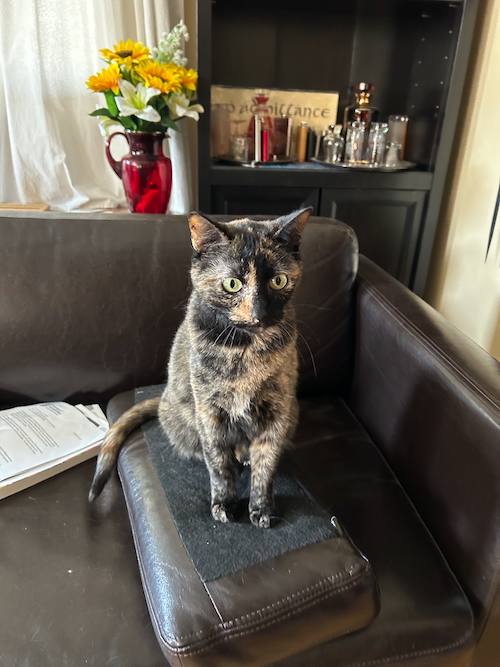
I’m doing hard time here.
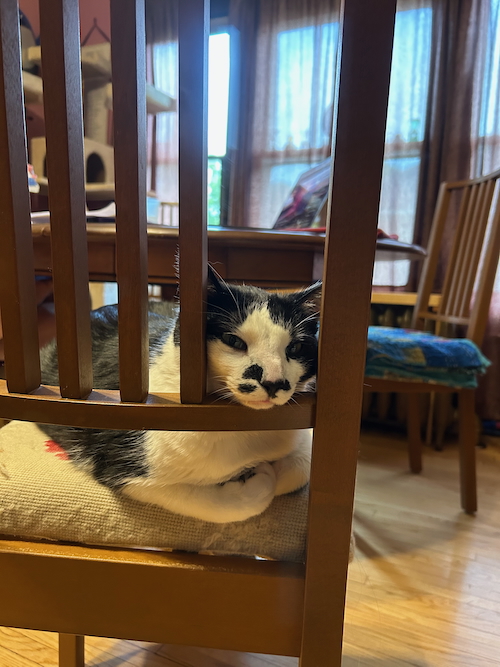
I’ll play you a lament if I can pick up the world’s smallest violin here.
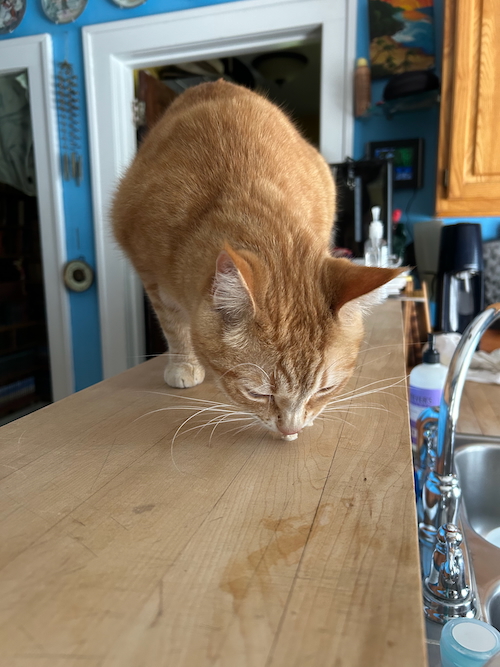
I understood that reference!
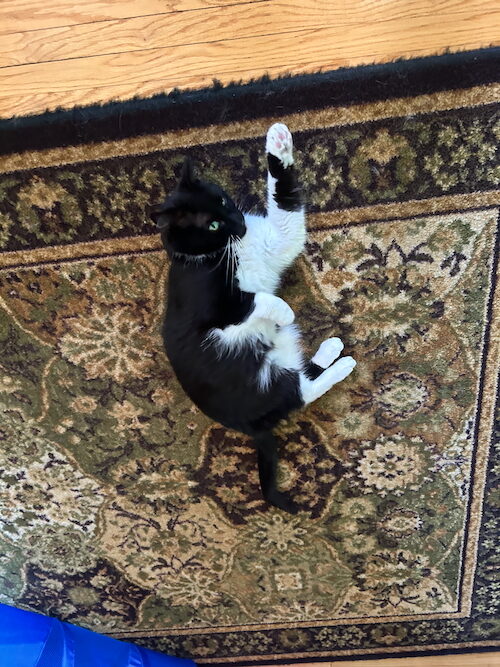
Russian Judge (Red Guardian) gives your joke three of four paws down.
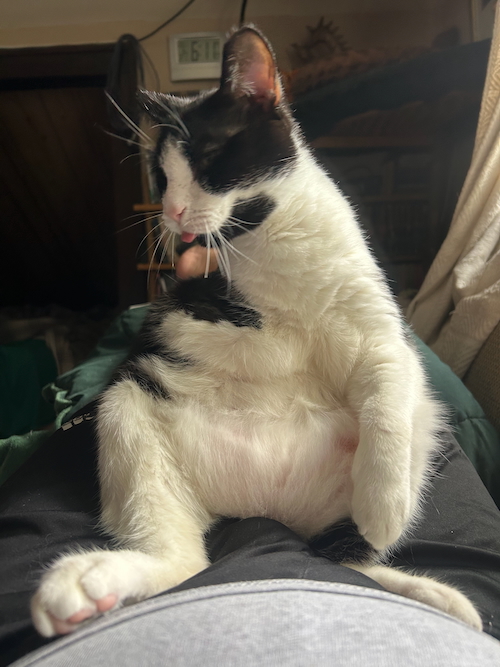
I’m in hell. I’m literally in hell.
Categories: Authors
GraphicAudio: Speaks the Nightbird Part 2/2 release date
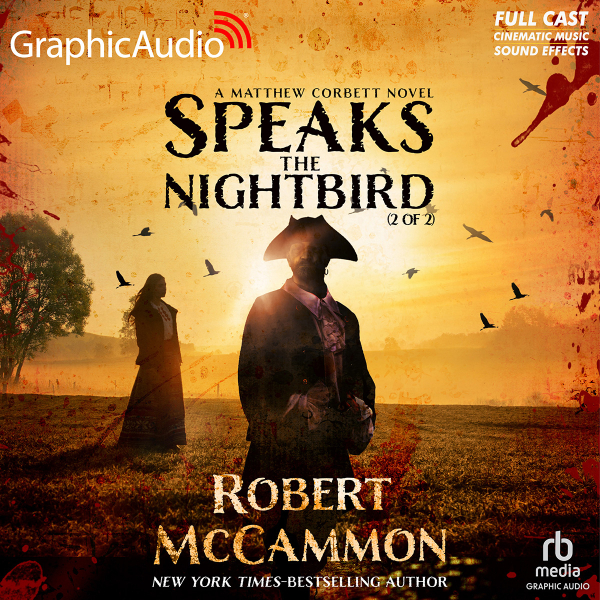
GraphicAudio will release the second half of their full-cast dramatization of Speaks the Nightbird on May 5, 2026. It can be pre-ordered from their site. Part 1 was released on January 13, 2026. They plan to produce dramatizations of the entire Matthew Corbett series. If you purchase from GraphicAudio, you can choose MP3 or FLAC downloads.
GraphicAudio has a 50% off sale running through February 15!
Speaks the Nightbird Part 2 of 2 at GraphicAudio
And if you missed it: Speaks the Nightbird Part 1 of 2 at GraphicAudio and at Audible
Categories: Authors
Announcing ‘The Tomb of the Corpse King’
I’m delighted to reveal that those good people at Subterranean Press have decided to let me play once more in the world of the Seven Swords. The Tomb of the Corpse King and Other Stories – Tales Set in the World of the Seven Swords will be released in September this year. The spectacular cover art is once again by the inestimable Didier Graffet.

Here’s the table of contents:
The Ballad Of Lorent And Ihlene
The Scarlet Ziggurat
The Beast Of The Sundered Forest
The Tomb Of The Corpse King
Fans of the series will note that the short story The Scarlet Ziggurat has been available as a free download on the Subterranean Press website for a while. The other stories are all novella length and original to this collection.
Those new to the series should check out Volume One: A Pilgrimage of Swords.
No pre-order page yet, or news about an audio version, but watch this space for further details.
Speaking of Didier Graffet, I thought you would like to see his cover for the French edition of A Tide of Black Steel – Une Maree dAcier Noir.

Une Maree dAcier Noir, translated by Olivier Debernard, will be published by Bragelonne on April 8th.
In other A Tide of Black Steel news, the German edition, Flut aus Schwarzem Stahl, will be published by Hobbit Presse on Frebuary 14th. Translation by Sara Riffel.

Those of you who have been following me for some time may recall that I was fortunate enough to have two stories published in Deep Magic Magazine, edited by fellow fantasist Jeff Wheeler. Deep Magic is no longer publishing, but Jeff is putting together two special edition hardcover compilations of the best stories from the magazine, including my interlinked short story and novella The Hall of the Diamond Queen and Fire Wings. Click the banner below for more details:

And finally, I’m please to report that most of my self-published ebooks are now available on Bookshop.org. Readers who prefer not to feed the Amazon monster can now order from the following links, a percentage of every sale goes to local bookshops:
Categories: Authors
Monday Musings: Where Does Mentoring Fit In With Today’s Publishing Realities?
I have a very good friend, also a writer, with whom I often discuss the depressing state of the writing world at this point in history. We have a sort of gallows humor about the whole thing — a lot of joking comments about low pay, the dearth of readers, the way New York publishing has basically lost interest in the midlist author, and the generally low quality of self-published works that we encounter when we dare to dip our toes into those murky waters. (No slight intended to anyone — seriously, if you are self-published, please don’t tell me that I have insulted you. There are good self-published books out there. But let’s be honest: The self-pubbed gems tend to be overwhelmed by the dross. Too many self-published books have had no serious editing or proofing, leaving them overlong and filled with errors that might easily have been avoided.)
Writers starting today face formidable obstacles that did not exist when I began my career (you know, back in the day when we carved novels into stone tablets….). There are more wannabe writers hawking their wares on various online platforms now than there have ever been. The democratization of publishing technology has convinced many that they can be professionals simply by writing something, slapping it into the appropriate app, and putting it up for sale. Again, some of those books might be very good, but none of them have had to make their way through any vetting process. I am a dedicated amateur photographer, and I am pretty good. I have even sold some of my work and had images published. But I am not truly a professional. I know professionals. Most of them are far, far better than I am. But I have access to digital photo equipment that has helped me elevate my skill. I have access to printing services that make my photos look professional. I have even put together a book of my work that looks like any other coffee table photography book. In short, I have benefitted from the same sort of democratization in photography that I am describing with respect to publishing, even though I KNOW that I am not nearly as good a photographer as most professionals.
So, anyway, that is one obstacle: The sheer number of authors out there these days, competing for the attention of an ever-shrinking pool of potential readers.
Why ever-shrinking? That’s obstacle number two. I actually think the absolute number of devoted readers has remained roughly the same over the course of the past, say, fifty years. But if that number is remaining relatively static while the population grows, and while the number of would-be authors grows… well, you do the math.
The third obstacle I mentioned above: New York publishing — a moniker used to refer to what some might call legacy publishing — basically means the publishing houses that have dominated the industry for so long: Alfred A. Knopf, Random House, Saint Martins (which includes my old publisher, Tor Books), and other such behemoths. When I started writing, these big publishing houses were still (mostly) independently owned. They ran their businesses with at least some sense of the mission of their founders. They understood that publishing was not simply another profit-maker. The success of big-name authors allowed these houses to nurture the careers of beginning writers, and of those in the so-called midlist who had solid readership but who were probably never going to break into the ranks of those bestsellers. (And allow me to say here that legacy publishing was far from an idyllic business world. Yes, it supported authors in a range of sales categories. But the vast, vast majority of its authors were male and White.) Around the turn of the millennium, New York publishing began to consolidate. Mergers and buyouts disrupted that old model, and when the dust settled, many of the remaining publishing houses were subsidiaries of larger corporations that had no interest in sustaining the careers of authors who didn’t sell all that well. They still gave contracts to the big names, and they still gave contracts to young writers who showed promise, but they had little patience if those young voices didn’t catch on quickly, and they stopped maintaining the midlist pretty much entirely.
 The publishers also squeezed out a lot of editors, feeling that editing was a luxury, and an expensive one at that. “Look at all those self-published titles selling online,” they said. “They’re not edited, and their readers don’t seem to care. Why should we spend so much when most readers just aren’t that discerning?” My editor at the start of my career was, to put it mildly, a problematic character. He was difficult to work with, unreliable, and slow. And eventually, he was fired for cause. And yet, I learned a ton from him. He taught me about the business. He taught me to be a much, much better writer, simply by working with me to improve my craft. I would be lying if I didn’t admit that I owe much of my career to his peculiar brand of wisdom. Young writers need that sort of mentorship. And in today’s world, few of them get it.
I should also say (in a post that is already lengthy) that today’s young writers also have to compete with a faceless, soulless technology that can produce passable stories at virtually no cost, in virtually no time. How the hell are human authors supposed to compete with that? Yes, AI generated characters and stories are not very good (yet). But again, many readers have come to accept mediocrity as entertainment, so long as it has a plot and serviceable characters. It may not be great, but it will divert my attention for a little while.
And all around us, civilization collapses….
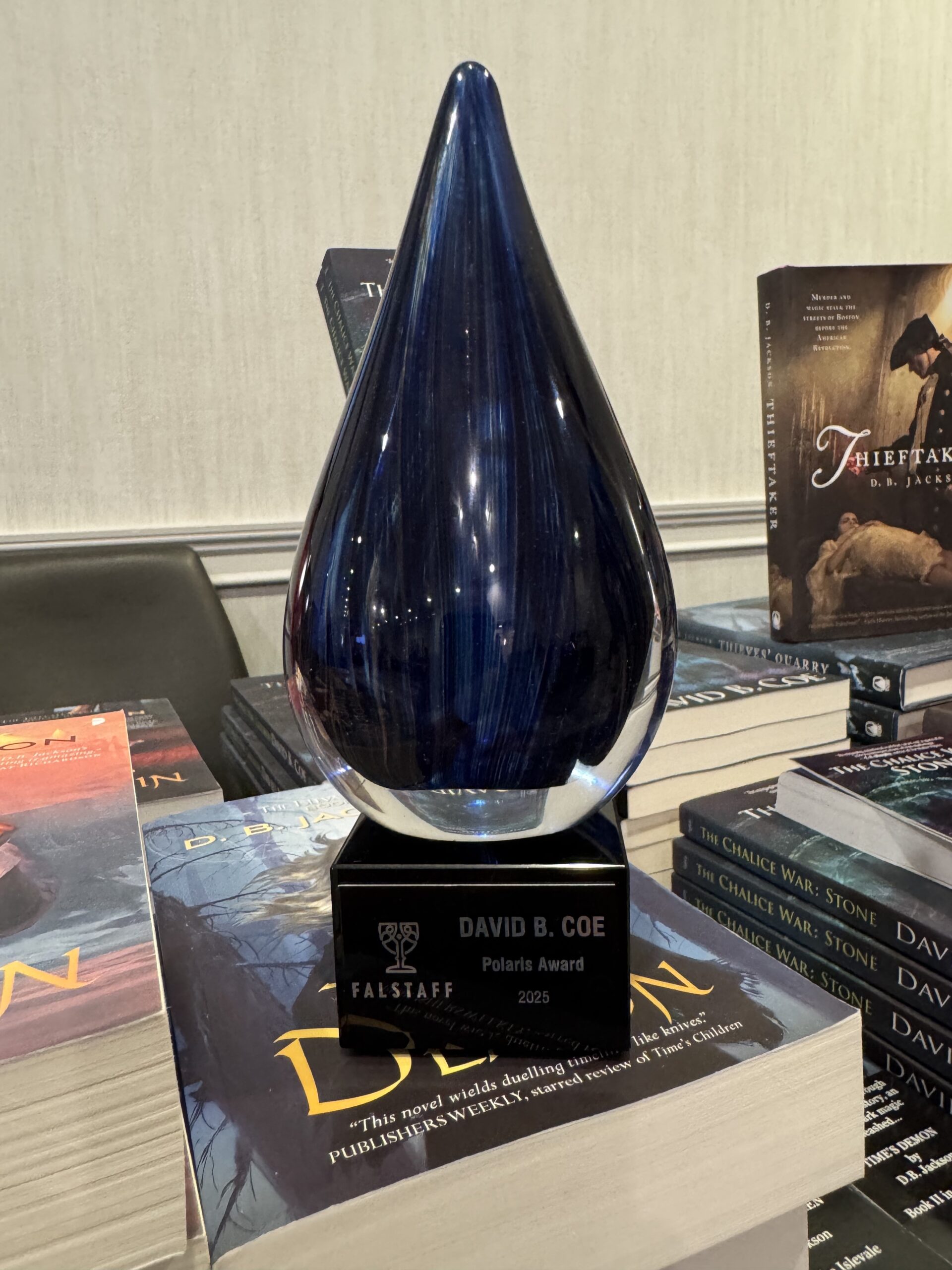 That brings me to the larger point of this post. Last year, at ConCarolinas, I was given the Polaris Award, in large part for the mentoring of young writers I have done, and continue to do. Right now, I have no fewer than half a dozen writers who consider me a mentor. Over the course of my career, that number is far, far higher. I benefitted from the wisdom of many established authors when first I began my career. I have always felt that it was my duty, and also my privilege, to offer the same guidance to those coming up after me. I love mentoring.
But in recent years, I have come to wonder how I can offer encouragement to young writers knowing how difficult a path they face in this profession. I have discussed this at length with the friend I mentioned at the beginning of this post. He feels much the same way, and yet he continues to mentor, too. Why do we do this?
At the risk of speaking on his behalf…. We do everything in our power not to mislead our mentees. We tell them all that I have said in this post about the state of the publishing world. We try to make certain that they understand fully the challenges laid before them. We make sure they know that there are many easier careers available to them, all of them more lucrative. But the truth is, this litany of obstacles usually does little to dissuade them. Which also begs that simple question: Why?
I believe the answer is the same for those seeking mentorship as it is for those of us who mentor. And I find hope in that answer. Storytelling is fundamental to being human. So is the act of receiving stories. Yes, that explains the glutting of the marketplace. But it also explains why so many of us continue to write for a world that seems less and less interested in the tales we create. Many of my friends who are writers tell me that they can’t not write. Writing is an imperative. It is as fundamental to their (our) being as breathing, eating, sleeping. This has been true for me for as long as I can remember. And it is also true for those seeking mentorship today. Just as reading (or listening to books and stories) is essential to those who still seek out books at cons and in bookstores. I have said repeatedly in this post that many readers are not all that discerning. They will accept stories that are just so-so in the absense of anything else. But I also believe that when they encounter a story written with passion and elegance, they recognize it, and they celebrate it.
This is a difficult time for the arts — not just writing, but also music, photography, painting, theater, dance, etc. Our digital world competes with those endeavors for our time, our ears and eyes, our money. And with the digital in our palms all the time, it has a huge advantage. And yet, new creators, with new creations, emerge from obscurity every day. Because at an elemental level, we yearn for art, for story and narrative, for beauty. These things are part of what make us human. I refuse to believe that they won’t remain so for generations to come.
Have a great week.
Categories: Authors
Monday Meows
I’m auditioning to be library lion!
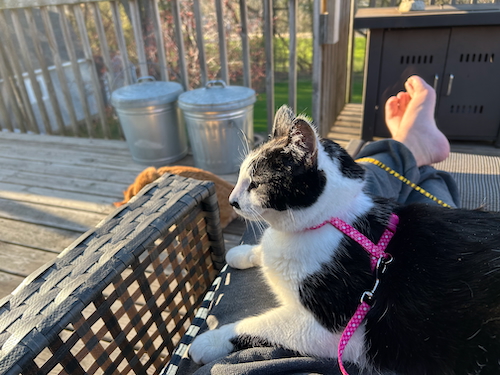
Lion? You? Srsly?
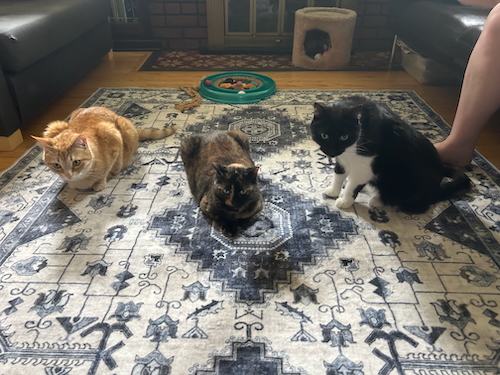
No, I think he’s got this.
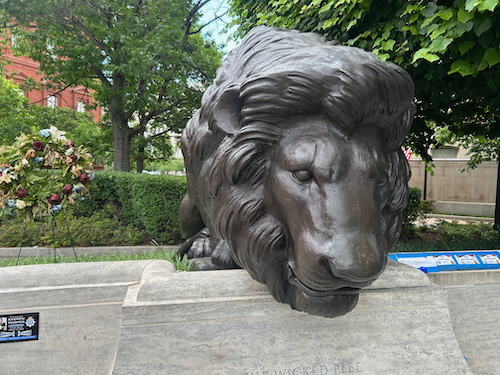
The only lion he’ll ever be is lyin’ around.
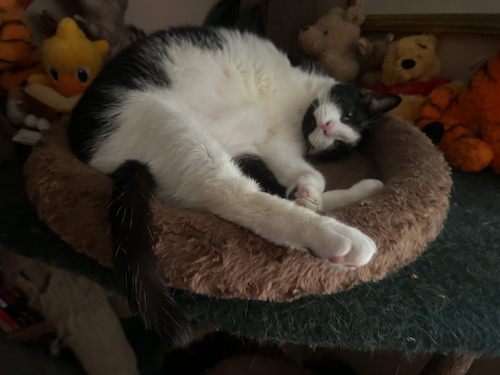
Categories: Authors
O&V Recap, hardcover sale, ARCs, and other news
As the time draws closer for the Wrath & Desire book release, I've prepared a refresher for readers so they can dive back into the Realm of Zadrya world more easily. In this post, you'll also find details on a hardcover sale for Oaths & Vengeance, updates on ARCs, and other news.
Categories: Authors
Stinger in Arabic
 Arabic publisher Aser Al-Kotob has just acquired the Arabic translation rights for Robert McCammon’s Stinger. The deal just happened, so there is no additional information at this time. This will be the first Robert McCammon novel translated into Arabic.
Update 2026-02-10: Aser Al-Kotob has created a “Coming soon” page for their edition of Stinger:
Categories: Authors
Writers! Do We Have Advice For You!
Dean Wesley Smith, one of the most influential voices in indie publishing, has updated his most essential writing books for 2026. Through our Kickstarter, which just launched, get all four ebooks for $20, and, if we hit our stretch goals, receive hundreds in online writing workshops as well.
You can also opt for four of my books on writing as a reward.
Lots of learning here, and all at a discount. But the Kickstarter won’t last forever, so order your copies now.
Categories: Authors
Polish edition of The Providence Rider coming this month!
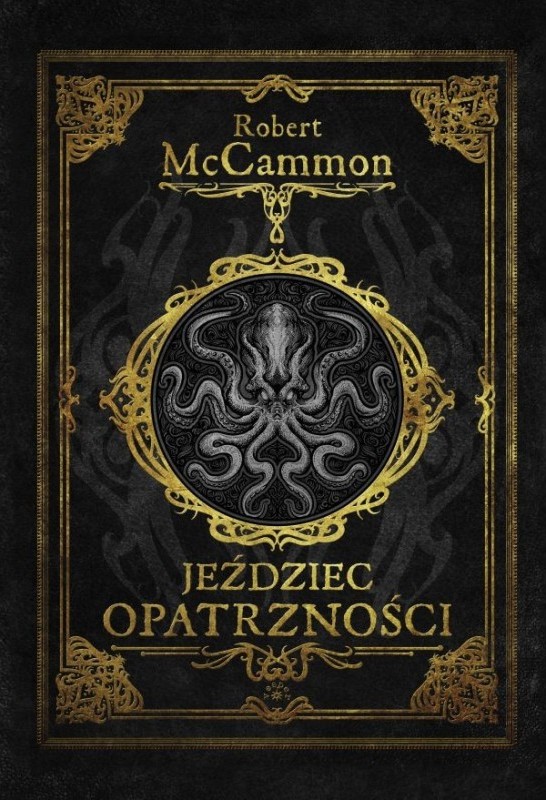
Polish publisher Vesper has revealed the cover for Jeździec opatrzności, their translation of Robert McCammon’s The Providence Rider, due for release on February 18, 2026! The cover art is by Krzysztof Wroński. The book can be pre-odered now from Polish booksellers.
Jeździec opatrzności at Vesper.pl
Categories: Authors
Monday Meows
Please sir, do not put my laundry in the machine. It’s done no harm.
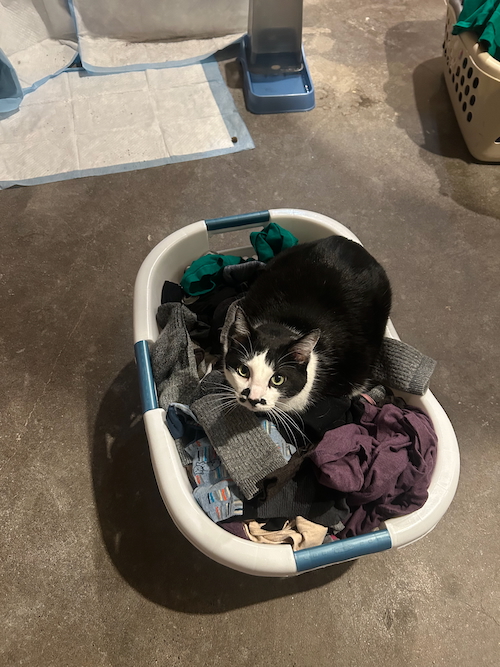
Why is he protecting the laundry?
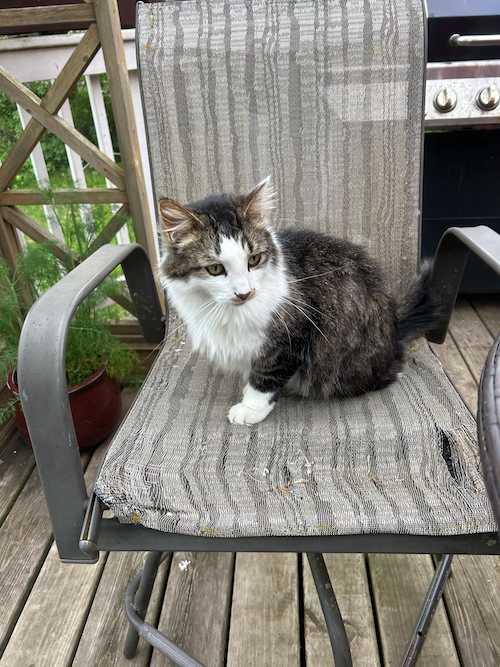
You REALLY don’t want to know.
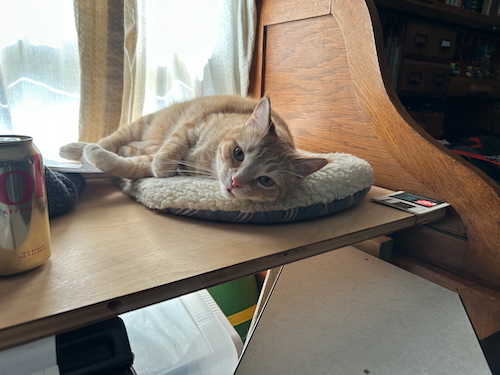
My favorite blanket is in there. I call her…Eileen.
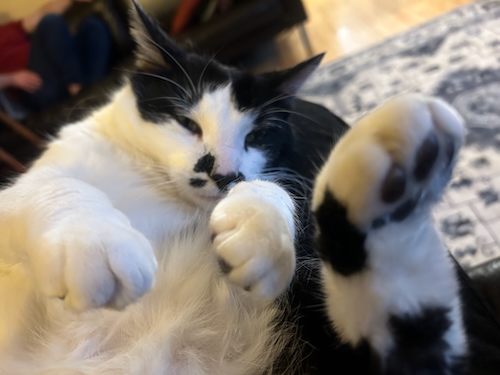
That is so not okay.
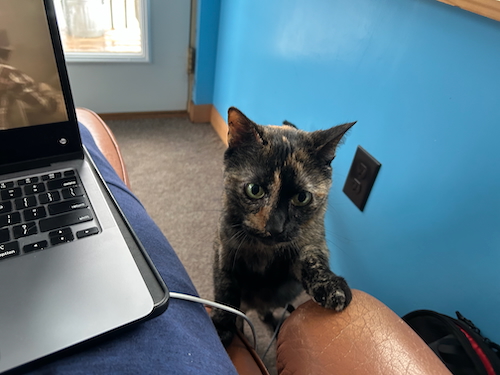
You hadda ask.
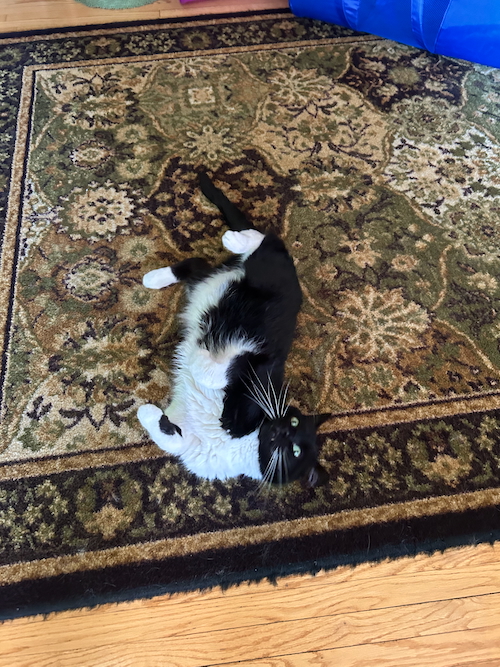
Hey now, don’t kink shame.
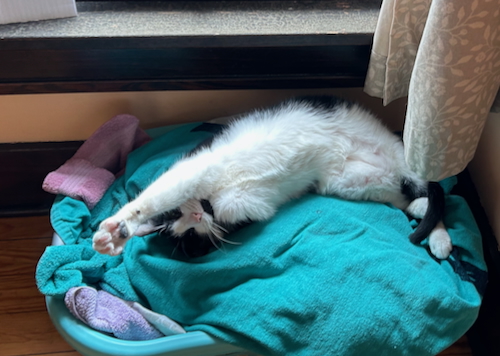
Categories: Authors
They Have Lightning Strikes Now!
This month has been one of the most eventful months in the history of Hidden Gnome! But I’m not allowed to talk about any of that, so I’m going to talk about Terraria.
Instead of letting you know about how we [REDACTED] to [REDACTED] for [REDACTED] number of penguins, I’ll instead tell you what I’ve been enjoying this week: the new Terraria update.
Terraria is one of my all-time favorite games, so whenever they release a new content patch, I do another playthrough with my friends.
This time, I’m running summoner, because they added a bunch of whips to the game. And whips, as we all know, are the summoner’s secret weapon.
Currently I’m roller-blading around the world, dressed as a butler for [REDACTED] reasons, with six summoned spiders crawling around to defend me. My whip is made of fire and makes enemies explode when my minions attack, and I have a pet treasure chest mimic with teeth that I can keep items in.
Truly this is the world we’ve always dreamed of.
-Will
P. S. When you hear our big news in the next few months, you can think back to this moment and know what I was talking about.
P. P. S. Also I’ve continued stitching Elder Empire together! That’s been fun.
P. P. P. S. Back to work on The Commander soon…very soon…assuming my jury duty next week doesn’t get out of hand.
P. P. P. P. S. Oh no, the jury duty is for a series of dragon rider murders. I might have to stick this one out.
Instead of letting you know about how we [REDACTED] to [REDACTED] for [REDACTED] number of penguins, I’ll instead tell you what I’ve been enjoying this week: the new Terraria update.
Terraria is one of my all-time favorite games, so whenever they release a new content patch, I do another playthrough with my friends.
This time, I’m running summoner, because they added a bunch of whips to the game. And whips, as we all know, are the summoner’s secret weapon.
Currently I’m roller-blading around the world, dressed as a butler for [REDACTED] reasons, with six summoned spiders crawling around to defend me. My whip is made of fire and makes enemies explode when my minions attack, and I have a pet treasure chest mimic with teeth that I can keep items in.
Truly this is the world we’ve always dreamed of.
-Will
P. S. When you hear our big news in the next few months, you can think back to this moment and know what I was talking about.
P. P. S. Also I’ve continued stitching Elder Empire together! That’s been fun.
P. P. P. S. Back to work on The Commander soon…very soon…assuming my jury duty next week doesn’t get out of hand.
P. P. P. P. S. Oh no, the jury duty is for a series of dragon rider murders. I might have to stick this one out.
Categories: Authors
Wrath & Desire pre-order incentive giveaway
Check out this post for the Wrath & Desire pre-order incentive giveaway.
Categories: Authors
Happy Book Birthday to BEAST BUSINESS
 STANDARD VISITOR NOTICE
You are leaving the comfort of a magic-free existence and entering a world shaped by powerful Houses. These dynasties control corporations, command private armies, and enforce their own rules. Their rivalries are long-standing, their resources vast, and their disputes often deadly.
Some magic talents destroy. Some deceive. None should be underestimated.
House Andrews is responsible for maintaining order and providing this advisory. By continuing, you acknowledge that House Andrews cannot be held liable for any squeeing, urgent sequel sensations or sudden appreciation for Illusion Primes that may occur. If this is your first visit, proceed at your own risk and do not accept experimental serums from anyone.
Welcome to Hidden Legacy!
BUY DIRECTLY FROM USThe Ilona Andrews store supports purchases from US, UK, AUS, and the EU – for now.
Or from your favorite retailers:





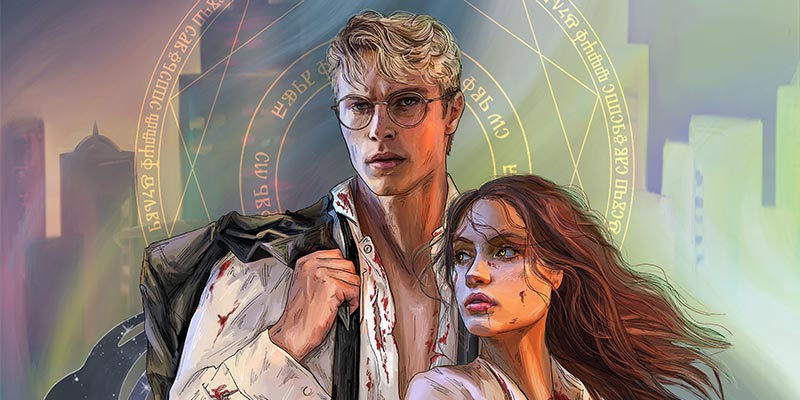
Augustine Montgomery is an Illusion Prime who owns a premier PI corporation and alters his appearance with magic. The people who have seen Augustine’s real face can be counted on the fingers of one hand. The people who witnessed the full extent of his power are dead. The illusion isn’t just the brand of his magic. It’s become his lifestyle.
Show as little as possible. Make them think that illusion is all you have. Your life depends on it.
Augustine lives by this creed. He’s cold, rational, and calculating. He doesn’t get emotionally involved. Then one day Diana Harrison walks into his office and asks for his help. Diana is a Prime, an animal mage who bonds with animals through her magic and prefers their company to humans. Something precious has been stolen from House Harrison. Something Diana must recover at all costs.
The two Houses are allied through a friendship pact. Assisting Diana is simply good business. And yet, there is something about her that disturbs the careful balance of Augustine’s inner world.
Neither of them is who they appear to be. Both would die to keep their secrets. But the enemy they face is more powerful than either had imagined, and saving the life that hangs in the balance will demand the ultimate price neither Augustine nor Diana ever anticipated to pay – complete honesty.
Le Admin:What all is in Beast Business?
- Augustine Montgomery and Diana Harrison (Cornelius’ older sister and Head of House Harrison) adventure novella
- Arabella Baylor new POV short story
I’m duty-bound to say: don’t read this first. Arabella is my favourite, I know we all want her books, but it lands much better after Augustine and Dian…oh, you’re already midway through it. Sigh. At least I tried.
- Beloved Hidden Legacy blog extras, for the first time in a published book. Free from dangerous archiving! A Misunderstanding, The Cool Aunt, Marty, and the FrInnterviews of Augustine and Arabella.
Formats, woman, which formats?
Epub – see above. It will be available everywhere you usually get self-published Ilona Andrews books from – please search the retailer catalogue if it’s not included above.
Print – paperback PODs are starting to populate. For now just on Amazon but soon to appear on other retailers, as soon as the internal systems finish checks. If you wish to buy from your local indie booksellers, they can place order through Ingram with the book’s print ISBN 9781641973724.
Audiobook – a few months down the line, we will of course keep you updated.
It doesn’t have a cover on Amazon.
It does now. You may have to sync your device or redownload your file in order to see it on your Kindle.
Thank you so much for your patience while we dealt with the bug that ate @helena.illustrated‘s beautiful cover art.
I’m leaving up the links to Amazon Canada and Amazon India, in case people still have issue finding them.
Zoom? Release Q&A?
Not this weekend, but maybe the next one if you’re interested. Let us know!
When does Beast Business happen, chronologically?
About 2 months after the Baylors buy their new compound, so in the gap between the prologue and main body of Ruby Fever.
Is. There. KISSY FAAAAACE??? Are we officially sailing the good ship Panthercakes?
There’s a spoiler comment section below, why don’t you check?
*walks off whistling sea chanties*
From Ilona: A quick note to those who are participating in the No-Buy day: go for it and please don’t worry about us. The book will be there for later purchase, and it’s not going anywhere. We had to put it out now, because delaying it would be cutting into Tor release window, so this was a no-choice type of deal – it was now or summer. We’ve gotten a couple of concerned emails, and I want to assure you that absolutely no stress, the lists are not important for this release and even if they were, standing up for causes you believe in is more important.
The post Happy Book Birthday to BEAST BUSINESS first appeared on ILONA ANDREWS.
Categories: Authors
Comment on Moving Along by Bill
Sorry that there isn’t any news from the edits, I wonder what can be delaying them? (or perhaps there is absolutely nothing they can find wrong with Book#4?).
Anyway it is good news that Book#5 is still going well, but not much to tempt you outside in this dismal weather!
Categories: Authors
This Kingdom Will Not Kill Me Tour & Events
I am very excited to announce the upcoming appearances House Andrews will be doing to celebrate the release of THIS KINGDOM WILL NOT KILL ME, the first book in the Maggie the Undying epic fantasy series.
Ilona and Gordon will be hitting the road to talk about the book, answer your questions, and sign copies, but most of all to meet all of you. BDH, assemble!
You can always find the up-to-date list on the Appearances page on the website and on the US publisher’s website.
A quick but important note before we get to the schedule: where these events require registering, please check the links and reserve your spot. House Andrews have only had a handful of in-person appearances since before the pandemic and the enthusiasm of the Horde is well documented. I don’t want you to be disappointed if you just show up on the night.
Each venue’s signing policy regarding how many books you may bring from home to get signed and books that must be purchased at the event will also be specified on the event links. These policies vary by location and are set by the venues themselves.
TUESDAY MARCH 31, 5 PM
Barnes & Noble Austin Arboretum
Arboretum, 10000 Research Blvd #158
Austin, TX 78759
Author event and signing on release day
Click here for event registration and info

WEDNESDAY APRIL 1, 7 PM
St. Mary’s Episcopal Church
1895 Laurel Avenue,
Saint Paul MN 55104
Author event and signing
Click here for event registration and info

THURSDAY APRIL 2, 7 PM
Joseph-Beth Lexington Green
161 Lexington Green Circle
Lexington KY 40503
Author event and signing
Click here for event RSVP and info
SATURDAY APRIL 4, 5 PM
Barnes & Noble White Marsh
The Avenue White Marsh, 8123 Honeygo Blvd Suite E, Baltimore, MD 21236
Chat with author and BFF Jeaniene Frost and signing
Click here for event information and here for registration. Number of seats extended by 50 at BDH request!
This is the current scheduled, but the Tor publicity team is a very hardworking hive of bees. We will let you know as soon as we’re allowed to share details of any other appearances or surprises.
And yes, international BDH, I hear you and I asked the same thing. Will there be any outside-US events, when are Ilona and Gordon coming to see any of us? While I can’t confirm anything officially at this time, I’ve heard rumours, there is hope!
In the meantime, we will also squeeze in a Zoom event or two that everyone can watch!
PS: Don’t forget about the release of BEAST BUSINESS tomorrow! There is no preorder period, the link will just go live during the day.
Augustine Montgomery’s novella, the new entry in the Hidden Legacy series, will also contain a brand-new Arabella Baylor POV and several beloved blog extras, for the first time in print!
The post This Kingdom Will Not Kill Me Tour & Events first appeared on ILONA ANDREWS.
Categories: Authors
This Kingdom Preview: Art, Maps, and Questions
As you probably guessed by now, Beast Business has been pushed back to Friday. Arabella POV ran too long. Don’t laugh.
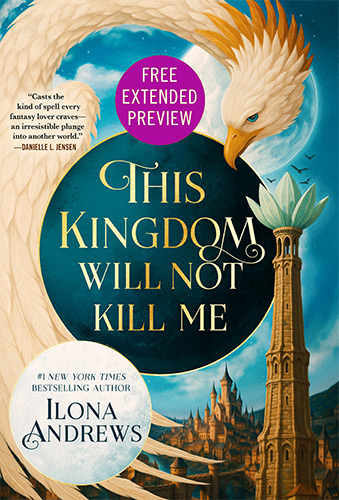
Today we bring you a companion to the free preview of This Kingdom.
Here it is again, if you missed it. It is a promo done by the US publisher and available everywhere the US edition reaches.
Amazon / BN / Bookshop / Google Play Books / Kobo
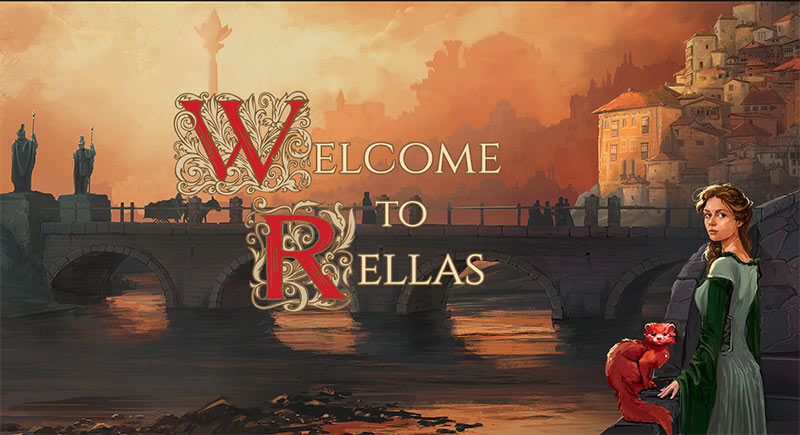
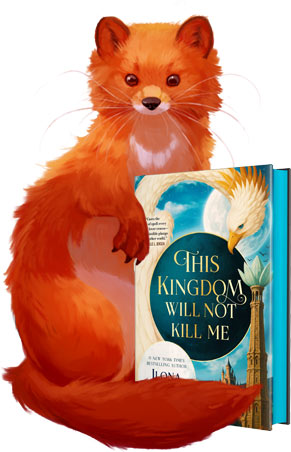
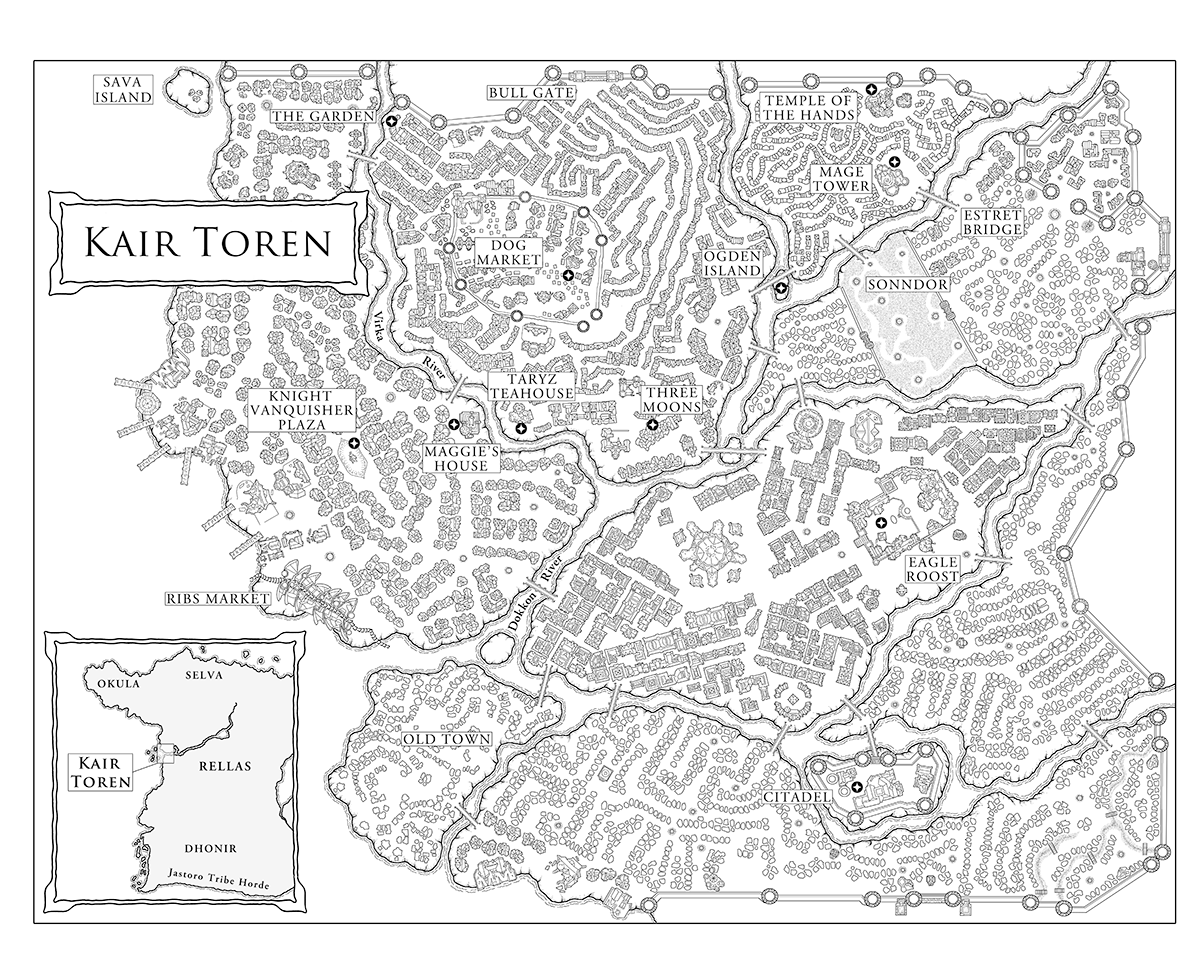
Nobody knows Kair Toren better than a stelka. Stelkas can’t talk, but if they could, they would tell you all sorts of secrets about what going on in the capital of Rellas.
This stelka is going to take us on a tour of Kair Toren as envisioned by Candice Slater.
The Mage Tower.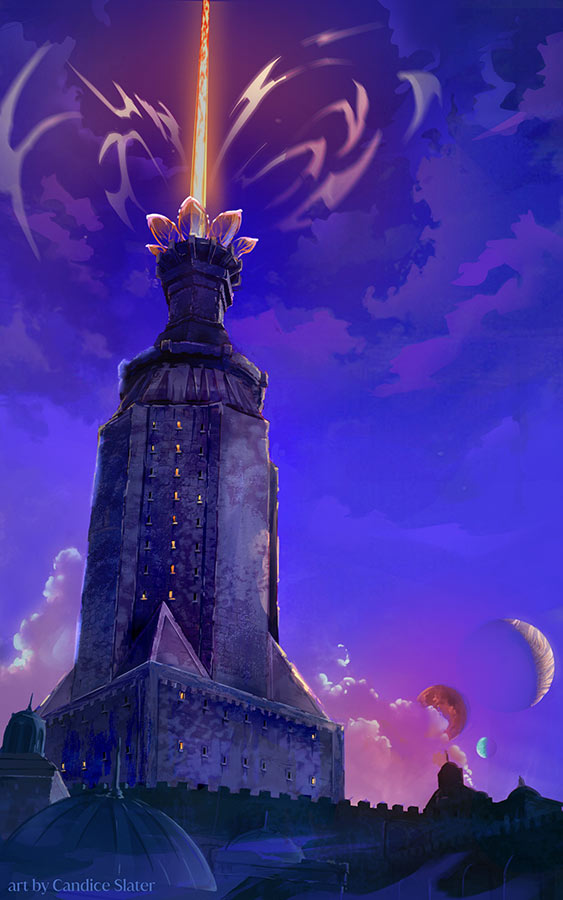 Click to enlarge
The Mage Tower is ancient. It smells of magic, and if you get too close, your fur will start crackling. This is where mages of Kair Toren make their magic. Sometimes stupid birds fly into the flower petals at the top and the magic fries them. They are good eating.
The Garden of Soft Blossoms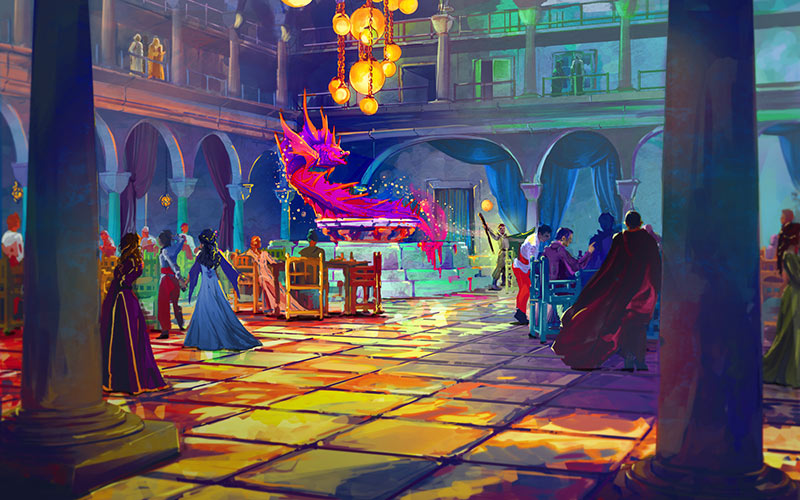
The Garden is located in an ancient fort, with thick stone walls and towers. It sits on the edge of the city, just south of the North Wall and looks over one of the rivers. It smells delicious. There are a lot of humans there, mostly at night. Sometimes you can sneak to the back and raid the garbage in the back courtyard by the kitchen for yummy tidbits.
The Bad House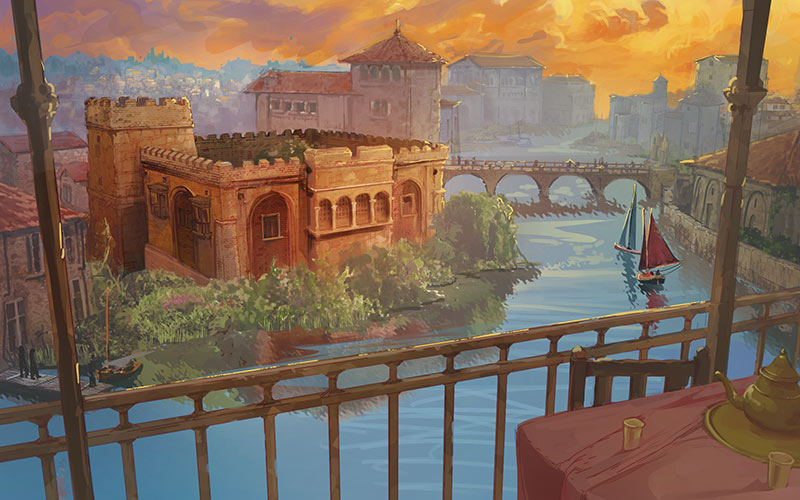
This is the bad house. It smells like human blood. The humans inside are mean and they will kill you if you come close. But it won’t stay the bad house for too long. This is where I’m going to live eventually. I will get to sleep on the human bed, and people will give me yummy meat.
The MapHere, you can have this map. Click it to make it bigger. See, I can be kind to humans. I am not all teeth. Although my teeth are pretty amazing. Chomp.
This is your official spoiler thread for This Kingdom. Speak freely! Ask your questions here, in the comments. The humans said they might do a zoom later and even answer some.
The post This Kingdom Preview: Art, Maps, and Questions first appeared on ILONA ANDREWS.
Categories: Authors
Free Fiction Monday: Hunches
The Fleet designed the new SC-Class ships with an impenetrable bridge. The most protected spot on the ship. Right in the center.
So, when Lieutenant Balázs Jicha realizes the bridge of the Izlovchi now opens to space, he fights to remember what happened. And what to do next.
Jicha always follows his hunches. Now, he must rely on those hunches to help him save his ship.
“Hunches,” part of my Diving Universe, is free on this website for one week only. The story is also available as an ebook on all the various sites. (Yes, someday, I’ll put it in a collection.) If you want to get updates on my Diving Universe, sign up for the newsletter here: http://eepurl.com/gqxk-D
Enjoy!
Hunches Kristine Kathryn Rusch
Balázs Jicha stood in the wreckage of the bridge of the Izlovchi. The environmental suit he’d donned—too early, Lieutenant, Captain Treseter said when she saw him—was looser than he liked, making it feel as if his skin was sloughing off. His eyes ached from the smoke still swirling around the bridge—even though he hadn’t been in the smoke at all.
He’d been the only bridge crew member in an environmental suit who had been close enough to a console so that he could hang on when something small and fiery burst into the bridge itself.
That something small and fiery had carved a large opening through the hull and three levels between that hull and the bridge, opening the bridge to space. The whoosh of atmosphere leaving the bridge had been sudden and startling, partly because it wasn’t supposed to happen, not with the new SC-Class design.
No part of the bridge was even near an exterior wall of the ship. The bridge was in the exact heart of the Izlovchi, and as such should’ve been untouchable.
The ship didn’t even have a proper response to the attack on the bridge. The nanobits were supposed to repair critical systems first, so they prioritized the hull breach, which was huge, and one of the corridors that led to the medical wing. The nanobits didn’t even seem to be aware (if such things could be aware) that the bridge had been attacked.
No, the bridge had been destroyed.
He watched it happen in real time, gloved hands gripping the console, the small fiery thing still glowing, as if it was waiting for the oxygen to return. The small fiery thing seemed to be gloating, its redness pulsing, taunting him.
He had watched it zoom inside, then burrow into the floor, not too far from his boots. The boots that had their gravity turned on, so that he wouldn’t get pulled out of the bridge with the atmosphere, like so many others had.
But he had risked getting hit by that small fiery thing, and somehow, it had missed him.
When it settled, and the destruction was over, and it seemed like no more small fiery things were going to follow this one, he found himself on the other side of his console, as far as he could get from the demolished section of the floor.
The bridge looked nothing like it had an hour before. Consoles and equipment gone, edges of that gigantic opening crisped, a few crew members wrapped around console bases, but not wearing environmental suits.
And without the suits, they hadn’t had a chance.
He thought others had put on the suits, but there were holes in his memory, and right now, he was the only one moving.
The oxygen hadn’t returned yet, but the gravity had, which meant the full environmental system would kick in soon, and he would have to do something about that weapon, but he didn’t know what.
He had a hunch—and he wasn’t sure why he had that hunch (maybe he was just being paranoid)—that the small fiery weapon thing wanted him to use fire prevention equipment on it. His hunch told him any conventional fire prevention solution would make the problem worse.
And he had no idea why he had that hunch, what he had seen or heard or deduced from all the materials he’d been studying for his first contact with the culture that refused to identify itself on Luluenema, the planet they’d been planning to orbit when—this—hit them.
He wasn’t thinking clearly. Or rather, as clearly as he should have been. Somehow—somewhen—he had let go of the console. He didn’t remember doing it. Just remembered clinging as the escaping atmosphere tried to pull him with it into space.
The captain was gone, along with the first officer and—god, half the bridge crew. Three other bridge crew had been obliterated when the small fiery thing had busted its way inside. They’d been standing in its path, and they hadn’t burst into flame as much as burst into a reddish glow, and then evaporated.
He had seen it all, almost in slow motion.
Grabbing the environmental suit—that was his last real memory.
The captain had said—
***
“Hull breach, Cargo Bay One.” Captain Treseter sounded surprised. She was looking at a floating holoscreen as she stood in the exact center of the bridge, what she called the “well” of the bridge, because it was lower than any other point on the bridge.
This bridge was a bowl, and she used it, often setting up screens in a circle around her, making her seem like she was shielded from her bridge crew.
“I thought the shields were up,” First Officer Aydin said as her fingers moved on her screen. She was clearly checking the shields.
“They are,” Jicha said. He’d checked when he arrived on the bridge. Maintaining basic shields was one of his duties as the lowest ranking officer on the bridge.
“Toggle them to full strength,” the captain said, most likely to him. And because it was most likely, he opened the shield information on his console, only to see that someone else had already maximized the shields, probably First Officer Aydin.
That didn’t make him feel safer. The shields had been strong enough that no conventional weapon would have gotten through them.
“Who is firing on us?” The current navigator on duty, Gunna Ota, was leaning forward. She was only a yard or so from Captain Treseter and could probably see the floating screens. “We hadn’t picked up any ships nearby.”
“I’m getting flashes of things,” said Lieutenant Srigly. “I would say that I’m seeing fireflies, but that’s not possible. We’re not planetbound.”
Jicha knew what fireflies were, although he doubted that the others did. Jicha’s father had been a land-based engineer with Sector Base J-2, and Jicha spent a lot of time outside. They’d lived near a swamp, which had all kinds of insects, including something the locals called fireflies, because their tiny bellies would glow at twilight.
That comment sent a shiver through him. No one else on the bridge seemed nervous.
“Captain,” he said, “if these weapons can penetrate the hull even with the shields—”
“The hole in Cargo Bay One is already repaired, Lieutenant,” Treseter said. Her tone was condescending. His cheeks heated. She had been babying him since he had been posted on the Izlovchi.
His previous assignment had been on a much smaller ship, and he’d been a lowly ensign then. His work with other cultures, and his skills with languages, had gotten him promoted to Lieutenant Junior Grade, and with that promotion had come this assignment—an SC-Class vessel that needed someone unafraid of first-contact situations, particularly when the SC-Class vessel was clearing the way for a DV-Class convoy exploring planets for possible sector bases.
He was good at first contact because he read body language. He understood subtleties. He knew how humans reacted to other humans, even if they weren’t from the same culture.
But he was bad at interactions with others on the ships he’d served on because he had no idea how to translate those hunches into something Fleet officers saw as actionable.
Fleet officers wanted logic and rules and A-to-B-to-C reasoning that would make everyone else see the same possibilities. He still hadn’t learned how to do that.
His previous captain had tried to explain that aspect of Jicha to Treseter, and she had claimed she understood, but in the three months Jicha had been on board, he had learned that she hadn’t.
We don’t need that vague stuff, Lieutenant, she would say to him, and that tone, the one she most often used to shut him down, was the one she had just used about Cargo Bay One.
“I’m sorry, Captain,” he said, “but something is off.”
First Officer Aydin shot him a warning look. She professed to understand his hunches, and even promised to train him how to communicate them better, but so far, she had lacked the time.
“I agree,” Lieutenant Srigly said. “Those flashes of light have me worried. The sensors aren’t picking up anything, but the way the lights appear make it seem to me like we’re surrounded.”
“I don’t like that word ‘seem,’” Captain Treseter said. “I’d prefer something more concrete.”
Jicha blinked, frowned. His own memories felt like flashes of light sometimes, particularly when he was putting pieces together.
“I found something in my research about the space around Luluenema,” he said. “Something about ships getting swarmed by light.”
“Are we being swarmed, Lieutenant Srigly?” Captain Treseter asked, with just a touch of mockery in her tone.
“If those lights were actual bugs, then I’d say yes, Captain,” Lieutenant Srigly said.
The captain nodded, clearly surprised by that response. “The swarms, Lieutenant Jicha. Were they harmful?”
“The ships reporting them got destroyed, Captain,” Jicha said. That much he did remember. He wasn’t going to tell her, though, that the information he’d been working off of was centuries old.
“All right,” Captain Treseter said. “Then we need to take all the precautions we can. See what you can find in the records, Lieutenant Jicha. Anything that will give us a clue as to what we’re facing.”
“Yes, sir,” he said, and then turned. The supplies closet was just behind his station. He pulled the nearest environmental suit out, one that looked like it would fit him.
She had said all precautions. Or had he misunderstood? No one else was grabbing environmental suits.
“Too early, Lieutenant,” Captain Treseter said. “But put it on anyway. We all will need to suit up, since we’ve already had a hull breach. Aydin, send an announcement through the ship. Suiting up—”
***
—and then his memory skipped and broke. Somehow he was in the environmental suit, and two others who had been coming for their suits had turned into red glowing bits of themselves, and he imagined he could smell burning flesh and smoke, even though there was no oxygen, not anymore, not even when the small fiery thing hit, and he was clinging to the console, the hole punched through three layers of the ship and the hull letting space gleam beyond.
He saw fireflies, he was sure of it, out there in the bluish-blackness of space. Little twinkling lights, almost like they were mocking him, mocking all of them, and in his head, one of those lights had become the small fiery thing that burned its way through the ship.
The small fiery thing was still glowing, and one of the other members of the bridge crew—he couldn’t tell who, one of five who had grabbed environmental suits after he had (he remembered that now; how come he couldn’t remember more?), was reaching for fire suppression equipment.
Jicha shook his head, then waved a hand, holding them off. Instead, he leaned against the nearest console, surprisingly dizzy, even though his suit registered perfect oxygen levels and the gravity on his boots kept him stabilized, long before the actual gravity had returned.
He tried to ignore the weird sensations—the smoke, the burning flesh, the aching eyes, his sore knees from too much gravity (God, he felt like he weighed three times his usual weight)—and concentrate. He called up a control panel, saw the environmental system blinking as it slowly rebooted, one piece at a time, and slid his gloved forefinger across the screen, finding a containment unit.
He nearly pulled his finger away. It took all of his strength to keep his finger there, but he managed. And then he guided the containment unit to the small fiery thing, which was just a small glowing thing, and it looked harmless until he contained it, and then he saw all kinds of bits—mechanical bits—he hadn’t seen before.
It was giving off energy that the containment unit had under control, at least for the moment.
His headache eased—and he hadn’t even realized that he had a headache until it went away. The smell of burning flesh was gone, not even leaving an after-smell in his nose—but his eyes still ached, and his cheeks were wet, and he was shaking, but the dizziness was gone.
Two other members of the bridge crew pushed themselves upwards, their environmental suits gray with some kind of dust or damaged nanobits or something. Both crew members looked at him, but he couldn’t see their faces. He imagined they were surprised.
Or maybe their headaches had eased too. Maybe without the energy coming off the small fiery thing, the crew members could move around.
He needed to get the small fiery thing off the bridge, and off the ship. He wasn’t sure how to do that. He wasn’t sure how to do anything.
He looked over at the hole in the bridge again, and finally, what he saw registered. He could see all the way through the ship to bluish-blackness of space beyond. Little floating lights, those firefly lights, still winked.
He blinked, trying to make the image go away—and it wouldn’t. Those lights—he could see the lights.
He could see outside the ship.
He looked at the control panel, forcing himself to concentrate. Concentrating was easier than it had been.
The shields were still up around most of the ship, but not on this side, where the hole was. They were gone near Cargo Bay One too.
But worse, the nanobits weren’t repairing the second hole in the hull. They also left the hole in Cargo Bay One only half repaired.
The nanobits had stopped doing their job.
He’d never heard of that.
But even without them, the environmental systems were restoring themselves, which meant that something had contained the area around the bridge.
He called up information about the bridge itself, saw that a containment field had dropped around the bridge about the point the gravity reasserted itself. The containment field was a secondary system, one designed to activate when the shields no longer worked.
So, the shields weren’t working on this side of the ship, and neither were the nanobits.
He leaned on the console, his chest aching, almost as if he wasn’t getting air. He made himself concentrate on breathing. The air inside his suit tasted of metal and sweat—probably his own sweat. Flop sweat, from being terrified.
First things first, he had to get the small fiery thing off the bridge, but he wasn’t sure how to do it.
Then he blinked, thought, realized his priorities were wrong.
The Izlovchi was badly damaged. She was a lead ship, and three other ships would arrive soon, helping prepare the way for the convoy which was going to arrive a day or two from now.
He couldn’t remember the details. The details hadn’t been about him. The first contact had, and he had gotten lost in that. The meeting, it was scheduled for ten hours from now, and on Luluenema’s moon, not even on the planet itself.
Which was important. He needed to focus, not sure why that was important. Someone had said—he had said they clearly didn’t want the strangers anywhere near Luluenema, and he wasn’t sure why that was, he had planned on figuring that out, he wasn’t sure how he could figure that out, and—
He yanked his busy mind back to the moment at hand.
The incoming Fleet vessels. He needed to send them a message first.
Beware the firefly lights? Something like that, only expressed in a better way.
He looked at the console again. No distress signal had gone out. All Fleet vessels were built with automated distress signals. When a hull breached, and the bridge hadn’t responded within five minutes, a distress signal went to the nearest ships, and that hadn’t happened here.
He couldn’t investigate that part, not yet. He needed to send a message first.
He sent the distress signal, and opened the automated controls. They had been shut down at the moment of the original hull breach, the one in Cargo Bay One.
Which meant that something had invaded the Izlovchi’s systems. He felt awkward suddenly, wishing he hadn’t even activated the distress signal. Then he reminded himself: the other ships would see the signal, not bring it into their systems.
But sending them a message—that was more complicated. He didn’t want to open any straight line of communication to the other ships, because he was afraid that whatever had invaded the Izlovchi’s systems might travel through some communications links.
He clutched the console and made himself breathe. He couldn’t get whatever it was out of the system—he didn’t have that kind of skill. His engineering abilities were miniscule, barely good enough to put him on the officer track.
But…engineering. He opened a different section of the console, got different readings, saw that the engineering department was untouched. As was the medical bay, and so many other sections of the ship.
Untouched meant that they would be able to solve problems.
He wasn’t on his own.
He opened a communications link to Engineering. He identified himself, and then—the link cut out.
He re-established it, saw that they were trying to respond, but seemingly unable to.
Which meant they knew the problems existed; they just didn’t know what the problems were.
Communicating with them, though, wasn’t going to be dangerous. Not to them, not to him.
He just had to figure out how.
He glanced at that hole again, space glinting out there—or maybe the fireflies, the light. Surely Engineering would notice that the nanobits weren’t functioning right.
But no one had come to the bridge yet. No one had come to see if anyone was alive here, or injured or in need of rescue.
Did they think everyone was dead?
He opened yet another screen on his console, saw the environmental system still trying to reboot, and nothing else. He couldn’t see any locations of crew personnel. That system was never supposed to fail, and it had.
Or maybe the Izlovchi was going through cascading failures.
He let out a breath, rubbed a hand over his face, then winced. It felt weird to rub a gloved hand over his hooded helmet, and it made him realize how deeply embedded that nervous gesture was.
A few of the other crew members, all in environmental suits, had wobbled to their feet.
“Can you hear me?” he asked.
One of them nodded. The other two didn’t move. The one who nodded reached up and touched the side of their hood, indicating that the others should turn on their comm systems.
Hands went up, moved, then down again, and he repeated, “Can you hear me?”
“Yes.”
He didn’t recognize the voice, but that didn’t mean anything. He hadn’t yet worked with everyone on the bridge crew—or at least enough to feel comfortable guessing who was who.
“I don’t think shipwide comms are working,” he said. “We need a medical team, and someone has to go to engineering.”
He explained his belief that something was in the system, something that was overriding the systems, preventing the nanobits from recreating the hull, preventing communications internally, and maybe infecting other systems.
He told the three crew members his fear of communicating with other ships, worry that they would get infected too.
“I have a personal communication device,” said the only other person who had been speaking to him. He wished he knew who they were. He couldn’t tell from their voice. It could be anyone with a mid-range voice, and no local accent at all. “I can send a message to the Yoi.”
The Yoi was a family ship. It traveled with the Fleet.
Jicha almost told them not to contact the Yoi. It didn’t dare get infected. But if it did, it was with the bulk of the Fleet, and someone—somewhere—would be able to stop whatever destruction got started.
Besides, the systems being attacked were shipwide, not human systems.
And then he remembered the headache, that ghostly smell of smoke and burned wires, and he wondered.
It was either contact the Yoi through a personal device, one that, in theory, had been encased in an environmental suit just like the four of them had, or endanger other ships.
“Do it,” Jicha said.
Then he pointed at the person standing to the right. “You, go down to Engineering. Let them know we’re alive up here. Tell them what’s going on, and don’t let them contact anyone using the Izlovchi’s systems. And you—” He pointed at the third person. “Get to the medical bay. Have them send someone here.”
“What will you do?” the third person asked. His voice was deeper, almost rumbly.
Jicha knew his name, but couldn’t access it. Maybe he was wrong; maybe something had infected the humans too.
“I’m getting this thing off our ship,” he said, sweeping his hand down toward the container. “If it’s the last thing I do.”
***
They didn’t argue with him. No one did.
Instead, they followed his orders, as if he outranked them, which he probably did not. Two of the three left the bridge right away, and the third stood stock still for the longest time, most likely communicating on that personal communications device.
Jicha didn’t have time for communications or anything else. He had waited too long. That was a hunch, a feeling of impending doom. If he didn’t take care of that container, that something small and fiery, then the entire ship was going to be destroyed.
The headache was back, behind his eyes, and into his nose. His sinuses? He wasn’t sure. He ran a diagnostic on the environmental suit, and the suit cleared itself.
He didn’t trust the clearing. He didn’t trust anything, except maybe himself. And he barely trusted himself.
He felt fuzzy.
He peered at the container, the small fiery thing no longer glowing inside. The container’s walls didn’t look as clear as they had before. Were they occluded? Scratched? Scarring up? Was there moisture inside making the walls cloudy?
He couldn’t tell.
But he had to get the thing out of the ship.
He hadn’t turned off the gravity in his boots. He wasn’t going to. He was going to take the thing off the bridge, away from that small protective barrier, and into the hole that the thing had made.
He was going to carry the small fiery thing. He couldn’t think of any other way to transport it—especially if it infected systems.
He had to figure that his system was already infected, so he would assume the least amount of risk carrying it out.
And if the environmental suit failed, oh, well. He’d had a good life. He hadn’t become the captain of any ship, let alone a DV-Class vessel, which had been his dream, but he had done his best. He had known good people, and had had solid relationships.
He was proud of himself for getting as far as he had. He hadn’t found a mate yet, wasn’t sure he ever would, and didn’t have children, also wasn’t sure he wanted those either. He’d missed a lot of chances. He would miss even more, if he didn’t come through this.
He didn’t expect to survive it.
But he had to hope to survive. He understood how very important attitude was.
He pivoted, which was hard with the double-gravity, and opened the closet behind him. The environmental suits hung in a straight line, taunting him. They should have been on the captain, on the first officer, on the rest of the bridge crew, not stored in some closet. If that had happened, the others would have survived, even though they’d been sucked out of the ship.
But they hadn’t.
He blinked, his eyes still burning. He reached into the closet and removed one of the protective jackets that the anacapa specialists sometimes wore. He had never worn one. When he’d had his anacapa drive training, he’d had to go without—all trainees did, to see if they could handle the massive amount of energy spewing from the drives.
And then his brain cleared for just a moment. He hadn’t checked the anacapa drive. He hadn’t opened the container to see if the drive was safe.
Which—some small voice in his brain reminded him—was not procedure. He didn’t dare do that. The anacapa drive was the most protected part of any Fleet ship, and he didn’t dare expose that drive to whatever was going on.
He could handle anacapa drives—he wouldn’t be on the officer track if he couldn’t—but he didn’t know much about them. Engineering would be here soon; they could deal with the drives.
He had to get the container off the ship.
Dizziness swept over him, and that moment of clarity fled. He was definitely feeling the effects of something. He couldn’t remember what he had been doing.
He looked at the closet, saw the suits, remembered, grabbed the protective jacket and put it on. It was snug over the loose environmental suit, making the environmental suit’s sleeves bunch just a bit. It almost felt like he had installed two bands across his arms.
He adjusted the environmental suit as best he could, sealed the jacket, and pressed the release on the wrists so that his hands were encased in matching protective gloves. Maybe he should have raised the jacket’s hood, but that meant he would be wearing two environmental hoods, which would definitely have an impact on his vision, on him.
He couldn’t do that.
He pivoted again, thought for a moment about shutting off the gravity in his boots, decided against it, then thought about shutting off the gravity in the environmental system. He almost did that, and then remembered: there were a couple of people down who were wearing environmental suits. He didn’t want to lose them when he struck down that container field protecting that hole into the bridge.
He swallowed. His mouth tasted faintly of metal, and he wasn’t sure why that was. Maybe the oxygen in his suit was compromised. Maybe he was. He wasn’t sure.
He just needed to get the damn thing off the ship.
He took two heavy steps toward the container. And he was right: the walls of the container looked brittle and white and scratched, as if something was trying to get out.
Maybe he had less time than he thought. Maybe he should envelop it in another container. Maybe—
Maybe he should make a decision.
And before he even finished with that irritated thought, he bent at the waist and wrapped his arms around the container.
He expected to feel a vibration through his entire body, so hard and powerful that it would make his teeth ache. That was what had happened when he had picked up his first anacapa drive.
Instead, his headache got a bit worse. His eyes ached even more, and that smell of scorched and burnt wires grew stronger. The container felt warm against his body—and that was through the protective jacket and his environmental suit, which was built to withstand space itself.
The hole the thing had made in the floor was deeper than he expected, and it looked hot on the edges, glowing red just like the thing had before he had contained it.
He staggered toward the big gaping hole, toward the openness of space, one part of his brain telling him to shut off the gravity in his boots, another part warning about the environmental system, and still a third part reminding him that he could go through the barrier with his suit and jacket on—that they were designed to work with the frequency of the barrier so that he could slip through if need be.
He concentrated on that thought. It seemed like the logical thought, or maybe it was a hunch breaking through, or maybe he knew something that he didn’t consciously know (which was a hunch anyway, wasn’t it?). He saw movement out of the corner of his eye—someone on the ground, waving a hand, and he felt a stab of fear.
If he broke the barrier and it stayed broken, they would get sucked into space.
If he let this small fiery thing remain on the bridge where it had been slowly breaking its way out of the container, then that person might die anyway.
Probably would die anyway.
And didn’t he remember that the way the suit/jacket worked was that he would slip through the barrier—the barrier wouldn’t dissipate at all?
He hoped his memory was right, because if it wasn’t, he was dooming everyone.
He finally reached the first hole. Beyond it, he saw hole after hole, each one getting bigger, until the biggest wasn’t really a hole at all, but an opening into space. That entire section of the hull was just gone, and what had once been ordered and neat corridors and rooms and decks were masses of broken walls and floors and furniture mixed with personal possessions floating and spindly cords and stems of consoles and bits of chairs hanging off barely intact parts of the ship.
His body was getting warm, and sweat poured down his arms. His legs ached from trying to walk with extra gravity on in his boots.
The first hole led to a scattered bit of corridor—he recognized that—and thick walls that were now open to space, through the second hole.
It would be a relief to go through that first hole, to have only the gravity in his boots hold him in place. Or so he was telling himself, because he needed something to make himself go through it.
Otherwise his brain would stop him, make him hope that the engineers would get here and find whatever it was that was causing the small fiery thing to make him so very hot. The inside of his arms were too warm now. The sweat had pooled under his chin. He was hot and tired, and he just wanted to stop.
God. He couldn’t even trust his own brain.
He stepped through that barrier, one foot and then the other. His boots clamped down on what remained of a room—a room he couldn’t quite identify—and there he stood, on the other side of that barrier, feeling lighter.
Much lighter.
If he shut off the gravity in his boots, he would float away, with this thing cradled in his arm.
The chill of space should have had some kind of effect on the exterior of his suit—that burning he felt, it should have eased, right? But it didn’t.
He swallowed, the sweat making him feel soggy, and peered at the destruction before him.
It looked worse now that he was actually in it. Ripped bits of walls hung loosely beside his face, cords belonging to something floated upwards. A pair of pants hung beside him, buoyed by the lack of gravity, but unable to move unless he shoved the pants away.
The floor he stood on wasn’t that sturdy. It had gaping holes as well, but there was always something he could use to cross those holes—a bit of wall or a column that looked solid enough.
He climbed across the debris, his legs feeling ever so much better, but the burning across his torso growing worse.
Clearly whatever was causing that fiery feeling hadn’t broken through his environmental suit, or he would know it—he would be getting cold, not hot—or maybe the container he had put around the small and fiery thing was actually protecting him too.
He didn’t give that too much thought, because if he thought about the how of what he was doing, he wouldn’t keep doing it. It all seemed too impossible, terrifying, and hopeless.
Maybe he should just shut off the gravity in his boots, grab something solid, and push himself forward so that he reached the edge of the ship quicker.
But if he did that, and couldn’t control what direction he was going in, then he wouldn’t be able to clamp onto anything. The hole was bigger at the opening—the size, he could see now, of a small ship.
That hole in the hull looked bigger than it had earlier. It should have gotten smaller as the nanobits repaired the opening, but it actually looked like the opposite was happening—that the nanobits, or something like them, was slowly eating away at the edge of the ship.
He wondered if that was happening at Cargo Bay One, if the engineers and the others still in the environmentally sound parts of the ship had figured out how to fight this thing, or what it all was.
He couldn’t. He just knew he had to get rid of the cause.
He thought he saw more flickers in the bluish-blackness of the space ahead. Fireflies. Watching? Gloating? Getting ready to attack again?
He didn’t know. And he wasn’t certain if what he saw was what Lieutenant Srigly had seen. Srigly. Had he come for a suit? Was he still alive?
Jicha couldn’t remember seeing him coming for a suit, but Jicha couldn’t remember much. His brain was busy with this, with stepping around the broken pieces of floor.
Maybe he should just drop the container now. His hands were beginning to burn through the gloves. It would be so easy to let go.
But he didn’t, and if he dropped the container now, it would go through layers of ship material.
He shook his head. That wasn’t so. The container wasn’t heavy, not here. He was no longer in any kind of gravity.
And yet…he couldn’t let go. What if he shoved the container away from himself, and the push made it veer slightly off course? What if it caught in the broken bits of the ship, and did something like heat its way through or infect more of the ship or kill more people?
He couldn’t do that.
He had to get this damn thing off the ship. Far from the ship. If only he had actual gravity. If only he could fling the stupid thing and guarantee that it would fall away from the ship.
He would need another container, and he didn’t have that. He had no way to get that.
He could use his own body, and his boots, launch himself off the edge of the ship, still clutching the container, but that seemed wrong somehow, and not just because he would most likely die in that scenario, but also because it wouldn’t work.
He didn’t know why he believed it wouldn’t work, but he did.
He picked his way to the edge of an opening, saw paths and conduits from several decks below, all open to space. The opening was too wide for him to step across, but he was close enough to one of the walls (or what looked like a wall; maybe it had been a pocket door) to touch.
He lifted his right boot and placed it on the wall, then lifted his left and did the same. He walked across the side, focusing on the gigantic opening into space that he was heading toward, knowing he would make it.
He could follow this wall to get most of the way there. It wasn’t direct—he had initially been picking his way through the very center of the damage, and now he was at the side of it—but it would do.
As he walked, his perspective shifted, and it seemed like the wall was a floor. He loved that about being in space. He loved the lack of gravity, the lack of up and down. He loved so much about being here.
Space was what his life was about. Exploring it. Studying it. Seeing the outer reaches of it.
He had done that, and if he died—
He forced the thought away. He was not going to die today. He wasn’t going to let himself die, no matter what happened.
He reached the edge of the wall-floor. It broke away evenly, not raggedly like so much of the rest of this damage. He was right; something was chewing away at the ship—or had gotten the nanobits to chew away at the ship.
But he didn’t know enough about nanobits to know if they did that, chewed away, worked in reverse, or whatever, and he didn’t want to think about it.
His chest seemed to have attached itself to his spine now, and he felt like he was melting. The insides of his boots were wet, his feet damp, his skin everywhere a big puddle of sweat.
He was tired—almost too tired to keep going—but that couldn’t be true. Adrenalin should have kept him moving.
Unless he was in shock.
He didn’t feel like he was in shock. But wasn’t that part of being in shock—you felt just fine. Only he didn’t. He wasn’t. He was burning up, in the coldest part of the universe, and his brain wasn’t working the way he wanted it to.
Ahead, the flickers of lights—the fireflies—seemed farther away. Maybe he was just seeing the reflection of the shields through his hood.
Then he remembered: the shield wasn’t working here.
Nothing was, except him.
He picked his way up toward what would have been the ceiling had he been on the bridge. Right now, it looked like another wall, and it was solid. It didn’t have a ragged or an even edge. It looked like it was intact.
He got to the edge and stood there for a moment, rooted by his boots, and not feeling as vulnerable as he usually did when he was outside the ship by himself. Maybe because those holes leading back into the ship gave him a sense of safety, even when he wasn’t safe at all.
The fireflies almost looked like distant stars. Except they were winking, as if he was seeing them through atmosphere, and they were evenly spaced around the ship. Beyond them, he could see a white-and-blue planet, and farther, an actual star—a diamond-sized pinpoint of light. A bit of white spread below him, almost like a wisp of a cloud, even though it wasn’t a cloud, but probably an asteroid belt, and just beyond that, more planets—browner, redder, bluer—depending on how he looked at them.
Not a bad view for a man to have before he died.
He smiled then. This was what made him lucky—that he had gotten to see things like this and he had gotten to live landbound and he had gotten to make a choice.
He was making a choice now, to stand here—
And crap, he had forgotten what he was trying to do. Either something had hurt him earlier or this thing was having an impact on his mind. Or something else, something more.
Concentrating was hard. Remembering why he was here was hard. Because he did feel an odd euphoria…that was probably a reaction to all the pain in his torso, arms and hands.
If he stood here much longer, he wouldn’t be able to shove the container away from himself. He would probably remain rooted to this spot, dead, until the wall dissipated or someone found him.
He made himself take a deep breath, straightened his back and looked beyond the fireflies.
That movement didn’t feel like his own, though. His breath sucked in—a hunch, maybe his last one.
The damn fireflies.
He slid his hands along the sides of the container and pressed his palms against it. Then he mustered all the strength that he had, and visualized what he was about to do—something his father had taught him long ago.
His muscles bunched (burning), his jaw clenched (aching), and he raised the container to chest level.
Then he shoved it away from himself as hard as he could, sending it tumbling toward the fireflies.
He had expected them to continue in their circular pattern, but they didn’t. The container tumbled into them, and they scattered as if the container had hurt them.
Then they reassembled away from it. They formed a long flat rectangular plane, and then zoomed away, curling upwards from his position as they did so, as if fleeing the container.
It continued to tumble, getting smaller and less visible with each passing second.
It was only at the very last minute that he realized it had become completely white, and maybe even brittle. When it hit something—if it ever did—it might shatter with a single soft touch.
He shuddered.
He hurt, everywhere.
He looked down at his environmental suit, saw the outlines of the container against his chest and arms, and was uncertain if that was because he had held it so close or if it had done any damage.
Part of him didn’t care. Part of him wanted to push off the edge of the ship and follow the container, tumbling through space, seeing the universe until he couldn’t see anymore.
But that was crazy. So much of what he had been thinking had been crazy.
He needed to get back, somehow.
He turned, saw the damage, wondered if he was damaged too, if parts of him were receding the way that the edges of the ship were receding, if he was turning white the way the container had.
He couldn’t think about that right now.
He followed his own trail back, as best he could remember it.
The interior of the ship didn’t look welcoming anymore. It looked dark and damaged and abandoned—or it would have, if there weren’t lights from the decks above and below him.
Only the center, the path to the bridge, was destroyed, like some gigantic creature had taken a bite out of it all.
He picked and stepped, and finally, somehow, reached the barrier to the bridge, and saw people inside, moving, in environmental suits with gurneys and medical handhelds and standing near consoles, looking like they had a purpose, all of them.
He crouched, not sure if he should go back in, not sure if he would hurt them.
Someone looked up, saw him, beckoned.
He shook his head. “I might contaminate you,” he said, but he wasn’t sure they could hear him. No one responded. They beckoned again, and he shook his head again, and then two taller people in environmental suits got close.
“I’ll contaminate you,” he repeated, and they didn’t seem to care, because they reached through the barrier, and grabbed him, pulling, dislodging his boots or maybe shutting them off.
He tumbled inward, into real gravity, and actual light, and faces he thought he recognized through the clear part of their environmental hoods, and more and more people crowded around him, mouths moving, and he couldn’t hear them and hands pulled him deeper onto the ruined bridge, near some console or a chair, maybe.
He was shaking his head, wanting them to send him back, because he would probably hurt all of them, and then something broke through.
“…aware of the danger,” a woman’s voice said. “We’ll decontaminate and get you medical attention. We’ll figure this out.”
Figure it out. Okay then. He wasn’t sure if he spoke or if he just thought that, but what he realized was the problems were no longer just his.
“You saved us, you know?” she was saying. “You figured out what it was doing just in time, and by getting rid of it, you bought us time to solve this. We’re going to limp to a nearby base, and get you medical attention—quarantined…”
She kept talking but he couldn’t focus on it any longer. He closed his eyes, his body aching—no, maybe burning—and his senses a little off. He didn’t feel like himself. He wasn’t a man who did heroic things, and they were using words like “saved,” as if he had done something heroic.
He was tired now and safe—or as safe as he could be in a damaged ship, limping to a base somewhere. Someone else would worry about what happened.
“…seem to work as a unit. We’re tracking those lights that you found,” she was saying. Did she ever stop talking? Maybe if she stopped, he would correct her, and say that Srigly found the lights not him, fireflies, that seemed to work as a unit, but if they did, why hadn’t they all attacked? Or was that thing—that small fiery thing—the first volley, and no other ship had ever figured out that you had to get rid of the damn thing to get rid of them.
He would have to think about it. Or let someone else think about it. They all seemed clearer than he was. They would figure out what happened, who attacked, and why. Maybe the ship had gotten too close or—maybe he should have trusted what he learned. Maybe the people on Luluenema didn’t want any contact with anyone.
That was likely, given what happened. They got the Izlovchi close, and then attacked it with these strange weapons. It would be a great way to protect the planet, seeming to cooperate and then not cooperating at all.
He would tell someone that. Later. When speculation and investigation met into some semblance of the truth.
Until then, he would rest. He would close his eyes and think about other things.
He had a hunch he would be fine.
He had a hunch they would all be fine.
No matter what happened next.
Hunches
Copyright © Kristine Kathryn Rusch
Published by WMG Publishing
Cover and layout copyright © WMG Publishing
Cover design by WMG Publishing
Cover art copyright © Philcold
This book is licensed for your personal enjoyment only. All rights reserved. This is a work of fiction. All characters and events portrayed in this book are fictional, and any resemblance to real people or incidents is purely coincidental. This book, or parts thereof, may not be reproduced in any form without permission.
Any use of this publication to train generative artificial intelligence (“AI”) technologies is expressly prohibited. The author and publisher reserve all rights to license uses of this work for generative AI training and development of machine learning language models.
Categories: Authors
Comment on Under Way by Hape
The reason ist probably that they made a Christmas break too
Categories: Authors
Monday Meows
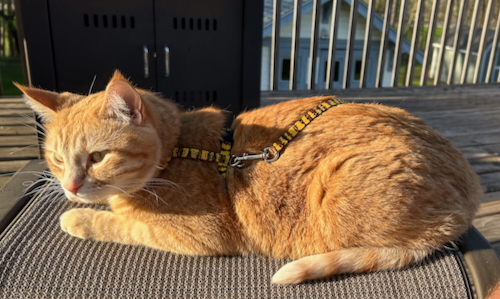
Witness my meta commentary on the usual success of author insertion.
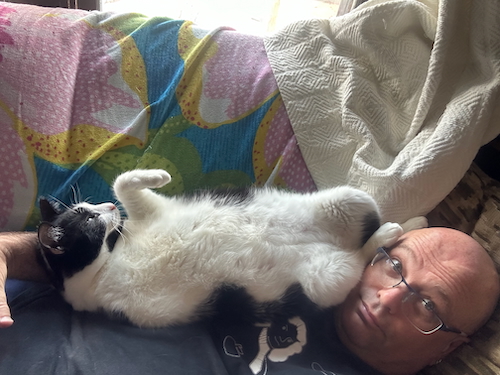
Meta-shmeta, that’s just pandering.
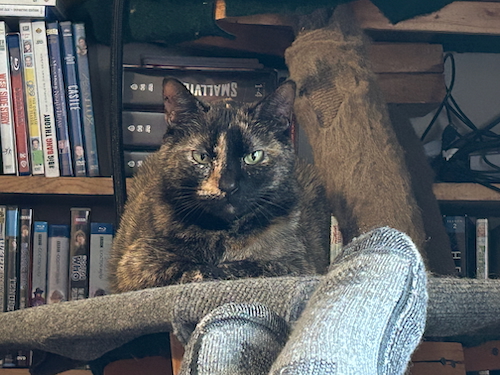
Also, kinda gross. Do you know where that cat butt has been?
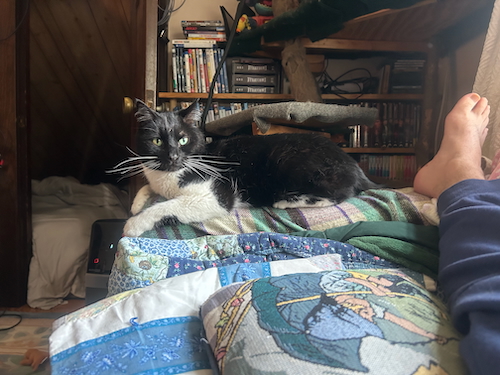
Ewwwww!
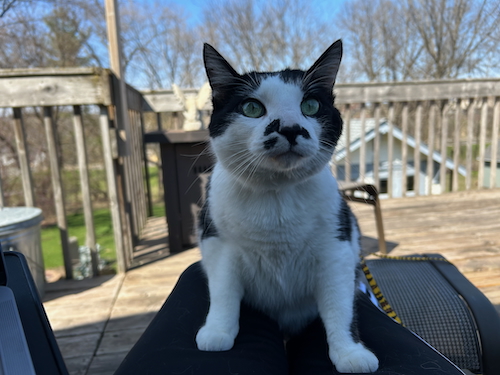
Not engaging. Happy place, happy place, happy place.
Categories: Authors
Silver & Blood, Zooms and Innkeeper: The Reprintening
I hope everyone made it through the worst of the cold. We’ll have lots of good news and releases this coming week to help lift spirits!
First bit of happy: against all odds, Subterranean Press has softened its policy before the might of the Horde and is republishing the Innkeeper Chronicles, Volume One.
UPDATE: This has SOLD OUT now, in less than 24 hours!
This is not something that usually happens, once the stock is exhausted the books are never reissued. But it is something that happens to us. Because Horde power, that’s why!
This is the preorder link and it will go live tomorrow, January 26, at 12:00 PM EST.
To clarify: the link is not broken. It doesn’t lead to anything yet, because it’s not yet 12 pm on January 26. I know your ways hehe!
Subterranean’s reissue is the omnibus of the first 3 novels in the Innkeeper Chronicles series (so Clean Sweep, Sweep in Peace and One Fell Sweep) and it’s a BIG boy.
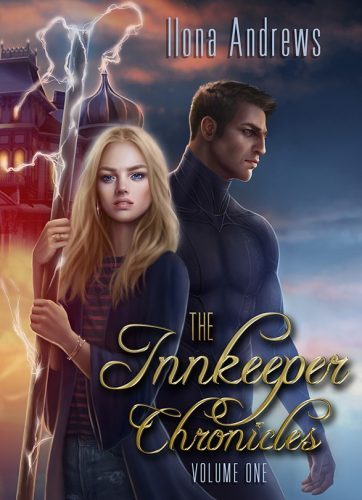
Over 760 pages of hardback goodness, signed by Ilona and Gordon, with a full colour wrap-around dust jacket, plus the familiar and beloved illustrations by Doris Mantair in both full-colour and black& white inside. The books are already with the printers and should ship out in a couple of months if all goes well.
Secondly, Ilona and Gordon hosted Jessie Mihalik yesterday to celebrate the release of her new romantasy, Silver & Blood, which will drop on Tuesday and is available from all major retailers, in epub, paperback and audio format (and gorgina hardback in the UK. Honestly, we’ve been rocking it lately over here with the pretty editions, yay us.)
We spited the cold and talked about the price of magic, the author–reader contract, what’s new in the Hidden Legacy world and most of all about Jessie’s new Avon-published duology, which is a Beauty and the Beast retelling with a smitten male protagonist, immersive world, and all the hot and dark twists for us to discover!
As promised, you can watch the Zoom recording below or catch it on YouTube via the Mod account.
PS: Edgar de Bruijn, if you’re reading this, the B.A. Bookish Boutique are trying to contact you about your Ilona Andrews merch order, please check your emails.
The post Silver & Blood, Zooms and Innkeeper: The Reprintening first appeared on ILONA ANDREWS.
Categories: Authors
Pages

Recent comments