
Feed aggregator
DNF Review – Quicksilver (Fae and Alchemy, Book 1) by Callie Hart (2/5 stars)

Reading Level: Adult
Genre: Fantasy/Romance
Length: 615 pages
Publisher: Forever
Release Date: September 10, 2024
ASIN: B0DDKHNVWF
Stand Alone or Series: 1st book in the Fae and Alchemy series
Source: Borrowed ebook from Kindle Unlimited
Rating: 2/5 stars
“Do not touch the sword. Do not turn the key. Do not open the gate.
Twenty-four-year-old Saeris Fane is good at keeping secrets. No one knows about the strange powers she possesses, or the fact that she has been picking pockets and stealing from the Undying Queen’s reservoirs for as long as she can remember. In the land of the unforgiving desert, there isn’t much a girl wouldn’t do for a glass of water. But a secret is like a knot. Sooner or later, it is bound to come undone.
When Saeris comes face-to-face with Death himself, she inadvertently reopens a gateway between realms and is transported to a land of ice and snow. The Fae have always been the stuff of myth, of legend, of nightmares…but it turns out they’re real, and Saeris has landed right in the middle of a centuries-long conflict that might just get her killed.
The first of her kind to tread the frozen mountains of Yvelia in over a thousand years, Saeris mistakenly binds herself to Kingfisher, a handsome Fae warrior, who has secrets and nefarious agendas of his own. He will use her Alchemist’s magic to protect his people, no matter what it costs him… or her. Death has a name. It is Kingfisher of the Ajun Gate. His past is murky. His attitude stinks. And he’s the only way Saeris is going to make it home.
Be careful of the deals you make, dear child. The devil is in the details… “
Series Info/Source: This is the first book in the Fae and Alchemy series. I borrowed this on ebook through Kindle Unlimited.
Thoughts: I didn’t finish this, which means I would usually give it 3 stars, but after writing the review, I just couldn’t go that high. I did get about 60% of the way through the story, but was really struggling with it. I disliked all of the characters in here. I thought the world-building was weak and the story was poorly paced; I just was not a fan.
The story follows Saeris a poor but fierce woman who steals a gauntlet (we will never understand why) and gets caught for that. She finds herself under threat of death in the castle when she is strangely able to melt the metal under her feet and ends up in a Fae realm. In the Fae realm she finds out that her ability to work with metal makes her a rare alchemist. The ruler of the Fae realm plans to hold her captive until she figures out who to awaken the Quicksilver that allows the Fae to travel through portals between worlds.
I hated the characters in this book with a vengeance. I kept forgetting Saeris was supposed to be in her 20’s because she acted like a horny teenager. She was overly angry, not too bright, and had the worst comebacks (they felt flat and made you feel like “oh poor girl, who wrote your dialogue”). The main love interest here is Kingfisher (aka Fisher), who was supposed to be a bad ass enemy-to-lovers type. He was an asshole (but of course he has excuses, so that is okay) and Saeris finds him super sexy right from the get go. She complains about him but is always hot for him, which felt very yucky to me.
The way the “romance” is handled is sloppy and again gave me a bit of the yucks. Saeris pretty much throws herself at Fisher at one point (with an ulterior motive) and they both really get into it. However, the characters are so immature and this was so sudden that it made me feel squeamish…like I was reading about two kids making out. There was no tension, there was no getting to know each other, and this was totally not something I was in to.
There is an odd section of the book where Saeris strikes a deal with Fisher for him to rescue her brother. Fisher comes back with a guy Saeris slept with. Another yuck moment, like “OMG, was Saeris sleeping with her brother”? However, this is explained further on in the story.
The world-building is thin here. We are thrown into an alternate fey world that seems fairly generic. I did like the addition of alchemy, which we finally got into around 45-50% in. However, somehow, the author managed to make even alchemy feel really boring with repetitive scenes of Saeris failing at various experiments.
The pacing is all over the place, and the whole thing feels sloppy and unfinished. I kept trying to push through on this one, but I just did not enjoy it. So, I gave up. Sorry to the people who recommended this to me, but this is just not for me. It felt like poorly done dark fae romantasy fan fic.
I have been having more DNFs than normal lately. Not sure if I just don’t have the patience for these books or if my tastes are shifting. I know I don’t have the patience for adult romantasy that feels like badly done YA fantasy fanfic (with more explicit sex scenes of course).
My Summary (2/5): Overall I did not like this. I appreciate the alchemy that was brought into the world, but the rest of the world feels so generic. My main beef was the characters here; they were all mean, immature, and kind of stupid. The dialogue between them feels forced and awkward. The pacing was all over the place, with the beginning fairly fast-paced and the middle super slow. I really wanted to like this but really struggled to pick it up and read it. Unless you are super hard up for a dark romantasy fae read I would look elsewhere.

Categories: Fantasy Books
Review of Masquerade by O. O. Sangoyomi
As a Bookshop affiliate, I earn from qualifying purchases. Masquerade, O. O. Sangoyomi’s debut novel, is a rare instance of a book I read without really knowing what to expect. I believe it first came to my attention when it became a finalist for the Goodreads Choice Awards for Debut Novel, and after that, I saw some readers mention they enjoyed it. I knew it was loosely based on the myth of Persephone, that it promised politicking in a reimagined […]
The post Review of Masquerade by O. O. Sangoyomi first appeared on Fantasy Cafe.
Categories: Fantasy Books
COVER REVEAL: Rising Gale (Song of the Damned #2) by Z. B. Steele

Official Author WebsitePre-order Rising Gale on AmazonAdd Rising Gale on GoodReadsRising Gale ARC Sign-up formBetaReader Sign-up form
Lord Z. B. Steele (as seen in his gracious avatar above) has deemed us worthy to take part in the cover reveal for book 2 in his debut series Song Of The Damned. Checkout the amazing cover below...

OFFICIAL BLURB: My execution draws near...
The noose beckons. My days dwindle. And still, my story is unfinished.
Tears are left to be shed. Blood has yet to be spilled. Lend me your ear once more to hear of sins and failures. Of swords and shadows. Of violet lightning and black blood.
For it was I who began the war of the gods.
Categories: Fantasy Books
Teaser Tuesdays - The Entanglement of Rival Wizards
 "I don't-" Elethior clears his throat. His voice is thinner.(page 59, The Entanglement of Rival Wizards by Sara Raasch)
---------
Teaser Tuesdays is a weekly bookish meme, previously hosted by MizB of Should Be Reading. Anyone can play along! Just do the following: - Grab your current read - Open to a random page - Share two (2) “teaser” sentences from somewhere on that page BE CAREFUL NOT TO INCLUDE SPOILERS! (make sure that what you share doesn’t give too much away! You don’t want to ruin the book for others!) - Share the title & author, too, so that other TT participants can add the book to their TBR Lists if they like your teasers!
Categories: Fantasy Books
Book Review: Strange Animals by Jarod K. Anderson
I received a review copy from the publisher. This does not affect the contents of my review and all opinions are my own.
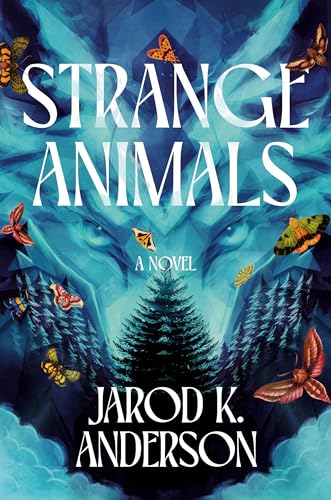 Strange Animals by Jarod K. Anderson
Mogsy’s Rating: 4 of 5 stars
Genre: Fantasy
Series: Stand Alone
Publisher: Ballantine Books (February 10, 2026)
Length: 320 pages
Author Information: Website | Twitter
In all honesty, Jarod K. Anderson’s Strange Animals is not typically the kind of book I would stick with, which is why it surprised me as much as it did. The novel is a strange kind of beast itself, but now I use that term affectionately. As weird and metaphysical and quirkily magical as it is, it somehow managed to overcome my usual struggle with these types of stories.
The novel follows an ordinary guy named Green, whose life suddenly goes completely sideways after a near-death experience involving a bus that most definitely ran him over. But then it also kind of didn’t. Like, what? At the moment of impact, time experienced something like a reset, and Green finds himself alive and well, like his fatal encounter never happened. From then on, he feels pulled towards the Appalachian wilderness, eventually ending up alone at a remote campground with a mysterious little acorn appearing in his pocket and tucked away like a good luck charm.
Not long after arriving, Green also realizes the woods around him are hiding more than he thought possible. He starts seeing things like creatures that shouldn’t exist, such as giant death moths, a fawn that looks like its made of brittle glass, and of course, the terrifying horned wolf that seems intent on stalking him. Fortunately for our discombobulated protagonist, that’s when a fellow camper steps in, an ancient looking woman named Valetina who is clearly more than she seems. She informs Green that his ability to see impossible creatures makes him something called a cryptonaturalist, just like her. She then agrees to take him under her wing, teaching him how to observe and understand the strange new world around him, just as a very real threat begins to emerge from the mountains.
Not gonna lie, the beginning of Strange Animals nearly lost me. To say the intro to this one is completely bizarro is an understatement. Green’s accident and subsequent inexplicable survival read like a fever dream, I had no idea what was going on, and I wasn’t even confident there would be much of a story here. The abstractness made me come close to calling it quits, and if it hadn’t been for Anderson’s easy, welcoming writing style, I very likely would have. Even when things got weird (and trust me, they did), the prose and Green’s personable voice was what kept things grounded and approachable, so I stuck with it. And I’m glad I did. Once the pieces started coming together, it became much easier to settle in, and yes, a coherent plot did eventually materialize.
What really worked for me were the themes. At its heart, Strange Animals is about humankind’s connection to nature and the idea that there’s more to the world than we notice in our day-to-day lives. As we have the ability to adapt the environment to ourselves and not the other way around, we also have the responsibility to act as its guardians. The cryptids in this book aren’t spectacles or monsters to be hunted down; they’re just like the more mundane and earthly animals around them that need conservation and the basic needs to survive. The best part is that none of these messages come across all that heavy-handed since they are universally relatable or simply common sense.
Of course, the characters also helped to sell it. Green is a likeable protagonist, and even as part of the supporting cast, Valentina easily stood out. The dynamic between them is fun, with the two of them playing their respective roles as the slightly in-over-his-head apprentice and the world-weary mentor. While their conversations frequently turn into philosophical discussions, the light humor keeps things from getting too tedious.
In the end, Strange Animals really caught me off guard. Admittedly, it’s a little odd and difficult to categorize, but somehow the novel made its little eccentricities work in its favor. Crazy to think how close I came to abandoning it, but I’m glad I didn’t. For some, it might take a bit of patience to get into, especially if you’re like me and not into the abstract or weird fiction. But stick with it, and you might also be surprised.


Categories: Fantasy Books
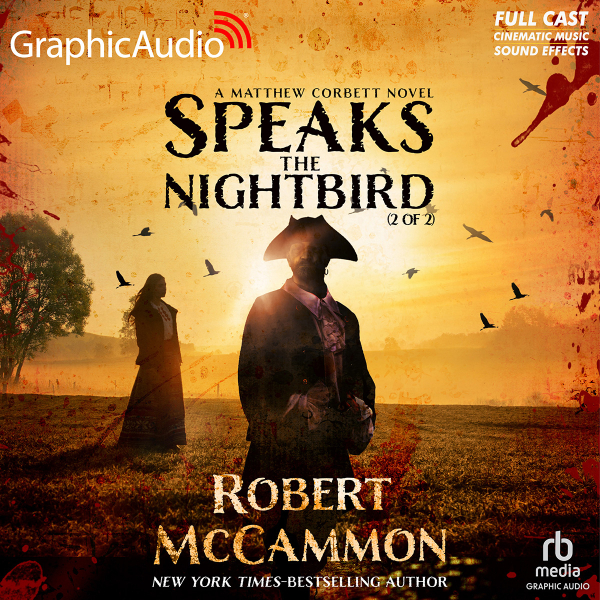
GraphicAudio: Speaks the Nightbird Part 2/2 release date
GraphicAudio will release the second half of their full-cast dramatization of Speaks the Nightbird on May 5, 2026. It can be pre-ordered from their site. Part 1 was released on January 13, 2026. They plan to produce dramatizations of the entire Matthew Corbett series. If you purchase from GraphicAudio, you can choose MP3 or FLAC downloads.
GraphicAudio has a 50% off sale running through February 15!
Speaks the Nightbird Part 2 of 2 at GraphicAudio
And if you missed it: Speaks the Nightbird Part 1 of 2 at GraphicAudio and at Audible
Categories: Authors
Announcing ‘The Tomb of the Corpse King’
I’m delighted to reveal that those good people at Subterranean Press have decided to let me play once more in the world of the Seven Swords. The Tomb of the Corpse King and Other Stories – Tales Set in the World of the Seven Swords will be released in September this year. The spectacular cover art is once again by the inestimable Didier Graffet.

Here’s the table of contents:
The Ballad Of Lorent And Ihlene
The Scarlet Ziggurat
The Beast Of The Sundered Forest
The Tomb Of The Corpse King
Fans of the series will note that the short story The Scarlet Ziggurat has been available as a free download on the Subterranean Press website for a while. The other stories are all novella length and original to this collection.
Those new to the series should check out Volume One: A Pilgrimage of Swords.
No pre-order page yet, or news about an audio version, but watch this space for further details.
Speaking of Didier Graffet, I thought you would like to see his cover for the French edition of A Tide of Black Steel – Une Maree dAcier Noir.

Une Maree dAcier Noir, translated by Olivier Debernard, will be published by Bragelonne on April 8th.
In other A Tide of Black Steel news, the German edition, Flut aus Schwarzem Stahl, will be published by Hobbit Presse on Frebuary 14th. Translation by Sara Riffel.

Those of you who have been following me for some time may recall that I was fortunate enough to have two stories published in Deep Magic Magazine, edited by fellow fantasist Jeff Wheeler. Deep Magic is no longer publishing, but Jeff is putting together two special edition hardcover compilations of the best stories from the magazine, including my interlinked short story and novella The Hall of the Diamond Queen and Fire Wings. Click the banner below for more details:

And finally, I’m please to report that most of my self-published ebooks are now available on Bookshop.org. Readers who prefer not to feed the Amazon monster can now order from the following links, a percentage of every sale goes to local bookshops:
Categories: Authors
Monday Musings: Where Does Mentoring Fit In With Today’s Publishing Realities?
I have a very good friend, also a writer, with whom I often discuss the depressing state of the writing world at this point in history. We have a sort of gallows humor about the whole thing — a lot of joking comments about low pay, the dearth of readers, the way New York publishing has basically lost interest in the midlist author, and the generally low quality of self-published works that we encounter when we dare to dip our toes into those murky waters. (No slight intended to anyone — seriously, if you are self-published, please don’t tell me that I have insulted you. There are good self-published books out there. But let’s be honest: The self-pubbed gems tend to be overwhelmed by the dross. Too many self-published books have had no serious editing or proofing, leaving them overlong and filled with errors that might easily have been avoided.)
Writers starting today face formidable obstacles that did not exist when I began my career (you know, back in the day when we carved novels into stone tablets….). There are more wannabe writers hawking their wares on various online platforms now than there have ever been. The democratization of publishing technology has convinced many that they can be professionals simply by writing something, slapping it into the appropriate app, and putting it up for sale. Again, some of those books might be very good, but none of them have had to make their way through any vetting process. I am a dedicated amateur photographer, and I am pretty good. I have even sold some of my work and had images published. But I am not truly a professional. I know professionals. Most of them are far, far better than I am. But I have access to digital photo equipment that has helped me elevate my skill. I have access to printing services that make my photos look professional. I have even put together a book of my work that looks like any other coffee table photography book. In short, I have benefitted from the same sort of democratization in photography that I am describing with respect to publishing, even though I KNOW that I am not nearly as good a photographer as most professionals.
So, anyway, that is one obstacle: The sheer number of authors out there these days, competing for the attention of an ever-shrinking pool of potential readers.
Why ever-shrinking? That’s obstacle number two. I actually think the absolute number of devoted readers has remained roughly the same over the course of the past, say, fifty years. But if that number is remaining relatively static while the population grows, and while the number of would-be authors grows… well, you do the math.
The third obstacle I mentioned above: New York publishing — a moniker used to refer to what some might call legacy publishing — basically means the publishing houses that have dominated the industry for so long: Alfred A. Knopf, Random House, Saint Martins (which includes my old publisher, Tor Books), and other such behemoths. When I started writing, these big publishing houses were still (mostly) independently owned. They ran their businesses with at least some sense of the mission of their founders. They understood that publishing was not simply another profit-maker. The success of big-name authors allowed these houses to nurture the careers of beginning writers, and of those in the so-called midlist who had solid readership but who were probably never going to break into the ranks of those bestsellers. (And allow me to say here that legacy publishing was far from an idyllic business world. Yes, it supported authors in a range of sales categories. But the vast, vast majority of its authors were male and White.) Around the turn of the millennium, New York publishing began to consolidate. Mergers and buyouts disrupted that old model, and when the dust settled, many of the remaining publishing houses were subsidiaries of larger corporations that had no interest in sustaining the careers of authors who didn’t sell all that well. They still gave contracts to the big names, and they still gave contracts to young writers who showed promise, but they had little patience if those young voices didn’t catch on quickly, and they stopped maintaining the midlist pretty much entirely.
 The publishers also squeezed out a lot of editors, feeling that editing was a luxury, and an expensive one at that. “Look at all those self-published titles selling online,” they said. “They’re not edited, and their readers don’t seem to care. Why should we spend so much when most readers just aren’t that discerning?” My editor at the start of my career was, to put it mildly, a problematic character. He was difficult to work with, unreliable, and slow. And eventually, he was fired for cause. And yet, I learned a ton from him. He taught me about the business. He taught me to be a much, much better writer, simply by working with me to improve my craft. I would be lying if I didn’t admit that I owe much of my career to his peculiar brand of wisdom. Young writers need that sort of mentorship. And in today’s world, few of them get it.
I should also say (in a post that is already lengthy) that today’s young writers also have to compete with a faceless, soulless technology that can produce passable stories at virtually no cost, in virtually no time. How the hell are human authors supposed to compete with that? Yes, AI generated characters and stories are not very good (yet). But again, many readers have come to accept mediocrity as entertainment, so long as it has a plot and serviceable characters. It may not be great, but it will divert my attention for a little while.
And all around us, civilization collapses….
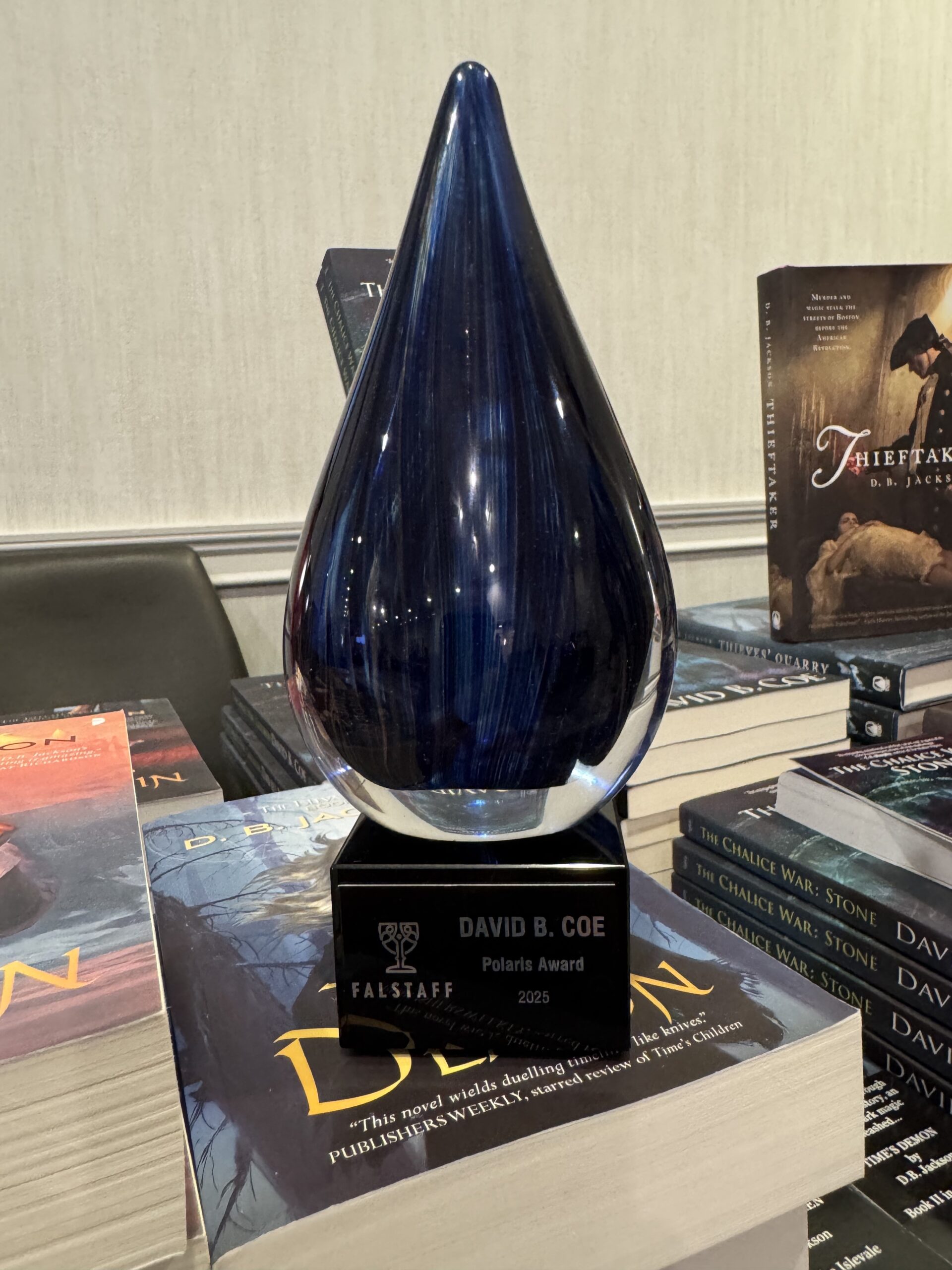 That brings me to the larger point of this post. Last year, at ConCarolinas, I was given the Polaris Award, in large part for the mentoring of young writers I have done, and continue to do. Right now, I have no fewer than half a dozen writers who consider me a mentor. Over the course of my career, that number is far, far higher. I benefitted from the wisdom of many established authors when first I began my career. I have always felt that it was my duty, and also my privilege, to offer the same guidance to those coming up after me. I love mentoring.
But in recent years, I have come to wonder how I can offer encouragement to young writers knowing how difficult a path they face in this profession. I have discussed this at length with the friend I mentioned at the beginning of this post. He feels much the same way, and yet he continues to mentor, too. Why do we do this?
At the risk of speaking on his behalf…. We do everything in our power not to mislead our mentees. We tell them all that I have said in this post about the state of the publishing world. We try to make certain that they understand fully the challenges laid before them. We make sure they know that there are many easier careers available to them, all of them more lucrative. But the truth is, this litany of obstacles usually does little to dissuade them. Which also begs that simple question: Why?
I believe the answer is the same for those seeking mentorship as it is for those of us who mentor. And I find hope in that answer. Storytelling is fundamental to being human. So is the act of receiving stories. Yes, that explains the glutting of the marketplace. But it also explains why so many of us continue to write for a world that seems less and less interested in the tales we create. Many of my friends who are writers tell me that they can’t not write. Writing is an imperative. It is as fundamental to their (our) being as breathing, eating, sleeping. This has been true for me for as long as I can remember. And it is also true for those seeking mentorship today. Just as reading (or listening to books and stories) is essential to those who still seek out books at cons and in bookstores. I have said repeatedly in this post that many readers are not all that discerning. They will accept stories that are just so-so in the absense of anything else. But I also believe that when they encounter a story written with passion and elegance, they recognize it, and they celebrate it.
This is a difficult time for the arts — not just writing, but also music, photography, painting, theater, dance, etc. Our digital world competes with those endeavors for our time, our ears and eyes, our money. And with the digital in our palms all the time, it has a huge advantage. And yet, new creators, with new creations, emerge from obscurity every day. Because at an elemental level, we yearn for art, for story and narrative, for beauty. These things are part of what make us human. I refuse to believe that they won’t remain so for generations to come.
Have a great week.
Categories: Authors
Monday Musings: Where Does Mentoring Fit In With Today’s Publishing Realities?
I have a very good friend, also a writer, with whom I often discuss the depressing state of the writing world at this point in history. We have a sort of gallows humor about the whole thing — a lot of joking comments about low pay, the dearth of readers, the way New York publishing has basically lost interest in the midlist author, and the generally low quality of self-published works that we encounter when we dare to dip our toes into those murky waters. (No slight intended to anyone — seriously, if you are self-published, please don’t tell me that I have insulted you. There are good self-published books out there. But let’s be honest: The self-pubbed gems tend to be overwhelmed by the dross. Too many self-published books have had no serious editing or proofing, leaving them overlong and filled with errors that might easily have been avoided.)
Writers starting today face formidable obstacles that did not exist when I began my career (you know, back in the day when we carved novels into stone tablets….). There are more wannabe writers hawking their wares on various online platforms now than there have ever been. The democratization of publishing technology has convinced many that they can be professionals simply by writing something, slapping it into the appropriate app, and putting it up for sale. Again, some of those books might be very good, but none of them have had to make their way through any vetting process. I am a dedicated amateur photographer, and I am pretty good. I have even sold some of my work and had images published. But I am not truly a professional. I know professionals. Most of them are far, far better than I am. But I have access to digital photo equipment that has helped me elevate my skill. I have access to printing services that make my photos look professional. I have even put together a book of my work that looks like any other coffee table photography book. In short, I have benefited from the same sort of democratization in photography that I am describing with respect to publishing, even though I KNOW that I am not nearly as good a photographer as most professionals.
So, anyway, that is one obstacle: The sheer number of authors out there these days, competing for the attention of an ever-shrinking pool of potential readers.
Why ever-shrinking? That’s obstacle number two. I actually think the absolute number of devoted readers has remained roughly the same over the course of the past, say, fifty years. But if that number is remaining relatively static while the population grows, and while the number of would-be authors grows… well, you do the math.
The third obstacle I mentioned above: New York publishing — a moniker used to refer to what some might call legacy publishing — basically means the publishing houses that have dominated the industry for so long: Alfred A. Knopf, Random House, Saint Martins (which includes my old publisher, Tor Books), and other such behemoths. When I started writing, these big publishing houses were still (mostly) independently owned. They ran their businesses with at least some sense of the mission of their founders. They understood that publishing was not simply another profit-maker. The success of big-name authors allowed these houses to nurture the careers of beginning writers, and of those in the so-called midlist who had solid readership but who were probably never going to break into the ranks of those bestsellers. (And allow me to say here that legacy publishing was far from an idyllic business world. Yes, it supported authors in a range of sales categories. But the vast, vast majority of its authors were male and White.) Around the turn of the millennium, New York publishing began to consolidate. Mergers and buyouts disrupted that old model, and when the dust settled, many of the remaining publishing houses were subsidiaries of larger corporations that had no interest in sustaining the careers of authors who didn’t sell all that well. They still gave contracts to the big names, and they still gave contracts to young writers who showed promise, but they had little patience if those young voices didn’t catch on quickly, and they stopped maintaining the midlist pretty much entirely.
 The publishers also squeezed out a lot of editors, feeling that editing was a luxury, and an expensive one at that. “Look at all those self-published titles selling online,” they said. “They’re not edited, and their readers don’t seem to care. Why should we spend so much when most readers just aren’t that discerning?” My editor at the start of my career was, to put it mildly, a problematic character. He was difficult to work with, unreliable, and slow. And eventually, he was fired for cause. And yet, I learned a ton from him. He taught me about the business. He taught me to be a much, much better writer, simply by working with me to improve my craft. I would be lying if I didn’t admit that I owe much of my career to his peculiar brand of wisdom. Young writers need that sort of mentorship. And in today’s world, few of them get it.
I should also say (in a post that is already lengthy) that today’s young writers also have to compete with a faceless, soulless technology that can produce passable stories at virtually no cost, in virtually no time. How the hell are human authors supposed to compete with that? Yes, AI generated characters and stories are not very good (yet). But again, many readers have come to accept mediocrity as entertainment, so long as it has a plot and serviceable characters. It may not be great, but it will divert my attention for a little while.
And all around us, civilization collapses….
 That brings me to the larger point of this post. Last year, at ConCarolinas, I was given the Polaris Award, in large part for the mentoring of young writers I have done, and continue to do. Right now, I have no fewer than half a dozen writers who consider me a mentor. Over the course of my career, that number is far, far higher. I benefited from the wisdom of many established authors when first I began my career. I have always felt that it was my duty, and also my privilege, to offer the same guidance to those coming up after me. I love mentoring.
But in recent years, I have come to wonder how I can offer encouragement to young writers knowing how difficult a path they face in this profession. I have discussed this at length with the friend I mentioned at the beginning of this post. He feels much the same way, and yet he continues to mentor, too. Why do we do this?
At the risk of speaking on his behalf…. We do everything in our power not to mislead our mentees. We tell them all that I have said in this post about the state of the publishing world. We try to make certain that they understand fully the challenges laid before them. We make sure they know that there are many easier careers available to them, all of them more lucrative. But the truthis, this litany of obstacles usually does little to dissuade them. Which also begs that simple question: Why?
I believe the answer is the same for those seeking mentorship as it is for those of us who mentor. And I find hope in that answer. Storytelling is fundamental to being human. So is the act of receiving stories. Yes, that explains the glutting of the marketplace. But it also explains why so many of us continue to write for a world that seems less and less interested in the tales we create. Many of my friends who are writers tell me that they can’t not write. Writing is an imperative. It is as fundamental to their (our) being as breathing, eating, sleeping. This has been true for me for as long as I can remember. And it is also true for those seeking mentorship today. Just as reading (or listening to books and stories) is essential to those who still seek out books at cons and in bookstores. I have said repeatedly in this post that many readers are not all that discerning. They will accept stories that are just so-so in the absense of anything else. But I also believe that when they encounter a story written with passion and elegance, they recognize it, and they celebrate it.
This is a difficult time for the arts — not just writing, but also music, photography, painting, theater, dance, etc. Our digital world competes with those endeavors for our time, our ears and eyes, our money. And with the digital in our palms all the time, it has a huge advantage. And yet, new creators, with new creations, emerge from obscurity every day. Because at an elemental level, we yearn for art, for story and narrative, for beauty. These things are part of what make us human. I refuse to believe that they won’t remain so for generations to come.
Have a great week.
Categories: Fantasy Books
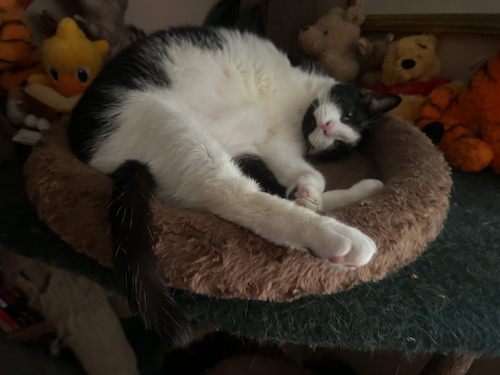
Monday Meows
I’m auditioning to be library lion!
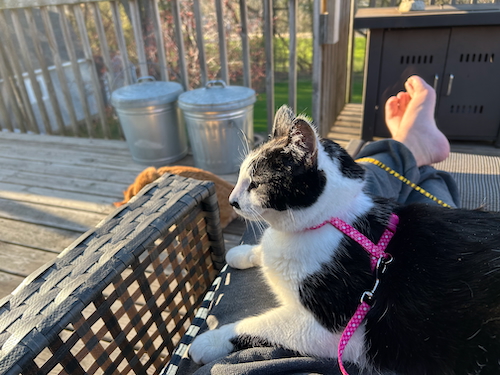
Lion? You? Srsly?
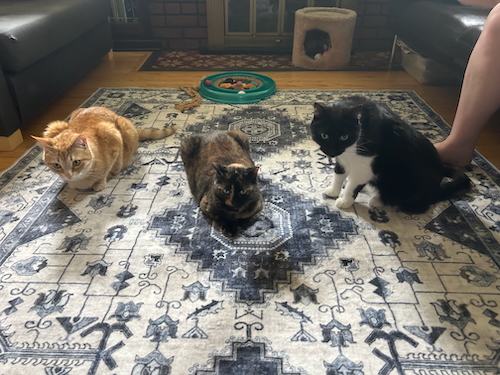
No, I think he’s got this.
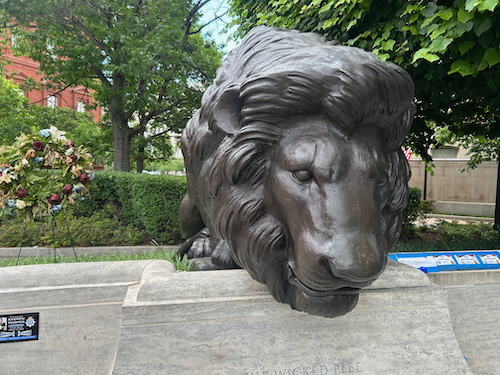
The only lion he’ll ever be is lyin’ around.
Categories: Authors
Gifts Between Us - Quick Book Review
 Gifts Between Usby C.C. Adams
What is it about:Elderly Londoner Augustus has lived a long, miserable life. Having driven his few remaining loved ones away years ago, he now whiles away his time drinking rum and hoping for the end.
One night his death wish is nearly granted by a mugger, but a local youth called Michael intervenes. Much to the old man’s horror (and fascination) Michael promptly begins to devour the mugger’s body.
Slowly, Augustus and his mysterious saviour form an unlikely friendship, one built on sharing the gifts of trust, camaraderie, and acceptance.
And one last a secret. It is the cause of Michael’s cannibalistic nature. And, perhaps, a reason for Augustus to go on living…
What did I think of it:I was offered a review copy, and it sounded like I might enjoy it.
Well...
It had some unnecessary gross scenes in my opinion. I was left slightly nauseated and not so much horrified. The parts that weren't totally Eeeeew! were interesting, so if you can handle the ick, this might be for you.
Why should you read it:If nauseating horror is your thing, go for it!
Categories: Fantasy Books
Novella Review – Kirkyards & Kindness (A Rip Through Time, Book 4.5) by Kelley Armstrong (4/5 stars)

Reading Level: Adult
Genre: Time Travel/Historical Fiction/Mystery
Length: 158 pages
Publisher: K.L.A Fricke Inc
Release Date: December 2, 2025
ASIN: B0F8YP6JWM
Stand Alone or Series: 4.5th book in the A Rip Through Time series
Source: Borrowed ebook from Library
Rating: 4/5 stars
“A year ago, twenty-first-century detective Mallory found herself in 1869 Edinburgh, in the body of Catriona Mitchell, a housemade working for Dr. Duncan Gray, pioneer in forensic science. Shortly after she arrived, she made the unfortunate acquaintence of Catriona’s former criminal mentor, Davina, an entanglement that nearly got Mallory killed. Now she’s about to meet Davina again.
Greyfriars Bobby has disappeared. The little terrier is already a legend, and Davina has made a tidy living showing him off on graveyard tours…while picking the pockets of her guests. When the elderly dog vanishes, Davina calls in a favor from her old student. Mallory agrees to help find Bobby in return for the one thing she’s been unable to get from Davina—the mysterious Catriona’s life story.”
Series Info/Source: This is a novella in the A Rip Through Time series and takes place after book Book 4 of that series. I borrowed a copy of this on ebook from the library.
Thoughts: This was a decent novella. This is set after Book 4 in the series and focuses on the disappearance of a famous dog named Greyfriars Bobby. While nothing super exciting happens, this was a well-done mystery and I enjoyed it.
This story brings in some additional aspects of Catriona’s past as one of Catriona’s “friends” Davina who is upset about Greyfriars’ disappearance because she was making money off of using the dog as part of her graveyard tour. The story focuses around the disappearance of this dog and Mallory (in Catriona’s body) working to solve this mystery. We do get a bit more character development both around Mallory and Duncan’s relationship and by learning more about Catriona’s past. Some small progress is also made on Duncan’s sister’s relationship with policeman Creedy.
This was a well done and quick read. I enjoy the setting of Victorian Scotland and enjoy watching Mallory try to unravel Catriona’s past. The mystery was well done and cute and gave some incite into this time in history.
This would be an okay stand alone read, but I think you will enjoy it more if you have read previous books in this series.
My Summary (4/5): Overall I enjoyed this short jaunt, it is a cute and well done mystery. I continue to enjoy the setting and premise here and love the characters. We do get to learn more about Catriona’s past, which was fascinating. I think you will enjoy this more if you have read the previous books in the series. I would recommend this whole series to those who enjoy police procedurals that are set in a historic period (with some weird time travel stuff thrown in). This series does have a tad of romance, but it is more in the background.

Categories: Fantasy Books
Summer Blooms
My neighbor across the street wants flowers blooming in her front yard from spring until the end of summer. To do so, she’s planted dozens of tulips, daffodil, California poppies, wildflowers, and other random bloomers.
Her yard is bright and colorful for months.
Autumn is creeping in, though—just the breath of it cooling the breeze and tempering the sunshiny days. Her flowers have done their job spectacularly, but now their colors have faded.
I love autumn, I do. But seeing her yard go fallow made me realize summer went by far too quickly. I stood at my gate wondering if I had enjoyed the sun enough. Had I drank lemonade, dipped my feet into lakes, rivers, oceans? Had I taken time to run through a sprinkler, sleep outside beneath a wide starry sky, told the people I love just how much I love them as we laughed and sang old songs?
Had I savored it enough, the sweet summer-ness of summer?
I’m happy to say YES! I did all those things! Summer was wonderful. I mean, Life has still been Life, with happy days and really sad days, hard things and joys. But time moves us all forward, and the seasons are turning once again.
I think this autumn I’ll take a hint from my neighbor. I have buckets of daffodil, iris, and tulip bulbs down in the shed. Maybe it’s time to plant them, a small hope—a promise—of more sweet summers to come.
Categories: Authors
World Con Day 1

Worldcon was a very fun experience for me this year! Here I am on day 1, waiting in the registration line. Even though I arrived just after noon on Wednesday, it took an hour for me to make it to the front of the line and there were even more people arriving behind me.
I headed straight to the dealers’ room, and was happily shopping all the tables (So Many books and authors present!) when I heard a familiar voice. Who should I see but…

the fabulous, amazing author (and terrific friend!) Nina Kiriki Hoffman!! We strolled more of the dealers room together and eventually went out for a bowl of chowder at Pike Place Chowder.
I’d just had a bowl of Mo’s Chowder a few days before, and sorry, Mo’s, Pike Place Chowder was the superior bowl.
I can’t quite remember the order of things but eventually Nina and I ended up going to Martha Wells Q&A session:
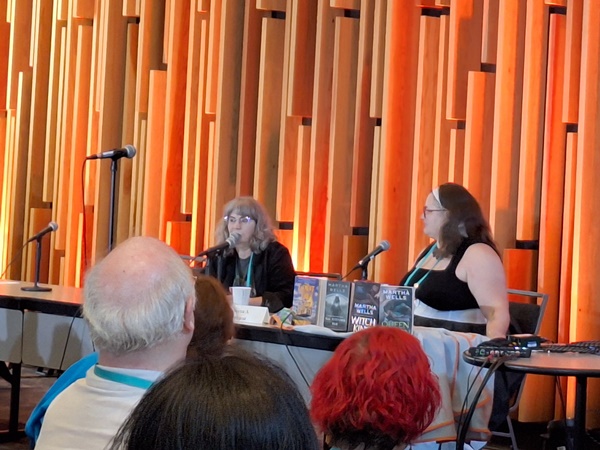
I thought it was a wonderful Q&A, and that Martha had thoughtful, interesting comments about her writing process, what she’s writing next, and even a bit of what she would take away from the Murderbot show and possibly use in her upcoming work (it’s the costuming, and how the people from Preservation leave obvious patches on their clothing to acknowledge both injuries and recovery.)
I finally caught up with my fabulous roommate (and writer friend) Diana Pharaoh Francis by the evening and if I remember right, we talked for hours and called it a day.
Categories: Authors
YA Fantasy Audiobook Review: Daughter of the Moon Goddess by Sue Lynn Tan
 Daughter of The Moon Goddess ( The Celestial Kingdom #1)bought on Audible
Synopsis from Goodreads
Growing up on the moon, Xingyin is accustomed to solitude, unaware that she is being hidden from the feared Celestial Emperor who exiled her mother for stealing his elixir of immortality. But when Xingyin’s magic flares and her existence is discovered, she is forced to flee her home, leaving her mother behind.
Alone, powerless, and afraid, she makes her way to the Celestial Kingdom, a land of wonder and secrets. Disguising her identity, she seizes an opportunity to learn alongside the emperor's son, mastering archery and magic, even as passion flames between her and the prince.
To save her mother, Xingyin embarks on a perilous quest, confronting legendary creatures and vicious enemies across the earth and skies. But when treachery looms and forbidden magic threatens the kingdom, she must challenge the ruthless Celestial Emperor for her dream—striking a dangerous bargain in which she is torn between losing all she loves or plunging the realm into chaos.
A captivating debut fantasy inspired by the legend of Chang'e, the Chinese moon goddess, in which a young woman’s quest to free her mother pits her against the most powerful immortal in the realm. Daughter of the Moon Goddess begins an enchanting, romantic duology which weaves ancient Chinese mythology into a sweeping adventure of immortals and magic—where love vies with honor, dreams are fraught with betrayal, and hope emerges triumphant.
8.5/10* * *
This turned out surprisingly good! I started the book rolling my eyes hard at sugary romance between the prince and his companion. Classic xinxia setup!
However, they both proved me wrong with their level of maturity. Basically, both ML and FL got over themselves pretty quickly and went on with their lives like adults.
The secondary romance developed so fast I must have blinked and missed its onset, but it definitely added tension and depth, especially when two men had to work together. * snort* Oh, the antagonism!
I'd say the action sequences were the most interesting and best written and I wished the author elaborated more about Xingyin's missions in the army as I was entertained the most with their descriptions.
Overall, a solid four star read. Will be checking out the next book in the series.
Categories: Fantasy Books
Chinese Paranormal Fantasy Short Drama Review: Butterflied Lover (2023)
 Butterflied Lover (2023)
22 episodes, watched on Viki
Synopsis from MyDramaList
Inspired by the romance of Liang Shang Bo and Zhu Ying Tai, the story revolves around two lovers who will overcome all obstacles to remain together.
Ling Chang Feng is an honourable general and has been in a passionate marriage with his wife for the past 3 years.
However, a strange disturbance hits their city on their third anniversary, and "madmen" run wild in the town, attacking innocent citizens violently.
Ling Chang Feng leaves his wife behind to protect the people, but when he returns, finds that his wife has been infected by this phenomenon.
He refuses to reveal this, as he knows that anyone who turns mad will be killed. He keeps her by his side in secret while trying to solve the cause of this frightful phenomenon.
8.5/10* * *
It's an exceptionally well made bite size drama, folks (each episode is only 15 mins). You can see they had a very tight budget but they used it so, so well. The plot is fresh, the scenes are carefully crafted and the cinematography is masterful. I watched other two short dramas from the same director, and they were both fantastic (The Killer is Also Romantic, A Familiar Stranger). So, please, don't hesitate to invest your time in this drama.
It starts with Chang Feng and Qian Yue happily married in a fictional Chinese city state. She keeps having a recurring dream about reliving the same day until it actually happens and she gets embroiled in a tragic attack by this world's equivalent of vampires.
After that we are taken into the past, where it shows how Chang Feng met his future wife and how their relationship developed. As she says, her memory starts from him. So she herself is full of secrets and has no memory of her past, a woman who literally had to learn anew everything.
Their relationship develops from him looking after her as this almost childlike creature until she slowly matures and finds her strengths turning into a woman who loves fiercely. Chang Feng himself is a reticent workaholic who keeps away from politics or anything that doesn't require him just to guard his city. Qian Yue slowly changes that, and it's very sweet to see them together.
For once, the second couple's love story here is also touching and very cute. Considering that last time I saw the second male lead, he was playing the main villain in Blood of Youth, and he started as an antihero here as well, I was ready to dislike him, but he went from one dimensional, cold man to a shy, confused and hilariously out of sorts young lover pretty fast, and this melted my resolve to not like him.
Phew, I don't know how I managed not to give you any spoilers! Here is a fan vid to show you the beauty of this drama, folks. I hope after this you will give it a chance. It was great. Humorous, humane and lovely. Two thumbs up from yours truly.
Categories: Fantasy Books
Romantic YA Fantasy Chinese Drama Review: I've Fallen For You (2020)
 I've Fallen For You (2020)
24 episodes, watched on Viki
Synopsis from MyDramaList
A story that follows the quirky female investigator Tian San Qi as she searches for her long lost 'brother' and cracks many cases along the way.
Growing up, Tian San Qi had a strange liking for performing autopsies. She had an older 'brother' who would always be by her side and they spent many good years together. One day, he mysteriously disappears. San Qi as a child promises to find her true love and vows never to marry unless it's him.
In her search, she comes across many potential candidates and forms new friendships. The gang accidentally becomes involved in several cases in the area one of which seems closely related to the disappearance of her 'brother' all those years ago. A shocking conspiracy that is 10 years in the making comes to light.
~~ Adapted from the web novel "Jin Xin Ji" (锦心记) by Han Xue Fei (韩雪霏).
8/10
* * *
Straight away I just wanted to clarify the synopsis: "brother" here is Chinese gege/older brother which can mean both your actual older brother or an older than you male you are familiar with. Same as you would be able to call an older girl -jiejie (older sister) or an older woman who is not your mom - ayi (aunty).
This is a very cute and engaging drama despite its silly light heartedness, and the characters are very young. I can't quite pinpoint what exactly snared me in I've Fallen For You.
It had Esther Yu whom I love since her performance in Love Between Fairy and Devil, and she is a very, very interesting actress. She is able to pull off cutest silliest pouts with great charm in her tinny tiny voice but at the same time give an impression that this is just a mask she adopted and make her moments of brilliant intelligence and sorrowful wise stares absolutely believable.
Liu Yi Chang who plays the male character, Zhao Cuo, is adorable as well. Grumpy, rough around the edges, abrasive, throwing money around and standoffish, he is actually covering his kind and trusting nature with this behaviour like a hedgehog with its needles to protect himself from getting hurt. You really feel his tentative pure nature straight away, and because he also doesn't bother to mince words, most people find him too rude and turn away until San Qi (FL) convinced that he is her long lost childhood sweetheart bulldozes him over.
That poor boy has no chance to withstand against her, and they go through all the phases of good relationship: partnership where they gain mutual respect for each other's abilities (she is great at solving cases, he is a brilliant martial artist), friendship (when they develop an easy camaraderie to each other), and at last, love.
The way Zhao Cuo shows his love for San Qi is especially adorable. There is a scene where she decides to leave him for another guy who she thinks is her real childhood sweetheart, and Cuo after battling his inner demons for awhile accepts it to make her happy and on the day of her departure spends all morning buying her favourite foods for the road and running after the carriage. After she takes the food and drives off he just dissolves into an ugly cry right in the middle of the road. Not a pretty staged "artful tear sliding down my cheek" sort of cry, but proper ugly, suffocating, can't breathe from heartbreak cry. That really touched me.
There were quite a few moments like this, and I surprised myself really enjoying this drama. The soundtrack was a surprise too, it was more a kdrama type, rather than typical Chinese fantasy drama OST.
Overall, despite the strong comedy vibe, this was not only an entertaining but touching and adorable short drama. Recommended!
Categories: Fantasy Books
YA Fantasy Duology Audiobook Review: The Book of Tea by Judy I. Lin
 A Magic Steeped in Poison by Judy I. Lin (The Book of Tea #1)
bought on Audible
Synopsis from Goodreads
For Ning, the only thing worse than losing her mother is knowing that it's her own fault. She was the one who unknowingly brewed the poison tea that killed her—the poison tea that now threatens to also take her sister, Shu.
When Ning hears of a competition to find the kingdom's greatest shennong-shi—masters of the ancient and magical art of tea-making—she travels to the imperial city to compete. The winner will receive a favor from the princess, which may be Ning's only chance to save her sister's life.
But between the backstabbing competitors, bloody court politics, and a mysterious (and handsome) boy with a shocking secret, Ning might actually be the one in more danger.
 A Venom Dark and Sweet by Judy I. Lin (The Book of Tea #2)bought on Audible
Synopsis from GoodreadsA great evil has come to the kingdom of Dàxi. The Banished Prince has returned to seize power, his rise to the dragon throne aided by the mass poisonings that have kept the people bound in fear and distrust.
Ning, a young but powerful shénnóng-shi—a wielder of magic using the ancient and delicate art of tea-making—has escorted Princess Zhen into exile. Joining them is the princess' loyal bodyguard, Ruyi, and Ning's newly healed sister, Shu. Together the four young women travel throughout the kingdom in search of allies to help oust the invaders and take back Zhen's rightful throne.
But the golden serpent still haunts Ning's nightmares with visions of war and bloodshed. An evil far more ancient than the petty conflicts of men has awoken, and all the magic in the land may not be enough to stop it from consuming the world...
7.5/10* * *
If I was breaking the rating for the two books, the first one would have 8/10 (4 stars) rating as it was more coherent and engaging than book two (3.5 stars). While listening to the book two I caught myself drifting and missing chunks of what was happening which for me is not a good sign, hence lower rating for the duology.
The best part of this duology is its unique magic system where people with certain abilities could brew tea from any plants, herbs, berries, flowers, etc. or their combinations for different healing reactions in patients or for imbuing people with particular powers and enhancing certain reactions. This whole concept was fascinating and very well done.
Book one with its competition and much tea making was perfect in its simplicity. Ning had a goal to win and get the best medical help possible for her younger sister. She also acquired friends, enemies and a love interest along the way who rounded up the story nicely.
Getting into book two, the plot stretched itself pretty thin. Ning got bogged down in endless quests. Get to point A, grab the object X, continue to point B. And apart from the willow episode and the hike through the bamboo forest, there was nothing juicy here. Kang, the love interest, lost all colour here and quite a lot of backbone. The amount of people who got tortured and killed around him, and he, the prince of the empire, was powerless to do anything to help. I didn't like it at all. I felt like he had no spark or spine and mostly reacted to events, rather than be a force to instigate them. His father had no personality and the villain was outright cartoonish from start to finish.
*Sigh*
Overall, it's an okay listen with a refreshing magic concept. Recommended with reservations.
Categories: Fantasy Books
Chinese Historical Fantasy Drama Review: Under The Power (2019)
 Under The Power (2019-2020)
55 episodes, watched on Viki (you can find in on YouTube)
Synopsis from MyDramaList
Lu Yi is a cold, ruthless and authoritative high-ranking officer of the Ming Dynasty's Jinyiwei (also known as the Brocaded Guards for their elaborately embroidered uniforms). The Jinyiwei are part of the Emperor's elite bodyguards that also serve as the secret police, and Lu Yi is one of the best at his job.
He meets Yuan Jin Xia, a smart, feisty and tom-boyish female officer from the Police's 6th Division, and they clash over a case that the both of them were involved in. Their paths continue to cross unpleasantly over a series of minor cases until Lu Yi was commissioned by the Emperor to secretly investigate the disappearance of funds that have been set aside for river repairs in Yangzhou. Part of the small team accompanying him includes Yuan Jin Xia, and as the two of them work together to solve the case, they find themselves uncovering a conspiracy involving high court officials while their feelings for each other slowly change from dislike to respectful friendship to love.
~~ Adapted from the web novel "Under the Power" (锦衣之下) by Lan Se Shi (蓝色狮).
7.5/10* * *
The rating says it all. Allen Ren (Ren Jia Lun) and Seven Tan (Tan Song Yun) is the main attraction here, and mostly it's Seven Tan. She has such a magnetic personality and can pull off the silliest, most idiotic antics for comedy value without being too much. In fact, the more I was watching this, the more I felt that recent Warm on a Cold Night drama which I abandoned half way through tried to poorly imitate Jinxia's behaviour (female lead) and ended up just looking stupid. Besides there were more similarities there.
As the male lead, Lu Yi, says half way through falling in love with Jinxia: "She is mesmerising..", so you can't help but falling into her orbit.
Jinxia is a classic poor, tenacious, cunning little thing working in the capital's police department, cleverly solving cases and keeping herself in all the little pies she can think of to survive and make money. Her mother sells tofu on the streets and keeps trying to marry her off.
Lu Yi is a complete opposite to Jinxia in almost all the aspects. He is rich, he leads the equivalent of special police of the country which concentrates on internal investigations and keeps rich and powerful in fear. That force answers only to the emperor. Lu Yi is aloof, ruthless and doesn't have many joys or passions in life.
When he clashes with Jinxia over a case, he outdoes her with ease in direct confrontations, but while he is rich in resources and manpower, she is a great tracker and knows common people, so she catches up with him or even thwarts him in other spects. Their antagonism is fun to watch, especially when you see her ruffling his feathers more and more.
"Why not higher rating then?" you'd ask. First of all, a secondary love story is extremely boring and takes too much screen time. I had to skip past their scenes, seriously.
Secondly, the ending episode is very stupid. Lu Yi who supposingly can plot an intricate chess game, goes and sacrifices himself for a very idiotic reason when all he needed to do is wait a few years and make a move without any danger, and everyone would have been perfectly happy with that plan as there was no urgency to act. Instead, the heroine had to save his sorry a*se again! There was no rhyme or reason in that last act.
Last problem, is that the production is low cost and it's very visible.
So, all these things detracted from my enjoyment but didn't stop me from loving the rest. Overall, a lovely, enjoyable watch! Recommended with some reservations.
Categories: Fantasy Books
Urban Fantasy Audiobook Review: Red Winter Trilogy by Annette Marie

 Red Winter/ Dark Tempest/ Immortal Fire by Annette Marie
bought on Audible
Synopsis from Goodreads
Red Winter (Book 1):
Emi has spent her entire life hiding from the creatures that hunt her. The savage earth spirits are determined to kill her before she can become the living host of a goddess, so she stays hidden—until the day she saves the life of a kitsune.
Shiro isn't the harmless fox spirit she thought he was. He's mysterious, cunning, unpredictable … and now hers to command. He's sworn to pay his debt to her, but he doesn't know who she is. If he finds out, he'll kill her.
But she can't send him away—not yet. Her future isn't what she thought. The lies surrounding her fate have begun to unravel, and she needs answers before time runs out—answers that lie in the spirit realm. Shiro can take her there … if she dares to trust him.
And only then will she find out how deep the gods' treachery runs.
--Dark Tempest (Book 2):
Emi has dedicated her life to becoming the perfect vessel for the goddess Amaterasu, but the insidious betrayal of another deity has changed everything. Now Amaterasu has charged Emi with an urgent mission: to find and free the earthly gods before mankind is brought to its knees beneath divine tyranny.
At her side is Shiro, the mysterious fox spirit. When she first saved his life, she could never have imagined that behind his cunning and confidence, he was lost—his power bound by a devastating curse and his memories obscured. His veiled history is somehow tied to the missing gods, but he can't remember how or why.
As their search leads them into the murky depths of the spirit realm, the shadows of Shiro's past begin to emerge. With each brief awakening of his true self, she loses a little more of him. The fate of the heavens and earth rest in her mortal hands, and she must find the missing gods before time runs out for her world—and for Shiro.
--Immortal Fire (Book 3):
Once, Emi believed the heavenly gods were righteous and wise, while the earthly yokai spirits were bloodthirsty and evil. But with a traitorous deity poised to destroy her world, and the yokai standing as humanity's only defense, the lies of her upbringing have toppled to reveal a far more terrifying reality.Despite the looming threat, Emi can't escape her greatest distraction: Shiro, the fox yokai who has so deftly claimed her heart for his own.
8.5/10* * *
What an underrated gem, folks! Such a solid, engaging, original urban fantasy. For me it was bordering on 9/10 (4.5 stars) rating, it was that good!
I confess the generic cover of the first book (all three have the unfortunate covers like the first one) made me hesitate for a long time before picking up Red Winter. I associate those covers with generic books too without much substance. I know, I know, I am a book cover snob, but esthetics play a huge role in me deciding to read something or not.
The whole trilogy was so smooth on audio, with an excellent narrator, so I literally binged on it, catching the other two reads through Audible sale.
It starts a little bit slow, but picks up pace extremely fast. I can tell you that once sped up the plot will not slow down until the end.
I loved how deeply infused by Japanese culture and mythology the books were. So much so, that I could vividly visualise the landscape, clothes and atmosphere surrounding Emi's life at the shrine.
I appreciated very much that Emi and Shiro, and surrounding them secondary characters were not one-dimensional. They learned and evolved with the experiences. Even the main villain did not decide to destroy human will in the world willy nilly, there was solid reasoning behind their actions and in a way it was a misguided attempt to save our planet.
Emi is a wonderful character, a strong young woman who learns fast and constantly stretches the capabilities her connection to the goddess of the wind brings her. Shiro flirts with her from time to time but it feels more as an intimidation tactics that anything else. What bonds them the most is the life or death situations and deep friendship and mutual respect they develop for each other throughout their journey.
I want to emphasise how much respect there is here between the main characters. They actually respect each other's choices and sense of duty which guides them. It's beautiful. And Shiro, thankfully, behaves according to his age and experiences and not like a horny teenager (yes, Sarah J. Maas, this is directed to your ancient beings who can't keep it in their pants and behave like they are 15, not 500! You can tell I was scarred.)
Also, holy Moses, action scenes in this trilogy ROCK. And there are a lot of them. On par with some of Ilona Andrews' books. All I can say, wait for the giant spiders fight. Your adrenaline will be pumping! There are so many fantastic action sequences, and the scenery is beautiful.
Overall, recommended without any hesitation. Great characters, fantastic world-building, refreshing mythology. I will be checking Annette Marie's other books as well. I am very impressed.
Categories: Fantasy Books
Pages

Recent comments