
Feed aggregator
Courtship Customs: Marrying Mr. Darcy by Erika Svanoe and Erik Evensen
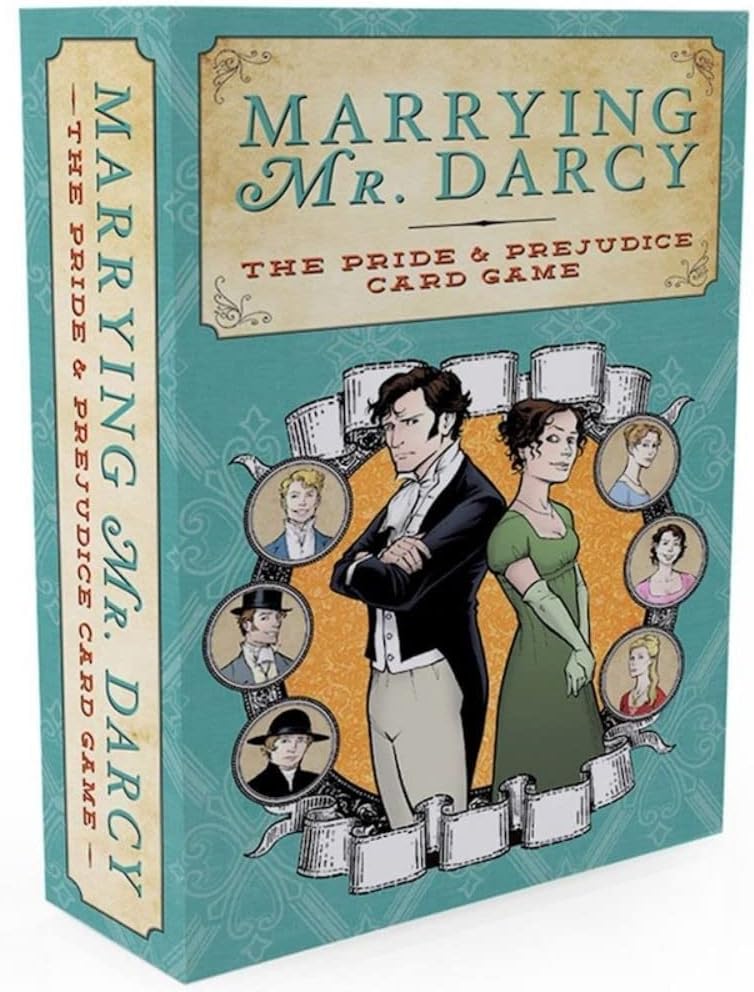 Marrying Mr. Darcy, designed by Erika Svanoe, art by Erik Evensen (Erika Svanoe Games, 2013)
One of my local gaming friends told me about Marrying Mr. Darcy, and brought his copy to a recent session, where we played it. I thought it was a lot of fun and have acquired a copy.
This is a game based on Jane Austen’s classic novel Pride and Prejudice. I think it could be played without having read that book, by anyone who has some familiarity with the courtship customs of the past. On the other hand, such players will miss some of the jokes that add to the pleasure of the game.
[Click the images to engage with larger versions.]
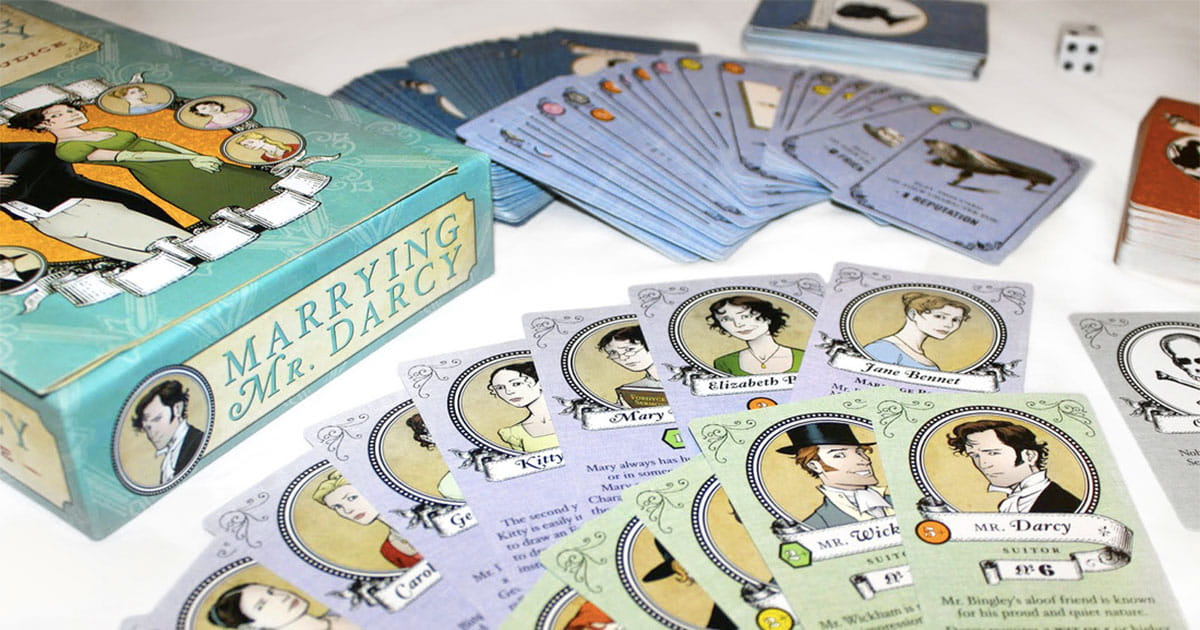
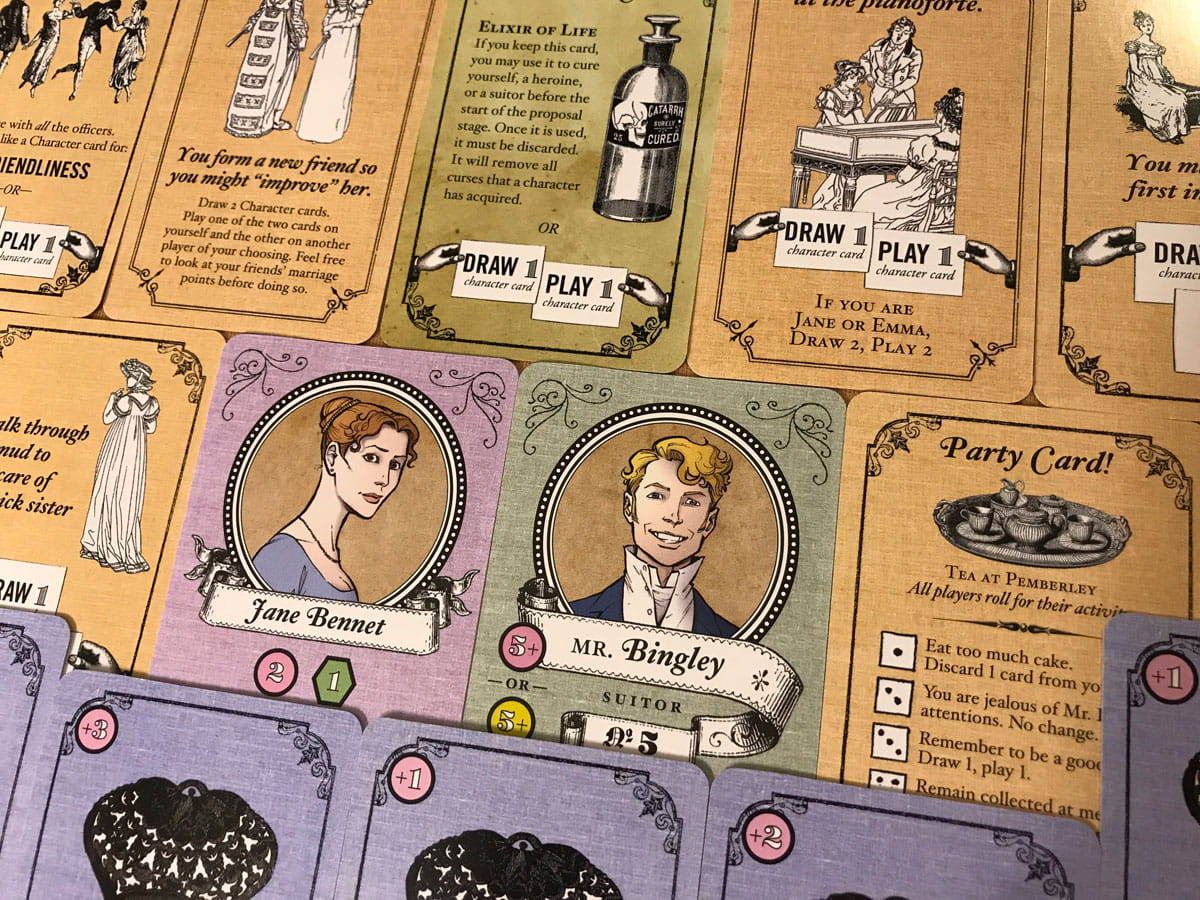 Some of the cards in Marrying Mr. Darcy
Up to six people can play Marrying Mr. Darcy. At the outset, players roll a die for first choice, and each chooses a young woman to play, from a set of eight, who are more or less all the named marriageable women in the novel: its heroine, Lizzie Bennet, and her four sisters, plus three others with disparate backgrounds. These women start out with certain personal traits; a dowry, which doesn’t count as a “personal trait,” but which many suitors are looking for; and a set of base scores to be earned by marrying different suitors.
Darcy, the hero of the novel, for whom the game is named, is usually worth a fair number of points, but is only the top ranked choice for Lizzie, for example. Cards are put out for suitors, showing what traits each requires before he would consider proposing to a woman. Note that some of the women are sisters of some of the men, who won’t propose to them — though there’s an optional rule where the women turn out to have been adopted (a plot twist H.G. Wells actually used in Joan and Peter, written about a century later).
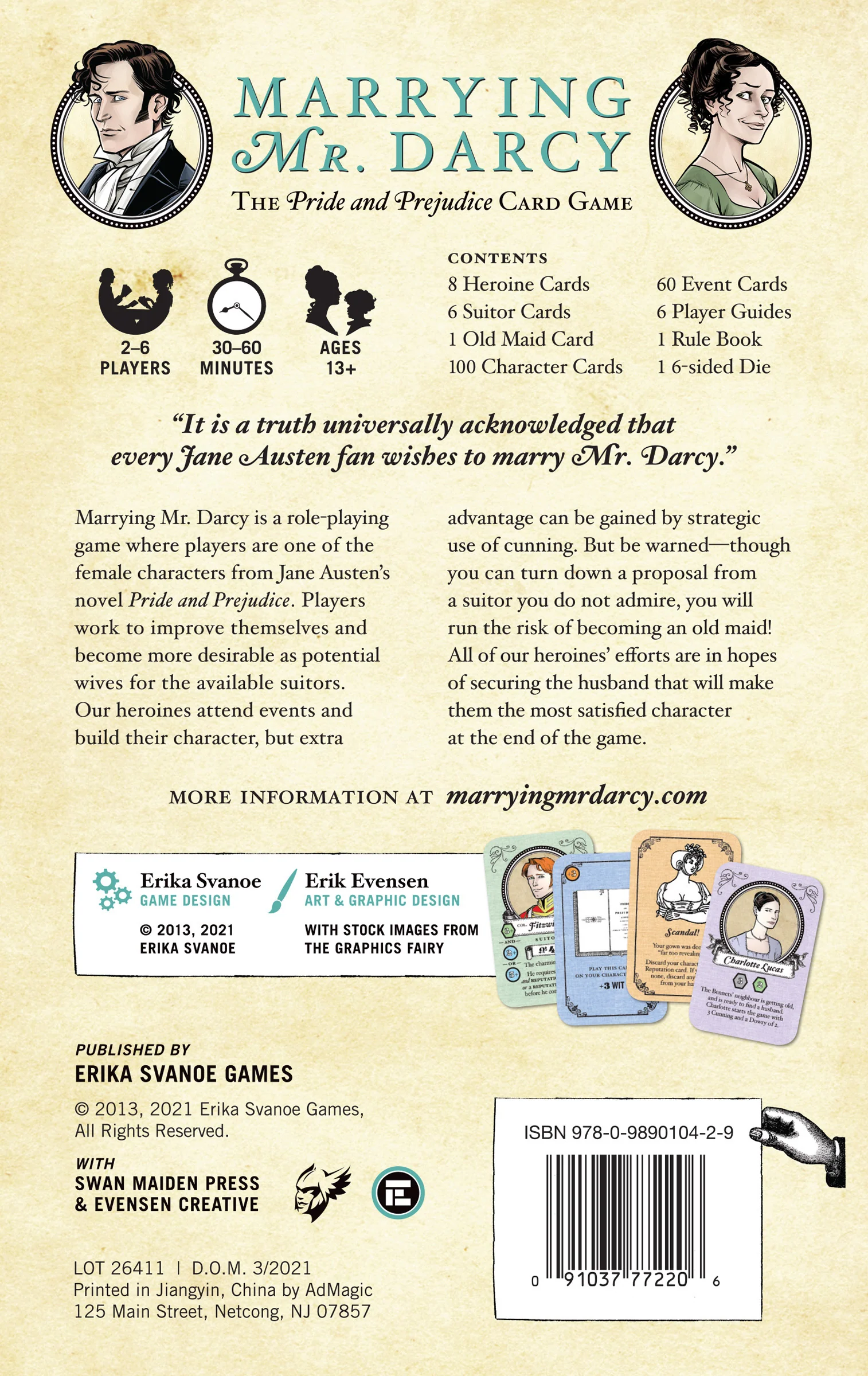 Back cover of Marrying Mr. Darcy
The first phase of play, courtship, involves drawing event cards, which represent something that could happen in the characters’ social milieu, such as a party, a family scandal, or simply learning to play a new piece at the pianoforte. I could think of an incident in the novel for nearly every “event.” Many event cards grant the ability to draw and/or play one or more character cards; they may also produce direct benefits or problems.
Character cards, in turn, often add to a characteristic. There are five of these. Four can be played face up: Beauty, Friendliness, Reputation, and Wit. These accumulate as played, giving each young woman the ability to appeal to various suitors; the strategy of the game involves knowing that Mr. Darcy, for example, favors young women with Wit, while Mr. Collins cares about Beauty and Reputation.

The Annotated Pride and Prejudice, by Jane Austen and David M. Shapard (Vintage, March 13, 2007)
Cunning is played face down, and can be used to undercut another young woman’s advantages by removing a card she has played face up, making her less able to compete for a suitor you want.
Character cards can also add to Dowry, which is not a characteristic but is important to some suitors. Reputation and Dowry, in particular, are important in ways that no longer apply in our era; players may need to have read some Austen or Heyer to be seized of the point that men usually expect a young woman to bring some of her family’s wealth into a marriage, and that they avoid a woman who might be feared to be unchaste or unfaithful — perhaps because her sister has eloped with a man she wasn’t married to (how did their family bring them up?).
 The Nonesuch by by Georgette Heyer (Sourcebooks Casablanca, April 1, 2009)
In the second phase of play, proposal and marriage, players’ turns are decided by Cunning scores: The most cunning young woman goes first. (If two young women are tied, the one with the higher Dowry goes first.)
All the suitors whose standards a young woman meets are identified, and the dice are rolled for each one to see if he proposes. The player can either accept or reject each proposal; acceptance removes that suitor from the pool available to other young women.
A young woman who turns down all her suitors, or receives no proposals, acquires the Old Maid card — a social disaster, but one some young women might prefer to a really bad marriage!
The final score is the sum of a character’s scores on Beauty, Friendliness, Reputation, and Wit and the point value of her suitor for her. The highest score determines the winner; ties are broken by Dowry or by Cunning — so that these two traits can still matter, in a less obvious way than the characteristics.
Marrying Mr. Darcy can be played in an hour or a bit less. It can be quite an entertaining game, as characters raise their standing in the marital competition or suffer dramatic reversals; each game is effectively a new drama about the Bennets and their social milieu.
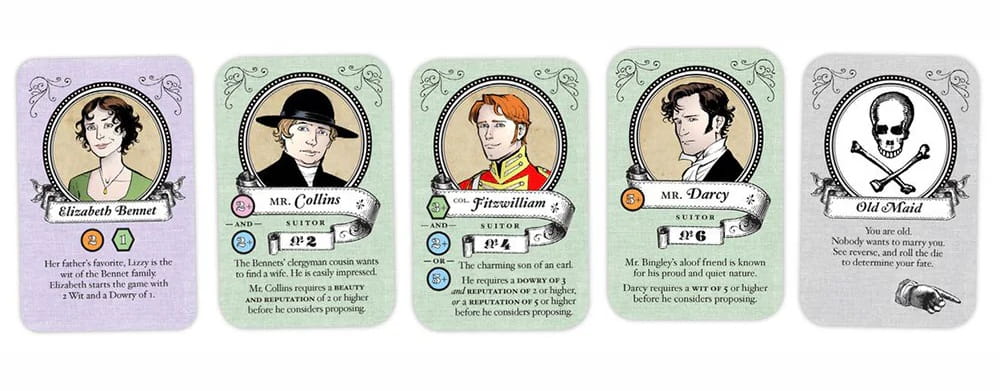
The cards are also attractively designed: Erik Evensen did a good job of suggesting that milieu. And between quickness and lightness, this was a perfect palate cleanser to be played after a complex, tactically challenging game, like having a salad after a main course. I look forward to playing it again.
William H. Stoddard is a professional copy editor specializing in scholarly and scientific publications. As a secondary career, he has written more than two dozen books for Steve Jackson Games, starting in 2000 with GURPS Steampunk. He lives in Lawrence, Kansas with his wife, their cat (a ginger tabby), and a hundred shelf feet of books, including large amounts of science fiction, fantasy, and graphic novels.
Categories: Fantasy Books
Spotlight on “Red X” by David Demchuk

LitStack Spots Here are a few other thrilling titles that we are absolutely adding to…
The post Spotlight on “Red X” by David Demchuk appeared first on LitStack.
Categories: Fantasy Books
The Faraway Inn - Book Review
 The Faraway Innby Sarah Beth Durst
What is it about:After a devastating heartbreak, a teen girl decides to spend her summer helping her eccentric great aunt manage her quaint Vermont inn--but this fixer-upper is hiding a magical secret--in this cozy and irresistable new fantasy from the New York Times bestselling author of The Spellshop.
Sixteen-year-old Calisa is desperate for a change of scenery after her lying ex ruins her perfect Brooklyn summer. When her parents suggest she head to rural Vermont to help her great-aunt run her cozy bed and breakfast for a few months, she jumps at the chance.
But when Calisa arrives at the B&B, she's shocked to find a rundown inn with only a handful of guests. And to make matters worse, upon meeting with her great-aunt it quickly becomes clear that Calisa was not invited. Auntie Zee is determined to keep anyone from messing with her beloved inn…even if it is clear she needs the help.
To earn her keep, Calisa sets to work fixing up the inn, enlisting extra help from the groundskeeper's (handsome) son. But the longer she stays, the more it becomes evident that there is something strange about the B&B—and its residents. Something almost…otherworldly.
The inn is keeping a magical secret—but to protect the place she's come to love, Calisa must unravel the truth of it, and her aunt, before it's too late.
What did I think of it:After the fluffy happy coziness of The Spellshop series I totally had to get this YA Cozy Fantasy.
And it doesn't disappoint!
I loved every minute I spent with this book. Together with Calisa I got to explore the Faraway Inn and discover its many wonders. Having read my fair share of Magical Realism and Fantasy books I picked up on the hints dropped throughout the story, which made sure I kept ahead of Calisa in discovering what was going on. It was fun to see where things started to click into place with Calisa.
Overall this is a wonderful and cozy read. You bet I'm keeping an eye out for more books by Sarah Beth Durst.
Why should you read it:This book is like a cup of hot chocolate on a chilly day.
Categories: Fantasy Books
Review: The Unicorn Hunters by Katherine Arden

Buy The Unicorn Hunters
FORMAT/INFO: The Unicorn Hunters will be published on June 2nd, 2026 by Del Rey. It is 368 pages and available in hardcover, ebook, and audiobook formats.
OVERVIEW/ANALYSIS: Duchess Anne of Brittany knows that she will never marry for love. As the ruler of a small duchy, she understands that any marriage she enters will be purely for political reasons. So when faced with marriage to the king of France, her resistance is purely political: marrying the king will end the independence of Brittany. Anne needs to find another marriage option without the king knowing, a task made all the harder due to the fact that the king's diviners can spy on a person at any time. But Anne knows of a nearby forest where the magics interfere with a diviner's gifts. In a desperate gambit, Anne announces a grand unicorn hunt in the forest, an event that will hide her real intent: to secretly marry a different king, one who won't require her to give up her duchy's independence. But the forest in question borders a fantastical realm known as the Lost Lands, and it isn't long before Anne realizes her actions have caused the Lost Lands to bleed into the mortal realms, threatening everyone she loves.
The Unicorn Hunters is a historical fantasy that has a wonderful blend of court politics and fairytale adventure. Loosely based on the real Anne of Brittany, much of the story has to deal with real world intrigue. Anne must deftly navigate advisors in her own court as well as envoys from two different royal courts as she tries to stall one marriage long enough to secretly arrange for the second. Through multiple POVs, we see the political chess moves of different characters, each trying to trap the other with clever words and polite decorum.
But woven throughout all the mortal intrigue is a fairytale adventure. Anne accidentally unleashes entities from what is essentially a fae realm known as the Lost Lands. It is a realm that operates by its own rules and logic. As the borders of the Lost Lands expand, the more fantastical things start to occur in the mortal world. The result is a story where Anne has to survive a political dinner in one scene, and figure out how to navigate a hall of endless doors in another. The two sides of the story blend together well and kept me thoroughly engaged in the story.
The one thing I bumped against in this story is that it often felt like problems were resolved too easily. A character could be kidnapped and rescued in a mere few pages, while a seemingly brutal political loss was turned into a victory in a mere blink. I'm all for competent characters, but I felt like some of these dangers needed to last longer to have their weight fully felt. Instead, we race from one problem to the next, which keeps the story moving, but also makes the dangers feel somewhat less threatening.
But overall, I loved the tone and writing of The Unicorn Hunters. It leans into the medieval, fairytale feeling of the story, feeling both real and surreal in equal measure. It was a wonderful adventure and another excellent release from Katherine Arden.
Categories: Fantasy Books
Book Review: A Parade of Horribles by Matt Dinniman
I received a review copy from the publisher. This does not affect the contents of my review and all opinions are my own.
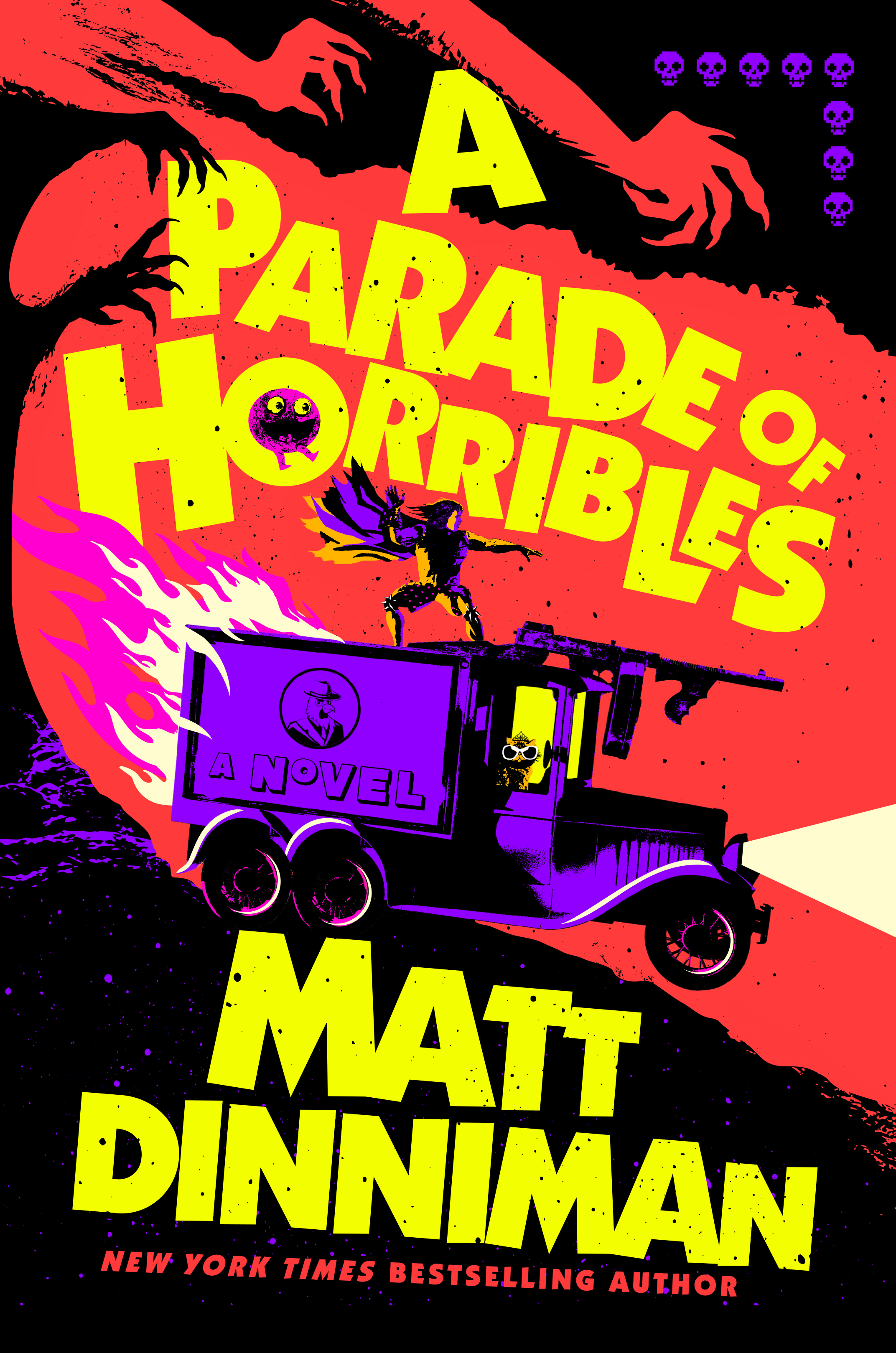 A Parade of Horribles by Matt Dinniman
Mogsy’s Rating: 4 of 5 stars
Genre: Fantasy, Science Fiction
Series: Book 8 of Dungeon Crawler Carl
Publisher: Ace (May 12, 2026)
Length: 704 pages
Author Information: Website
Saying that I was excited for A Parade of Horribles feels like gigantic understatement. Dungeon Crawler Carl has become one of my favorite ongoing obsessions, and thanks to the rapid-fire releases of the earlier books, I was able to tear through the first seven installments. This was the first time I actually had to wait, but I have to say, the anticipation was half the fun. Gotta love seeing this series explode in popularity over the last couple years because Dinniman really has built something special here, an action-packed sci-fi fantasy litRPG that’s equal parts ridiculous, heartfelt, and chaotic.
A Parade of Horribles brings us to the tenth floor, giving Carl, Donut, and the remaining crawlers barely a moment to breathe after the absolute carnage and fallout of the Faction Wars on the previous level. They thought the worst was behind them, but true to form, the dungeon has prepared yet another brutal setup, this time built around a deadly racing game that feels a bit like Mario Kart meets Mad Max. While the scale of the dungeon remains enormous, the field has narrowed considerably. Only several thousand crawlers remain, but their numbers are about to be whittled down further in this cutthroat, no holds barred competition designed to kill them all.
However, Carl has never been particularly good at sitting back and accepting impossible odds when the lives of the people he cares about are on the line. He wants to get as many of them out of the dungeon alive as he can but also knows he can’t guarantee the survival of every crawler during their individual heats on the racetrack. But perhaps there may be other ways to protect them? Meanwhile, the dungeon itself is evolving into something far more unpredictable and dangerous as the AI grows increasingly more unhinged. Out in the wider universe beyond the crawl, the fragile balance between alien factions and their galactic governments is also beginning to break down under the weight of everything that’s happened. Before long, the cracks in the system will become impossible to contain, threatening to bring entire civilizations crashing down along with them.
In this book, only a relatively small number of crawlers remain, and even our group of core characters has become reduced. For example, a certain someone who was a member of Carl and Donut’s party is no longer in the dungeon, for reasons I will not spoil, and I felt their absence keenly. This does give the story a very different feeling compared to the earlier books. Also, this isn’t the only area growing more streamlined, as I can feel Dinniman trying to simplify things in other ways. And honestly, I can understand why. In addition to the character roster, over the course of the series we have seen the world-building, game mechanics, dungeon lore, alien factions and politics all balloon into something massive. At some point, trimming is required to keep things manageable, and A Parade of Horribles definitely feels like part of that process.
I also noticed how the world outside the dungeon feels less present this time around. Earlier books constantly reminded us of the audience tuning in, watching Carl’s journey and showering his feed with septillion follower counts and likes. Presumably, everyone in the universe is watching by default, which makes sense narratively, but I did miss the broader sense of scale and spectacle. On the flip side, it did help keep the focus tighter on the immediate danger and the increasingly desperate attempts to survive what’s coming next.
Speaking of which, what I continue to love about this series is how every floor delivers something different. The vehicle race mechanics on the tenth offer new ways to play, and despite the high stakes, they are genuinely fun and full of the over-the-top scenarios that this series thrives on. Characters are dodging traps, engaging in sabotage, and pulling off increasingly ruthless strategies even as the story’s darker themes continue building in the background. The humor is still there, of course, but the mood has gotten noticeably heavier as Carl and Donut begin approaching problems with the cold pragmatism of hardened, seasoned crawlers.
Finally, even though I had a great time, I confess A Parade of Horribles comes in slightly lower for me compared to the previous books, but that honestly says more about how absurdly high the bar for this series has become than anything else. The pacing did feel a little off towards the end as certain plot points were rushed, and these were developments that probably could have benefited from more breathing room considering the importance of this final stretch. Sometimes the solutions to conflicts also feel like they materialize a little too conveniently and not as organically as before, but the author’s incredible creativity along with his sheer confidence are usually enough to push through any plot hiccups before things get too bogged down.
All in all, I greatly enjoyed A Parade of Horribles. Even when it gets messy, it remains wildly entertaining. The emotional investment is there. The humor is laugh-out-loud funny. The tension still works. And Carl and Donut are still the best duo ever. More than ever, this book feels like the calm before something huge, with all the buildup pointing towards a momentous endgame looming just over the horizon. I can’t wait to see how Matt Dinniman will bring this insane, hilarious, awesome ride home.


More on The BiblioSanctum:
Review of Dungeon Crawler Carl (Book 1)
Review of Carl’s Doomsday Scenario (Book 2)
Review of The Dungeon Anarchist’s Cookbook (Book 3)
Review of The Gate of the Feral Gods (Book 4)
Review of The Butcher’s Masquerade (Book 5)
Review of The Eye of the Bedlam Bride (Book 6)
Review of This Inevitable Ruin (Book 7)
Categories: Fantasy Books
Tales of Fantasy Rome: The Eternal City, edited by David Drake, Martin Greenberg, and Charles Waugh
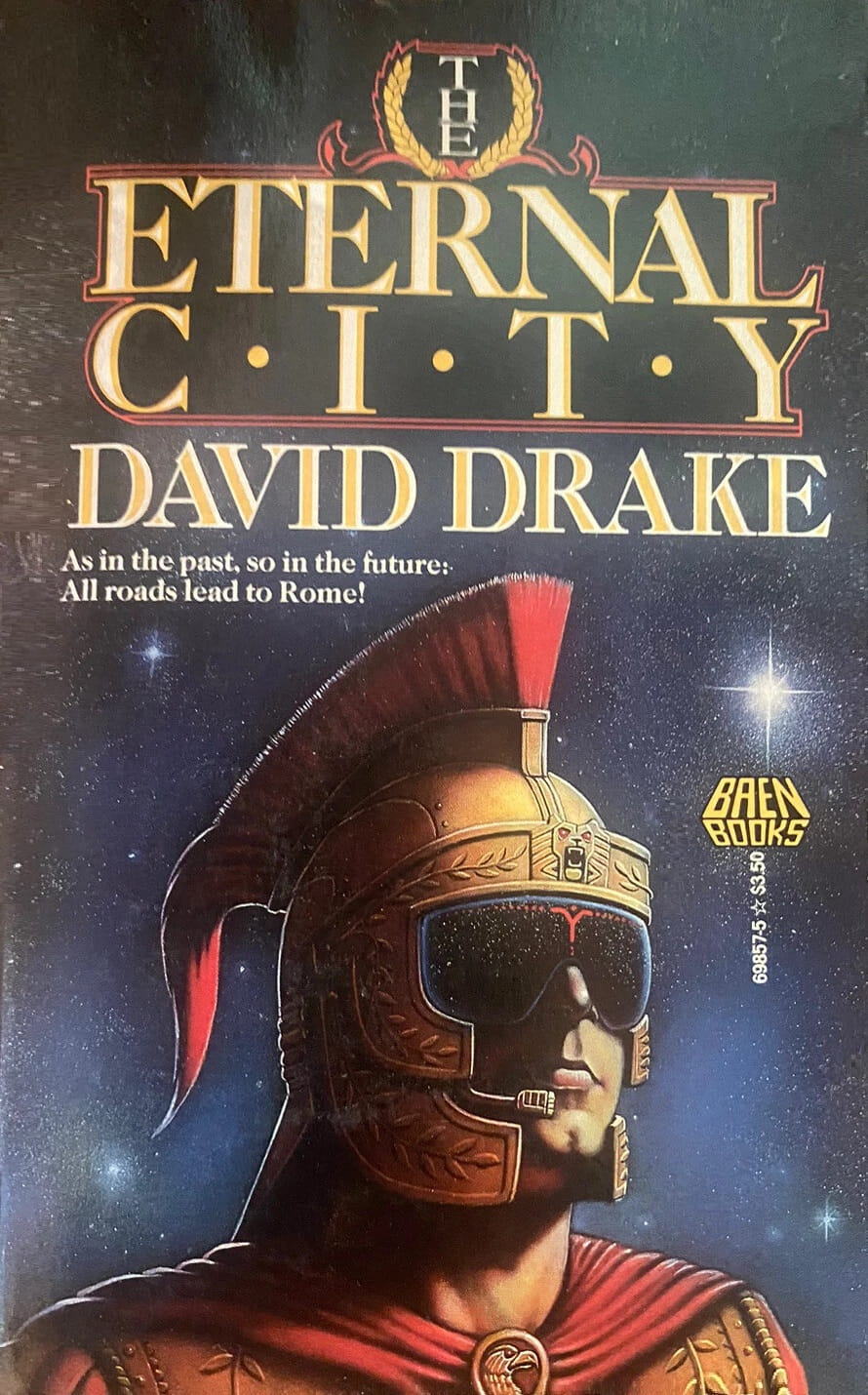
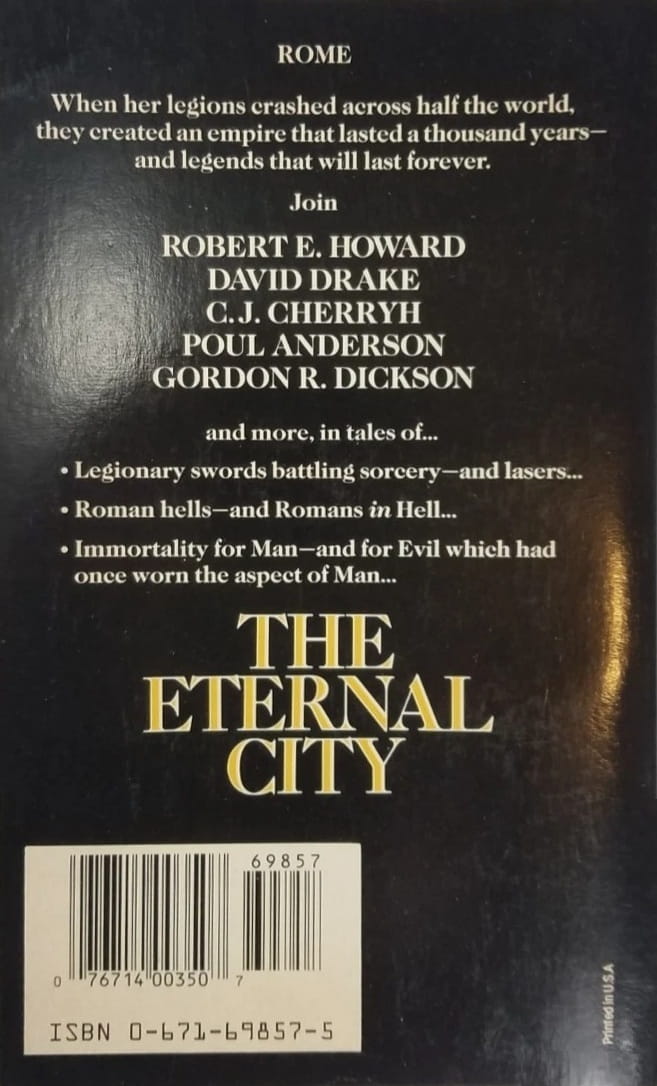
The Eternal City, edited by David Drake, Martin Greenberg, and Charles
G. Waugh (Baen Books, January 1990). Cover by John Rheaume
The main reason I bought this collection was for the Howard story, “Kings of the Night.” This was back when I was striving to be a Howard completist. All in all, an entertaining collection.
It was published by Baen in 1990, and Drake did a pretty good job of selecting the stories. Here’s the complete Table of Contents.
We have:
1. Introduction: The Creation of Rome, by David Drake.
2. “Delenda Est, a Time Patrol tale,” by Poul Anderson (F&SF, December 1955)
3. “Nightfall on the Dead Sea,” by Ray Faraday Nelson (F&SF, September 1978)
4. “The Prince, Heroes in Hell tale,” by C. J. Cherryh (Far Frontiers Vol. IV, 1986)
5. “The Bottom of the Gulf,” by Barry Pain (Stories in the Dark, 1901)
6. “An Elixir for the Emperor,” by John Brunner (Fantastic, Nov. 1964)
7. “Some Very Odd Happenings at Kibblesham Manor House,” by Michael Harrison (F&SF, April 1969)
8. “Time Grabber,” by Gordon R. Dickson (Imagination, December 1952)
9. “Survey of the Third Planet,” by Keith Roberts (F&SF, January 1966)
10. “Don’t Be a Goose,” by Robert Arthur (Argosy, May 3, 1941)
11. “Domitia,” by Mrs. Richard S. Greenough (Arabesques: Monarè, Apollyona, Domitia, Ombra, 1872)
12. “Survival Technique,” by Poul Anderson & Kenneth Gray (F&SF, March 1957)
13. “Ranks of Bronze,” by David Drake (Galaxy, August 1975)
14. “Kings of the Night,” by Robert E. Howard (Weird Tales, November 1930)
 Inside cover for The Eternal City
All the stories have some tie in with Rome, although sometimes fairly tenuous. A lot of them are very good.
“Delenda Est” is a classic. I also much enjoyed “Nightfall on the Dead Sea,” “An Elixir for the Emperor,” and “Survey of the Third Planet.” I thought “The Prince” was weak.
The “Some Very Odd Happenings” was definitely the strangest of the bunch, and grotesque enough to make itself a horror story.
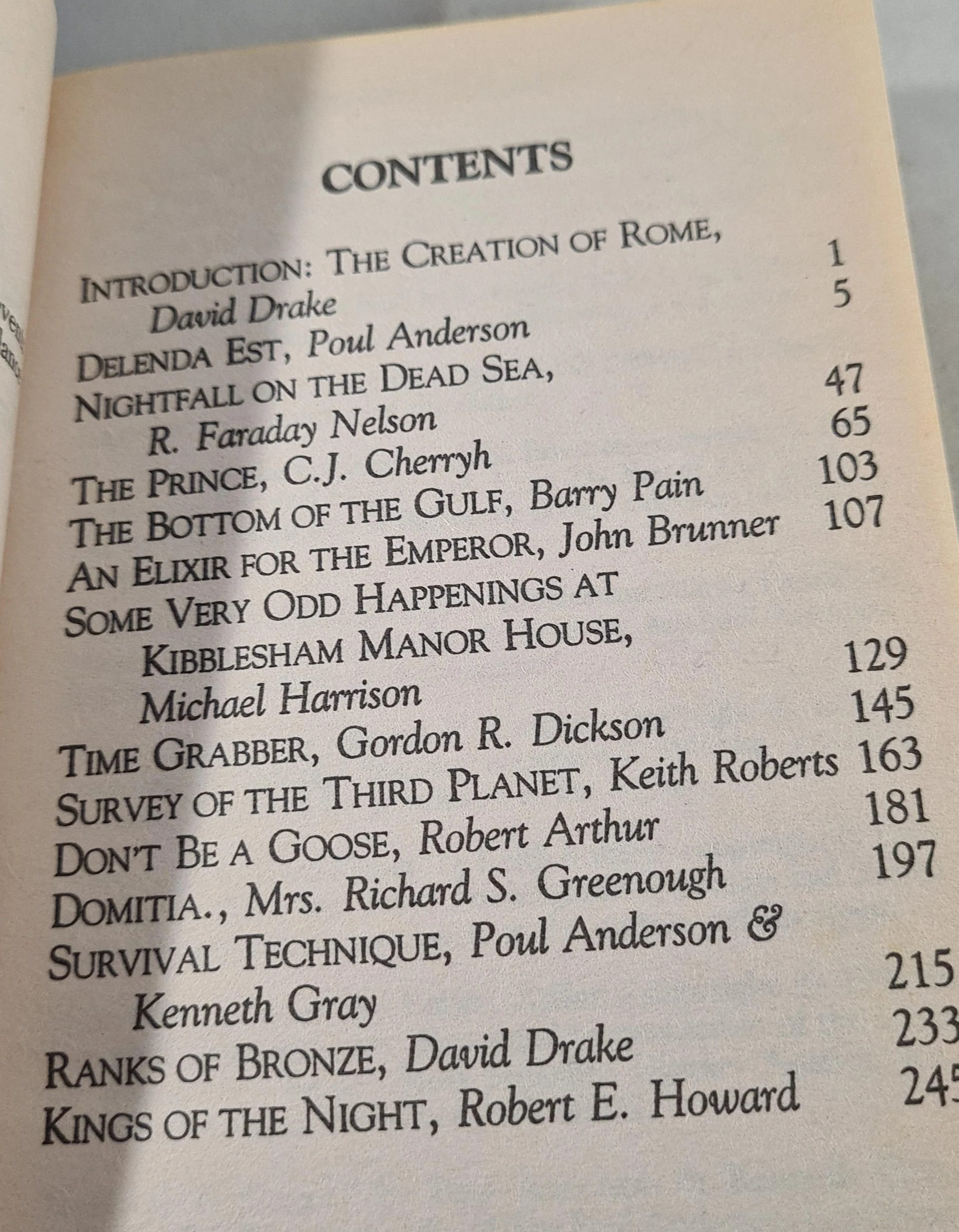 Table of Contents for The Eternal City
There were also two very hilarious tales, “Don’t be a Goose,” and “Survival Technique.” I enjoyed them both, and I like the short story “Ranks of Bronze” better than the full-length novel of that name.
Of course, Howard’s “Kings of the Night” is a great story, when Bran Mak Morn and Kull meet.
Charles Gramlich administers The Swords & Planet League group on Facebook, where this post first appeared. His last article for us was a look at Lin Carter’s Year’s Best Fantasy Stories. See all of his recent posts for Black Gate here.
Categories: Fantasy Books
Hello, Hello

I’ve received a concerned email asking if Something Bad happened due to my prolonged blog absence.

This is the actual wordcount. 7 scenes left.
This is a massive epic story. This sounds terrible, but neither one of us want to take anything out. We could tighten some scenes, but taking things out breaks either characterization or the flow of the manuscript. It’s not just about delivering plot and character moments. It’s about making sure that tense scenes are followed by lighter ones.
Three things are the hardest to write: battles, making love, and horrible tragedies. The latest 5 scenes in this draft include all three. These are the ones you write, and then rewrite, and finetune, and then finetune again. And then your husband frowns at the narrative and says, “This is okay, but it’s not punching. It needs to be punching.”
And then he punches his hand with his fist to demonstrate, and we go into greater detail on the gore.
I hate being late. Hate it. Due to this self-imposed pressure, I tend to default to writing bare-bone scenes, and I am incredibly fortunate because Gordon will not let me sketch it. He forces us to slow down and make sure we wring as much impact out of every scene as we can. This is the finale, and we need to stick this landing.
We only have a few scenes left, and this is the point where you make sure that all the threads are there to be tied into a knot. Meaning, if a character A is important, he must be highlighted 75,000 words ago, so people would remember who he is. So a lot of this is going back and tweaking.
Inevitably, this is the point most writers realize they have done something stupid, and it has to be fixed now, or there is no finish. For example, we had one-noted a character. His parts had to be rewritten. Sometimes it feels like you need to adjust seven things, so one sentence you have to have would make sense.
The one absolutely wonderful and amazing thing in all of this is Tor. They are basically letting us just write.
I estimate we will finish in 2 weeks. I am so ready for my summer, I can’t even tell you.
So I owe you updates on some things.
Vellum
The first trial order has been shipped out and UPS promptly sorted it into the wrong container, causing a delay. It should be arriving by Friday to most places. One person who received it said it was bent despite the cardboard, because the mail person folded it.
All new orders are going to get the Do Not Bend stickers. I’m told they are usually ignored, but we will try. If your order has arrived bent, please let us know. If everything arrives bent, we will adjust our packaging. Also, I will replace bent orders at no charge. I bought insurance, and I intend to file all the claims.
Vellum US – ready to go pending packages arriving.
Vellum UK. We found a printer. We now need fulfillment center, someone to pack out order and ship it to UK people.
Vellum EU – printer needed. If you know of someone based in EU who can print vellum, please let us know.
Vellum AUS – looking for printer and fulfillment center.
Merch
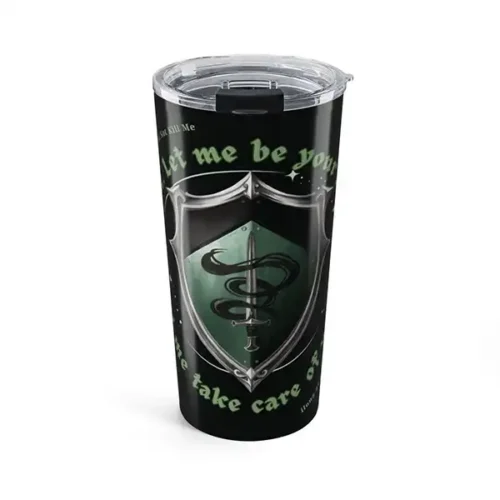
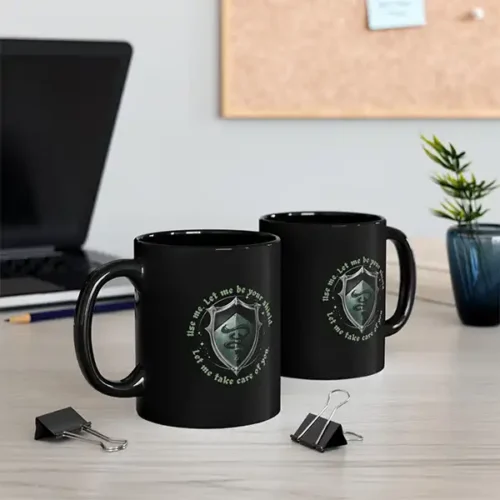
Working on it. We want to give you mugs and goodness. Some samples below/
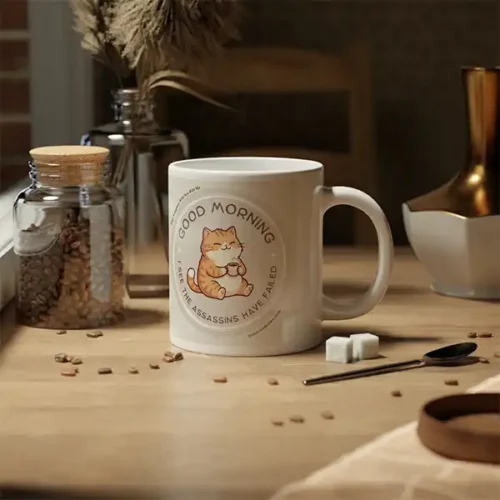
What’s the hold up?
I am. I am the hold up, because the book must be finished. This is kind of that primary thing where if there is no book, there is no merch or anything else. I need to get together with our long suffering designer and get things approved.
I have been falling down on the job. I have missed an invoice from an artist and did not pay it for 2 weeks, which happens never. If I get an invoice, it is paid within 48 hours. I sent the payment, an apology, and a prepayment, just in case.
Crafting update.
Kid 2: My fiancé took my blanket. He will not give it back. He says it’s cozy. I am blanketless.
Behold, a candid shot of me working on her new blanket.
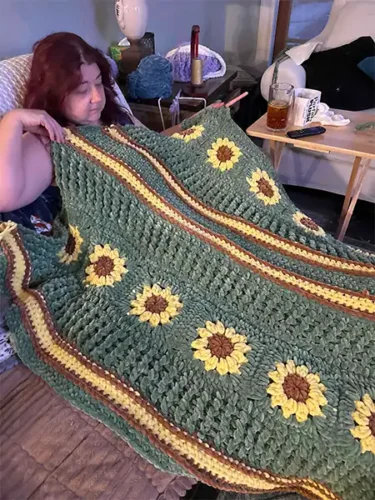
Gordon has a special power of taking the worst possible pictures of me, so this is a huge win. The pattern is my own. There is pretty much no pattern. I just did some sunflowers, post double crochets and stripes. Almost done. A couple of days and it goes to her.
Surprisingly, it’s not too hot, but it is a little heavy just because of the size. I was going to add some bees I would sew on, but I think the weight is probably too much as it is.
I also ordered yarn for that one shawl I want to make, but it is being dyed to order and I am waiting. I have been waiting for a while. Grrr.
Appearances
Monday, June 1st, we will be in Austin, at BN Arboretum, in conversation with Caitlin Rozakis about her new book, Startup Hell. I will do a bigger post on this before Monday. But if you missed us and need something sign, we will do it.
Hopefully we will be coherent. Because let me tell you, there is no brain left. This is an actual conversation I had with Grace Draven.
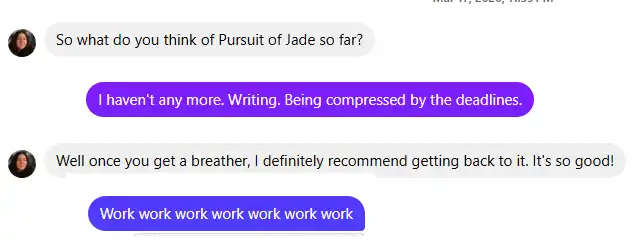
Hopefully we can be good hosts.
And now you are all caught up. I have to go and work now, because we have a can’t miss it errand this afternoon. Love you, BDH! You guys are honestly the best.
The post Hello, Hello first appeared on ILONA ANDREWS.
Categories: Authors
7 Author Shoutouts | Authors We Love To Recommend

Here are 7 Author Shoutouts for this week. Find your favorite author or discover an…
The post 7 Author Shoutouts | Authors We Love To Recommend appeared first on LitStack.
Categories: Fantasy Books
Slaying the Vampire Conqueror - Book Review
 Slaying the Vampire Conqueror (Crowns of Nyaxia #2.5)by Carissa Broadbent
What is it about:She was commanded to kill him with a single strike to the heart. She didn’t expect her own to betray her.
Sylina has sacrificed everything for her goddess–her soul, her freedom, her eyes. Life in service to the Arachessen, a cult of the Goddess of Fate, has turned Sylina from orphaned street-rat to disciplined killer, determined to overthrow Glaea’s tyrannical king. But when a brutal vampire conqueror arrives on their shores, Sylina faces an even deadlier adversary. She’s tasked with a crucial mission: infiltrate his army, earn his trust… and kill him.
Atrius is a terrifying warrior carving an unstoppable path through Glaea. Yet when Sylina becomes his seer, she glimpses a dark and shocking past–and a side of him that reminds her far too much of parts of herself she’d rather forget. Sylina’s orders are clear. The conqueror cannot live. But as the blood spilled by Glaea’s tyrant king runs thicker, her connection with Atrius only grows stronger. A connection forbidden by her vows. A connection that could cost her everything.
Slaying the Vampire Conqueror is a standalone fantasy romance set in the Crowns of Nyaxia world, full of heart-wrenching forbidden romance, dark curses, and epic battles – perfect for fans of The Bridge Kingdom and the From Blood and Ash series.
What did I think of it:I devoured this book, it's so good!
Turns out I absolutely love Broadbent's writing and worldbuilding, I just really did not like the main characters in The Serpent and the Wings of Night.
Sylina is an intriguing character. I liked getting to know her and learn more about her order and how it shaped her. Atrius is a cool character as well, so it was easy to root for the both of them to connect and learn to trust each other.
There's action and suspense, betrayal, and more, but the growing bond between the two and Sylina's growth as a person away from her order were the heart of this story.
All in all this is a really enjoyable and engaging read. I'll investigate if there are more books in this world that have this vibe.
Why should you read it:Cool worldbuilding and a very enjoyable romance.
Categories: Fantasy Books
Review – First Sign of Danger (Haven’s Rock, Book 4) by Kelley Armstrong (5/5 stars)

Reading Level: Adult
Genre: Mystery/Thriller
Length: 344 pages
Publisher: Minotaur Books
Release Date: February 17, 2026
ASIN: B0F5PDG8NF
Stand Alone or Series: 4th book in the Haven’s Rock series
Source: Borrowed ebook from library
Rating: 5/5 stars
“Detective Casey Duncan and her husband, Sheriff Eric Dalton, are entering a new chapter of life as parents to their six-month-old baby. Their family is hidden away in the sanctuary town of Haven’s Rock where they can live safe and private lives. But when they encounter hikers too close to the borders of Haven’s Rock, they realize they’re in danger of being exposed.
When they find one of the hikers dead the next day, they realize that their paranoia was justified, but they’re no closer to finding out who these people were and what they were doing in the vicinity of Haven’s Rock. Only by tracing the hikers’ movements, as well as examining the recent behavior of their closest neighbors, the workers of a secretive mining camp, will they be able to figure out where the threat is coming from and shut it down. Otherwise, the lives of everyone in Haven’s Rock–and their safe, secure new existence–are at risk.”
Series Info/Source: This is the 4th book in the Haven’s Rock series. I borrowed this on ebook from the library.
Thoughts: I really enjoyed this continuation of the Haven’s Rock series. The mystery is well done, and it was great to see how the new sanctuary town of Haven’t Rock is progressing. I am a big fan of Armstrong and have read the majority of her other series and enjoyed them. I would recommend reading the Rockton series before reading this one because there is quite a bit of background there that ties in with this story. However, this whole series does stand alone fine on its own.
In this book, Casey and Eric are juggling being new parents while ensuring that Haven’s Rock runs smoothly. The autumn is in full swing and they are surprised when they stumble upon a couple of lost hikers. This makes them both a bit paranoid about why the hikers were really out in the middle of the Yukon forest this late in the year. When one of the hikers is found dead the next day, their worry deepens. Exposure is always a danger, and Haven’s Rock has already been dealing with a group of nearby miners, not to mention rumors about possible spies from Rockton.
This story is another wonderful blend of survival elements, combined with a good mysterious police procedural. We get some closure around the mystery of the nearby mining company and also get some insight into what has been happening at Rockton since Casey and Eric left there.
I really enjoyed watching Casey and Eric move onto a new stage of life with their young daughter. Many people seem to want their new baby to be a liability, but instead, they are approaching this new stage of life in a way that brings the people of Haven’s Rock closer together.
This was a quick and easy read that was fast paced, kept you guessing, and well written. I can’t wait to see what the fifth, and final, book of the series holds.
My Summary (5/5): Overall I really enjoyed this book and thought it did a wonderful job of progressing the story. I really enjoyed the police procedural and survival elements to this story. I also enjoyed seeing Casey and Eric enter a new stage of their lives together. I am eager to see what happens in the final book in the series. I would recommend to Rockton fans, or to those who think survival combined with a good murder mystery sounds intriguing.

Categories: Fantasy Books
The Horrifying Draw of Subnautica

Good afterevenmorn, Readers!
Now that I’ve finished my play-thorugh of Far Cry 6, I have started playing a new game on my Friday night live streams. It is a survival exploration game that I am assured also has a story element (my livestreams are narrative games, largely). It is both fascinating and absolutely horrifying. I am, of course, talking about Subnautica. With the third game in the series out now in early access (oddly called Subnautica 2, even though the second game in the series was Subnautica: Below Zero), I figured I should take a stab at the original game. I knew precious little about it, save that it was a science fiction survival and exploration game, and that there was a thing in it called a reaper levaithan.
Now, I’m not very far into the game, so I haven’t experienced any of the promised story, save for the introduction, but I am already obsessed. Let’s talk about it!
 This thing. This thing is a reaper. I have seen it at a distance, heard it roar… and that’s quite enough for me.
I have only streamed this game three times (it’s a recent start), so I’m not very far into it. The story so far is this: your spaceship, the Aurora, owned by intergalactic corporation Alterra, crash lands on an alien planet (4546). A planet that’s entirely ocean. You, a person on the ship, escape into a life pod/escape module and land in a relatively shallow region in the ocean, not far from your downed spaceship. You are the only person in the life pod. And you might be the only person who survived the crash. I’m not sure yet. Every other life pod I’ve come across has been sunken, ripped open and empty of anything but personal PDAs (personal digital assistants). A couple of times, your PDA notes that some of the animals in the area have bellies full of human remains.
Oh, great.
You have nothing, but some food and some water, and your life pod. So… good luck?
It is up to you to gather resources and, using what’s on your life pod, create the things you need to survive – a scanner, so you can scan parts of other tech that you need in order to have your PDA patch together blueprints that you can use, or, if you’re me, the fascinating biological life everywhere around you (seriously, my inner nerd is going wild!). The further you explore, the more you discover and can use in order to help you survive this alien world. For instance, there is a type of fish that can yield fresh water… which is your most essential resource. Other fish you can cook or salt and eat. Other fish are poisonous and will kill you, which you won’t know unless you scan the thing. Also, there are broken pieces of tech strewn all over the place. If you scan enough of the pieces of one kind, you can create all kinds of tools – a knife, a repair tool, a seamoth (a kind of personal submarine – I just got the blueprints for that), even habitat pieces you can use in order to build your own base. I have a very rudimentary base at present.
 That’s her. That’s the remains of the Aurora (and your wee life pod).
There is also something about a virus which, the game having prompted the player to scan themselves for, I feel will play a much larger role eventually. I suspect that’s where the story will come in, but I haven’t much of a clue as to what that might be just yet.
I stream only once a week, being stupidly busy, but I am obsessed. I can’t stop thinking about this game. I want to catalogue all the species I find. I want to explore every biome. I run (swim?) screaming from that exploration because of horrific sounds in the dark…
Look, I don’t do horror. I am a cowardly, knock-kneed, scaredy-cat. I don’t read horror novels. I don’t watch horror films. And I do not play horror games. Except for this one, apparently. In my defence, I didn’t know this was horror until I was looking into the murky waters around the Aurora and heard a roar right behind me. THE SCREAM I SCRUMPT. As they say in internet parlance. Beyond the horrifying unknown, though, is an incredible game. The world is insanely thought through; from the various biomes to the creatures that inhabit them, and the technology that will help you survive this water world. It’s all so detailed and thorough. This game is a masterclass in worldbuilding.
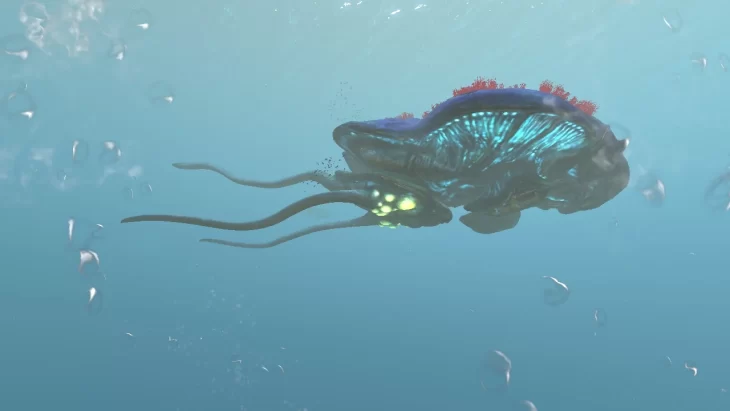 *Best Steve Irwin Voice* This beauty is a Reefback; the gentle giants of the oceans of planet 4546B. They might be the size of a house, but these puppies are passive as. They carry entire ecosystems on their backs…
While I cannot yet make any claims as to the story (I’m way too early in game time for much of that to have happened), if the story is anywhere near the level of worldbuilding, this game might become my absolute favourite.
It is also scratching that itch that I believe lives in nearly everyone. The itch that is curiosity – the urge to learn, to go to new places, to discover, and explore. The urge that compelled our ancestors into the frozen lands north of their home, the urge that compels us now to stretch out into the heavens. It is a powerful thing that I think the makers of this game tapped into expertly.
It is also absolutely horrifying. The number of times I have muttered the word “nope” (and much less savory words) while playing is not insignificant. And yet, despite that horror, despite the threat of dehydration, starvation, and drowning, I am drawn again and again beneath the waves of 4546B. I don’t know what magic this dev. team poured into the making of this game, but just nine hours in, it is certainly working. I can’t wait to return.
Alas, I must go to the office instead.
*grumble*
When S.M. Carrière isn’t brutally killing your favorite characters, she spends her time teaching martial arts, live streaming video games, and sometimes painting. In other words, she spends her time teaching others to kill, streaming her digital kills, and sometimes relaxing. Her most recent titles include Daughters of Britain, Skylark and Human. The Timbercreek Incident is free to read on Wattpad.
Categories: Fantasy Books
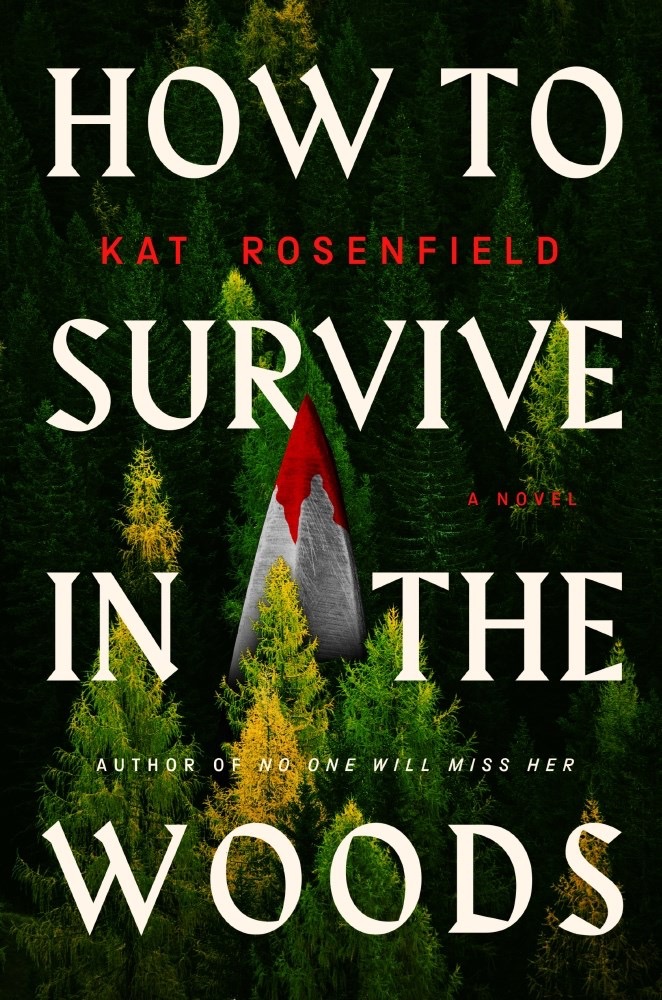
How to Survive in the Woods (by Kat Rosenfield)
Mystery / Thriller
Logan comes into Emma’s life after a suicide attempt, at a time when she just wanted someone to tell her what to do, where to be, how to live. He is a control freak and at her most vulnerable it seemed to be what she needed, but as the years go by his gaslighting and controlling lead into domestic violence.
When Emma meets Taylor, Logan’s former girlfriend she immediately knows what is happening and she comes up with a plan to get Logan out of both their lives. But everyone has secrets, everyone has a plan.
–––––––––––––––––––––––––––––––––––––––––––––––––––––––––––––––––––––––––––––
How to Survive in the Woods reminded me of a lot of different things. Gaslight, the old Ingrid Bergman move, Sleeping With the Enemy and maybe just a little Double Indemnity. It is a dark mystery thriller which holds its secrets close and only releases them begrudgingly. If I’m honest, the first half of the book was a struggle, it’s a painfully slow build but the second half more than makes up for it.
Trigger Warning: suicide, domestic violence
Categories: Fantasy Books
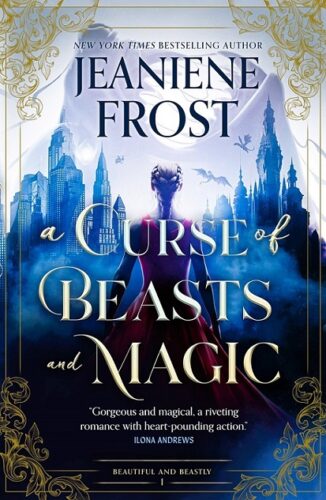
Happy Book Birthday to A Curse of Beasts and Magic
By now everyone probably knows that Jeaniene Frost is my BFF, so I am very biased, but I loved this book.
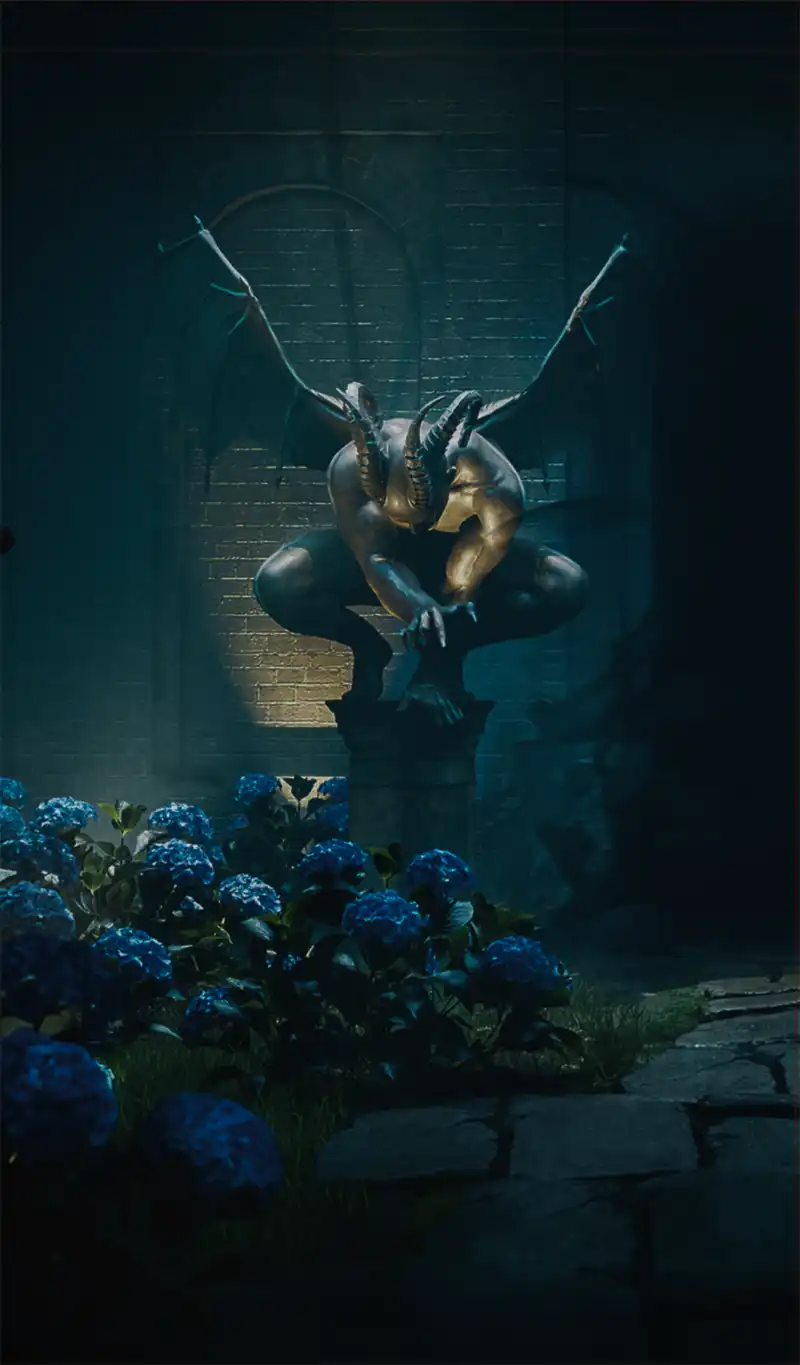 A CURSE OF BEASTS AND MAGIC
Raine Stone is living a nightmare. Ever since she survived the attack that killed her family, she’s been hiding a terrible secret–and a Beast inside her.
It feeds on violence and chaos, but she restrains its urges by playing vigilante on the city streets. Until one night, Raine uses the Beast’s energy to heal an elderly gentleman from a seemingly random attack and discovers a new world of danger—literally.
Remington “Remy” Byrne knows the wall between a realm of deadly mythic creatures and our own world is very fragile. After all, he’s the Warden who guards the gateways between them. Raine’s Beast contains power that could tip the scales in a sinister plot against Remy’s rule—if she allies with him.
Will they be friends or foes…or will their dangerous attraction turn into something else? And can our world be saved by their explosive alliance?
At the Publisher’s request, this title is being sold without Digital Rights Management Software (DRM) applied.
“Jeaniene Frost is Romantasy royalty!” J. R. Ward, #1 NY Times bestselling author
“A thrilling, sexy world.” Geneva Lee, NY Times bestselling author
“Unputdownable…A truly spectacular read!” Laura Thalassa, USA Today Bestselling author
Buy Links: Barnes&Noble, BooksAMillion, IndieBound, Bookshop, Walmart, Apple Books, Kobo, Target, Amazon, or your favorite book store.
Also available on Kindle Unlimited.
 Art by Elliza Art
- Enemies to Lovers
- Forced Proximity
- Fake Dating
- Morally Grey MMC
- Touch Her and D!e
- Portal Romantasy
- Spicy Scenes
This book is a modern fairytale.
The setting is lush and filled with magics, both large and small, from something like a model of a city where rivers flow upward to seeing that city in real life.
The hero is mysterious and inscrutable and is very clearly morally grey, although I’m not sure morally grey standard would even apply. Remington exists on the crossroads of magical realms. His interactions with regular people are limited. His primary concern is keeping everybody else from killing each other. Somewhere between the dragons and the fae, he forgot how to human a little bit.
But what I really liked the best is Raine. All of us harbor a part of ourselves that we don’t particularly like. Occasionally it rears us and jams a random thought into you head that makes you pause and think, “This was mean and petty. This is not me.” No matter how hard we work on it, we can never get rid of it. We can only suppress it.
Raine carries literal monster inside of herself and so much of her has been devoted to containing it. This is a woman who turned her body into a prison and thought for years that this is a burden she had to shoulder alone. Then along comes Remington and opens the world of possibilities she couldn’t have even imagined. She is so out of her depth, but she is a survivor, and she’s learning to swim in those dangerous magic currents. I have a feeling (more than a feeling, as I have read the second one) that Raine will soon come into her own.
So, pick it up for the scorching romance and magic realms, and stay for a woman who will not be anyone’s pushover.
As with all Jeaniene Frost’s books, romance is strong with this one. The spice is there and it is open door. She is also going on tour. If you are so inclined, you can see us together in Columbus this summer.
May 26th, 6:30pm
Barnes and Noble Arboretum
Charlotte, NC
In conversation with author Alyssa Dar for the launch event of A CURSE OF BEASTS AND MAGIC
Event details here.
June 7th, 2026
The American Writers Festival
Chicago, IL
Sunday 11:00am Panel and signing at Chicago Public Library
Panelists: Naima Simone, Alexis Saarela, Jeaniene Frost. Moderator: Sara Benincasa
Event details here.
June 13th, 12pm
Barnes and Noble Magnolia Mall
Florence, SC
Signing with Jeaniene Frost, Melissa Marr, and Alyssa Day
Event details here.
June 20th, 2pm
San Marco Books and More
Jacksonville, FL
Signing with Alyssa Day, Jade Presley, and Jeaniene Frost
Event details here.
July 11th thru 12th
Columbus Book Festival
Columbus, OH
Saturday: 10am, SPEED MATCHING, followed by a signing.
Saturday: 1pm, SPIRITS, SPELLS, & SWOONS panel, followed by a signing.
Sunday: 12pm: THE BEAST INSIDE panel, followed by a signing.
Event details here.
The post Happy Book Birthday to A Curse of Beasts and Magic first appeared on ILONA ANDREWS.
Categories: Authors
Building Intrigue Snippet 4
Normal 0 false false false EN-US X-NONE X-NONE MicrosoftInternetExplorer4 /* Style Definitions */ table.MsoNormalTable {mso-style-name:"Table Normal"; mso-tstyle-rowband-size:0; mso-tstyle-colband-size:0; mso-style-noshow:yes; mso-style-priority:99; mso-style-qformat:yes; mso-style-parent:""; mso-padding-alt:0in 5.4pt 0in 5.4pt; mso-para-margin:0in; mso-para-margin-bottom:.0001pt; mso-pagination:widow-orphan; font-size:10.0pt; font-family:"Times New Roman","serif";}
Chapter 4
Grand Duchy de Medicini
Grand Duke Lucas De Medicini swirled his drink as he considered his scheming and its latest implications. Things had not gone at all as planned.
He fought a grimace. He knew better; he honestly did. Too many annus of success had made him forget that there was the occasional setback and that not every scheme worked. These two had backfired rather spectacularly in fact.
For many annus, his spies had stolen technology, kidnapped artisans, assasinated people to destabilize a region, or formented war between two dominus to keep them fighting each other rather than look in his direction.
He had paid off the pirates with tribute so they would naturally look to his enemies to prey on for a time. He had no regrets over any of those actions. None at all.
This time though … he downed the drink. This time was a bit different he reflected. This one had the potential to bring thousands of annus of rule by his family crashing down around his ears. And he had only his own schemes to blame.
Well, to be fair he had to work through secondary parties, and he had to rely on the pieces moving in the directions he wanted. That didn't always work out. This time it had and had backfired anyway.
Duluth attacking the Imperium a decade or more ago had been anticipated and even encouraged. He had sat back and thought that the war would run for at least a generation, thus protecting him and his people. Instead, it had gotten the newly-arrived gaijin involved.
Duluth had settled into trying to lay siege to duchy Emory while also looting the countryside. He would have loved to have been a witness to the clash of titans on the battlefield.
He had anticipated the old king to have to rally the other dominus, and his spies had been set to have them bicker and stall while sending forces to the north. Duluth would have dug in, and it would have been a gloriously long campaign.
No one, not even he, could have anticipated a group of well-armed gaijin with technology beyond his people's to come from Patria. Nor could he have anticipated the massive changes that were shaking the Imperium and their world to the core.
The gaijin's influences had allowed the Ianna Imperium to smash the Duluth army. Their infernal contraptions had allowed them to smash the dominus as well. Rather than capture them and ransom them many of those dominus had been killed with their sons.
The Imperium had then taken control of Duluth, sending the young princess there. His spies had a few minor machinations to help prod the surviving Duluthians into rebellion. Rather than smash them again and then spend many annus and fortune guarding the north east the Imperium's gaijin had led a raid and rescued the princess as well as broken the rebellion.
Now instead of looting the fallen country, they were rebuilding it. That had killed a lot of resentment in the rusticus. The peons had taken the food and the aide that the gaijin had offered and were well on their way to converting into loyal subjects.
He shook his head. He'd thought the Duluthians were more prideful than that. Apparently, the giajin's allure had driven a wedge between them and their dominus. Most likely because they had been starving and the war that would have given them food had ended badly. Instead, their so-called enemy had helped them and wanted to teach them … he shook his head. Even he could hardly believe that.
It definitely inspired loyalty, though his spies he had recently sent to Duluth would put that to the test soon.
His latest schemes to destabilize the Imperium had failed. He was still struggling to understand how. Of course the gaijin had a hand in the failure of one. The other, well, that may yet succeed in diverting the gaijin from his borders for another few annus.
He reached over to the decanter and poured himself another drink.
Ever since the war in Duluth had ended, his spies had been reporting that the gaijin had convinced the queen to hold a Harvest Festival in her capital. It was just before the beginning of Autumus, when the largest harvest was finished and the winter crops were put in. Each festival was more impressive than the last. At the festival, they taught new things and showed the rusticus how to make things and of course sold many things as well.
They even had a university, a school of learning to teach such things. He had yet to get a spy in there for long. He didn't have such things; the guilds were jealous over their territory and did not like to share their secrets easily.
His spies had of course come back with many things from the festivals. However, the Imperium's spymaster had gotten wise to their antics. Also, no matter how much gold they offered no one could bribe or steal the recipe for the blasted thunderstick ammunition.
His right fist clenched and then unclenched around his glass. After a moment, he stopped it and gently touched the rim with a fingertip and traced it for a full minute.
The thundersticks and machima had started a race in all of the remaining kingdoms. He had taken advantage of their fear of the Imperium to try to forge an alliance with them. He hadn't anticipated that some would be more able than his own people at implementing the new technology.
One such group were the pirates and slavers off the west coast. He had an ambassador with them paying them tribute to keep them off his shipping. Dominic Cassius was his Legatus, ambassador to the pirates. He was also a spy. Through his reports, the duke had become aware that they were more advanced than he had assumed. But they were wary of him for his machinations and refused to share or sell their new technology.
He grimaced and shook his head. He would do the same if he was in their shoes. In fact, he was doing that very thing. His people had a treasure trove of material from the Imperium. He naturally wanted to keep what his spies had delivered under wraps for as long as possible. But he needed to use it too. It put him on the horns of a dilema.
He was still pushing to have his artisans look at the various things and do their best to recreate them. The weapons were top of the list.
Of course that research and development cost a lot of money. He wasn't happy at the expenses involved. He had been selling the secrets to the guilds but they hadn't been putting them into use much.
Oh sure, they'd made some strides with printing presses but not a lot. He had recently found out that the duchy ones were crude in comparison to the Imperium's. The guilds used wood carvings that were pressed onto paper. The costs had come down a lot for posters and such things but they still take time to produce.
His eyes went to the slate clock on the mantle and then to the map nearby. It studied it with practice ease, eventually shifting to the bottom of their known world.
He was very nervous about Caliope. Word had gotten back to him by ship; Caliope had fallen to the Imperials some time ago. He hadn't anticipated their fall happening so quickly. He'd thought the pass had been impregnable or at least would have turned into a slogging match that would have attritioned each side badly.
He hadn't anticipated the ability to bypass the pass with flying craft. Nor had he anticipated that the Imperials could take it so readily. The details were sketchy; however, his spies in the Imperium had confirmed that there were plenty of news reports stating that Caliope had fallen.
Had the grand duchess' court survivors told the Imperium about the mutual defense deal? How much had she let on to her court? He cursed himself for putting anything in writing. That had been foolish.
He still thought that playing her as a patsy had been a good move. Had he waited until the armies of the Imperium had been committed to attacking Caliope, even during the invasion, he might have been able to get in and take some of the northern reaches away from them.
Maybe. But they and their infernal gaijin would have taken it all back and then come for him next.
The new weapons gave a single man the power of many. It was amazing as to how small their army was and how easily it could break larger more conventionally armed ones. It was also a bit terrifying given that his army was still armed with those now antique and useless implements.
The one bit of good news was that the pirates had played into his hands in a way. The news from the Imperium had reported that they had somehow forced one of the Imperium planes to land in the water near their land. They had taken the people on board hostage.
He had to get a look at the thing. There were no doubt many wonders on board.
More importantly, the downing of the craft and the pirate raid on Nuevo Imperium's coast had fixated both Imperiums on them for the foreseable future. Which meant he might have time to get his people to finally crack the secrets of the thunder sticks and other mechanical marvels.
---+--+-{0}-+--+---
Categories: Authors
“Last Girl Gone” | Heart-Pumping Realism Hits Close to Home
Recommended Titles by J. G. Hetherton and Others Along with Last Girl Gone, we’re picking…
The post “Last Girl Gone” | Heart-Pumping Realism Hits Close to Home appeared first on LitStack.
Categories: Fantasy Books
Teaser Tuesdays - The Sea Witch

But I thought I should show him what I can do, I protest.The Sea Witch cuts me off. Let him win. Again and again. Watch his mood improve.
(page 136, The Sea Witch by Rebecca F. Kenney)
---------
Teaser Tuesdays is a weekly bookish meme, previously hosted by MizB of Should Be Reading. Anyone can play along! Just do the following: - Grab your current read - Open to a random page - Share two (2) “teaser” sentences from somewhere on that page BE CAREFUL NOT TO INCLUDE SPOILERS! (make sure that what you share doesn’t give too much away! You don’t want to ruin the book for others!) - Share the title & author, too, so that other TT participants can add the book to their TBR Lists if they like your teasers!
Categories: Fantasy Books
THE DORIANS by Nick Cutter
If, on your death bed, a stranger offered you the chance to extend your life, would you? Especially after you were resigned to death to the point your death would be medically assisted? That’s the question Nick Cutter posits at the start of The Dorians, publishing in May 2026 from Saga Press. On a remote…
Categories: Fantasy Books
Free Fiction Monday: The Trendy Bar Side of Life
Strangers don’t walk into D’s bar very often. But one night, a stranger shows up. Something about him seems familiar. Reminds her of her past. And just might threaten her future.
“The Trendy Bar Side of Life” is available on this website for one week only. If you want your own copy, head to WMG Books, or pick it up from any of your favorite retailers.
The Trendy Bar Side of Life Kristine Kathryn Rusch
I tend bar, not in one of those upscale things that serve weird drinks with funny names, where everyone comes after work for a nanosecond while the bar’s the hot spot and then move on when someplace else becomes trendy.
Nope. I tend bar in one of the old dives that still exist in neighborhoods, the kind that no sane person would enter without an invitation, and that invitation only comes from the universe. You know, you lose your job, your wife walks out, your friends tell you to stop whining, so you pass the dive bar you’d never think of entering when you’re on the trendy bar side of life.
You walk in, see the decrepit unshaven guy sitting at the edge of the bar, a woman nursing a piss-colored beer at a table that hasn’t balanced since 1970, and one of those lighted bubbling beer signs for a brand that got discontinued when you were a kid. You doubt the bar’s been cleaned since then, either, although none of the surfaces you touch are sticky or dirty or dust-covered. The place is just so old that the dirt and the now-banned cigarette smoke are embedded into the walls.
I’ve worked in that kind of bar since the night Ronald Reagan got re-elected, the night I decided to chuck it all and walk into one of those bars myself. Only I walked in, wearing a suit with a lace collar, bow-tie untied, and heels so high they looked like fuck-me-shoes instead of what they really were, which was the required business attire of the day.
Yeah, I’m a woman. Yeah, you’re excused if you have no idea. Most people don’t know until I open my mouth, and some aren’t sure even then. They see the shaved head, the muscular fat, the T-shirt with ripped sleeves, and the bicep tattoos and think “man.” They ignore the studs outlining the rim of my ears, the delicate chain around my neck that ends in a tear-drop diamond, and the breasts which, granted, are a bit underwhelming, even with the extra fifty pounds I’ve gained since that horrid night.
This isn’t my bar, even though folks think it’s my bar. They never see Bancroft, the owner, who, let’s be honest, hasn’t crossed the threshold since his first AA meeting in 1991. He calls me on the landline when he’s coming by (he doesn’t have a cell), stops his Hog in the alley near the garbage cans so he can’t smell the piss and stale beer from the back door, and makes me hand him the books (on paper), the cash, and the hard drive backup which, in theory, he takes to the accountant, because Lord knows, a man who doesn’t like cell phones doesn’t like computers either.
Bancroft tells me I can do what I want with the place. I can redecorate. I can expand to the empty storefront next door (which he also owns). I can start making trendy drinks.
He doesn’t care, so long as the bar makes money.
I’m afraid if I alter a damn thing, the money will vanish, and if the money vanishes, then I actually have to confront a few things, like why I work in a dive bar in a redneck neighborhood, why I have the same conversations that I’ve had weekly for thirty years with the same people, and why even I’ve started to look at strangers with suspicion because, y’know, they don’t belong in this bar.
Which is how I look at the new guy when he staggers in. Maybe twenty-five, pretty in a sexually ambiguous kinda way, collar open, shirt askew, tie completely gone. He’s walking like something hurts, like a woman does when the high heels she’s worn all day hurt not just her feet, but her back as well. Only he’s not wearing high heels. His dress shoes are stained on top, but the sides shine.
He gingerly climbs onto a bar stool in the very center of the horseshoe bar and if I weren’t paying attention to him, I’d assume he was being prissy—worrying that the seat wasn’t clean enough for the black silk pants that matched the shiny black silk suit coat.
I slap a bar napkin in front of him, and he jumps. Then he looks at my hand, resting on that bar napkin, as if he’s never seen a hand before.
I frown. And, for once, I modulate my tone so I don’t sound actively hostile.
“You want something?”
He raises his head, but his eyes don’t meet mine. “I don’t know. Jesus. A drink.”
Normally, I’d say, You are in a bar, buddy, but I don’t. Instead, I look closer at him. His hair’s spikey, and I don’t think that’s style. Either a bruise is forming along his chin or something has smudged there.
“Ah…beer,” he says, then shakes his head. “Um, no. Whiskey. Brandy. Something that burns.”
“Beer, whiskey or brandy,” I say. “Which do you want?”
“Jack,” he says. “Just give me some Jack.”
I pour him a Jack Daniels, and set the glass in front of him. He’s already torn up the bar napkin. There’s dirt under his fingernails.
His manicured fingernails.
He leans over the drink like he doesn’t recognize it. I get another glass, and fill it with ice water, and set that in front of him, on a coaster this time, with a bar napkin beside it.
He doesn’t even look up. I’m not sure he notices.
My own mouth is dry. I look around the bar, to see who’s here. The same crowd is here day to day, so sometimes I don’t really notice who’s in the bar and who’s not. And I haven’t noticed until now.
Ma Kettle sits in her favorite booth, her gray wig askew, and her sweatshirt food-stained. Her real name is Cora Kattleman, but I think I’m the only one who knows that, and only because she opened her tab with a credit card fifteen years ago. Everyone calls her Ma Kettle at her insistence, and most folks don’t even know the reference, a clichéd but popular hillbilly movie character from the 1940s and 50s.
But then, no one thinks about the nicknames. Most of us in this place have one, and we use it instead of our real names. It’s easier that way.
Ma Kettle comes in at noon, every day, and sits in her booth. I set the first vodka tonic in front of her, and maybe by the fifth, she’ll say hello. She doesn’t talk much, mostly watches the TV, which I have on mute, and stares at nothing.
She hasn’t seen the guy.
And no one else is here, although Rick Winters should come in at any moment. His shift ends at 3:30, and he usually rolls in here by 3:35.
Just me, Ma Kettle, and the new guy, who hovers over his drink like he’s about to puke.
The sleeve of his suit is split at the shoulder, and the silk in the back looks smudged, like silk does when it has encountered liquid it doesn’t like.
I’m shaking, just a little. I’ve been there. I’ve literally been there, right here, at this bar, in ripped clothes, aching all over, staring at a drink I don’t want, but not sure what else I can do.
Turning point: Last night of my professional life. Last night of my all-important career. Last night of ain’t-she-cute.
That’s how I know he wasn’t in a fight. Oh, he might’ve fought. But one of those knock-em-down, drag-em-out fights? Naw. Right now, everything’s scraped and raw and coming in images. He’s not thinking clear, and I don’t blame him.
I also don’t lean toward him to talk.
Bancroft leaned in that night, thirty-two years ago, and probably scared a decade off of me. I still have nightmares about that moment, and jump whenever Bancroft leans toward me. Not his fault, but he got roped into those images, those memories.
So this afternoon, I slide the ice water toward the new guy and say, “Did you know him?”
The new guy’s hand shakes as he grabs the whiskey glass. His knuckles are scraped and his thumb is swollen and it hangs funny. It might be broken.
“Whatever you think you know,” he starts in a tone that puts me, a bartender, back into my lower-class place, “it’s wrong.”
His voice wobbles on the word “wrong,” and he swallows hard.
Naw. I’m not wrong. He wants me to be wrong. He doesn’t want me to see him at all, and I see too clearly.
Like Bancroft had with me. I’d said to Bancroft, Piss off, asshole. Let me drink in peace.
And he’d said, I don’t think you’re going to find peace tonight.
I don’t know what to say now. I know what not to say. So I go for short and succinct, flat tone, as if I don’t care. And I do care, even though I don’t want to.
“You want that thumb to keep working, you’ll need to see a doctor,” I say. I don’t say anything about his private parts, which’ve got to be just as bruised. Maybe more bruised. Maybe more than bruised.
I don’t want to scare him away.
Now his eyes meet mine. They’re brown, two shades darker than his skin. They’re also watery, and his lower lip is trembling.
“No,” he says in a tone that adds, Back off.
I shrug, grab the bar rag and toss it over my shoulder. It smells of the vinegar solution we use to wipe down the back area. I walk away, keeping my eye on the guy in the gigantic mirror behind the expensive alcohol.
He starts to pick up the whiskey, grimaces, and keeps the glass on the bar. That thumb is the size of a dying balloon. With his other hand, he grabs the ice water. The glass shakes as he raises it to his lips. Some of the water drips onto his expensive suit.
The door bangs open. The new guy jumps and spills more water. Rick Winters stomps in and slams the door behind himself. That takes some doing, because I got the door on one of those slow swings, just so no one can slam it.
Rick looks older than he should—balding, a growing beer belly, and a whole lotta attitude. He’s staving off burnout by spending the afternoons here, but he doesn’t have much longer. Every day for the last six months, he’s come in mad.
I open a Heineken and set it at his usual spot on the bar, on the left side of the horseshoe, back to the door. He looks at the new guy.
“What’s the story?” Rick asks, with an edge.
I shrug. I don’t ask for stories. Rick should know that. It’s one reason he comes here. The relief bartender, who usually works weekend days, came in for me one afternoon, asked Rick what had him so pissed off, and got to hear the entire story about a five-car pile-up on the Expressway, which started with the sentence, Fucking drunk drivers, and ended with, and of course, the asshole drunk walked away.
Rick might be a drunk himself, but the minute his fingertips touch a green longneck, he doesn’t go near a vehicle. He says 90 percent of the shit he deals with as an EMT occurs because someone who had too much to drink gets behind a wheel or punches the wife or plays with a gun. Rick says he needs to haul his ass to AA, but he’s not ready.
He’ll be ready when he quits the job. He’s not suited. It’s not the drunks he objects to. It’s all the blood.
Rick’s fingers haven’t touched the bottle. He’s still looking at the new guy. “Pretty messed up.”
“Yeah,” I say, not willing to add that I’d mentioned a doctor already.
“It’s probably none of our damn business,” Rick says.
“It usually isn’t,” I say, and wipe off an imaginary spot on the bar near that Heineken. Ma Kettle pounds her glass on the table—a sign that I haven’t been doing my job: I usually anticipate her drinking needs—and then there’s a large clatter and bang behind me.
I whirl in time to see the new guy’s head slide off the bar. He’d knocked over his water and his whiskey when he passed out. He would’ve fallen all the way to the floor, but somehow Rick levitates from his place at the end of the bar and runs to the new guy’s side, catching him before he bangs his head again on the nearby stool.
“Shit,” Rick mutters. “Shit.”
At first, I think he’s commenting on working after hours, at dealing with some drunk. We’d done it a hundred times, dragging some idiot to a chair where we throw water in his face, pick his pocket for his wallet and address, and call him a ride home.
Then I realize that Rick isn’t looking at the guy or where he’s dragging the guy to. He’s looking at the bar stool.
He picks up the guy as if he weighs nothing, and swings him toward the door. Liquid drips—I’m thinking whiskey, when my brain registers the viscosity.
Blood.
The guy surfaces, looks up, sees Rick holding him, and screams. I’ve never heard a sound like that, raw and pain-filled, and completely anguished.
“Call Mercy General,” Rick says. “Tell them I’m bringing in a guy. I’ll radio.”
The guy claws at him, moaning now, kicking, trying to get free.
“You got your rig?” I ask. I’ve only seen it once, that ambulance he drives like it’s a tank.
“No, not that it matters. I got a radio in my truck.” Then Rick backs him out the door, and the guy screams again.
The sound fades as the door bangs closed.
“Jesus,” Ma Kettle says. “High drama.”
Then she holds up her glass.
I pour her another vodka tonic, just because it’s easier than fighting with her. I carry the vodka tonic around the bar, and head toward her, careful to step over the blood trail.
In one move, I take the old glass and set the new one down on the wet bar napkin. It’s a sign of how distraught I am that I haven’t brought a new napkin. Automatic movements and all that.
I turn, look at my bar from the customer’s point of view. A thin line of blood drips off the new guy’s stool. How had I missed that?
I look at the door, see only a blood trail leading out. Either he hadn’t been bleeding that bad when he came in, or the blood disappears in the general ambience of the place.
Here’s what I can do: I can call the cops, let them treat this place like part of a crime scene, not that it is a crime scene. It’s a crime scene aftermath. Technicalities and all that. I can leave it or I can clean up.
The cops’ll come here anyway. Mercy General will have to run a rape kit. Rick’ll insist on it, and because he’s there, he’ll file, as an EMT on the scene. Whether or not the new guy presses charges, well, that’s up to him.
Considering how he was sitting for so long in so much pain, considering how he didn’t want a doctor in the first place, considering that suit, that condescending tone, he’s not going to want cops involved. Hell, women don’t want cops involved, and it’s quote-unquote normal for a woman to get raped.
Guys, well, they’ve got even more stigma to overcome. Not just with the cops, but in their own head.
I go to the back, grab the fluids bucket, the oldest mop, and some bleach. At least three times a month, I clean blood off my floor. I’m damn good at it, after thirty years.
I can make anything disappear.
Except the memory of what came before.
That memory never leaves.
***
“He won!”
Confetti, balloons, hotel grand ballroom doing double-duty—half a party for the Reagan-Bush Re-election Campaign, the other half for Senator Dwight Corbin. Red, white, blue, the posters with their exclamation points and patriotic lettering lining the walls, including the stupid one, the one that always stopped me short—Ronald Wilson Reagan painted to look decades younger despite the wrinkles on his face, almost Norman Rockwell, an American flag behind him, an unrecognizable George H.W. Bush looking off to the side, and the slogan “Bringing American Back!” which always, always made me ask, “Bringing America back to what?”
If I’d been working national campaign instead of state campaign, I’d’ve advised against the slogan. I mean, after all, hadn’t Ronald Reagan been president for four years already? Bringing America back from the brink? Because we felt like we were on the brink: I just didn’t trust Mondale to do anything except flap his gums.
I was a great operator back then, a better operator for Reagan than Senator Corbin, although Corbin’s campaign shared me once everyone figured out just how well I could handle the press. Didn’t need a lot of press for the re-election campaign—they’d send their flunkies in when the President came to town, which ended up being all of three times. Needed lots of press for Corbin because he was young, because he was new, and because he was dumb as rocks.
I wasn’t really grooming him for a national senate seat or even governor once he finished with his state term. I was grooming me for the day when women in politics became more than a curiosity or a curious screw-up, like Mondale’s Veep Ferraro, whose husband cocked everything up, the way husbands always do.
So, celebrating, drinking, confetti in my hair—hell, confetti everywhere, including my hoo-ha when it was all said and done. I still don’t see confetti as anything but evil, even now.
The rest of the memory gets lost in campaign Sousa marches and cheers of “he won!” and laughter, lots of laughter. The laughter bleeds into everything, like clown laughter in a bad horror film, and then the lights get dim, and there’s a bed involved, one of those pasty hotel beds in one of those gold upscale rooms, and I’m holding champagne, and then I’m not, and I stand in the bathroom, aching everywhere, pulling confetti out of my hair and wondering if my lips look bruised.
I paste myself back together, adjust the suit coat, leave the stupid bow-tie undone (who thought of bow-ties for women, anyway?), finger comb my blond curls, wash off my face and ignore my shaking hands.
Then I walk out the door, go back before it closes, grab my purse, leave again, and look at the elevator, think: maybe he’s in the elevator. Think: maybe people’ll wonder why I’m in the elevator. Think: they’ll want me back in the ballroom. Think: screw the ballroom, and walk to the stairs, conscious that I’m limping a little.
I blame the shoes. Even in my memory, I blame the shoes—too high, too pointed, too tottery. But really, that year, I lived in extra-high-heels, showing off my calves, my thighs, my ass, because you could go miles with the male operatives if you distracted them with some cleavage and a hint of sex.
That’s what I was thinking as I walked down the steps. My fault. Cleavage, hint of sex, only a matter of time. Reached the lobby, didn’t go out that way, went down one more flight to the parking garage, only it wasn’t a parking garage, it was the basement, a nearly empty function space that I hadn’t seen, and a door marked exit that I walked through to an alley that meandered like I was, until I found our street, this bar, one drink, and Bancroft saying I don’t think you’re going to find peace tonight.
But I did. Peace and oblivion, not in bottles, like Bancroft those first six years. But in the work. The mindless work. I cleaned up after him, tended bar when he couldn’t, slept in the back room because, hand-to-God, I didn’t want to walk outside again, and I didn’t, not that I noticed anyway, until someone (Bancroft?) told me the hotel’d gone bankrupt and the building was empty, and it was the last bastion of the Great Downtown, and it was finally, finally going away.
Thought of torching it myself. Instead, meandered up that alley, stared at the broken windows, the steel door, the now-faded glory, thought: Serves you right, you bitch, and wasn’t sure if I was talking to the hotel, or to me, or to the world in general.
Then turned around and headed back to the bar, but first, stopped in the barbershop half a block away, and when they wouldn’t shave my head, grabbed the electric razor and started it myself. Lots of screaming, lots of Don’t do it, honey, and I was wondering where the hell they were years before, when someone should’ve screamed (me, maybe?) and someone should’ve said Don’t do it, honey (me again?) and someone should’ve yanked his hand away, like they yanked the razor out of mine. But Gus, the barber, finished the shave, told me to go buy a wig, said, At least you got one of them perfect skulls, and I looked in the mirror, liked what I saw, none of that you’re-too-cute-to-work-in-politics-sweetheart, not any more. Looked more like a Star Trek alien than the girl next door.
Took another year to get the tattoos. By then, the extra fifty I carried took away the cute as effectively as the hair. Stopped watching the news, stopped voting, stopped thinking about politics at all. Mostly listened to my drunks repeat the same stories over and over, finding comfort in their miserable little lives, happy that those lives weren’t mine, happy that I had a place and some usefulness and that sense I belonged, even if daylight had become foreign and the stench of stale beer normal.
I’da kept going too, if the blood didn’t remind me, if the blood didn’t—
***
Ah hell, it wasn’t the blood. It was the look on the new guy’s face, that shell-shocked, not-me-look I’d seen in the mirror too many times, the dirt (blood) under the fingernails, the way he jumped when my hand got too close.
His wallet sits on the bar, drenched in whiskey, and I pick it up, wrap it in a towel, and put it in the safe. And I think about it, through the long normal night, like the wallet’s a talisman, thinking, thinking as Ma Kettle expounds drunkenly on her latest theory about toll ways and city streets, as Screwy Marcus and The Donster argue about next year’s playoffs, and as five guys, fresh from their weekly basketball game, stop in on their way home.
Rick never comes back though, and I wonder if tonight’s the night he finally gets clean. Then I wonder if the new guy died, and Rick couldn’t deal. And then I wonder why I should care about either of them.
But the wallet…it calls me and calls me and calls me, and I know I can’t keep it forever. I wait until closing, when The Donster does his chivalric thing and offers (like he does every night) to walk Ma Kettle home, and she refuses, and he does it anyway, and they pretend like it’s something new.
I lock the door, open the safe, and pull out the wallet.
It’s calf leather, black, and stained now, not just from the whiskey, but probably from blood. That doesn’t gross me out. After tending bar for thirty-some years, nothing grosses me out, although behaviors often disgust me.
I take the wallet to the office, which has better lighting, and turn on the overhead, along with the gooseneck lamp that probably curved over the desk since the bar’s founding. I set the wallet on a wad of paper towels, even though I know I’m going to clean up the desk anyway. Bleach is a marvelous thing.
I flip the wallet open, see gold cards, platinum cards, and at least five hundred dollars cash. Tucked in both sides of the cash flap are business cards, two wads of them, one white and one a light blue. I pull out the business cards first, expecting to see that he had organized a pile of them.
Instead, I see two different cards for the same man: A.D. “Andy” Santiago. One card, the blue one, with somewhat archaic type, lists his job as “consultant,” along with an email address and a phone number.
The white card has a red-white-and-blue logo on the front. The logo’s for the Jeff Davis For Senate campaign, and I damn near drop the card. I don’t like coincidence. Politics and rape and this bar. Thirty years apart, but still.
I glance at the driver’s license. Yep. A.D. Santiago is the owner of the wallet, the guy who stumbled into my bar, the man who looked like I had all those years ago.
Only we got him to the hospital. Bancroft never took me.
I make myself cling tighter to the white card, bending it slightly, and I focus on it. I focus on the now. In the lower left, the card reads Andy Santiago, Media Relations, along with a different phone number and a different email address from the other card.
This one’s newer, but I would have known that just from the campaign itself. Jeff Davis is in a dead heat with some other candidate whose name I can’t recall. The only reason I know Davis’s name is because of the billboards plastered on the Expressway, accusing him of living up to his namesake Jefferson Davis, former president of the Confederacy.
Want to go back to 1861? the billboards ask. They have a Confederate flag as a backdrop. Vote Jeff Davis For Senate.
Every once in a while, my old calling catches me, and I have thoughts I can’t bury. Like who the hell thought that was a good campaign slogan? It doesn’t even name the candidate running opposite Jeff Davis, although, in fairness, who would want her name on a billboard like that?
I shake myself from the reverie, know I mentally walked that way because of the shock of seeing that poor A.D. “Andy” Santiago is a political operative just like I was.
And then he ended up here.
I slip both cards into my back pocket, clench my fist to stop my hand from shaking, and dig through the wallet a little more. The address on Santiago’s driver’s license is eight blocks from here, on a street that was gentrified ten years ago.
The money’s coming back to the neighborhood, as I mentioned to Bancroft a while ago. At some point, we’re going to have to upscale the bar or sell it. He doesn’t want to sell it: Bancroft doesn’t like change. But that was when he gave me permission to remodel the place.
Bancroft isn’t the only one who doesn’t like change.
And I force my mind back to the wallet. I recognize the way my thoughts wander when there’s something in front of me that brings up my past. Only now, I want to face it, and I’m finding that as hard as running away from it.
I write the address down, then fold the wallet back up and carry it, wrapped in paper towels back to the bar. I pull out a plastic sandwich bag from the stack I use for leftover garnish, and slip the wallet inside.
Then I sigh. Crunch time.
I can keep it here until someone comes for it. I can take it to the police. Or I can take it to the hospital.
I glance at the ancient clock emblazoned with the Christmas Budweiser Clydesdales in the snow. It’s quarter past eleven. We don’t stay open past midnight on weeknights: there’s no point.
It’s past visiting hours at the hospital, not that I want to look in on this guy. But it’s still early enough that someone on the staff with half a brain would be there, who would be able to trace the John Doe that Rick Winters brought in.
If Santiago registered as a John Doe. He seemed pretty out of it when Rick carried him out of here, but Santiago had been conscious. He might’ve used his name.
I slip the wallet in its baggy in the canvas tote I call a purse, grab my leather jacket, toss them both over a chair, and go through my lockup routine. I have to follow the same routine, day in and day out, or I forget something.
When you do the same thing for decades, you zone out as you do it, and I’m no exception. Books balanced. Pour count entered. Cash in the safe in my office, receipts printed and tallied. Computers shut down. Lights dimmed. Bar gleaming.
Purse and jacket over my arm, check to see if the front door’s locked. Yep. Make sure the window bars are secure. Yep. Head to the back, set the alarm, let myself out, and lock up.
Alley smells of vomit again, with a bit of piss mixed in. Supposed to rain tonight, so the smell should be gone by morning. I step gingerly past any puddles, note that the garbage is particularly rancid as well, happy that the pickup arrives before I do tomorrow.
I slip my purse over my shoulder, my jacket over the entire thing, keys in hand, heart pounding like it always does—as if I expect some sex-crazed asshole to jump me in the 20 feet between the bar’s back door and the parking lot. Me, round and muscled. Me, who took so many self-defense courses that I can lay out a 250-pound drunk with a well-placed shove to the chest. Me, who hasn’t had anyone look at her sideways in maybe fifteen years.
But every night, sure as I lock up, I also talk myself down from the panic, remind myself just how safe I am, remind myself that the asshole who changed the course of my life wasn’t some random sex-crazed idiot with a hard-on, he was one of the best known politicians in the state, and goddamn if I shouldn’t’ve enjoyed his attentions because, after all, he spent some of his precious time with me.
That’s why I’m shaking. He’s still well known. Hell, he’s better known. And he’s not just in the legislature. He’s running it.
And he’s hoping to fill it with men like Jeff Davis, hoping to bring the world back to 1861. Just because I think the slogan’s bad politics for the opposition doesn’t mean I think the slogan’s wrong.
My vehicle’s the last one in the parking lot, just as it always is. Usually, I look at my black F-150 and smile, thinking Built Ford Tough because damned if I don’t need a vehicle that’s tough and protective, since I’m still on my own.
But this night, I scan the perimeter, like I always do, then I unlock the truck and get inside, locking back up immediately. I don’t feel safe. I don’t feel unsafe. I feel jangly, a little outside my own body, as if I’m not in complete control.
Maybe the fact that I’m not in complete control is how I ended up at Jeff Davis’s campaign headquarters. I realized I was driving there halfway down a side street I don’t normally drive on.
Campaign headquarters are never on the beaten path. They’re not places voters go to. Campaign headquarters are places to keep voters out of.
I expected this one to have one light burning and a few die-hard true believers, all under the age of twenty-five, to be shuffling papers and manning the phones. Shows how 1980s my campaign memories are, because when I pull up, the entire place is lit up. Yellow light, not pasty fluorescents, illuminates everything behind the glass windows, initially designed for a long-dead retail establishment.
Inside, people talk, exchange papers, lots of papers, and stare at computer screens, which adds even more ambient light. And yes, everyone seems to be under twenty-five—and well-dressed. No hoodies and ripped jeans, no T-shirts and old jeans, no jeans at all. Open-collar dress shirts, suit coats on the backs of chairs, matching pants which fit well—and everyone thin, or at least, thinner than the average American.
Enthusiastic, well-dressed, thin—jeez, it looks more like a movie set than an actual campaign headquarters.
I can’t help myself. I pull the truck over, park behind a Prius and feel tempted to go all Monster Truck on its ass. I ignore the thought and what it means (okay, yeah, I’m pissed, but I’m generally pissed, so what’s it matter?), grab my giant purse and let myself out.
I can’t do innocent anymore, although I’m tempted. I almost revert to Girl Operator, the one who died, along with her blond curls and her innocence.
Instead, I square my shoulders and take a deep breath. No Girl Operator. Instead, Bad-Ass Bartender. Or, maybe, Concerned Friend.
As I walk down the sidewalk, I try on Concerned Friend for good measure. Won’t work. Everyone in the headquarters knows Andy Santiago, and I don’t. Can’t do Bad-Ass Bartender either. Don’t have my bar, blocking me from the fighting customers. Don’t have my baseball bat for minor scuffles. Don’t have my gun for major ones.
Just me, short, squat, bald and tattooed. Big, and muscled, and unexpectedly female.
That should surprise the little shits working to take us back to 1861.
I pull open the campaign office door and, of all things, a bell jingles above me. Conversation ceases. Everyone looks up, a sea of white surprised faces. I remember this now from my years in campaign headquarters:
Alert! Stranger in our midst! Reporter? Spy? Civilian? Volunteer?
Only it’s nearly midnight. Who the hell comes into a campaign headquarters at midnight?
I let the door bang behind me. No one approaches me, although someone should. There should be some flunky in charge, even this late at night.
Computers hum in the silence. No one moves, as if I’ve caught them selling drugs or laundering money. I’m not real fond of standing here, either.
So I meet their gazes, slowly, one at a time, acknowledging them. An I-see-you action that I learned in self-defense class. It works with drunks who’re acting up all the way across the room.
Once I’ve met everyone’s gaze, I say, “I was told I could find Andy Santiago here.”
In the back of the room, two women glance at each other. Another woman stands up. As she draws closer, I see that she’s a little older than the others.
“What do you want with Andy?” she asks.
“It’s personal,” I say.
“Uh-huh,” she says in a tone that says I-don’t-believe-you.
“He’s not at his place,” I say, “and he’s not answering his cell. So, a friend said to try here.”
Those women glance at each other again. Someone titters in the back.
“You think this is funny?” I ask in my driest voice. “I’m looking for someone. I was told you people could help. Can you?”
The woman glares in the direction of the titter. Then she looks back at me. Her makeup has faded on the right side of her face, as if she’s been resting her hand there, and the makeup came off.
“Can’t help,” she says. “He’s not part of this campaign any longer.”
“Really?” I ask. “Since when? Because he was still handing out your business cards a few days ago.”
Her too-red lips thin. “We parted ways this afternoon.”
He showed up in my bar this afternoon.
“Over what?” I ask.
“That’s personal,” she says.
“Huh,” I say. “Because he worked for you. So that should be business.”
One of the young men in front of me leans back in his chair. His mouth twists sideways. I think maybe he’s trying to smile derisively. It’s not working.
“We don’t have any room for Log Cabin Republicans,” he says.
“Jordy,” the woman cautions.
He glares at her. “It’s true. That’s what Jeff—”
“We parted ways,” the woman says. “It turns out that Andy’s agenda was different from ours.”
I smile, and I know my smile works. “Log Cabin Republicans,” I say. “Is he a card-carrying member of that particular organization, or are you rocket scientists labeling him that because you just figured out that he’s gay?”
“He’s not gay,” one of the women from the back says.
“Stop,” the woman in charge says. “This is no one’s business but ours.”
The woman in the back stands up. “Andy’s not gay—”
“Yeah, right,” says the guy in front of me.
“But he believes in equality for everyone. He’s been pushing—”
“An agenda that’s not consistent with the Davis campaign,” the woman in charge says over her. “So we told him to take his services elsewhere.”
The woman in the back is looking at me. She’s maybe 21, with long blond hair, and the kind of cute that’ll get her dismissed in politics.
I should know.
“Two weeks before the election?” I ask. “That’s bit odd, isn’t it?”
“You’re a reporter, aren’t you?” the woman in charge asks.
“Actually, no,” I say. “I used to do your job, though, a long time ago in a land faraway.”
She looks me up and down, making it clear without saying a word that a woman like me could never have run a position of authority in a campaign. Funny, I used to get dismissed because I was little and cute. And now that I’m neither, I get dismissed for being the kind of person who’s too militant to ever be taken seriously.
“Well,” she says, “be that as it may, Andy’s not here, he’s not going to be here, he’s not ever coming back, and we have no idea how to reach him. So you have no reason to stay here.”
“And no reason to vote for Jeff Davis either, apparently, considering how nice and cooperative his staff is.”
“It’s midnight,” she says. “What did you expect?”
“It’s midnight,” I say, “and someone’s concerned about Andy. I would have expected some compassion, and maybe a little help.”
No one responds. I look at each of their faces again, as if I’m memorizing them. A number of the staff won’t look at me this time. The young woman in the back, the only one who spoke to me, glances at the woman in charge.
She doesn’t say anything. She’s still glaring at me.
I want to say Thanks for nothing, but that sounds childish, even in my head. So I just turn around and leave. I hear someone lock the door behind me.
I know if I turn around, I’ll see a few faces pressed against the glass, watching me go.
Strangely, that sense I had, that jittery not-quite-in-control sense is gone. And so is the underlying panic that I usually feel in a strange neighborhood. You’d think it would be worse here, but it’s not.
I get in the truck and sigh. I glance at the clock on the dash. Maybe I can get the wallet to someone who knows Andy Santiago at the hospital desk, but I think that’s a true maybe. The other maybe is whether or not I should go home—
A knock on the driver’s side window startles me. I swallow a scream, then curse myself. I still haven’t learned how to scream for help. Eight self-defense classes, and screaming still doesn’t come naturally to me.
I turn, and see the face of that young woman, the one who spoke out of turn, looking up at me. She had to reach up to hit the window with the knuckles of her right hand.
She’s not wearing a coat. Her arms are wrapped around her torso and she’s shifting from foot to foot as if she’s cold.
I lower the window, and don’t say anything.
“Why do you need to find Andy?” she asks.
“He left his wallet at my place,” I say, which is trueish, “and he’s not answering his phone,” which is probably true as well.
“Oh,” she says. “I thought maybe….”
I wait.
Her face scrunches up and she takes a deep breath. “He’s okay then?”
“I can’t reach him,” I say, as if that’s an answer. “That’s unusual for a man like him.”
She sighs a little. Bites her upper lip, glances over her shoulder.
“They walked him out,” she says. “Jordy and three other guys. And it didn’t look friendly.”
I don’t interrupt.
“I’m worried about him,” she says and her voice breaks. She seems to be telling the truth. She looks over her shoulder again. Then she adds, “I left my stuff in there. I—they’ll—would you walk me back?”
Is she kidding me? After she just told me that four men marched Santiago out of the building, and he ended up raped and beaten? Do they think I’m that dumb? Or do they think she’s so appealing that she’s going to be bait I would fall for?
I have no idea where that thought came from, but as soon as it crossed my mind, it made me angry.
“No,” I say.
Her lower lip trembles. She frowns prettily, and I resist the urge to roll my eyes. Bad-Ass Bartender doesn’t really exist outside of the bar, apparently.
“Tell you what,” I say. “I’ll back up, park in front of your headquarters, and watch as you go in. If anything goes wrong—”
“Forget it,” she says, voice plumy with tears. “I can handle it myself.”
She stomps away, then pauses just for a moment as if marshaling courage. It’s that little movement that catches me. I wheel the truck around and park across the street.
She sees me, then turns her head away.
She goes inside the headquarters. Everyone watches her, like they watched me. No one says anything.
They watch her walk to the back, grab her purse, a laptop bag, and a coat, and then the woman stops her near the door.
The girl isn’t bait. She’s genuinely scared. And I treated her badly.
I look around the neighborhood, then get out of the truck. I shove the keys in my pocket, and walk to the door, keeping my eye on the girl and the woman. They’re arguing.
I pull the door open—apparently she left it unlocked—and say, “You fired her for talking to me?”
They all look at me now.
The girl’s face is pale. “I quit, actually.”
She can’t lie to save herself. That’s so different from me at that age. I was the queen of liars. That’s how I got and kept my job.
“And I’m leaving,” the girl says, pulling the laptop bag away from the other woman.
“The laptop is ours,” the woman says.
“The laptop is mine,” the girl says. “My personal laptop. I never ever used yours. I don’t like linked networks.”
“It has our work product on it,” the woman says.
I know where this conversation is going, and I don’t like it.
“So hire a lawyer,” I say to the woman. Then I extend my arm to the girl. “C’mon. Let’s get out of here.”
Her look is both startled and grateful.
The Jordy kid stands up. He’s taller than me, younger than me, dumber than me. Even though he’s not drunk, I probably have fifty IQ points and a whole lotta living on him. And I can put him down with a shove to the chest.
Only he doesn’t know that.
“She’s not leaving,” he says.
“What’re you going to do?” I ask. “Hold her hostage?”
I waggle my fingers at the girl, and she runs toward me. I hold the door open, watching everyone, Jordy, the woman, the other workers still at their seats.
The other girl in the back, the one who had exchanged glances with the one heading to my truck, she’s gone too. I hope she went out a back exit, and isn’t just in the ladies room.
But she’s not my problem. I’m neither cop nor superhero.
“You people are something else,” I say, then follow the girl outside.
She’s standing on the sidewalk, shivering.
“Do you have a car?” I ask, thinking maybe the Prius is hers.
She shakes her head. “I took the bus.”
Worse than a Prius, then. A True Believer, who can’t afford a vehicle. True Believers go all Ninja Avenger when they lose their cherry and discover their candidate is an ass and a cad. (They’re all asses and cads, at minimum. Often they’re crooks and egomaniacs too.)
If she has writing skills, she’s going to blog.
If she doesn’t, she’s going to cause other troubles, and the problem is that the woman inside that campaign headquarters knows it.
“I’ll drop you,” I say to the girl.
She glances at me, then at the people inside. I can almost read her thoughts. She’s having two of them. The first: They’re going to think that I’m connected to this woman. And the other comes from a much younger, much more vulnerable place: I’m not supposed to get in a car with strangers.
The girl takes a deep breath, then nods. We cross the street to my truck, and using the remote access, I unlock the door. I’m getting into a car with a stranger, too, something I haven’t done in more than thirty years.
Not that my problems have ever come from strangers.
“I’m D,” I say after we’re both inside the truck. I don’t explain that “D” is short for “Blondie,” which was what the patrons used to call me before I got rid of the hair. Then they called me “Baldie,” and all I could hear over the noise of the jukebox was the hard “d,” so I took on the name.
“Laney,” she says, her voice still shaking. She’s glancing out the window as if she expects Jordy and his friends to follow us.
I start the truck and put it in gear in one swift movement. “I take it you like Andy.”
“He’s a lot of fun,” she says, “and he’s really smart, and he was right.”
A girl with a crush, it sounds like.
I check the mirrors, and the door to the campaign headquarters. The remaining staff is arguing. I don’t see the other girl.
I pull out and start down the road. “How do you know Andy’s not gay?”
“I just do,” she says. “I mean, he doesn’t seem like it, and he wouldn’t be, and he’s really nice.”
I suppress a sigh, wondering how anyone can be as naïve as she is and still function. I remind myself, as I often do at the bar, that it’s not my job to educate people. At the bar, it’s my job to help them forget their idiocies for a while.
Right now, I don’t really have a job, except maybe to get this girl home.
“Where do you live?” I ask.
“They’re not going to come for me, are they?” she asks.
I don’t ask “who.” I know who she means. “You got a roommate?”
She shakes her head.
“Deadbolts?”
She nods.
“Just don’t answer your door tonight,” I say, knowing it’s not a lot of comfort. But I’m not going to be responsible for this kid. “Call the cops if someone’s persistent.”
She makes a little involuntary sound of panic. I ignore it.
“Address?” I ask again.
She tells me. She lives all the way across town, near the university. Of course.
I wheel the truck in that direction, and wonder what I’m going to do with the information that the girl has given me. Call the cops? Tell Rick? Tell the hospital?
It’s really none of my business.
And I’m not the type who makes it my business. I tend bar, for godssake. Nothing is my business.
“Where were you when he left his wallet?” she asks.
I glance at her. I had said he left it at my place. Either she forgot that, or she’s trying to figure out why Santiago would be with a woman like me.
We’re nowhere near the headquarters now, and something about being alone in the cab of this truck with this girl makes me decide on honesty.
“He came into my bar,” I say, my voice flat.
“Bar?” She frowns at me. “I thought—he says—he doesn’t drink.”
Maybe like Bancroft doesn’t drink. Because no non-drinker would order Jack. Although I had pushed him into it. And he hadn’t known what would hurt him.
Maybe someone he knew ordered Jack, and he parroted the order.
“He did,” I say. “And then he passed out—”
“He drank that much?” she asks.
I wheel onto the Expressway. Not a lot of traffic this late at night, but the billboard is lit up from below. Want to go back to 1861?
“No,” I say, answering both questions. “He passed out from blood loss.”
“He got beat up in your bar?”
“He got beaten up and raped before he got to my bar.”
I let the words hang.
She’s shaking her head. “No. You can’t rape a…” and then she pauses and her breath catches. “No,” she says again, only this time, the tone is different. This no is a disbelieving no. She saw something, realized something, knew something.
“Where is he?” she asks.
“Mercy General,” I say. “We took him there.”
“If you know where he is, why did you come to campaign headquarters?” There’s anger in her voice now, as if it’s all my fault.
Why did I go to the headquarters? It was the sixty-four-thousand-dollar question. I hadn’t meant to, but I’m not sure I should say that to this girl.
“I thought maybe I’d find some of his friends there,” I lie. “I thought maybe I’d find someone who cared.”
She nods, and goes silent. The Expressway seems alien at this time of night, with the halogen streetlights leaving uneven pools of light across the smooth pavement. We’d gone several miles. We were due for another Want to go back to 1861? billboard real soon now.
“I care.” She says it so softly that I almost didn’t hear her over the hum of the tires. “Can we go see him?”
“It’s the middle of the night,” I say. “Do you know his family?”
She shakes her head. “Who do you think did this?”
“Who do you think did it?” I ask with more charge than I expect.
She turns away, thinking I can’t see her. But I can see her reflection in the passenger side window. Her mouth has thinned, her eyes are narrow, and at first, I think she’s angry. Then I realize she’s holding back tears.
“If I go to the police,” she whispers, “I’m done.”
“You already quit,” I say, recognizing the irony as the words come out of my mouth. I’m pushing her to take action in a situation where I never would.
“No,” she says. “I’m done working in politics.”
“Maybe,” I say. But politics are different now than they were in my day. No one would believe a girl with a complaint thirty years ago, even if she had been bruised and battered and bleeding for days.
Now, people would believe a girl, a sincere girl of the proper background, who saw something, knew something, accused something. And if she stood up, then maybe—
I smile at myself, mentally pat myself on the back and think, Hello, Girl Operator. I thought I’d trained her out of me, but she reappears like the undead, filled with naiveté, optimism and hope.
“You want to keep working in politics more than you want to help a friend?” I ask.
“He’s not a friend,” she says too fast. “He’s….”
He was the hope of a friend. A boyfriend. Someone kind to her.
We’ve reached her neighborhood. I take the first exit off the Expressway. Students sit outside well-lit bars, one hour before last call. My bar hasn’t been open to last call since Barak Obama got re-elected, when the rednecks and the bigots were too scared and angry to go home.
I wonder what made Laney want to return to 1861. She fits into my bar—Bancroft’s bar—better than I do, and she doesn’t even know it.
I wind through a couple of side streets and find the rundown apartment complex where she lives.
She looks at me for a moment, as if she wants to say something. Then she opens the passenger side door.
“Thanks for the lift,” she says, as if we’re old friends.
She gets out, slams the door, and half-runs, half-walks to the building. She doesn’t look both ways to see if anyone is lurking in the shadows. She doesn’t look back either.
I watch her fumble with her keys, open the main door, and head inside.
I don’t know why I expect her to do the right thing, when the only person in this entire situation who has done the right thing wasn’t me. It was Rick. And he did it without hesitation.
I sigh, pull away from the curb, and drive away.
Eventually, I head home, because I can’t think of anywhere else to go.
***
Home isn’t much. It’s a condo only because I bought the entire building a few years ago, when I realized it was better to control who I had as neighbors than it was to suffer through another loud drunken party two floors below me.
I have the entire top floor, which sounds more impressive than it is. Living room with a view of the street, good-size kitchen with a view of nothing, a dining room that serves as a storehouse for mail that I forget to sort, and a large bedroom complete with TV and reading chair, and two windows, both locked and shaded. I installed air conditioning and a good heating system, and if you came inside with me (which you never would) you’d think that the windows hadn’t been opened since the last century, and you’d be right.
Fresh air is for suckers, baby. And people who trust other people.
My kitchen table is always spotless. I hang my purse over one of the chairs, open the fridge, and take out the sub I bought that morning. I usually have something ready when I get home so I don’t have to think about food.
I unwrap the sub. The bread’s soggy from the oil and vinegar dressing I splurged on, but I don’t care. I eat a few bites, listen to the green pepper crunch, let the pepperoni bite my tongue, and start shaking again.
It’s hard to eat. My throat has closed up like it did in those first weeks after I met Bancroft. I trained myself to eat after that—too well, some would say—and I force myself to take a few more bites now.
No regression, no regrets. Just move forward.
Only that’s not really working for me right now. I know something. Laney knows something. And neither of us have taken any steps forward.
I cut the rest of the sub in half, and put the good half in the fridge for tomorrow—if I can eat tomorrow. I make myself finish the other half, chase it with some cold water, and head to the bedroom.
The queen-sized bed doesn’t even look inviting. The entire room seems like a foreign place. I go to my living room, don’t turn on any lights, and sit on the couch, surveying the neighborhood.
Or so I tell myself. Part of me knows I’m reverting to the scared woman I’d been thirty years ago.
And part of me doesn’t care.
***
I wake up with my head jammed against the arm and back of the sofa, a crick in my neck so profound that I moan as I move. The light falling into the room is unfamiliar, and I have awakened much earlier than usual.
I get up, and as I make some much-needed coffee, I look at the clock on the microwave. It’s 7:30 a.m.
Even though I don’t have to be at the bar until eleven, I know I can’t go back to sleep. My dreams were filled with confetti and laughter and cries of He won! I’m not going back there just to get a few more hours rest.
I shower, dress, manage to shove some Raisin Bran into my mouth, and chase the meal with coffee. Then, without really thinking about it, I let myself out of the condo.
Mercy General is fifteen minutes away on back roads in rush hour traffic. I get there just as visiting hours open.
I’m not sure if I want to see Andy Santiago. My stomach is as twisted as my neck was this morning, the coffee mixing badly with the cereal. I ask for Santiago’s room, and receive the number with no fuss.
Apparently, he was able to tell them who he was.
Hospitals have the same smell—the sour scent of sickness overlaid by disinfectant and cafeteria gravy, with a hint of very bad coffee. I take the elevator to the fourteenth floor, wondering what, exactly, I’m about.
But I don’t turn around.
His room is halfway down the hall from the elevator. I pass rooms with moaning patients, beeping equipment, and loud televisions. The room number is displayed prominently on the blond wood.
Santiago’s door stands open. I slip inside, surprised to see that the room is private. It has a bathroom near the door, and a bed in the center. Windows cover the outside wall, letting in sunlight.
Andy Santiago looks nothing like the man who came into my bar. His face is gray with pain and that bruise on his chin is five times the size it was yesterday afternoon. He’s smaller than I thought, and he wears a hospital gown instead of an expensive suit.
“Mr. Santiago?” I sit on the edge of the chair next to his bed. I don’t want to tower over him. In my experience, looming is as threatening as leaning in.
He opens one eye and slowly moves his head in my direction.
“You,” he says, his voice raspy with disuse.
I nod. I reach into my purse and remove the plastic bag with his wallet.
“I found your wallet.” I set it on the nightstand, near the TV remote. That’s when I realize the television is off.
“Thank you,” he mouths and closes his eyes again.
I wait a minute, just to see if he’ll talk to me. I start to get up, feeling very awkward.
You’d think I would know how to talk to someone in a situation like this. You’d think I would know what’s right and what’s wrong, how to pressure, how to comfort.
But I don’t. I don’t know any of it.
I don’t even say, I’m sorry for what happened to you, because even though the words aren’t empty, they sound empty.
I walk out of the room, feeling like I should have done more, but not sure what more actually is. I can’t tell him to go to the police; I never did. And I can’t offer him the comfort of some support group, because I never found them comforting.
I’m most of the way to my truck when I realize that all the things I would offer a friend, all the common-sense things people do for each other in times of crisis, all the ways our society says we should take care of crime and each other, I have done none of them for myself. Ever.
Coffee-flavored acid rises in my gorge and I swallow, hard. I lean on the truck for a moment.
Then I climb inside, and drive to work, two hours early and thirty years too late.
***
I clean the front top to bottom in those two hours, and I keep cleaning through the slow arrival of the lunch drinkers. Ma Kettle finds her booth around one, and I give her the usual vodka tonic. A twenty-something couple walks in about one-thirty, looks around, and then gives me a sheepish look before leaving again.
I’m amazed they got inside at all.
I’m clock-watching, waiting for Rick. I’m not sure what I want to talk to him about; I just want to talk.
Then, at three-thirty-five, he arrives, like he always has. Only he doesn’t bang the door closed and he doesn’t seem quite as angry.
He also doesn’t sit at his usual spot at the bar.
He glances at everything, as if memorizing it. I’ve seen this from regulars before. They’re saying goodbye.
I head over, but I don’t grab the Heineken. I won’t, unless he asks.
“Hey,” I say. “I took that guy his wallet.”
Rick nods. “He’s pretty messed up.”
“Yeah,” I say.
“They used something—bottle, bat, I don’t know,” he says. “I didn’t ask. But he was hemorrhaging. If we hadn’t brought him in, he would’ve died.”
Jesus. In my bar. Right in front of me.
“If you hadn’t brought him in,” I say.
“What?” Rick asks.
“You did it, not me,” I say. “If I had been here by myself—”
“You’d’ve called 911,” Rick says. He looks longingly at the bar stool. I can feel him wavering. “Those bastards. He wouldn’t tell me who did it.”
“Guys he worked with,” I say.
“He told you?” Rick asks.
I shake my head. I don’t want to tell him about the campaign office—it’s too close, too personal, but…
Rick’s staring at me. “What, D?”
“Debra,” I say, surprising myself. “I’m Debra.”
And then I burst into tears.
***
Oh, I’d love to tell you everything’s hunky dory now, and my life is perfect, and that big-name politician isn’t sitting like a slug at the statehouse. He is, and my life is still my life, and nothing’s hunky dory.
But Rick knew the detective handling Santiago’s case, and Rick made me tell the detective about the campaign headquarters and the Log Cabin Republican comments and the sheer hostility.
They found Laney, and it turns out she was scared not just because she figured out what happened. Right after I had said Santiago was raped, just as she was going to tell me with all her naïve passion that raping a man wasn’t possible, a memory hit her, and made the sentence die in her throat.
She had seen the bloody dowel Jordy and his friends used, part of a broken towel-rack someone placed near the back to take out with the recycling. She’d seen it, and better yet, she helped the police find it.
Those four guys who used it to teach Andy Santiago a lesson are going to learn some lessons themselves.
If this were one of those happy feel-good alls-well-that-ends-well kinda stories, I’d tell you that Santiago and I have become friends or that we bonded at our support group. I’d tell you this incident derailed the Jeff Davis campaign.
But none of that happened.
I’m still here, still tending bar, still wondering what to do with my afternoons.
Something’s different, though. I’m trying to figure out how to update the bar, so that we’re not the neighborhood eyesore as the gentrification continues. I’ve decided that I like what we are—that wayside, that haven, for the folks whose lives are in the crapper.
There’re plenty of trendy bars. I don’t like them much.
I prefer places where strangers wander in rarely, and when they do, they tend to stick around until they cross back over to the trendy bar side of life.
I imagine that’s where Rick is. Or he’s in that same place Bancroft is, the one that knows about the reality of dive bars and the camaraderie of people hanging at the end of their ropes.
About a week ago, Santiago came back, he says, because he owes me. But I keep saying he owes Rick. Santiago doesn’t owe me anything.
But Santiago does know that I used to do his job, back in the day, the job he doesn’t do any more either, and he knows I once sat on the same bar stool with the same disillusionment.
I don’t know if that means anything to him. I’m not sure it means much to me.
I do know that, for the time being, he’s finding comfort here.
And who can argue with that?
The Trendy Bar Side of Life
Copyright © Kristine Kathryn Rusch
Published by WMG Publishing
Cover and layout copyright © 2020 by WMG Publishing
Cover design by WMG Publishing
Cover art copyright © aragami12345/Depositphotos
This book is licensed for your personal enjoyment only. All rights reserved. This is a work of fiction. All characters and events portrayed in this book are fictional, and any resemblance to real people or incidents is purely coincidental. This book, or parts thereof, may not be reproduced in any form without permission.
Any use of this publication to train generative artificial intelligence (“AI”) technologies is expressly prohibited. The author and publisher reserve all rights to license uses of this work for generative AI training and development of machine learning language models.
Categories: Authors
Spotlight on “Tillinghast” by Clare Cavenagh

LitStack Spots Here are a few other bloodcurdling titles that we are definitely adding to…
The post Spotlight on “Tillinghast” by Clare Cavenagh appeared first on LitStack.
Categories: Fantasy Books
Monday Meows
Hey, we’re running short on pickles!
What I want to know is why he’s in the fridge.
What I want to know is why he’s in MY fridge.
I want to know why I didn’t get to go in the fridge.
I want to know what secrets lurk in the hearts of men.
I want to know how to write my own damn cat blogs, starring…moi.
Categories: Authors
Pages

Recent comments