It’s been quite a while since I’ve shared some Things I Think. Since I just jumped back down the Castle rabbit hole, and finished off the associated Nikki Heat books, I had the basis for this column. And away we go!
Nathan Fillion was a big name on the nerd convention circuit (you know I was a nerd way back when it got you laughed at in school) due to the cult favorite, Firefly. He’d had some attention in more mainstream things such as Two Guys, a Girl, and a Pizza Place, but in 2009 a buddy cop show launched him to stardom. He was Richard Castle, a James Patterson-like writer who works with NYC detective Kate Beckett (Stana Katic). It’s an odd couple pairing, with the immature Castle constantly annoying the professional driven Beckett.
I like a drama buddy cop show with humor, and Castle is one of the best. There are some over-arching story-lines, and even a big cast change. Humor, original crimes, good cast: this show worked. I’m on season two of my first-ever re-watch, and this is still a favorite show. It holds up, and Fillion really shines. It’s got more humor than his current hit show, The Rookie, which I also watch.
The show ran eight seasons, with viewership trending downward, as is often the case in long-running ones. But it got to where Fillion and Stanic were not even speaking off camera. It was abruptly announced that the show would continue without Katic – only Fillion. Not long after that, it was canceled outright. Several Castle co-stars have appeared on The Rookie. Katic has not been one of them. But you can’t go wrong watching Castle.
So, on the show, Richard Castle is a thriller writer. He achieved fame with novels about Derrick Storm, a spy-type stud. He kills off Storm in season one, and begins writing about a hot, tough, NYC detective named Nikki Heat. And she’s openly based on Beckett.
Tom Straw, writing as Richard Castle, turned out three Derrick Storm novels, and ten Nikki Heat books. There were also short stories, and graphic novels in the mix.
The Heat novels are essentially like bonus episodes of the show. It’s easy to envision Stana Katic as Heat, and Nathan Fillion as Jameson Rook. The book characters aren’t exact duplicates of the TV show, but pretty similar. The books hit a ‘jump the shark’ period in books eight and nine, but recovered. There were crossovers with Storm, and it was a bit much. But I think any Castle fan will enjoy Nikki Heat.
3 – GRIM DAWN IS PRETTY COOL
I played a TON of Diablo 1, and 2, back in the day. I replaced Diablo with Titan Quest, a really cool ARPG I got many hours on. I finally got around to D3, last year. I liked it well enough. I set aside the Reaper of Souls expansion, however. I then bought Titan Quest II in early access. TQII set aside it’s proprietary engine to use the Unreal Engine. It looks pretty, but it doesn’t have the charm of TQ1.
Which makes it somewhat ironic that I abandoned Titan Quest II, for Grim Dark. The 2016 ARPG was built using the Titan Quest 1 engine, by some former developers of TQ1. And I am enjoying this game far more than I was TQ2.
It’s a mix of pre-Victorian, horror, alien, cowboy, fantasy settings. Which all combine pretty neat. I have a large axe for melee, and a two handed musket for ranged. You can make some decisions with limited impacts on the storyline. Which is pretty railroad. But I like rr. There are side quests, as well as bounties from different factions, so you an mix things up.
You multi-class at level 10, so you can tailor your character to play a couple different ways if you want. Point-and-click games don’t capture me the way they did in D1 and D2 days. But I’m pretty into Grim Dawn. I was looking for something after LA Noire, and this is working for me. Leaving Reaper of Souls, and Titan Quest 2, on the shelf.
4 – AUDIOBOOKS COUNT AS READING
This is a distinction mostly made by obnoxious twits, who want to argue semantics. I am not going to use the term ‘consume books’ so that doofuses who wanna expound on the difference between seeing/reading, and listening.
Yes, reading is a specific experience. But for purposes of enjoying a book, ‘reading’ is a generic term, unless you want to specify a difference. People who get into ‘the listening experience is different’ are exhausting. Like so many on social media.
In January, I finished 9 audiobooks, 4 physical books, and 2 e-books. I would not have been able to get to those nine books, ‘reading.’ 7 of the 9 were first reads. I’d have completely missed out on those.
I just block people who start on about this. It’s not even worth arguing.
5 – DOUGLAS ADAMS WAS A TREASURE
I re-read the first two books of The Hitchchiker’s Guide, listened to audiobooks of them, listeneed to the entire radio series, and continue to listen to the BBC radio plays of the two Dirk Gently novels. And Douglas Adams never grows old for me. The latter Hitchchiker’s books are uneven, for well-documented reasons.
But Adams’ works age well. He had an insatiable curiosity about many things, along with keen insights. I will never outgrow Adams, or Terry Pratchett. I’m going to do a regular column on Aams quotes. Mostly his real life – not his book characters. Douglas Adams wass a rare treasure for our lifetimes. The Black Gate Landing Page, for Adams.
Prior Ten Things I Think I Think
Four Things I Think I Think (May 2025)
Six Things I Think I Think (March 2025)
Ten Things I Think I Think (January 2025)
Ten Things I Think I Think (December 2024)
Nine Things I Think I Think (October 2024)
Five More Things I Think: Marvel Edition (September 2024)
Ten Things I Think I Think: Marvel Edition ( September 2024)
Five Things I Think I Think (January 2024)
Seven Things I Think I Think (December 2023)
Talking Tolkien: TenThings I Think I Think (August 2023)
A (Black) Gat in the Hand: Ten Things I Think I think (August 2023)
5 More Things I Think (March 2023)
10 Things I Think I Think (March 2023)
Bob Byrne’s ‘A (Black) Gat in the Hand’ made its Black Gate debut in 2018 and has returned every summer since.
His ‘The Public Life of Sherlock Holmes’ column ran every Monday morning at Black Gate from March, 2014 through March, 2017. And he irregularly posts on Rex Stout’s gargantuan detective in ‘Nero Wolfe’s Brownstone.’ He is a member of the Praed Street Irregulars, and founded www.SolarPons.com (the only website dedicated to the ‘Sherlock Holmes of Praed Street’).
He organized Black Gate’s award-nominated ‘Discovering Robert E. Howard’ series, as well as the award-winning ‘Hither Came Conan’ series. Which is now part of THE Definitive guide to Conan. He also organized 2023’s ‘Talking Tolkien.’
He has contributed stories to The MX Book of New Sherlock Holmes Stories — Parts III, IV, V, VI, XXI, and XXXIII.
He has written introductions for Steeger Books, and appeared in several magazines, including Black Mask, Sherlock Holmes Mystery Magazine, The Strand Magazine, and Sherlock Magazine.
You can definitely ‘experience the Bobness’ at Jason Waltz’s ’24? in 42′ podcast.
I hope everyone made it through the worst of the cold. We’ll have lots of good news and releases this coming week to help lift spirits!
First bit of happy: against all odds, Subterranean Press has softened its policy before the might of the Horde and is republishing the Innkeeper Chronicles, Volume One.
UPDATE: This has SOLD OUT now, in less than 24 hours!
This is not something that usually happens, once the stock is exhausted the books are never reissued. But it is something that happens to us. Because Horde power, that’s why!
This is the preorder link and it will go live tomorrow, January 26, at 12:00 PM EST.
To clarify: the link is not broken. It doesn’t lead to anything yet, because it’s not yet 12 pm on January 26. I know your ways hehe!
Subterranean’s reissue is the omnibus of the first 3 novels in the Innkeeper Chronicles series (so Clean Sweep, Sweep in Peace and One Fell Sweep) and it’s a BIG boy.
Over 760 pages of hardback goodness, signed by Ilona and Gordon, with a full colour wrap-around dust jacket, plus the familiar and beloved illustrations by Doris Mantair in both full-colour and black& white inside. The books are already with the printers and should ship out in a couple of months if all goes well.
Secondly, Ilona and Gordon hosted Jessie Mihalik yesterday to celebrate the release of her new romantasy, Silver & Blood, which will drop on Tuesday and is available from all major retailers, in epub, paperback and audio format (and gorgina hardback in the UK. Honestly, we’ve been rocking it lately over here with the pretty editions, yay us.)
We spited the cold and talked about the price of magic, the author–reader contract, what’s new in the Hidden Legacy world and most of all about Jessie’s new Avon-published duology, which is a Beauty and the Beast retelling with a smitten male protagonist, immersive world, and all the hot and dark twists for us to discover!
As promised, you can watch the Zoom recording below or catch it on YouTube via the Mod account.
PS: Edgar de Bruijn, if you’re reading this, the B.A. Bookish Boutique are trying to contact you about your Ilona Andrews merch order, please check your emails.
The post Silver & Blood, Zooms and Innkeeper: The Reprintening first appeared on ILONA ANDREWS.
Silent Running (Universal Pictures, March 10, 1972)
I’ve had a little think about my favorite films, and what makes them my favorites. As you will see, my choices are on the whole rather fluffy, but these are the films that I return to time and time again for comfort, or as a way to reset my brain. I’d be very interested to find out if any of my favorites align with any of your own – please let me know in the comments below!
Read Part 1 here. Without further ado, in no particular order, and no ratings (because they are all 10s), let’s get cracking!
Taxi Driver (Columbia Pictures, February 8, 1976)
Taxi Driver (1976)
Who’s in it?
Robert De Niro, Jodie Foster, Harvey Keitel, Cybill Shepherd
What’s it about?Travis Bickle (De Niro) is a Vietnam Vet, suffering from PTSD, driving a cab for a living, and growing increasingly detached from reality day by day. He lives alone, on a diet of cornflakes and scotch, and writes in his diary the thoughts that trouble him nightly; the state of the New York City streets, the perceived inhumanity of its residents, and brief phrases and idioms to live his life by.
When he meets Betsy (Shepherd), a campaign assistant for a presidential candidate, he is fascinated by her, and attempts to take her on a date. The failure of their unformed relationship is due to his social awkwardness and choice of venue (an adult film theatre). Rejected by Betsy, he falls further into delirium as he becomes obsessed with ‘saving’ a child prostitute (Foster) from her pimp (Keitel). His mental breakdown concludes in the botched assassination of the candidate, and the successful liberation of the young girl in a bloody shootout.
Why do I love it?Everyone remembers their first Scorsese, and this was mine. It is still my favourite Scorsese film, and the fella has made quite a few good ones (sarcasm)!
Taxi Driver is an utterly dreamy film for me, not in the gossamer nightgown and watercolour pastures sense, nor in the David Lynch stream of consciousness sense, but more of an intangible mosaic of sound and light and shadow. Just thinking about it now, having not actually watched in over a decade, I can see the neon-drenched streets and hear the melancholy wail of Herrmann’s brass (my favourite score of his, completed mere weeks before his death).
I fell in love instantly with Cybill Shepherd and wanted to take her out for a coffee and apple pie with a slice of cheese (which still seems utterly alien to me), although I had a hard time separating Jodie Foster from Bugsy Malone. De Niro’s raw performance, years before he became a facsimile of himself, is hypnotic, and although I couldn’t possibly identify with him, I could certainly empathise.
There are so many quirky elements in this film that add to the dreamstate; the afore-mentioned cheese slice, corn flakes and scotch, custom wrist holsters, and Bickle’s own reaction to pornography, and these have all lingered with me like half-forgotten personal memories.
Silent Running (Universal Pictures, March 10, 1972)
Silent Running (1972)
Who’s in it?
Bruce Dern, Cliff Potts, Ron Rifkin, Jesse Vint
What’s it about?In the future, all of nature on Earth has been eradicated by the advancement of humanity, and the last remaining forests, along with a clutch of animals, have been sent into space in vast geodesic domes attached to giant star freighters. The custodians of these last biomes are a motley bunch of blue-collar workers, including an obsessive biologist who seemingly prefers nature over humans, Freeman Lowell (Dern), and a trio of robotic gardener drones, Huey, Dewey, and Louis. When the order comes through to destroy the habitats (for ‘business’ reasons), Lowell flips and turns on his crewmates, determined to keep the forests alive.
Why do I love it?There have not been many films that made me blub uncontrollably at the end (Merry Christmas Mr. Lawrence (1983) is one of them), but when Joan Baez’s ‘Rejoice in the Sun’ kicks in as we watch Dewey, the last surviving drone, caring for a little garden with Lowell’s old watering can, the waterworks inevitably begin. It’s an ending both depressing and profoundly optimistic, and caps off a truly groundbreaking hard sci-fi flick that paved the way for many cultural touchstones, not least R2-D2, the stoned bomb operators of Dark Star (1974), and the crew of the Nostromo.
Following Star Wars, little me devoured any and all science-fiction I could find, and Silent Running felt like one of the few ‘realistic’ settings; less catsuits and rayguns, more industrial grime and hardware. It certainly helped that director Douglas Trumball shot many of the interiors in a real-life decommissioned aircraft carrier, the USS Valley Forge, blending the claustrophobic corridors and cabins with stunning, large-scale, greeblie-heavy spaceship models, and the talented performers, all bilateral amputees, imbued the little drones with so much character that they became more than machines, they were the characters that we empathized with the most. A stunning film.
Re-Animator (Empire International Pictures, October 18, 1985)
Re-Animator (1985)
Who’s in it?
Jeffrey Combs, Barbara Crampton, Bruce Abbott, David Gale
What’s it about?VERY loosely based on H.P. Lovecraft’s 1922 novelette “Herbert West – Reanimator,” this version features West (Combs) as a brilliant, obsessive, young scientist who has developed a glowing green serum that can reanimate dead things.
Having secured a spot as a medical student at the famed Miskatonic University, West ropes his fellow student, Dan Cain (Abbott) into a series of experiments that soon grow wildly out of control. When one of the professors, Dr. Hill (Gale) learns of West’s discovery, he covets it for himself, but soon falls foul of West’s vengeance. However, death doesn’t stop him from continuing his quest to steal not only the formula, but Dan’s girlfriend, Megan (Crampton), and he literally unleashes bloody hell upon the university in his efforts.
Why do I love it?The first of Brian Gordon’s utterly bonkers reinventions of Lovecraft classics (see also From Beyond (1986), Castle Freak (1995), and Dagon (2001)), Re-Animator popped onto the scene when I had just hit 18, and was one of the first legitimate ‘adult’ certificate films I went to see. I was already frothing at the mouth having had the film’s insane effects teased by Fangoria magazine, but I really wasn’t prepared for the sheer sticky madness of the whole affair. Not only was it gory as all heck, but the gore itself was used in such an imaginative and hilarious way, that it altered my brain chemistry forever. Remember, this is a kid who grew up with the horny grue of Hammer films, so I was used to a little more restraint in the bloodletting (barring the occasional The Thing (1982) highlight).
Re-Animator however decided to not just disembowel someone, but then had their reanimated entrails loop out and grab someone, it had a headless corpse steady its own head by slamming it onto a desk paper spike, the undead are dispatched with bone saws. Of course, much of this visceral lunacy would be turned up to 11 in the better of the two sequels, Bride of Re-Animator (1990), but this film was the O.G. — the one that kicked off my passion for over-the-top gore, and my enduring infatuation with Barbara Crampton.
Jaws (Universal Pictures, June 20, 1975)
Jaws (1975)
Who’s in it?
Roy Scheider, Robert Shaw, Richard Dreyfuss, Lorraine Gary
What’s it about?When the sleepy seaside town of Amity Island in New England is rocked by a shark attack, the local sheriff, Martin Brody (Scheider), must contend with the town mayor who wants to keep the beaches open for the 4th of July, while trying to convince the townsfolk of the very real danger of stepping into the ocean. A failed shark hunt leads him to recruit a student oceanographer, Matt Hooper (Dreyfuss), and a grizzled seadog, Quint (Shaw), in a last desperate attempt to destroy the toothsome terror before it can do more snacking.
Why do I love it?In this complete list of favourite movies, I would argue that all of them are fantastic, but only a handful of them are perfect. Jaws is undoubtedly one of the perfect ones.
My dad (in one of his rare moments of doing something cool with me) took me when I was 9 to see Jaws in the cinema. This was in the first week of release, when the hysteria hadn’t quite kicked in yet, and it had an ‘A’ certificate (the UK equivalent of a PG film), shortly before it was recertified to ‘AA’ (no one under 14 allowed). Naturally it scared seven colours out of me, especially old Ben Gardner’s noggin popping out of the boat hull.
Later that year we holidayed in Cornwall, and I recall the sheer panic when someone yelled “Shark!” at the beach and the sunburned throng erupted from the surf, mimicking a scene from Spielberg’s masterpiece. We did indeed see a dorsal fin, but it was probably a basking shark, harmless. We don’t get great whites off the English coast. Still, it was a lovely snapshot of the ongoing shark obsession that had gripped the world, and a perversely happy memory for me.
Jaws is a regular watch for me, it’s one of those comfort films that I can put on and just wallow in the mastery of all concerned; the stellar cast, the music, the cinematography, and Spielberg’s supernatural blocking skills. The film means so much to me, and has been present in key moments in my life — my early introduction to horror, as a learning tool in film school, as a teaching tool for my own son. I think I’d like it to be one the last things I watch before finally shuffling off. Guess I should be making plans.
Starship Troopers (TriStar Pictures, November 7, 1997)
Starship Troopers (1997)
Who’s in it?
Casper Van Dien, Denise Richards, Neil Patrick Harris, Dina Meyer
What’s it about?The future expansion of the human race has brought us into contact with a highly-evolved alien insect species, which is now hellbent on destroying our planet. The war with the ‘Arachnids’ is ongoing, and the world government, run by a fascist corporation born from the ashes of a failed democracy, puts military service above all else. Only through fighting for your planet can you truly be perceived to be a citizen, and thus embrace the benefits that come with that status.
Into the fray is thrown Johnny Rico (Van Dien), a blond-haired, blue-eyed jock who doesn’t quite have the smarts for officer material, but is a good fit for the fodder known as the General Infantry. Rico enlists partly to impress his crush, Carmen (Richards), but is fully onboard after his parents and home town are destroyed in a bug attack. Once thrust into the brutality of close combat with the Arachnids, all that remains is for Rico to try to survive each encounter, save his friends, and eradicate the bug menace once and for all (spoiler alert — two out of three ain’t bad).
Why do I love it?The third in the holy Verhoeven trilogy, following Robocop (1987) and Total Recall (1990), and although I love the others equally, Starship Troopers is the one I’ve returned to the most times (and that’s saying something).
For all of my inherent anti-war feelings, I am always completely swept away on a jingoist wave of blood lust when this film gets going — much like rooting for the Colonial Marines when a swarm of xenomorphs is advancing. Nothing beats this film for sheer, bombastic military mayhem, and yet at its core are some sneaky anti-fascist themes, sandwiched between the violent layers like warm syrup in a stroopwaffle. Verhoeven’s great at this, he did something similar with Robocop, and here he manipulates (let’s face it) a Beverly Hills soap cast in a savage deconstruction of the military machine and Robert A. Heinlein’s alleged right-wing fantasies in his original 1957 novel on which this film is based.
But enough of my pseudo-analysis of themes, what really probes my brain bug are the effects, stunning for the time and further proof that for the best CG effects you need to place them in the hands of a traditional artist. Phil Tippett’s bugs still hold up today — it’s hard not to marvel at the swarms of Arachnids thundering across the rocky plateaus on their way to slice and dice the hopelessly outnumbered soldiers. Add to this spectacle some of the best military vehicles ever put on screen, gnarly animatronic gore, and Michael Ironside shoving his metal fingers into a hollowed out bonce and growling, “they sucked out his brains,” and you have the recipe for a damned good time. POPCORN, STAT!
Previous Murky Movie surveys from Neil Baker include:
My Top Thirty Films, Part 1
The Star Warses
Just When You Thought It Was Safe
Tech Tok
The Weyland-Yutaniverse
Foreign Bodies
Mummy Issues
Ch-Ch-Ch-Ch-Changes
Monster Mayhem
It’s All Rather Hit-or-Mythos
You Can’t Handle the Tooth
Tubi Dive
What Possessed You?
See all of Neil Baker’s Black Gate film reviews here. Neil spends his days watching dodgy movies, most of them terrible, in the hope that you might be inspired to watch them too. He is often asked why he doesn’t watch ‘proper’ films, and he honestly doesn’t have a good answer. He is an author, illustrator, teacher, and sculptor of turtle exhibits.
Frank Frazetta’s Death Dealer, Volumes 1-4, by James Silke (Tor Books, 1988-1990). Covers by Frank Frazetta
James Silke (1931 – ) is something of a renaissance man in the arts. He’s a visual artist and prose writer, a set and costume designer, photographer, and comic book guy. Most people who I meet recognize him as a comic artist/writer, although I’ve never read any of his graphic stuff.
I’ve seen a few of the movies he’s worked on, including King Solomon’s Mines and The Barbarians. My only experience with Silke’s writing is the four Sword & Sorcery books in the Frank Frazetta Death Dealer series.
These are:
1 Prisoner of the Horned Helmet (February 1988)
2 Lords of Destruction (January 1989)
3 Tooth and Claw (November 1989)
4 Plague of Knives (June 1990)
There’s also a book called Rise of the Death Dealer, with a Frazetta Cover (shown below), but I’ve never seen a physical copy, and from what I understand it’s not a 5th book in the series. According to Fantastic Fiction, it’s an omnibus volume that collects the first two books. Fantastic Fiction has been pretty accurate in my experience.
Frank Frazetta’s Rise of the Death Dealer, omnibus edition (Tor Books, March 2005). Cover by Frank Frazetta
As far as I understand, Frazetta provided the Death Dealer character and the covers and Silke wrote stories about the warrior, including an origin story in Prisoner of the Horned Helmet. I don’t know whether Frazetta offered any story ideas but the prose is Silke.
The series features a character named Gath of Baal, a young but powerful warrior at the beginning of the series, who acquires a horned helmet imbued with great sorcery. He doesn’t realize that once he puts it on he’ll become its prisoner and will become the Death Dealer.
I enjoyed the series quite a lot. There are some strong visuals and some bloody, gory fights. The prose is serviceable but not outstanding. There are some very modern phrasings that occasionally threw me out of the story. I was hoping for more Robert E. Howard style poetic prose but didn’t get it.
The pacing is not as fast as it could have been either, mainly because the books are too long. Cutting fifty pages out of each of these volumes would have really helped. At some point I’ll also talk about the “problem” of the invincible warrior and how it diminishes tension in a tale.
Charles Gramlich administers The Swords & Planet League group on Facebook, where this post first appeared. His last article for us was Erich von Däniken’s Chariots of the Gods? and the Pseudoscience Bestsellers of the 1970s. See all of his recent posts for Black Gate here.

Alright, let’s talk about science fiction novels and fantasy novels, and escape reality for a…
The post Exhilerating Escape! 6 Mind-Bending Science Fiction & Fantasy Novels appeared first on LitStack.
I received a review copy from the publisher. This does not affect the contents of my review and all opinions are my own.
Mogsy’s Rating: 4 of 5 stars
Genre: Urban Fantasy
Series: Book 18 of Dresden Files
Publisher: Ace Books (January 20, 2026)
Length: 448 pages
Author Information: Website | Twitter
It’s kind of wild to think it’s been almost six years since Battle Ground came out, because Twelve Months very much feels like a sequel that has been cooking quietly in the background all that time. But instead of throwing readers straight back into the action, Jim Butcher hits the brakes to bring us a Dresden Files novel that’s much more subdued and reflective. In other words, this one is very much an “aftermath story” that explores what happens after the dust settles.
The last time we saw Harry, who is now openly operating as the Winter Knight, Chicago burned as the city became the site of a full-scale magical assault which resulted in the deaths of thousands. Though the attack was eventually thwarted and the enemy defeated, this came at an enormous cost. The supernatural world has been exposed for all to see, and Harry also lost someone very near and dear to him, only barely containing his anger and grief before he did something he’d regret. Still, given his history and his increasingly erratic and risky behavior, the White Council ultimately decided to cut ties with him, leaving our protagonist more isolated than ever.
And so, Twelve Months basically follows Harry across a year of his life as he tries to regain some sense of control and normalcy while trying to manage the crushing stress caused by grief, guilt, and an endless list of responsibilities. That said, there’s no more saving the world for Harry Dresden, at least not at this time. Right now, he’s in recovery mode, putting all his efforts into healing after loss and rebuilding the support systems around him, both emotionally and physically.
Stylistically, Twelve Months is one of the more unusual entries in the series. It’s certainly different from many of the previous sequels which saw Harry facing down supernatural foes and dealing with ever escalating threats. In this, the pacing slows down, but if you think that means the stakes disappear or the story loses its momentum, think again. The conflicts are alive and well, they’re just more intimate, and the focus turns towards character development and relationship dynamics.
Because of this, I can see this book receiving mixed reviews, but personally I enjoyed the change of pace. Having some room to breathe is a good thing, not to mention it’s also more realistic. Places don’t just bounce back from the brink of utter destruction, and neither do people. A lot happened in Battle Ground leading to significant repercussions that are going to take more than a few pages to digest, and Twelve Months gives us the chance to do a deep dive into the fallout, looking at how Chicago has changed. People are scared, resources are strained, and Butcher’s storytelling here truly drives home the point that the world of the Dresden Files is, and always has been, bigger than just Harry’s personal sphere.
There’s also a noticeable shift in the way Harry interacts with the greater world around him. He’s no longer the young, brash wizard who storms into every situation with his guns blazing. It’s been more than twenty-five years since the first book burst onto the scene, and in that time, the books have seen Harry mature and become a hardened man shaped by real-world experiences and fatherhood. Of course, he’s always been a reluctant hero, but there’s a lot more people now who look up to him and depend on him, and he’s becoming increasingly aware that his actions have consequences well beyond the here and now.
In the end, I do think there’s value in having a book like this every so often, especially in a long-running series. If nothing else, it helps break up the usual pattern and to prevent monotony. In this case, Dresden Files fans got a much calmer ride than we’re used to, but to be honest, I probably wouldn’t want too many more installments in this similar vein, and I certainly wouldn’t be too heartbroken if the next one swung back towards a more action-oriented approach. I’ll even admit I was cheering inside when the end of this book finally ramped up and delivered a genuinely exciting climax and conclusion.
In the end, Twelve Months feels very much like a transitional novel, nudging the overarching plot of the series forward, but not by too much and not in any way that’s too dramatic. By this point, Jim Butcher clearly knows his audience and trusts both their patience and their investment in Harry’s journey. In a way, this also feels like a book the author himself needed to write, since I’ve heard that so much of the emotional beats in the series are often a reflection of what he’s going through and feeling in his own life. As a sequel, this one feels necessary, giving the story a chance to decompress, while also efficiently laying the groundwork for what comes next.
![]()
![]()
Hey so, got it back earlier than expected and here we go!

About:
Admiral Shelby Logan has had a lot of challenges in her life since growing up on Anvil Station. Her initial naval career as chief engineer and then XO on Firefly, her time on Prometheus, leading the expedition to the Tau sector, trying to make contact and rebuild the Federation, fighting pirates, fighting the pirate plagues, and then the xenophobic Tauren Confederation. Now she is in for another challenge like she had never experienced before.
The Tauren Confederation has fractured and a civil war has been put down. But thousands of Federation personnel were taken hostage by xenophobic fanatics hell bent on making a last stand. Shelby is light years away; forced to watch and send what forces she can in the vain hope of saving them and the man she has started a relationship with…
And on the northern frontier of the sector, an ancient nightmare alliance has spread like a cancer to the neighboring sector and threatens all of civilization…
Amazon: Occupation
B&N: Occupation
So much stuff. Okay, let’s see if I can get some of this in here without collapsing.
Winter StormWe are expecting a massive winter storm. As I am writing this, the outside world is soaked. Standing water lingers on the street and in the driveway. It is the first major rainfall we had this winter season. We need it desperately, because we are in full drought.
Tonight, and especially tomorrow afternoon, all of this will freeze. Ice will coat the ground and build up and down the electric cables, the temperature will drop, and Texas grid, which is made of tissue paper, will likely collapse again. We are already having multiple pole fires and outages.
We expect to lose power. If this happens, we may have to reschedule the Price of Magic Zoom and the release of Beast Business. We have a bit of an emergency with the copy editor, but we found someone else, so we are back on track. If the grid holds, we should release on the 27th. If the grid fails, it maybe more like Friday instead of Tuesday.
The novella is finished and has been through the first round of edits, so it’s not the matter of “it’s not done,” it’s the matter of “it’s not clean.” We need to do a copy edit and a proofread. Mod R has my number, and if we are powerless, she will update you.
Beast Business Release Party with This Kingdom Preview Q&AWe will be doing a second zoom to celebrate the release of Beast Business, probably next weekend – the registration link will be posted on the blog next week. We have been given permission to answer your questions regarding the content of the free preview of This Kingdom during the Q&A, but we will not be revealing any spoilers.
Gordon has promised to stick to that policy. (We are wise to your ways.)
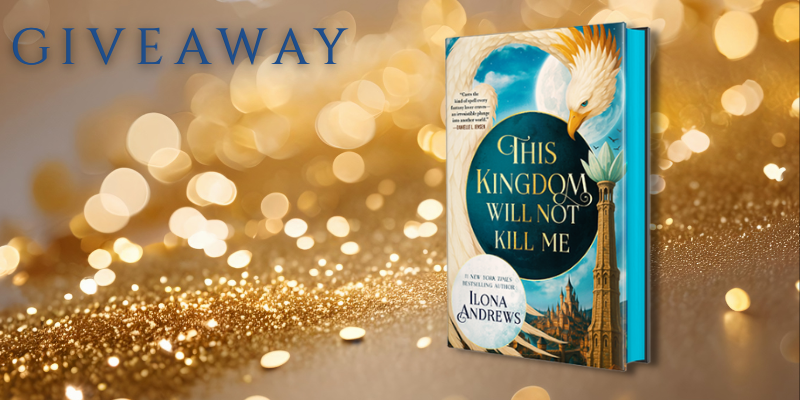
Imagine Books: This KingdomThis Kingdom is attractive and charming, and it now has several special editions. One of these is by Imagine Books, and I’m here to tell you more about it.
DISCLAIMER: We cannot answer any specific questions, because we did not commission this edition and have nothing to do with the order fulfillment. This was done through Tor, and we are breaking this down to avoid any confusion.
What is it?It is a box containing the Tor Hardcover with teal edges and some extras.
The book:
The extras:
Add-on option:
Additional page overlay — $11.99
Okay, I didn’t know what page overlay was, so I had to look it up. It is a semi-transparent full page illustration that is almost like a very large bookmark. It fits over the page, so if you wanted to mark your favorite place or a scene in the book, you would slide it in. So imagine a removable illustration. Google came up with this awesome Instagram post about it, so if you want to see the pictures of what it might look like, go here.
(Also, page overlays, super cool, and we will be doing this in the future.)
To reiterate: this is a Tor hardcover with extra stuffs.
The price: This book will be priced at $42.99 plus tax plus shipping (this price does not include the add-on overlay).
The preorder date: the preorder will drop on Imagine Books Shop website on February 28th at 11:00 AM PST. Yes, we will remind you on the blog when it goes live.
The shipping date: This special edition is estimated to ship in JUNE. So, the regular release date for the Tor Hardcover is March 31, but this edition will NOT ship on that date. It will ship later. Here is what Imagine Book Shop says about it:
Why does a preorder take longer to ship, and how does this relate to special editions?
Great question! Our special editions feature custom artwork that is exclusive to Imagine Books Shop—that’s what makes them special. The artwork is designed, illustrated, and then sent to be manufactured. The longer wait time is
because the art (in this case, dust jackets and overlays) must be produced and shipped to us before we can ship the customized books to you.
We are currently estimating that this book will ship in June. Ship dates are estimates. We always do our best to get your order to you on time, but unforeseen circumstances or delays may occur. If there is a delay, we will always keep you updated.
We asked some additional questions. All answers are provided by Imagine Books.
Tell us about you?
“Hey everyone! I work for Imagine Books Shop, and we are thrilled to announce that we are collaborating with Macmillan and Ilona Andrews to bring you special editions of This Kingdom Will Not Kill Me!
As huge fans of Ilona Andrews, we couldn’t be more excited and honored to share these
editions with you. I got early access to this book and absolutely loved it. This is truly an amazing story that is near and dear to my heart. Reading this one was a special experience.”
Do I need a subscription to buy this book?
“No! This order is open to the public. No subscription is required to purchase these editions.”
Where can I buy this Imagine Books Shop edition of This Kingdom Will Not Kill Me?
“Our website is the only place this particular edition of this book will be available.
Here is the link to our website: Imagine Books Shop.”
Do you ship internationally, and what are your rates?
“Yes, we ship internationally. Shipping rates vary by location.”
What is a preorder, and how does this affect shipping?
“A preorder means you place an order for a book that will not ship right away. Our estimated shipping timeframe is June. Our preorder goes live on February 28th.
“Members of our Facebook group get early access to reveals and early access to sales by half an hour. We can’t wait to show you what’s coming! Here is the link to join:
Imagine Books Shop Facebook Group Link.”
Why does a preorder take longer to ship, and how does this relate to special editions?
“Great question! Our special editions feature custom artwork that is exclusive to Imagine Books Shop—that’s what makes them special. The artwork is designed, illustrated, and then sent to be manufactured. The longer wait time is because the art (in this case, dust jackets and overlays) must be produced and shipped to us before we can ship the customized books to you.
“We are currently estimating that this book will ship in June. Ship dates are estimates. We always do our best to get your order to you on time, but unforeseen circumstances or delays may occur. If there is a delay, we will always keep you updated.”
Are these editions limited?
“Yes. Once the initial stock sells out, the preorder will close, and there is no guarantee that we will restock these editions. We typically do not offer reprints.”
What is a page overlay?
“A page overlay is a vellum sheet that depicts a scene from the book. In simple terms, it is an art print (on thinner paper) designed to be inserted into a book to bring your favorite scenes to life.”
There you have it. For all additional inquiries, please contact Imagine Book Shop. If you ask us, Mod R will just paste the link back to you.
The post This Kingdom Comes to Imagine Books and Other Fun Stuff first appeared on ILONA ANDREWS.
I’m so glad to hear that things aren’t as stressful this time around! I’m happy for you.
I’m pleased to hear that Book#5 is proceeding well despite the silence surrounding the Edits for Book#4. Are you planning to ‘prod’ the publishers to find out why things are taking longer?
As you said, now that you are familiar with the process the Edits (usually) aren’t as major as when you started writing. It sounds as if your new writing methodology is paying dividends!
You haven’t said anything about Sales figures recently and I’m assuming that they are still good both for the new IoM series and for Alex Verus series too?!
Snake-Eaterby T. Kingfisher
Raymond F. Jones was born in Salt Lake City on November 15, 1915. He studied engineer and English at the University of Utah before working as a radio engineer. He later suggested that getting an English degree is one of the worst things a writer could do. He had a reasonable amount of success as an author, with his novel This Island Earth being the work he is best known for. It was adapted into a film in 1955, starring Jeff Morrow and featuring Russell Johnson, who would go on to portray the Professor on Gilligan’s Island, and Richard Deacon, who played Mel Cooley on The Dick van Dyke Show.
According to Jones, he was introduced to science fiction in 1927 when he read H.G. Wells’ War of the Worlds. He decided he never wanted to read it again because he was afraid it couldn’t live up to the “thrill of that first contact with the realm of imagined science.”
After graduating college, he served on a mission in Galveston, Texas and worked installing telephone exchange equipment for Western Electric in Texas, but after marrying Elaine Kimball on June 27, 1940, he took a job with the Weather Bureau to cut down on travel. During World War II, he used his radio engineering degree at Bendix Radio in Baltimore before settling in Arizona after the war.
Jones’ first short story, “Test of the Gods,” was published in the September 1941 issue of Astounding, in which it was overshadowed by the cover story, Isaac Asimov’s “Nightfall.” This is a pattern that would be repeated, leading Gerald W. Page to note that while Jones was a “writer of surprising versatility. But the price of this seems to be that too often he came on the scene with a perfectly good story that was still second best to the similar works of someone else.”
Jones wrote 15 novels in addition to This Island Earth, beginning in 1951 with the novel Renaissance (which was reprinted as Man of Two Worlds).
In addition to This Island Earth, two other stories by Jones were adapted by Hollywood. “The Children’s Room,” originally published in 1947, was an episode of the anthology series Tales of Tomorrow in 1952, and 1950’s “Divided We Fall” was adapted for the anthology series Out of This World in 1962.
His 1950 story “Tools of the Trade” is believed to be the first description of 3D printing.
Jones not only wrote science fiction, he also wrote non-fiction, with four juvenile science books ranging from The World of Weather to Animals of Long Ago. He also wrote the study Ice Formation on Aircraft.
Jones was a Hugo finalist in 1967 for his short story “Rat Race,” which lost to Larry Niven’s “Neutron Star.” In 1996, his story “Correspondence Course,” was remembered by enough people to earn him a Retro-Hugo nomination, where he lost to Hal Clement’s “Common Sense.”
Elaine died on July 23, 1970 and on May 2, 1973, Jones married Lillian Wats. Jones and Elaine had five children and eighteen grandchildren. When he married Lillian, he gained five step-children.
Jones died in Sandy, Utah on January 24, 1994 after suffering from pancreatic cancer. For no reason other than the same first name, I tend to think of Jones along with author Raymond Z. Gallun (1911-1994). Coincidentally, both of their obituaries appeared in the same issue of Locus, with Jones coming in second to Gallun’s.
I reviewed Jones’ short story “Death Eternal” in 2018 as part of my Birthday Reviews series on Blackgate.
Steven H Silver is a twenty-one-time Hugo Award nominee and was the publisher of the Hugo-nominated fanzine Argentus as well as the editor and publisher of ISFiC Press for eight years. He has also edited books for DAW, NESFA Press, and ZNB. His most recent anthology is Alternate Peace and his novel After Hastings was published in 2020. Steven has chaired the first Midwest Construction, Windycon three times, and the SFWA Nebula Conference numerous times. He was programming chair for Chicon 2000 and Vice Chair of Chicon 7.
Reading Level: Adult
Genre: Cozy Fantasy
Length: 538 pages
Publisher: Self-Published
Release Date: November 4, 2025
ASIN: B0FW17TZ45
Stand Alone or Series: 1st book in the Meow: Magical Emporium of Wares series
Source: eGalley from Netgalley
Rating: 4/5 stars
“When Sable answers a too-good-to-be-true job posting—cozy bookshop, perfect espresso machine, adorable black cat, and an apartment upstairs—she thought she’d finally caught a break from her crushing student loans.
But the ink on the deal is barely dry when Sable realizes that the contract is very literal. She cannot leave. Also, her new feline companion talks, the bookstore itself is a sentient enigma with an excellent espresso machine, and magic isn’t just for storybooks–it’s woven into her new reality.
Bound to the shop as the mystical Cat’s voice and hands in the human world, the bookstore’s true purpose begins to unfold, and Sable must choose. Will she embrace the impossible magic blooming around her, or cling to the mundane life she thought she wanted, risking the fate of the shop and its curious inhabitants?”
Series Info/Source: This is the first book in the Meow: Magical Emporium of Wares series. I got a copy of this on ebook from NetGalley from review.
Thoughts: I really liked the premise behind this book and really enjoyed the day to day adventures and intriguing characters. I definitely plan on continuing the series. My only complaint is that the story started to drag some in the middle and started to feel a bit repetitive.
Sable shows up for a job interview at an amazing bookshop that appears too good to be true. The pay and benefits are wonderful, and there is an adorable cat in the store. She gets the job on the spot and can’t believe her luck. However, maybe she should have read the contract a bit better. Sable is not allowed to leave MEOW (Magical Emporium of Wares) for a year and must answer to The Cat. Suddenly, Sable’s days are filled with odd magical visitors and events and she never knows what to except next!
This book has serious cozy vibes, and I really enjoyed the characters and how you never knew what was going to happen from day to day. I loved how Sable just rolled with all the odd day to day happenings in the shop. Initially, the story starts with Sable being anxious and surprised by the next encounter each day brings, some of them fairly normal and some of them of the more magical variety. All the while, Sable is trying to figure out the mystery of The Cat and the bookshop itself. The layout of the bookstore changes, dishes are washed, and it’s all very mysterious.
Initially this is very light on characters, you have Sable and you have The Cat. However, as the book continues, we are introduced to more and more intriguing characters. I really enjoyed them all. This book has a very adventuring feel to it despite the fact that Sable can’t leave the book store, and I really enjoyed that. I also liked the glimpses I got of Sable’s family but hope we get to see more of her family as well in future books.
The only downside to this book for me was that the day-to-day format started to feel a bit repetitive despite each day being somewhat different. The story picked up towards the end of the book again as Sable learns more about The Cat and gets pulled into a broader story. So while I adored the concept and the characters, and enjoyed the story as well, I thought the pacing was a bit off. However, the way things picked up at the end really had me intrigued to read more of this series.
My Summary (4/5): Overall I really enjoyed this book it is a fun and cozy read with a creative concept, intriguing characters, and an entertaining story. It does drag a bit in the middle, but it quickly picks up again towards the end and really had me wanting to read more about this magical book store and these characters. The second book is supposed to release in early February (so very soon) and will be titled “Keeper and Kindred”. If you enjoy cozy fantasy with cats, books, dragons, and magic, I would recommend!
Robert McCammon will be one of the speakers at the 2026 Impact Book Festival in Fultondale, AL. The event takes place on Saturday, April 18, 2026. He’s scheduled to speak at 1 PM CT. More information can also be found on the website for Alabama Writers’ Forum.
The final “old” list! I finally got here. I had books stacked all over the condo, magazines falling off tables, because I got so far behind. September’s list is the final one to catch up on, and after that, I’m current. If you’d like to see the most recent list (December’s), click here.
In the final week of August, I started my one-per-semester class at the University of Nevada, Las Vegas, which meant I had time to read short stories at my (middle of the afternoon) lunch. I caught up on reading the best-ofs. Honestly, I don’t remember a lot of the stories in the 2024 Penzler mystery volume. I think I skipped quite a few due to kid/pet danger. I remember being frustrated that writers and editors seem to believe that good stories put innocents in danger for suspense. (Sigh. And yes, I’m a hypocrite, because I do the same thing sometimes.)
The other news for September? I finished my McManus binge.
I did have a pile of magazines here, but I ended up blogging on my Patreon page about a lot of the articles that interested me, so I decided not to repeat them here…in the interest of finishing!
So much of what I have here I can’t say much about because I might spoil the stories for you. So just pick them up. Here’s what I recommend from my September reading.
September, 2025Daw, Stephen
, “A Force For Good,” Billboard, June 21, 2025. The cover story for one of the June Billboards is an interview with Cynthia Erivo. She’s an amazing woman with a great head on her shoulders. She has a lot to saw about being a queer Black woman in this modern world, about being an artist, and more. Read this.
Floyd, John M., “The Last Day at The Jackrabbit,” The Mysterious Bookshop Presents Best Mystery Stories of the Year 2024, edited by Anthony Horowitz, Mysterious Press, 2024. Good titles get you into a story and remind you of what you just read. “The Last Day at The Jackrabbit” is a good title for a marvelous story, filled with surprises. I won’t say much more, so that the story can surprise you. But it’s worth reading.
Gilbertson, Nils, “Lovely and Useless Things,” The Mysterious Bookshop Presents Best Mystery Stories of the Year 2024, edited by Anthony Horowitz, Mysterious Press, 2024. There are a couple of stories set in the past in this volume. One is so far off on its history that I found it almost laughable. This is not that story. This one is a rather perfect presentation of a time and a crime gone by.

McManus, Karen M., The Cousins, Delacorte Press, 2020. This is one of McManus’s books that end on a “gotcha!” which I blogged about in August’s list. The ending kinda works, but kinda doesn’t. I don’t know if I’d pick up more of her books if I had read this one first. Having read a bunch of the others, though, this was candy for me. Family secrets, an island, lots of hidden mysteries. Lots and lots of fun, but don’t start here.
McManus, Karen M., You’ll Be The Death of Me, Delacorte Press, 2021. And this is one of those “gotcha!” endings that works. We don’t need anything more. But what’s here, a story of close friends who walk into the scene of a murder, is wonderful. One of my favorite of the books I binged this fall.
Methos, Victor, “Kill Night,” The Mysterious Bookshop Presents Best Mystery Stories of the Year 2024, edited by Anthony Horowitz, Mysterious Press, 2024. Very creepy, very well done story. Another one, filled with surprises that I will not spoil for you. Read it.
Padura, Leonardo, “A Family Matter,” The Mysterious Bookshop Presents Best Mystery Stories of the Year 2024, edited by Anthony Horowitz, Mysterious Press, 2024. Story translated by Francis Riddle. Amazing short story that creates an entire world. Extremely well done…and again, I’ll spoil it if I say more.
Reed, Annie, “Dead Names,” The Mysterious Bookshop Presents Best Mystery Stories of the Year 2024, edited by Anthony Horowitz, Mysterious Press, 2024. I’m the original editor on Annie Reed’s “Dead Names,” so I’m a bit biased. Annie has really hit her stride as a writer these past few years, and I’m extremely pleased that the story got picked up for the best of the year. The story deserves it, as does Annie.
Well, this posted early. Because I’m an airhead. So I’m just going to add to it as the rest of the month goes on. Whoops!
I took 8 days of my leisure reading time to watch Season Five of Stranger Things, and now I regret it. The show’s always been a tough watch for me–children in danger—but I got hooked in the first season and I stayed with it.
SPOILER!
They whiffed the ending. The validation went on too long and became boring. Yes, the Duffer Brothers can write cliffhangers, but they have no idea how to wrap anything up in a satisfying manner, so they gave us at least five endings, most of which were not satisfying at all. (I tell my students: don’t time jump at the end. Don’t give us how they grew up. Let us imagine that. Make us realize they’ll be all right. And if there’s a surprise, well then, set us up for it.) This show was set up for the “it’s all a long D&D campaign ending” which I’m glad they didn’t do, but everyone went back to normal too easily. I spent two days thinking about it, and in the end, decided that they didn’t stick the landing, and I’m not happy. I still think it was a good and ambitious show, but I feel like I wasted time better spent doing something else this year.
That something else is reading, and I was happy to get back to it.
The first book I finished in January was a rather dull romance novel that I’d been reading slowly just before bed. This was by design; I need sleep and staying up for “one more chapter” was, at that point, counterproductive. But as I looked at the book the morning I finished it to decide if I wanted to recommend it, I decided against it. Characters were great, but wow, nothing really memorable except a penguin wood carving that served as a McMuffin.
The second book I finished, which I blogged about a bit on my Patreon page in another context, was written by a British author for British readers. He assumed they knew a lot about World War I in great detail, and I’ll wager they did. Me, I’m struggling along, going…Did Lloyd George succeed Asquith as Prime Minister? When? and I thought Gallipoli came later in the war. I recognize the book’s structure. It’s a shocking (to some) and small (ish) story set against a horrible backdrop. If it had been a novel about the American Civil War, it would have worked for me, since I knew the details of the backdrop. As it was, it was an interesting read with no ending at all (but apparently shocking to the British reviewers). So I’m not recommending it, although I considered it. British readers, you might want to follow the link to see which book I’m vague-booking about.
Anyway, these are the things I liked in January.
January 2026
Belanger, Steve, “The Producer Who Hoodwinked Half of Hollywood,” The Hollywood Reporter, October 22, 2025. After Dean and I discovered that a once-trusted employee embezzled from us for years, I find myself quite attune to stories like this one. Most people believe that embezzlement is simple: someone takes cash from your bank account. Dean and I were always very careful with our accounts. We were embezzled through a quirk in the payroll system that allowed extra money to taken as non-taxable income in a paycheck. No getting into the bank accounts at all.
This particular case in this article focuses on embezzlement and fraud committed by a well respected producer. His method was equally sideways to the one above. From the article:
Ozer was accused of embezzling more than $200,000 from the production budget. He did this, the indictment said, by creating phony invoices from dummy companies and forging his accountant’s signature on backup documentation. Because Ozer had emailed some of these falsified documents, it was considered a federal crime under the Interstate Wire Fraud Statute.
Because this guy took a plea deal (a sweet one at that), he’s already in jail, even though his crimes were discovered only a few years ago. I can tell you that other cases (like ours) move very slowly. And recovery is hard. Most people don’t recover financially when they’ve been victimized like this. Dean and I are slowly coming out of it, but it’s been 2 years since we discovered exactly what was happening. (And there were other issues as well. [heavy sigh])
Cerná, Pavlína, “Are You Still A Runner If You Cannot Run?” Runner’s World, Fall, 2025. Great short essay on the doubts runners (and heck, writers too) have if they’re unable to do the thing that defines them. Cerná injured her leg and couldn’t run for a while, and got all tangled in her head. I know how that feels, because it happened to me in March. Timely and well written. (And oh, I love her “To be a man” comment.) (NOTE: I can’t spell her name properly because my Word Press program won’t allow me to put the proper first letter on it, so I had to default to a “c.”
Conklin, Melanie, “Chasing The Story with David Maraniss,” On Wisconsin, Summer 2025. I had no idea that legendary reporter David Maraniss failed to graduate from the University of Wisconsin. His high school sweetheart got pregnant. He married her and got a job at the local paper. (He’s ten years older than me, but I can attest to the fact that in Madison through the 1980s, you could get a job in the news based on writing ability alone.) He went on to an amazing career, chronicled here. (And yes, he’s still married to his high school sweetheart.) Great reading about a great reporter. There are too few of them these days…or rather, there aren’t enough outlets for them anymore.
Goodman, Carol, The Bones of the Story, William Morrow, 2025. The blurb calls this a locked room mystery, and I guess it’s that, but not really. I had a realization as I was reading along that I didn’t believe any of this, and then I chuckled. I’m known as an sf/f writer. Everything is unbelievable. But a group of people being murdered for old things…well, yeah, no. This is a cozy and cozy usually aren’t my thing, but with all the stuff going on in the world, I’m not having much success reading romance as my relaxation reading. So I went to this. I knew whodunnit and why right away, but the characters are marvelous and the story is compelling, so I kept reading. This is also (for those wondering) a good example of Dark Academia.
Goodman, Carol, Writers and Liars, William Morrow, 2025. Ignore the totally stupid log line (“They’ll Kill For Inspiration”) which has nothing to do with the book at all. This is a riff on Agatha Christie’s And Then There Were None, which is like catnip for writers. (I wrote one too, in the Spade/Paladin universe, Ten Little Fen, which we’re going to rebrand as soon as I get the time.) These writers are having a reunion on a Greek island and everything goes wrong from the start. The island itself, with its labyrinth is so completely cool that I want to see it someday. (It does not exist.) It makes the book, however, which is almost too cozy for me. (Cozies often have people acting in unbelievable ways for the sake of the mystery. And yeah, here too. But I don’t mind that much.) A fun and quick read.
McDonough, Michael, “Grandpa Jellybean and The Power of Perseverance,” Runner’s World, Fall 2025. A beautifully written essay about being a lifelong athlete and the people you inspire. Read about someone remarkable here. (And the writing is good too!)
Miller, Shannon,“Pro Bono Pros,” Las Vegas Weekly, October 23-29, 2025. I’m sure there are people like this all over the country, working with limited resources and fighting the good fight. But Shannon Miller at Last Vegas Weekly brought the struggle alive, so I’m sharing it with you folks.
Robbins, Dean, “Farewell to Paul’s Book Shop,” On Wisconsin, Summer 2025. Don’t hate me, Madisonians, but I hated Paul’s Book Shop. It was disorganized, smelled of mildew, and the staff bordered on rude. And yet when I saw this piece, that this State Street staple closed after sixty-some years, I felt a moment of sadness. It’s pretty amazing that a bookstore could be around that long, and with a single owner. Things change, sadly…
Robbins, Dean, “The Scholar and The Superstar,” On Wisconsin, Summer 2025. I’ve been reading about Bad Bunny’s tour now for a year in places like Billboard and various economic journals. His tour generated millions for Puerto Rico. He’s one of the biggest stars in the world, and he’s doing all kinds of cool things. But I didn’t realize until I read this that he asked UW professor Jorell Meléndez-Badillo to collaborate on a Puerto Rican history project tied to the album and the tour. Read this. It’s soooo cool.
Rodriguez, Gabriela, “Street Royalty,” Las Vegas Weekly, October 23-29, 2025. The value of reading as widely as possible from many different sources. I knew that there was a car show in Las Vegas in October, but I didn’t realize it was for lowriders…and I didn’t realize that lowriders are an art form all their own. This article focuses on the history, the community, the art, and the people behind it all. There’s even a podcast recommendation if you want to learn more after reading the article. I love finding pockets of culture I knew nothing about. I learned when I started writing the Smokey Dalton books thirty years ago that you can’t depend on the white corporate media to report things correctly. Back then, my research was showing me who the Black Panthers really were as opposed to what the media said when I was a little kid. This lowrider culture is another example just like that. Read this.
Schmitt, Preston, “Quantum Leaps in Education,” On Wisconsin, Summer 2025. I found this article so inspiring that I wrote an entire Patreon post about it. In short, this piece put the AI debate into context for me. AI isn’t going away, and the arts are dealing with theft on a grand scale. (For the record: I’m part of the Anthropic settlement. Yes, my works were stolen.) But AI is part of our future. Whether it will be a Segway or a smart phone remains to be seen, but it’s there. So see what a major university is doing about it.
Steinhoff, Jessica, “The Supermom Myth,” On Wisconsin, Summer 2025. A few years ago, Jessica Calarco went viral with this statement: “Other countries have social safety nets; the U.S. has women.” It seems like something random people might say on social media, but she brought the receipts. She has made a study of what women are doing that is stretching them much too thin. Steinhof explores Calarco’s research, her book, and her solutions in this interesting piece.
Zeitchik, Steven, “Emotional Support Cinema,” The Hollywood Reporter, November 5, 2025. I can’t find an online link (even a paywalled link) to this article anywhere online, yet it’s in my copy of the magazine. So I put it here for you to find. He’s talking about the ways that the current suggested crop of nominees this award season (and nothing had yet been nominated when he wrote this) reflect the nervousness of our times. Worth reading, if you can find it.
Terraforming Mars by Jacob Fryxelius (FryxGames/Stronghold Games, 2016)
About a year ago, I added Terraforming Mars to my collection of board games, fascinated by the premise. At the very end of the year, a local friend proposed to get together and try playing it. On 2 January, three of us sat down to a first game, using the beginner option of everyone playing a standard corporation and keeping all ten of their initial cards without having to pay for them. Four and a half hours later, we started counting up scores.
Terraforming Mars is a game about economic investment and its returns, like Race for the Galaxy, one of my long-time favorites. The premise is fairly hard science fiction: Several corporations have been granted charters by Earth’s world government to begin — as the title says — terraforming the planet Mars: raising its temperature and oxygen and giving it bodies of water. When these reach specific designated values, the game ends and score is taken. There are no violations of fundamental laws of physics such as faster-than-light travel; the departure, so far as there is one is not qualitative but quantitative, in the rapid progress of terraforming, though in some compensation, play is divided into “generations,” which implies a time scale on the order of centuries.
[Click the images to terraform them.]
Back cover of Terraforming Mars
The rule book for the game is 16 pages, but that includes introductory material, illustrations, and several game variants, including a solitaire version. The actual rules are in easily readable type and can be read through in a few minutes. Most of the complexities are strategic and are expressed in the text and graphics of game cards. Along with these cards, each player has a personal game board that keeps track of resources, and players share a larger board that’s a map of one hemisphere of Mars, where tiles can be placed to represent cities, oceans, vegetation, and other special achievements.
The map is also used to keep track of various scores and accomplishments. Reading the map is a little complicated, like watching the screen for character status in a computer game; on this first session we took a while to figure out some of its sections. But I think it can become familiar quickly.
In a way comparable to Race for the Galaxy, each generation in Terraforming Mars is divided into phases. A generation begins with each corporation receiving four cards from a deck, which represent newly acquired capabilities if the player wants to pay for them (“‘Take what you like,’ said God; ‘take it, and pay for it.'”) After that, players perform various actions, many but not all enabled by the cards, and some of which add tiles to the large board. Spatial arrangement of tiles is important and is partly restricted by the game rules.
Race For the Galaxy by Tom Lehmann (Rio Grande Games, 2007)
Some cards are used up by one action; some are kept and displayed in front of the player, and some of these can be used for a new action in each generation. All of this costs credits, and sometimes other resources! At the end of the generation, players engage in “production,” which provides more credits (based partly on their terraforming scores) and sometimes other resources that can be used to advance terraforming, directly or indirectly.
One thing that’s largely omitted from the game is violent conflict; most of the time, the various corporations are competing in an enterprise that theoretically benefits all of them (moving them toward a fully terraformed planet). There are a few moves that advance one player while imposing costs on another. An economist would call these “externalities”; a historian might call them “acts of war.” But as with, for example, Settlers of Catan (another European game), players have the option either of cutthroat competition or of deciding that that makes playing the game less fun, and avoiding it.
One of the three of us found the game rules a bit too complicated and hard to follow, so this may not be a game for everybody. It’s certainly not a casual game! But the other two of us enjoyed it a lot. In The Psychology of Everyday Things (published 1988), Donald O. Norman set out principles for ease of use, and pointed out that well designed games are deliberately a little difficult to “use” successfully (that is, to win); otherwise they become boring when the player solves them. I don’t see Terraforming Mars as likely to become boring.
Many games have an implied story. Sometimes this is very abstract, as with chess (a game about feudal warfare) or bridge (a game about capitalistic competition and cooperation); sometimes a kind of story emerges from the play of the game. (And sometimes, as with Dungeons and Dragons, telling bits of story is an actual move in the game.) Terraforming Mars has a fairly strong story aspect: It tells about how humanity moves out into the solar system and makes other planets humanly livable, in the style of classic science fiction writers (a clever joke in the rule book is to give examples of play with three players named Kim, Stanley, and Robinson!), of recent video series such as For All Mankind, or of the proposals of billionaires.
If you like that premise, or are willing to accept it, you’ll find Terraforming Mars a well thought out representation of a lot of its scientific details. I expect that as we play more games, and move on to using more than the standard starting corporations, we’ll find interesting bits of added flavor in the profiles of other corporations. And I may try playing the solo version when I have a few hours free; it seems likely to be entertaining.
William H. Stoddard is a professional copy editor specializing in scholarly and scientific publications. As a secondary career, he has written more than two dozen books for Steve Jackson Games, starting in 2000 with GURPS Steampunk. He lives in Lawrence, Kansas with his wife, their cat (a ginger tabby), and a hundred shelf feet of books, including large amounts of science fiction, fantasy, and graphic novels. His last piece for Black Gate was a review of Whose Body? by Dorothy Sayers
Today we bring you two more stories of writers realizing they wanted to be writers.
Alyssa DayThe moment everything changed for me was when I volunteered to pick up an editor (Kate Seaver, then at a small indie publisher, now at Penguin Random House) from the airport for a writers’ conference. We chatted on the drive to the hotel, and I told her about a novel I had in mind. I was working all the time, and I had two small children, so I’d been dithering about writing it. Did anybody really want to hear my stories? (I’d already published a nonfiction book about being a military family during wartime, but I’d wanted to be a fiction author since I was a little girl reading Nancy Drew.) I didn’t even have a title for the novel yet. I just called it Tuna Fish Girl, because the heroine liked tuna sandwiches. (Yes, I know. Awful!)
But I told her about it, and she laughed so hard and said, “If you can write like you can tell a story, that’s going to be a wonderful book.” After that conference, she kept in touch with me, and kept saying, “Send me Tuna Fish Girl!”
So, finally, I did. My agent sent the editor my proposal (a synopsis and 50 pages) on a Friday, and I had an offer to buy it Monday morning. They wanted to launch their new chick-lit line with my book! We even went to auction with other publishers wanting to buy it. (No, everything in publishing does NOT go this well. Think: roller coaster.) I was so ready to quit being a lawyer and try writing full time, so I jumped at Kate’s offer.
I’ve never changed my mind about being an author, even during the tough years. It’s hard sometimes, making this job work, since I have chronic bouts of clinical depression, but I wouldn’t trade it for anything. I love creating worlds and inviting readers into them, and I will never get over the wonder of writing.
Alyssa’s Featured Release
NOBODY’S QUEST
(June 2, 2026; adult romantasy)
Prophecy insists that nobody will defeat the goddess of war.
Meet Nobody.
For a hundred years, Altarra has burned. The goddess of war, Morrigan, has conquered kingdom after kingdom, leaving only ruin in her wake. Every prophecy says the same thing―nobody can defeat her.
And after a century of failure, someone finally takes that literally.
When the goddess Artemisen chooses Soli Graymind―a nobody from the lowest caste who suffers from chronic depression―to lead one last desperate quest, the world laughs. But Soli won’t be alone. She’s joined by five others just as broken, just as lost:
A thief with no Guild.
A noble with no wealth.
A sorcerer with no hope.
A warrior with no morals.
And a prince with no kingdom―the one man she can’t stop thinking about, even when hope itself is dying.
Together, they are Altarra’s last chance.
Because maybe being a “nobody” is more powerful than anyone imagines―including themselves.
The first time I realized that becoming a writer was an actual possibility – that real people wrote all the books that I loved, and wrote those books as their actual grown-up JOB (whoa!!!) – I was seven years old, and the discovery BLEW MY MIND. I still remember turning to my mom that day, as we drove out on an errand, to share my epiphany:
“I’ve found something I love even more than reading: writing. I’m going to be a WRITER!”
Of course, because my mom is a smart and practical woman, she responded instinctively, before she could stop herself, “Oh, God. Really?”
As a mom now myself, let me tell you: I get it. What loving and practical mother would want their kid to pin their hopes onto such a scary-sounding, unreliable-paycheck of a career? My family didn’t know any novel writers. We knew vets and math professors and civil servants and other people who made their living with steady, reliable salaries. Good, safe jobs. (Or at least, so they all seemed at the time. All of my friends in academia are laughing hollowly at this point.)
By the time I was an adult, I knew just how unlikely it was that I would ever really be able to become a professional author. But that just made me all the more determined to put my whole heart into becoming the best that I could be, applying for competitive writing workshops, searching out reliable critique groups, and researching publishing even as I majored in different subjects in college and made firm plans for dayjobs to pay my rent.
I sold my first trilogy of novels when I was 31, 17 years ago. Since then, I’ve published a surprising number of books in more than one genre, and I’ve even won a few awards – but even now, every time I sell a new series to a traditional publisher or get a good review for one of my self-published books, I still find myself thinking with tentative hope, “Wow. This really might work out after all!”
I don’t ever take this career for granted…but I’m incredibly grateful for it every single day.
Stephanie’s Featured Release
WOOING THE WITCH QUEEN
Queen Saskia is the wicked sorceress everyone fears. After successfully wrestling the throne from her evil uncle, she only wants one thing: to keep her people safe from the empire next door. For that, she needs to spend more time in her laboratory experimenting with her spells. She definitely doesn’t have time to bring order to her chaotic library of magic.
When a mysterious dark wizard arrives at her castle, Saskia hires him as her new librarian on the spot. “Fabian” is sweet and a little nerdy, and his requests seem a little strange – what in the name of Divine Elva is a fountain pen? – but he’s getting the job done. And if he writes her flirtatious poetry and his innocent touch makes her skin singe, well…
Little does Saskia know that the “wizard” she’s falling for is actually an Imperial archduke in disguise, with no magical training whatsoever. On the run, with perilous secrets on his trail and a fast growing yearning for the wicked sorceress, he’s in danger from her enemies and her newfound allies, too. When his identity is finally revealed, will their love save or doom each other?
LEARN MOREThe post The Moment Everything Changed: Part 3 first appeared on ILONA ANDREWS.
Recent comments