
Feed aggregator
Camelot Fantasy Novels | 6 Paths of Hope, Courage, Fairness and Justice
Camelot fantasy novels have always held a special place in our hearts, reading that offers…
The post Camelot Fantasy Novels | 6 Paths of Hope, Courage, Fairness and Justice appeared first on LitStack.
Categories: Fantasy Books
Book review: Red Empire by Jonathan Maberry

Book links: Amazon, Goodreads
ABOUT THE AUTHOR:
Publisher: Page count: Formats:
Jonathan Maberry’s Red Empire is the fifteenth Joe Ledger novel and the fifth Rogue Team International book. At this point, the series is long enough that picking up a single entry without context is a bit like walking into season twelve of a TV show and hoping for the best. Maberry does try to make the story understandable on its own, but the emotional weight, the grudges, and half the revelations only really land if you’ve been here for the long haul.
I have. And that probably means I liked this book more than it objectively deserves.
We finally got the long-promised look into Mr. Church. For years he’s been the most mysterious person in the series - Ledger’s boss, puppet master, and occasional badass. Red Empire finally digs into who he is and where he came from. The answers are satisfying. Maberry reveals a lot, but leaves room for questions. The infamous cookie code, for example, remains unsolved.
Also, the Red Order is back and that means things will spiral fast. These genetically altered vampire-like warriors take center stage again. Their return ties together a lot of old plot lines. It also allows Maberry to reach deep into history, jumping back to the Crusades and the Black Death. I loved the historical sections that made a lot of things clearer.
On the modern-day side, a weaponized version of the bubonic plague may wipe away humanity. Between that and the usual Joe Ledger combat scenes, this book gets very violent. Anyone squeamish should probably look elsewhere. Longtime readers already know the deal and enjoy brutal fights, ugly deaths, and the constant sense that no character is entirely safe.
And yes, some familiar faces die.
Maberry has been thinning the cast regularly for years. Fans are used to it, even if it still stings when it happens. The series has always balanced its action with the sense that these people matter to each other, and when one of them goes down it hurts.
The action itself is fast, loud, and relentless. The last third of the book in particular barely slows down. There’s a long siege inside a sealed London skyscraper where plague, terrorists, and Joe Ledger collide. It’s chaotic, tense, and a lot of fun to read.
After fifteen books, the characters feel like old teammates. Ledger’s grim humor still works. Havoc Team still operates like the world’s most dangerous family. And when Maberry throws them into chaos, it’s easy to get pulled along.
In the end, Red Empire isn't the tightest book in the series but it is one of the most revealing. It finally opens the door on Mr. Church’s past, pushes the Red Order storyline forward in a big way, and reminds readers why this series has lasted so long.
Categories: Fantasy Books
Neverwhens: Existential Horror and Medieval Mystery Play meet in Between Two Fires
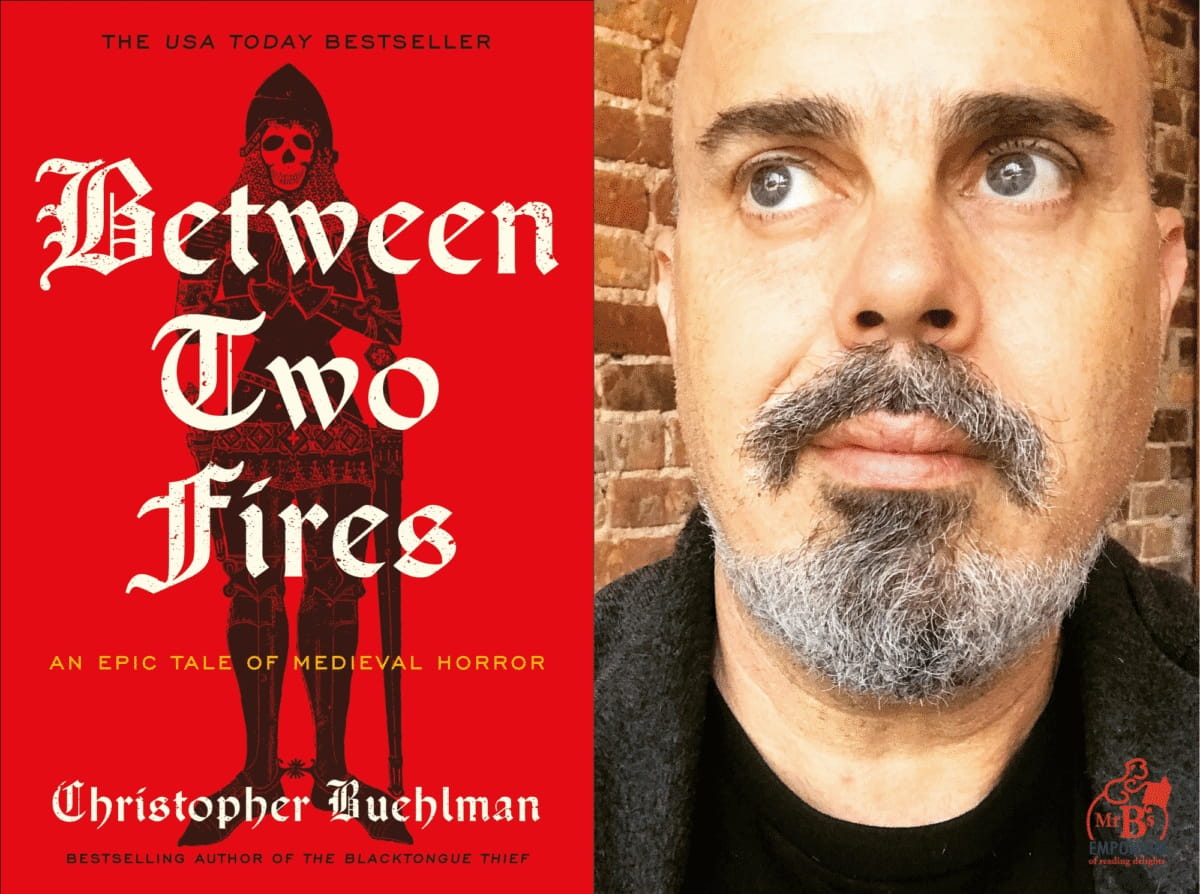
Last week, I had the dumb good luck to be sitting to dinner with Christopher Buehlman just after the news came out that Nightfire’s new edition of Between Two Fires had hit #4 on the Bestseller list.
I want the record to show I was on the BTF train long before that.
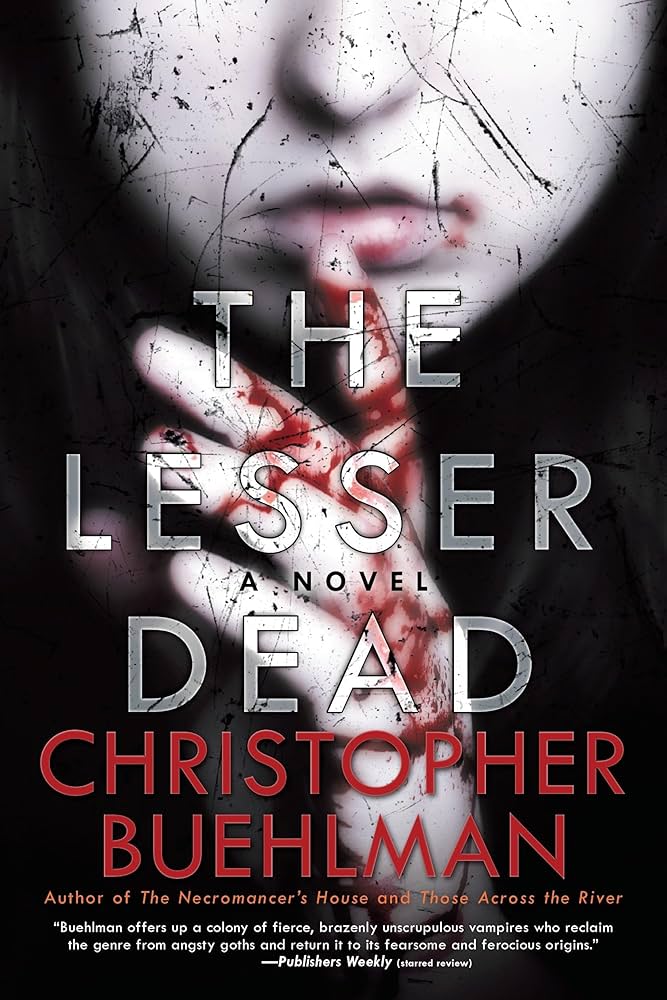
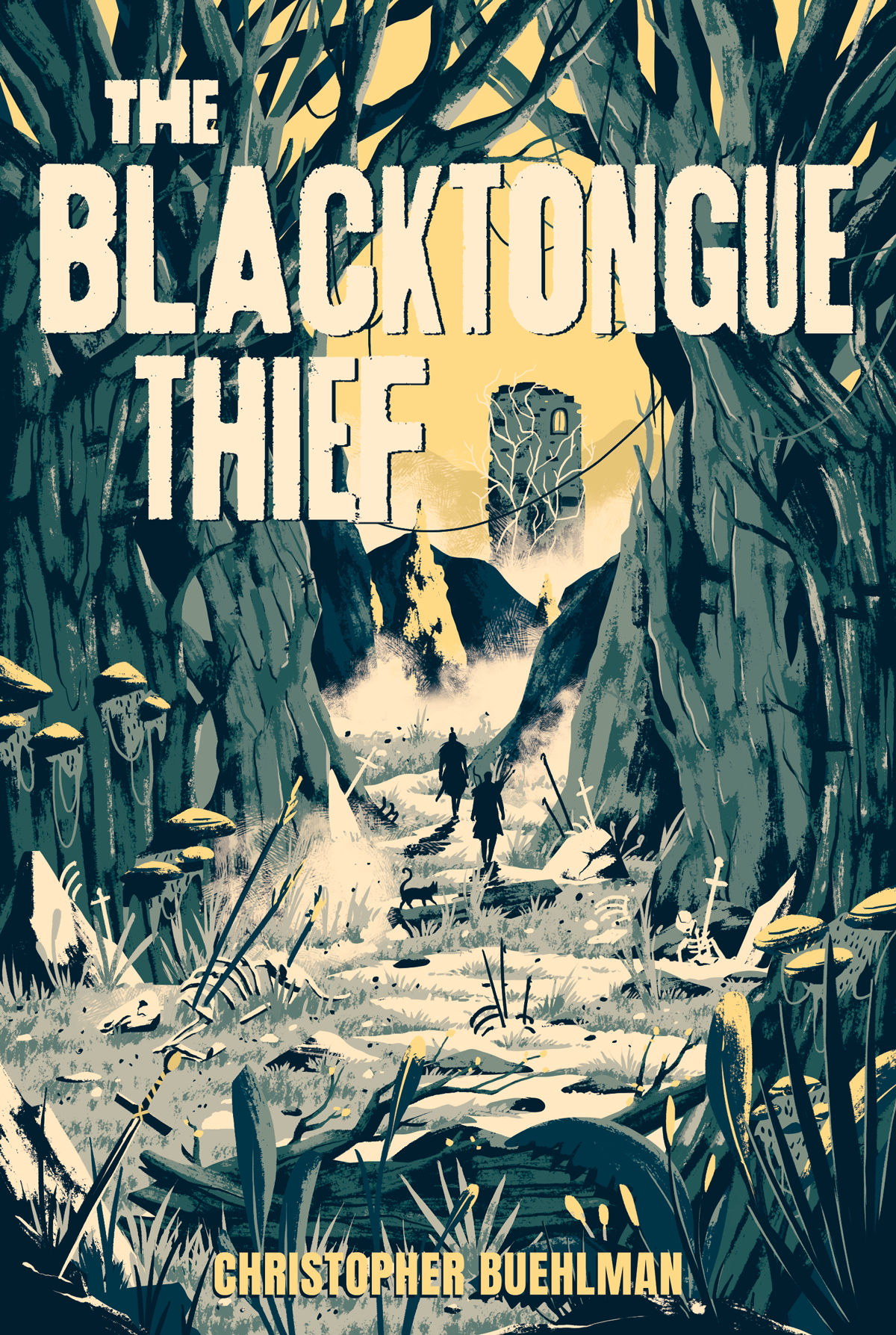
Indeed, Buehlman, who’s garnered a lot of (deserved) attention for his recent fantasy novels The Black Tongue Thief and The Daughter’s War, had a previous career writing horror, including some of the most creative horror novels (IMO) of the 21st century I have had the privilege to read, and definitely one of the best vampire novels of all time (The Lesser Dead).
But any student of the fantasy genre knows that horror and fantasy, especially the sort of “street level” fantasy found in Sword & Sorcery or Grimdark, shares a large dose of its literary DNA with horror. And so, over a dozen years ago, Christopher Buehlman penned his first fantasy novel under the guise of horror (or is it horror under the guise of fantasy?): Between Two Towers. The premise was brilliant: what if what medieval people believed was simply… true… and the Black Death was a supernatural event, devils running amok on Earth.
The year is 1348. Thomas, a disgraced knight, has found a young girl alone in a dead Norman village. An orphan of the Black Death, and an almost unnerving picture of innocence, she tells Thomas that plague is only part of a larger cataclysm — that the fallen angels under Lucifer are rising in a second war on heaven, and that the world of men has fallen behind the lines of conflict.
Is it delirium or is it faith? She believes she has seen the angels of God. She believes the righteous dead speak to her in dreams. And now she has convinced the faithless Thomas to shepherd her across a depraved landscape to Avignon. There, she tells Thomas, she will fulfill her mission to confront the evil that has devastated the earth, and to restore to this betrayed, murderous knight the nobility and hope of salvation he long abandoned.
As hell unleashes its wrath, and as the true nature of the girl is revealed, Thomas will find himself on a macabre battleground of angels and demons, saints, and the risen dead, and in the midst of a desperate struggle for nothing less than the soul of man.
Sexy, right?
Unfortunately, the book crashed-and-burned in the realm of sales, stalled its author’s career in the horror genre and really was only known by those who were already fans — 14th-century history geeks like me.
Flash forward to two successful fantasy novels and Tor suddenly gets the brilliant idea it should re-release the novel (via its horror imprint) in a hardcover with sprayed pages and fancy endpapers and voila! A success. It should be. It always should have been. You should read it. Because, although the above synopsis is spot on covering the plot, it only sort of tells you what the novel is about.
Certainly, this is a book with some big action sequences, following the format of a quest novel as our characters travel down a river and make their way to Avignon. But you know, The Heart of Darkness is a “journey down a river” story too, and yet a lot more is going on inside the narrator’s head and in the eventual meeting at journey’s end, than the plot about steamer trip down the Congo with an attack by natives, and a very much failed attempt to bring the missing man back.
In a very similar vein, BTF is far more Heart of Darkness than Lord of the Rings: each of our characters are very much on a journey inward as they outwardly travel, and the very palpable, very real manifestations of Hell have the powers they do because of what lives in the human heart. Along the way, the author is creating a story comprised of common genre tropes and turns them all on their heads.
We know this one: a young, pre-pubescent girl or boy is the unbeknownst savior of humanity and must make some dangerous journey. Along the way they are befriended by a grizzled, disenchanted or unlikely warrior past his prime, forming an odd couple. Name your story and characters here: from the original intent of Strider vis-a-vis Frodo to John Connor and the T800 in Terminator 2: Judgment Day, to the tale of Arya Stark and the Hound in A Song of Ice and Fire.
Eragon has this. The movie Ladyhawke has a lower-stakes version of it, with a love-story thrown in. Hell, you can probably wedge Luke and Han in there, because Luke’s such a youthful innocent in Episode 4. Point is, it’s been done, a lot, with lots of variations.
Yet BTF’s Delphine is literally not that pre-pubescent heroine (for reasons I will withhold) and she really may be mad. Also, in this case our tale is told far more from the PoV of the disgraced knight-turned-routier, Thomas, so we can debate who is truly assisting whom…
Trope #2 The Embittered Hero-Despite-HimselfThomas is our *primary* PoV character, which is unusual in the Young Savior story, but the embittered, fallen man who suddenly finds himself with a chance to be something more “this one last time” is not. This story has played out so many times, in so many ways, I’d waste my time listing them but think of much of Clint Eastwood’s later film career from Unforgiven forward, about half of the noir cannon, and so forth.
But tropes are only problematic when they have nothing new to give and there is a great deal here. All I will say is that anyone will see some of themselves in Thomas if they can recall being 20 and full of dreams, then one day being middle-aged and not sure how they got there; or has had a marriage fail or lost a dear friend and knows they own some of that failure; or who finds themselves struggling to believe in a higher purpose or ideals in a world that seems increasingly not just callous, but actively ruled by the hostile. Like the best of “literature,” BTF is being driven by these characters, whom you will come to love and worry about, and whatever they are. Only, unlike a lot of modern literature, it actually uses the workings of plot to help tell their tale.
Trope #3 The QuestI mean, duh. It’s literally a journey to bring a message to the Pope from God (or not). Quests are old as time, and they are often linear. The in-world name of The Hobbit is literally “There and Back Again.” One could argue that a linear journey “there and back” is all that drives The Lord of the Rings, or in Woodrow Coll and Gus Macrae’s long journey in the greatest American quest novel, Lonesome Dove. (Maybe someday I will sit down and write a column on why the real “American Tolkien” is not white-bearded, former TV-writer with an unfinished hack-job of the War of the Roses with elements directly lifted from better writers but Larry McMurtry, but I digress.)
But without doing a Joseph Campbell deep-dive, the “quest” tale is a mythic version of the pilgrimage — a journey part and parcel to the Medieval lived experience, and still lived today. Santiago de Campostella, Rome, Jersualem — theses were the great destinations, but many more existed from Chartes to Canterbury. The Quest, expressly the Grail Quest, had dominated medieval literature since the 12th century and was decidedly popular in the 14th, and southern France, site of the fallen “Languedoc” with its Cathars, and Marian-cult, its Courtly Love — and a lot of the Grail literature, is where the French popes had set up shop. Sauron squatting in Minas Tirith.
This makes Avignon the PERFECT place for our heroes to travel in a world in which the devils of Hell are literally running amok. Avignon was *not* a pilgrim’s destination; rather it was the seat of the Babylonian Captivity of the Church, a vast, beautiful papal residence that had begun as a forced retreat for the Bishop of Rome, and then the gilded cage where the papal institution found itself captive to the ambitions of French kings and French cardinals. The damage caused in the fight to return the papacy to Rome cast a long shadow that takes us to the deadly Wars of Religion in the 16th century. In a way, nothing could be more the Mordor of Christendom, whatever the pope’s role as Vicar of Christ on Earth.
So now, imagine if Frodo’s job was to go find Sauron and say, “hey buddy, I know you and the Valar had a falling out, but I have a message from Eru the One, and he needs you to listen so you can save us from Morgoth.” Gonzo, right?
Trope #4: The DevilThis is the biggie. Lucifer the Lightbringer, Satan, Old Nick — the Adversary is a recurrent theme in literature who really only lost his power as a compelling villain in the post-modern world, which sometimes struggles to even acknowledge the idea of *evil*. The modern literary Devil’s largely relegated to film, which needs to make its supernatural villains easily understandable to wide audiences, or he is “contemporized” as one more dark god in a universe with counterparts like Loki, Set, Hades, yadda yadda (see, for example, the way Lucifer fits in to the DC Universe in Hellblazer or The Sandman). Sometimes, he’s even just a chummy ne’er-do-well you can’t help but like, as in the novel Good Omens. Even a lot of modern possession stories just choose to dodge an explanation of Devil or Hell — Demons are “something otherworldly” and malevolent, and that’s that.
The only major exception to this I can think of in novels is so-called “Christian Lit” where the Devil is very much real, there’s very much a battle, but it is also all very black and white… and strangely it all makes exactly sense via the lens of American conservative Evangelicalism. The Devil is pretty much behind everything bad about the modern world, and the angels those sweet, lovely people you see in card shops….
Yeah, forget all of that.
To understand what is happening in Buehlman’s world, you need to look at evil and Hell through medieval eyes. These are the tormentors of Dante, and the fever dreams of Bosch; these are the fallen angels in the famous 14th-centurty Apocalypse Tapestries in Anger and the tempters of medieval romance: monsters horrible to behold, wielders of glamour and deception, doomed creatures eternally hopeful of overthrowing their Creator — or to at least have vengeance via the destruction of His favored creature: Mankind. You cannot reason with them, you cannot win a contest of bargaining, they are incapable of mercy, and you cannot truly comprehend them for they are made of a different sort of spiritual stuff than you are.
But worst of all, the Devil “doesn’t make you do it.” You do it because the capacity for Evil is in you, and devils merely know just how to bring that out.
And the Angels?
Sure, angels sometimes walk among men in human form — see the Annunciation — but that is not their true form, nor how they appear when they represent the Creator’s divine wrath. The angels you will meet herein are the cherubim and seraphim that destroyed Sodom and Gomorrah, the heavenly warriors of Revelations and the Book of Daniel — creatures so powerful and alien to the mortal world that they are “terrible to behold.”
Lovecraft has nothing on them with his servitors of the Outer Gods in terms of weirdness, and when Heaven does make its presence known, it is decidedly not Gandalf’s arrival on the third day with the Rohirrim at Helm’s Deep. Instead, readers become reminded how the words awe and awful are related terms.
But what makes Between Two Fires so much more than the sum of its parts isn’t the way Buehlman reworks these tropes, but instead, well-versed in Tudor literature and medieval history, how he casts his story in the form of a medieval saints play and a medieval morality play.
Saints plays were stories highlighting the moments in a Saint’s life that were notable to their elevation — their martyrdom, miracles, etc. — and was a creative way to teach such to the faithful, although the plays themselves soon became secular. On one hand, this is very much the story of Delphine, who claims to talk to God, and who, if she is not mad, is the one person with the knowledge to prevent Hell’s triumph.
Morality plays, were more complex: an allegory, told through drama, and like most medieval quest literature, was written to be understood on more than one level. Its characters are personified abstractions with a protagonist who represents either humanity as a whole (Everyman) or an entire social class (as in Magnificence). Antagonists and supporting characters are not individuals, per se, but rather personifications of abstract virtues or vices, especially the seven deadly sins. Most often, morality plays were an externalized dramatization of a psychological or spiritual struggle: “The battle between the forces of good and evil in the human soul.”
The driving force is the hero’s own internal flaws and his struggle to overcome them. Perhaps the most famous of these, The Castle of Perseverance, is one of the oldest and is about the battle between vice and virtue, the mixing of allegorical and diabolical figures, and the enactment of Death and Judgment, with Good and Bad Angels on either side. This is literally the ride we are on with Thomas during the novel’s course.
I am not sure whether or not this was all consciously in Buehlman’s mind as he wrote, but it does not matter: a medieval morality play is exactly what he has written, only for the modern agnostic living in a world very much sure of its materialism, not always comfortable with its inner life. Between Two Towers is packed not with assurance, but with crisis. This is a story about inner struggle — with failure, with self-worth and self-identity, with hope, and indeed, with faith. That seems an odd thought in a story where literal devils are running amok, but as we are told at the start of the tale…”and Heaven made no answer.”
There is much of that problem in this story: how does one believe in God, or let us say godliness, when so much evil prevails. It’s a very inward-looking novel… told in the midst of a dark fantasy with monsters and battles. It is not a religious novel — the story will take its shots at religion, but also ruminate on its worth, but it is a deeply spiritual one in the oldest sense of that word.
That’s the best you can ask from a novel.
I have to emphasize that while I’ve called this Buehlman’s first fantasy novel, the horrific elements are truly horrible. I will not tell you much other than to say that from a literal “noble court of the damned” to a river monster, to the final denouement in Avignon, the scenes with the powers of Heaven & Hell are truly disturbing, relentless and at times, terrifying — the stuff of nightmares.
But then, what devils are more terrible than those that dance inside our own troubled minds?
Categories: Fantasy Books
Comment on A Beginner’s Guide to Drucraft #44: Life Sigls (I) by Brianna
In reply to Celia.
Maybe a Light sigl that allows you to project a blinding field around an enemy’s eyes, similar to the Haywire Stephen uses to mess with strength sigls?
Categories: Authors
Hellooooo! I love your books, you are one of my favourites writers. My question is: is Livvy going to stay with Ty the whole time in tlkof? Will she ever be separated from him in a way that seriously affects them both?
She is separated from him a time or two, and the separation does affect them both. It's very clear that their bond is under a lot of pressure, magically speaking.
Categories: Authors
Will Ash be as much of a fashion icon as Conor ??
You know, he actually did remind me a lot of Conor while I was writing him — probably the dissipated prince thing. He definitely has nice clothes and is fashionable, and does a certain amount of complaining when his clothes are ruined, but I don't think anyone is as much of a fashion icon as Conor, though it would be fun to see if Ash could start a trend in court of like, faeries wearing cowboy hats made out of moss or something. If he wore it everyone else would probably have to.
Categories: Authors
Hello! Thank you so much for writing these books, they’ve been such a huge part of my life! I’m really intrigued by the idea of prophecies in this world. What or who exactly is their origin? Like is it something derived from a higher power or is it...
That's a good question! TWP is the first series to really revolve around a prophecy. The current prophecy (not all of which has been deciphered) is a bit like a series of threats ("If someone does not do X, Y will happen) but they feel obligated to take it seriously since it's been right about a lot of things that have happened and continue to happen (so it cannot be mere speculation). Even though, you're right, they don't know the source. It's probably always a good idea to regard the source of a prophecy with some suspicion. :)
Categories: Authors
<div class="npf_row"><figure class=

Hi! I am so sorry if there was confusion about this. The Wicked Powers was never supposed to be four books that I remember — it was sold to publishers as a trilogy. (If it was meant to be four books, it would have been sold as four books, publishers like to know what they are getting!)
Here is the official announcement of Wicked Powers being sold, which calls it “the final trilogy” in Shadowhunters.
In 2023 I sort of mused out loud about how many books it might end up being, but it was very “I don’t know” and that that was before the announcement (in 2024) that it was going to be a trilogy. And you never do know. I’d have to be further along in the story to decide whether a fourth book was needed, so all I can say is that it’s supposed to be a trilogy, it was sold as a trilogy, but then so was TMI.
I know there is a lot of anxiety about the fact that there are four main characters and three covers at the moment. I don’t know who is going on the later covers but I can promise you this is something my publisher is well aware of! We’ll figure something out. And if eventually it does stretch to four books, well, that would fix that problem!
Categories: Authors
Hey !! I love all the editions you announced about TLKOF ( especially the barnes and noble one ) but most of them are only available in the States.. do you plan anything more accessible to international fans ??
Hey! Well, as authors, we don't really get to determine who does what special editions. It's up to stores and the like. I can tell you there will be at least one book box edition that isn't US based and at least two other UK based special editions. If you loved the B&N one, you just need to wait about a week or two.
Categories: Authors
Will Ty be a centurion at the start of TLKOF? And how will he be able to leave the Scholomance for their road trip?
The Scholomance isn't really about chasing down students and making them come back if they don't want to. It's voluntary to be there.
Categories: Authors
Hi Cassie, Thank you for writing such wonderful stories all these years. Your characters have me in a chokehold since I was 11. My question is regarding the new management style lol - young shadowhunters in every series have a habit of going over the...
This is a very funny question. I do get what you mean: in the past, young Shadowhunters have had to deal with a corrupt or incompetent Clave along with other enemies. Now we know the Clave is neither corrupt nor incompetent, and hopefully not too many jerks are in positions of influence. I can promise that Alec has not gone mad with power or anything.
So indeed, in this iteration of things, the Clave is not the problem. The Clave is also sort of split, and the Cohort remains a threat, along with plenty of other evildoers. As for why the kids have to handle some of this themselves and not have the Consul etc. handle it, well. Let's just say things are chaotic and it isn't possible for the adults to handle all the kids' problems.
(Ty, Kit and Dru are not currently doing any necromancy, although they will have to all deal with the fallout from past necromancy. )
Also, I set my alarm to remind me to open up my inbox for questions, then it didn't go off! I am technologically cursed. Trying to be more reliable, though!
Categories: Authors
4 Sleeps ’till Maggie
 Art @sincerely.candice.slater
“So House Andrews are on tour and Mod R is ‘in charge’. Pah. As if we need a babysitter. When did we ever get in trouble?”
“I have the alphabetized list here somewhere…”
“All right, so we’ve occasionally been in the wrong place at the wrong time. No one can link it back to us.”
“Mod R is cool anyway. She supports Horde rights.”
“And more importantly, she comes up with defenses for Horde wrongs. Which never happened.”
“Nice save.”
“Focus! What’s the situation?”
“Only four sleeps until This Kingdom Will Not Kill Me. Tuesday, we ride at dawn!”
“Um, I can’t actually ride at dawn. I couldn’t take time off work, sorry.”
“We ride at lunch break!”
“That works, thanks.”
“FOR MAGGIE! She’s one of us, one of us, one of us!”
“Imagine, dropped into her own favourite story… historically, we’ve dealt with that very well.”
“Have we, though?”
“Well, we’ve done Nav.”
“Eh. More like Nav did us.”
“The point is: CASTLES! Politics. Assassins. Questionable decisions. Emotional compromise. That’s our natural habitat.”
“Maggie’s adventures are a trilogy, Ilona confirmed it. Seems unsafe to me. That means w*iting for two sequels.”
“Dollar for the swear jar, we’ve talked about this. It’s not like House Andrews even do actual cliffhangers. Cliff-leaners, at most.”
“But with no one coming to save us…”
“Think about it. That means no one’s coming to stop us, either.”
“Ooooh. Game changer! So we can do anything.”
“Even better, my friend. We can do everything.”
Mod R: “Okay, let’s remember fluffiness … is that Andrea’s crossbow?!”
“It’s fine, I’m practically an honorary bouda.”
Mod R: “No weapons during Horde strategy! It’s Ferret Safety 101, people. We are regrouping, we are being chalant, we are—”
“Barsa?”
Mod R: “Resting. You need your strength.”
“Can we get a bedtime story? We’ll lie down and pretend to nap.”
Mod R: “Once upon a time, in the great world of readers, there lived a Horde…”
“Not a nasty, pillaging Horde!”
“The best Horde.”
Mod R: “…and they were given a book, for them and for all readers who have ever wished to get lost in a story…”
“And then, we made it into a bestseller?”
Mod R: “And then, we made it into a bestseller indeed. And we devoured dushegubilly ever after.”
“Read it again, Mod R?”
The post 4 Sleeps ’till Maggie first appeared on ILONA ANDREWS.
Categories: Authors
Forgotten Authors: F. Anstey
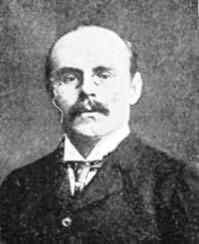 F. Anstey
Thomas Anstey Guthrie was born in London on August 8, 1856. He attended King’s College School and studied at Trinity Hall in Cambridge. Over the course of his career, he used multiple pseudonyms, including Hope Bandoff, William Monarch Jones, and the one most associated with his genre work, F. Anstey. He had meant to publish under his first initial and middle name, but a typo rendered the initial F and he elected to keep it.
Anstey studied law and briefly practiced beginning in 1880, but gave it up to write, with numerous short humorous pieces appearing in Punch. He was also known for writing humorous novels, the most famous of which, Vice Versa, originally published in 1882, was adapted into a play by Anstey in 1883. He similarly adapted several other of his novels and short stories into plays, as well as adapting multiple of Molière’s works into English.
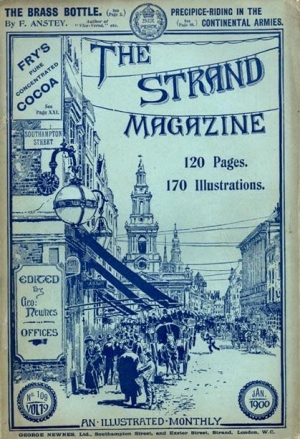 The Strand, December 1905
His novels and short stories are explorations of normal, bourgeois English life when they are touch by elements of the fantastic and magic. Many of his stories show the influence of William S. Gilbert, not only his plays like The Sorcerer, but also his short stories and The Bab Ballads.
Anstey anonymously published the story “The Wraith of Barnjum” in the March 1879 issue of Temple Bar, reprinting it under his byline in his 1884 collection of short fiction, The Black Poodle and Other Tales. His stories not only appeared in Punch, but in other Victorian magazines, and as Anstey built a reputation for incorporating magic into his stories, he would sometimes use that reputation to subvert the readers’ expectations by hinting at the possibility of magic, but writing a story without any fantastic elements.
His novels The Brass Bottle, The Tinted Venus. The Man from Blankley’s, and Vice Versa have been filmed multiple times, with two versions of The Brass Bottle filmed during Anstey’s lifetime (1914 and 1923) and The Man from Blankley’s released in 1930 and 1934. The earliest version of Vice Versa filmed in 1916 and The Tinted Venus in 1921. Vice Versa was also filmed in 1948 featuring a sixteen year old Petula Clark, and in 1988, starring Judge Reinhold and Fred Savage. It was also adapted for television at least four times.
Popular throughout the Victorian period, writing for adults and children, his style of writing influenced authors who would follow him, and his style became known as Ansteyan fantasy. However, the Edwardian era was not as enamored in his style of Victorian writing or morality and, while his writing remained influential on other humorists who followed, such as P.G. Wodehouse, his general popularity waned.
Guthrie died on March 10, 1934. He is buried in St Peter Churchyard in East Blatchington in East Sussex.
 Steven H Silver is a twenty-one-time Hugo Award nominee and was the publisher of the Hugo-nominated fanzine Argentus as well as the editor and publisher of ISFiC Press for eight years. He has also edited books for DAW, NESFA Press, and ZNB. His most recent anthology is Alternate Peace and his novel After Hastings was published in 2020. Steven has chaired the first Midwest Construction, Windycon three times, and the SFWA Nebula Conference numerous times. He was programming chair for Chicon 2000 and Vice Chair of Chicon 7.
Categories: Fantasy Books
Review – Dreams Lie Beneath by Rebecca Ross (5/5 stars)

Reading Level: Young Adult
Genre: Fantasy
Length: 492 pages
Publisher: Quill Tree Books
Release Date: November 2, 2021
ASIN: B08VNWJTXT
Stand Alone or Series: Stand Alone
Source: Borrowed ebook from Kindle Unlimited
Rating: 5/5 stars
“The realm of Azenor has spent years plagued by a curse. Every new moon, magic flows from the nearby mountain and brings nightmares to life. Only magicians—who serve as territory wardens—stand between people and their worst dreams.
Clementine Madigan is ready to take over as the warden of her small town, but when two magicians arrive to challenge her father for his domain, she is unknowingly drawn into a century-old conflict. She seeks revenge, but as she gets closer to Phelan, one of the vexingly handsome young magicians, secrets—as well as romance—begin to rise.
Clementine must unite with Phelan to fight the realm’s curse, which seems to be haunting their every turn. But will their efforts be enough to save Azenor from the nightmares that lurk around every corner.”
Series Info/Source: This is a stand alone book. I borrowed this on ebook from Kindle Unlimited.
Thoughts: I have been a fan of many of Ross’s novels, and this is one of the few I hadn’t read yet. Previous books I have read by Ross are “Sisters of Sword and Song” ( loved it), The Queen’s Rising (okay), Wild Reverence (loved it), and the Letters of Enchantment duology (loved it). I ended up really loving this book as well. I loved the creative world here; this was very well written and easy to read. I thought the magic in here was especially intriguing and would have loved to learn more about the magic system.
Clementine (Clem) is training under her father to become the Warden of her small town. The Warden protects a town from the curse of the Nightmares of the residents that come alive every new moon. Clem’s future takes an odd turn when two magicians arrive to challenge her father for his domain. Clem finds herself drawn into a past and conflict that she never knew existed. She is forced to uncover the truth behind many lies and tell many lies of her own if she is going to survive the path forward.
I absolutely loved this world where Nightmares comes alive and wardens must protect people against them. It is a fascinating curse to have on a world and the magicians that fight this curse are intriguing as well. I thought the magic system here was interesting and would have loved the chance to hear more about it and understand it better. There are multiple kinds of magic in this world, and although we hear about them, we never really get to delve into how they work.
This starts as a revenge story, but quickly morphs into Clem trying to uncover secrets and mysteries from multiple directions. I really enjoyed all of the characters in here, including Clem. They are all very morally gray, none of them are really evil, but they make as many bad decisions as they do good ones. There is an enemies to lovers type of romance blended into the story, which I thought was well done. These are complicated characters, and making assumptions about any of them can be dangerous.
I enjoyed how the story wrapped up and always love a good fantasy that is contained to one book; however, I loved this world so much that I wanted more. I wanted to know what happens after all these events that take place and what happens to this amazing world in the future.
Ross is an amazing writer, and I find her writing both easy to read and incredibly beautiful. It always flows off the page so well.
My Summary (5/5): Overall I really loved this story. I loved the complex characters, the intriguing world, the mystery, and the magic. I thought the story wrapped up nicely but wanted more. I wanted to learn more about the aftermath in this world and more about how the magic worked. I always really enjoy Ross’s writing style; it flows so well, is easy to read and beautiful. I would highly recommend if you are looking for a stand-alone dark fantasy with a creative world and intriguing characters.

Categories: Fantasy Books
Dark Muse News: Horrific Art – Interviewing Tim Waggoner
This Dark Muse News column continues its coverage of Beauty in Weird Fiction/Art via interviews (a series that began in 2014 on my author blog and was taken up by Black Gate in 2018). We’ve hosted authors such as Carol Berg, Anna Smith Spark, Darrell Schweitzer, CSE Cooney, Scott Oden, CS Friedman, Bryn Hammond…. and many more… the latest being Waclaw Traier.
Now we corner author Tim Waggoner, who has published over sixty novels and eight collections of short stories. He’s a four-time winner of the Bram Stoker Award, a two-time winner of the Scribe Award, and he’s been a finalist for the Shirley Jackson Award and the Splatterpunk Award. He’s also a full-time tenured professor who teaches creative writing and composition at Sinclair College in Dayton, Ohio.
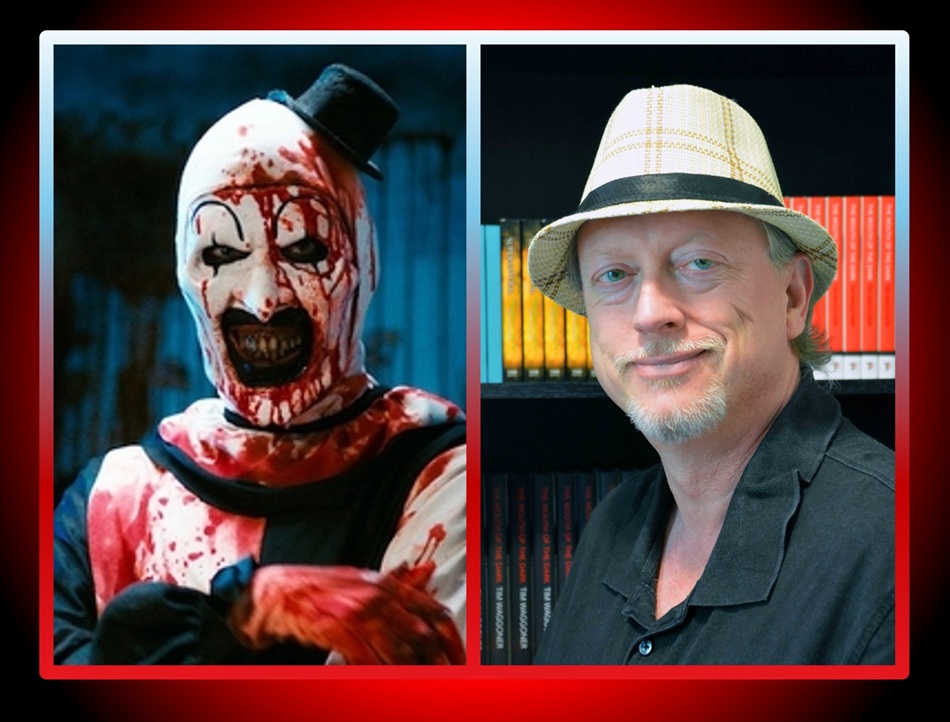
Waggoner has been getting a lot of press, and an award, for his novelization of the Terrifier movies that feature the serial killer named Art. You’ll learn more about that in this interview. Check out the juxtaposition of Art (the Terrifier on the Left, for clarity) and Tim Waggoner (innocent author on the Right). What wonderful hats they have!
Sword & Sorcery fans are also excited that Waggoner penned a Conan novel, just released from Titan Books, called Spawn of the Serpent God (Black Gate review ink). Being a fan of S&S and horrific art, I jumped at the chance to learn more about Tim Waggoner’s perspectives on craft.
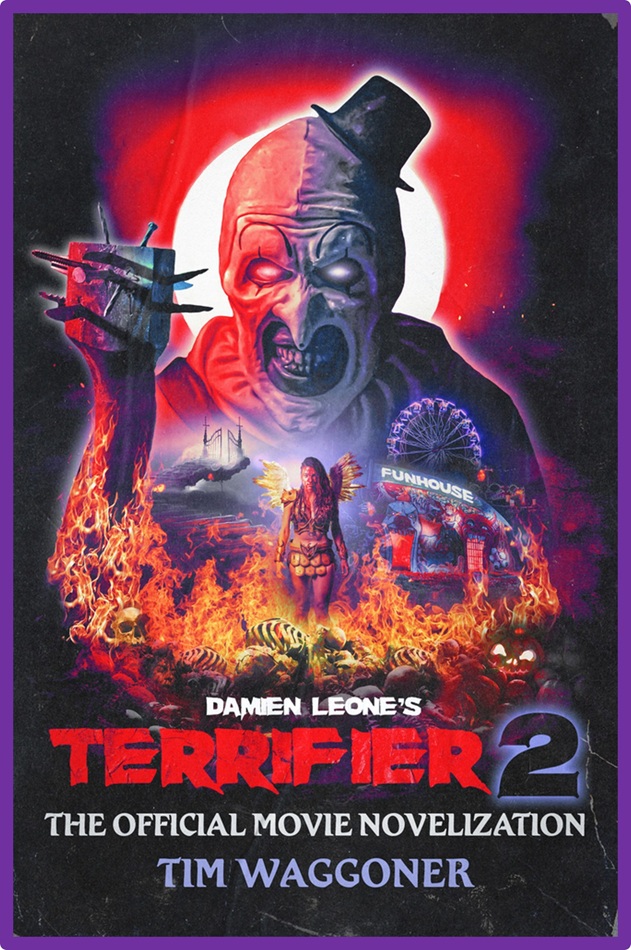 rom Terrifier #2!).
Art is the scary clown archetype combined with the slasher archetype, and he’s an especially brutal one. He’s silent like Michael Myers and Jason Voorhees, but he’s far more expressive physically. He can be playful in a dark, sadistic way, like Freddy Krueger, and his kills are bloody and violent, like Leatherface. He has a childlike quality that can be strangely endearing, but when he drops his façade, we can see the cold, empty evil that lies at his core. All these aspects combine to make him the most effective horror villain to come along in years.
I’ve done ten novelizations at this point in my career, and a movie script doesn’t provide enough material for a full-length novel. Most editors want at least 80,000 words, and a movie script usually results in 40,000 to 50,000 words of prose. So you have to add quite a bit of material to create a full novel. I look for areas in the script that could be explored further. In Terrifier 2, Art has a van, but we don’t know how he gets it, so I wrote a sequence showing that. In Terrifier 3, we know that Sienna has spent some time in a psychiatric hospital, so I explored that aspect of the script. I also developed the supporting characters further, in order to make them seem more like real people and not just prey for Art. In both novelizations, I added details about what lies behind the mystery of Art – what exactly he is, where he came from, why he’s allied with what seems to be a demon, etc. I extrapolated these details from hints in the script since only Damien Leone, the writer/director, really knows what’s going on!
Well, we need to talk about the hats now! Any comments on your fedora or Art’s top hat?My wife and I attended the World Horror Convention in 2013 in New Orleans, and I brought a straw fedora to wear when we were wandering around the French Quarter so I wouldn’t get a sunburned head. People mostly ran into each other in the hotel lobby, so I was usually wearing my hat when people saw me. But during and after panels, people would ask me why I wasn’t wearing my hat, and I’d think, ‘Because I’m not outside!’ During the Bram Stoker Awards afterparty, I was talking with editor Leah Hultenschmidt. I told her how everyone kept asking me about my hat, as if it was a hall costume or something. Leah said I should keep wearing the hat at cons as a branding method. She said that since I was tall, people would always be able to find me because of the hat. “I challenge you to wear it for a year,” she said. I was reluctant, but I promised I would, and I did. I’ve worn it at conventions and author appearances ever since. I call it My Stupid Author-Branding Hat.
You covered effective monster-making on your blog regarding “Art Appreciation.” Do you think Art is an artist?Art doesn’t display his kills the way some horror villains do, but he’s definitely creative in the way he commits his murders. And he’s creative when it comes to his clown/mime antics. I don’t know if he was named “Art” because he’s a kind of an artist, but it was something I leaned into when writing the books.
Any tips on creating “Monsters” in general? Is there any beauty in these creatures who typically villainize protagonists?One of the best ways to create an effective monster is to drill down to what their core archetype is and then find a new way to express that archetype. For example, in the early sixties, Alfred Hitchcock made Psycho, based on Robert Bloch’s novel. Norman Bates is a version of the werewolf archetype – a human who transforms into a savage monster – recreated for the modern world. Using this technique, you can keep the power of an archetype without any of the baggage that might’ve become attached to it over the years through books, comics, movies, and TV shows.
You can also combine aspects of archetypes. George Romero and John A. Russo did this when they created the zombies in Night of the Living Dead. Their zombies are a combination of the living dead, ghouls that eat flesh, vampires that spread their contagion, humans that become alien, and a horde of monsters. Putting all these pieces together resulted in an iconic monster that’s become part of the pantheon of legendary horrors.
I do find beauty in the monstrous. It has a power and a dark majesty that I’ve been attracted to all my life as a reader and viewer. For some reason, the monstrous stimulates my imagination more than anything else. The great thing about the dark is that anything could be in it – anything at all.
You contributed to THE BEAUTY OF DEATH – Vol.1: The Gargantuan Book of Horror with a bunch of other horror masters. The collection’s title resonates with the topic of Beauty in Horror. What was your contribution?I’m not sure why publisher Alessandro Manzetti used The Beauty of Death as a title. The anthology’s theme was horror stories relating to water. I wrote a story called “Fathomless Tides,” which deals with a couple having trouble in their relationship, along with the man’s fear of sharks. I often try to find the beauty in the grotesque in my horror stories, and I did this in “Fathomless Tides,” especially at the end.
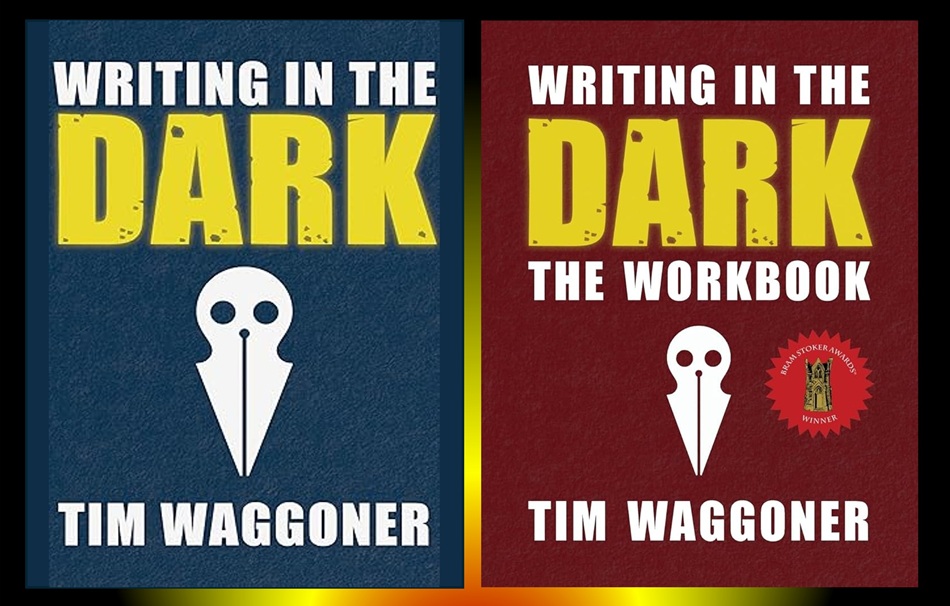
“Writing in the Dark” is the name of your blog and your book(s) on how to write horror. Can you highlight your guides to writing?Writing in the Dark is a book on writing horror. Writing in the Dark: The Workbook is a companion to the first book, which presents horror-writing exercises. Let Me Tell You a Story is a book about writing short fiction, using stories from throughout my career as examples. Just Add Writer is a book about writing media tie-in fiction. They’re all published by Raw Dog Screaming Press.
There have been so many! In the fields of science fiction, fantasy, and horror, “pay it forward” isn’t merely a platitude – it’s a core value. I was in a writers’ group with Dennis for several years, and I learned a ton about the craft and business of writing from him. He was kind enough to introduce me to writers and editors at various World Fantasy Conventions, and he also recommended me to his agent, Jonathan Matson, who took me on as a client. We worked together for nineteen years until his death.
Mort Castle has helped so many writers over the years, both as a professional writer and writing teacher. Before he immolated his career, Thomas F. Monteleone mentored dozens of writers, including me. Jonathan Maberry is so generous with his time and advice, and he’s supportive of all writers. Dawn Dunn taught me how to network at conventions. And I’ve learned a ton just by listening to writers on panels during conventions over the years and following them on social media. I learned a vast amount about being a professional from the late Mike Resnick, and I read Lawrence Block’s columns and books on writing religiously. I learned more about writing from him than anyone else. That’s why I dedicated Writing in the Dark to him.
I’ve been writing and teaching for forty years now, and I’ve done my best to honor my mentors and pay it forward to new writers, and I hope they, in turn, will do the same.
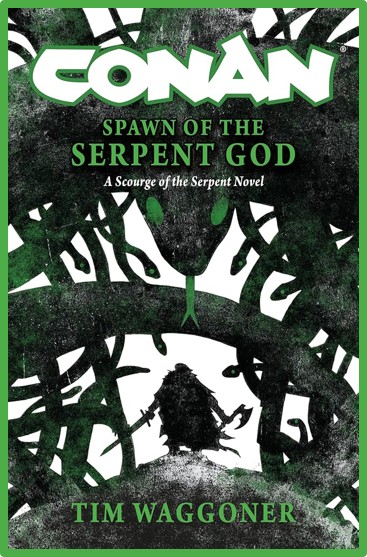
Sword and Sorcery fiction and horror go great together, so horror appears throughout Spawn of the Serpent God. There are serpent men, the evil god Set, giant spiders, an undead woman who was Conan’s girlfriend when he was younger, intelligent apes, ancient monsters, possession, shadow-snake zombies, a god-cursed warrior… Whether these horror elements are beautiful is up to the reader, I suppose. They’re beautiful to me, but then I wrote the book!
Tim Waggoner in 2019“Years ago, a student asked me why I write horror. “You seem like such a pleasant person,” she said.
I looked into her eyes and smiled.
“Writing horror is what keeps me pleasant.
I meant it as a joke, but I think it’s as good an explanation as any, and probably the closest to the truth.”
There is a fun anecdote from your Kendall 2019 interview to explore more (excerpt above). How does horror bring joy/pleasantries?
There’s the carnival thrill-ride aspect. Scary stories are fun! There’s also a deeper emotional catharsis you can reach as you emotionally wrestle with some of the darkest aspects of human existence. Perhaps the greatest thing that horror can do is help us confront the most serious existential question that we face as mortal beings: We all know that we’re going to die eventually, so how do we go on living with that knowledge? How can we find meaning in a universe that is dying all around us? Characters in horror stories, whether they survive or not, contend with darkness, fight back against it… They keep living until their very last moments – and we can do the same. I find that idea very comforting.
One of your blog posts indicated that “the worst thing artists can experience is indifference to their work.” How do you balance being empathetic while intentionally disturbing the reader?I write with a close point of view, so readers can understand what a character is thinking and feeling, even during the most intense scenes. I believe in giving every character his or her dignity, even if they only spend a short time onstage. A number of reviews I’ve seen about my Terrifier books discuss how they’re even more intense than the movies. That’s because I stay in the characters’ point of view when they suffer and die, and I invite readers to do the same.
You have a fascination with dark fantasy. Can you explain your muse, like where it originated and where it takes you?When I was in my early twenties, I wondered why horror writers’ stories were so limited when they had the whole realm of the supernatural to explore, and I wondered why fantasy writers’ stories didn’t take more advantage of magic in their worlds. Their worlds and magic systems tended to be similar. I eventually ran across the work of Charles DeLint and Robert Holdstock, and their fantasy fiction had strong elements of horror. Bradbury did a much better job of this fusion in his fiction. I decided to explore blending horror and fantasy in my own work, and then in my mid-twenties, I began reading Clive Barker’s novels. Not only did he blend horror and fantasy to great effect, is novels had an epic scope and world-building as well. Shortly after this, Twin Peaks came on the air, and I loved it so much, I checked out all of David Lynch’s films and became a lifelong fan. I think Lynch’s work is an ultimate expression of fantasy fused with horror (along with mystery and noir elements).
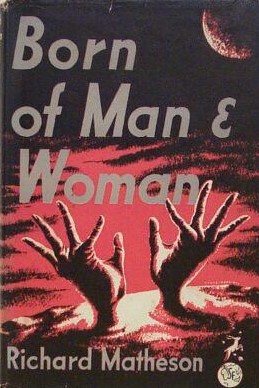
One example I’d give is Richard Matheson’s short story “Born of Man and Woman.” I first read it in high school, and it had a huge impact on me. It’s written as a series of short diary entries from a monstrous child whose human parents keep them (a gender is never specified) locked up in the basement. The child has only rudimentary language and simplistic thoughts from having been isolated all its life. Sadness permeates the story, which is a metaphor for child abuse/neglect. It’s also the story of how monsters are made, not born.
Do you see beauty in the things that terrorize/scare you?I’ve been a horror fan all my life, so horror media of any kind doesn’t scare me. The real horrors of the world can be too hard to look at straight on, like an eclipse, and horror lets us look indirectly at darkness, through imagery and metaphor. That’s what I think the true beauty of horror is.
Tim Waggoner in 2026“The real horrors of the world can be too hard to look at straight on, like an eclipse, and horror lets us look indirectly at darkness, through imagery and metaphor. That’s what I think the true beauty of horror is.”
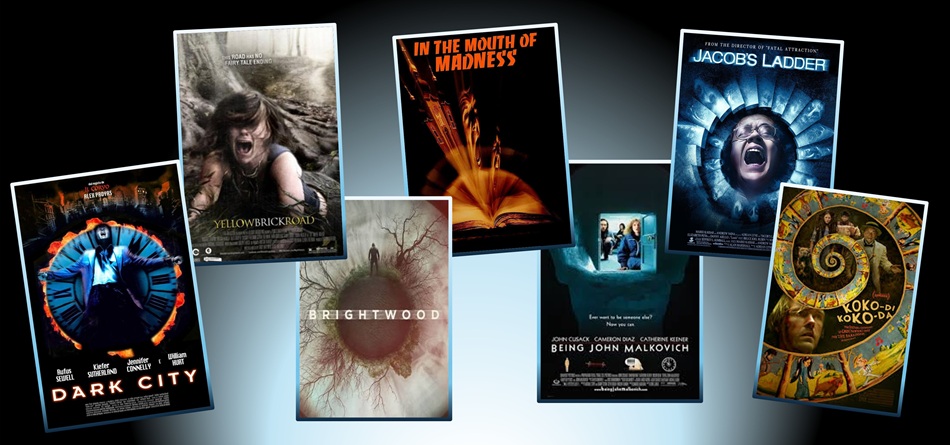
Have you any other muses besides writing (music, drawing, pottery…)? Can we share any of those here via images/links?Here’s a list of bizarre/surreal films I find inspiring:
- Brightwood
- Resolution
- The Endless
- Something in the Dirt
- Vivarium
- Titane
- Berberian Sound Studio
- The Editor
- Men
- Hostile Dimensions
- Koko-Di, Koko-Dah
- Strange Factories
- Caught
- Dark City
- Lost Highway
- Yellowbrick Road
- The Attic Expeditions
- In the Mouth of Madness
- Triangle
- Drive Back
- Dead End
- mother!
- Being John Malkovich
- Tetsuo: The Iron Man
- Dave Made a Maze
- Naked Lunch
- Jacob’s Ladder
- Mad God
- Gozu
- The TV show From
My first published novel was an erotic novel called Dying For It, which I wrote for the long-defunct Foggy Windows Press. Foggy Windows’ brand was erotic stories about married couples. I wrote about husband-and-wife private investigators who have trouble keeping their hands off each other while they’re working. I couldn’t take the whole thing seriously, so I made the book a comedy, too.
Any new releases in 2026?Winding Road Stories will be releasing a reprint of my novel Beneath the Bones, as well as a new sequel called The Gatherum. I’ll also have a new horror novelization out, but it hasn’t been officially announced yet. I’ll have a handful of short stories out in anthologies, too.
Tim Waggoner
Tim Waggoner has published over sixty novels and eight collections of short stories. He writes original dark fantasy and horror, as well as media tie-ins, and his articles on writing have appeared in numerous publications. He’s a four-time winner of the Bram Stoker Award, a two-time winner of the Scribe Award, and he’s been a finalist for the Shirley Jackson Award and the Splatterpunk Award. He’s also a full-time tenured professor who teaches creative writing and composition at Sinclair College in Dayton, Ohio. His papers are collected by the University of Pittsburgh’s Horror Studies Program.
- Four-Time Bram Stoker Award-Winning Author
- Website: timwaggoner.com
Blog: http://writinginthedarktw.blogspot.com/
Facebook: http://www.facebook.com/#!/tim.waggoner.9
Instagram: tim.waggoner.scribe - Threads: @waggoner.scribe@threads.net
- Bluesky: @timwaggoner.bsky.social
- YouTube Channel: https://www.youtube.com/channel/UCZEz6_ALPrV3tdC0V3peKNw
S.E. Lindberg is a Managing Editor at Black Gate, regularly reviewing books and interviewing authors on the topic of “Beauty & Art in Weird-Fantasy Fiction.” He has taken lead roles organizing the Gen Con Writers’ Symposium (chairing it in 2023), is the lead moderator of the Goodreads Sword & Sorcery Group, and was an intern for Tales from the Magician’s Skull magazine. As for crafting stories, he has contributed eight entries across Perseid Press’s Heroes in Hell and Heroika series, and has an entry in Weirdbook Annual #3: Zombies. He independently publishes novels under the banner Dyscrasia Fiction; short stories of Dyscrasia Fiction have appeared in Whetstone Amateur S&S Magazine, Swords & Sorcery online magazine, Rogues In the House Podcast’s A Book of Blades Vol I & II, DMR’s Terra Incognita, the 9th issue of Tales From the Magician’s Skull, Savage Realms Magazine, and Michael Stackpole’s S&S Chain Story 2 Project.
Categories: Fantasy Books
SPFBO 11 - The Fifth Update

Read FBC's SPFBO11 First Update (Lukasz's batch)
Read FBC's SPFBO11 Second Update (Jack's batch)Read FBC's SPFBO11 Third Update (Mihir's batch)Watch FBC's SPFBO11 Fourth Update (Lisa's batch)
And here's our last update before we pick a finalist amongst five semi-finalists. Check Chels's thoughts on her batch and see who's her semi-finalist!
Categories: Fantasy Books
Spotlight on “A Private Man” by Stephanie Sy-Quia
Other LitStack Spots We’re always looking out for you, and we have a few other…
The post Spotlight on “A Private Man” by Stephanie Sy-Quia appeared first on LitStack.
Categories: Fantasy Books
Book Review - Love, Lies, and Ley Lines
 Love, Lies, and Ley Lines (The Fast & the Fae #1)by Jeffe Kennedy
What is it about:It’s been years since the infamous smuggling team of Bandit and Goldilocks thumbed their noses at the fae authorities, running the priceless magical pixie dust desired by everyone from hedge witches to the storied magic academies. No one in the human principalities controlled by the fae can work even the simplest spells without the stuff. And without fae magic, humans will find themselves back in the dark ages of disease and fast mortality. But the enigmatic fae keep a tight grip on their monopoly of pixie dust, charging extortionate prices at their whim.
Bandit has been doing her best to get by on her racing wins and the quick thrill of one-night stands while her former partner and best friend, the powerful sorceress known as Goldilocks, is off playing house and having babies. But when Bandit gets the offer of a lifetime, she convinces Goldilocks to come out of retirement for one last, hugely profitable gig.
And if the Bandit picks up a mysterious and seductive hitchhiker fleeing his wedding, well that just adds a bit of spice to the job. When he refuses to tell her his name, she dubs him Prince Charming and only regrets that she won’t have time to find out more about her enticing companion—and what he looks like under those fancy clothes.
As the Bandit and Prince Charming run distraction for Goldilocks and her precious haul, they face untold dangers penetrating the arcane fae realms.
All for gold, glory, and maybe even true love.
What did I think of it:Do you even need to ask?!
Jeffe Kennedy isn't my favorite author for nothing: this book is yet another winner!
This book had Dungeons & Dragons: Honor Among Thieves vibes, but did it so much better in my opinion. They absolutely should make a movie based on Love, Lies, and Ley Lines. I'd watch the shit of out of it while also rereading this book.
I absolutely fell in love with Cha & her best friend, had my doubts about Prince Charming as well as finding him super intriguing, and couldn't get enough of the cool world Jeffe created for this thrilling adventure.
You bet I finished this in one day and that I'm now eager for the next book!
Why should you read it:It's such a cool and delicious read!
Go Buy Here
Categories: Fantasy Books
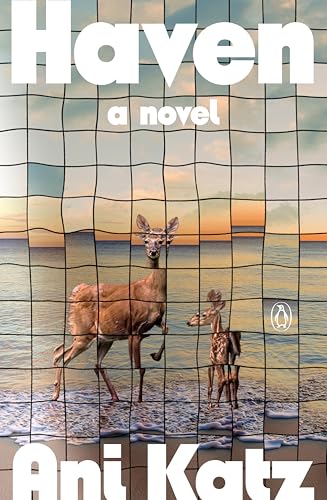
Book Review: Haven by Ani Katz
I received a review copy from the publisher. This does not affect the contents of my review and all opinions are my own.
Mogsy’s Rating: 3 of 5 stars
Genre: Thriller, Science Fiction
Series: Stand Alone
Publisher: Penguin Books (March 10, 2026)
Length: 256 pages
Author Information: Website
Haven by Ani Katz was interesting and a little weird, in both good and slightly frustrating ways. It has the sort of premise I’m usually drawn to, kind of a mix of near-future science fiction and thriller elements, but at the same time, the story leans heavily into an uncanny, surreal atmosphere that leaves you with the nagging sense that something is off, even if you can’t quite put your finger on what.
The novel follows Caroline, who arrives at the island community of Haven with her husband, Adam, and their infant son, Gabriel. The past few months have been challenging, marked by the stresses of new parenthood and financial uncertainty while Adam searched for work. Things finally seem to turn around when he lands a position at a powerful tech company called Corridor. Though it means long hours and time away from his family, the promise of stability and security makes it all worth it. And with Haven serving both as the company’s base of operations and a summer retreat for its employees, the couple decides to take advantage of the opportunity to unwind and strengthen their bond. Besides, Caroline is curious about Adam’s new friends and colleagues, hoping to gradually integrate into their world.
But Haven quickly proves to be anything but relaxing. The community feels overly curated, the residents polite yet distant, and there’s something about the island’s culture that seems a little too polished to be genuine. Adam’s new colleagues are friendly enough on the surface, but beneath that geniality runs an undercurrent of detachment, their relationships both exclusive and vaguely performative. Caroline senses the tension, and even though she can’t fully make sense of it, she feels an odd pull toward these social dynamics. When Adam leaves for work, leaving her alone to take care of Gabriel, that temptation only grows. Then one morning, she wakes up to find the baby missing, and that lingering sense of unease suddenly snaps into something far more immediate and terrifying.
I want to reiterate how much I really liked the book’s concept here. However, the execution had a way of stumbling all over itself. The combination of tech culture, the seemingly idyllic isolation, and an almost cult-like elitism among the characters was compelling, but at times, it was like the plot was circling itself without knowing what it wanted to say. Something about control? Influence? Complicity? Caroline’s perspective adds to this haziness, because in a way, she is an unreliable narrator, filtering everything through her own anxiety, isolation, and fear that she might be missing something just out of reach. I will say this works wonders for the atmosphere, but when it comes to clarity? Nope, I am still very confused.
That same quality extends to the world-building. There are a lot of interesting ideas baked into Haven as a setting, this polished and almost artificial community shaped by Big Tech. Again, the vibes are spot on. There’s just enough strangeness in the residents’ behaviors, the manicured landscapes, the absurd commercials on the television, etc. to be appropriately creepy and off-putting. But at the same time, the details never fully coalesce, leaving you with questions about why some of these eccentricities even exist or how this world actually functions.
As an example, the inclusion of medically assisted suicide is another element that feels like it’s reaching for something weighty and provocative, but in reality, it is already something happening in some parts of the world, and the book’s presentation of it as shocking or ethnically extreme comes across as a bit overdramatized, adding to the sense that the story is gesturing toward themes that are big and profound without fully grounding them. Characters fall into a similar pattern. Caroline’s motivations are solid in theory, being a new mother who is navigating an unfamiliar environment. But as the story progresses, she drifts further from us, so that by the end her reactions feel increasingly untethered and harder to understand.
Even so, there was something about Haven that kept me reading. There are moments, especially after Gabriel goes missing, where the suspense is sharpened and the story starts to come together in a more satisfying way. However, the final sections deliver a resolution that, while tense and dramatic, feels a little rushed and leaves several of the novel’s bigger questions only partially answered.
All in all, Haven is one of those books that lingers in your mind more for its atmosphere and ideas than for a fully coherent story. It’s uneven, occasionally frustrating, and doesn’t quite deliver on all its promises, but at the same time, there’s a certain magnetism that made it hard to put down. If you’re drawn to stories that blur the lines between thriller and speculative fiction, there’s a lot here to enjoy, but don’t expect everything to be neatly tied up by the final page.


Categories: Fantasy Books
Jethro Goes to War 10 What We Fight For is publishing NOW!
...and the book!

About: Normal 0 false false false EN-US X-NONE X-NONE /* Style Definitions */ table.MsoNormalTable {mso-style-name:"Table Normal"; mso-tstyle-rowband-size:0; mso-tstyle-colband-size:0; mso-style-noshow:yes; mso-style-priority:99; mso-style-qformat:yes; mso-style-parent:""; mso-padding-alt:0in 5.4pt 0in 5.4pt; mso-para-margin-top:0in; mso-para-margin-right:0in; mso-para-margin-bottom:10.0pt; mso-para-margin-left:0in; line-height:115%; mso-pagination:widow-orphan; font-size:11.0pt; font-family:"Calibri","sans-serif"; mso-ascii-font-family:Calibri; mso-ascii-theme-font:minor-latin; mso-fareast-font-family:"Times New Roman"; mso-fareast-theme-font:minor-fareast; mso-hansi-font-family:Calibri; mso-hansi-theme-font:minor-latin;}
With the pirate battle moon captured Jethro and the pirate empress in custody; the Cadre must secure it for the Federation's future while also preparing for the next fight.
At home and abroad Shanti and the family deal with the fallout from the attempted abduction of Bagheera as well as family members starting their own life paths. The brass refused to allow Shanti in on the investigation into the abduction however Shanti has other ideas.
While Jethro and the Cadre sail cross the stellar void to their next battlefield against nightmarish foes; Shanti has to fight on her own battlefield, battling politics and corporate espionage but reminding one and all What We Fight For…
Amazon: Amazon
B&N: To be continued...
Categories: Authors
Pages

Recent comments